Tag Archives: Knight Inlet BC

Grizzly Bear Triplets

grizbeachcubsaa

Note that there are three cubs: to the left of the rock, on the rock and to the right (partially hidden by the rock). We watched this family for about an hour and I was not able to get a clear photo of the family together. My guest got good photos but then they were not maneuvering the boat and taking pictures. That’s my excuse. Grizzly cubs, twins and triplets, are not uncommon in the area of Knight Inlet. It is a sign that the females are healthy and able to handle multiple births. The cubs are born in the winter den and if the female is not in good health (enough fat to feed her and her expected babies) the eggs are absorbed and no cubs are produced. Many of these multiple births survive their first year as they are seen the following year still with their mothers.
Wild River Day – 2 of 7

river scenery
Click to enlarge then click again


beautiful river
Click to enlarge then click again

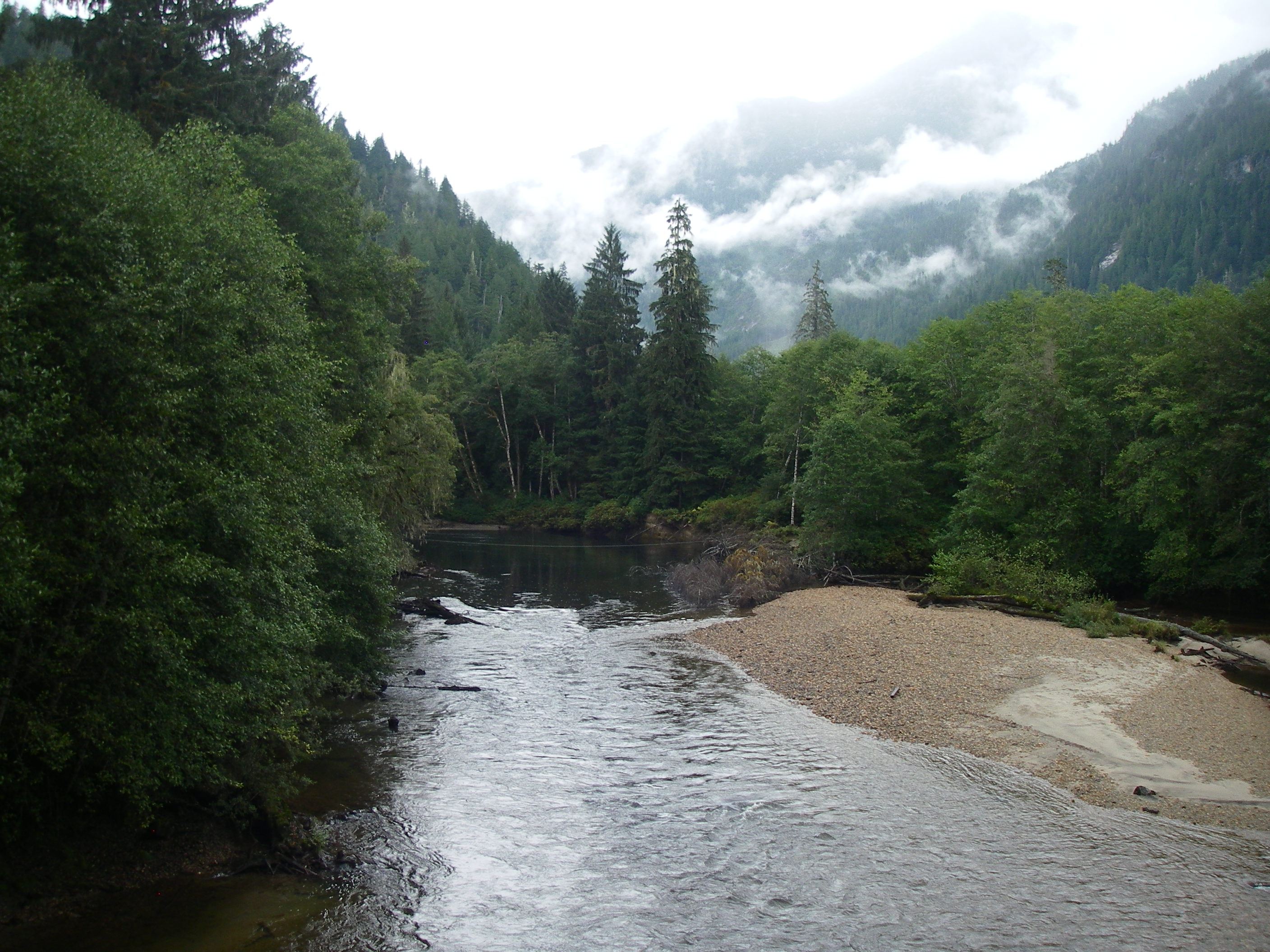
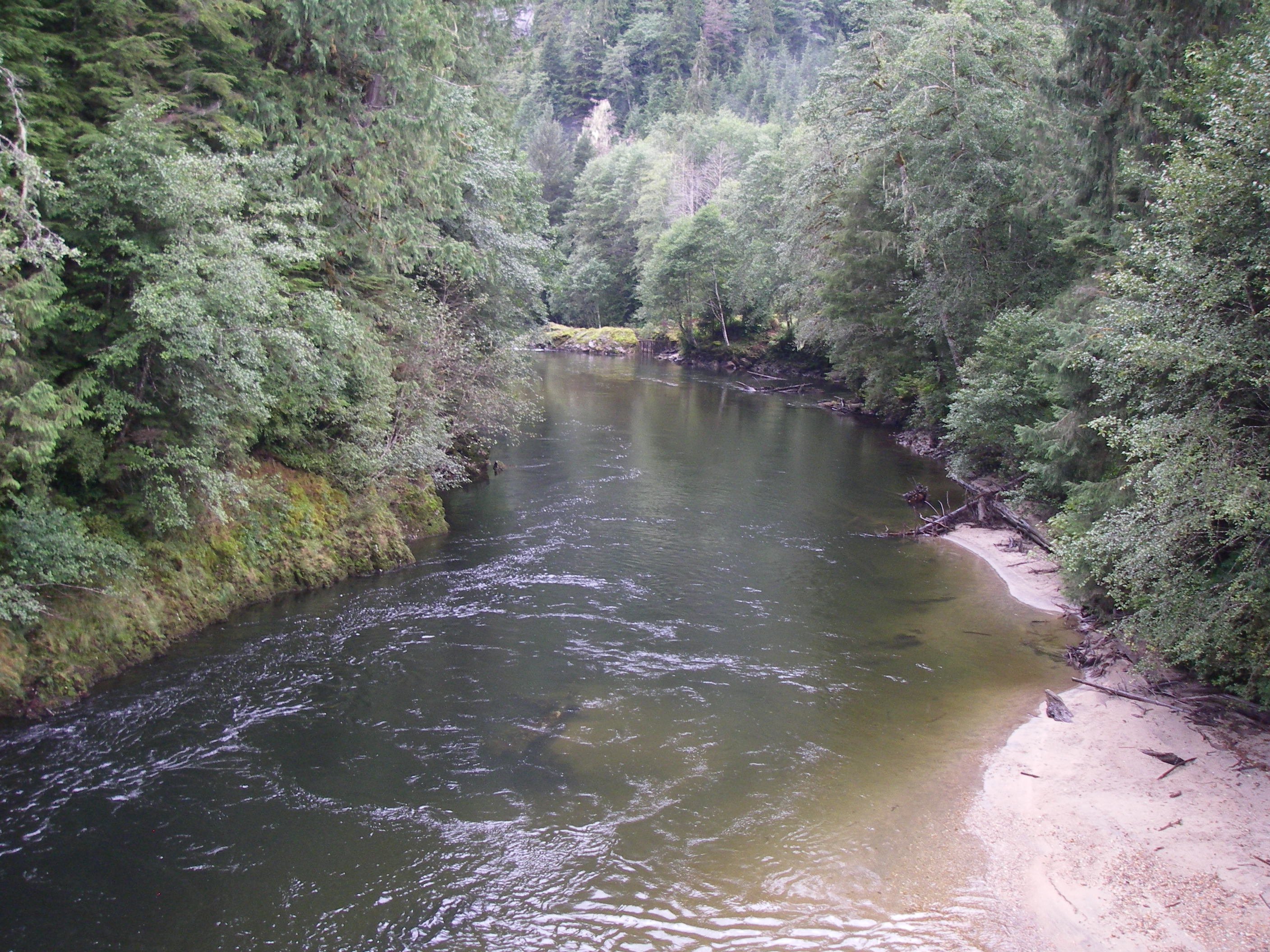
On the fifteen-minute walk to Rick’s cabin we spend some time on a decommissioned bridge (and that story you will have to hear from Rick) which provides views of the Kakweikan River. The first photo is looking up the river to the boat pool and the second down river to the bend where the cabin is located. Depending on the time of the year salmon will be spawning below the bridge while the bald eagles fly overhead.

Grizzly Bear Waiting

leary grizzly
Click to enlarge then click again

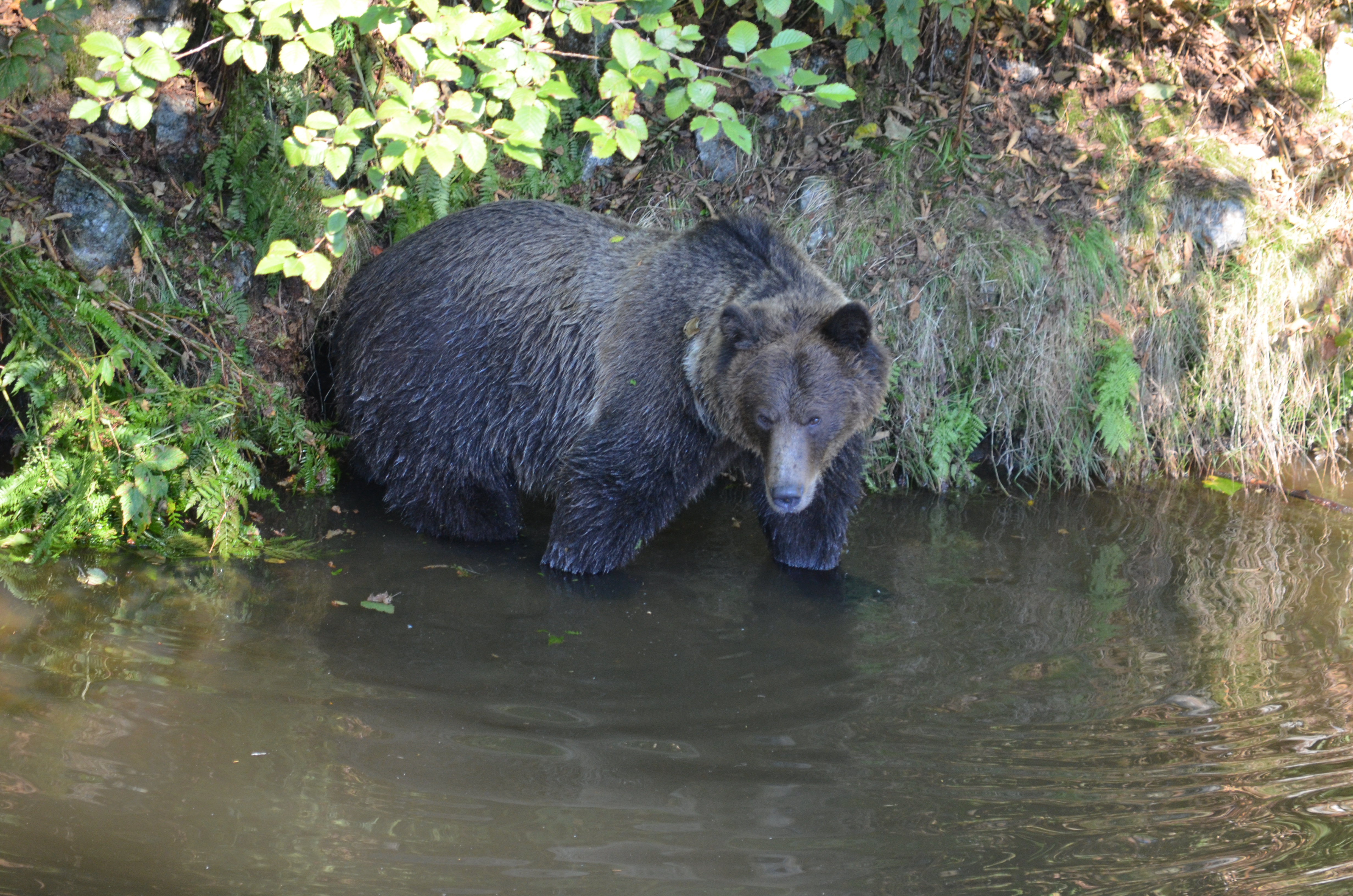
Our guests, from Grizzly Bear Lodge, spend two hours on the viewing stands enjoying their time watching and photographing the grizzly bears on Knight Inlet’s Glendale River.  However the bears do spend sometime watching the guests but by in large we are ignored as their prime goal on the river is enough food (calories) to fatten and survive the winter hibernation. This grizzly bear was more interested in the other bears in the area and whether it was safe to proceed into the fishing area we were not part of that decision.  Our presence actually makes it safer for mothers and cubs as well as sub-adult grizzly bears as the larger males are a little more cautious near humans.

Spyhoping orca / killer whale

spy hopping orca
Click to enlarge then click again

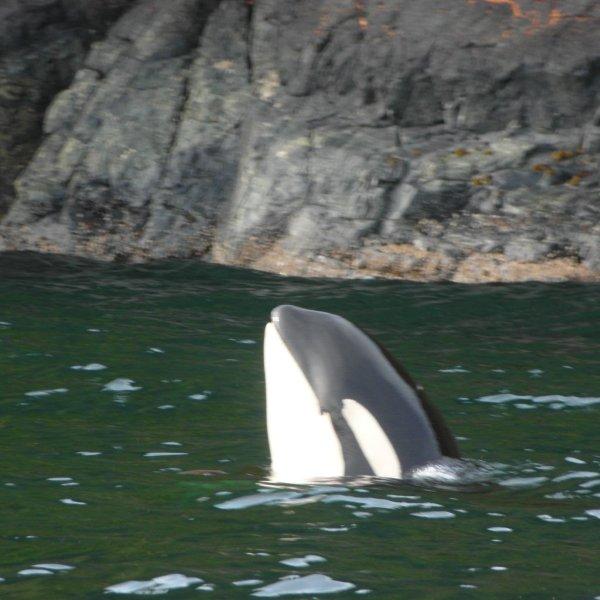
It is said that an orca’s eyesight is equally good in or out of the water. In fact it is thought they use eyesight when ‘spyhopping’ to spot boats that may present a danger. Orca do not seem to fear boats but once a motor is turned off and no sound is coming from the boat it becomes harder for them to locate. “Orcas possess sophisticated underwater sonar that enables them to perceive their surroundings ten times more effectively than our most advanced equipment.” (http://www.orcafree.org) However a boat’s shallow draft may make it harder to locate and thus the need for an occasional spyhop.  Great photo from James Wendy of Australia.

Grizzly bear family visit

grizzly family
Click to enlarge then click again

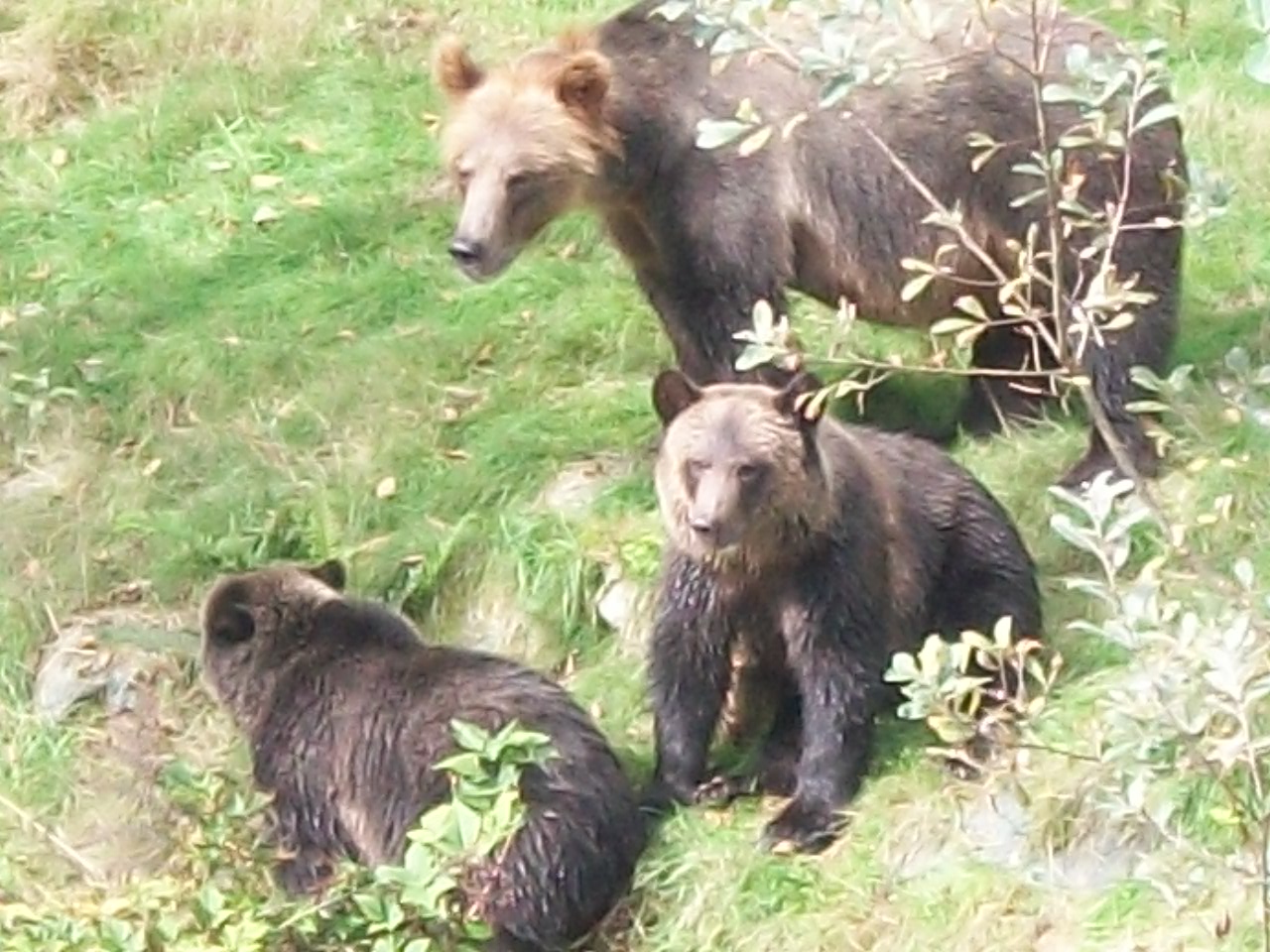
The two viewing stands used by Grizzly Bear Lodge on our wildlife tours in Knight Inlet seem to attract bears.  They show no fear of the red and orange suited guests or the click of cameras as they pass beneath the stands. The main attraction is salmon.  The grizzly bears have a limited time to add enough fat to survive hibernation.  Once the salmon arrive in mid August and we are permitted to use the stands after August 24th we view bears eating salmon.  If cubs do not add enough fat they will not survive hibernation and if expectant mothers body fat is not high enough the fertilized eggs will be absorbed and fewer cubs will be born for the next year. Pausing to see the roses does not seem to be an option for grizzly bears this time of the year.

Grizzly bears grazing

Grizzly Bears Grazing

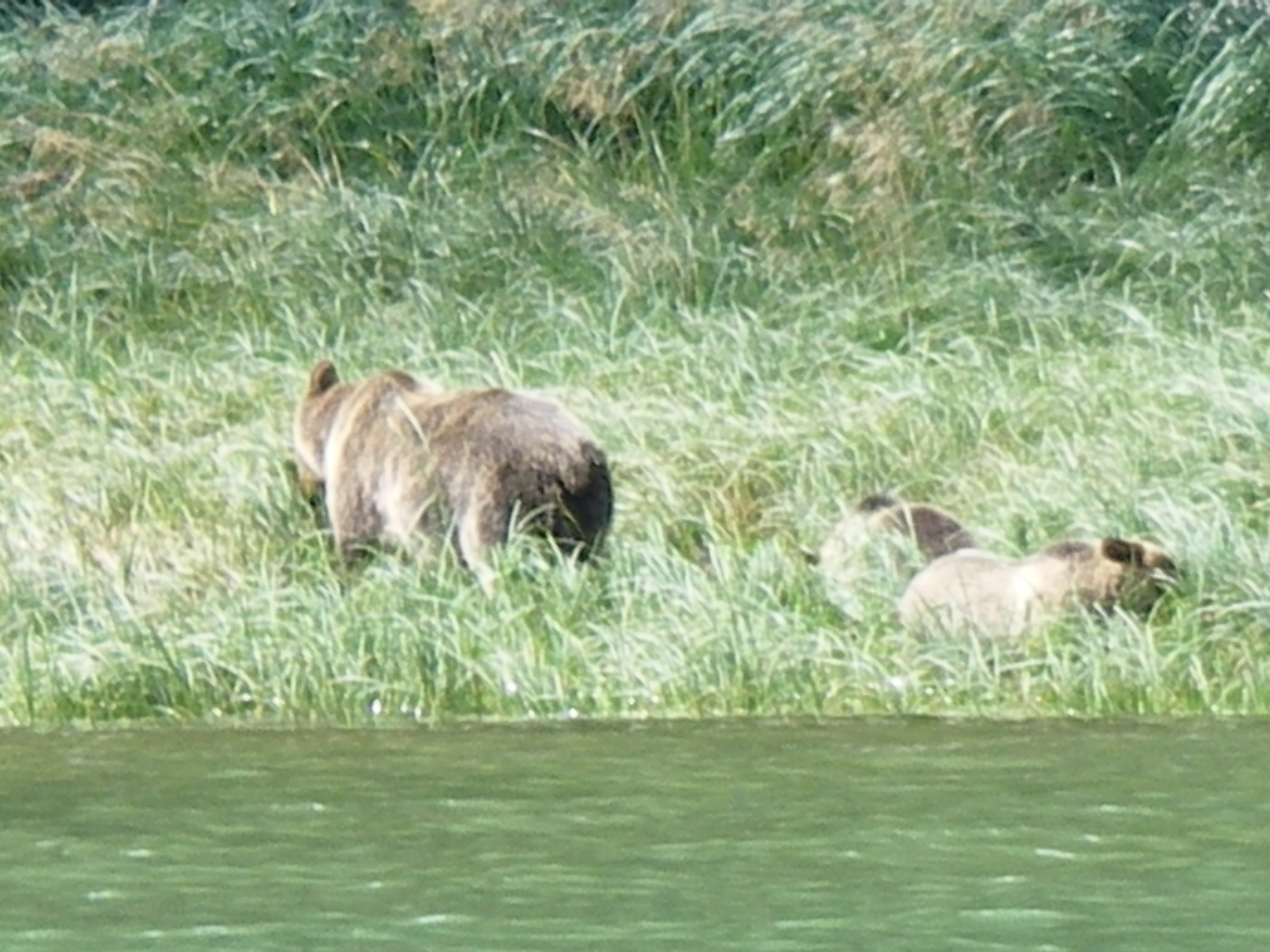
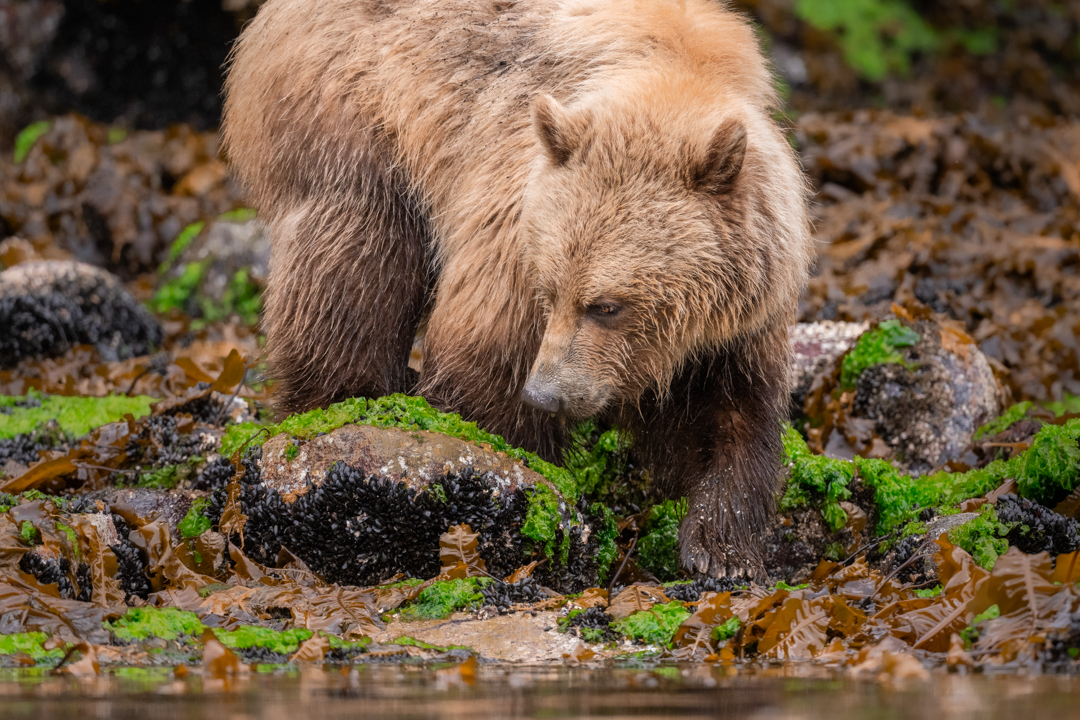
As the tide comes in and access to the protein from turning over rocks is gone this grizzly bear and cubs turn to sedge grass. The grass along the shore of the river estuary is more than a meter (3 feet) high so these cubs are in their second year; first year cubs would be lost in the grass. The sedge grass is 25% protein much richer that other grasses and the best plant proteins available as berries are not yet ripe.  Most of a grizzly’s springtime is spent in search of food as fall and the salmon approach this changes.

Grizzly Bear Triplets

triplet grizzlies
Click to enlarge then click again

Early August and the family is busy on the beach. The Lodge’s grizzly bear tours travel up Knight Inlet to the area of the Glendale River estuary. The grizzly bears are in the area waiting for the salmon, which return to the river in late August to spawn. From mid May on the bears start to appear along the shores of Knight Inlet working their way to the mouth of the river until September there may be close to fifty bears feeding on the salmon in the Glendale River valley. Well the bears wait they must eat and therefore spend time on the beach turning over rocks at low tide and grazing on the protein rich sedge grass along the shore. This mother grizzly has her two-year-old cubs well trained to feed themselves.  Self-sufficiency is necessary to survive, as it will likely be there last year under mother’s protection and care.

Grizzly bears in the tub

young grizzlies fighting

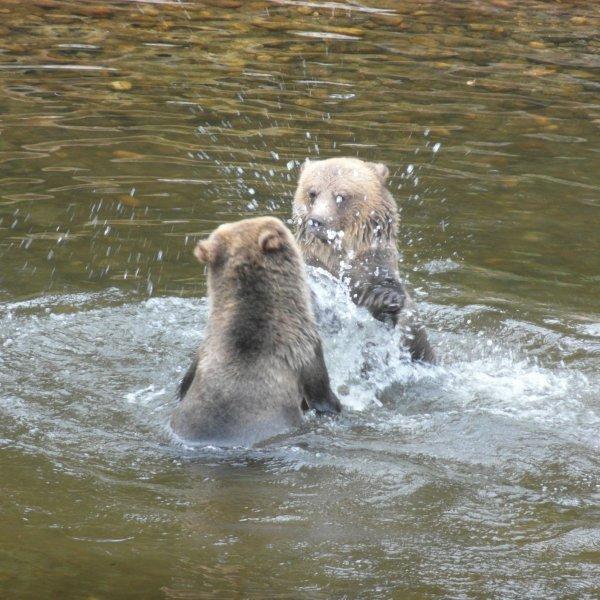
This photo taken by James and Wendy from Australia reminds me of my grandkids when they visit and have a bath before getting into their pajamas for the drive home. There is often as much water to be cleaned off the floor as there is in the tub. Grizzly bear siblings will often stay together for two or three years after they leave their mother at the age of two, staying together until breeding begins around the age of five. Either playing of fighting they are sharpening the skills need to survive once they separate and travel solo.

Male humpie

Salmon for lunch

Male pink salmon develop a large hump on their back during spawning, hence the nickname humpback (humpie) salmon. They are the smallest of the fall spawning Pacific salmon. Pinks have a very regular life history, living for two years before returning to spawn the next generation. Pink fry do not rear in freshwater. Immediately after emerging they move downstream to the estuary and rear there for several months before heading out to the open ocean. Because of this, pink fry have no spots, which provide camouflage in streams, but are bright chrome for open water.

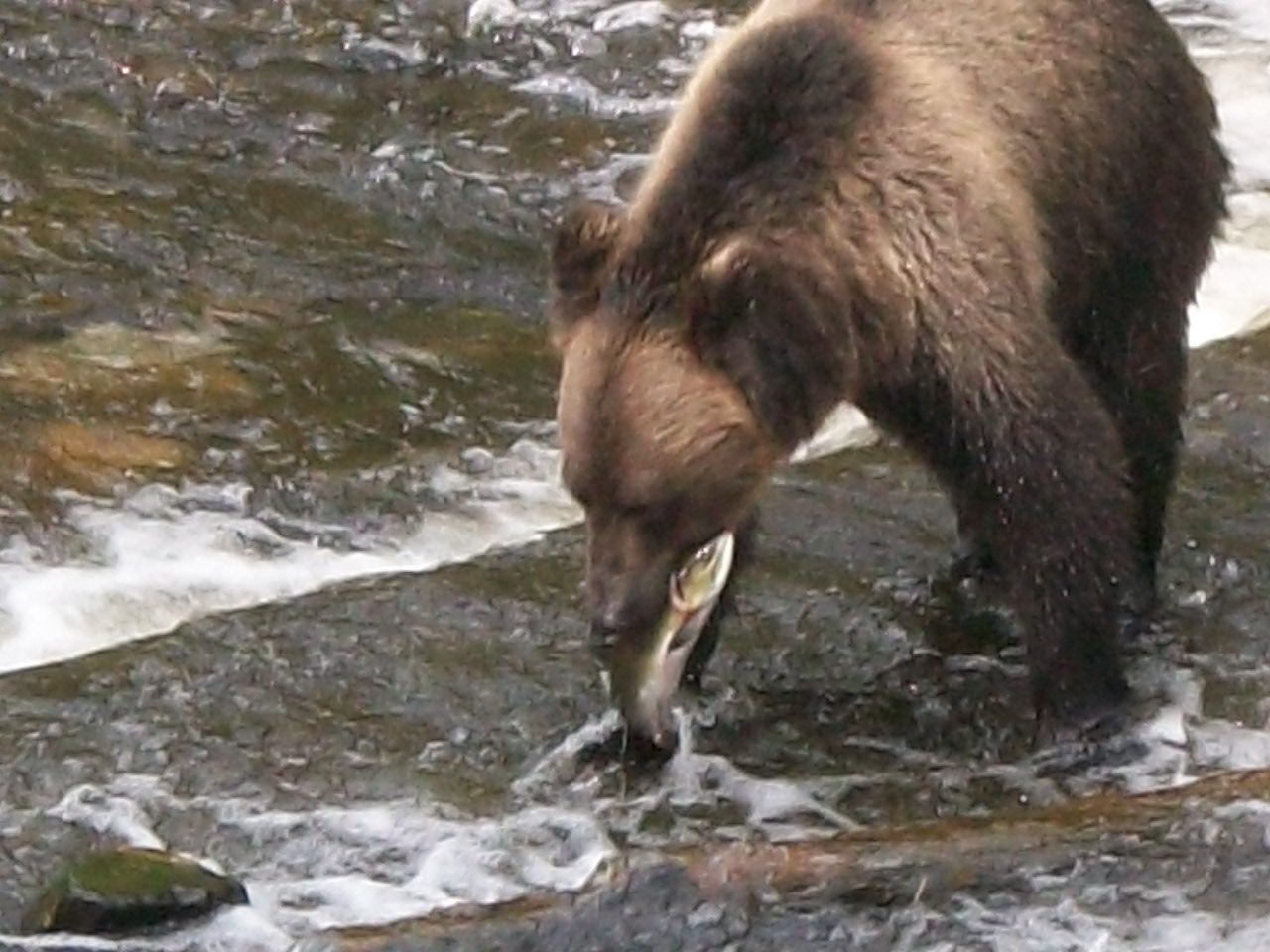
The only interest the grizzly has in the life cycle of the pink salmon is their sex. At certain times in their feed grizzly will drop a male humpie to catch a female which contain the high fat content roe (eggs).  During this peak of the run when grizzlies have access to an abundance of salmon at that time they will eat only the parts highest in calories – the eggs, skin and brains.

My morning perspective

spirder view of lodge
Click to enlarge then click again

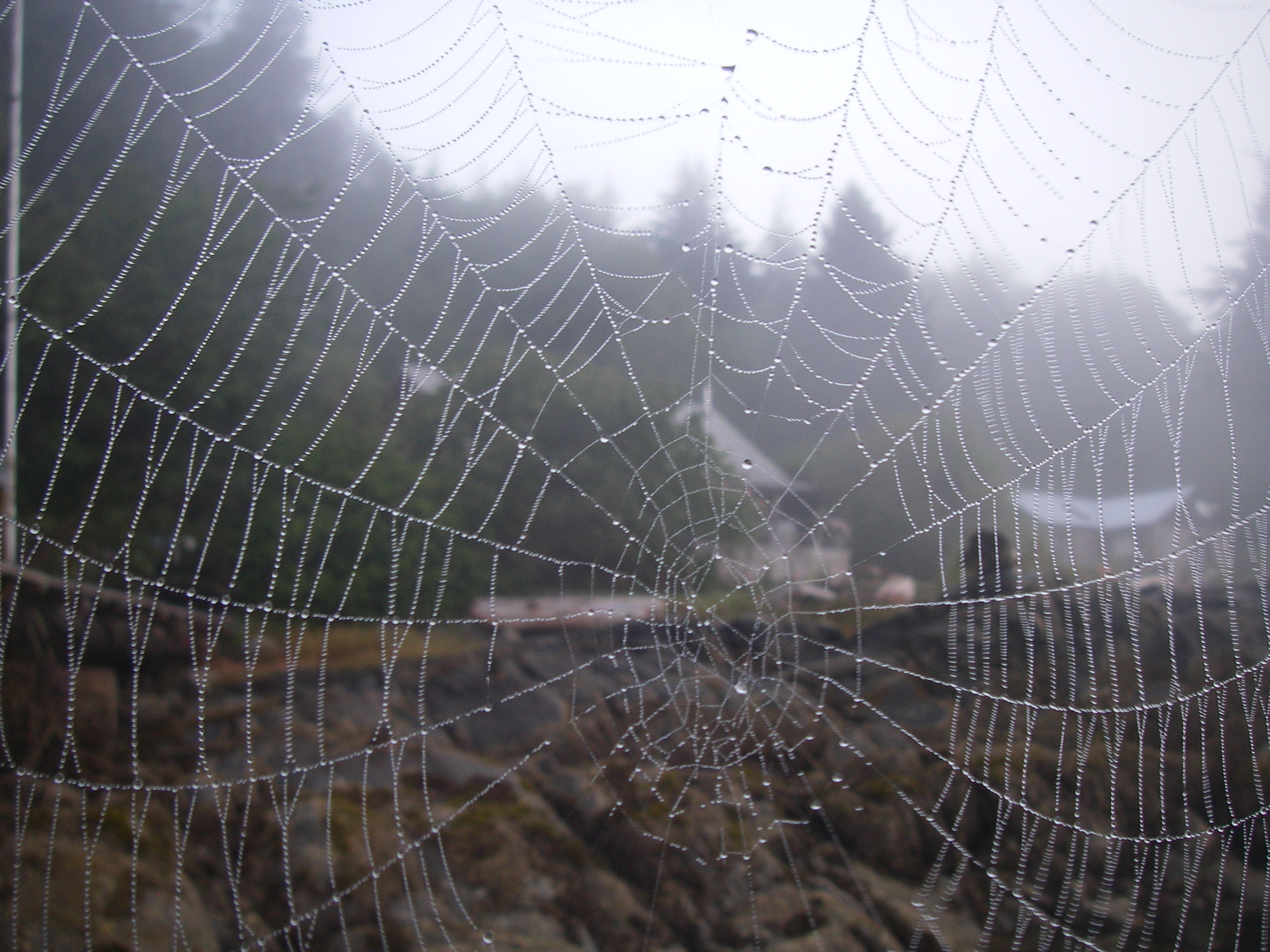
Some mornings I may have too much time on my hands.  We rise at 6:30 start coffee, finish setting the breakfast table and load our boats with the picnic lunches and check for fuel. The guests are called at 7:00 and we depart before 8:00 for the day’s activities.  Sometime in there I noticed the spider web on the scales used to weight the salmon, in the background the lodge. I think artist license rather than boredom.