Tag Archives: Knight Inlet BC
Bald eagle feeding
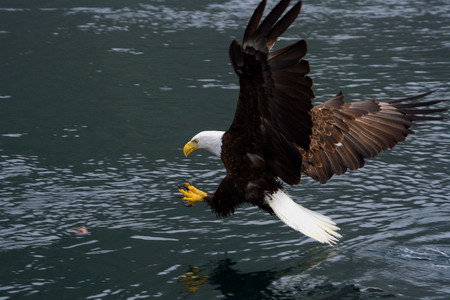
“Once an eagle spots a fish swimming or floating near the water surface, it approaches its prey in a shallow glide and then snatches the fish out of the water with a quick swipe of its talons. Eagles can open and close their talons at will; although, a hungry eagle can be dragged into the water when refusing to release a heavy fish. Unfortunately, the eagle might drown during the encounter with the fish; eagles are strong swimmers, but if the water is very cold, it may be overcome by hypothermia. If an eagle falls into the water during an aerial fight over food with another eagle or accidentally falls into the water, they are able to take flight from the water surface. Because of the energy expended during hunting, an eagle has to spend a lot of time resting quietly. It’s estimated that only one out of eighteen attempts at attacking its prey is successful. Note: a bald eagle’s lifting power is about 4 pounds.” American Bald Eagle Information at baldeagleinfo.comThis photo was provided by Glen one of the lodge’s guides and was taken near the lodge on Minstrel Island BC.
Viewing grizzly bears from the stands
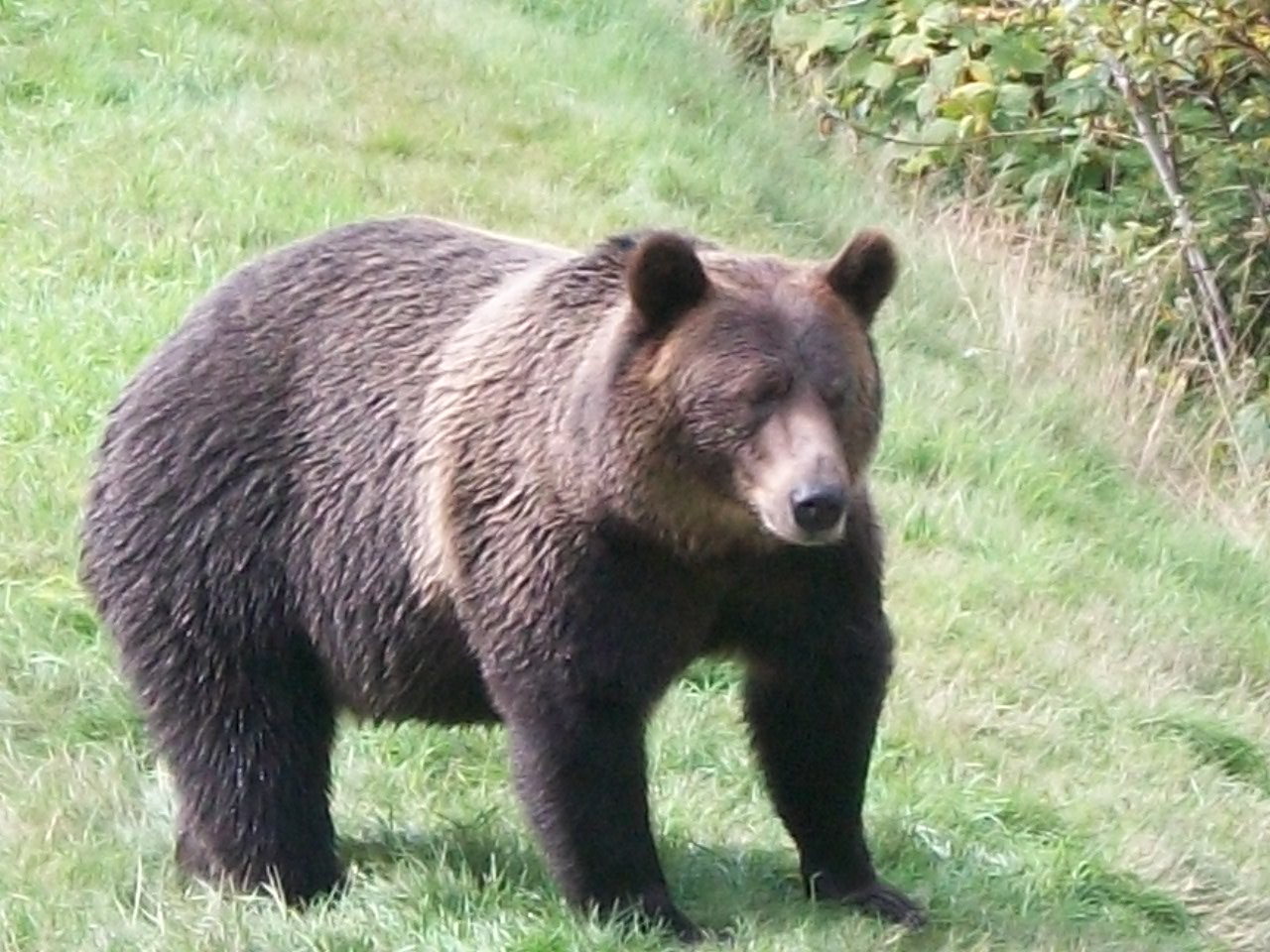
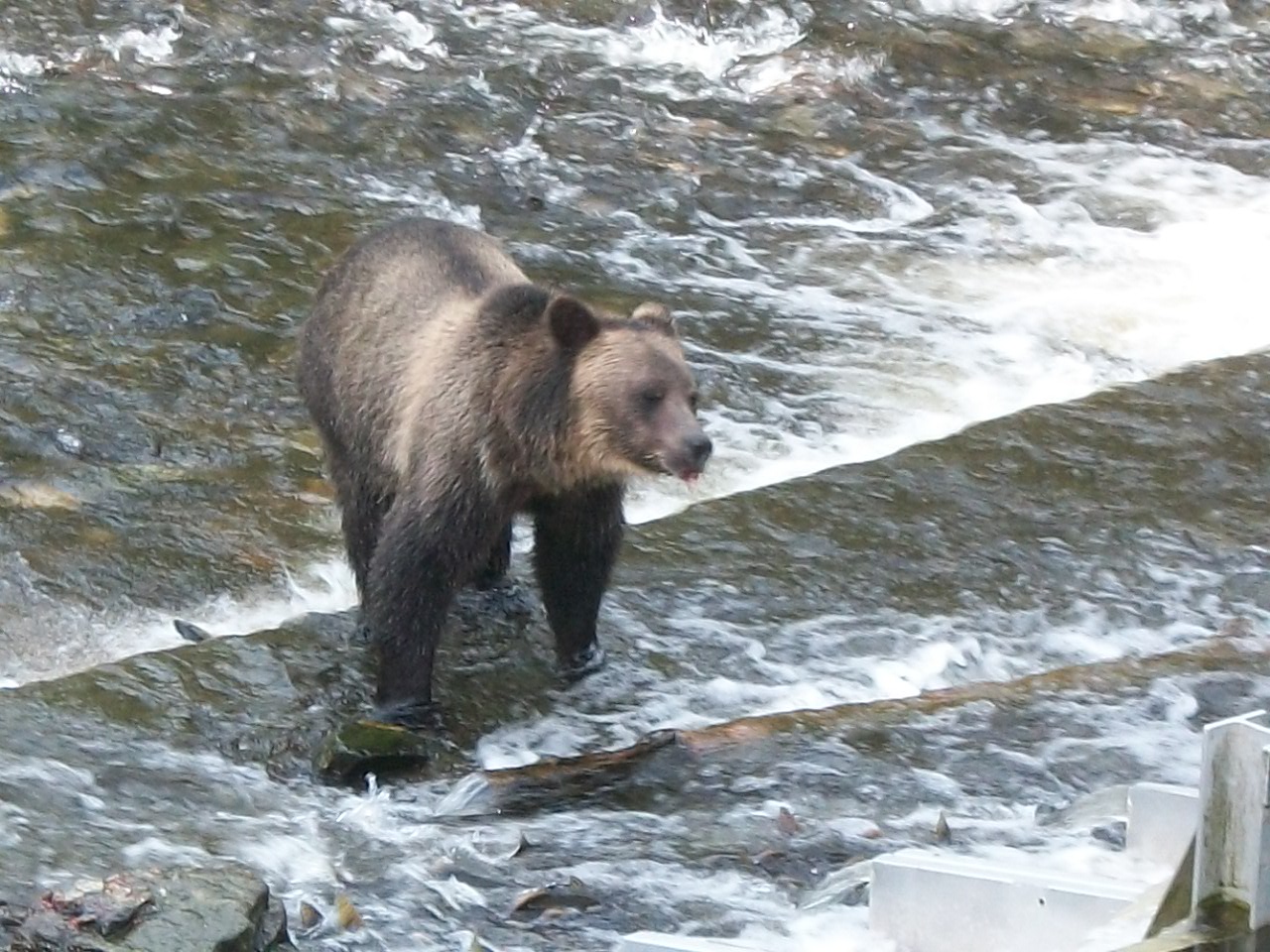
The grizzly bear tour from the lodge travels up Knight Inlet to the viewing stands on the Glendale River. It is estimated that there are close to fifty bears in the Glendale River valley and they come to this area to feed on the pink salmon that arrive in late August and travel up the rive to the man made spawning channel. The viewing stands overlook this spawning area and the grizzly bears come to fish, eat and fatten up for their winter hibernation. If one was to attract human attributes to the grizzly one might speculate that this bear was thinking “If I close my eyes maybe these humans will be gone when I open them.” or “If I can’t see them they can’t see me.” All in all the bears are very tolerant of our presence and we are ignored unless someone forgets to turn off their camera flash, makes a load noise or sudden movements. Just pretend you child or grandchild has just gone to sleep and you do not want to wake them, talk quietly and move slowly.
Trapper Rick’s river scenery
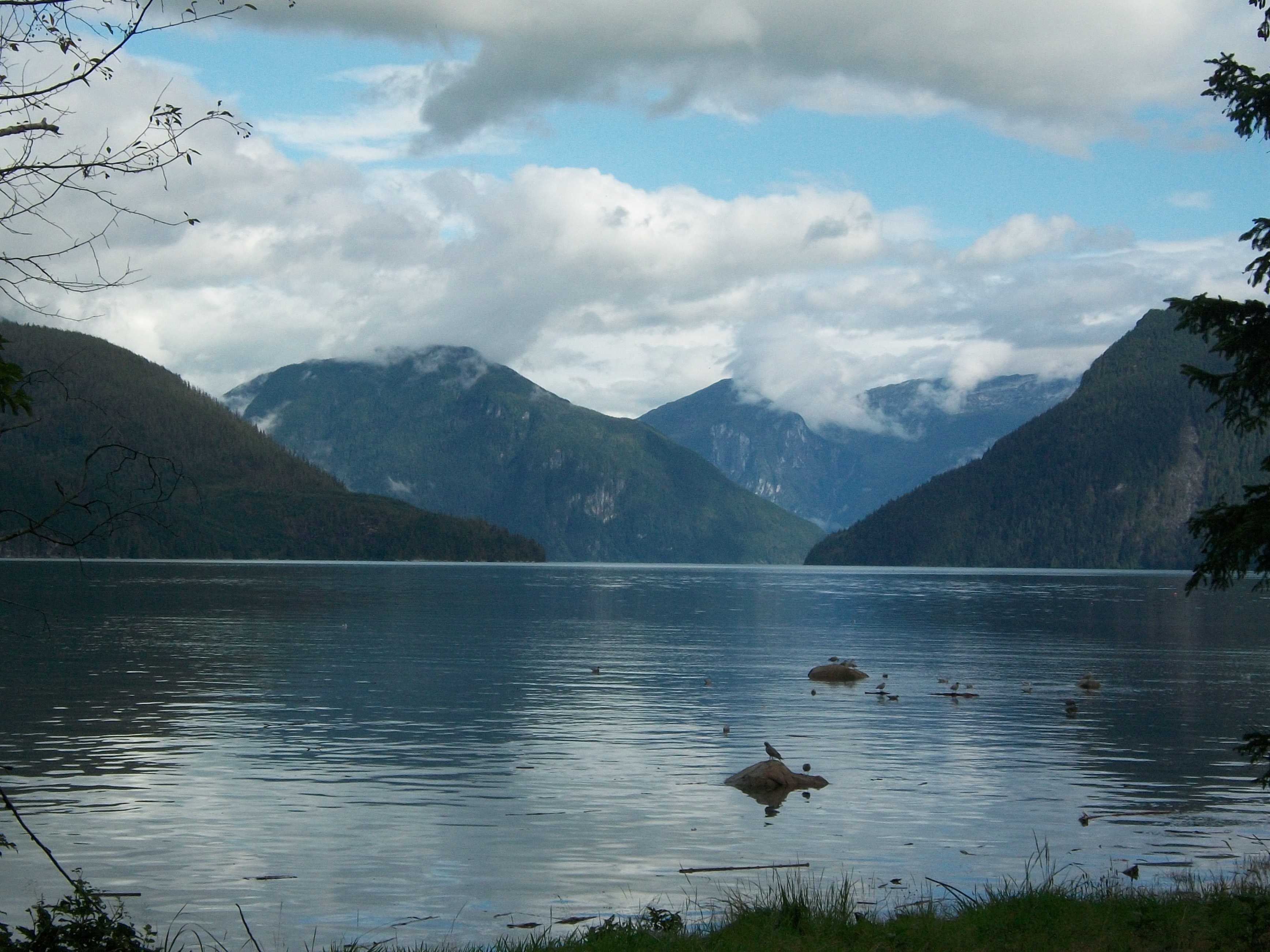

If you have chosen the extra day at Grizzly Bear Lodge it is normally spent with Trapper Rick on a wild river that few people get to visit. It is a classified fishing river and therefore is not open to public fishing without a guide. As the first photo shows just going to the river requires passing through the foothills of the Coast Mountains. The second photo shows the upper river in full flood after a heavy fall rain, it is possible for the river to rise six to eight feet over night and go down just as fast. The sudden rise and fall of the river is due to the fact that it is located in a steep sided valley, which again provided for interesting photos. Time spent with Rick is worth the trip as he explains his stewardship of the valley and his years trapping in the area. Also a chance to fish for pink and coho salmon and hike to areas to wait for the grizzly bears to show the best fishing techniques.
Whales watching by Braille
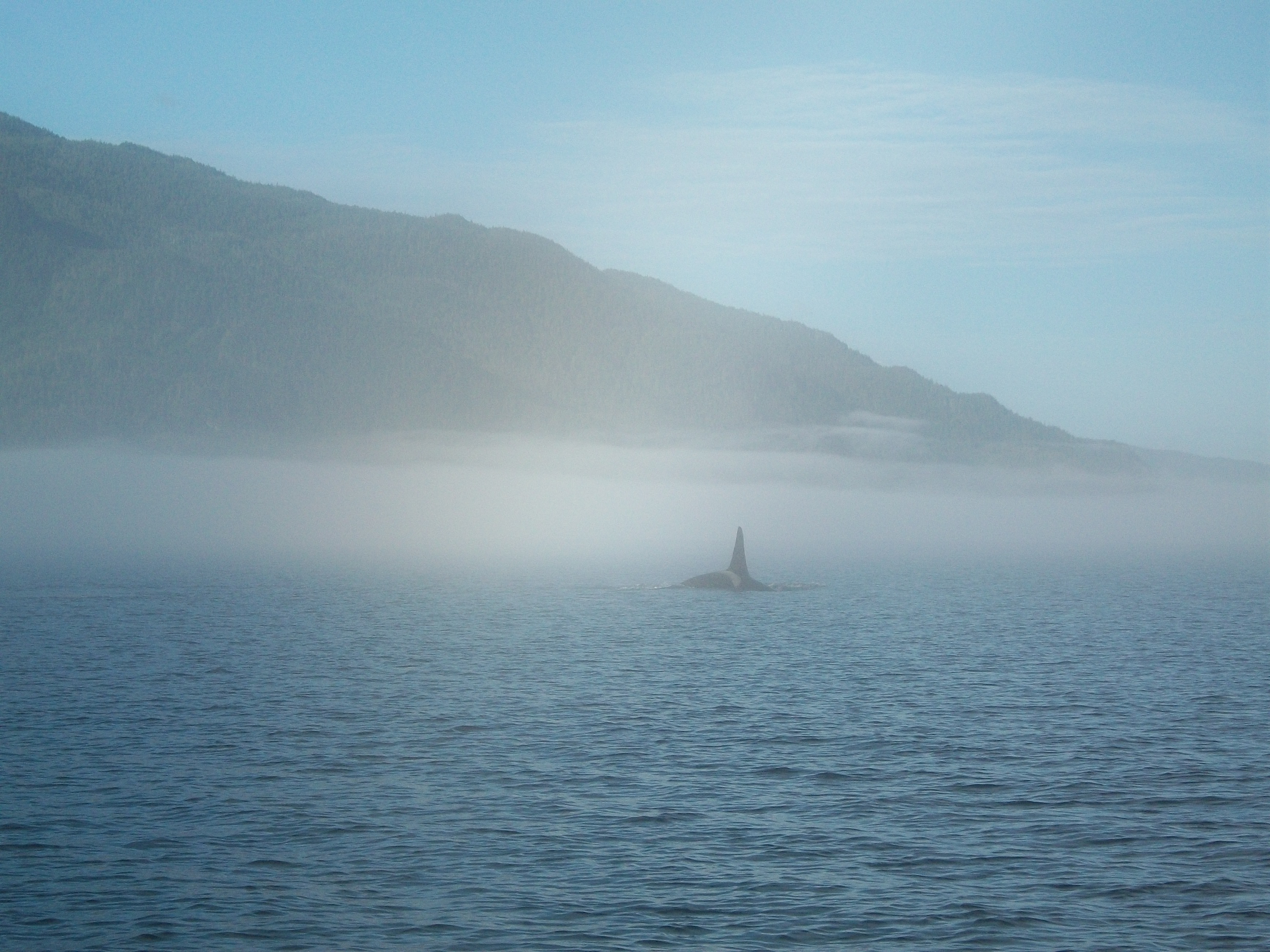
Some of the mornings, until noon at the latest, provide your guide a reason to use their GPS. It is also fun to try and locate orca or humpback whales by sound. The whales by Braille routine requires allot of stopping and listening until a “tell tail” blow is heard from either an orca or a humpback whale it is then necessary to determine the direction of the sound and to move ion that direction. This is more of a challenge than one would think as the fog muffles the sound and makes determining direction interesting. The whales make this more difficult as they frequently change direction while the orca are at least a little more consistent in their movements. This low fog makes for a mystic picture and also shows why the morning that has fog clear up pretty fast.
Grizzly bear claw surgery
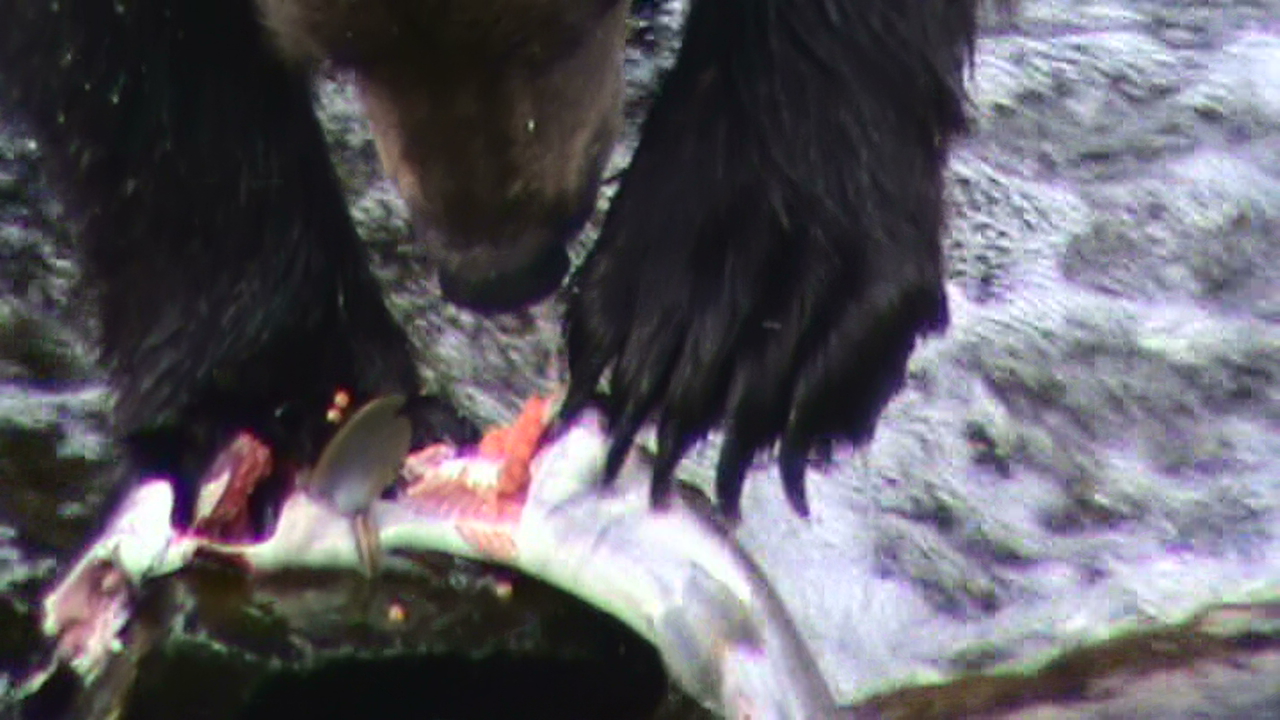
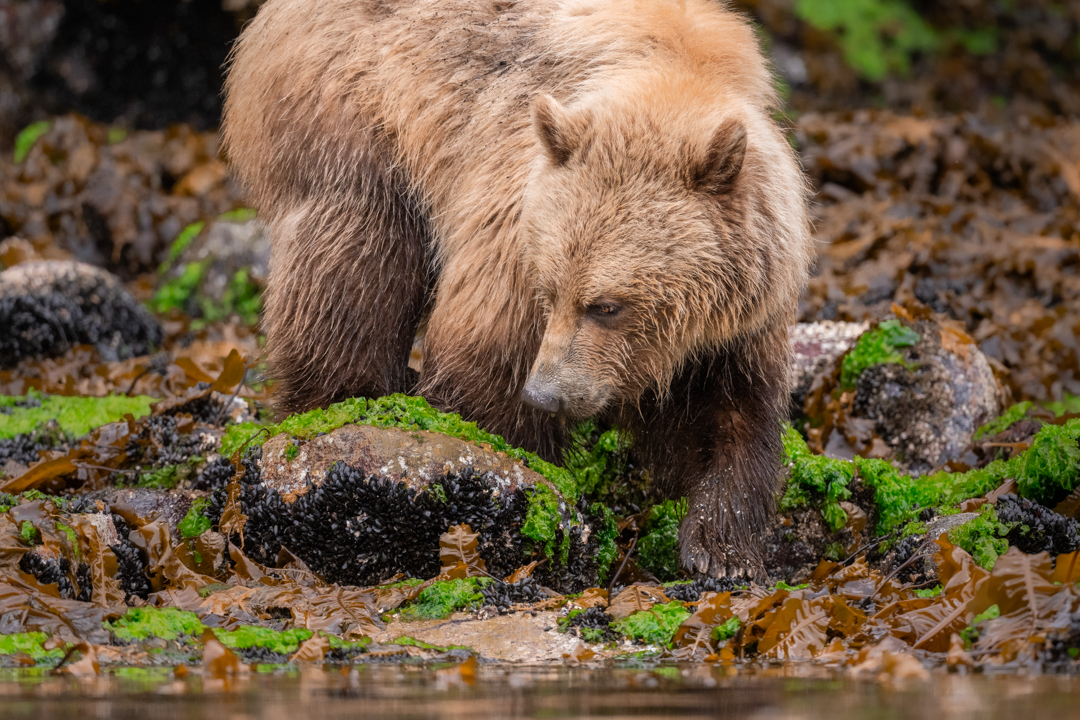
A grizzly bear’s normal claw length is 3 to 4 inches long; it is curved and the sharp claws helps it to dig for its food. In early spring the bears use these claws to dig up the root bulb of the skunk cabbage, one of their favourite foods. As the season progresses the claws allow grizzlies to get a good hold on the beach rock they turn over in search of crab, clams, amphipods and other tiny invertebrates. Claws are also used to scrape mussels and barnacles off the beach logs and rocks. And as this photo, by UK’s Janis Worsley, shows the claws permit the bears to hold the salmon in position while also opening the belly to expose the fat rich eggs. Views such as this are common in the fall as viewing takes place from the stands on Knight Inlet’s Glendale River. The stands overlook the spawning channel and tens of thousands of pink salmon that come to spawn. It is a grizzly bear buffet and the main and only course is salmon.
Mystic morning in Knight Inlet
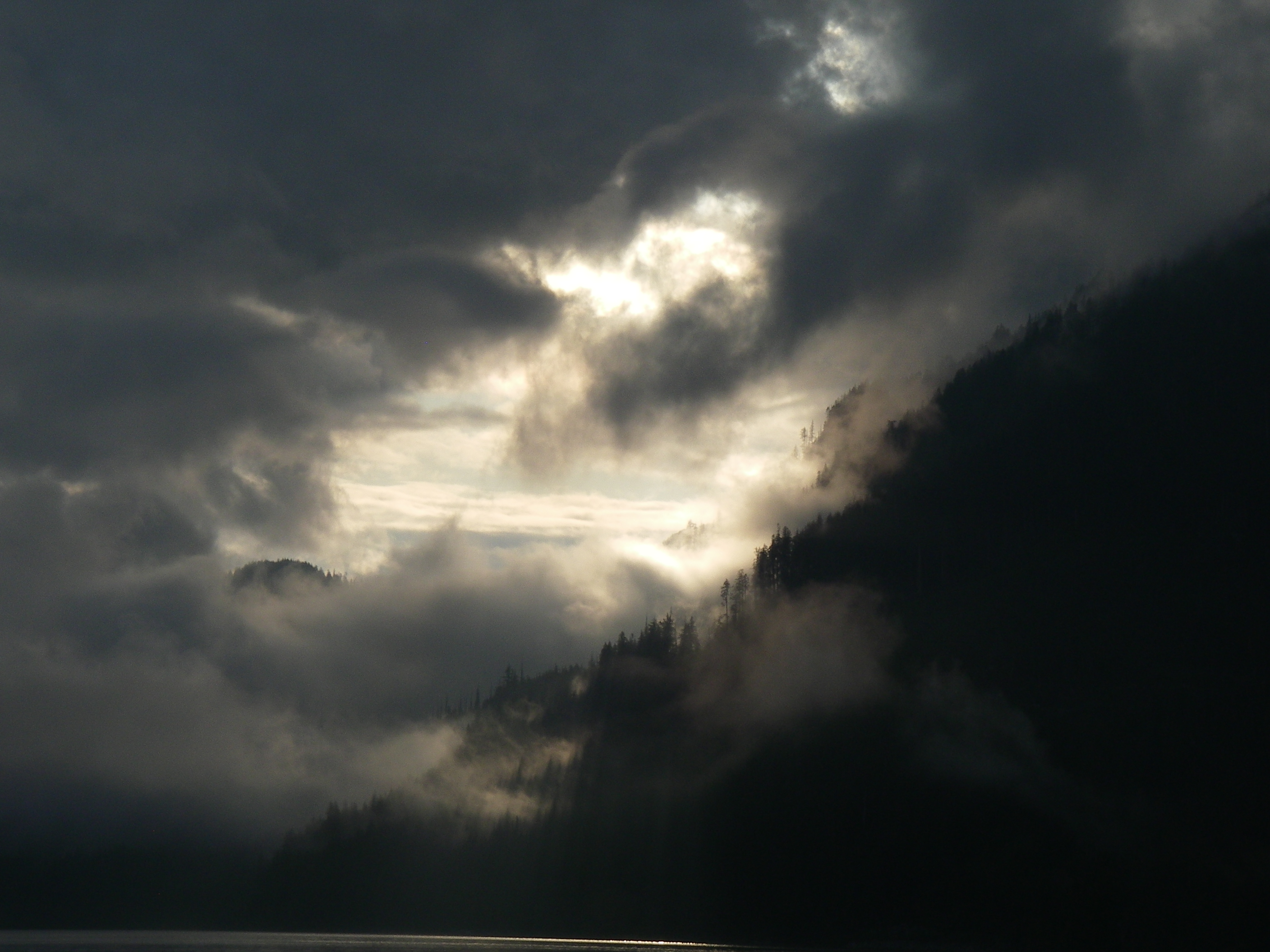
I love running up Knight Inlet in the morning as every morning offers something special and this was one I really liked. The run up the inlet to where we watch the grizzly bears is just over an hour and this photo was taken at the start on the run and was special for two reasons. First that I like clouds and cloud formations especially with the dark cover and the sun starting to show through. Second that sun was shinning on the valley that contained the Glendale River which was our destination so I knew we had a great day ahead.
Surf scoters departing
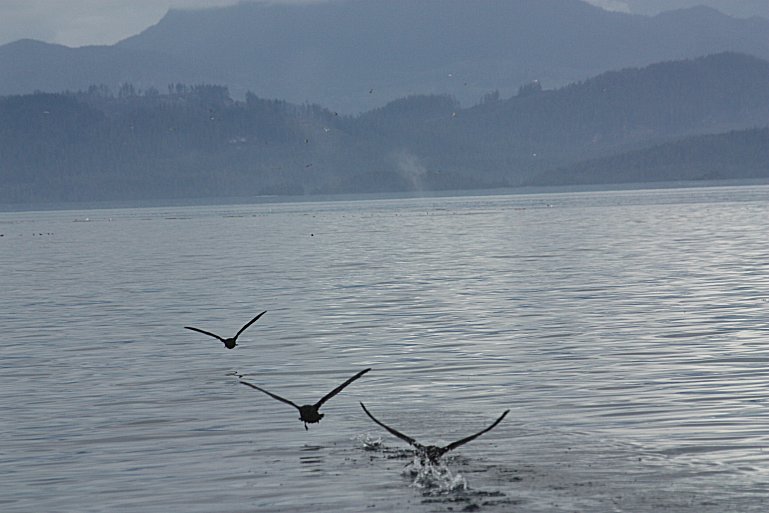
Large flocks of surf scoters while wildlife viewing are common in Knight Inlet as well as the area of Johnstone Strait where we spend our day’s whale watching. The abundance of food for these ducks in the form of herring is shown in the difficulty that they have leaving the water. They appear to be running on the water while trying to build up enough speed to become air born but it is common to see the ducks abort a take off and go for the dive to get out of the way of approaching boats. Maybe this is why airlines are so careful when calculating their payload, as they would find an abort with a dive rather uncomfortable.
Why you want a guided tour
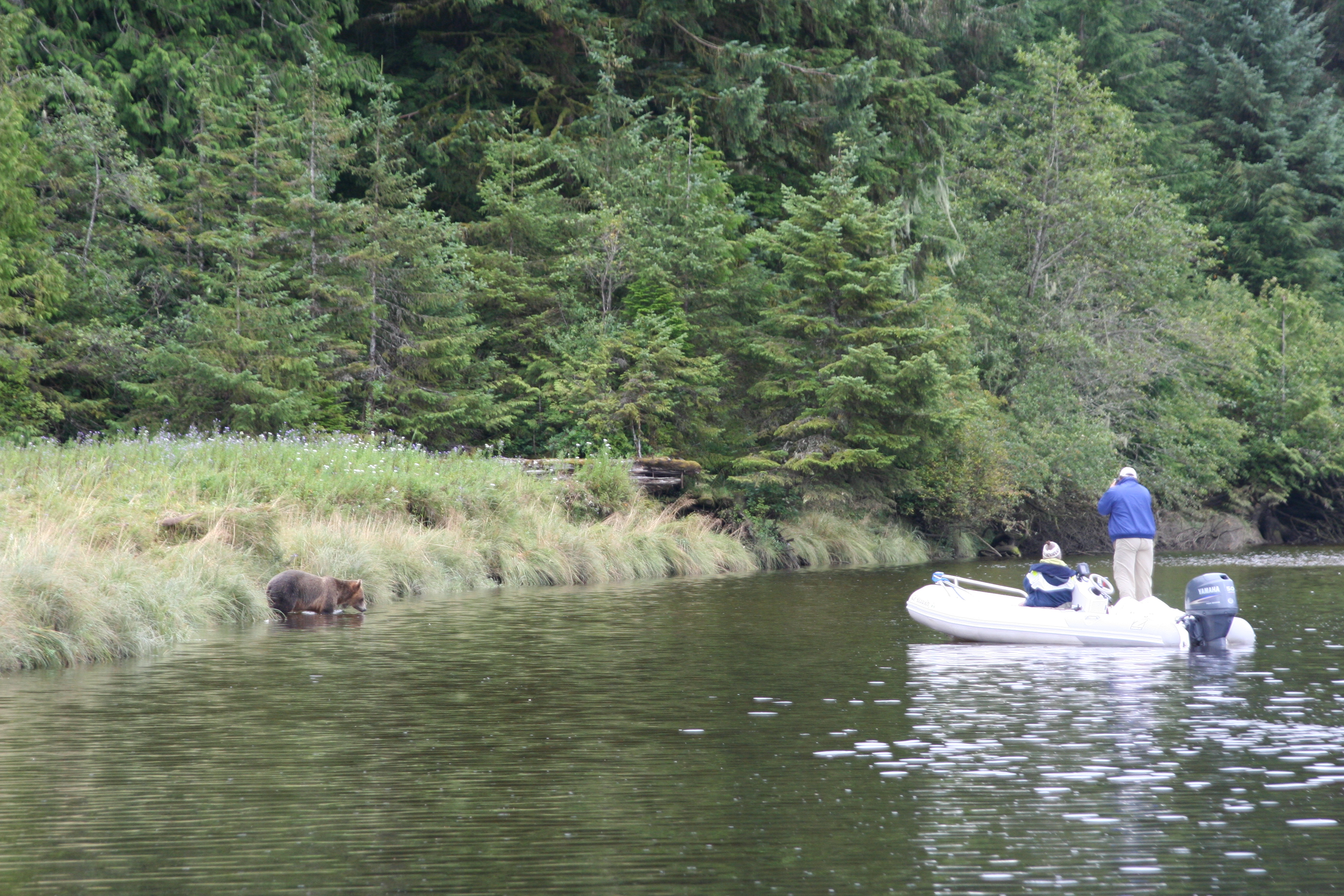
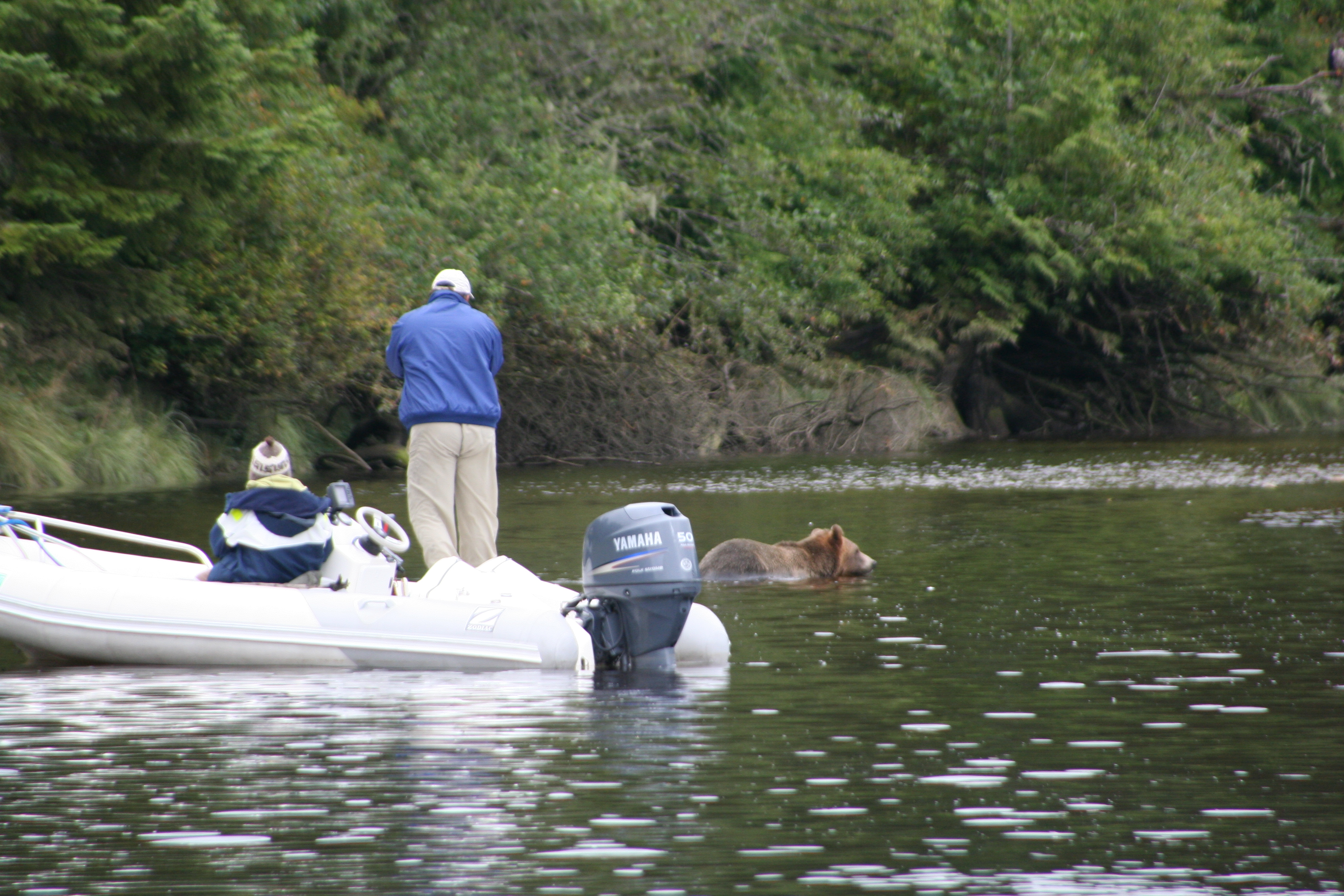
This was a late August trip to the Glendale River on Knight Inlet. The tide was rising so we were up the river in the lodge’s eighteen-foot flat-bottomed skiff. Using the skiff permits us to travel up the shallow river and gain closer access to the grizzly bears feeding on the sedge grass in the delta or estuary. On this day a “tourist boat” was anchored is the river mouth and they were up rive in their zodiack and much too close to the grizzly wanting to cross the river. We tried to get the zodiack to move back without much luck. Fortunately the bears in the area accept the small boats as a fact of life and tend to ignore them but I prefer to give them a little more room. The etiquette of grizzly bear watching is not to get so close that you prevent them from going where they want and behaving in a natural manner.
Successful fishing
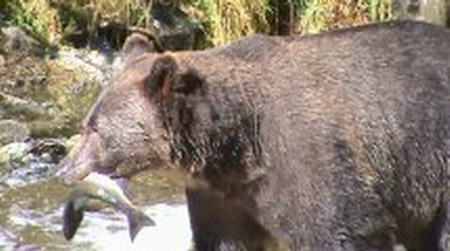
The reason we travel up Knight Inlet to the Glendale River and to the viewing stands is to obtain pictures such as this one provided by Mike and Christina from Florida. In the fall we are able to spend two hours a day, between 10 am and 12 noon, observing the grizzly bears as they catch and eat salmon to fatten up before winter hibernation. The pink salmon in particular is the primary food source for grizzly bears in late summer to early fall. The rock turning on the beach in early summer and the many berries that are available are important food sources but it is the salmon that add that necessary layer of fat.