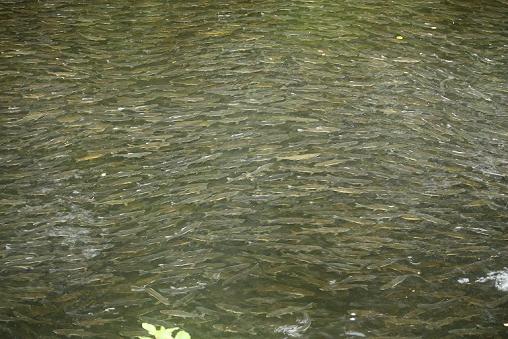
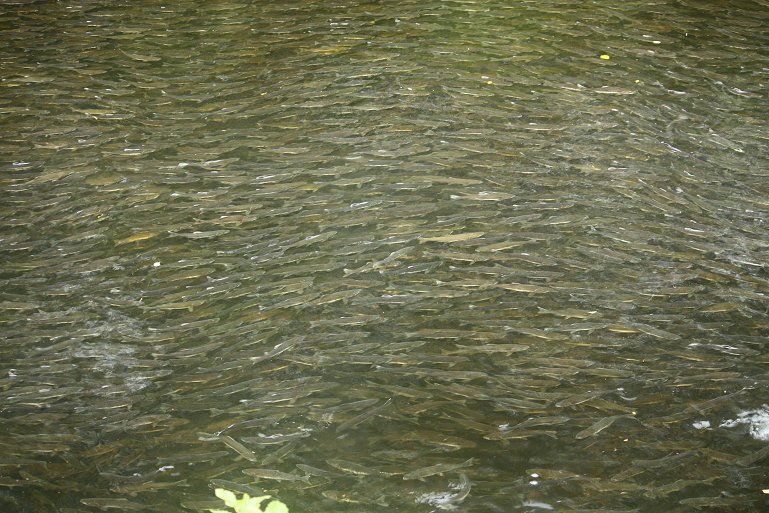
The entrance to the spawning channel is directly below the viewing stand used by the lodge after August 24th. The salmon wait in this area before they proceed over the weir which is the entrance to the man made channel that was built to increase the success of the pink salmon’s spawning in Knight Inlet’s Glendale River.
Yes, salmon by the thousands wait in the holding pool in the entrance to the spawning channel of BC’s Glendale River. Grizzly Bear Lodge’s bear tours have rights to a viewing stand overlooking this pool. The salmon are the attraction for the grizzlies that are trying to fatten for the winter denning. The salmon arrive in mid August and we are permitted to use the stands after August 24th. It is a short van ride from the river estuary and provides guests with many photo opportunities.
This is a photo that many guests try to obtain but are not always successful. The fall grizzly bear tours from the lodge travel 26 miles up Knight Inlet to the Glendale River and the man-made spawning channel. The viewing stands over look the entrance to the spawning area and there are several small falls prior to the weir and a large holding pool for the humpback salmon before they move into the channel. This is a salmon buffet and the grizzly bears love to come down to dine. You can imagine the number of salmon (in the thousands in a small area) required for Ingo to get a photo of one leaving the water.
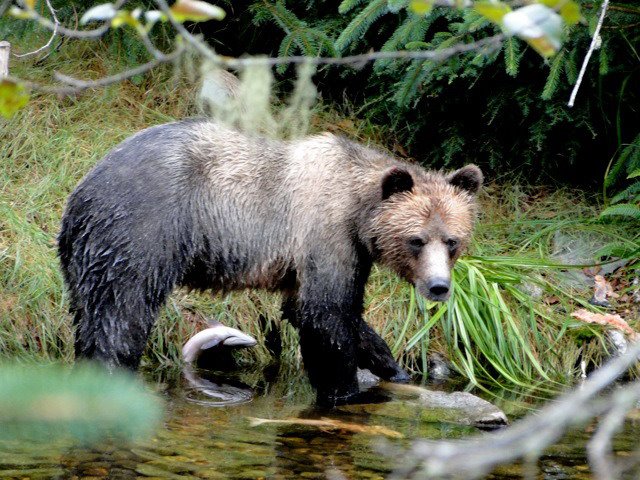
This past summer part of the early run of salmon into the spawning channel died because fresh cool water from the lake feeding the channel was not released soon enough. If the water in the spawning beds becomes too warm it loses oxygen and salmon suffocate. This photo shows a late August grizzly bear; late August because it does not have the fat belly it will have later in the season when one normally sees this number of dead uneaten salmon. The positive of the salmon kill is that many more bears came early to feed in the area of the spawning channel. Unfortunately the control of water to the spawning beds is not under the control of those most often in the area and it takes time for other to respond.
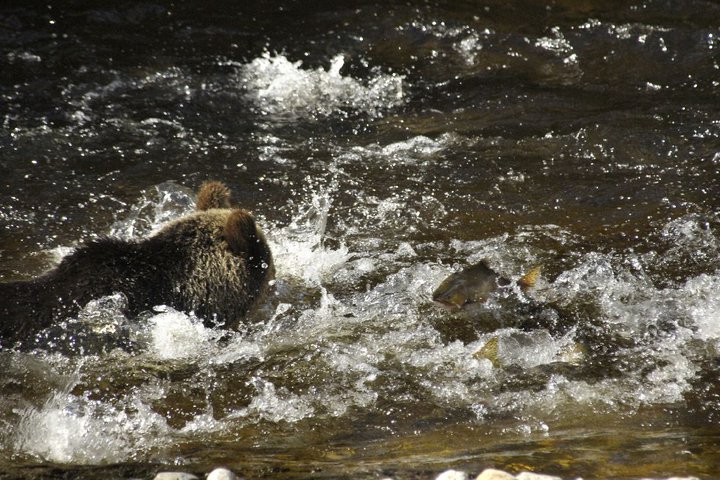
With all those salmon in the water one would think that it would be next to impossible NOT to catch one. The key to catching salmon is shallow water, as grizzly bears tend to grab the salmon with their mouth after they have pinned them to the bottom with their claws. In this photo the bear is in water over a meter (yard) deep so it becomes much more difficult to push a salmon from the surface to pin it on the bottom. The photo in the April 3rd posting is a better example of a successful grizzly bear fishing. The fall tours from the lodge are on the Glendale River, which provide a variety of locations and many opportunities to watch bears catching and eating the spawning salmon.
This is the classic pose for a grizzly bear. The photo was taken from the viewing stands on the Glendale River in Knight Inlet BC. The late summer grizzly viewing, after August 24th, requires a short van ride (fifteen minutes) from a floating dock in the river estuary to the man made spawning channel. The grizzlies of the Knight Inlet area, which is on the southern edge of the Great Bear Rainforest come to this river to feed on the fall, run of spawning salmon. The day tours from our lodge on Minstrel Island use these viewing stands and often view more than a dozen different grizzly bears in the immediate area of the stands as well as grizzlies on the drive to the stands. If one looks closely in the water in front of the bear there are many salmon on their way to the spawning channel and the main reason the bears pose for this photo.
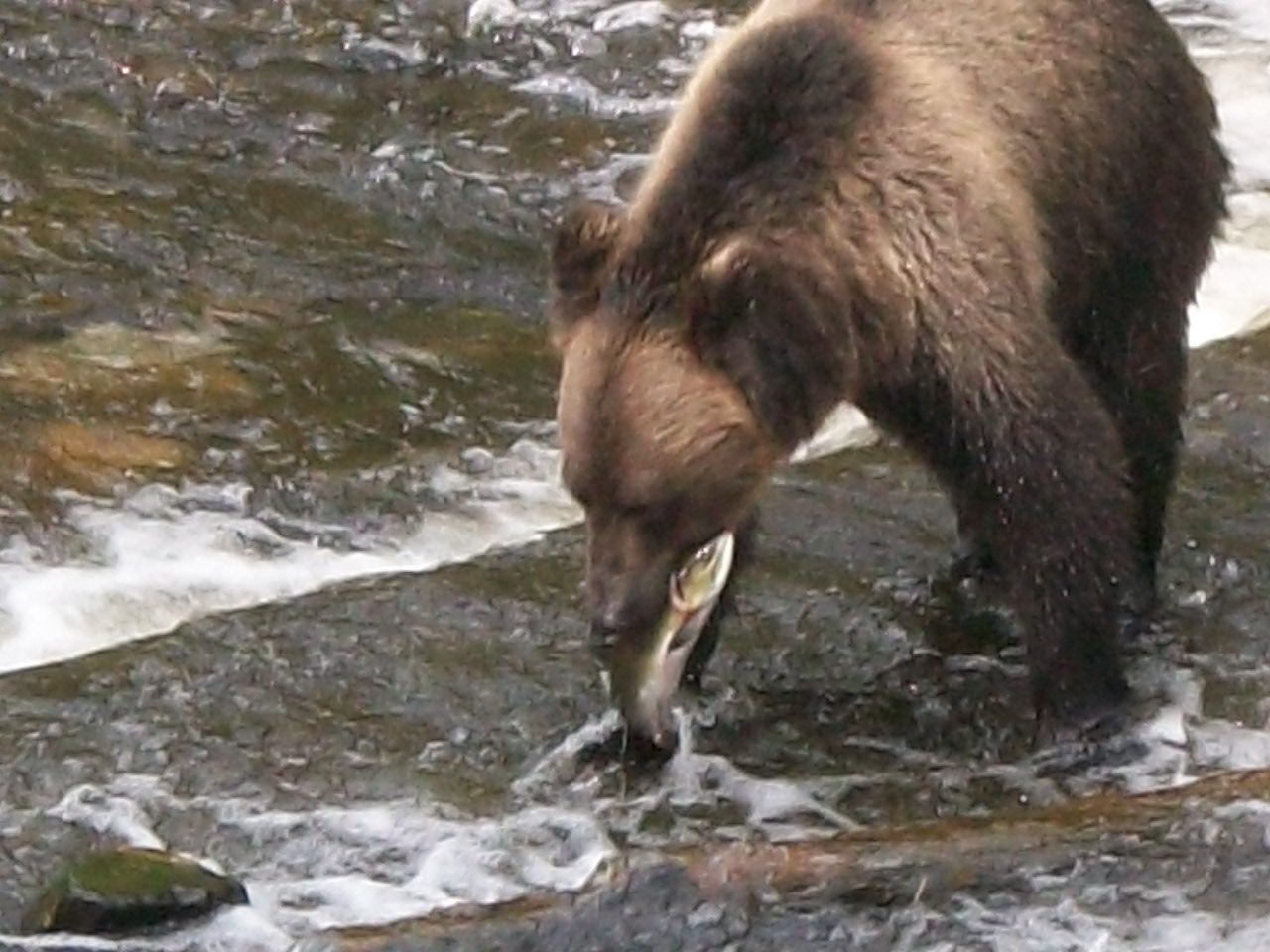
Same bear from yesterday’s post eating the salmon headfirst. This photo was taken on September 1 which is one week into Grizzly Bear Lodge’s use of the viewing platform on Knight Inlet’s Glendale River. The salmon arrive in the river mouth in mid-August and start up the river in late August giving the bear their first opportunity to catch salmon. This means that the grizzlies are hungry and will normally eat the whole fish and not be selective and eat only the protein rich roe and belly fat.
A great photo by Lynn Morris showing the numbers of salmon in Knight Inlet’s Glendale River. From late August to early October it is these salmon that bring the grizzly bears to our viewing area. This area is about an hour and fifteen minutes by boat from the lodge on Minstrel Island. At this time of the year the grizzly bear tours use a viewing platform which overlooks the entrance to a manmade spawning channel and for the bears this is like “fishing in a barrel”. The spring and early summer viewing occurs along the shore and in the estuary of the Glendale Cove which attracts the bears because of the abundance of high protein sedge grass, the tidal flats and rocky shore with their animal protein.
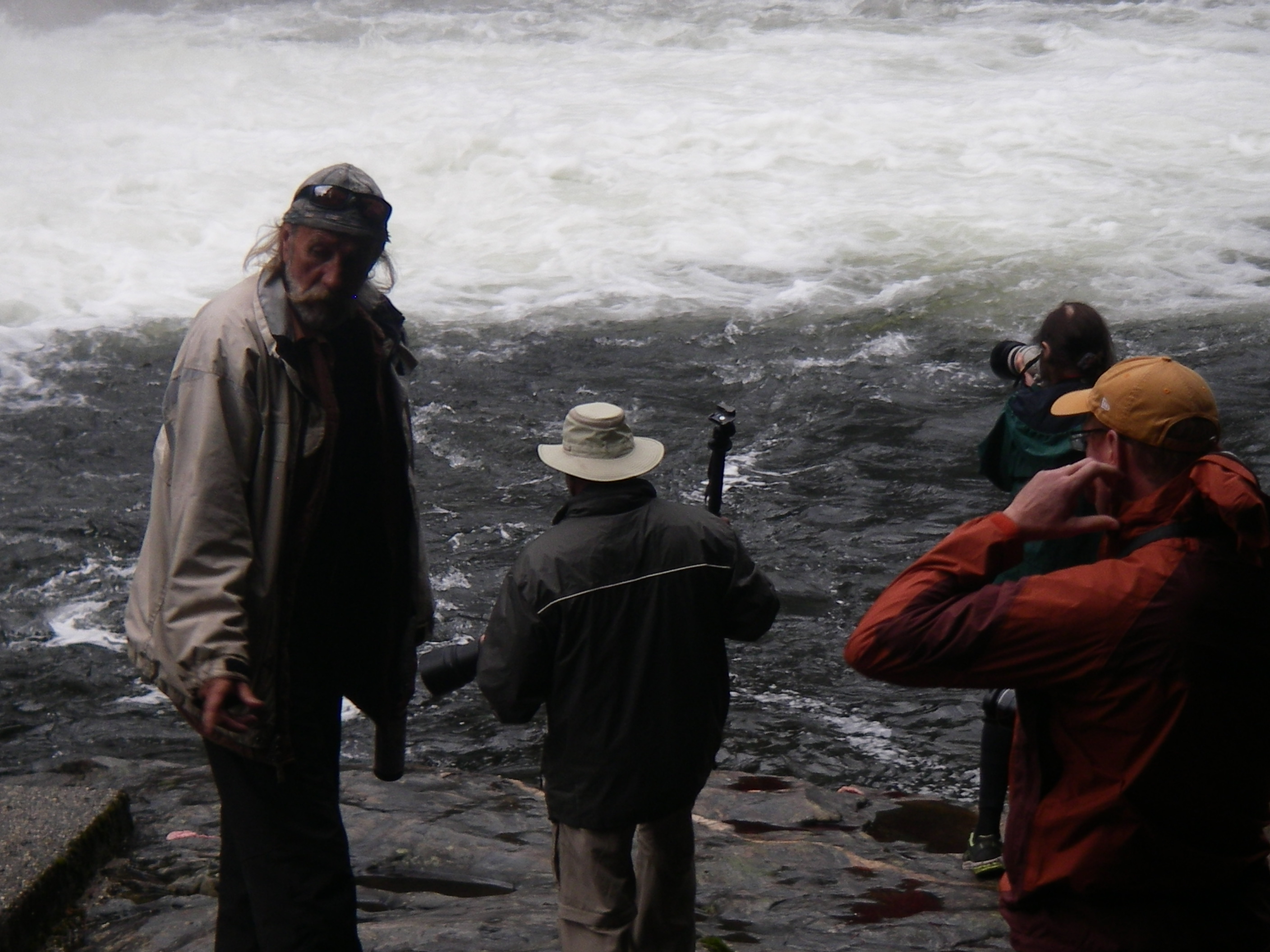
Trapper Rick is a fountain of knowledge about his unique river valley. He has worked for years to have the valley and bears protected and is very passionate about the area in which he lives. As shown in the first photo he is always willing to share his knowledge with the guest and has many stories about the bears he has known over the years. The guests photographing in the background are trying to get a photo like the second photo in the blog. A salmon jumping the falls. This will require you to click on the photo and then click again until it takes the full screen.
Male pink salmon develop a large hump on their back during spawning, hence the nickname humpback (humpie) salmon. They are the smallest of the fall spawning Pacific salmon. Pinks have a very regular life history, living for two years before returning to spawn the next generation. Pink fry do not rear in freshwater. Immediately after emerging they move downstream to the estuary and rear there for several months before heading out to the open ocean. Because of this, pink fry have no spots, which provide camouflage in streams, but are bright chrome for open water.
The only interest the grizzly has in the life cycle of the pink salmon is their sex. At certain times in their feed grizzly will drop a male humpie to catch a female which contain the high fat content roe (eggs). During this peak of the run when grizzlies have access to an abundance of salmon at that time they will eat only the parts highest in calories – the eggs, skin and brains.
Just like that another season has come to an end. We are grateful for all the wonderful staff and the guests this season. It was an excellent season and we are already looking forward to next May.
One of the highlights of the season was all of the new cubs out. It was awesome to see so many new cubs of the year and that is great news for our bear populations moving forward. We had great spring viewing and this continued through summer. On our river trips we started to see salmon arriving in August and enjoyed some great shoulder season viewing. The fish at the viewing platforms were a little late showing up this year, but viewing during late September at the platforms was great and the estuary viewing remained strong throughout the season.
Out in the whale watching world it was another year that saw large numbers of resident Orca who remained in the area right into October. The Humpback viewing was also great with large numbers feeding in Blackfish Sound. It is so amazing to have these magnificent animals back in our waters in such numbers.
Over the winter and spring we will be doing some repairs and maintenance. We rebuilt the front deck last spring, utilising cedar cut on site. We will continue with some siding, rooms improvements and hopefully a floating sauna ready for the start of our season.
2026 is already looking like a very busy season for us. We only have limited high season availability so please book early to ensure we have space for your group.