Tag Archives: Stellar Sea Lions
Tracking sealions
The USA Department of Fish and Wildlife (ODFW) has a program to brand Steller sea lions as a means to estimate vital population parameters in the future. The western stock is listed as endangered under the ESA (U.S. Endangered Species Act) and the eastern stock is listed as threatened. The Steller Sea Lion Recovery Team recommended in 2000 that researchers begin branding and marking Steller sea lion pups throughout their range. Most summer we viewing two of three branded sea lions and report them online.
Guess who came to lunch?
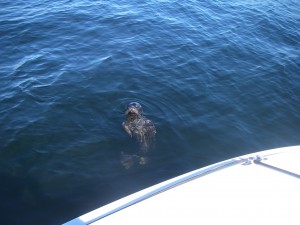

The whale watching day from the lodge requires a fifty-minute boat ride to the area around Johnstone Strait, which is part of the Inside Passage to Alaska. On this day we have a picnic lunch that is normally eaten in the boat as we drift with the whales or other marine life. I am always amazed at the curiosity of these mammals. With the motor turned off and sitting quietly we frequently have visitors. Harbour seals because of their size are a little more timid and less frequent. Steller sealions will approach the boat swimming around and beneath when we have lunch near their “haul out island”.
Sealion or dolphin?
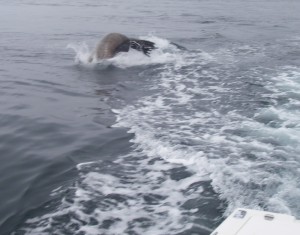
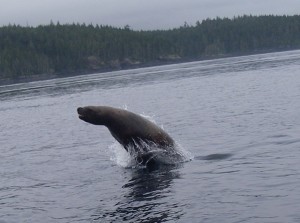
Interesting experience on a whale watching day in Blackfish Sound. We were traveling beside a pod of Pacific whitesided dolphins when I look behind the boat and snapped a photo of what might have been a dolphin playing in the wake of the boat. It was the second photo that made it clear it was a Steller Sealion copying the dolphins. This Sealion repeated this proposing action eight or ten times and the guests got some great photos. It was the first and last time I saw this behaviour in my twelve years guiding for the lodge. The whale watching tours are in an area that provides opportunities for photos of orca, humpback whales, minke whales, Steller sealions, harbour seas, dolphins, harbour porpoise, dall porpoise as well as black bears, eagles and a variety of ducks.
Steller Sea Lions
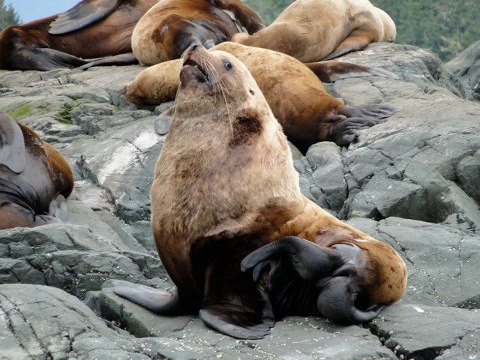
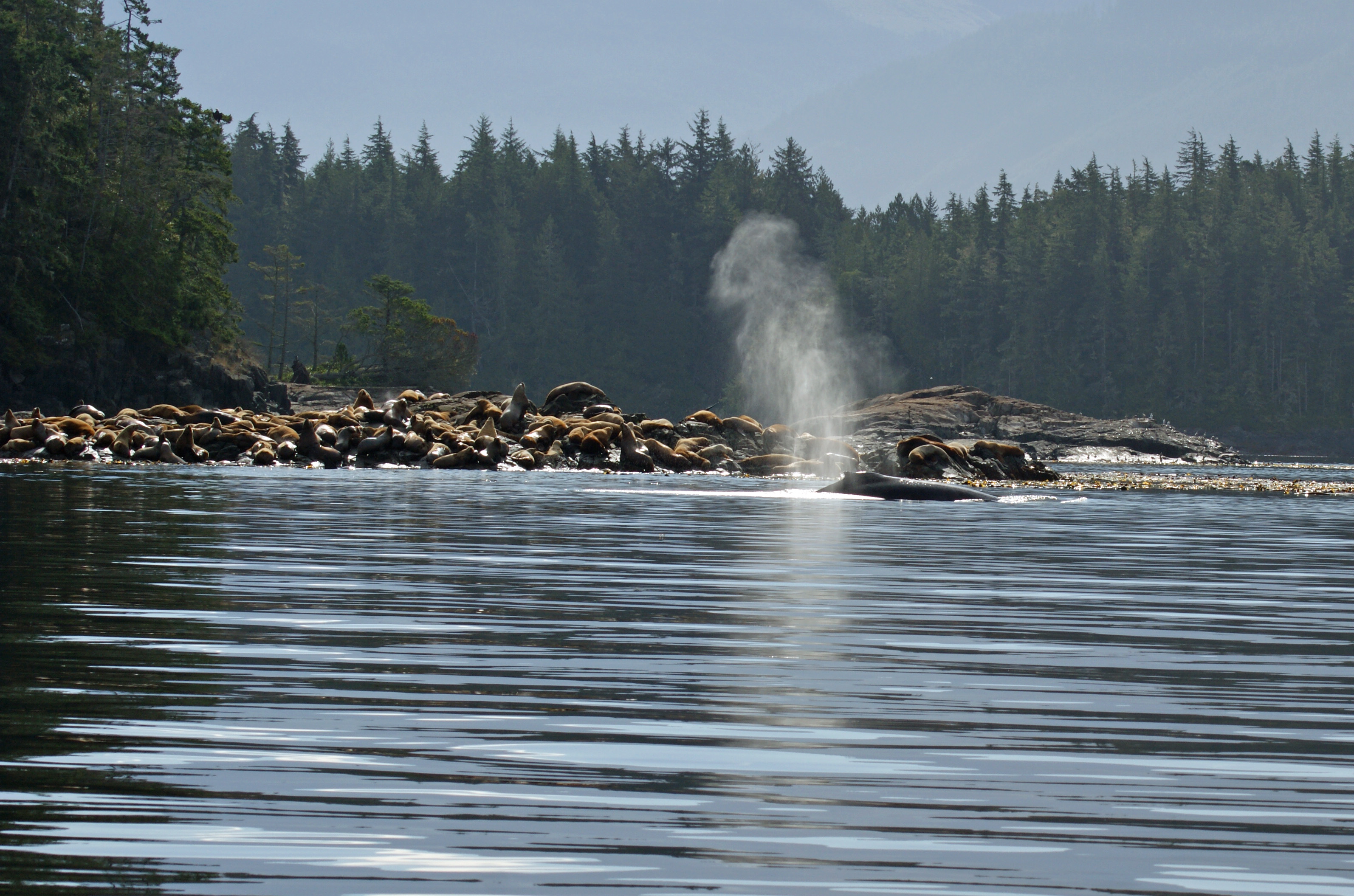
Steller sealions have become common on whale watching tours. With the abundance of herring in the area of the day trips the sealions have started to stay all summer rather than just in the spring and fall on their coastal migration. Several dozen of these large males frequent the small island in Weynton Pass across from Vancouver Island’s Telegraph Cove.
Guide Photos
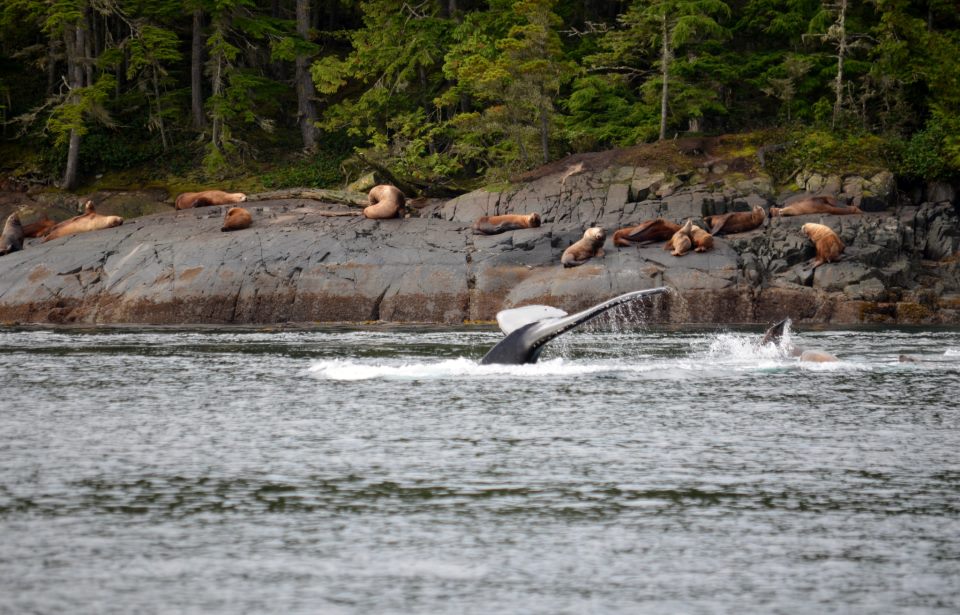
It is not uncommon to see Steller sealions play with humpback whales. I have found no research to explain the behaviour and from the times that I have viewed these actions they do not appear aggressive just interesting to observe. In this case it is a humpback passing the small island that is one of the “haul outs” for the sealions and a few in the water following it as it dives. Other times they will follow it along the shore and go to where it surfaces after a dive.
Guide Photos
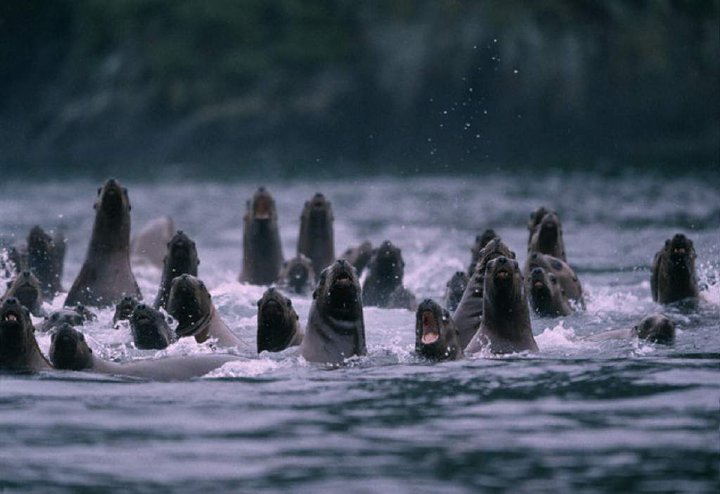
Some Steller sealions have started to spend their summers in our viewing area. The whale watching safari from Grizzly Bear Lodge travels from Minstrel Island on Knight Inlet to Johnstone Strait and Vancouver Island. This hour trip places us in an area of a variety of marine wildlife such as killer whales (orca), humpback whales, sealions, seals, pacific white-sided dolphins, dall porpoise, harbour porpoise as well as bald eagles and numerous species of ducks and gulls. All of this is because of the abundance of herring which one way or another is the main source of food, either eating the herring directly or indirectly through salmon. Some of the Steller sealions, about three dozen, which used to pass through on their migration now summer here.
Steller sea lion haul-out
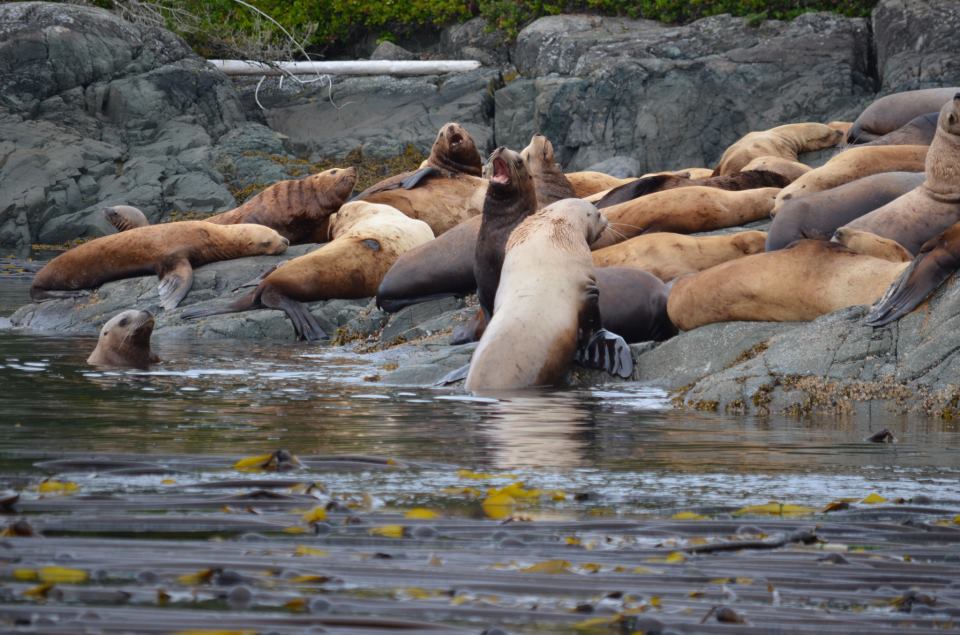
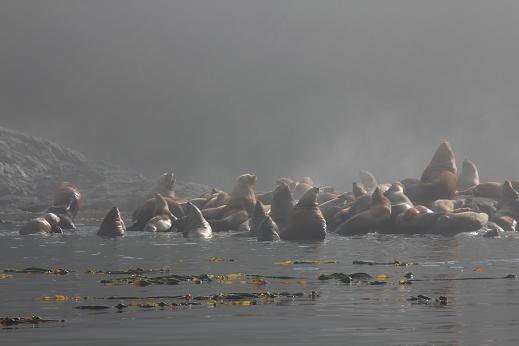
Steller sea lions use land habitat as haul-out sites for periods of rest, molting, and as rookeries for mating and pupping during the breeding season. In this case it is a resting area as they migrate along the coast spending part of their spring and fall in the area where we watch whales. Steller sea lions have been known to migrate large distances (>400 nm) but it is presumed their routes remain coastal. They are solitary hunters but are often seen small groups, but may gather in large “rafts” at the surface near rookeries and haul outs. The haul-pouts are a noisy area as they are capable of powerful vocalizations that are accompanied by a vertical head bobbing motion by males.
Stellar sealions
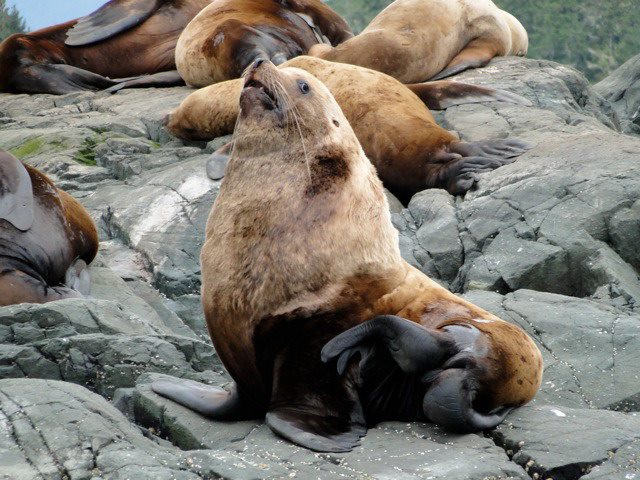
Steller sea lions are the largest eared seals in the world. They are sexual dimorphic, meaning the males are noticeably larger than the females. A distinguishing characteristic of male Steller sea lions is their thick mane of coarse hair. Males can weigh up to 1,120 kilograms (2,500 pounds); whereas; females weigh up to 350 kilograms (770 pounds). Pups range from 16 to 22.5 kilograms (35 to 50 pounds). Males can reach lengths up to 3 to 3.4 meters (10 to 11 feet), while females reach 2.3 to 2.9 meters (7.5 to 9.5 feet). The coloring of the adult Steller sea lions ranges from light blonde to reddish brown, with slightly darker coloration of the chest and stomach. The stellar sealions can be found in our viewing areas all year but are more abundant in the spring and fall when they are travelling between Alaska and California. They spend time in the area to rest and feed while moving between the two areas.
First – TWO for one – humpback and sealions