Tag Archives: Whale Watching

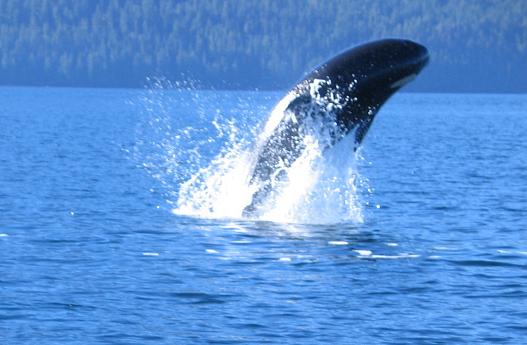
Orca breaching

Orca BreachingThe classic photograph for an orca is breaching. All of the books on marine mammals have numerous pictures of killer whales and most of them are breaching. I would assume that the photographers have spent hundreds of hours on the water and countless pictures of splashed. Guest coming to Grizzly Bear Lodge expect that this will be the case when they go on a whale watching safari to the whale watching area in Johnstone Strait. The truth of the matter is that although we do see breaching orca on a reasonably regular basis it is not easy to get a photo especially a good photo. For some reason orca do not announce their intention to breach and do not  repeated breaches so you can be prepared to get that clear focus.


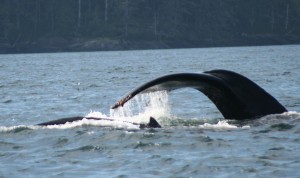
Humpback whale diving

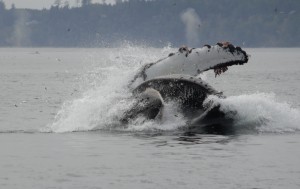
Humpback  whale flukingGreat photo of a humpback whale into its dive but would not work for identification. The whale watching companies in the viewing area used by Grizzly Bear Lodge are constantly trying to determine which whales are in the area. Whale identification requires a clear photo of the underside of the tail to view the patterns of white and black as well as all the nicks and scars. 


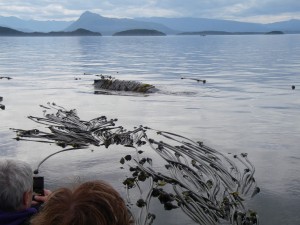
Humpback for lunch

The whale watching tour leaves the lodge between 7:30 and 8:00 to travel the fifty-minute boat ride to Johnstone Strait. Mid-morning we have a bathroom break in Telegraph Cove on BC’s Vancouver Island. The picnic lunch we carry is often eaten drifting on the ocean currents. This day for a change we tied to the bull kelp that grows along the shore. It was also the same day that a humpback whale decided to spend some time in the same kelp bed. It was less than 10 meters (yards) from the boat and spent about thirty minutes rolling and playing in the kelp. We were quite and the whale did not move off until another boat made noise running up Blackfish Sound about a kilometer (mile) away.


Humpback whale and calf

With the ever-increasing number of humpback whales remaining in the whale watching tour area there are also more calves. The number of whales normally viewed on a given tour day has increased from five or six whales six years ago to fourteen to sixteen this past season. The humpback calves are much more active than their mothers often spend time tail lobbing and breaching however it is the adults that provide the best classic whale tail photographs.


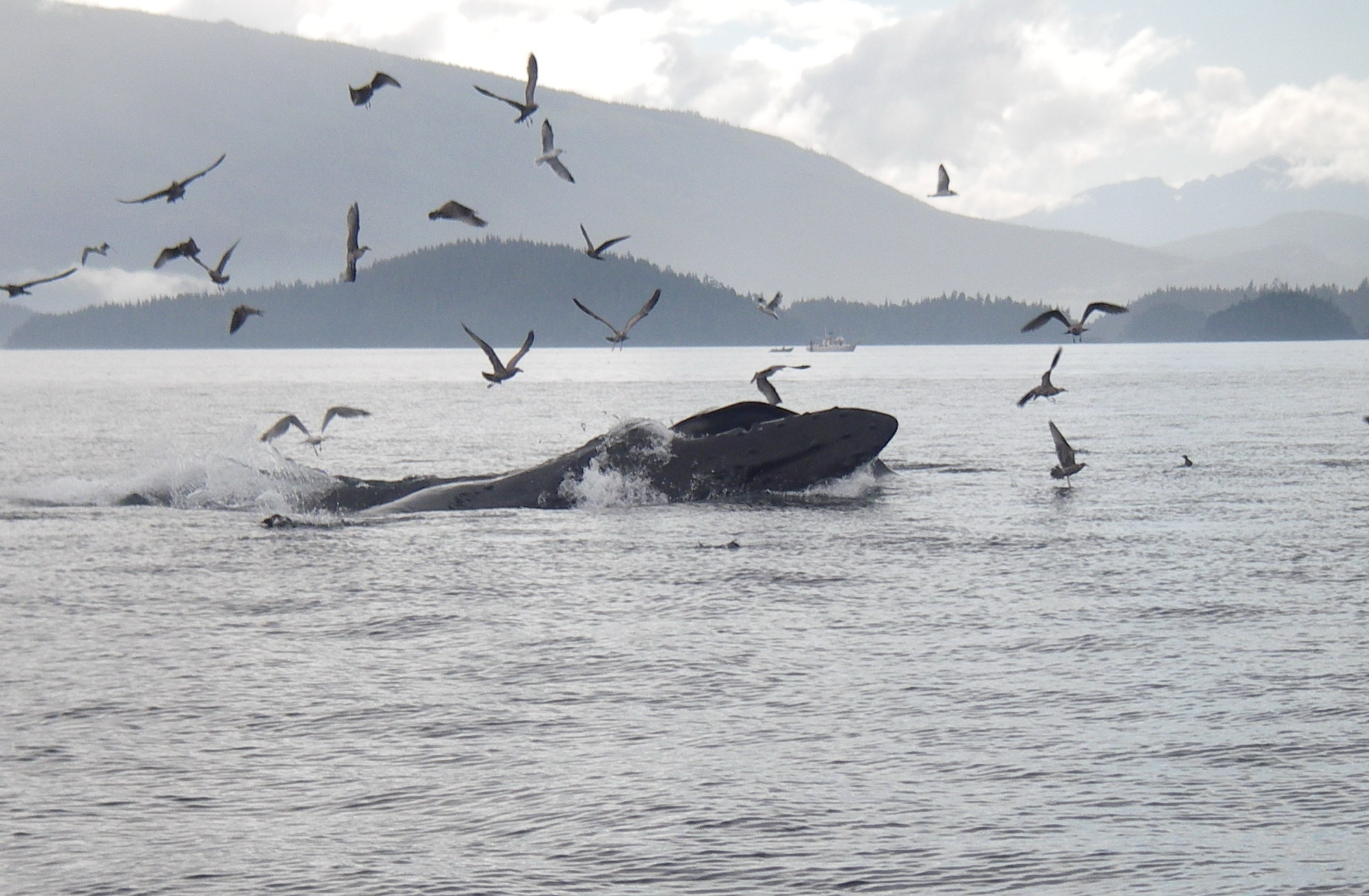
Humpback whale lunge feeding

Click to enlarge then click again

 Whale watching safaris in and around Johnstone Strait always provide opportunities for interesting photographs. In this case it is a humpback whale lunge feeding beneath or up through a school of herring. The boat in the background is also of interest as it belongs to Susan MacKay who spends her summers in this area photographing whales, orca and all marine mammals.


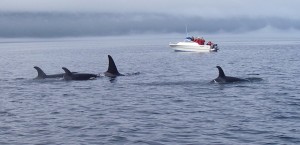
Orca passing between boats

Click to enlarge then click again

The northern resident orcas appear in the area of Johnstone Strait in late June and remain until mid October. They are the fish eating orca and their appearance coincides with the arrival of the Chinook salmon. The Chinook salmon, Oncorhynchus tshawytscha is the largest species in the pacific salmon genus. Other commonly used names for the species include king salmon, black mouth, Quinnat salmon, spring salmon and Tyee salmon.
Chinook salmon are big fish! They are the largest Pacific salmon species. On average, Chinook salmon are close to a meter (3 feet) long and 8 to 14 kg (20 to 30 pounds). But some Chinook salmon in this area can grow to over 25 kg (55 pounds)!  This is the preferred food for the orca although they will other species of salmon…..more tomorrow.


Killer whale on a mission

Click to enlarge then click again

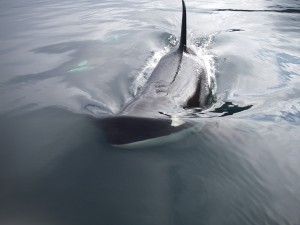
As with most wildlife photography doing nothing is often the best practice. On whale watching safaris from the lodge there is normally allot of activity when a pod of killer whales in located. The guides job is to try predict where the orca are going and to try and be there when they arrive and this can be a challenge when they continually change directions. But when there is a full day on the water at sometime there is a good chance of success and then a photo such as this is the result. Taken just before the two orca dove beneath the boat.


Humpback Lunge

Click to enlarge then click again

The head on lunge of a humpback whale coming up through a school of herring produces a very impressive photo. This is a definite “Click on to enlarge” to get the detail of the herring in the air and the baleen in the whales mouth. The area of the whale watching tours from the lodge in Knight Inlet has become the summer home of eighteen or more humpback whales. This increased number of whales on the day tours means many more photos such as this one.


Passing through

Click to enlarge then click again

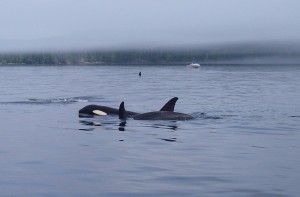
The whale watching trips from the lodge on BC’s Minstrel Island travel about fifty minutes to Johnstone Strait and along the shore of Vancouver Island to find orca. The resident (fish eating) orca spend their summers working this area in search of the larger spring salmon. The whale watching guidelines require that we remain a hundred meters (yards) from the orca so if they are coming up the straits the boats will line up parallel to the line of travel for a good view. Engines off we wait for the orca to pass but at times they will do a ninety-degree turn and pass between waiting boats or in this case start to feed on salmon.


Humpback Whale Feeding

whale feding on herring
Click to enlarge then click again

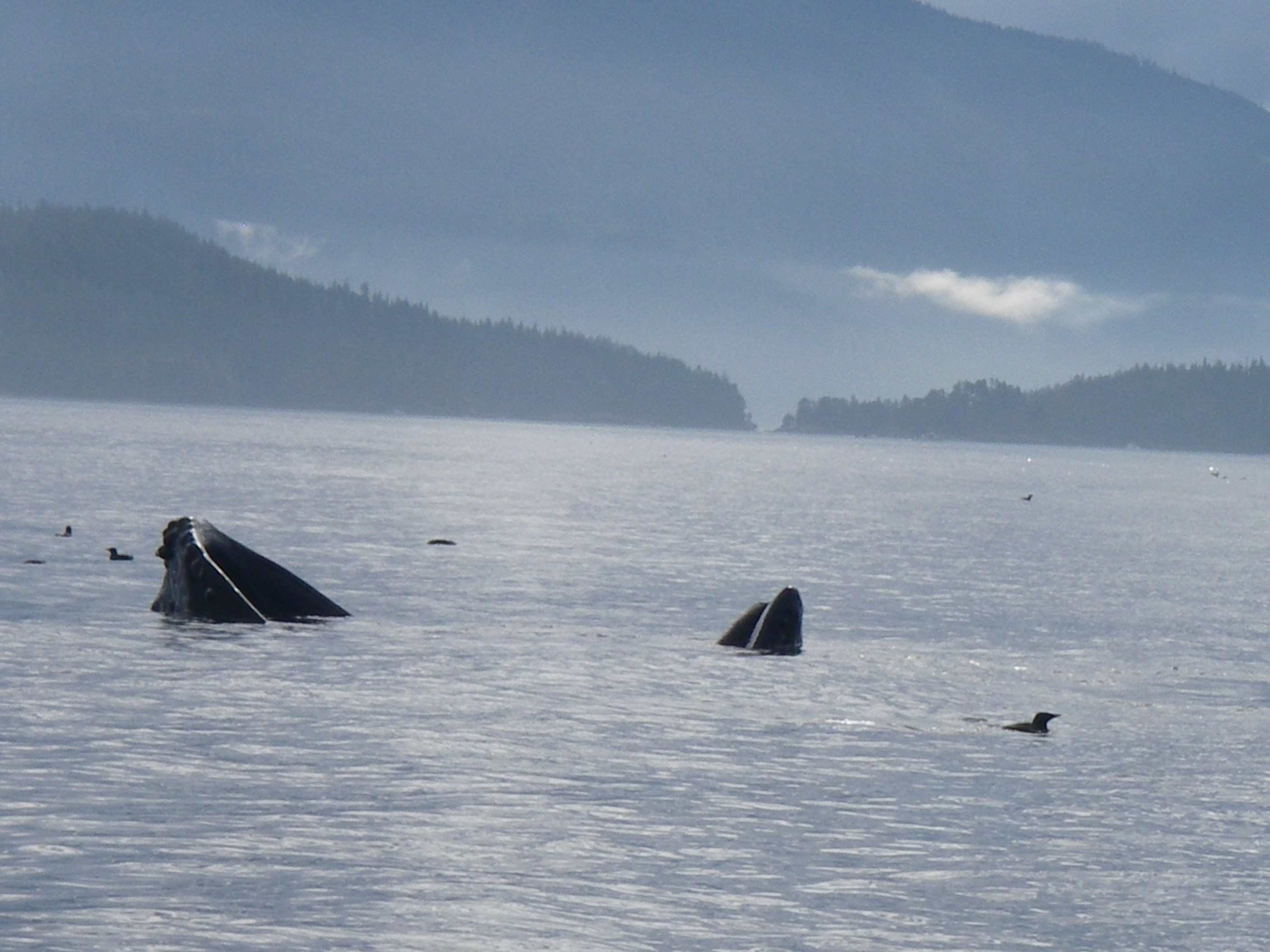
These photos represent the opposite of a lunge feed for a humpback whale. The whale watching tour from the lodge travels to an area known as Bold Head that is on BC’s inside passage or route to Alaska. In this picturesque area the whales come to feed on the abundant herring. A lunge feed is when the whales suddenly come up beneath a ball or school of herring with their mouth open and lunge out of the water. In today’s photos the opposite happens. The whale opens it’s mouth as wide and comes up very slowly often spinning in a circle for up to a minute before closing it’s mouth very slowly to trap an many herring as possible.