The fall grizzly bear watching season in Knight Inlet starts on August 24th and at this time guests are permitted into the viewing stands on the Glendale River. The stands overlook the entrance the man-made spawning channel that contains over eighty thousand salmon as well as the natural river, which may contain several hundred thousand pink salmon over the season. This photo by Alfred Bittner shows two juvenile grizzlies, likely siblings, fishing side by side in the small rapids below the stands…more tomorrow.
Alfred Bittner provides a great photo that I call “Follow the leader”. Take a close look and there is a tip of a dorsal fin just in front of this large male killer whale. Also an excellent photo as this is how an orca is identified using a picture of the right side of the orca showing its dorsal fin and the saddle patch. All the resident orcas on the BC coast are in two groups either the Northern or Southern Residents. The website: http://wildwhales.org/killer-whale/ provides the following: “The southern resident community consists of one clan (J clan) and 3 pods (J, K and L pods) and number only around 86 animals. They are most commonly seen in the waters around Victoria and the San Juan Islands in the summer, although they may range north to Desolation Sound and as far south as California in the winter months. Southern resident killer whales are critically endangered, due to their small population size, reliance on endangered or threatened salmon runs for prey, high toxin loads and sensitivity to boat disturbance.
The northern resident community consists of 3 clans (A, G and R) and numerous pods within each clan. It numbers around 250 animals. Northern residents are most commonly seen in the waters around the northern end of Vancouver Island, and in sheltered inlets along B.C.’s Central and North Coasts. They also range northward into Southeast Alaska in the winter months. Northern resident killer whales are also threatened by the same factors as southern residents.”
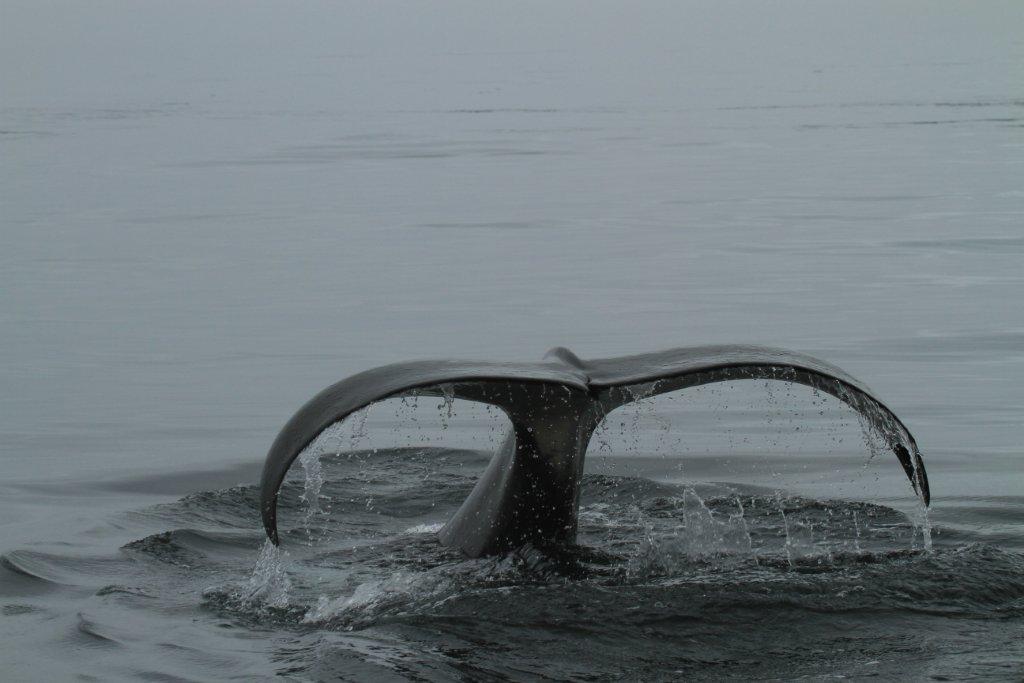
April and Rob White of Australia provide this unique series of photos from their visit to Grizzly Bear Lodge. It is a set of six photos of, which of choose three to make it interesting. This is the best set that I have viewed in my ten years as a guide for the lodge. It is known that humpback whales are identified by the markings on the underside of their tail. The key to this sequence is the first photo and the tip of the dorsal fin, which is visible in the water in front of the tail. This fin is about two meter (six feet) tall and belongs to an orca or killer whale. This orca passed beneath our boat and surfaced about five meters away and then dove and Rob manage to obtain a very unique set of photos.
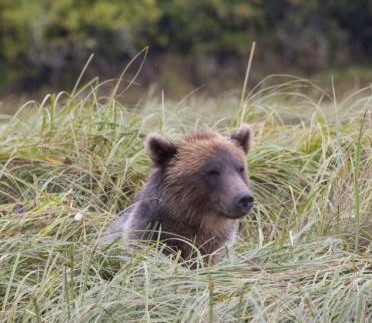
Debbie’s photo of a grizzly bear sitting in the sedge grass of British Columbia’s Knight Inlet gives the impression of a “cute” little bear. The “cute” may be lost when one realizes that the sedge grass in the spring is more than a meter (three feet) tall and that this is the same bear that was shown is yesterday’s posting.
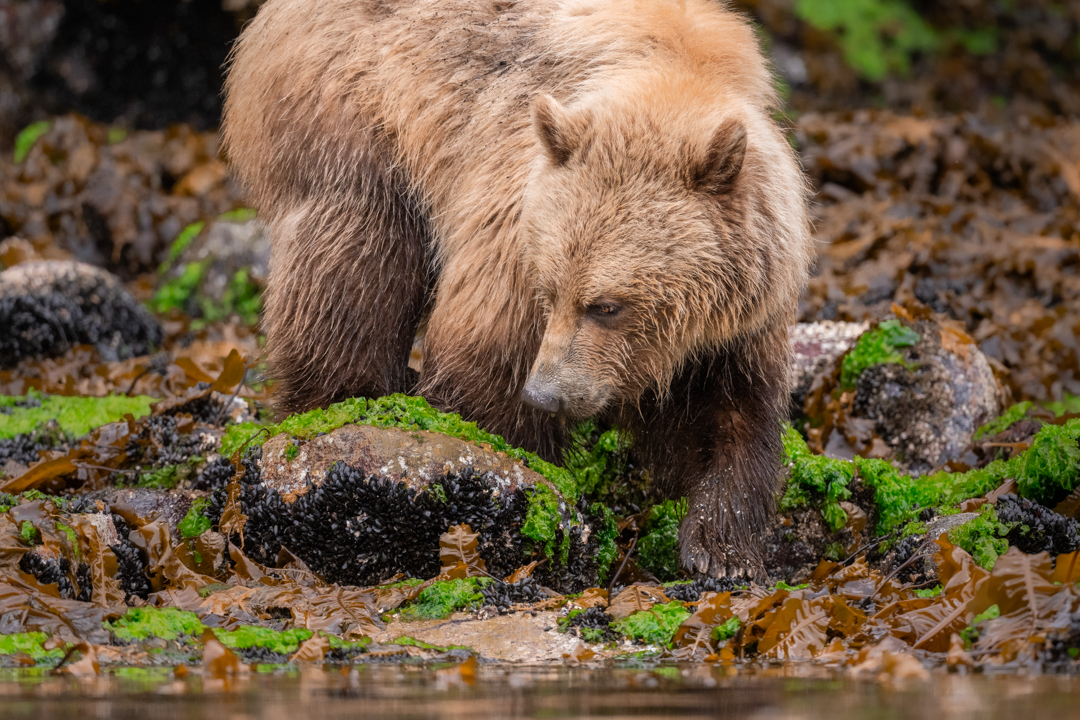
A classic grizzly bear pose is captured by Debbie Zygmunt in the Glendale River estuary. The spring grizzly tours up Knight Inlet view grizzlies in the estuary sedge grass and along the shore of the bay. Until the salmon arrive in late August the grizzlies spend their time turning over rocks in search of protein or grazing on the protein rich grasses. The bears of the area have accepted the presence of the skiffs used for touring along the shore and this provides ample opportunity for great photographs.
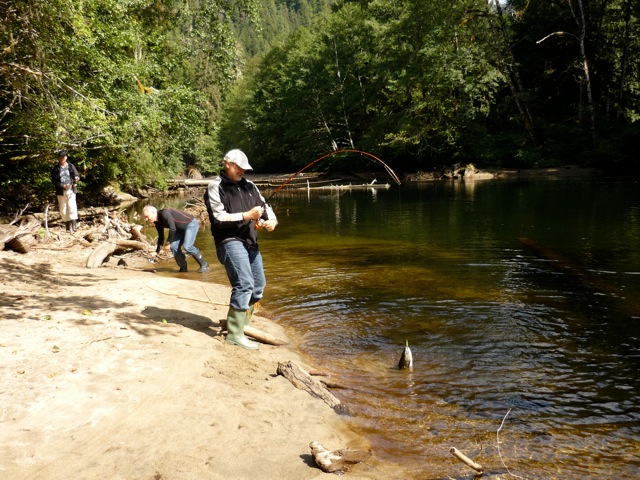
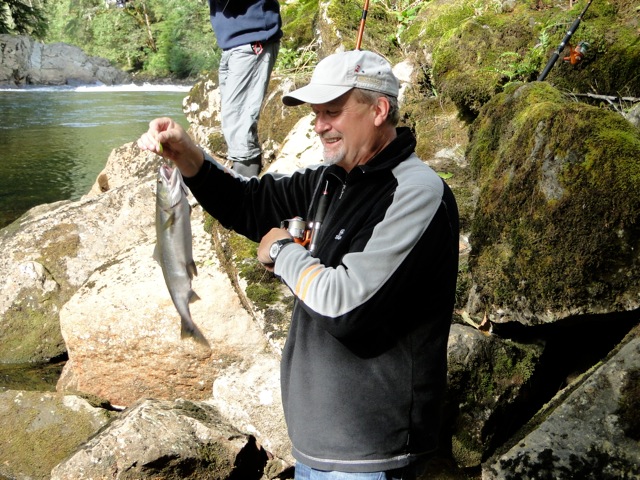
If guests are interested and Ingo’s crew from Germany was there is some great salmon fishing while visiting Trapper Rick. This protected river provides opportunities for guests to spin fish for salmon with light gear that often gives the salmon the advantage. The protected aspect means that anyone fishing the river must have a guide which has been allotted time on the river and therefore it is not open to the public. The only other people we see and that is rarely are from a lodge that brings guest in by helicopter and you can guess what that costs.
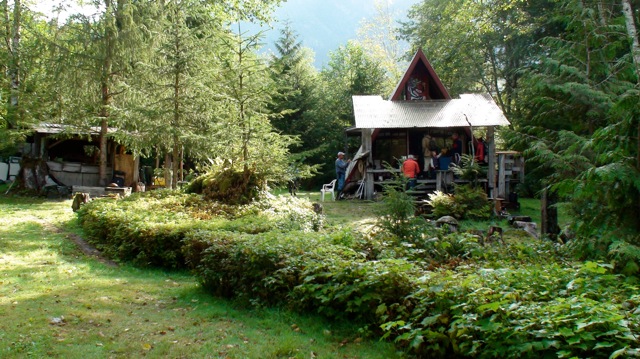
As this photo taken by Ingo shows the extra day visiting Grizzly Bear Lodge includes a trip to the Kakweikan River and a day with Trapper Rick and a visit to his cabin. The cabin is a half-hour truck ride over logging roads and then a fifteen-minute hike through the coast rainforest. This past summer we had excellent grizzly bear viewing at the falls below the cabin. This is one location that has no visitors except for the loggers and the guest from our lodge, a true wilderness river.
Ingo and his crew of four in the back row are ready for their morning tour. The floater suits provided by Grizzly Bear Lodge is a must for the day’s wildlife viewing. We are normally on the water by 8:00 and it can be cool if you are not used to the dampness of a morning boat ride. The morning’s overcast burns off before noon and that is about the same time the suits start to be removed. Layering is the best way to be prepared for the day’s tours because a running boat is always cooler than when sitting in the sun watching wildlife such as grizzly bears, whales and orca.
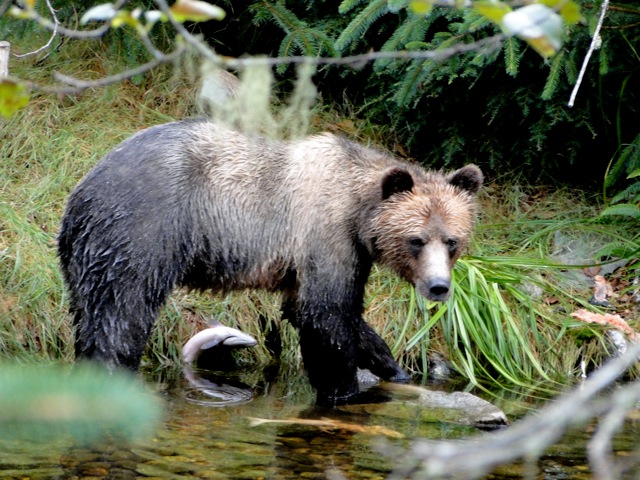
The grizzly tour day for Ingo and his crew was successful. An hour and half run up Knight Inlet to the salmon-spawning channel on the Glendale River provide many good photos. This one shows a grizzly bear having a hard time making a decision. The decision is to go into the river and catch a fresh salmon or to save energy and eat one of the two at its feet? In this case the easy meal won. Later in the season when this bear has more bulk (fat) it will be more selective and go for the fresh salmon and likely only eat the row, skin and brain.
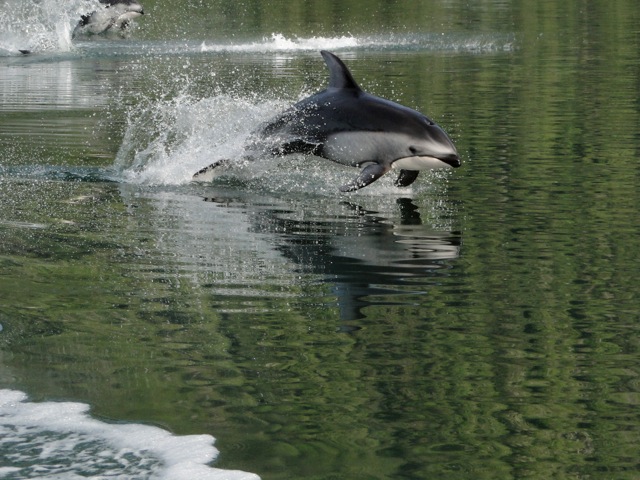
Pacific white-sided dolphins can be found on any one of the lodge’s tours. Whether going on a whale watching safari, up the river with Trapper Rick or up Knight Inlet to view grizzly bears. These dolphins most often travel in pods several hundred strong and love to ride the bow wave of the boat or to follow in the prop wash of the motor. They will race the boat and leap up to three or four meters (ten to twelve feet) out of the water. A glassy calm day with the reflection of the trees just makes the photo more amazing.
Just like that another season has come to an end. We are grateful for all the wonderful staff and the guests this season. It was an excellent season and we are already looking forward to next May.
One of the highlights of the season was all of the new cubs out. It was awesome to see so many new cubs of the year and that is great news for our bear populations moving forward. We had great spring viewing and this continued through summer. On our river trips we started to see salmon arriving in August and enjoyed some great shoulder season viewing. The fish at the viewing platforms were a little late showing up this year, but viewing during late September at the platforms was great and the estuary viewing remained strong throughout the season.
Out in the whale watching world it was another year that saw large numbers of resident Orca who remained in the area right into October. The Humpback viewing was also great with large numbers feeding in Blackfish Sound. It is so amazing to have these magnificent animals back in our waters in such numbers.
Over the winter and spring we will be doing some repairs and maintenance. We rebuilt the front deck last spring, utilising cedar cut on site. We will continue with some siding, rooms improvements and hopefully a floating sauna ready for the start of our season.
2026 is already looking like a very busy season for us. We only have limited high season availability so please book early to ensure we have space for your group.