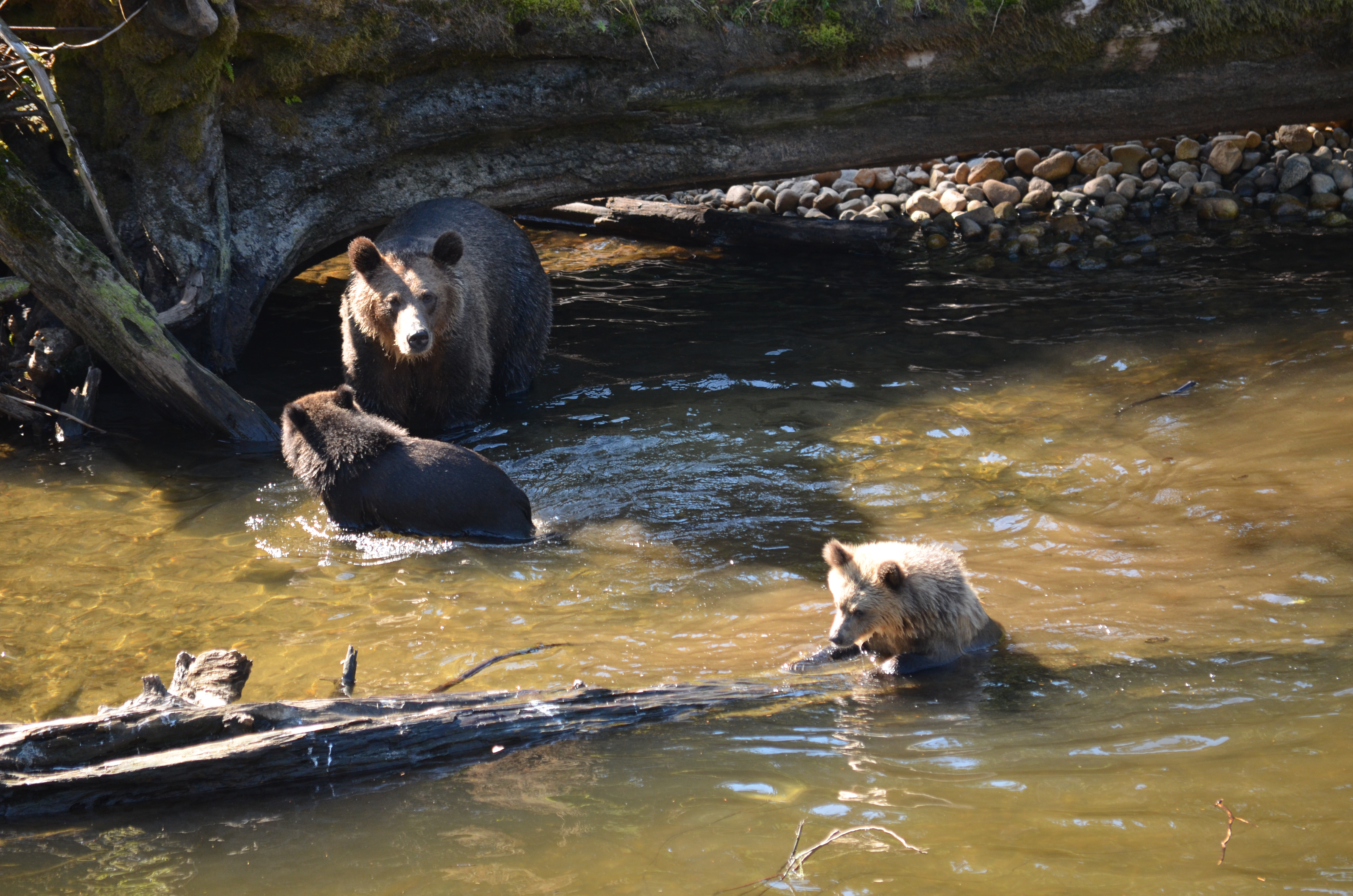
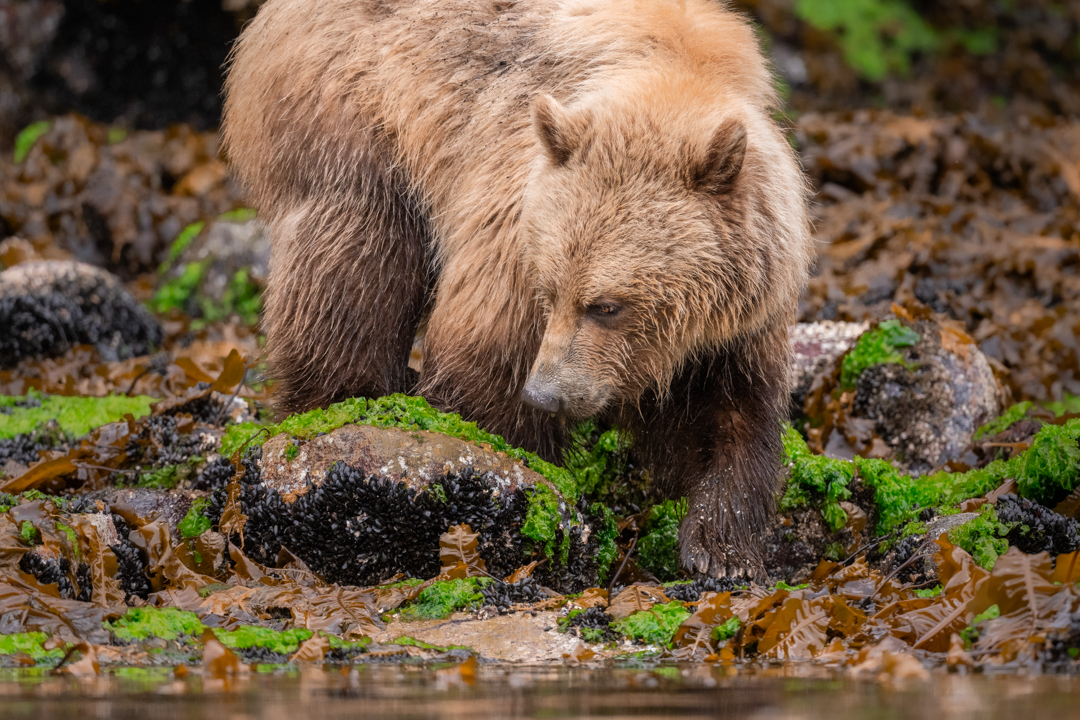
The key to a successful fisher is to keep trying. The first photo shows a close call for the salmon but to be sure bears do not stop and this fish did not escape. The time to fatten on the fish in the river around our viewing stands is limited from late August to late October so persistence is the key to a good hibernation.
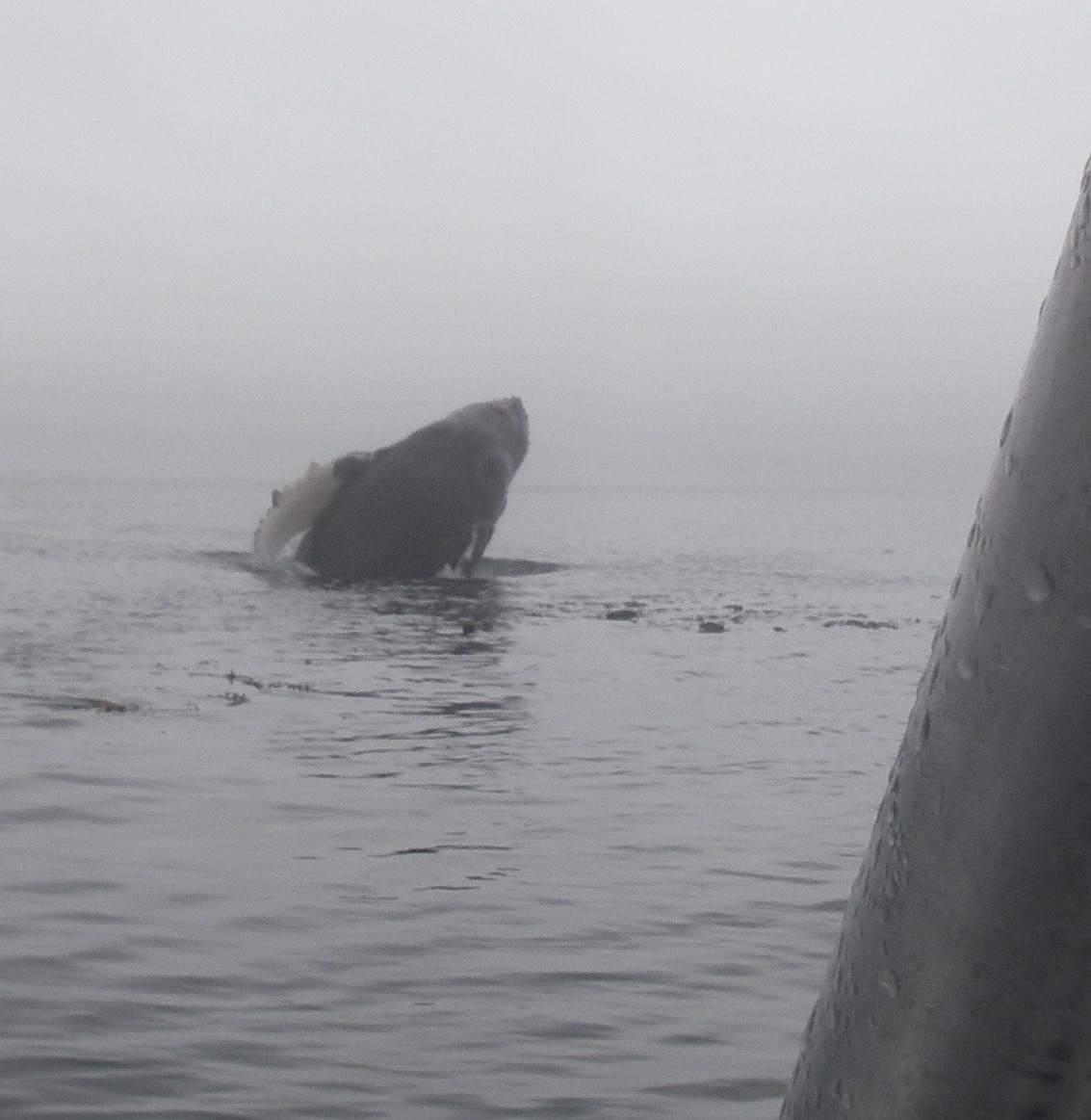
As the blog writer and guide I have frequently mentioned that the best strategy in whale watching is to do nothing. Doing nothing means once the whales are located it is often best to sit in a quite boat and let the whales carry on with their natural activity without the noise of boats moving around. This is especially effective if you are the only boat in the area. Besides providing the guests with opportunities for great photos it gives me time to play with my Pentax Optio (6mp 3Xoptical zoom) and get a shot like the one posted. If I am able to do this with a “point and shoot” imagine what guests are able to do with the cameras they normally have.
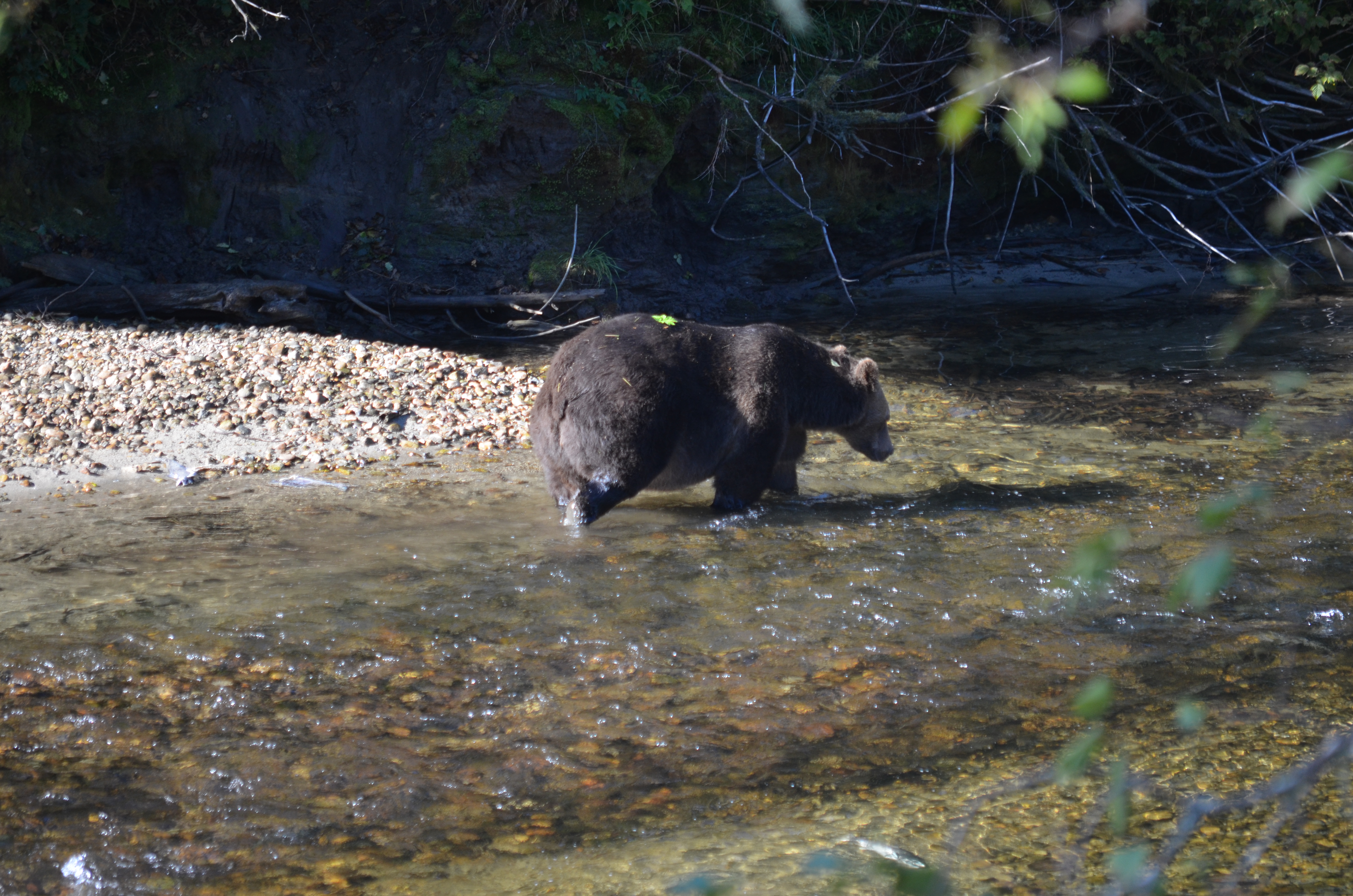
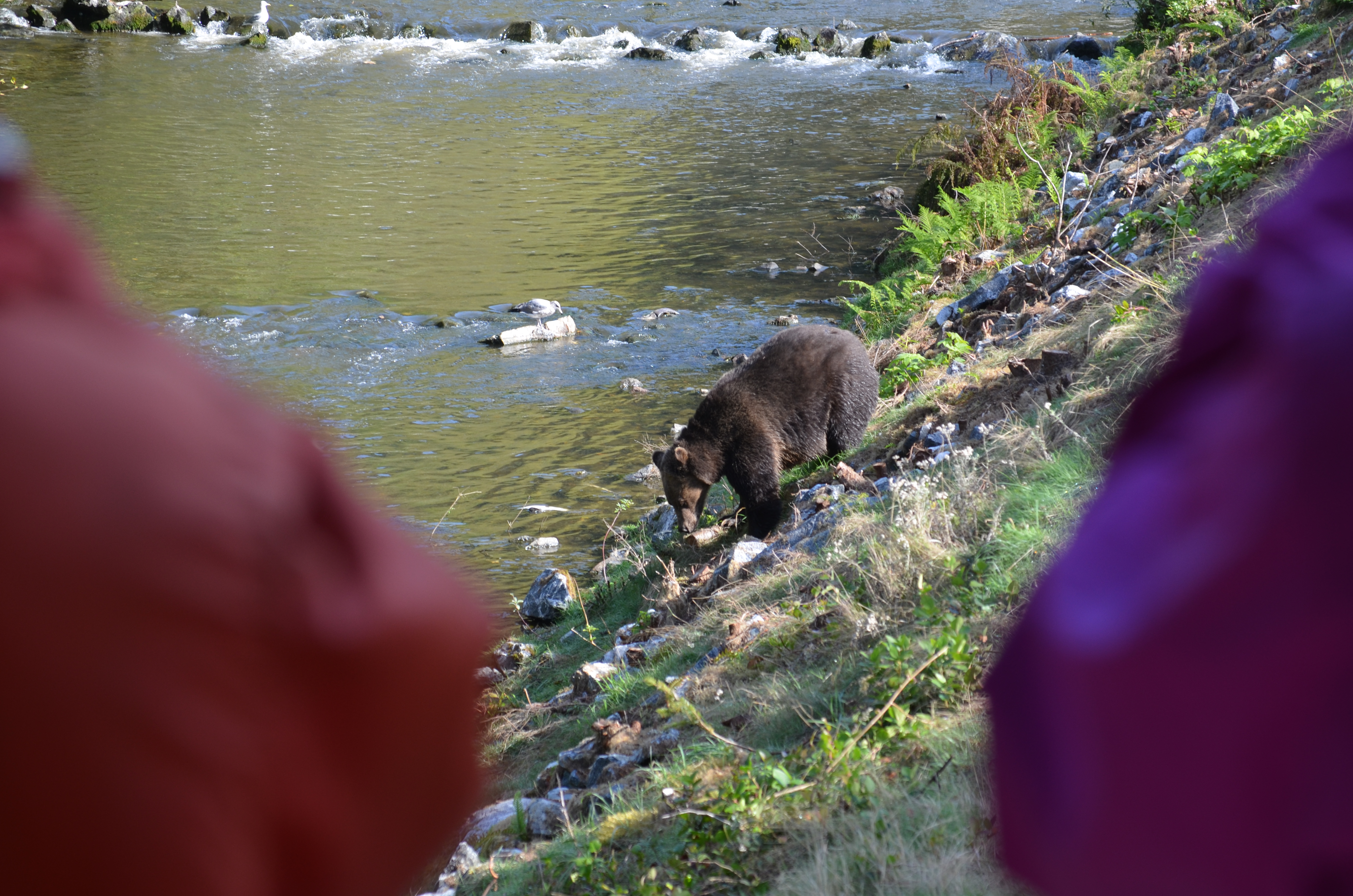
The area behind the viewing stand that we use on the Glendale River is a traveling route for grizzly bears. It is easier to walk the riverbed and possibly pick up the occasional salmon than through the thicker bush. As can be seen by the vegetation on this bear’s coat it is using the river as a road rather than a fishing area. Also the size of this grizzlies belly it is a pretty good indication that it can catch salmon when it is hungry.
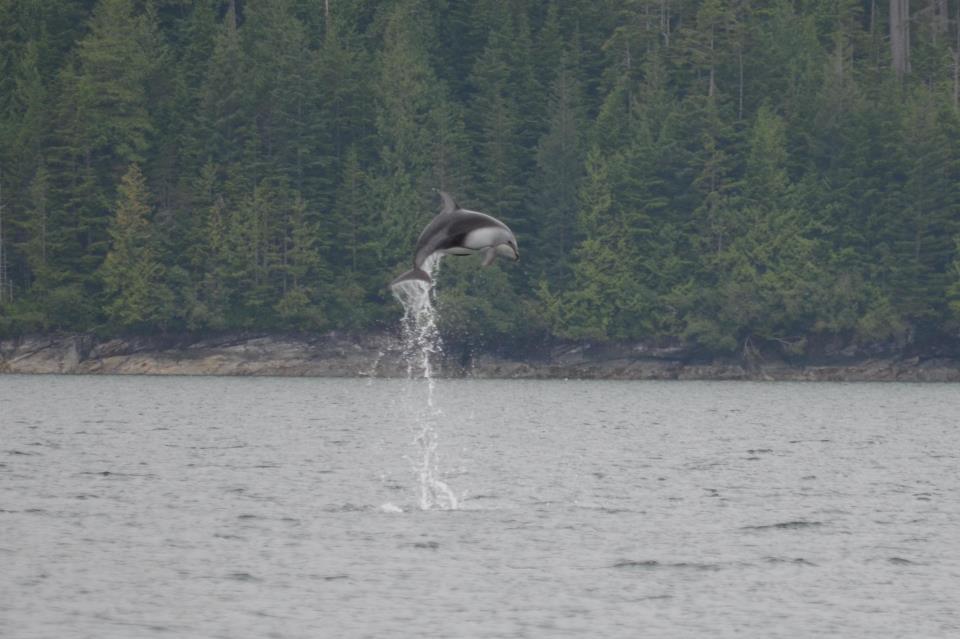
Great photo of a pod of pacific white-side dolphins which frequent the waters of British Columbia’s coast. The average pod size for pacific white-sided dolphins is 10-100, but they can be found gathered in pods of thousands of individuals. These dolphins commonly leap (breach) and somersault and may also ride the bow and stern waves created by boats. This photo shows the dolphins surging forward as a pod as they search for food (herring) along the shore. While engaged in this activity they travel at about nine miles an hour but have clocked speeds of up to 25 miles per hour.
A male killer whale’s dorsal fin can grow to as much as two meters (6 feet) tall. Despite the fact that the dorsal fin is very straight, it is primarily made of cartilage. Orcas travel in deep water and this water provides pressure to the fin, keeping the tissues inside healthy and straight. This photo shows the difference in size between and adult male and female orca’s dorsal fin.
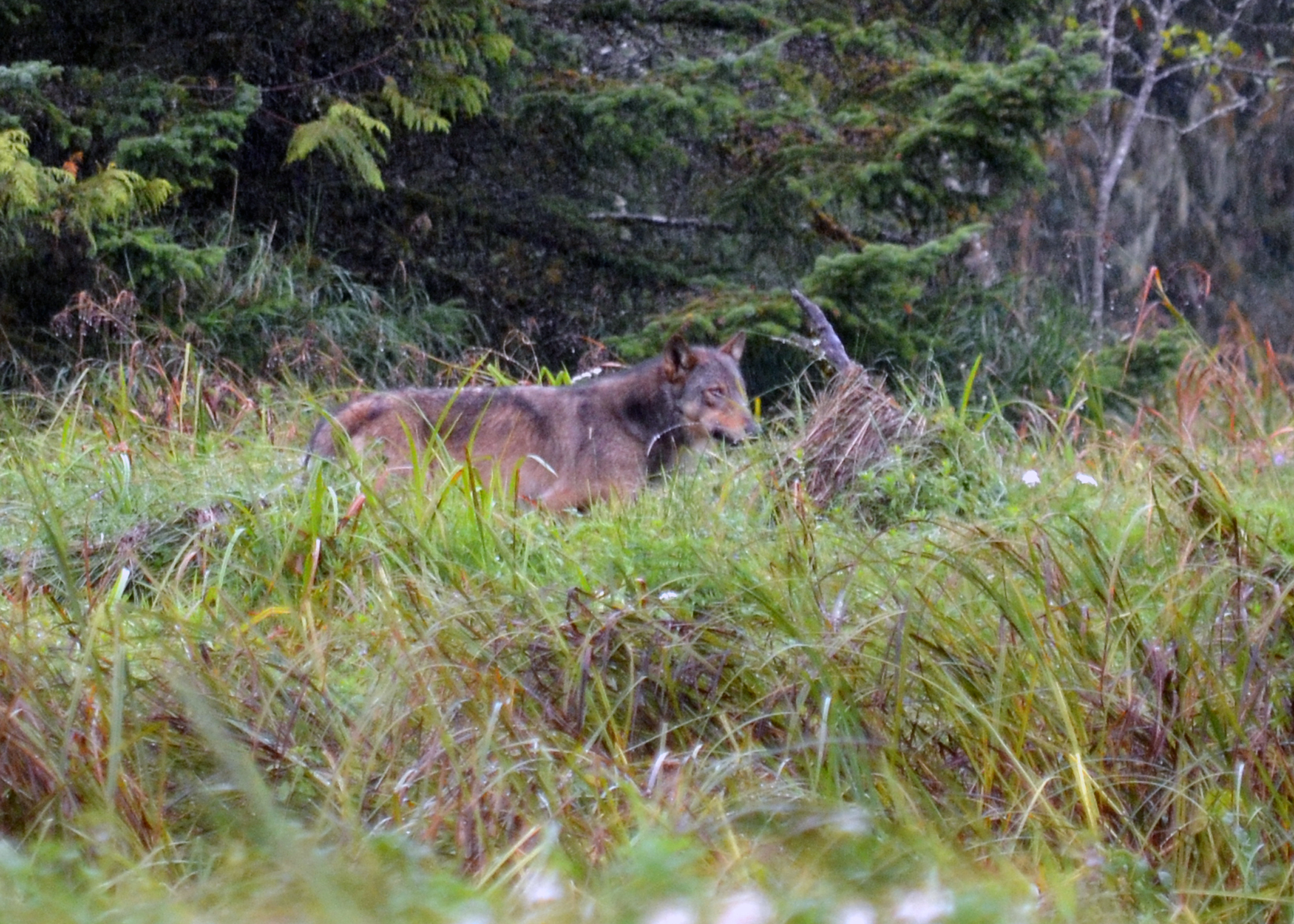
Guests in the lodge often ask about wolves. The wolves located along the coast are referred to as Rainforest Wolves that take to the sea, swimming among forested islands to feed themselves. These wolves make more than 75% of their living from marine resources like salmon, beached whales and seals. The most common question is how often do you see wolves and the answer is rarely, I have guided for Grizzly Bear Lodge nine seasons full time and also spent several weeks every summer in Knight Inlet for more than twenty-five years and had seen wolves twice until this year. This year I had two good views of wolves and Angus and Ed three more. This picture taken by Angus was at the mouth of the Glendale River on a grizzly bear tour where along with the guests the wolf was watched for more than fifteen minutes. Truly a rare sight.
On the other side of the stands grizzly bears travel up and down the river and often stop to fish. It is also their approach around the end of the finger into the holding pool. In this case a mother with this years cubs spends some time fishing, teaching and feeding in the natural river.
This picture was taken from the viewing stands on Knight Inlet’s Glendale River. We are able to use the stands, which are located at the mouth of the man made spawning channel after the 24th of August. The stand we use is at the end of a finger of land that has the natural river on one side and the holding pool for the spawning area on the other side. This photo taken between the shoulders of two guests shows a grizzly bear walking along the edge of the holding pool toward the stand. The vehicle we use is up the bank about five meters (fifteen feet) from the bear, which is about ten meters from the stand.
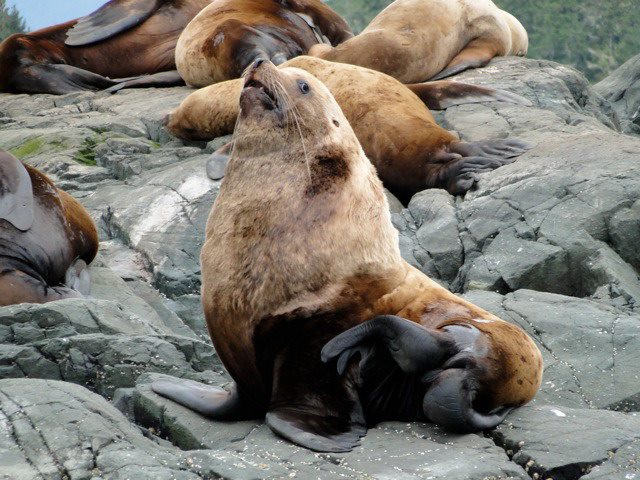
Steller sea lions are the largest eared seals in the world. They are sexual dimorphic, meaning the males are noticeably larger than the females. A distinguishing characteristic of male Steller sea lions is their thick mane of coarse hair. Males can weigh up to 1,120 kilograms (2,500 pounds); whereas; females weigh up to 350 kilograms (770 pounds). Pups range from 16 to 22.5 kilograms (35 to 50 pounds). Males can reach lengths up to 3 to 3.4 meters (10 to 11 feet), while females reach 2.3 to 2.9 meters (7.5 to 9.5 feet). The coloring of the adult Steller sea lions ranges from light blonde to reddish brown, with slightly darker coloration of the chest and stomach. The stellar sealions can be found in our viewing areas all year but are more abundant in the spring and fall when they are travelling between Alaska and California. They spend time in the area to rest and feed while moving between the two areas.
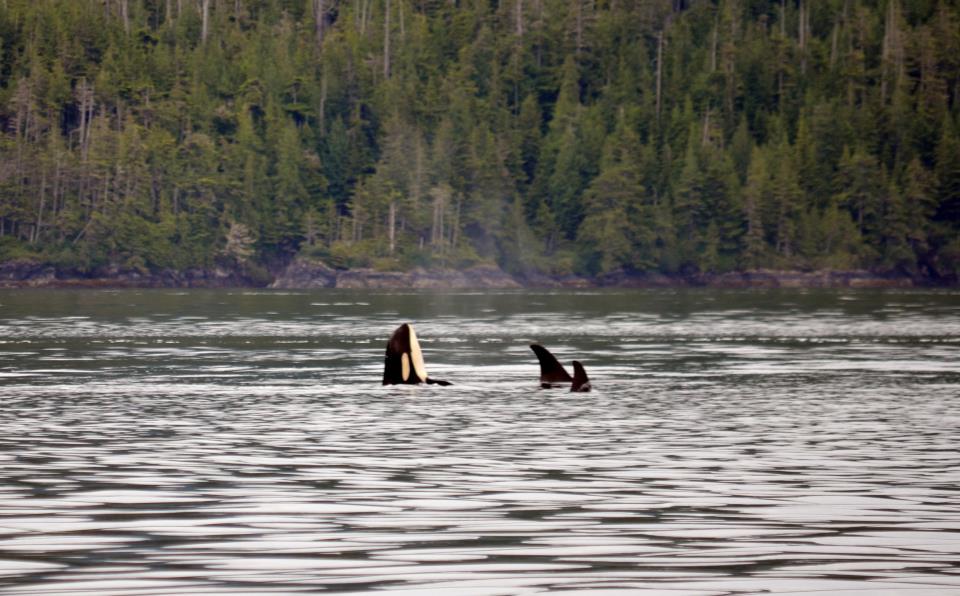
“When spyhopping, the whale rises and holds position partially out of the water, often exposing its entire rostrum and head, and is visually akin to a human treading water. Spyhopping is controlled and slow, and can last for minutes at a time if the whale is sufficiently inquisitive about whatever (or whomever) it is viewing.
Generally, the whale does not appear to swim to maintain its “elevated” position while spyhopping, instead relying on exceptional buoyancy control and positioning with pectoral fins. Typically the whale’s eyes will be slightly above or below the surface of the water, enabling it to see whatever is nearby on the surface.
Spyhopping often occurs during a “mugging” situation, where the focus of a whale’s attention is on a boat rather than on other nearby whales. Spyhopping among orcas may be to view prey species. For this a spyhop may be more useful than a breach, because the view is held steady for a longer period of time.” From Wikipedia
Just like that another season has come to an end. We are grateful for all the wonderful staff and the guests this season. It was an excellent season and we are already looking forward to next May.
One of the highlights of the season was all of the new cubs out. It was awesome to see so many new cubs of the year and that is great news for our bear populations moving forward. We had great spring viewing and this continued through summer. On our river trips we started to see salmon arriving in August and enjoyed some great shoulder season viewing. The fish at the viewing platforms were a little late showing up this year, but viewing during late September at the platforms was great and the estuary viewing remained strong throughout the season.
Out in the whale watching world it was another year that saw large numbers of resident Orca who remained in the area right into October. The Humpback viewing was also great with large numbers feeding in Blackfish Sound. It is so amazing to have these magnificent animals back in our waters in such numbers.
Over the winter and spring we will be doing some repairs and maintenance. We rebuilt the front deck last spring, utilising cedar cut on site. We will continue with some siding, rooms improvements and hopefully a floating sauna ready for the start of our season.
2026 is already looking like a very busy season for us. We only have limited high season availability so please book early to ensure we have space for your group.
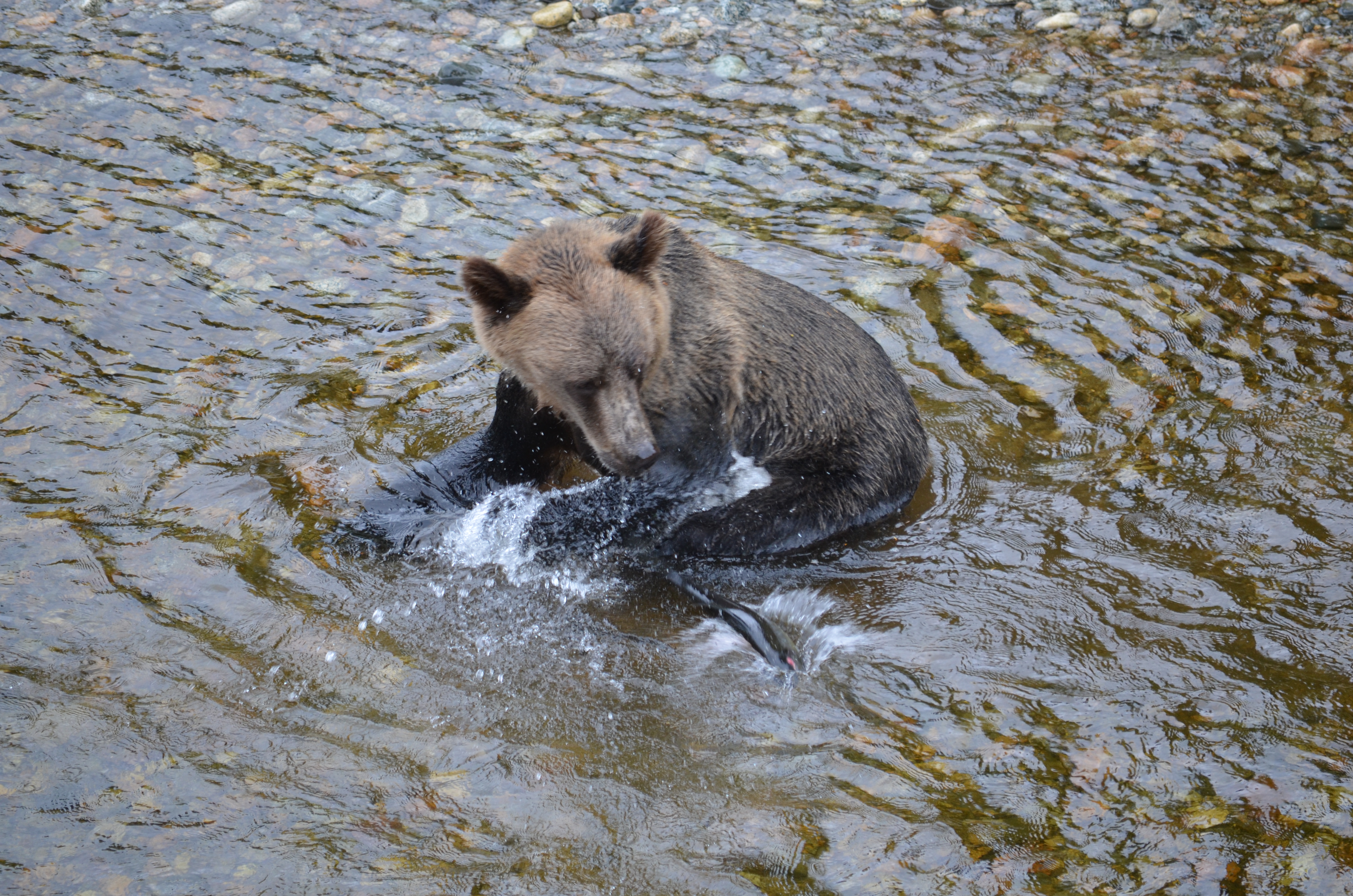
 The key to a successful fisher is to keep trying. The first photo shows a close call for the salmon but to be sure bears do not stop and this fish did not escape. The time to fatten on the fish in the river around our viewing stands is limited from late August to late October so persistence is the key to a good hibernation.