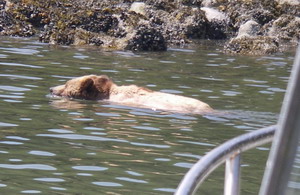
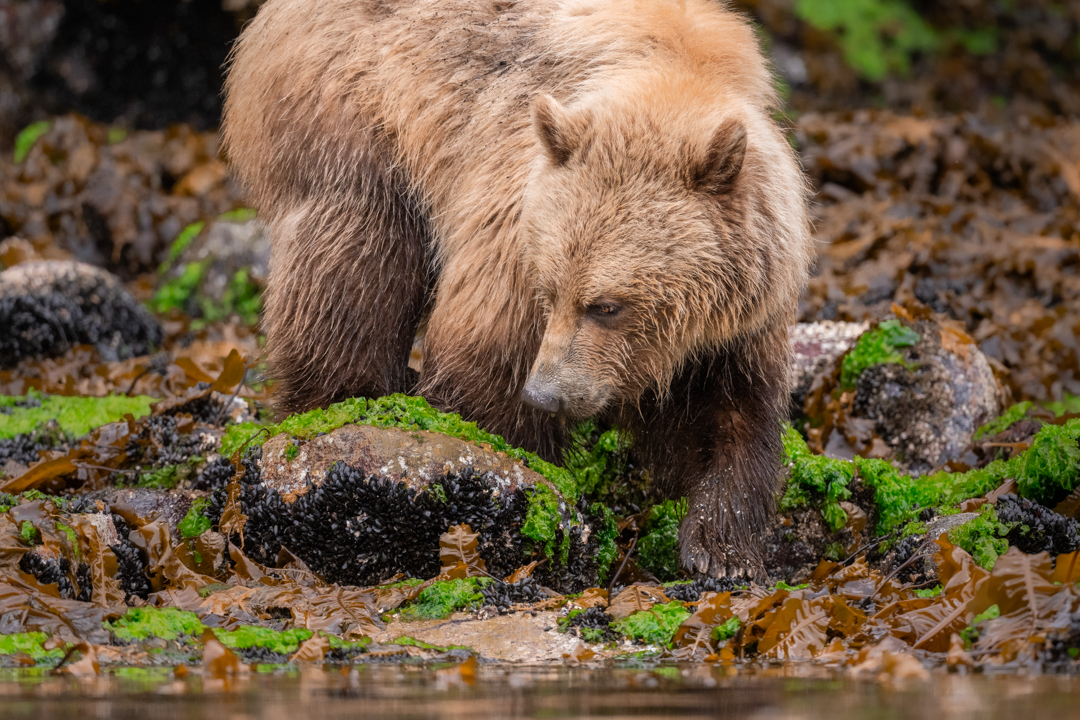
Grizzly Bears are magnificent and the biggest reason visitors choose our lodge!
Grizzly bears thrive here and the viewing opportunities are spectacular. We have operated our Grizzly Bear Lodge for decades and know the prime spots for bear watching. The ultimate grizzly bear photo opportunities.
This is a great pose of a mature bald eagle with a solid white head without any dark feathers and the bright yellow in beak and claws. As common as eagles are on the whales watching and grizzly bear tours it is still difficult to obtain a good picture. The important part is the dark background so that the eagle does not blend with the sky. At times it is hard to find and eagle sitting low enough in the trees to achieve the necessary background.
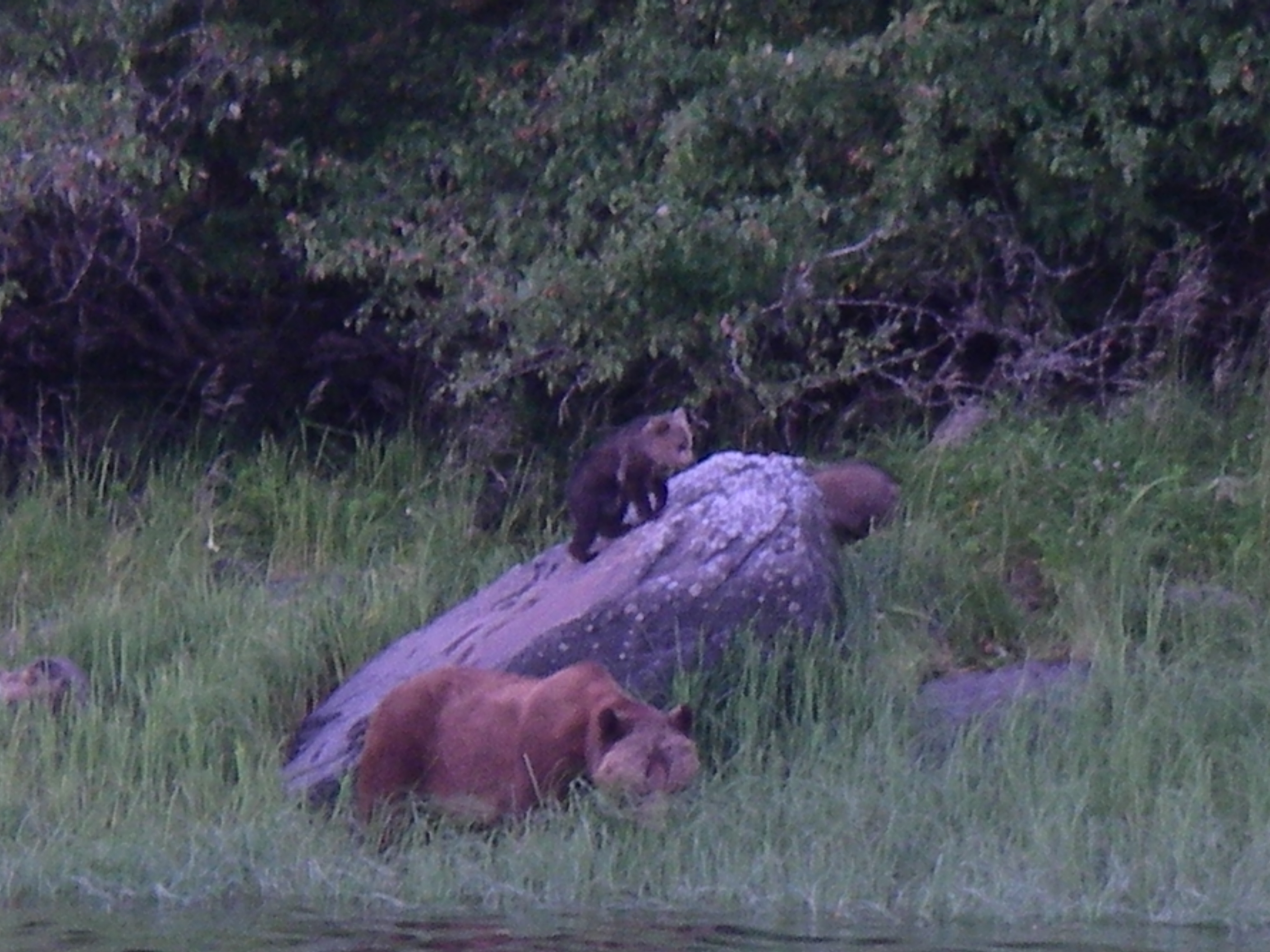
Mid July on a grizzly bear tour up Knight Inlet to the Glendale River estuary and a family of grizzly bears grazing on the breach. A family with first year triplets. One to the left of the large rock, one on the rock and one just behind the right edge of the rock. Sorry the best I could do while maneuvering the boat so we would not get to close and scare them into the high sedge grass. Twins are common in the area; triplets’ not that unusual and this past summer there was even as set of quadruplets a first for the lodge viewing records. On this day the guests got some great pictures much better than mine but that is the most important part of being a guide to ensure the guest photos a better than the guides.
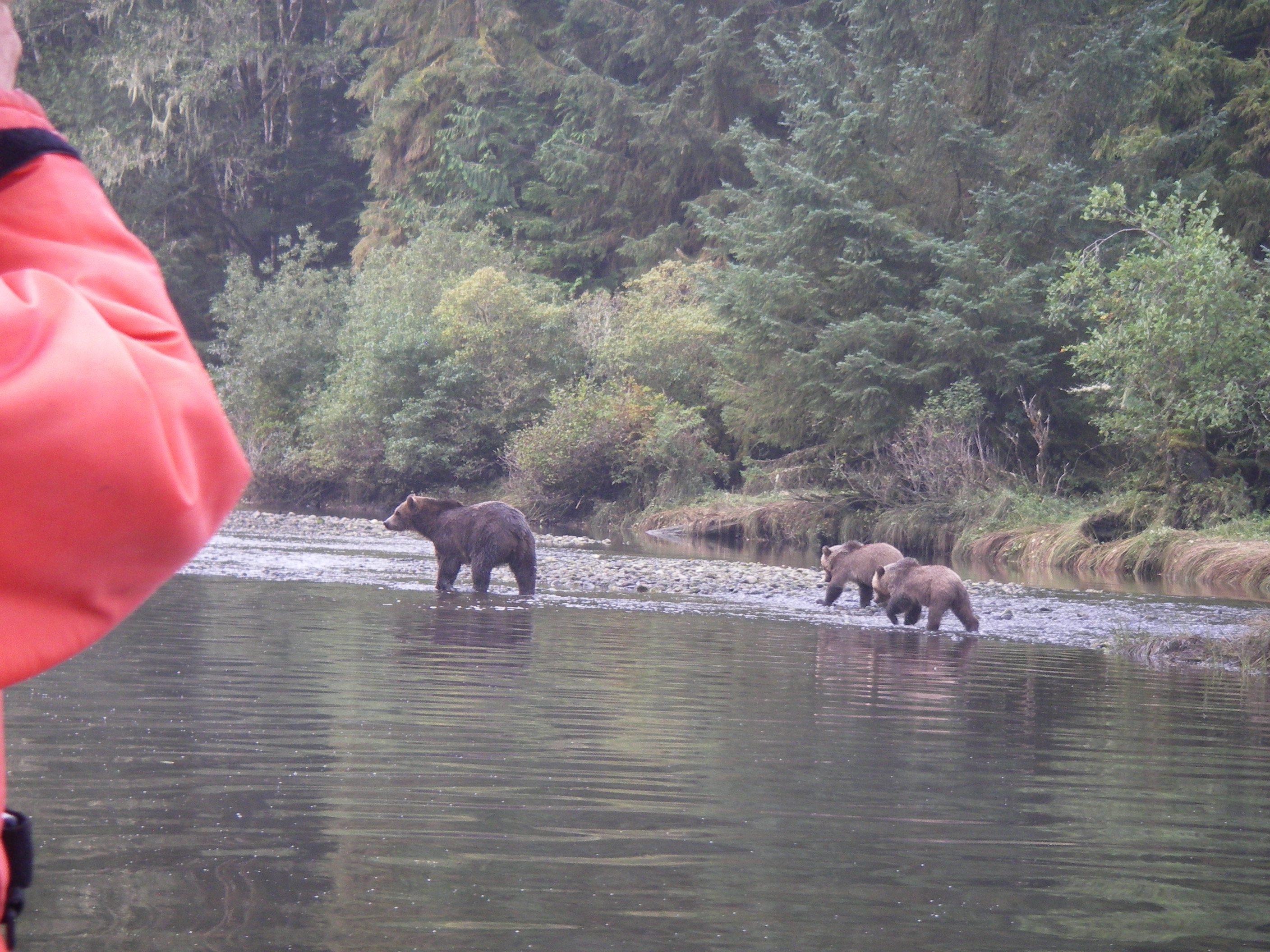
Today’s posting is the opposite of yesterdays. We were still going up the river but these grizzly bears were coming down river. It was a high tide and we were about as far up the river as we were able to go in the skiff. We were hugging one side of the river when the mother and cub came around the corner and passed on the other bank about fifteen meters (yards) away. Over a period of several weeks last summer we viewed mother grizzlies and their cubs on a daily basis as we all moved up and down the river with the tide.
The Glendale River, which flows into Knight Inlet, is a tidal river located about an hour and fifteen-minute boat ride from the lodge. As tide rise we can go up river in a shallow draft eighteen-foot skiff and follow the bears. On this day a mother and cubs were slowly grazing in the sedge grass along the riverbank as they made their way up river. The orange arm in the photo belongs to a guest and provides some perspective of the closeness of the bears. We followed this family for about thirty minutes before they wandered into the forest.
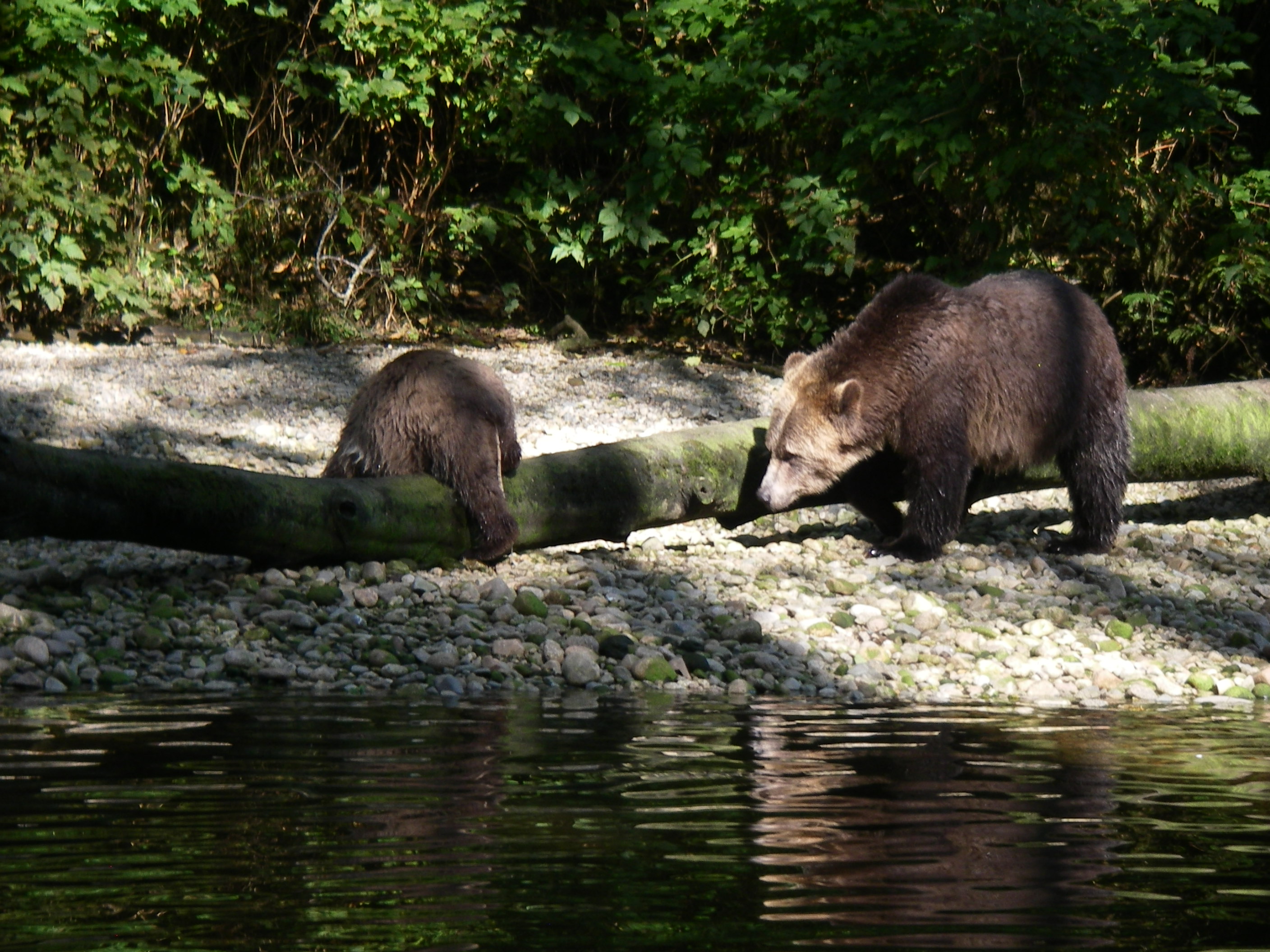
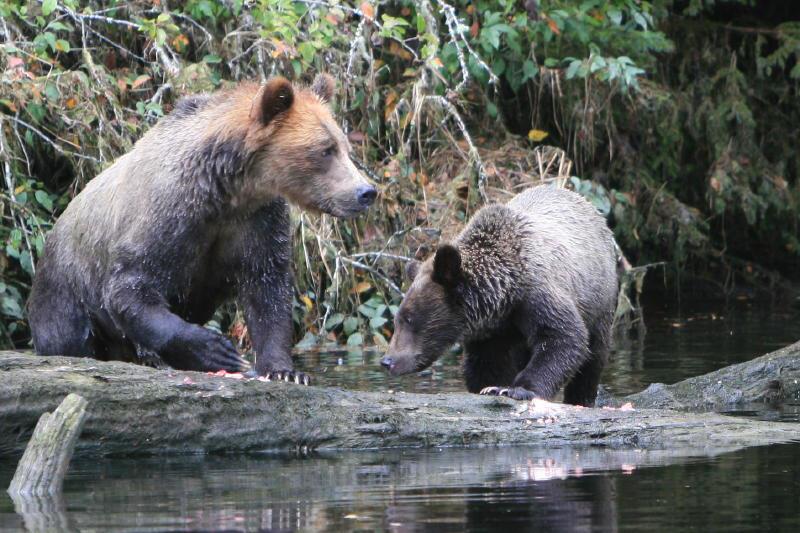
The grizzly bear tours from the lodge after August 24th as permitted up the Glendale River to watch the grizzlies catch and eat the spawning salmon. In this case the two year old cubs wants a share of mother’s salmon but mother thinks that at this age it should be catching it’s own food. Grizzly cubs have been known to stay with their mother three or four years if she does not become pregnant but they could also be denning on their own after the second summer.
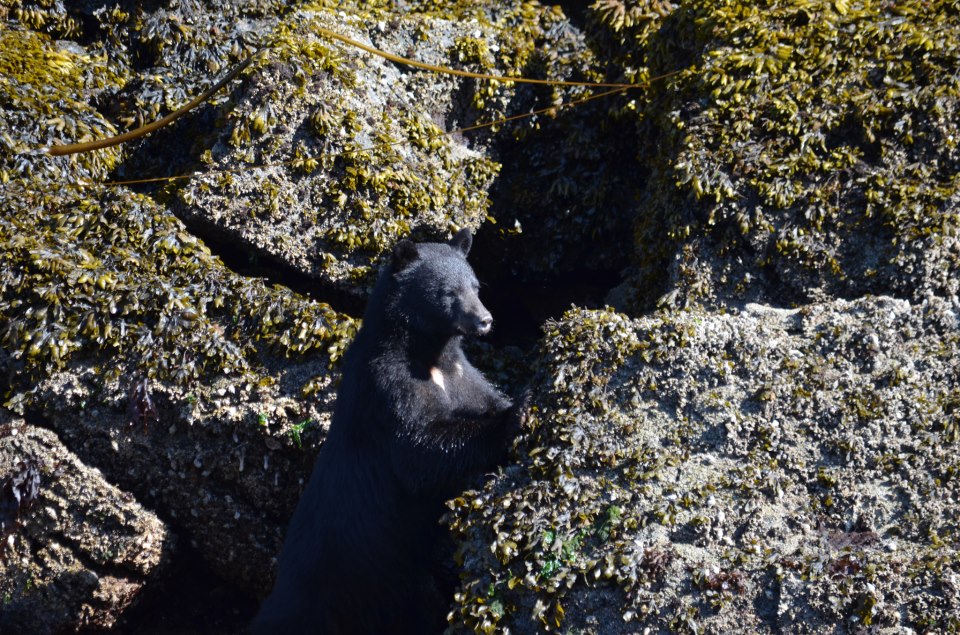
The black bears we view along the beach whether on a grizzly bear or a whale watching tour or most often on a beach with rocks that can be turned over in search of food. But they also like the larger boulders because of the number of barnacles and black mussels. They will scrap the barnacles loose with and eat them shell and all. The same goes for the mussels. This is a good source of protein for the black bears. They do not have access to the salmon rivers in this area because the grizzly bears control the rivers.
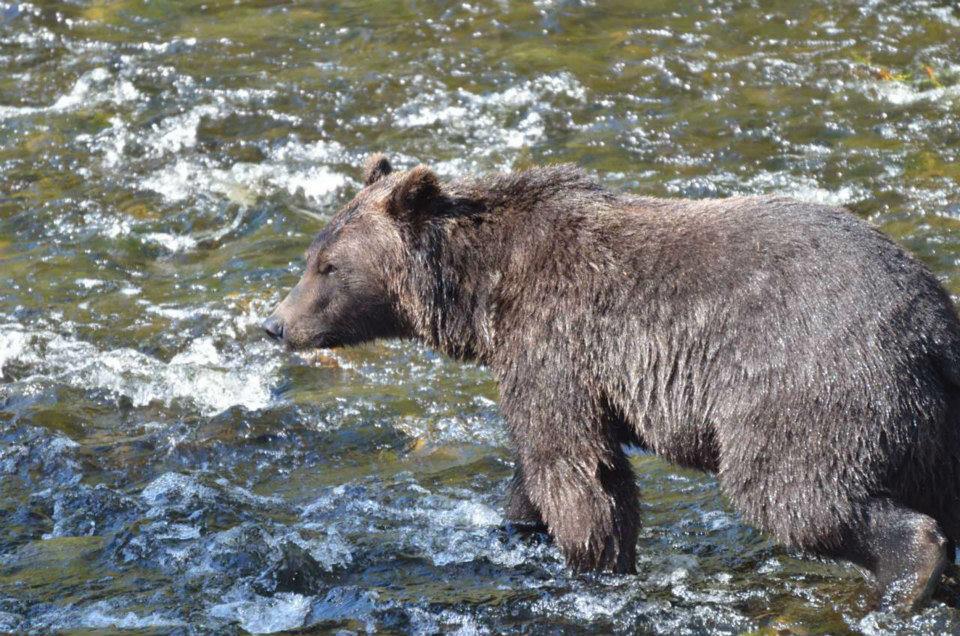
The fall grizzly bear tours from Grizzly Bear Lodge spent there day on the Glendale River located on Knight Inlet about 40 km (26 m) from the lodge. The salmon have arrived in the river and the grizzlies are hungry. And if one was to ascribing human emotions or motives to this bear it would be “determination”. It came down the bank focused of the water ignoring other bears in the area and began to fish catching a salmon and walking back up the bank to eat and then repeated the process. It did this for about an hour and then walked away down the road.
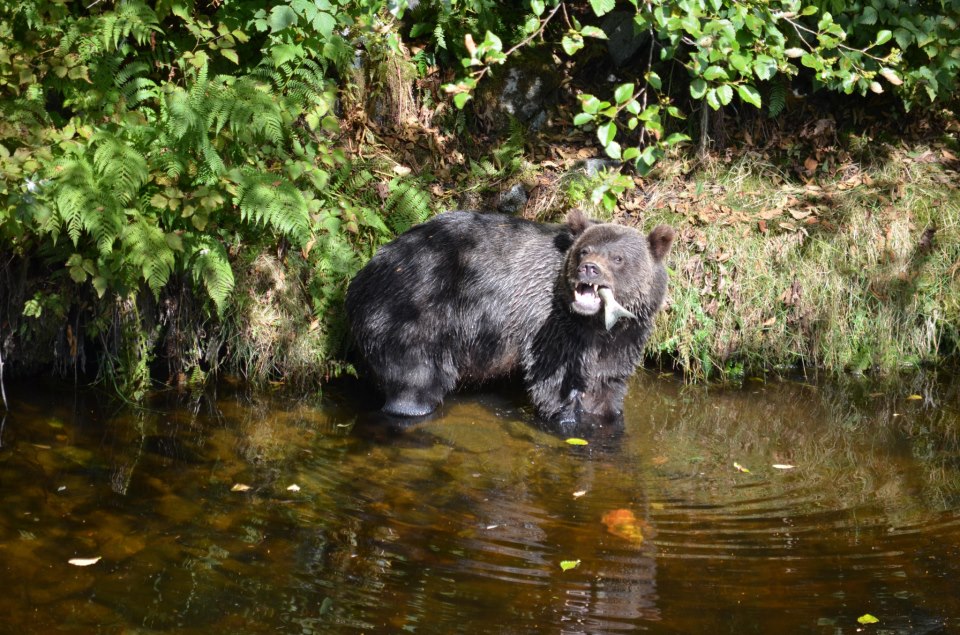
The reason for watching grizzly bears on the rivers of British Columbia’s coast is to obtain photos and more important memories of the grizzlies catching and eating salmon. This photo of a bear eating the “whole” salmon shows a hungry bear. At the start of the salmon arriving in the rivers the grizzlies have been eating sedge grass, root, bulbs, berries and turning over rocks on the beach for three or four months. This food source keeps them alive and adds a little fat but what the coast bears want is salmon and when they first arrive they eat the whole salmon. At the end of the salmon run and just before denning (hibernation) if the bears do not have a sufficient fat layer they again will eat the whole fish. In between these two times grizzlies are more selective catching only the females for their eggs or just eating the skin and its fatty layer or the brain.
But on this day the male grizzly was not far behind. We left these bears and had our picnic lunch. Came back about an hour later and he has followed her into the estuary and was still giving her his undivided attention.
Decision made she headed up the beach past the bow of the boat into the back of the Glendale River estuary. The river mouth is a large flat sedge grass covered area and easier to travel on than the rocky beach. We have viewed other female grizzlies take this approach when wanting to escape form an unwanted suitor…..more tomorrow.
Just like that another season has come to an end. We are grateful for all the wonderful staff and the guests this season. It was an excellent season and we are already looking forward to next May.
One of the highlights of the season was all of the new cubs out. It was awesome to see so many new cubs of the year and that is great news for our bear populations moving forward. We had great spring viewing and this continued through summer. On our river trips we started to see salmon arriving in August and enjoyed some great shoulder season viewing. The fish at the viewing platforms were a little late showing up this year, but viewing during late September at the platforms was great and the estuary viewing remained strong throughout the season.
Out in the whale watching world it was another year that saw large numbers of resident Orca who remained in the area right into October. The Humpback viewing was also great with large numbers feeding in Blackfish Sound. It is so amazing to have these magnificent animals back in our waters in such numbers.
Over the winter and spring we will be doing some repairs and maintenance. We rebuilt the front deck last spring, utilising cedar cut on site. We will continue with some siding, rooms improvements and hopefully a floating sauna ready for the start of our season.
2026 is already looking like a very busy season for us. We only have limited high season availability so please book early to ensure we have space for your group.