Grizzly Watching

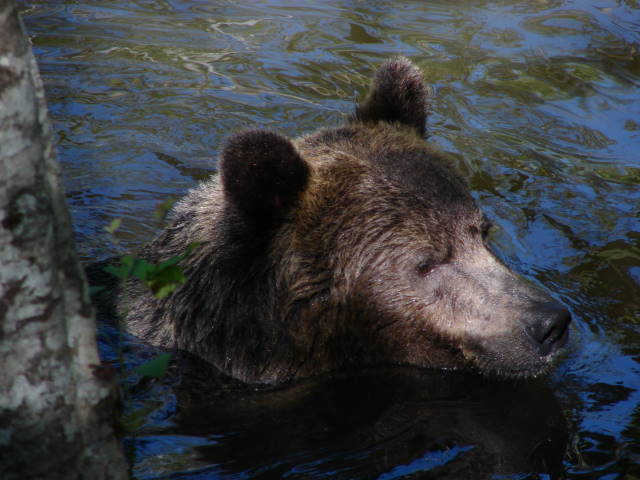
Grizzly Bears are magnificent and the biggest reason visitors choose our lodge!

Grizzly bears thrive here and the viewing opportunities are spectacular. We have operated our Grizzly Bear Lodge for decades and know the prime spots for bear watching. The ultimate grizzly bear photo opportunities.

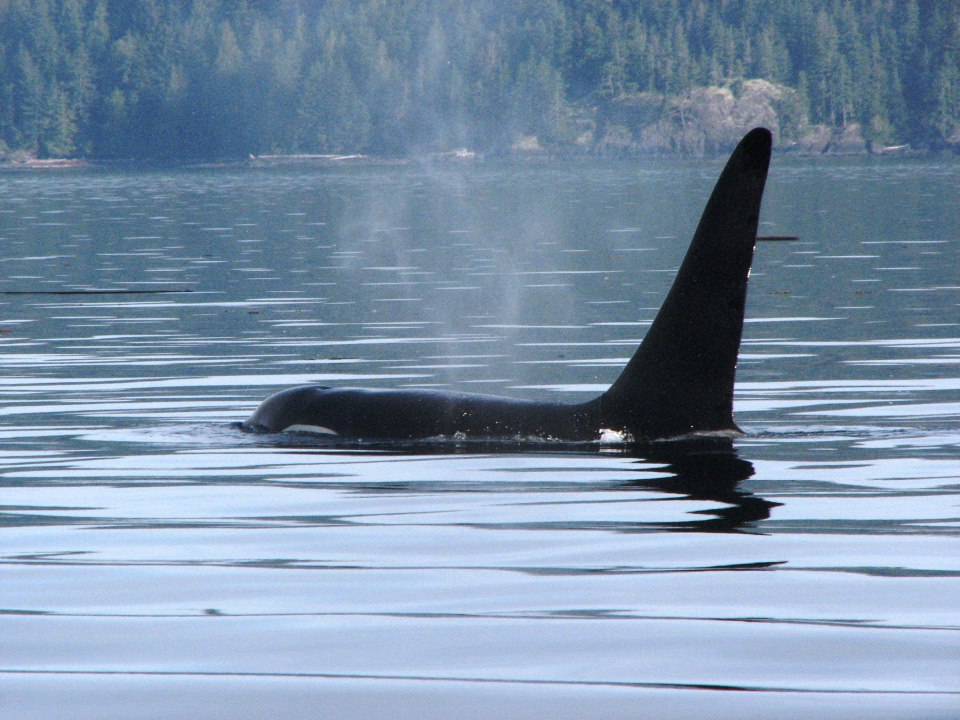
Killer Whale – Male

killer whale dorsal fin
Click to enlarge then click again

Orcas (killer whales) can be identified on an individual basis due to natural markings and differences in fin shape. Dorsal fins that vary in shape and size often have unique nicks or scars. The saddle patch behind the dorsal fin also varies from in shape, size, color and scarring. This male orca is a member of the northern resident community, which are most often seen during the summer months in the area of western Johnstone Strait and Queen Charlotte Strait, off northeastern Vancouver Island. This orca watching area adjacent to Grizzly Bear Lodge is also the home of humpback whales, which along with the orca are normally viewed on a daily basis.
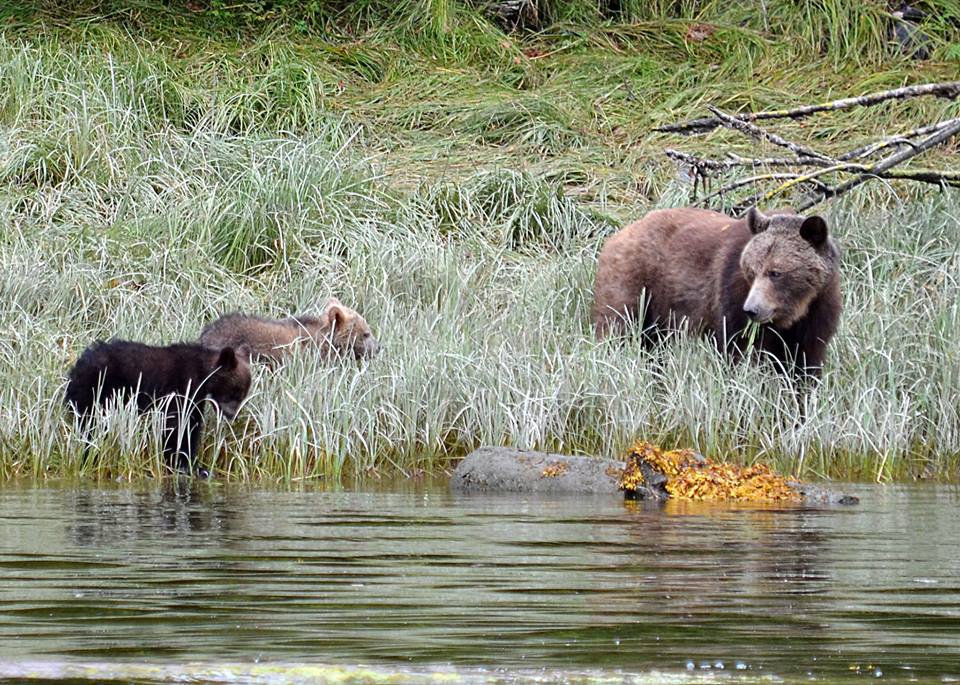
Grizzly Mother and spring cubs

grazing grizzly cubs
Click to enlarge then click again

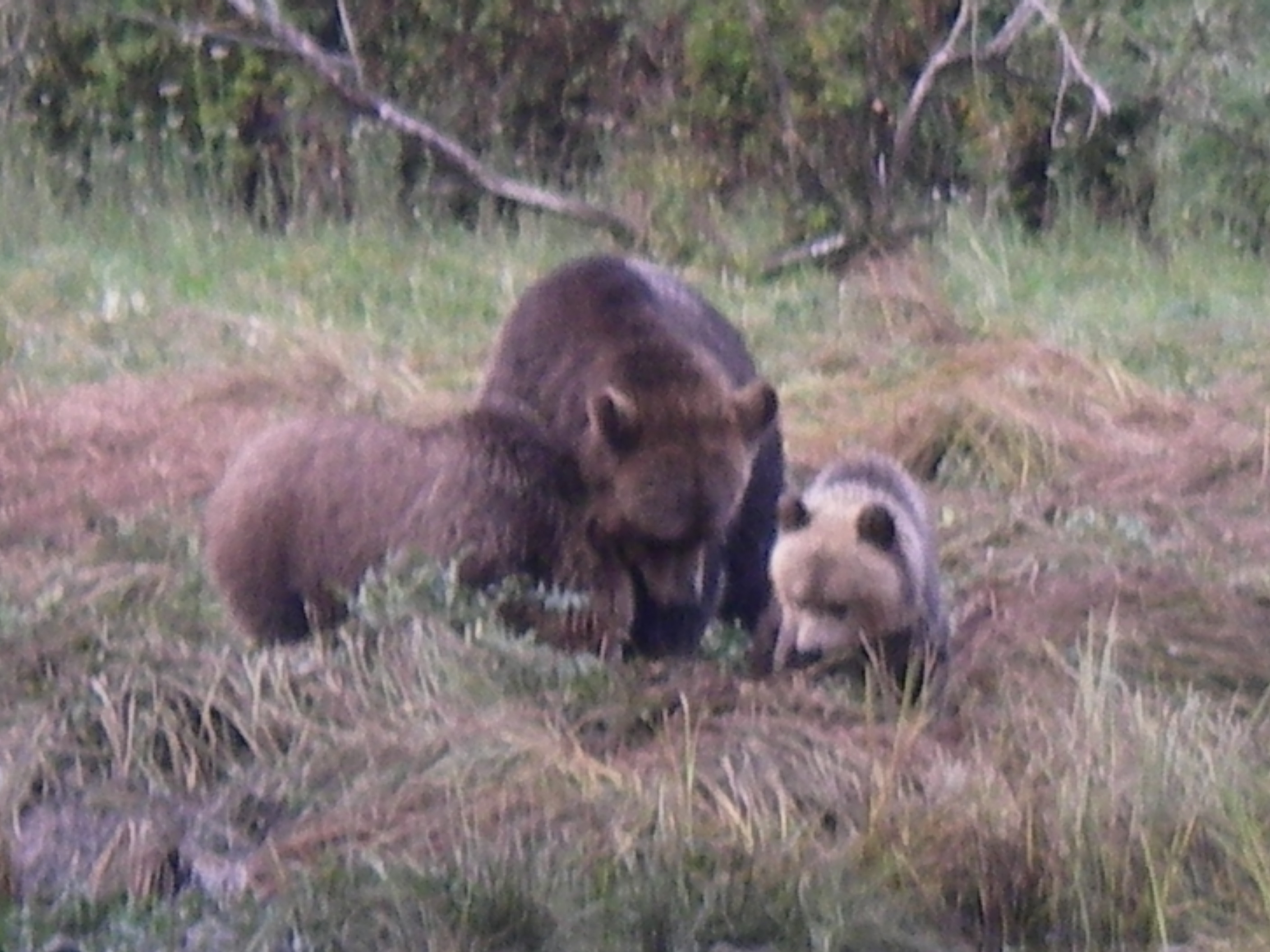
Spring and early summer (until August 24th) tours from Grizzly Bear Lodge involve a boat ride up Knight Inlet to the estuary of the Glendale River.  This photo of the grizzly bear with two spring or first year cubs was taken in this estuary. The mothers bring their cubs to the shores along Knight Inlet in late May.  The cubs born in January or February are only three or four months old and when they first appear along the shore stay close to their mothers. As time progress they move into the estuary to feed on the protein rich sedge grass.  These cubs are closer to five months old but still stay close to their main source of food as they will nurse for a few more months and there will be a few male grizzlies in the area because mating season last until mid-June.

Grizzly Sub-Adult

sub-adult grizzly
Click to enlarge then click again

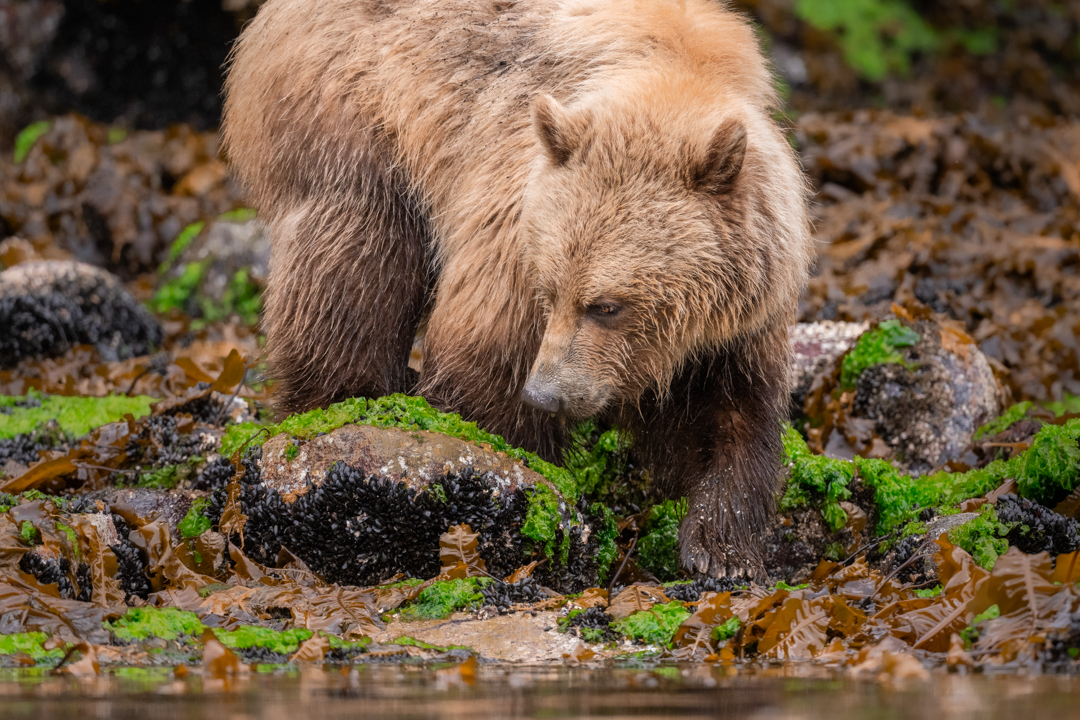
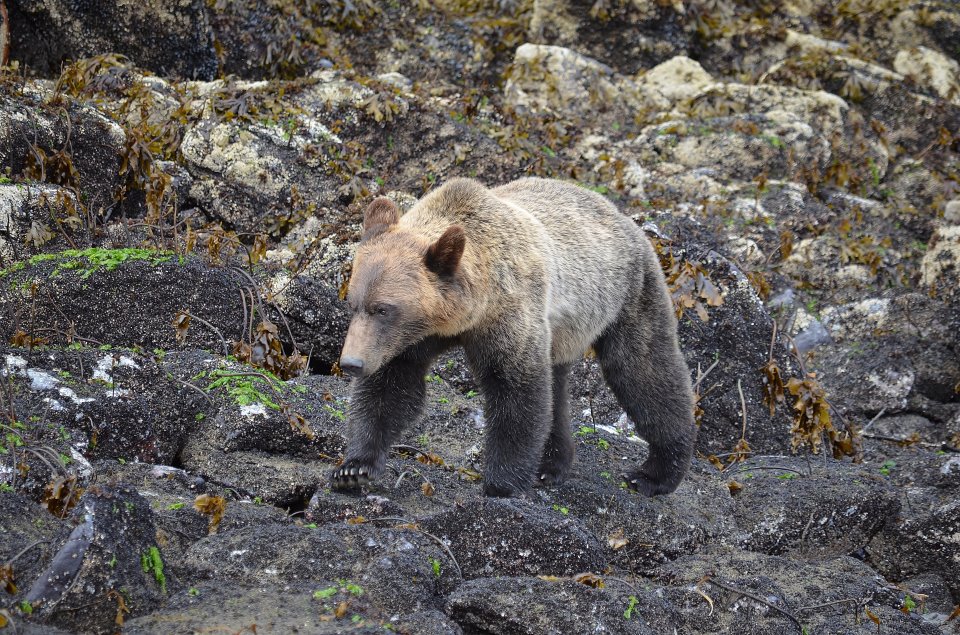
This is a great picture of a sub-adult grizzly in BC’s Glendale River estuary in the spring. The long looking legs because of the absence of a fat belly means that sedge grass and protein from turning over rock is this bear’s main food source.
Sub-adult or juvenile grizzly bears refer to the age they leave their mother and they reach sexual maturity. Depending on food abundance mother grizzlies may keep their yearlings a second (even a third) year, denning together again and breaking up in the third (or fourth) year. The average breeding age for female grizzlies is 4.5 years. Males reach sexual maturity at roughly the same age as their female counterparts. Even though males are capable of breeding at three or four years of age, they rarely have the opportunity to do so because of intense competition from older, bigger males.

Black Bears in the evening

black bear follows cub
Click to enlarge then click again

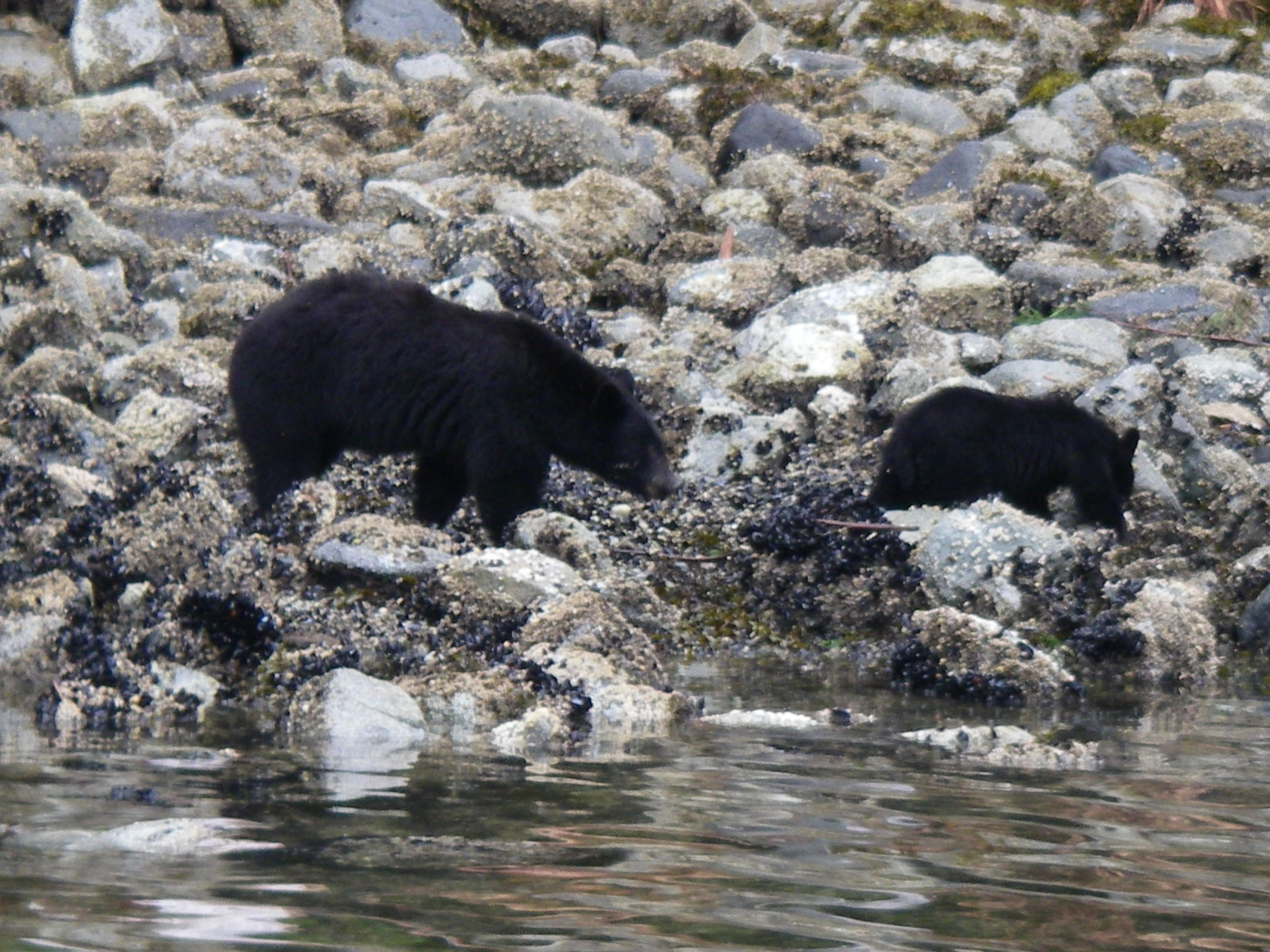
The float plane flight from Campbell River on Vancouver Island means that arrival at Grizzly Bear Lodge is between 3:00 and 4:00. Once guests are settled in their rooms a welcoming snack of fresh dungeness crabs or prawn is served on the front deck. The first evening is a familiarization tour where you get to know your guide and feel comfortable is the boats and start to check off the list of wildlife you hope to see. If the tide is right and low enough to have a beach black bears may come to forage. As both the grizzly bear tours and the whale watching safari days are by boat the guides are always looking for black bears. Black bears appear on the beaches to turnover rocks. This inter-tidal zone “food” is high in protein and is made up of crab, clams, barnacles, amphipods and other tiny invertebrates.


Grizzly Bears September River Trip – 4

arm in grizzly photo
Click to enlarge then click again
grizzly long view
Click to enlarge then click again

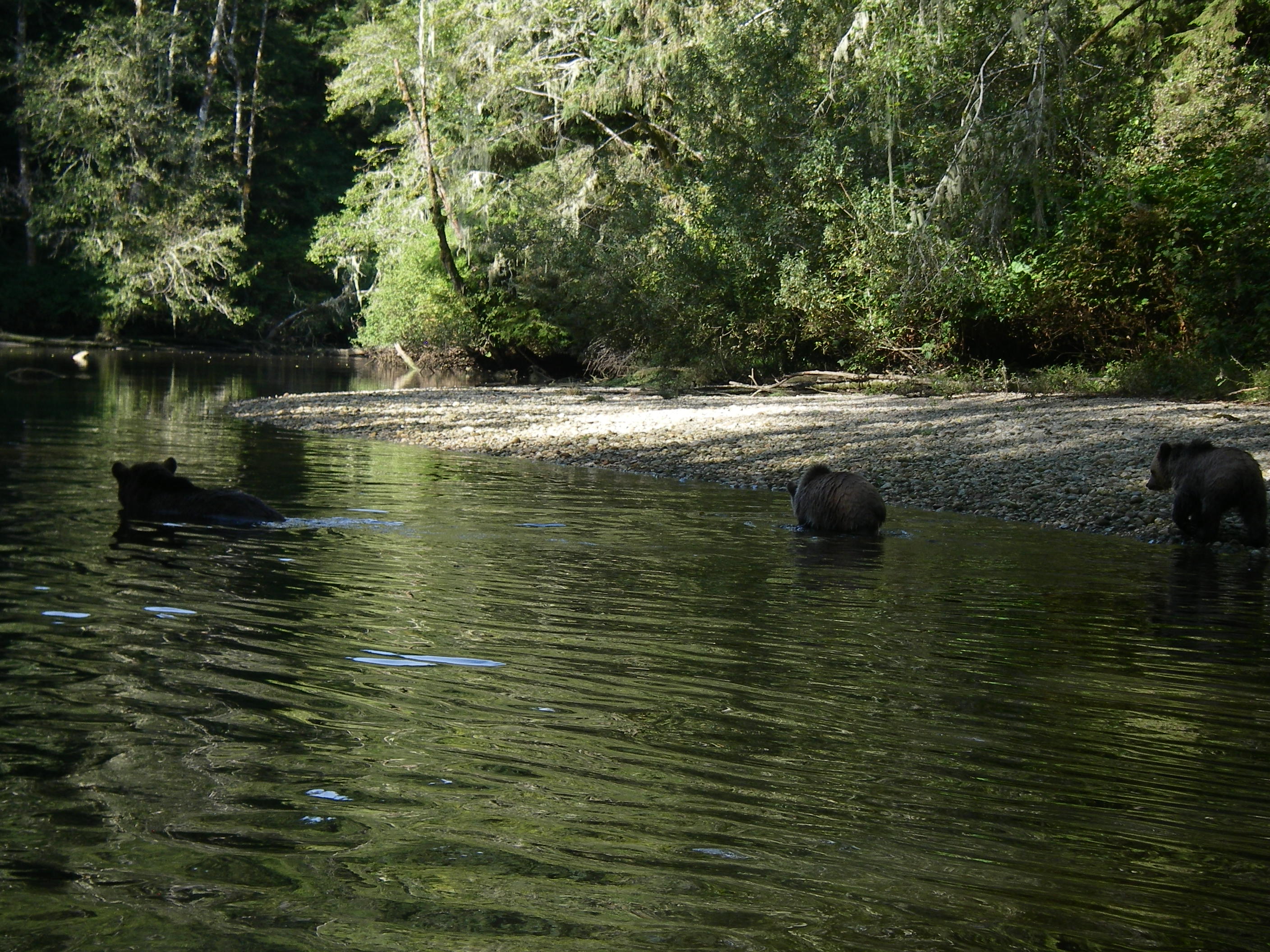
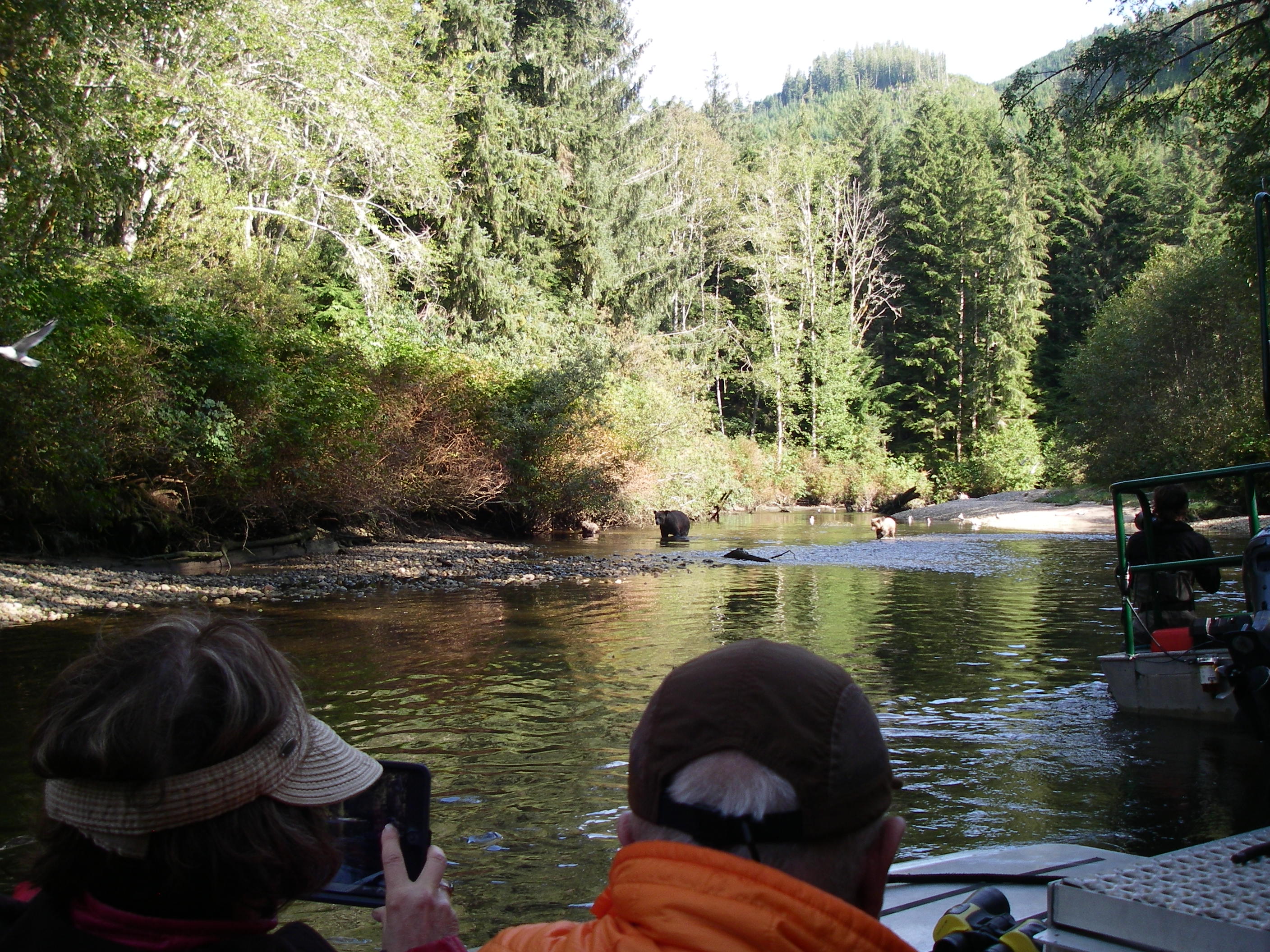
The bears move into the water and down river still looking for salmon. This mother and cubs are quite fat for this time of the season so their daily routine of walking the river in search of food must be a successful.  Not that these pictures were taken with a point and shoot Pentax Opti 6mp 3X Optical Zoom I can only imagine the quality of the photos my guests obtained with their long lens camera and then again maybe we were to close.

Grizzly Bears September River Trip – 3

grizzly close on river
Click to enlarge then click again
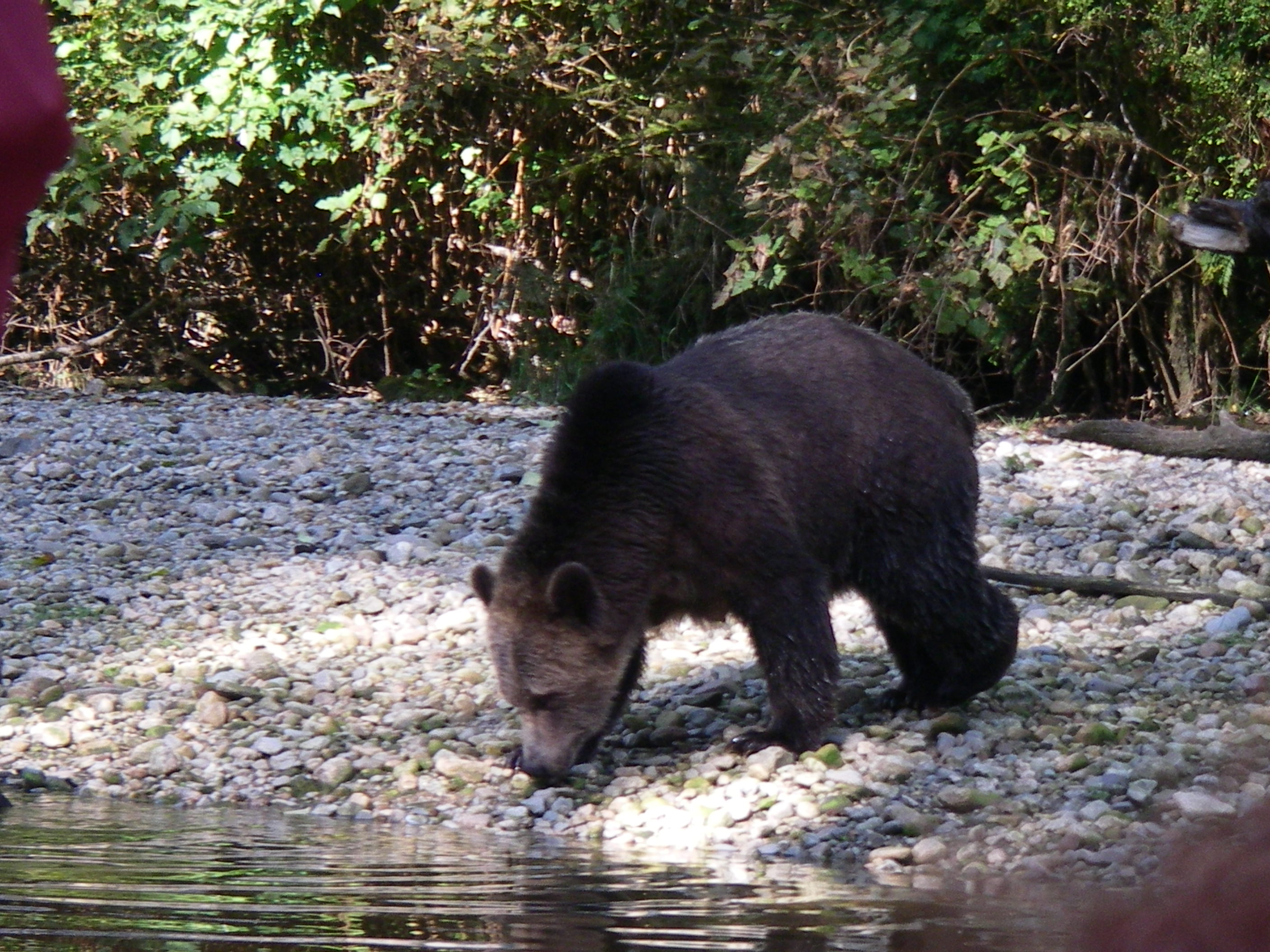
second year grizzly
Click to enlarge then click again

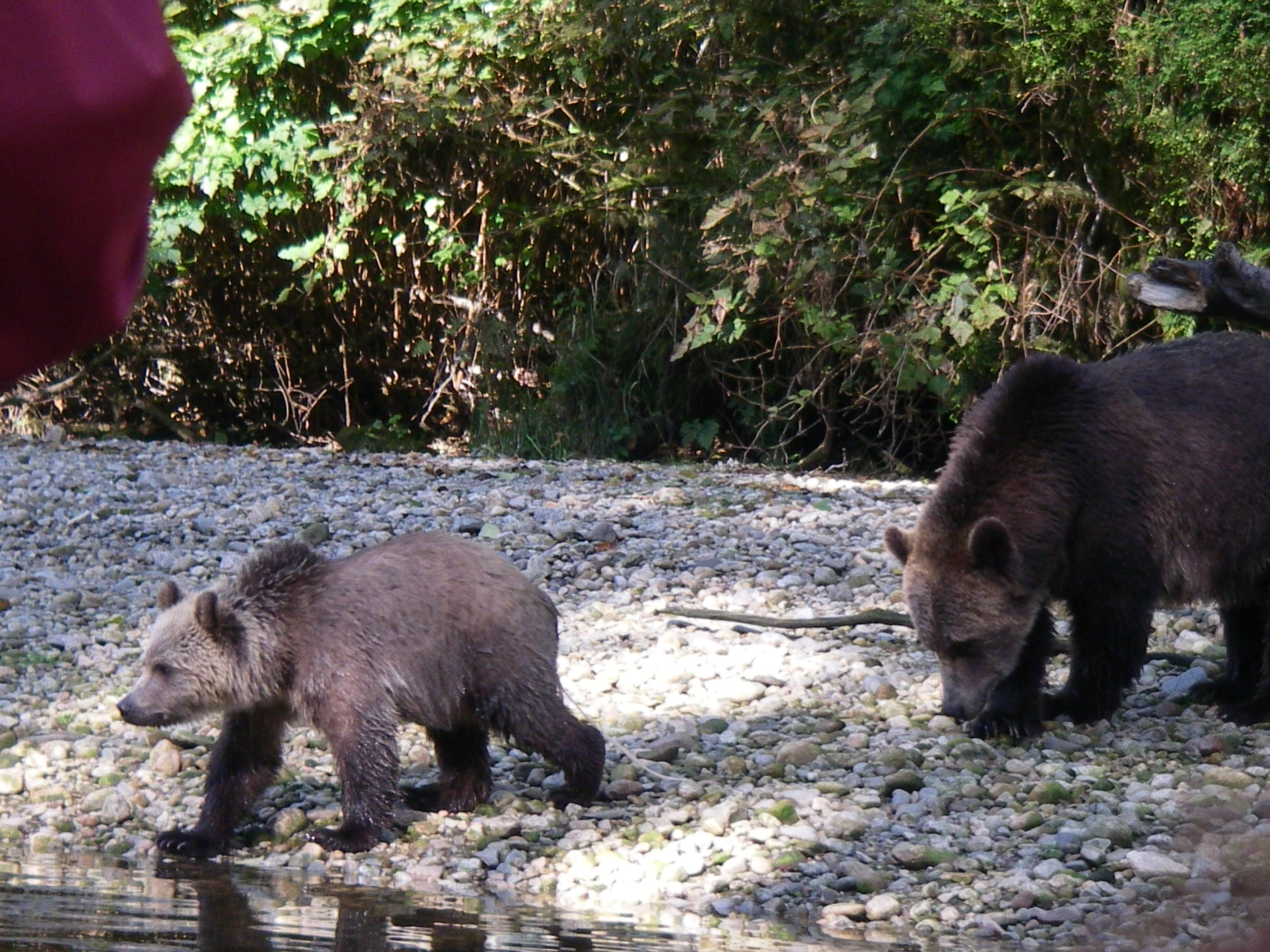
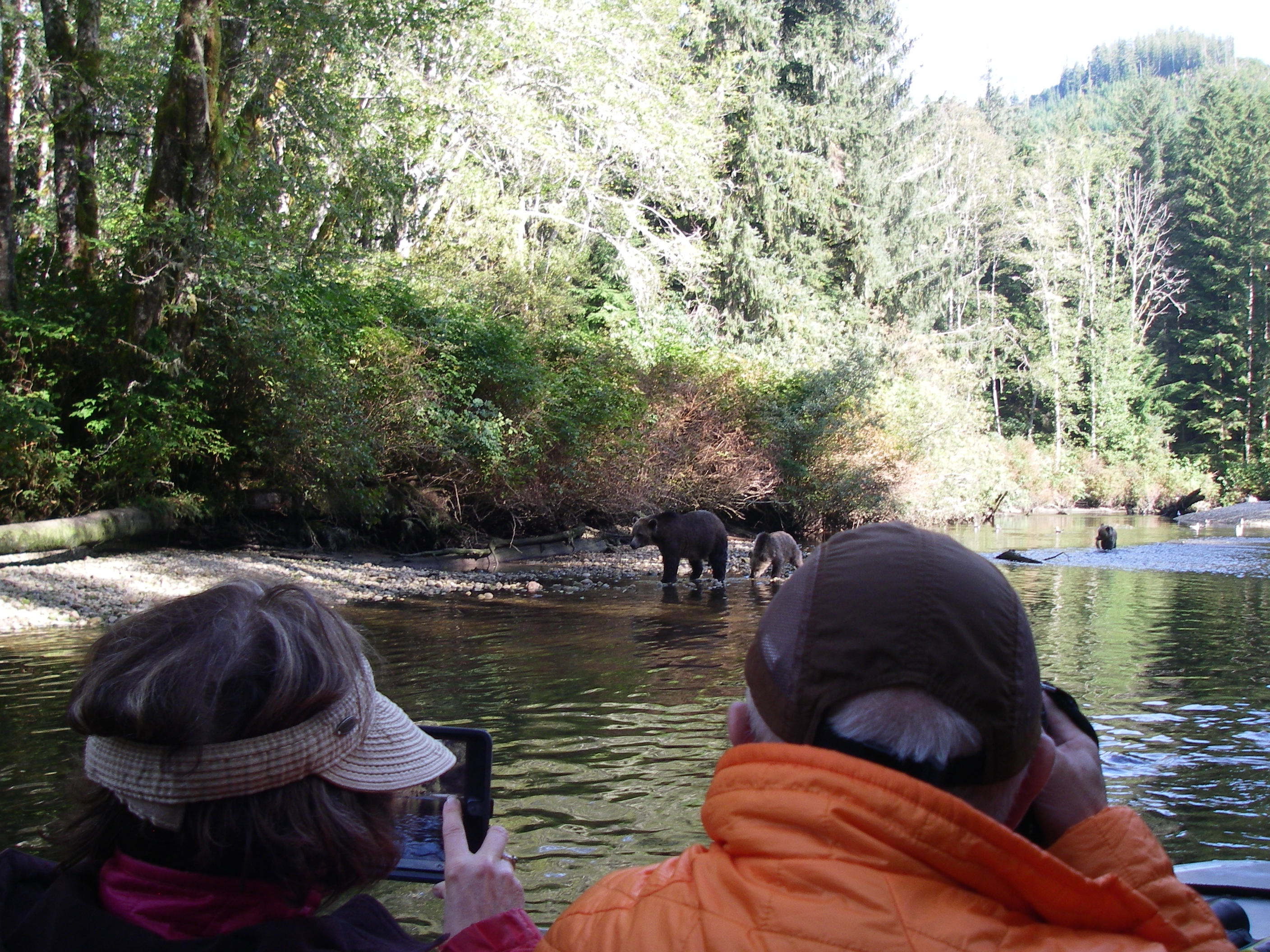
The mother grizzly and cubs have climbed over the log and are about to enter the river just behind the boat. If you look over the previous photos in this series of postings you will notice the grizzly did not make eye contact by looking toward the boats – staring a bear in the eyes is a sign of aggression. And the guests were cautioned that it was ok to glance and take pictures but to avoid “bug eyed staring”. The mother had her head down while the cubs would occasionally glance toward the boats when a camera was making noise. …. more tomorrow


Grizzly Bears September River Trip – 2

Click to enlarge then click again


Click to enlarge then click again

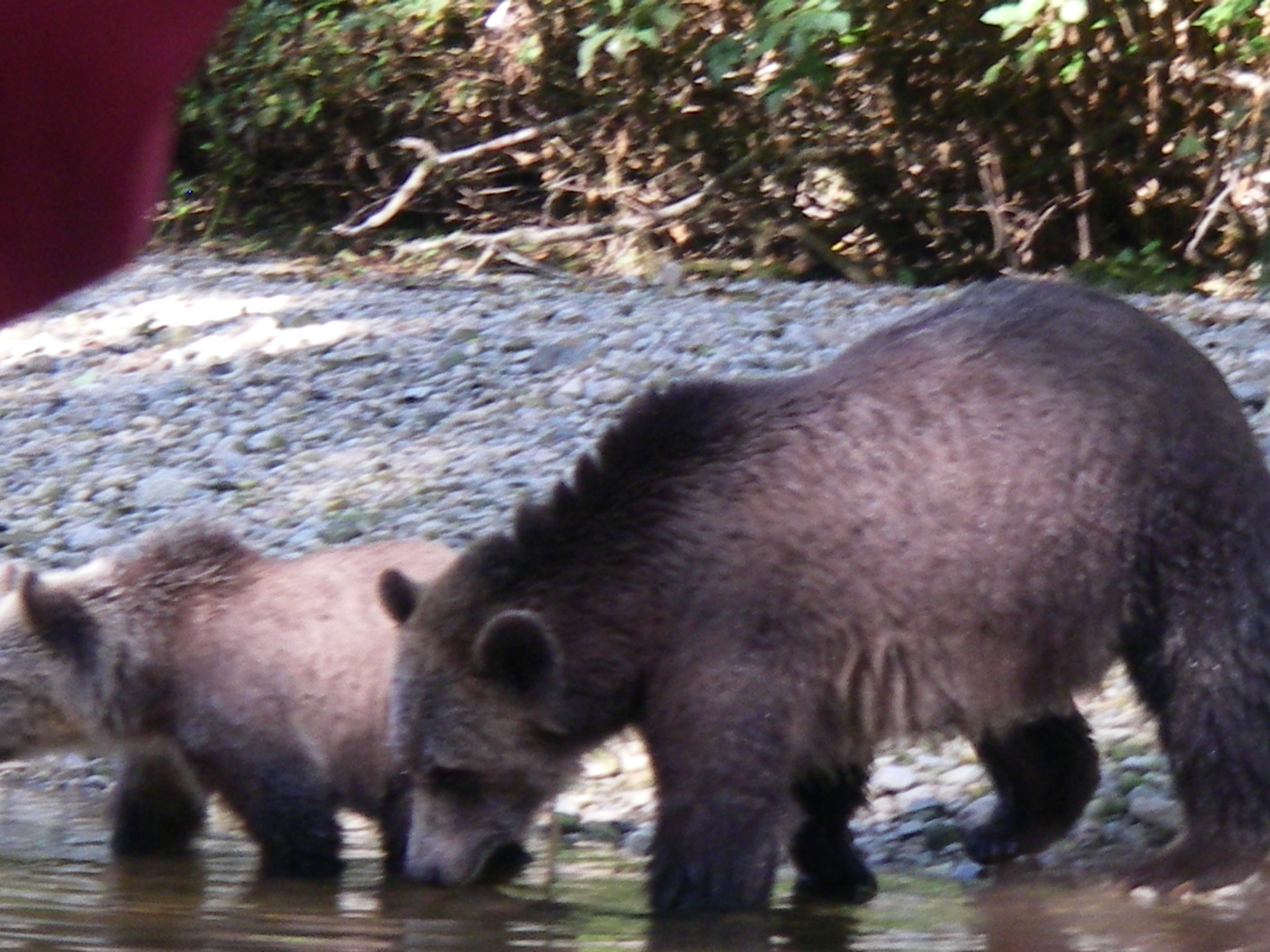
You my notice that both the guests head and the bear are in reasonable focus so the distance is close. At this point the mother grizzly bear was about fifteen meters or less than fifty feet across the river from the boat. Knowing the bears and their habits we were very safe in our location. These same bears had being coming down the river for about five days and had accepted the boats presence and as you may have noticed there was a larger boat ahead of ours and another behind, enough to make the bears very cautious…. more tomorrow


Grizzly Bears September River Trip – 1

river grizzly watching
Click to enlarge then click again


closer river grizzlies
Click to enlarge then click again

A beautiful fall morning on the Glendale River located on Knight Inlet, which is part of British Columbia’s Great Bear Rainforest. We had left Grizzly Bear Lodge at 7:30 for the hour and half boat ride up the inlet to the river. After taking Angus’s guest to shore for the SUV ride up to the viewing stands my guests climbed into the flat bottom river skiff for an estuary tour. If you check the Jan 1st posting “Google Map of Spawning Channel” it shows the yellow dot of the float and we went from there into the river and up past the tree line. At times pulling the boat over the sand bars and up the shallow river but as the tide came in we were about half a mile into the tree’s when we saw this mother and cubs coming down river. We had moved to the riverbank and I was standing in hip deep water holding the boat…… more tomorrow


Grizzly cubs – different size and colour

grizzly cubs size matters
Click to enlarge then click again

This photo shows that grizzly bear cubs are often different colours and can be quite different in size even though they are siblings. The size difference is often a result of one being a male and more aggressive than a female. This means first to nurse and the first to solid food once they are on the beach in the spring. It could also be due to the fact that siblings may have different fathers as females will mate with multiple males. A genetically larger male may produce a larger cub.  And the difference in colour is a result of the different mating partners. As the season progress and salmon become more of their diet the oils will cause the fur to darken but these are “spring cubs” and salmon are not in the rivers.

Myrna Daschuk, Haida Gwaii BC– 3

grizzly face
Click to enlarge then click again

Driving to and from the viewing stands we drive slowly along side of the spawning channel for a short distance. This is a shaded area mentioned in Jan 5th post often contains allot of grizzly bears. The drive is slow enough to allow some good photos such as the one above.