Grizzly Watching

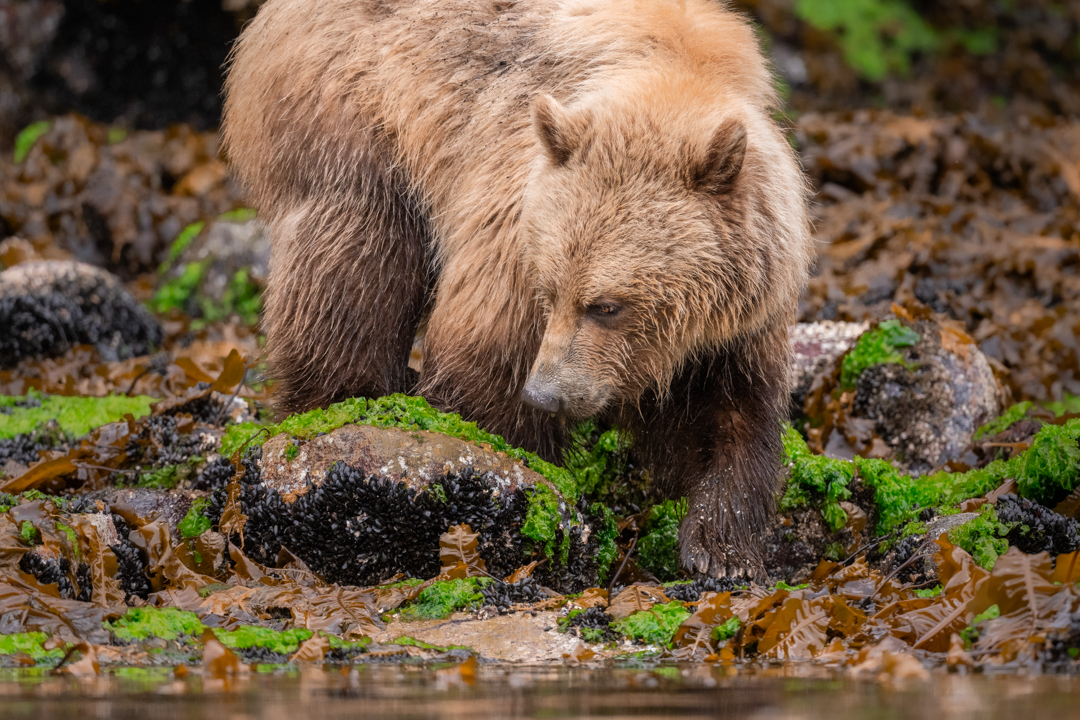
Grizzly Bears are magnificent and the biggest reason visitors choose our lodge!

Grizzly bears thrive here and the viewing opportunities are spectacular. We have operated our Grizzly Bear Lodge for decades and know the prime spots for bear watching. The ultimate grizzly bear photo opportunities.
Grizzly bears watching and waiting

grizzlies share a rock
Click to enlarge then click again

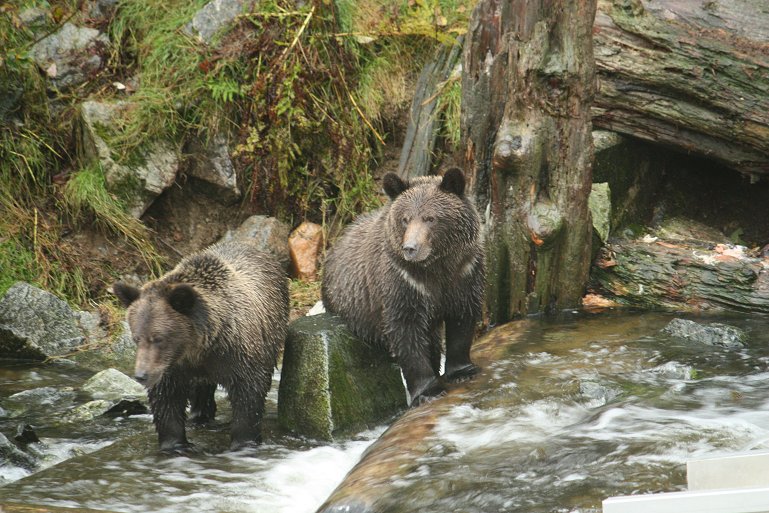
These grizzly bear siblings seem to be old enough to fish on their own but they appear to be waiting for something to happen. It could be the lack of salmon in the river or that other larger dominant bears have moved then to the sidelines. It could be perspective on my part in that when you do not have another bear use for size comparison maybe they are just very fat two year olds waiting for mother to provide another meal.  However at two they should be fishing because next year they would normally be on their own. At times the cubs stay with mother more than two years and if she is not pregnant cubs may stay with their mother for four years.

Guests being ignored

grizzly below stands
Click photo to enlarge then click again


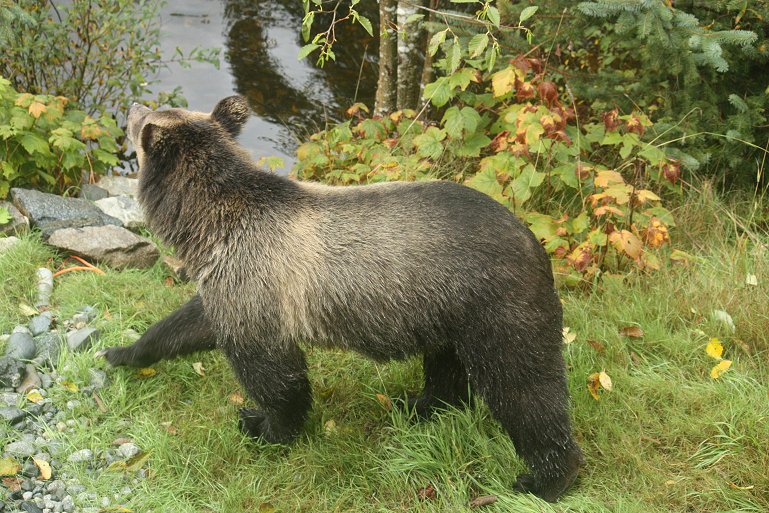
“If I don’t look at you are not there.” The grizzly bear tours from the lodge, after August 24th, are permitted to travel up the Glendale River to the man-made spawning channel and use one of the two viewing stands. These brown bears have accepted or presence and will pass close and at times underneath the stands.  They seem to show no fear but loud noise, flashes from cameras or sudden movement will cause them to move off the river.

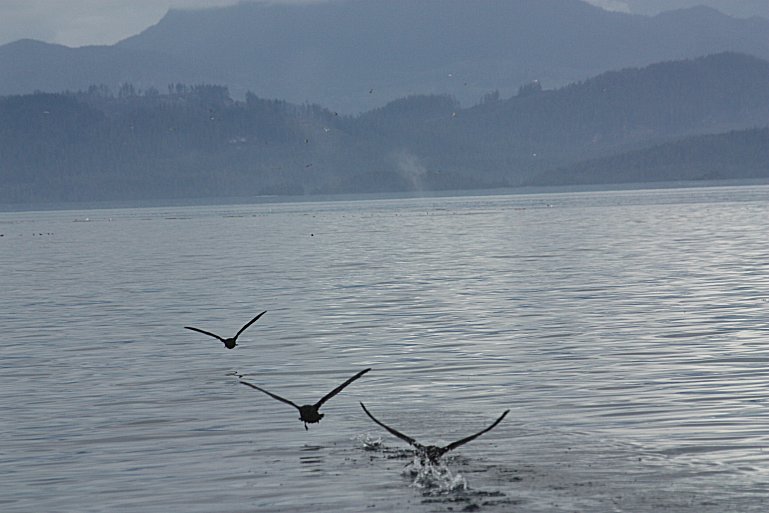
Surf scoters departing

Ducks Departing

Large flocks of surf scoters while wildlife viewing are common in Knight Inlet as well as the area of Johnstone Strait where we spend our day’s whale watching.  The abundance of food for these ducks in the form of herring is shown in the difficulty that they have leaving the water. They appear to be running on the water while trying to build up enough speed to become air born but it is common to see the ducks abort a take off and go for the dive to get out of the way of approaching boats. Maybe this is why airlines are so careful when calculating their payload, as they would find an abort with a dive rather uncomfortable.

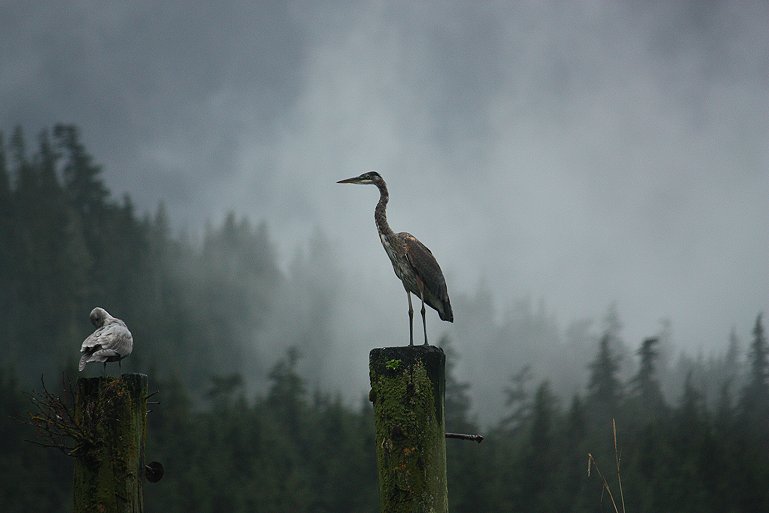
Great Bear Rainforest heron

Great blue heron

A misty morning in the Glendale River estuary and Lynn Morris captures a great blue heron the safest way. Our wilderness tours leave the lodge by eight in the morning for the hour and quarter run along the shores of Knight Inlet with a constant lookout for wildlife. Wildlife seen like the ever present bald eagles, frequently black bears, often pacific white-sided dolphins and on the rare occasion killer whales. Most days the run up the inlet is fog free and the few days there is fog it clears part way up the inlet. This appears to be a day with a low mist coming down the inlet and adding to the mystery and excitement in a grizzly tour. Heron are normally seen wading shores, in the river, walking on kelp beds or the lodges log breakwater looking for food on pilings less common.  Even thought they do nest in trees I still find it hard to accept when I see this long legged bird sitting in a fir tree along the shore.

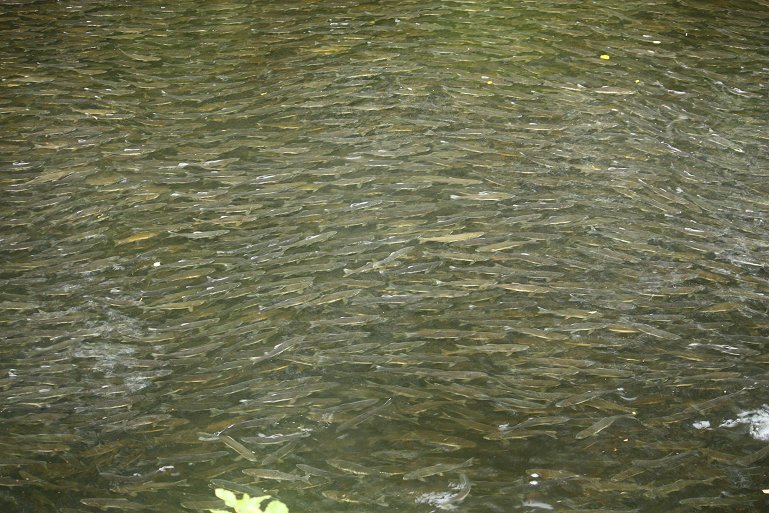
Pink salmon in the Glendale River

Pink SalmonThe reason the grizzly bears travel over a hundred miles through the Great Bear Rainforest of BC to the area of the Glendale River is the number of pink or humpy salmon that return each year to the man-made spawning channel. This photo by Lynn Morris shows the abundance of the salmon during the peak of the run. The travel distance was documented about ten years ago when ten bears were fitted with radio (GPS) collars to determine their den area to see if proposed logging would do any harm.


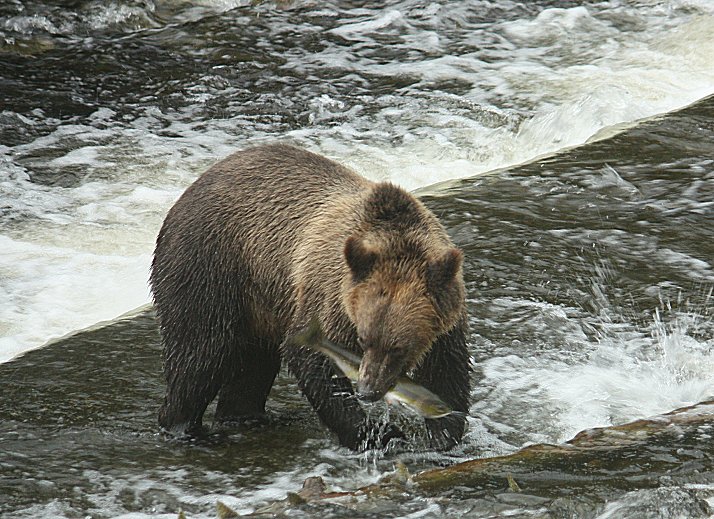
Grizzly bear eating salmon

grizzly eating a fresh salmon
Click photo to enlarge then click again

This grizzly bear is not being selective eating this pink salmon. Looks like the “whole” fish is to be devoured not just the eggs or the other high fat body parts.  The closer it is to the end of the salmon run and therefore hibernation the more likely it is that all the salmon is eaten. It comes down to numbers; the number of days left to put on sufficient number of pounds to survive the winter. Fat brown bears are more selective and this bear’s belly is a little to far from the water meaning that it does need to add some bulk.

Grizzly Bears sharing

male grizzly with fish
Click on photo to enlarge then click again

This photo by Lynn Morris shows two grizzly bears, each eating salmon, and not being concerned with the closeness of the other bear.  The abundance of pink salmon means that there are few disputes over fishing rights and those are settled without bloodshed. It is estimated that there are close to fifty grizzly bears in the Glendale River valley during the peak of the pink salmon run in September. The number of salmon means that all are able to obtain enough food without risking injury by fighting. A dispute normally means that one bear will just move up of down river to another fishing area and still be able to catch enough salmon to satisfy it’s hunger.

It is a keeper

grizzly fishing pinksalmon
Click photo to enlarge then click again

“It is a keeper” is often the first words out of a fishing guide’s mouth when guests first get the salmon to the boat. In this case the grizzly bear must be thinking the same thought, as bears are selective when deciding which salmon to keep at certain times of the season. The selection is based on “male or female”; the fat rich eggs are a prime concern to speed up the weight gain to ensure a successful hibernation.  The tell tail feature for human is that male pink salmon have a rather large and distinctive hump on their back and thus the nick name “humpy”.  As Lynn’s photo shows this salmon lacks the hump so it is a female and to the grizzly “it is a keeper”.

Grizzly family visit

Grizzlies visit Grizzly Bear Lodge's viewing stands

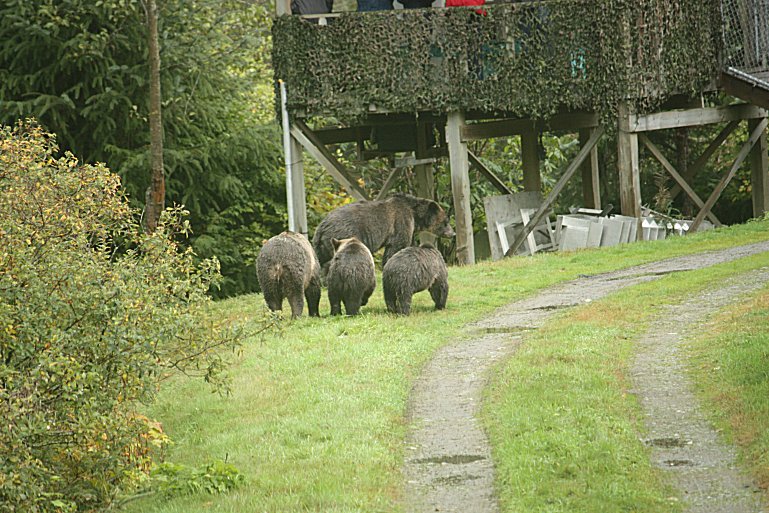
Grizzly Bear Lodge’s tour time on the Glendale River viewing stand starts on august 25th each year. The time slot is from ten until noon this means we need to be leaving the lodge before eight to arrive at the river estuary float to give us time to transfer to shore for the fifteen minute van ride to the viewing stands. There are two wildlife viewing stands at the entrance to the man-made spawning channel and these stands are both located where the brown bears pass close by to come and catch the pink salmon. This photo taken by UK’s Lynn Morris from the second stand gives you a good idea of how close the grizzly may come to the stands when they are directly below the photo shows a rather large back as the bears tend to ignore the stands and do not normally look up.

Grizzly bears fishing?

grizzly fight
Click on photo to enlarge then click again

This could be mistaken for a “fight” or disagreement over the right to fish on a certain part of Knight Inlet’s Glendale River but actually it is a mother grizzly bear disciplining her second year cubs. Even sitting down you can see she has a definite weight advantage and check the size of the stomachs. This mid-October photo shows that these bears are in good shape for hibernation. The grizzly or brown bears of BC we view on our wildlife safari trips do well in hibernation because of the abundance of salmon.