Guest Photos

A wildlife photographer’s dream!

We offer fantastic bear and whale watching opportunities at Sailcone’s Grizzly Bear Lodge, your guests’ photos prove it!

Do you have your own photos to add from your stay with us? Please click here to email us!

Trapper Rick’s river scenery

Looking backThe River

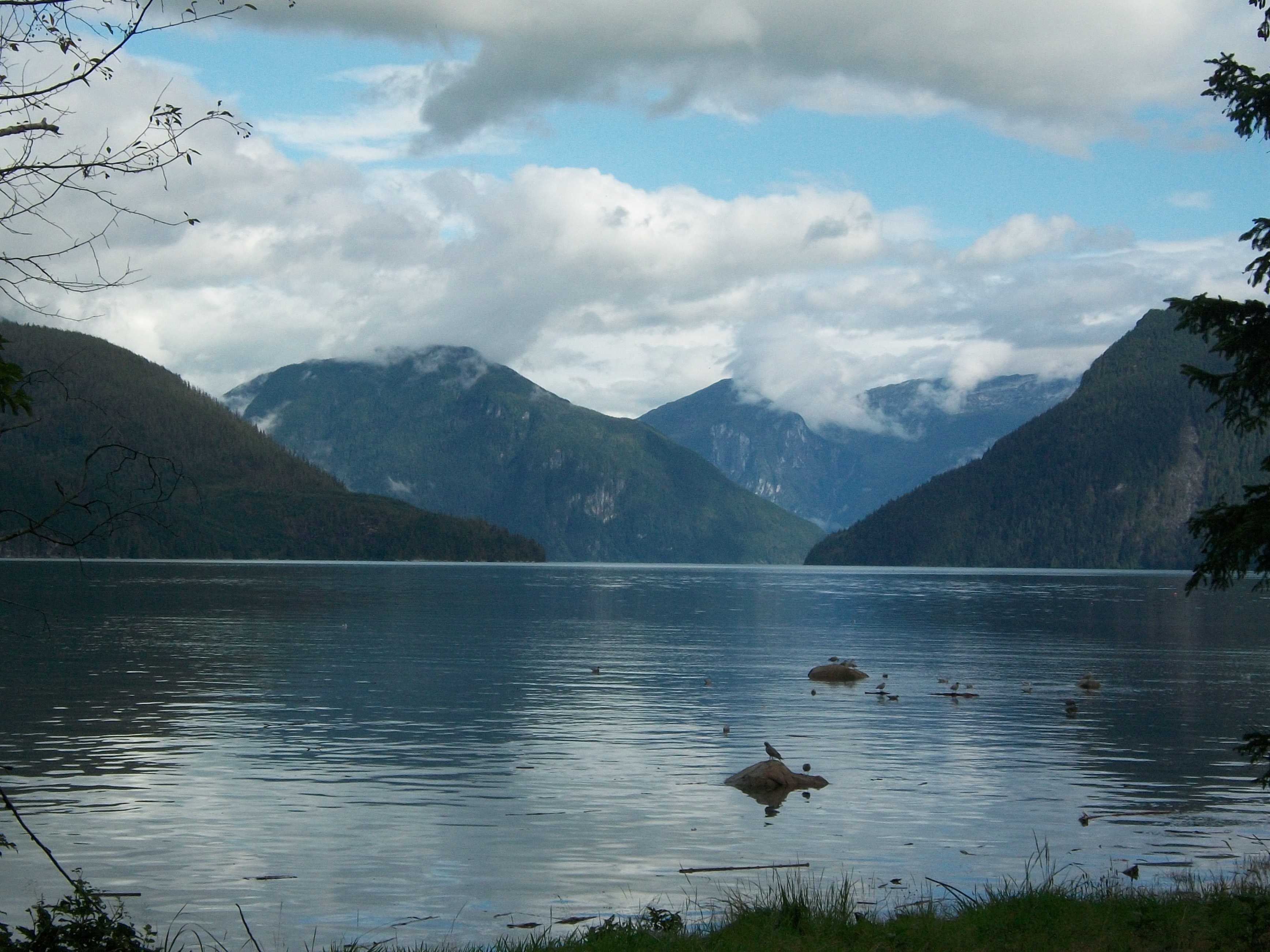
If you have chosen the extra day at Grizzly Bear Lodge it is normally spent with Trapper Rick on a wild river that few people get to visit. It is a classified fishing river and therefore is not open to public fishing without a guide.  As the first photo shows just going to the river requires passing through the foothills of the Coast Mountains. The second photo shows the upper river in full flood after a heavy fall rain, it is possible for the river to rise six to eight feet over night and go down just as fast.  The sudden rise and fall of the river is due to the fact that it is located in a steep sided valley, which again provided for interesting photos. Time spent with Rick is worth the trip as he explains his stewardship of the valley and his years trapping in the area. Also a chance to fish for pink and coho salmon and hike to areas to wait for the grizzly bears to show the best fishing techniques.


Whales watching by Braille

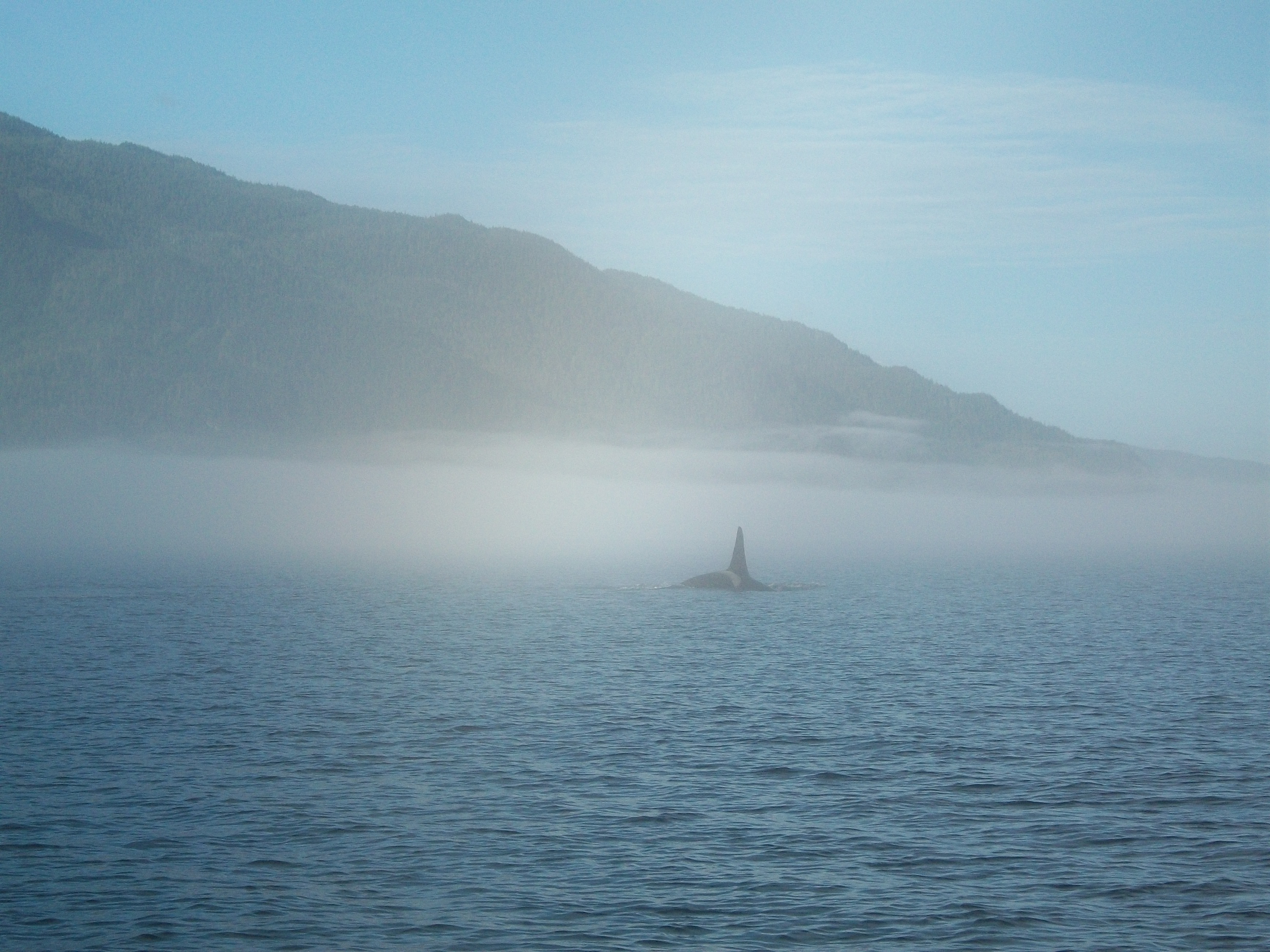
Orca in the mist

Some of the mornings, until noon at the latest, provide your guide a reason to use their GPS.  It is also fun to try and locate orca or humpback whales by sound.  The whales by Braille routine requires allot of stopping and listening until a “tell tail” blow is heard from either an orca or a humpback whale it is then necessary to determine the direction of the sound and to move ion that direction.  This is more of a challenge than one would think as the fog muffles the sound and makes determining direction interesting. The whales make this more difficult as they frequently change direction while the orca are at least a little more consistent in their movements.  This low fog makes for a mystic picture and also shows why the morning that has fog clear up pretty fast.

Grizzly bear claw surgery

large grizzly claws
Click to enlarge then click again

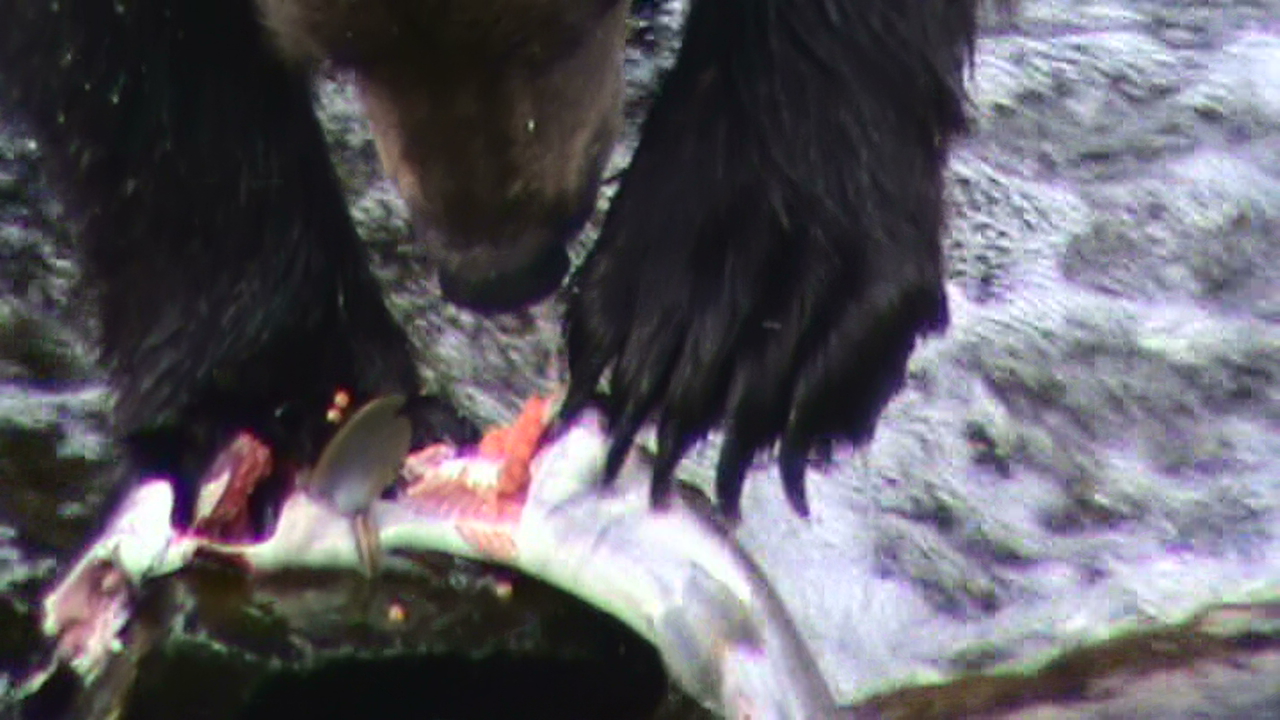
A grizzly bear’s normal claw length is 3 to 4 inches long; it is curved and the sharp claws helps it to dig for its food.  In early spring the bears use these claws to dig up the root bulb of the skunk cabbage, one of their favourite foods.  As the season progresses the claws allow grizzlies to get a good hold on the beach rock they turn over in search of crab, clams, amphipods and other tiny invertebrates. Claws are also used to scrape mussels and barnacles off the beach logs and rocks.  And as this photo, by UK’s Janis Worsley, shows the claws permit the bears to hold the salmon in position while also opening the belly to expose the fat rich eggs. Views such as this are common in the fall as viewing takes place from the stands on Knight Inlet’s Glendale River.  The stands overlook the spawning channel and tens of thousands of pink salmon that come to spawn.  It is a grizzly bear buffet and the main and only course is salmon.

Active White-sided dolphins

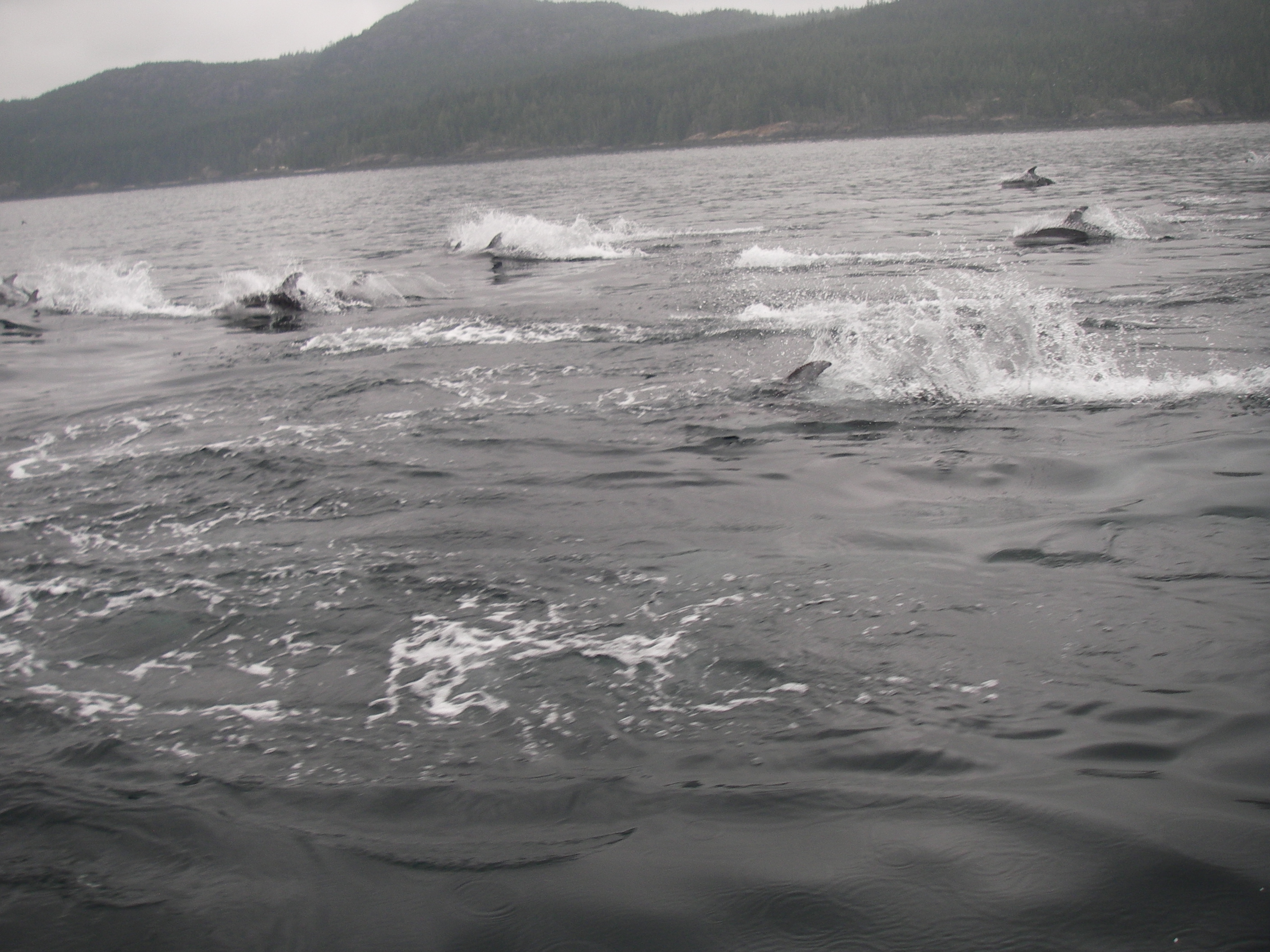
Pacific white-sided dolphins

Pacific white-sided dolphins are often encountered on tours from Grizzly Bear Lodge. Grizzly bear tours or whale watching safari each have an equal possibility of coming across a pod of dolphins. Dolphins are playful and enjoy riding the bow wave and the rear wake of the boat.  The best advise is to point and shoot and take as many pictures as possible and maybe a dozen or so may even contain dolphins and not just water and one or two of those may be good pictures. The pods range in size from several dozen to over five hundred and the more there are its seems the more playful the dolphins.

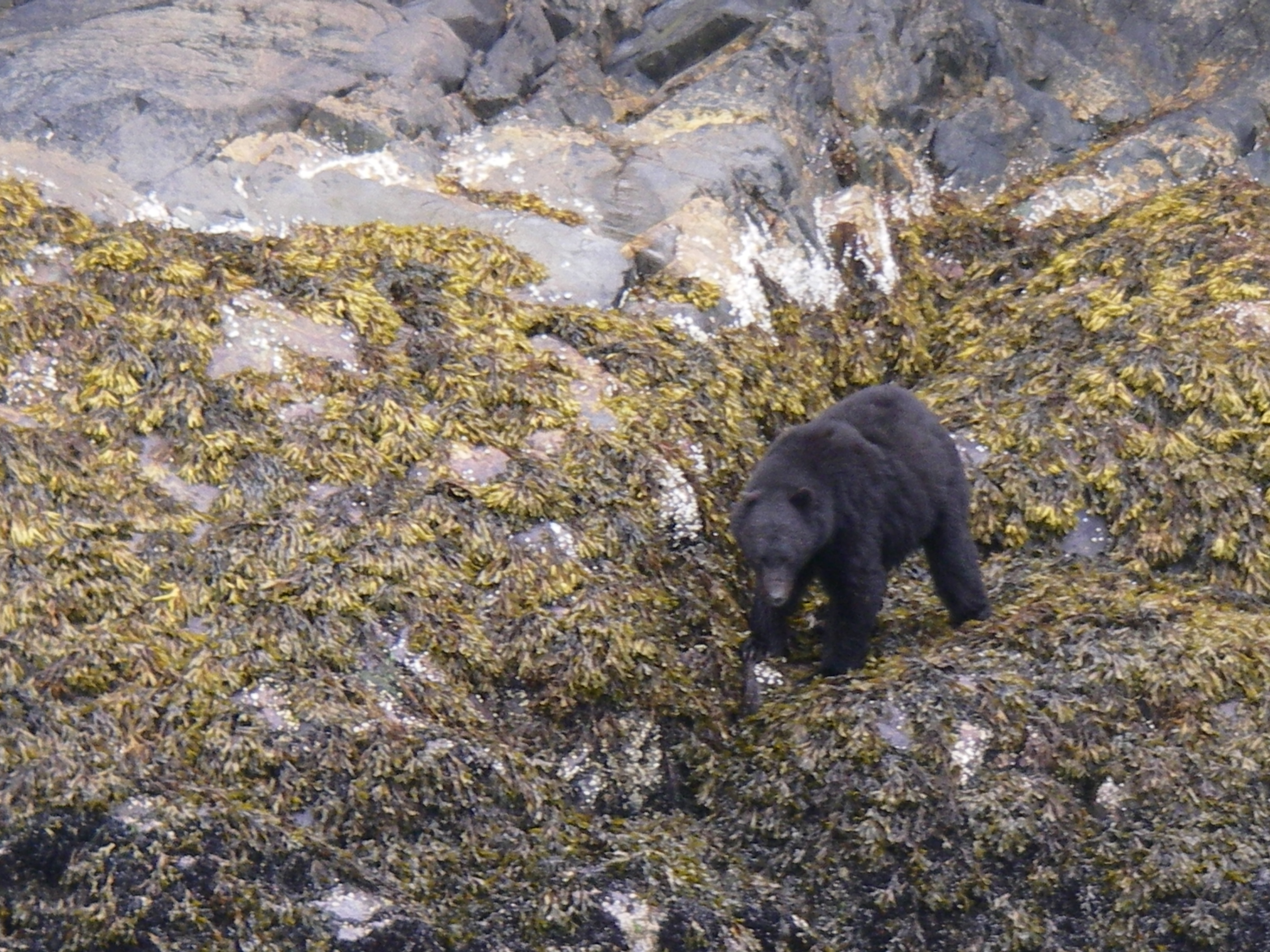
Black bear evening tour

Black Bear

The first evening at the lodge, if the tide is low enough, there is a local boat tour looking for black bear, bald eagles and other wildlife. The black bears come to the shore for food high in protein and this is made up of crab, clams, barnacles, mussels, amphipods and other tiny invertebrates. In this case the bear would use its claws to scrap the barnacles free to the rocks and eat them including the shell.  From the size of this bears belly it is in pretty good shape for the coming winter and the photo date in only July.  Black bears do not have access to the salmon rivers because of the number on grizzlies in the area so they cannot rely on a sudden food source in September to gain hibernation fat and must work hard all spring and summer if they want to survive.

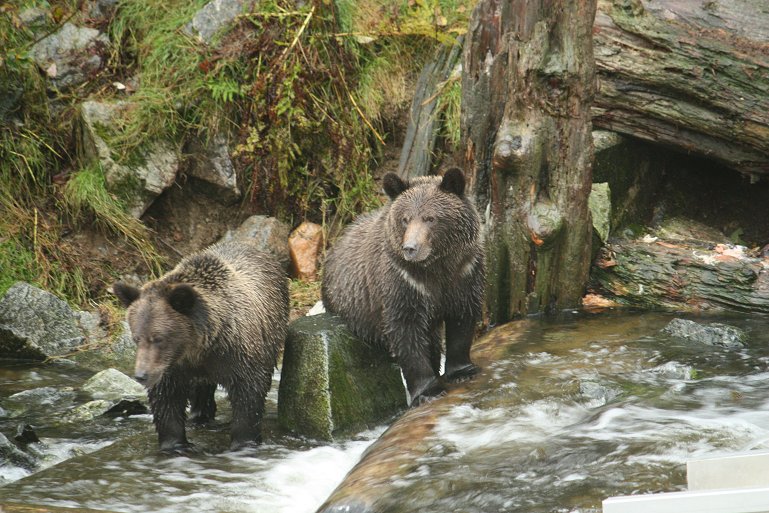
Grizzly bears watching and waiting

grizzlies share a rock
Click to enlarge then click again

These grizzly bear siblings seem to be old enough to fish on their own but they appear to be waiting for something to happen. It could be the lack of salmon in the river or that other larger dominant bears have moved then to the sidelines. It could be perspective on my part in that when you do not have another bear use for size comparison maybe they are just very fat two year olds waiting for mother to provide another meal.  However at two they should be fishing because next year they would normally be on their own. At times the cubs stay with mother more than two years and if she is not pregnant cubs may stay with their mother for four years.

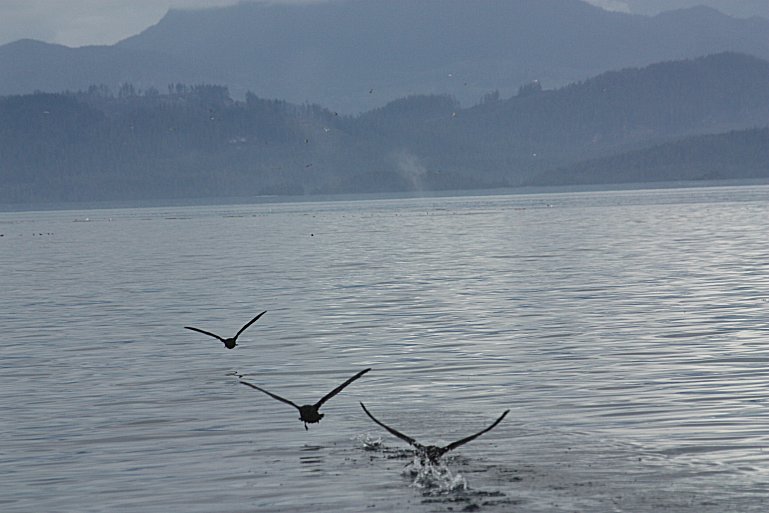
Surf scoters departing

Ducks Departing

Large flocks of surf scoters while wildlife viewing are common in Knight Inlet as well as the area of Johnstone Strait where we spend our day’s whale watching.  The abundance of food for these ducks in the form of herring is shown in the difficulty that they have leaving the water. They appear to be running on the water while trying to build up enough speed to become air born but it is common to see the ducks abort a take off and go for the dive to get out of the way of approaching boats. Maybe this is why airlines are so careful when calculating their payload, as they would find an abort with a dive rather uncomfortable.

Humpback whale dive

Humpback whale up close

Is a good lens to get a close up picture of a humpback whale about to dive? The tell tail sign of a humpback whale about to dive and provide a opportunity for a picture of its tail is the thrust of its back higher out of the water as it noses down for a deep dive. A long telephoto lens is not a necessity as we normally have lunch with the whales. On our whale-watching safari, after a short bathroom break in Telegraph Cove on Vancouver Island, we head toward Bold Head an area frequented by humpback whales.  Once there we cut the motors and drift while we have a picnic lunch. At this time it is not uncommon to have the whales come close enough to eliminate the need for long lenses in fact I have had guests comment that they could not get the whole whale in the photo. An excellent whale shot captures by UK’s Lynn Morris.

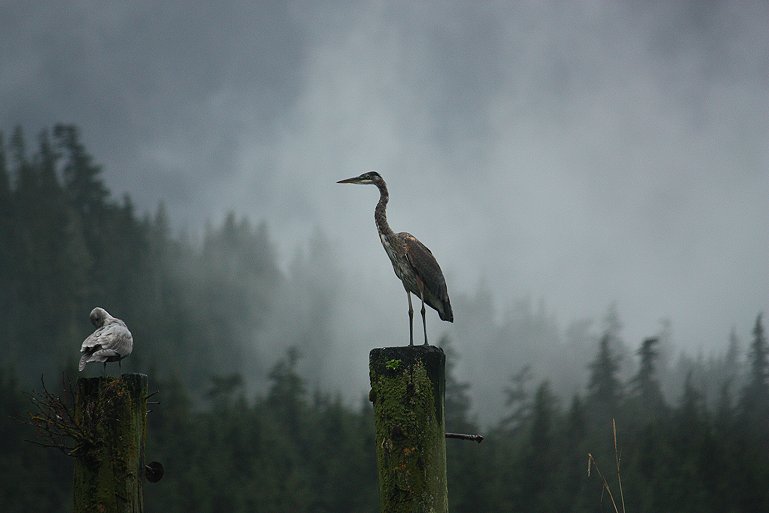
Great Bear Rainforest heron

Great blue heron

A misty morning in the Glendale River estuary and Lynn Morris captures a great blue heron the safest way. Our wilderness tours leave the lodge by eight in the morning for the hour and quarter run along the shores of Knight Inlet with a constant lookout for wildlife. Wildlife seen like the ever present bald eagles, frequently black bears, often pacific white-sided dolphins and on the rare occasion killer whales. Most days the run up the inlet is fog free and the few days there is fog it clears part way up the inlet. This appears to be a day with a low mist coming down the inlet and adding to the mystery and excitement in a grizzly tour. Heron are normally seen wading shores, in the river, walking on kelp beds or the lodges log breakwater looking for food on pilings less common.  Even thought they do nest in trees I still find it hard to accept when I see this long legged bird sitting in a fir tree along the shore.

Pink salmon in the Glendale River

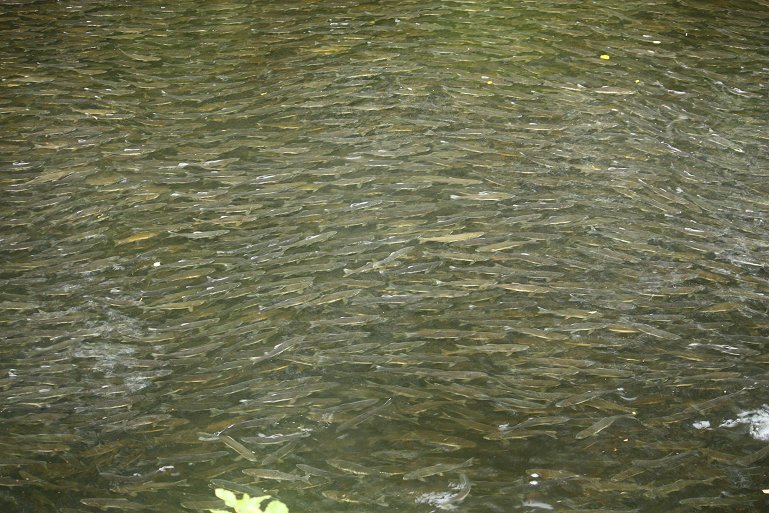
Pink SalmonThe reason the grizzly bears travel over a hundred miles through the Great Bear Rainforest of BC to the area of the Glendale River is the number of pink or humpy salmon that return each year to the man-made spawning channel. This photo by Lynn Morris shows the abundance of the salmon during the peak of the run. The travel distance was documented about ten years ago when ten bears were fitted with radio (GPS) collars to determine their den area to see if proposed logging would do any harm.