Guest Photos
A wildlife photographer’s dream!
We offer fantastic bear and whale watching opportunities at Sailcone’s Grizzly Bear Lodge, your guests’ photos prove it!
Do you have your own photos to add from your stay with us? Please click here to email us!
Grizzly Bear Triplets

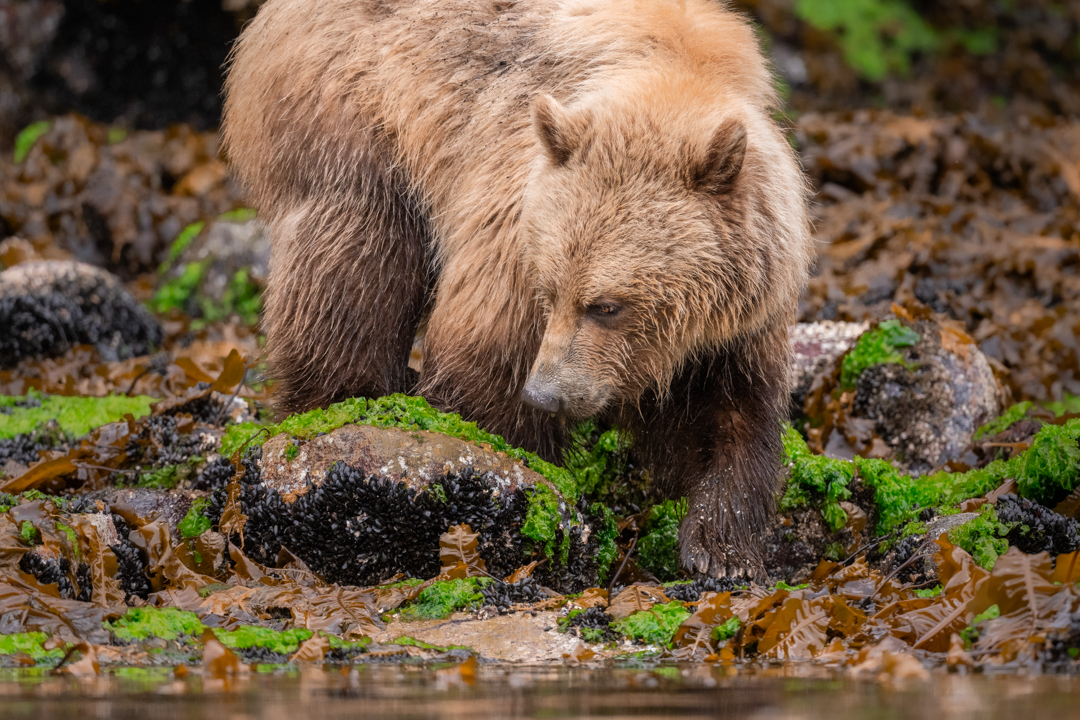
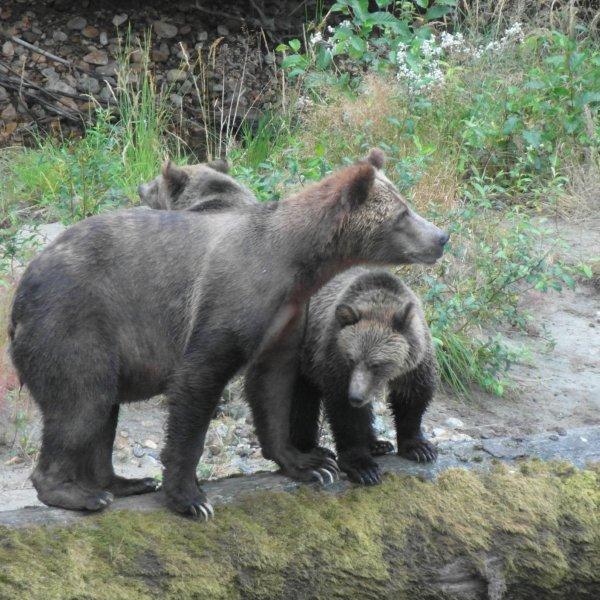
Early August and the family is busy on the beach. The Lodge’s grizzly bear tours travel up Knight Inlet to the area of the Glendale River estuary. The grizzly bears are in the area waiting for the salmon, which return to the river in late August to spawn. From mid May on the bears start to appear along the shores of Knight Inlet working their way to the mouth of the river until September there may be close to fifty bears feeding on the salmon in the Glendale River valley. Well the bears wait they must eat and therefore spend time on the beach turning over rocks at low tide and grazing on the protein rich sedge grass along the shore. This mother grizzly has her two-year-old cubs well trained to feed themselves. Self-sufficiency is necessary to survive, as it will likely be there last year under mother’s protection and care.
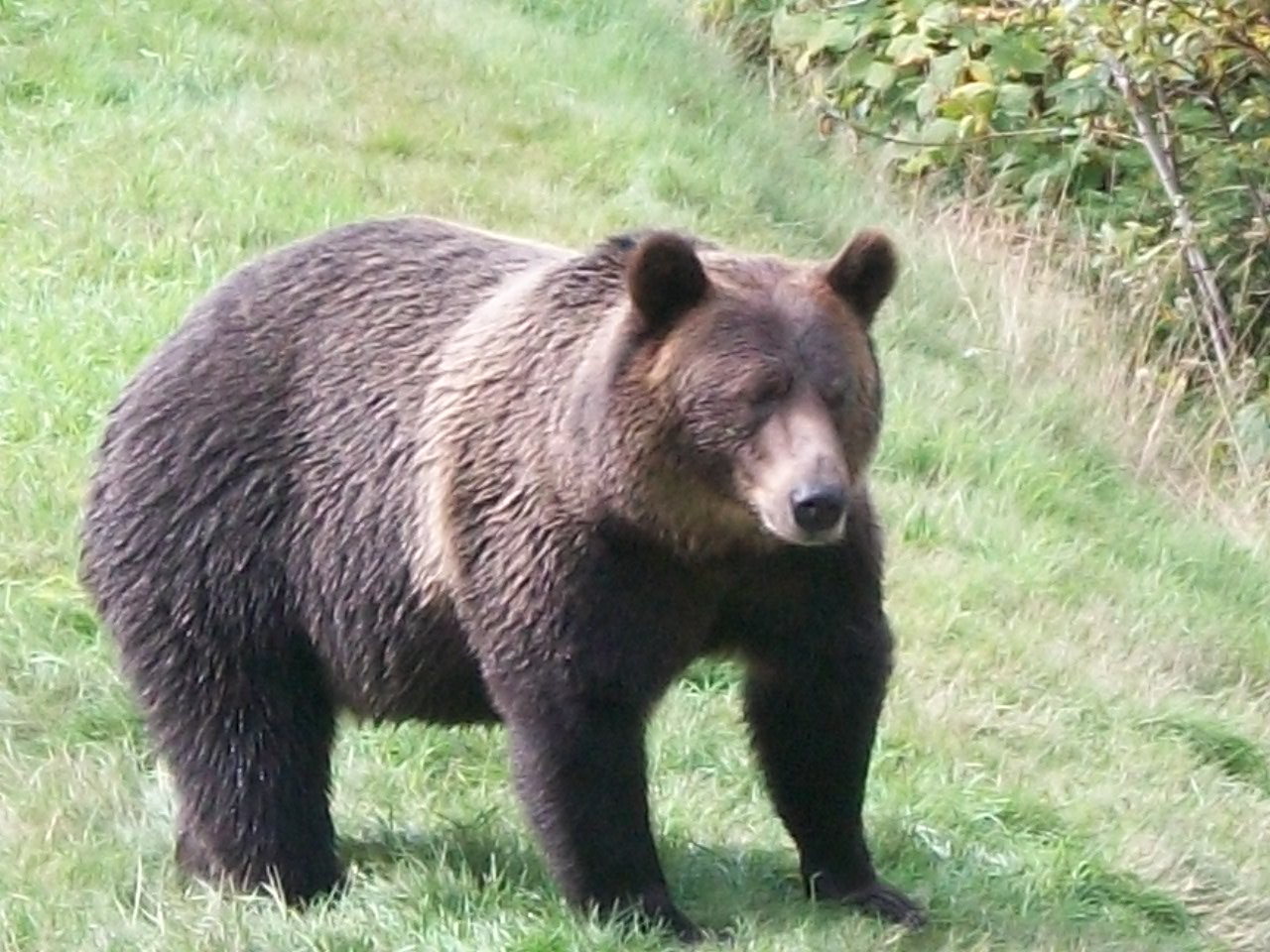
Black Bear ancestry – proof?

The picture that supports the speculation of scientists:“Most black bears are black with a light brown muzzle and often have a white V-shaped fur patch on their chest. The North American black bear Ursus americanus is the smallest and the most widespread bear species found in North America. Its ancestors are believed to have crossed into North America over the Bering Land Bridge.” (from http://www.bearsoftheworld.net)
“Asian black bears are medium-sized bears that inhabit parts of southeast Asia and the Russian Far East. Asian black bears have a patch of yellowish-white fur on their chest and a black body. They resemble American black bears in body shape and behavior. Asian black bears feed on a variety of plant materials including bamboo shoots, leaves, herbs, grasses, fruits and nuts.” ( from About.com Animals / Wildlife)
Every tour from the lodge is a black bear tour as they are most often seen along the shore at low tide turning over rocks in search of food. These bears do not have access to the salmon spawning rivers as they are under the protection of the grizzly bear. For a grizzly a black bear would be food for several days.
Grizzly Bear cub wanting to share
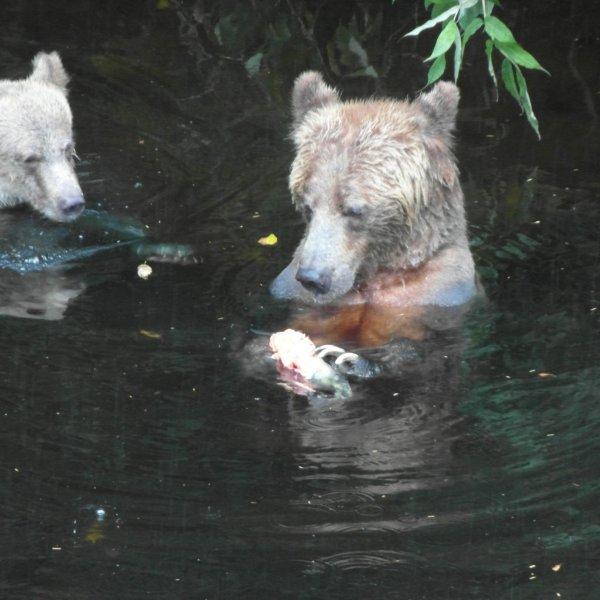
Grizzly Bear Lodge normally uses the second viewing stand at Glendale River’s man made spawning channel. It is the more popular stand as it is located at the junction of the natural river and the channel leading to the weir at the mouth of the actual spawning area. On one side the bears are fishing in the river and the other in the holding pool were the salmon rest before going over the weir. In the case of this picture from James and Wendy from Australia a mother grizzly bear is considering sharing her catch with her two-year-old. The pool is ideal for the lazy grizzly that can just pick up the salmon that are wounded and have drifted from the weir about fifty yard up the channel. The less energy expended chasing salmon the faster a grizzly adds fat and that is the only reason for fishing. It is also a good area for the cubs to learn to fish, as nothing is more encouraging than success.
Grizzly bears in the tub
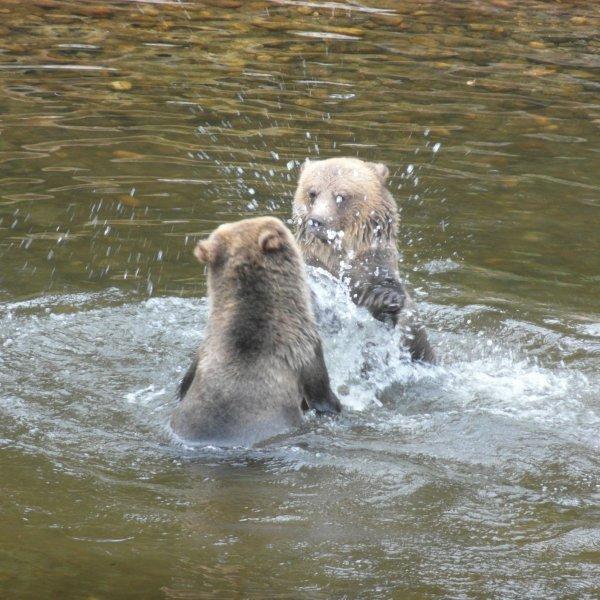
This photo taken by James and Wendy from Australia reminds me of my grandkids when they visit and have a bath before getting into their pajamas for the drive home. There is often as much water to be cleaned off the floor as there is in the tub. Grizzly bear siblings will often stay together for two or three years after they leave their mother at the age of two, staying together until breeding begins around the age of five. Either playing of fighting they are sharpening the skills need to survive once they separate and travel solo.
Male humpie
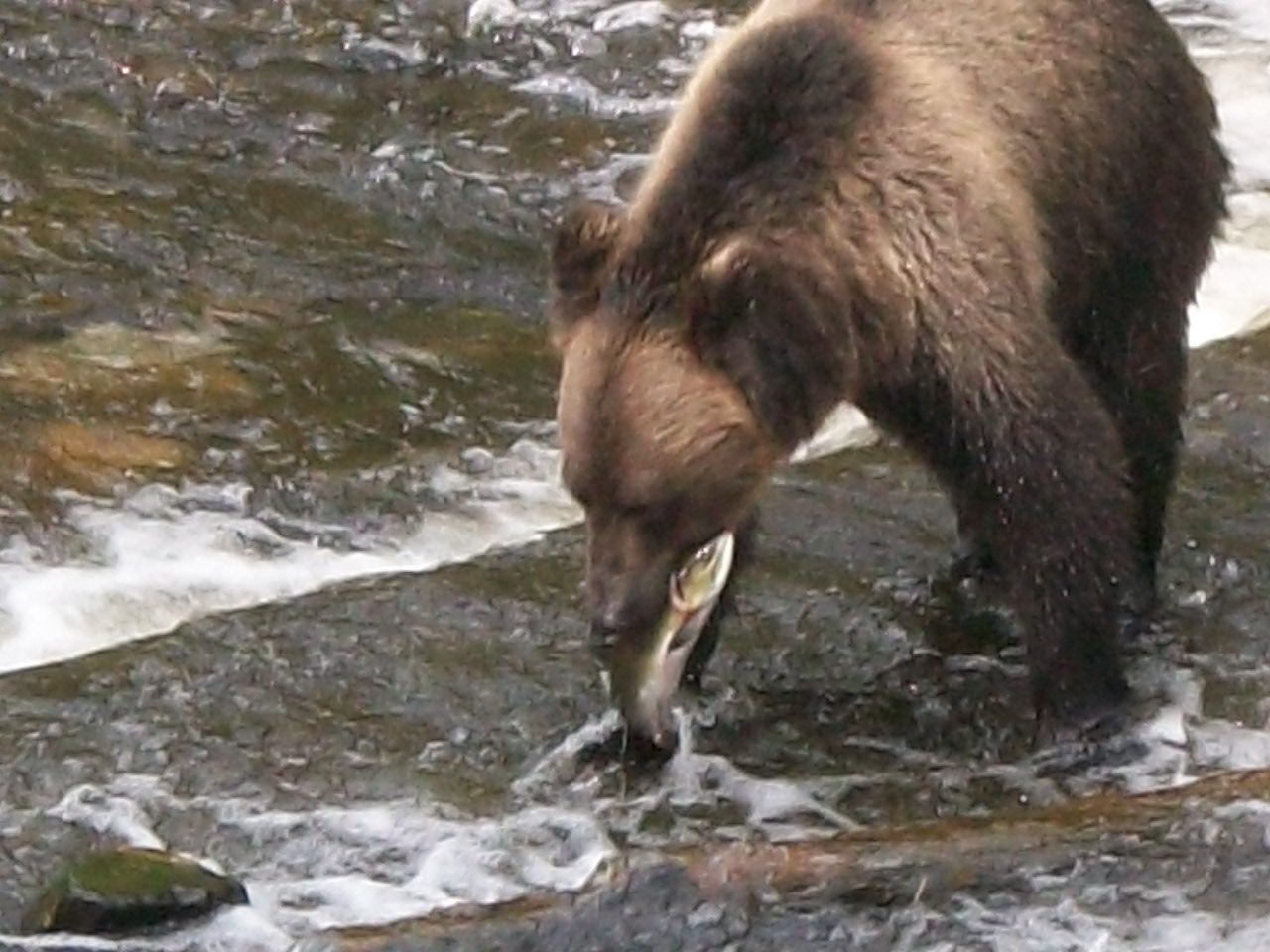
Male pink salmon develop a large hump on their back during spawning, hence the nickname humpback (humpie) salmon. They are the smallest of the fall spawning Pacific salmon. Pinks have a very regular life history, living for two years before returning to spawn the next generation. Pink fry do not rear in freshwater. Immediately after emerging they move downstream to the estuary and rear there for several months before heading out to the open ocean. Because of this, pink fry have no spots, which provide camouflage in streams, but are bright chrome for open water.
The only interest the grizzly has in the life cycle of the pink salmon is their sex. At certain times in their feed grizzly will drop a male humpie to catch a female which contain the high fat content roe (eggs). During this peak of the run when grizzlies have access to an abundance of salmon at that time they will eat only the parts highest in calories – the eggs, skin and brains.
Third – TWO for one – grizzly bear and salmon
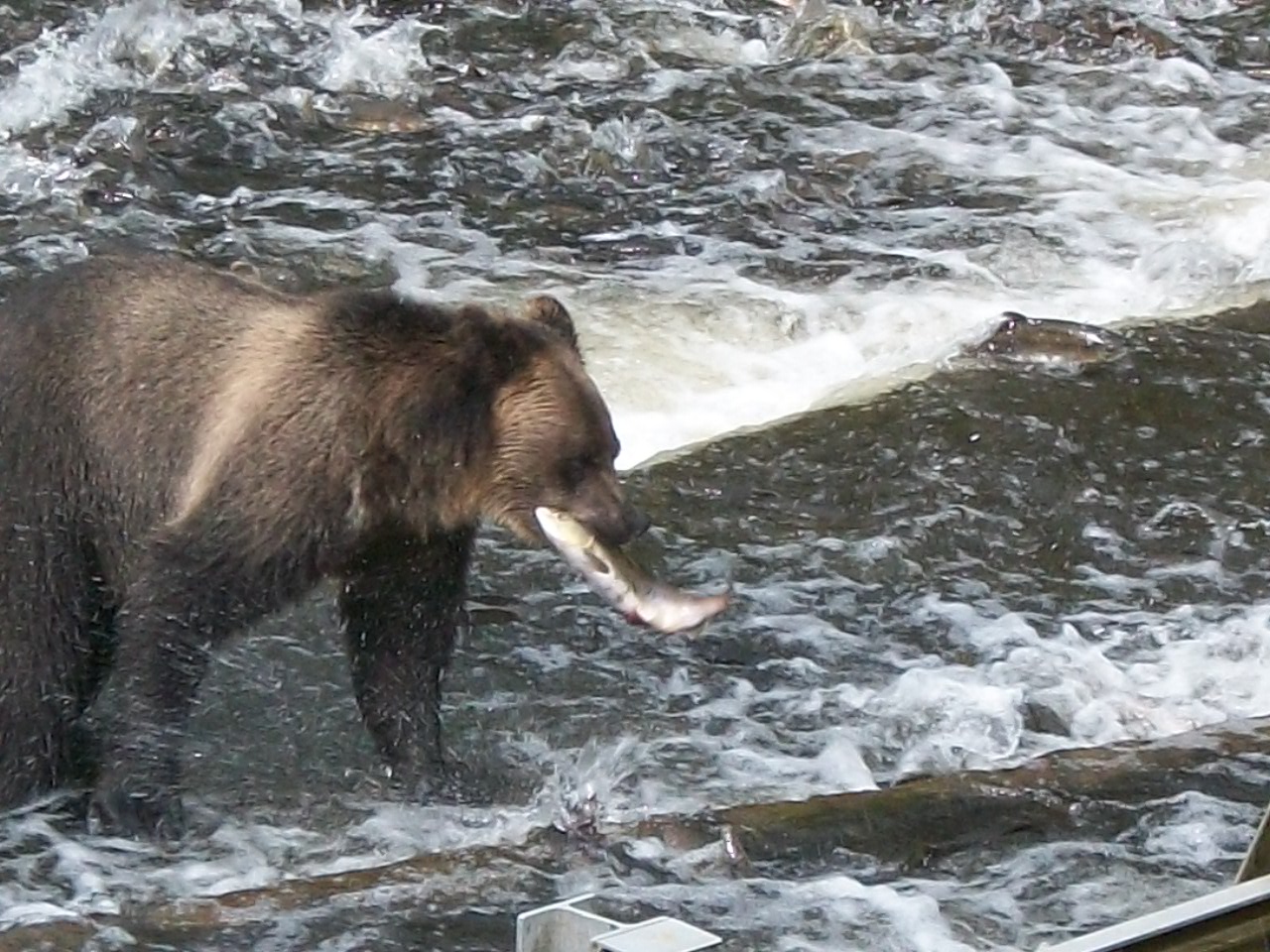
This could actually be a three for one photo. The unfortunate salmon in the grizzly bears mouth that will not live to spawn, the salmon coming over the small falls to the right and the third salmon behind the bears shoulder that is just clearing the water and coming up stream. The viewing stands on Knight Inlet’s Glendale River are used after August 24th and provide great opportunities for interesting photos even if the interesting part is a result of chance. The guests always say one can never have too many photos to take home while the guides are trying to encourage them to put down the cameras for a few minutes and enjoy all the sights not just those seen through the camera lens. The stands are located so that the action is 360 degrees not just the small arc of the camera.
Grizzly bear with too many choices
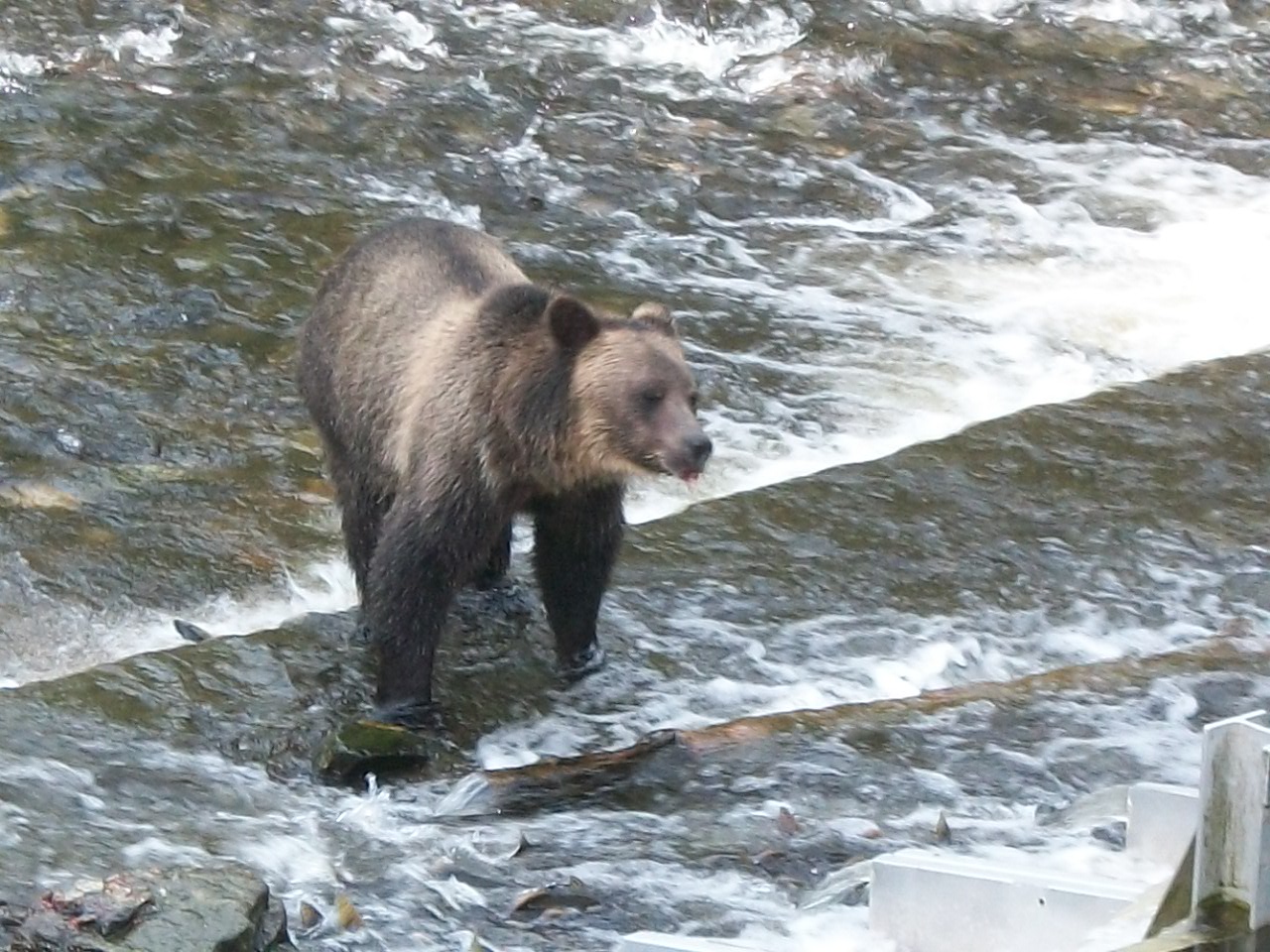
This grizzly could be getting full or just confused. Checking it’s mouth there is the pink tinge of salmon blood of one less salmon that will make it to the spawning grounds so this bear may be getting full. The confusion comes from the water in front of the log and all the pink salmon fins that are breaking the surface. This bear has chosen one of the entrance shuts to the spawning channel (the two white metal arms in the bottom right corner of the picture) to be its fishing site. This is often referred to as the Glendale River buffet. Janis Worsley of the UK captured a pause in the action, maybe even a catnap.
First – TWO for one – humpback and sealions
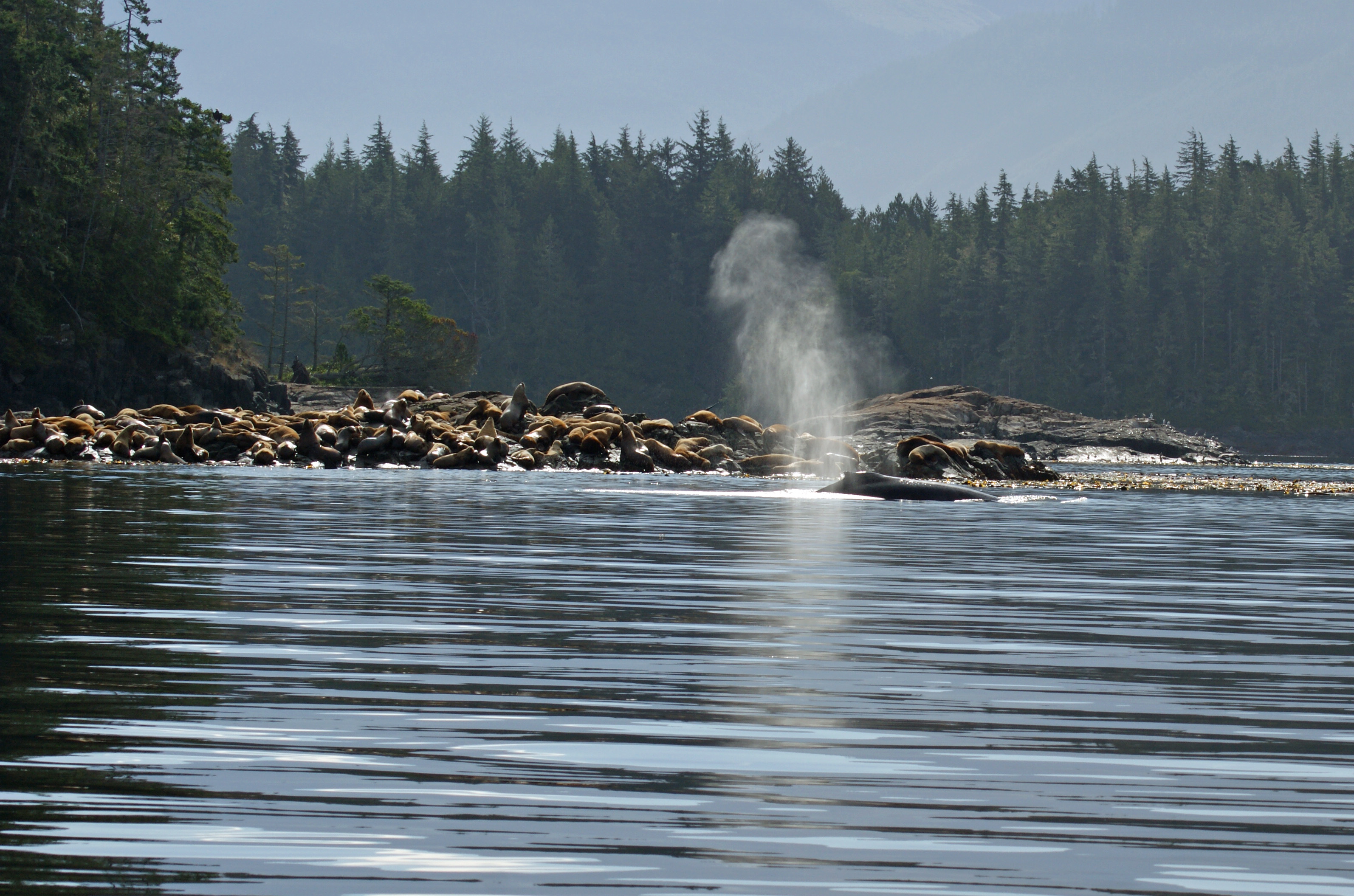
Australia’s Gary Wilson waited for the perfect picture, a humpback whale in front of the Steller Sealion haul out area. In this case the sealions are on their return from Alaska to California and spending a few weeks resting and replacing some of the fat used to travel this far. Large groups of sealions pass through the area in the spring and fall, however we now have several dozen that spend the summer in our viewing area. The humpback whales arrive in June and remain in the area through October due to the abundance of herring, which is their main food. A beautiful fall day for this well timed rare picture.
Viewing grizzly bears from the stands