Guide Photos

Awesome sights on a daily basis!

Each day our guides see something new, it never gets old for these guys. Check out some of their photos from guiding bear and whale watching excursions.

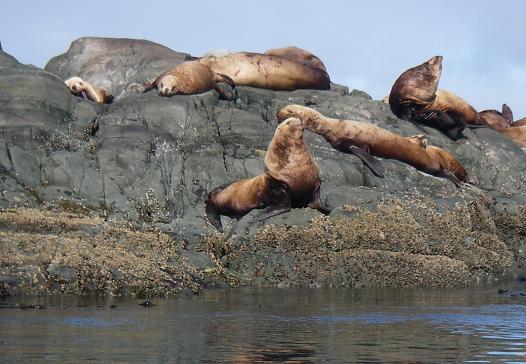
Steller Sea Lions

sea lions AKA Steller sea lion, Steller’s sea lion, northern sea lion are in are viewing area all year around but much more abundant in late May to early June on their way North and again in late August through September when returning south. These male Steller sea lions average a nose-to-tail length of 3 m (9 ft.) and weigh about 700 kg (1500 lbs.). When dry, Steller sea lions are a tan to golden-brown color and darken to a chocolate brown on their flippers and underside. They appear dark brown or black when wet.
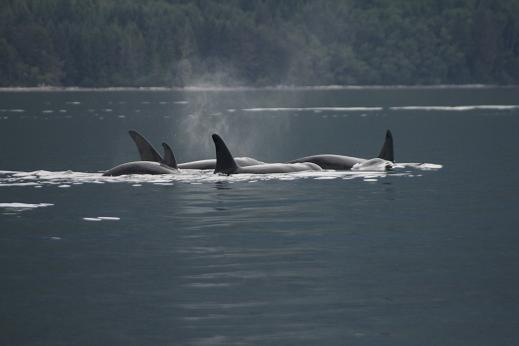


Resident Killer Whales

Killer paradeLooks like a good photo of some resident killer whales until you look closely and realize that all the dorsal fins are not going in the same direction. Resident orcas are the ones that eat salmon.  This was an occasion when they stopped travelling and started to feed.  From this point on they stayed in the ripe tide off Craycroft Point and fed on salmon for over an hour. We turned off our engine and sat in the ripe while the orca fed all around the boat.


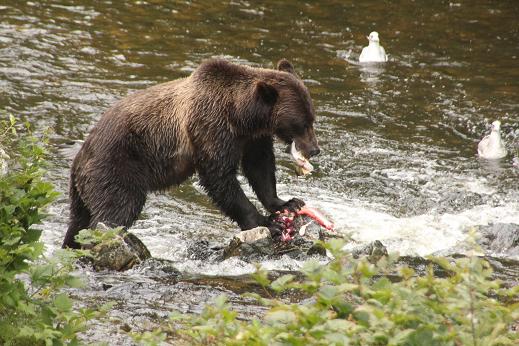
Fall Grizzly Bear Fishing

Grizzly bear DiningThis is the more “expected photo” of a grizzly bear than yesterdays posting. In late August once the salmon have arrived in the rivers of Knight Inlet the grizzlies have access to their preferred food – salmon. This is the food that provides the necessary calories for the bears to add the layer of fat need for them to survive hibernation.


Spring Grizzly Bear Grazing

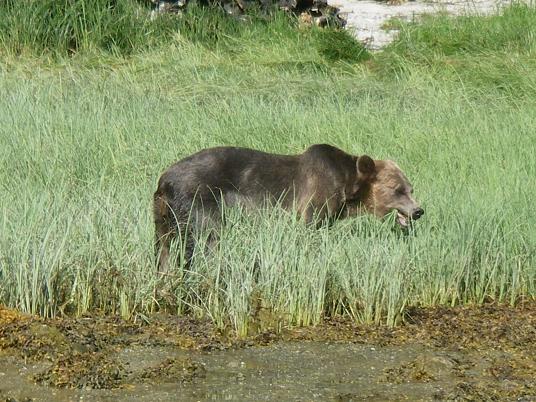
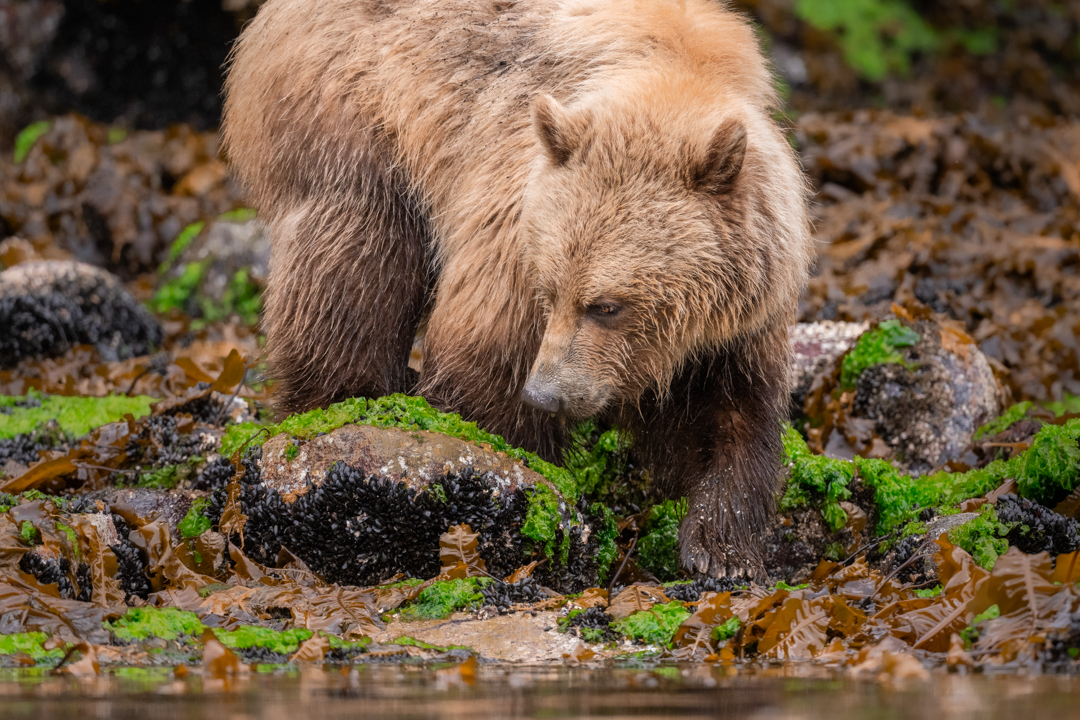
Grizzly bear grazing“Bears are omnivores that have relatively unspecialized digestive systems similar to those of carnivores. The primary difference is that bears have an elongated digestive tract, an adaptation that allows bears more efficient digestion of vegetation than other carnivores (Herrero 1985). Unlike ruminants, bears do not have a cecum and can only poorly digest the structural components of plants (Mealey 1975). To compensate for inefficient digestion of cellulose, bears maximize the quality of vegetal food items ingested, typically foraging for plants in phenological stages of highest nutrient availability and digestibility (Herrero 1985).” From Yellowstone
National Park website. Its fun to quote sites that give scientific facts for: – grizzlies eat anything and in the spring sedge grass is consumed in great amounts because they are not cows and have a hard time digesting the high protein sedge grass. But it is still strange seeing such a large animal with a fierce reputation eating grass.


Evening Black Bear Tour 2 0f 2

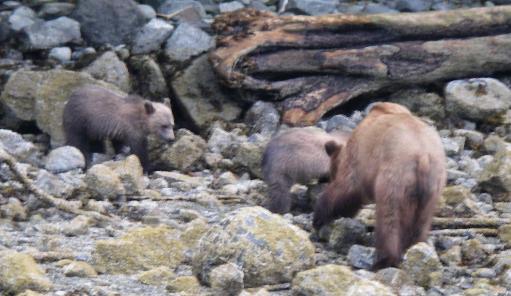
black bear tourYes this is an evening black bear tour and this is a mother grizzly bear with two first year cubs. This bear spent most of the summer in an area that was less then a twenty minute boat ride from the lodge. Some mornings she was observed on the way to the whales and other evening on a black bear tour. This evening we followed them along the shore for close to an hour which extended our evening tour so we got back just before dark. Our lodge does not have a tight schedule requiring us to be back at the lodge at a set time so if we find something worth watching, we watch.


Black Bears on Tour

Black Bear Knight Inlet


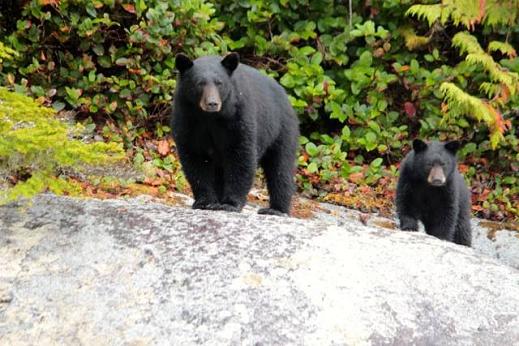
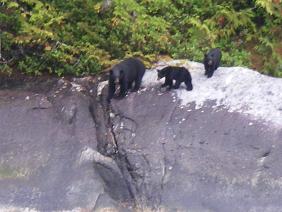
BB cubsI recall these black bears because for most of the season it was hard to get photos of black bears.  All our guests had good photos of grizzly bears but photos of black bears were much harder to obtain. These three bears, mother and two cubs, were on a rock face on the shore of Knight Inlet on the return trip from watching grizzlies all morning. They were on the shore scraping muscles off the rocks and we followed them along the shore for the better part of half an hour as they moved in and out of the bush as they worked their way down the shore for better patches of muscles to eat. Paul and Sheila took the larger photo while the smaller one was from my camera to show there were three bears.

Guide Photos

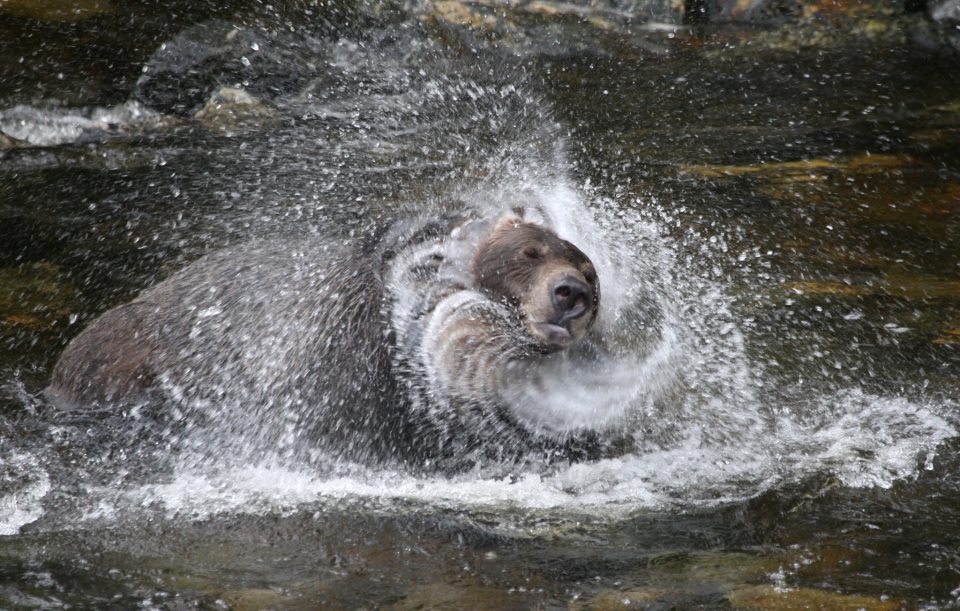
grizzly shaking water head
Click to enlarge then click again

The advantages of being a guide for Grizzly Bear Lodge are many; good food, guest on holidays enjoying themselves, the common interest in wildlife, great conversations around the dinner table and the list goes on… But the one shown by this photo is that if you take enough pictures during the season you will capture some unique images.


Guide Photos

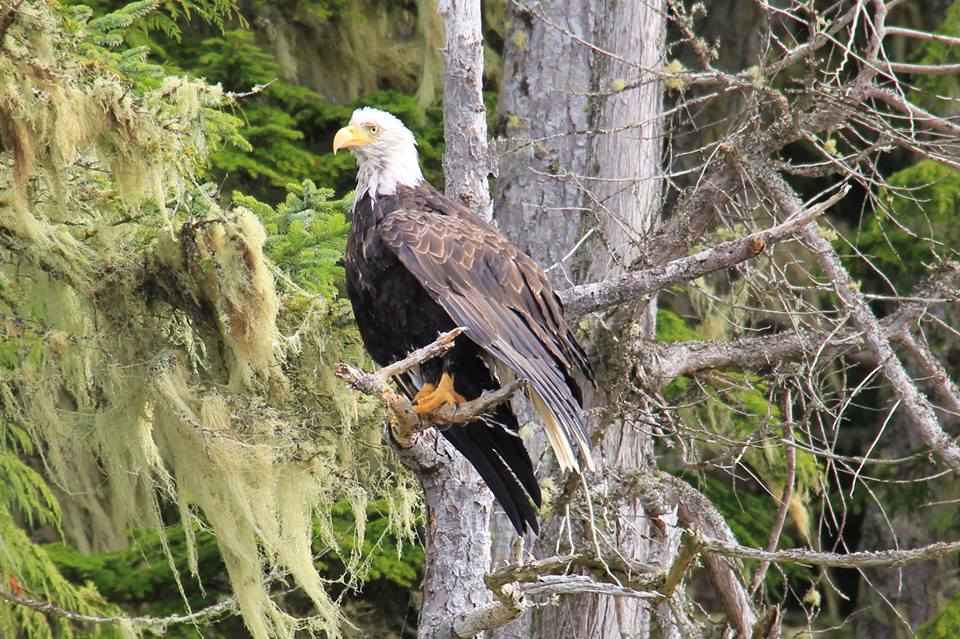
eagle resting
Click to enlarge then click again

Bald eagles can be viewed from the front deck of the lodge on Minstrel Island as they fly from the nest behind the lodge to their fishing areas. On all the day trips for the whale watching safari, grizzly bear tours and wild river trips eagles are plentiful. The hardest part for a good bald eagle picture is to have the eagle so it is not “sky lined”. They need a dark background to set off their white head as shown in this photo. Also to note is the spread wings as it enjoys the sun while drying after the summer’s morning fog.


Guide Photos

grizzly tasting salmon
Click to enlarge then click again

In the May 27th posting I mentioned that grizzly bears would fish beside the stand. The deck of the viewing platform is just over three meters (ten feet) above the ground and this bear was down the bank about two meters (six feet) and out from the bank about four meters (12 feet). I did the math allowing for the fact that the stand is not at the edge of the bank and the bear is approximately eight meters (25 feet) from the where the guest stand to watch the bears. To tell the truth none of the guests take time to comment on the closeness of the bears when their photos allow them to count the number of claws and their size.


Guide Photos

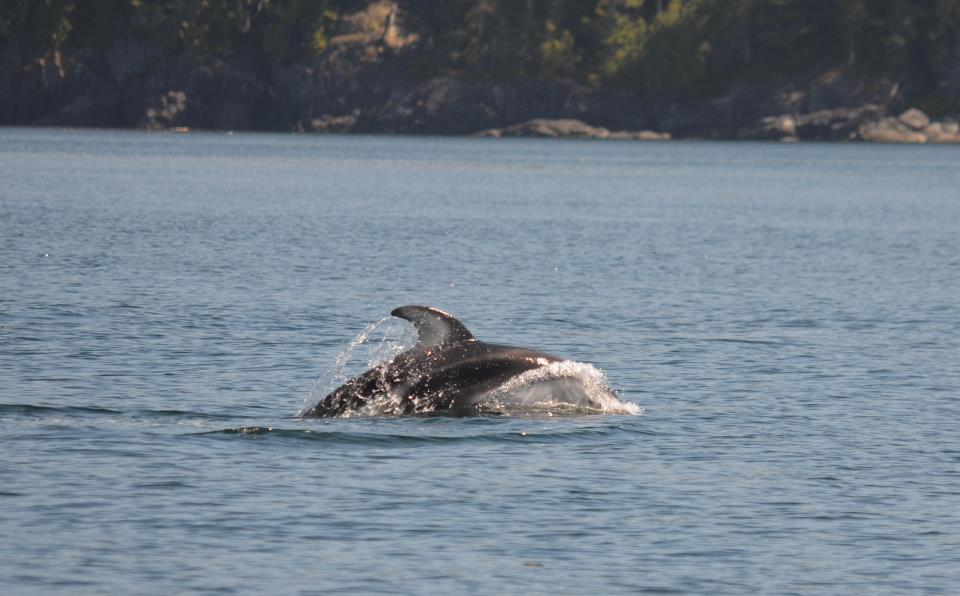
flying dolphin
Click to enlarge then click again

Pacific white sided dolphins are frequently seen in the area of the lodge; whether on a grizzly bear tour, whale watching safari or the extra day trip to Trapper Rick’s wilderness river. The pods range in size from several hundred to over one thousand individuals. They are playful and like to ride the bow wave of our boats and will cross beneath the bow as if they are trying to see how close they can come without being fit. The prop wash is also popular and they will come within two meters (six feet) of the back of the boat. The unusual aspect of this picture is that there is only one dolphin.