A choice that guests make when photographing orca : Is it better to have an exhaled breath or the white eye patch in the photo? Your choice.
Killer whales and humpback whales are often seen during our wildlife tours. There are resident whales and transient whales that can be seen feeding and playing in our waters.


A choice that guests make when photographing orca : Is it better to have an exhaled breath or the white eye patch in the photo? Your choice.
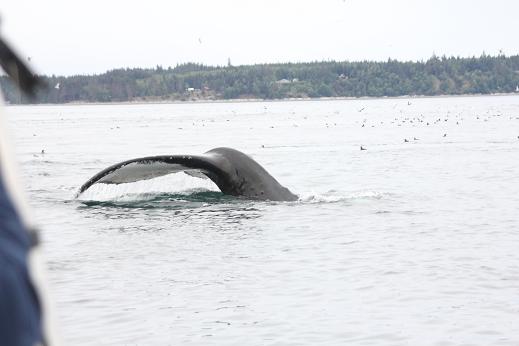
The left edge of the photo is a guest trying to get a good picture of a humpback whale, on a tour, that surfaced close to our boat. When the whales are feeding in our area on the BC coast the best action is no action. That means find a herring ball and sit and wait, running after the whales just creates to much disturbance and they tend to move off to another area. We have a number of humpback whales that summer in our viewing area so the problem is often to “guess” which side of the boat will provide the beat picture. I can think of worse problems.
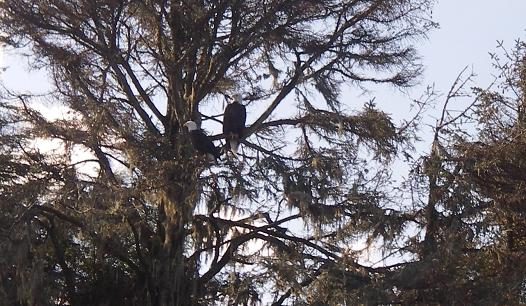
Bald eagles are a common sight in our tour area. As one of our guides says to his guests: “I will point out the first ten eagles and after that you are on your own.” This does not mean we don’t stop to get a good photo but that means when the eagle is a little lower down in a tree and not a white spot on the top of a tree. The waiting aspect of the photo is because that is what eagle do. They wait for a salmon on the surface or a herring ball to form to provide a “chance” for a meal.
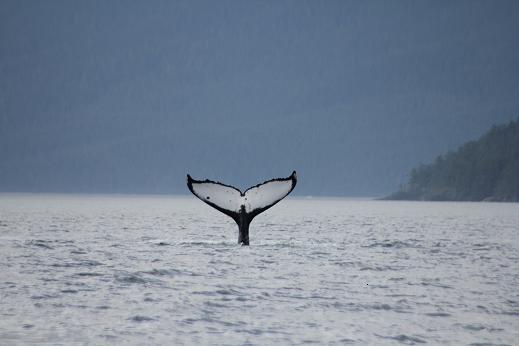
Humpback whales are identified by the underside and trailing edge of their tail flukes; each one is different just like a fingerprint. In British Columbia humpbacks are given a letter as part of their identification to categorize their fluke based on color. X animals have mostly black tails with less than 20% white on their fluke, Y animals have a fluke that is 20-60% white, while Z animals have more than 60% of their fluke white. Humpback whales often show these tails, or ‘fluke’ while diving, making them ideal candidates for photo-identification projects. This photo is of a humpback that we frequently see on our whale watching tours, it is called ‘Guardian’.
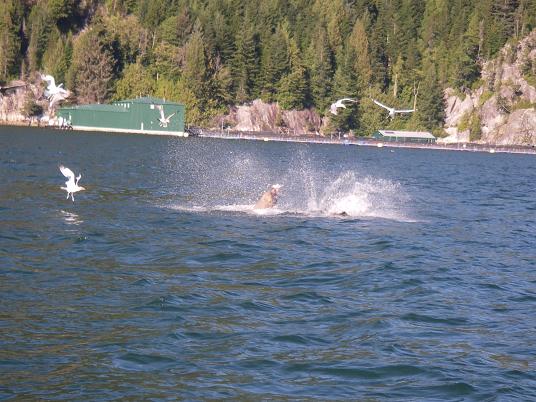
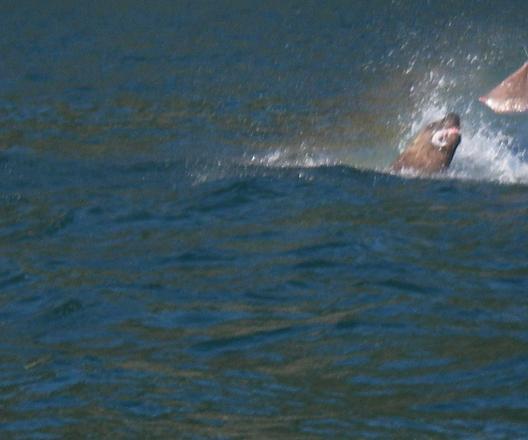
Steller sea lions on the BC coast most often catch and eat their food under water however if it is larger then they come to the surface. The process has the sea lion whipping their head back and forth until they rip a mouthful out of their catch. Once that is swallowed they dive down and pick up the catch and repeat the performance until it is all consumed. The first photo shows the whipping process and the second is all I could get of a close up of the sea lion with a mouthful. From the second photo this appears to be a halibut or some other flounder style fish.
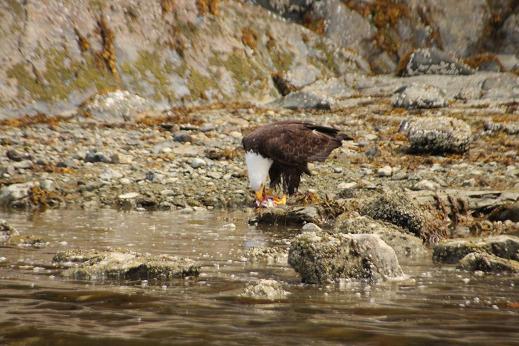
Spending the hours we do in the boat on our tours from the lodge we frequently see bald eagles on the shore eating their catch. In this case the catch is a pink salmon we saw it pick from the water a few minutes earlier. Until the salmon arrive in the rivers the eagles are more concentrated in the Johnstone Strait area where there is an abundance of herring which are a little easier to catch than salmon. If you have time to Google “Eagle Myths – State of Alaska” you will find one of the best article I have read on a bald eagles lifting powers “Eagle Flight and Other Myths Eagles Don’t Eat Children or Pets By Riley Woodford”. Short version: “best estimates put the lifting power of an eagle at four or five pounds.” The full article is definitely worth the time.

Little easier to tell that it is a humpback whale lunge feeding on a herring ball. Over the years it has become a much more common sight on the British Columbia coast as we frequently encounter a dozen or more whales on a day tour compared to one or two on a good day ten years ago. Still have a hard time convening my guests to ignore the humpbacks when there is a report of killer whales in the area. Saying “don’t worry they will be there when we return” does not seem to satisfy the need for photos.

On this day’s whale watching safari it is hard to tell from this photo what is happening. It is a marine mammal of some kind doing something. It is all a matter of perspective or the guides positioning of the boat maybe even the fault of the mammal for not considering the location of the boat. Clearer photo in tomorrow’s post…

Sea lions are a little larger than harbour seals. Their length is 2.4 to 2.8 m (7.75 to 9.25 ft) and they weight 1,133 kg (2,500 lbs.) and have average life span in the wild of 18 years for (males) and 30 (females). The sea lions have started to stay our viewing area all year but are more abundant in the summer. The rocky island haulouts in spring and fall may have over one hundred sea lions.
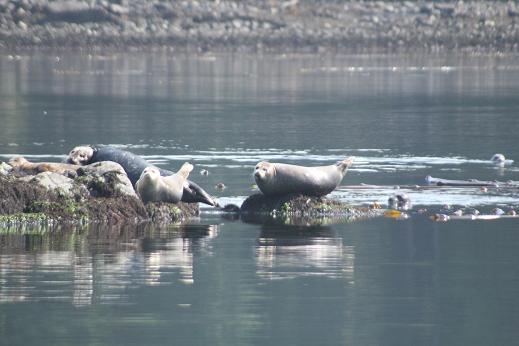
Harbour seals are found in British Columbia often in coastal waters, estuaries and river systems. The Pacific harbour seal inhabits the B.C. coast. The adult seal may reach a length of 1.6 – 1.9 m (5 –6 feet) and weigh from 60 – 120 kg (132- 265 lbs.), while ranging in colour from brownish to black with a speckled pattern. Your guide often takes them for granted because they are so abundant so remind them if you want a good picture.
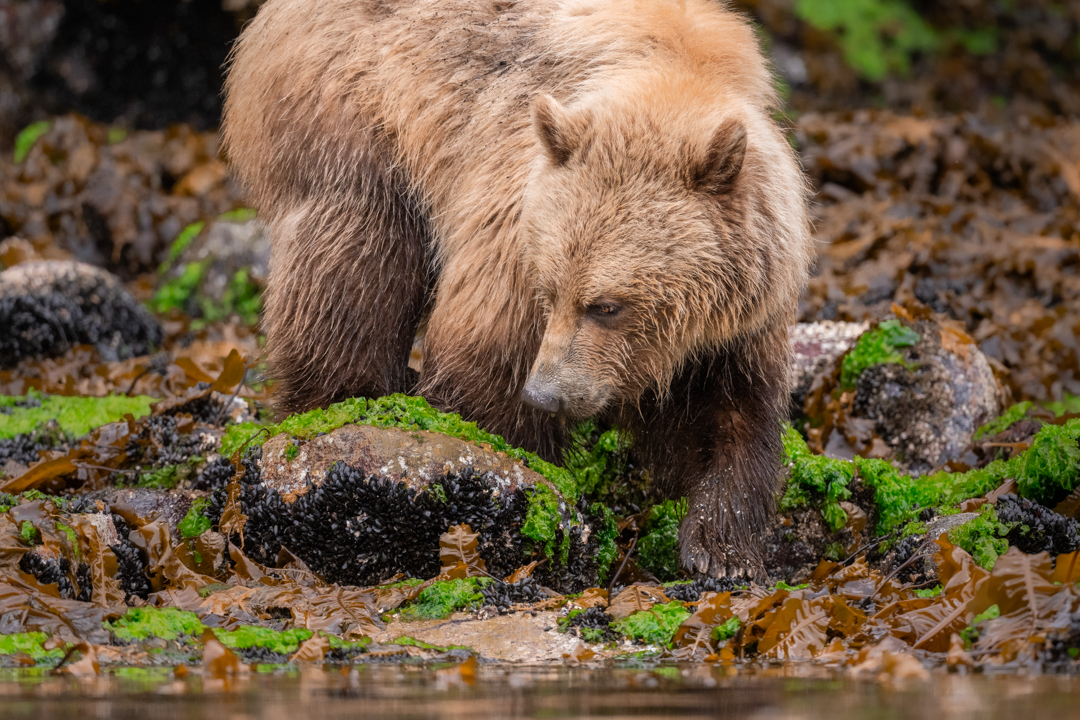
Just like that another season has come to an end. We are grateful for all the wonderful staff and the guests this season. It was an excellent season and we are already looking forward to next May.
One of the highlights of the season was all of the new cubs out. It was awesome to see so many new cubs of the year and that is great news for our bear populations moving forward. We had great spring viewing and this continued through summer. On our river trips we started to see salmon arriving in August and enjoyed some great shoulder season viewing. The fish at the viewing platforms were a little late showing up this year, but viewing during late September at the platforms was great and the estuary viewing remained strong throughout the season.
Out in the whale watching world it was another year that saw large numbers of resident Orca who remained in the area right into October. The Humpback viewing was also great with large numbers feeding in Blackfish Sound. It is so amazing to have these magnificent animals back in our waters in such numbers.
Over the winter and spring we will be doing some repairs and maintenance. We rebuilt the front deck last spring, utilising cedar cut on site. We will continue with some siding, rooms improvements and hopefully a floating sauna ready for the start of our season.
2026 is already looking like a very busy season for us. We only have limited high season availability so please book early to ensure we have space for your group.
Looking forward to seeing you next year
Angus Reid
Visit our Blog