Whale Watching

We’re not all about the bears, whales are abundant here too!

Killer whales and humpback whales are often seen during our wildlife tours. There are resident whales and transient whales that can be seen feeding and playing in our waters.

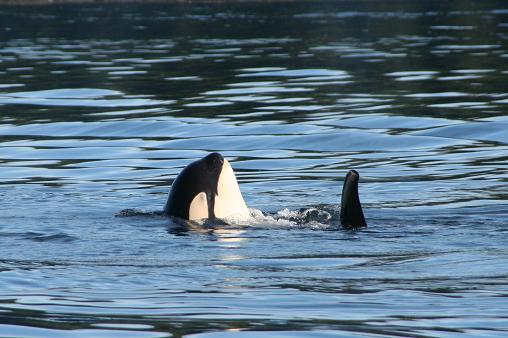
Orca spyhopping

Killer whale spyhopping

In a good spyhop the orca / killer whale has about half of it’s body out of the water. This is more of an orca backstroke where it was passing the boat and rolled over and stuck it’s head out of the water. The description of what is happening is not important because the picture is interesting and unique.


Running with dolphins

Dolphins Close

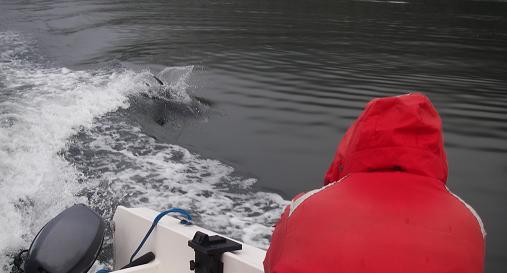
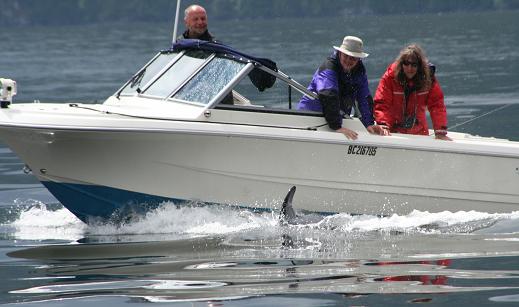
Once you are with a large pod of pacific whitesided dolphins they are everywhere. They seem to like 8 mph (GPS speed) as a speed for running along side the boat. Glenn took this photo of my guests not believing what they were seeing. Note the glare from my head. Besides running beside the boat they follow in the wake and stick their nose within one meter (yard) of the motor’s prop. The key to operating the boat is to maintain a constant speed and direction or the dolphins will leave.

Dolphins following boat


Confusing orca photo

Orca?

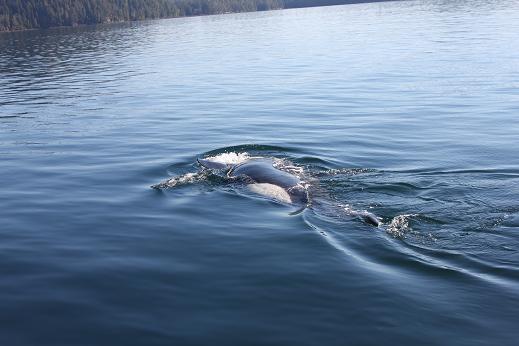
These two orca / killer whales passed under our boat and surfaced a few meters (yards) away. Explanation: looking at the photo their appears to be a dorsal fin at the top of the photo but it cannot be from the main orca because that would mean it was coming out of it’s belly. The belly of an orca is white and it is possible to see the tip of the tail at the end of the photo. So it could be one orca diving over the back of another or the dorsal fin could be the tail of another orca and the second one is following too close. Either way it was close.


Humpback Whale Close

Humpback Whale Tail

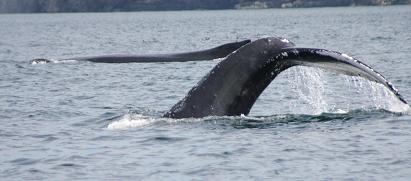
If I recall this photo correctly it was one on the few times I have seen a humpback whale passing under our boat. We often eat our picnic lunch in the same area that the humpbacks are feeding. Of course at lunchtime the motor is off and we drift quietly. It is common at this time for whales to surface near the boat but this was the rare time when it continued and we could see it under the boat.


Steller sealions at rest?

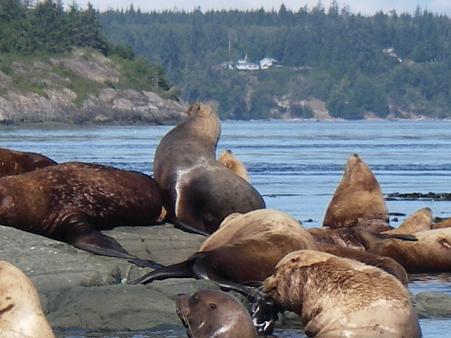
Steller sea lions

This was one of those rare times when the sealions were actually resting and not roaring and climbing over each other. But if you look closely you do not see any young sealions only the adults. It is the young that come out of the water and want to move to the top of the rock what cause all the problems and noise. The quiet only lasted five minutes and it turned to chaos and better opportunities for photos of roaring sealions.


Everybody gets a Killer Whale

research vessele

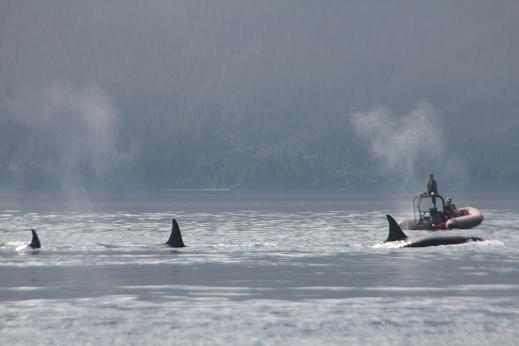
The above photo shows an orange zodiac very close to the orca and this is permissible if you are a research vessel however it should be flying a “research” flag. The photo below shows what happens if you wait patiently in the right place, the killer whales come to you.

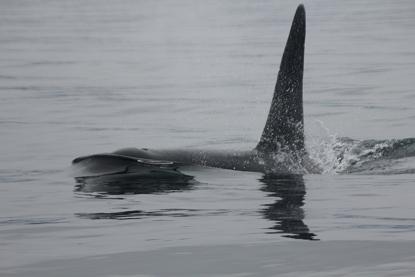
Killer whales close


Tail led to Lunge

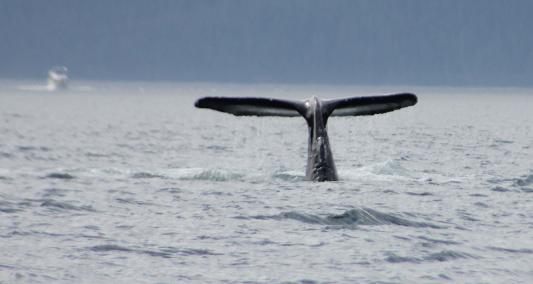
Good Tail for humpback

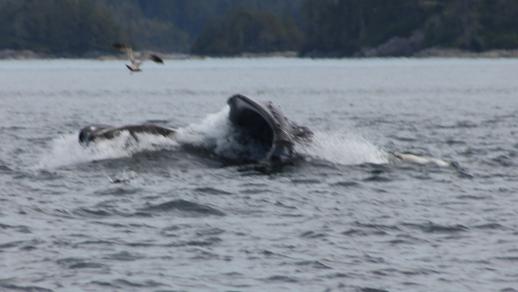
Our viewing area for humpback whales is off the mouth of Knight Inlet. On a flood (rising) tide the herring move toward the shore and this brings the humpbacks from deeper water. The herring are forced into tight schools known as “herring balls”, which vary in size of a basketball to the size of a small boat. The humpback whales dive deep (above photo) to come up beneath the ball with mouth open (photo below) and that is lunch. I say lunch because that is normally what we are doing while we watch the whales, eating our picnic lunch.

Humpback lunge feeding


Successful Fishing

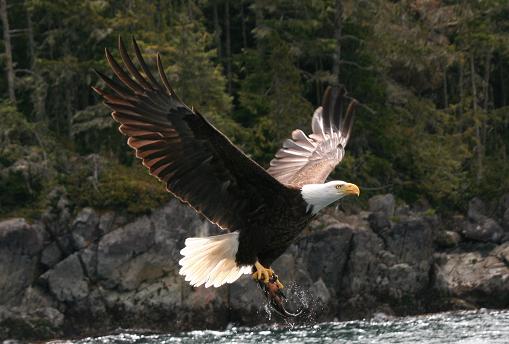
Bald Eagle Fishing

Whether you are on the lodge’s front deck, on a grizzly bear trip, whale watching in Johnstone Straits, or on your way to Trapper Rick’s you will see bald eagles. The likely hood of watching them catch a fish increases when whale watching because there is an abundance of herring in the area and therefore more fish to catch. However this eagle picked up a rock cod which is a bottom fish and that means that it was caught and thrown to the eagle to get the photo.


Orcalab – What is it?

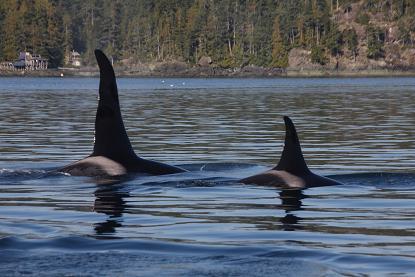
Resident male orca

A male and female orca / killer whlaes passing close to the boat in Blackfish Sound. Blackfish is the native name for orca. In the background one can see the building of OrcaLab. From their website at http://orcalab.org/:

“The work of OrcaLab is centred on the philosophy that it is possible to study the wild without interfering with lives or habitat. A network of hydrophones, positioned around the orcas’ “core habitat”, helps us monitor their movements all year round. Supplementing the acoustic data are visual sightings of orcas as they pass OrcaLab, and reports from land observation sites staffed by OrcaLab volunteers during the summer “season”, as well as reports from other researchers and whale watchers who share observations and information.”

If you go to OrcaLabs second website at “www.orca-live.net/” and click on “OrcaLive” then click on the map “The Hanson Island area” you have a view of the area where Grizzly Bear Lodge does their whale watching.


See you at the Lodge

I (one of the guides at the lodge) have signed off the blog for awhile, to go to work where the Internet reception makes it hard to upload pictures. I leave you with a few comments. The majority of the pictures used in the blog were taken with a Pentax Optio 6MP 3X Optical Zoom (a good, but small pocket digital) the pictures attributed to Glen came from a much better camera and of course the guest pictures are from a variety of cameras.