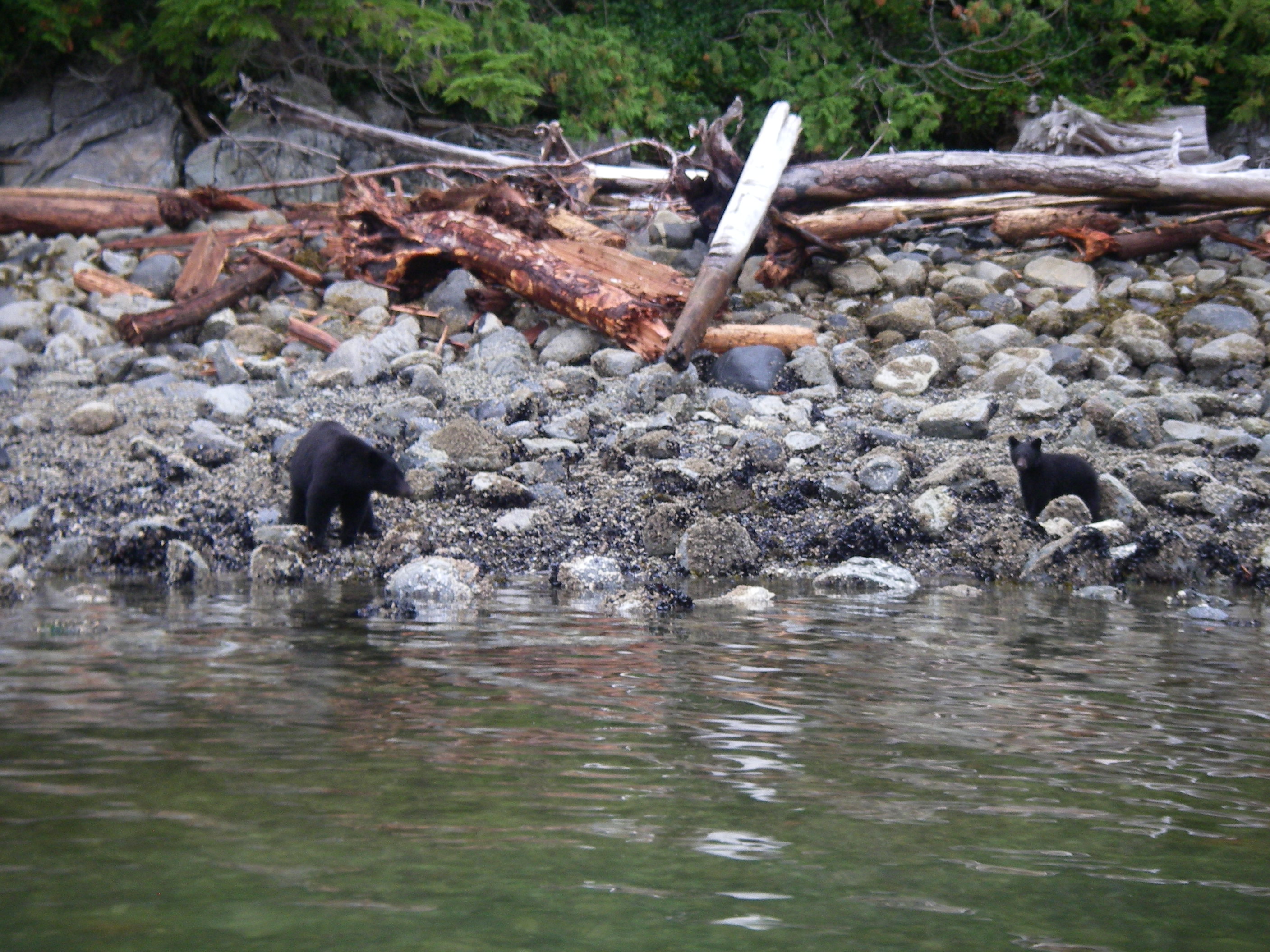
A black bear and cub stroll along the beach on one of the evening wildlife tours. A low tide provides the ideal conditions for the bears to be on the beach. Comparing this black bear photo with yesterday’s post it is quite obvious which bear has the higher hump and is the grizzly.
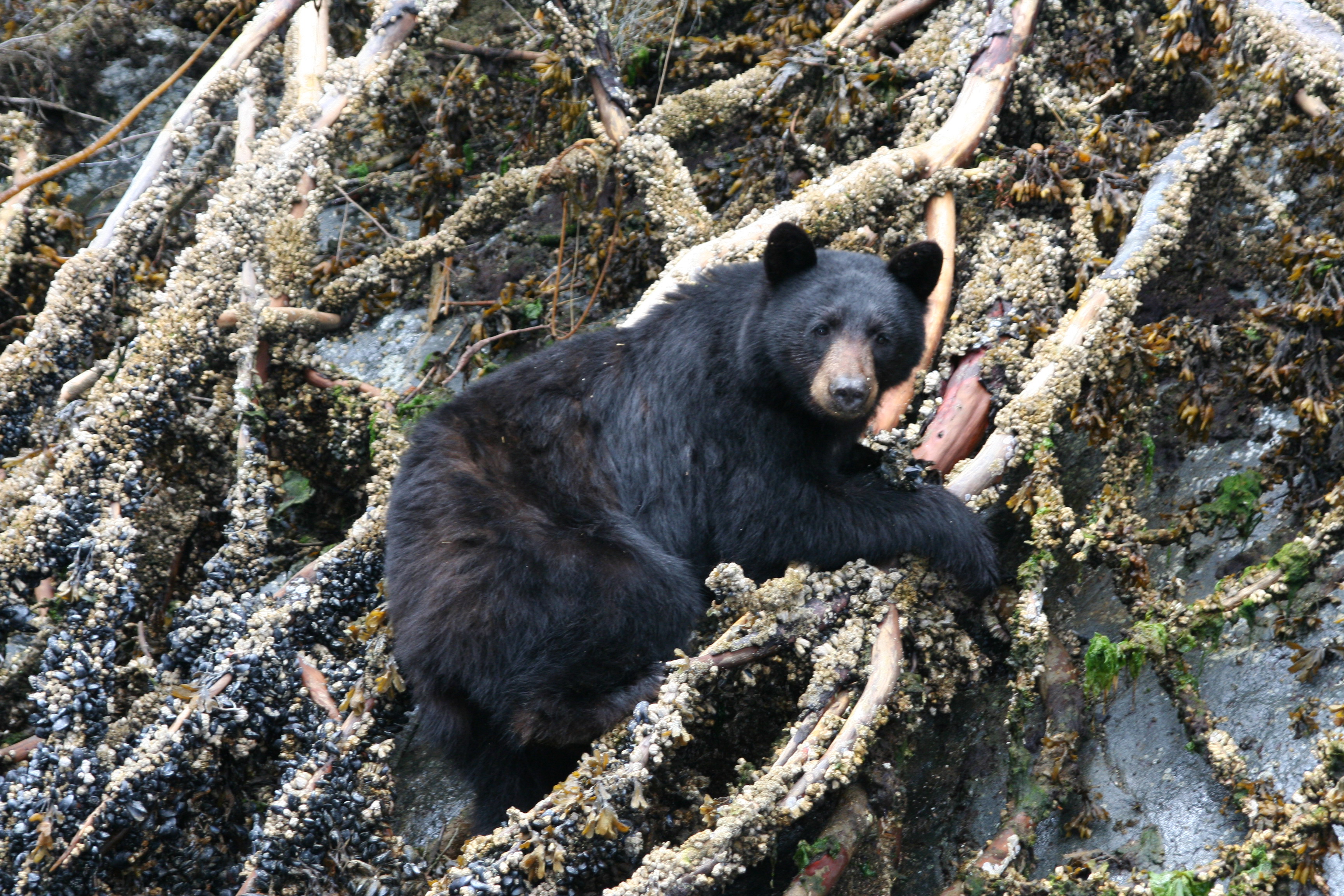
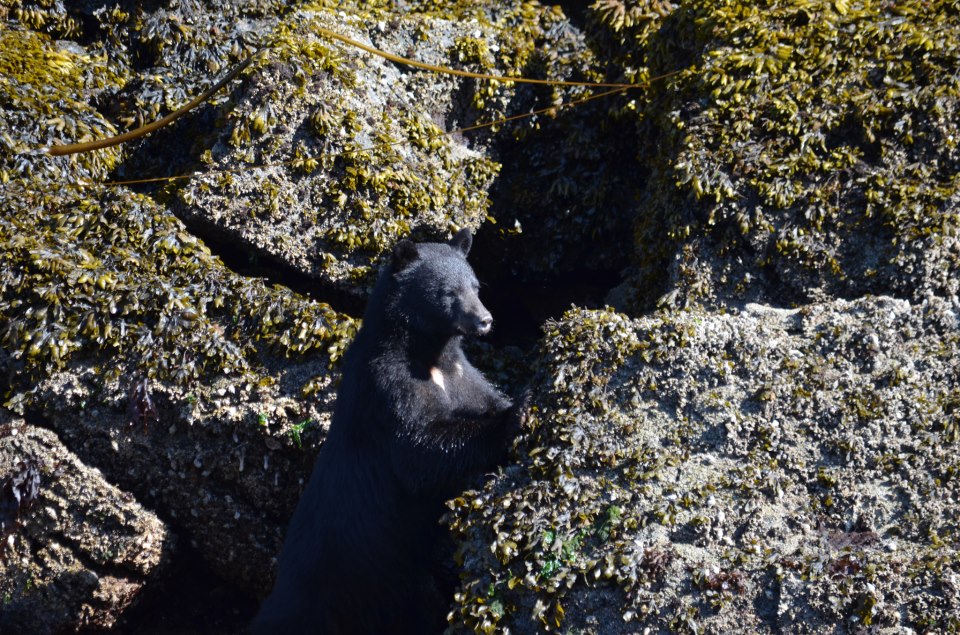
Mussels and barnacles are a staple source of protein for black bears along the British Columbia coast. On grizzly bear tours, whale watching trips or the evening wildlife tour from the lodge black bears are often on the beach at low tide. This bear has found an ideal location that allows it to scrape the branches of this tree to eat the mussels and barnacles. Extreme low tides always bring more bears to the beach because the parts of the beach that are exposed at these tides offer a source of food rarely available.
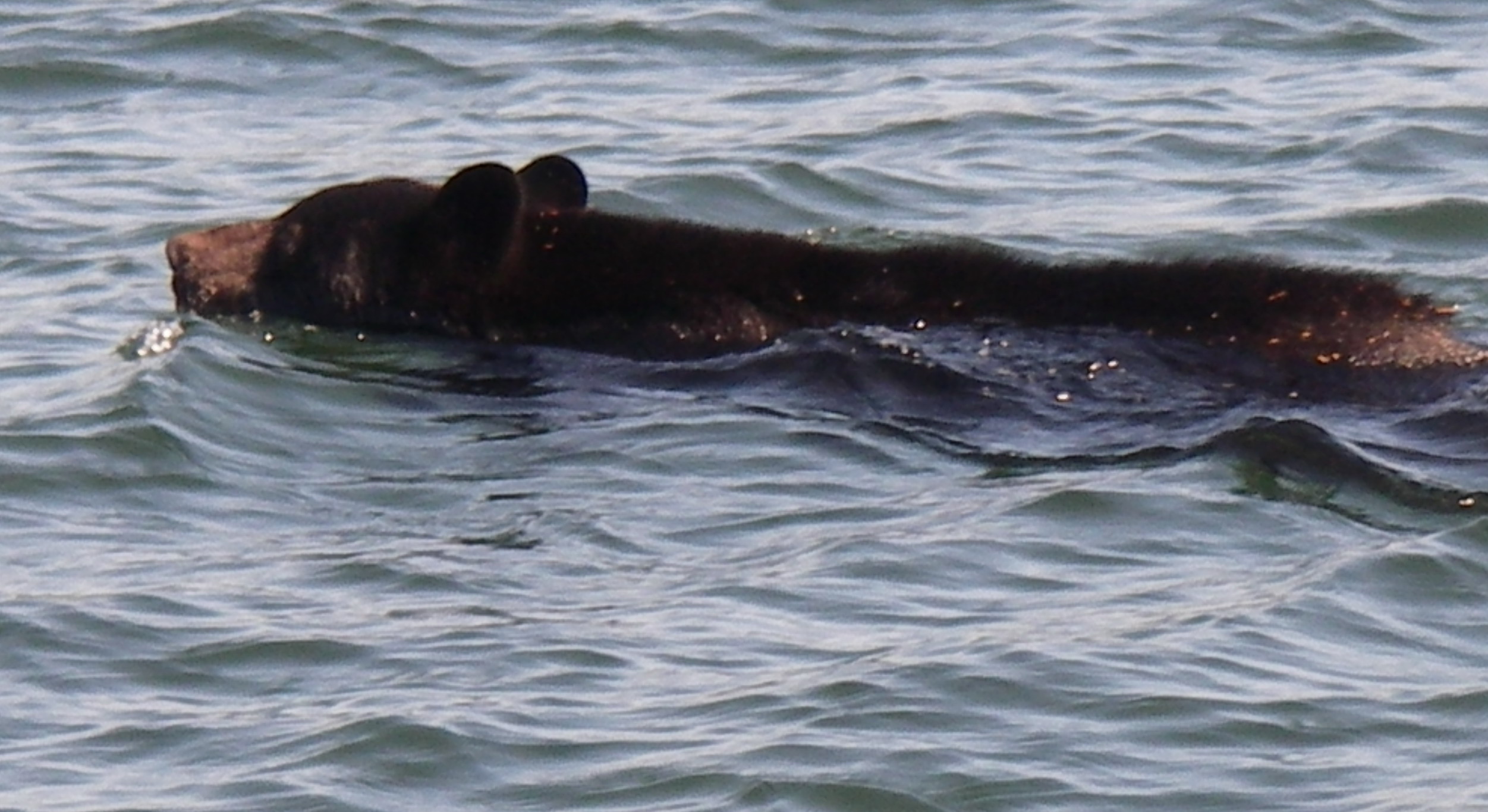
Grizzly Bear Lodge is on Minstrel Island BC and on the southern edge of the Broughton Archipelago. This is an area of many islands varying in size from small (100 square meters / yards) to large (100 square km /miles) and therefore many passages that need to be swum when black bears want to move from island to island. The current estimate of the black bear population in British Columbia is 120,000–160,000. This is about one quarter of all black bears in Canada. Its natural range includes Vancouver Island and most coastal islands to the north. This means that a swimming black bear is common rather than rare. This appears to be a healthy bear with a good layer of fat as shown by how high it’s body is out of the water. In the early spring often all that is visible is their head.
On the boat rides up and down Knight Inlet for the grizzly bear watching day the guides are constantly scanning the shores for black bears. This photo is of one of the few brown black bears observed in the inlet over the years. Ministry of Environment, Lands and Parks for British Columbia says: “Black bears are not always black, and this variation is most apparent in British Columbia. Other colour phases that occur in British Columbia include cinnamon, brown, and blonde. A white-coloured morph, called Kermode or Spirit Bear, is reported most frequently on the north-central coast. The blue phase, or “glacier” bear, is sometimes seen in the extreme northwest corner of the province.” Unfortunately this “brown” black bear is rarely seen in our viewing area.
Whenever we are on the water for a day whether it is a grizzly bear tour, whales watching trip or the extra day at the river we are always scanning the shore for wildlife. Frequently the wildlife found is black bears. On this trip in late June it was a mother and cubs that are about six months old. Two things are interesting the first being that there are three cubs. Triplets for a black bear are rare the common number being one and twins occasionally. The second is all the white on the rock where the barnacles have been removed. Bears come to the shore in search of protein and scraping off and eating barnacles is one source. This appears to be one of their feeding areas.
The black bears we view along the beach whether on a grizzly bear or a whale watching tour or most often on a beach with rocks that can be turned over in search of food. But they also like the larger boulders because of the number of barnacles and black mussels. They will scrap the barnacles loose with and eat them shell and all. The same goes for the mussels. This is a good source of protein for the black bears. They do not have access to the salmon rivers in this area because the grizzly bears control the rivers.
The spring / summer grizzly bear viewing season is from late May until August 24th. After August 24th the grizzly bear tours are permitted by the Canadian Department of Fish and Game to travel the short fifteen-minute van ride to the viewing platforms on Knight Inlet’s Glendale River. Prior to the 24th all viewing takes place on the shore of Knight Inlet and Glendale Cove. The spawning salmon arrive in mid-August and are given several weeks to make their way up the river and for the bears to settle into the area of the spawning channel before bear viewers are permitted in the area… more tomorrow
Click to enlarge then click againClick to enlarge then click again
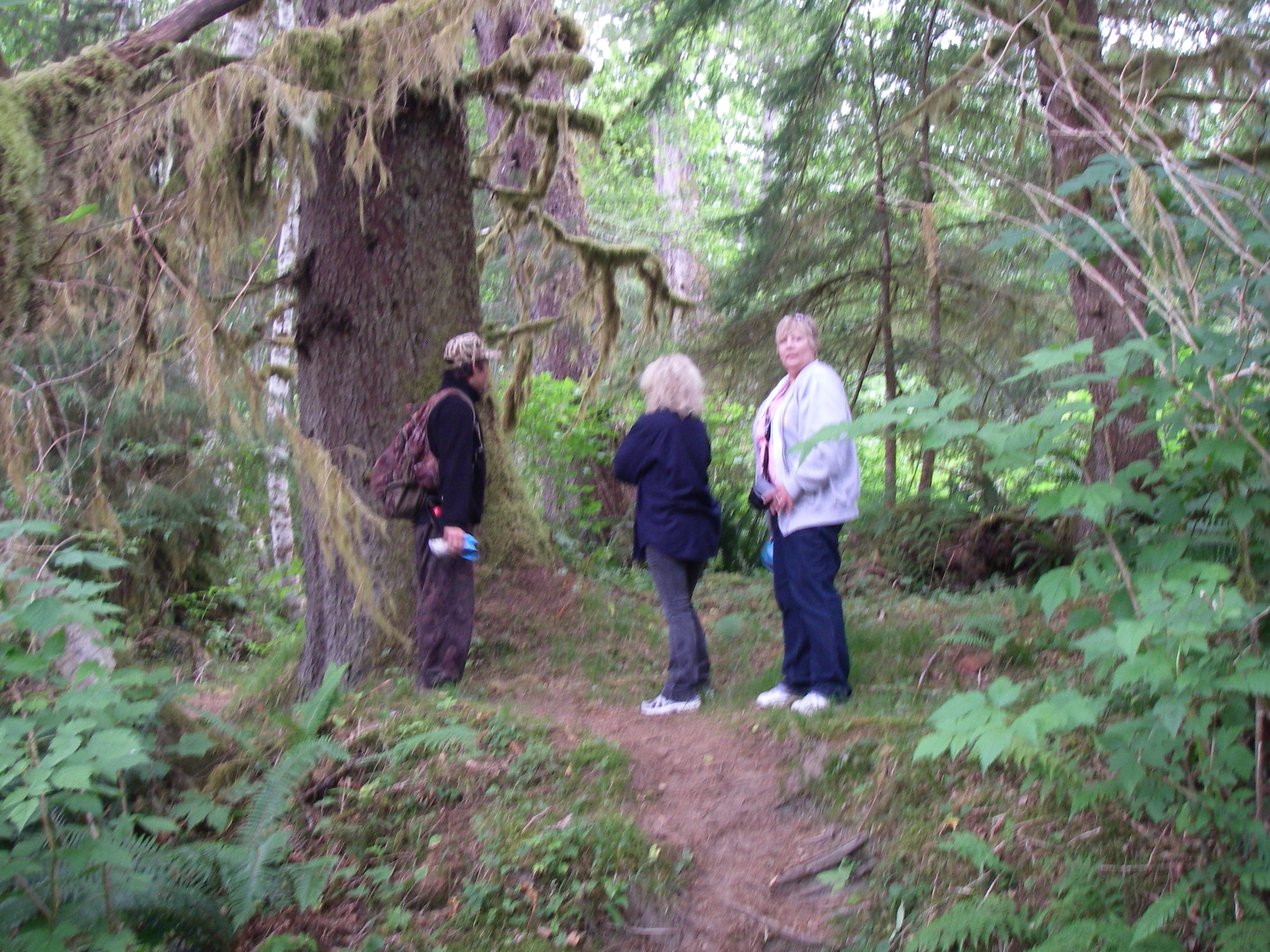
On the short walk to Trappers cabin guests stop to wait for other guest to catch up with Rick. No they are not wandering around on their own. Rick is the lead guide on this day while your lodge guide brings up the rear so there are no stragglers. The stop is to wait and talk about the surroundings and how Rick obtained the black bear skull in the second picture. A story about a grizzly and a black bear that met on the trail and made traveling the trail interesting for a week or more. A story better saved for Rick.
Guests normally arrive at Grizzly Bear Lodge on Minstrel Island between three and four o’clock. Once the luggage is moved to rooms, introduction to the lodge on the front deck, welcoming snacks of prawns or dungeness crabs it might be time or the first day’s black bear trip. “Might be” because it requires a reasonably low tide so there is a beach for the bears and at times that may be after dinner. This trip was successful finding a mother and cub on the shore looking for dinner. Important to note that this photo was taken with my small pentax with only a ten times optic zoom. I assure you the guest photos were much better.
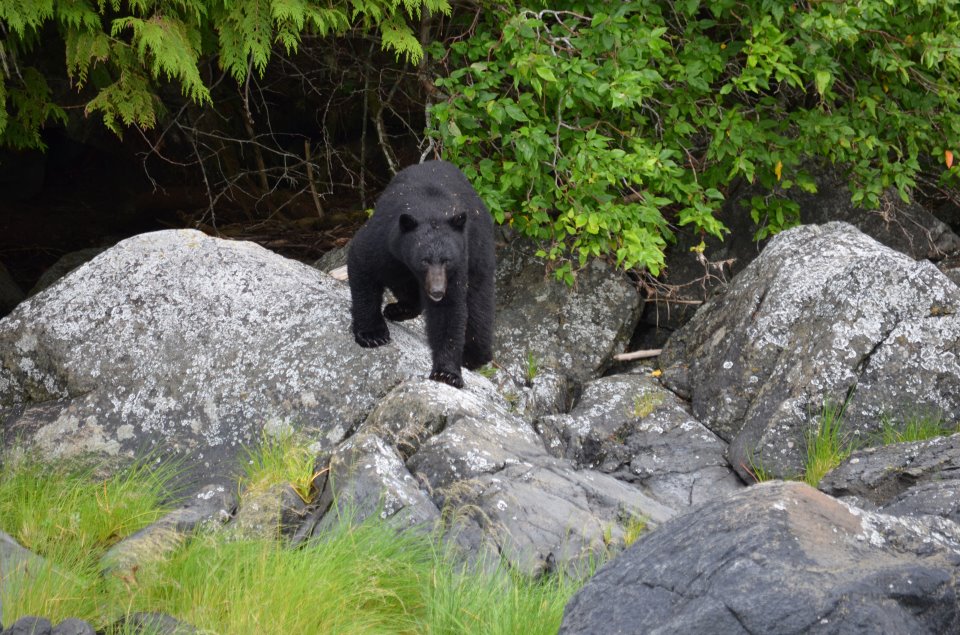
The first day / evening in the lodge involves an hour plus wildlife tour. This may occur before or after dinner depending on the height of the tide as it is hard to find a black bear on the beach if there is no beach. It is a local tour that familiarizes guests with the boats, the guides and the area around the lodge. The black bear that frequent the shore are less than half the size of the grizzlies mainly because they do not have access to the salmon rivers, which are controlled by the grizzlies. The best way to judge if the black bear is a big bear is the size of its ears in relation to the head. Small Bears: Will have a small, narrow head, almost dog like. Their ears will appear to be much larger and defined. Almost like “Mickey Mouse” is a common description. Big Bears: Will have a very large, blocky looking head. Their ears will look small, and almost off to the side of their skull a little.
That’s a wrap on the 2026 season at Sailcone’s Grizzly Bear Lodge. It has been an amazing year. We welcomed guests from all over the world and witnessed one of the best salmon runs in decades.
I would like to thank our crew who looked after our guests from May until October. We are very fortunate that they are all planning on returning next season.
On the wildlife side it was truly an epic year. We saw a number of bears with new cubs and had an amazing salmon run. With these conditions the survival rate for these cubs is high. On the water the Humpbacks were abundant, with a large numbers hanging out in Knight Inlet in the early season and lots in our whale watching area throughout the year. The resident Orca were abundant and we also had a lot of Biggs Orca sightings.
For 2027 we are continuing to refresh the rooms, with new ceilings and paint. We will also have our floating sauna operational for the start of the season. More information on that to come.
Thank you again to everyone who visited us in 2026, to our staff and our travel partners. We are booking quickly for 2027 so if you want to visit us next season inquire soon.