Tag Archives: Dolphins

Running with dolphins

Dolphins Close

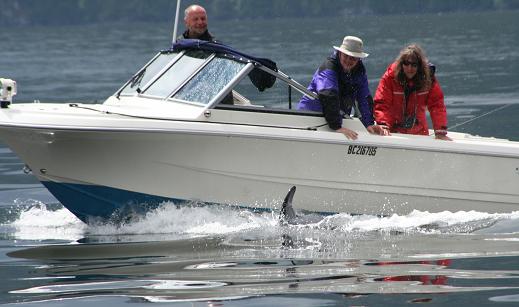
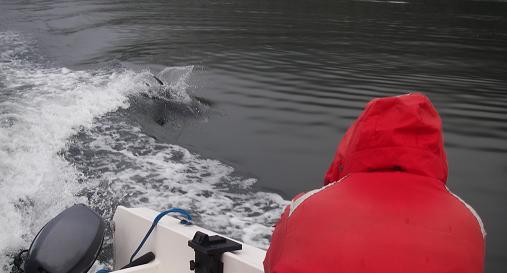
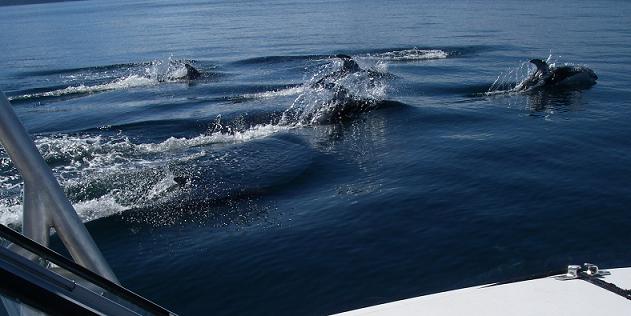
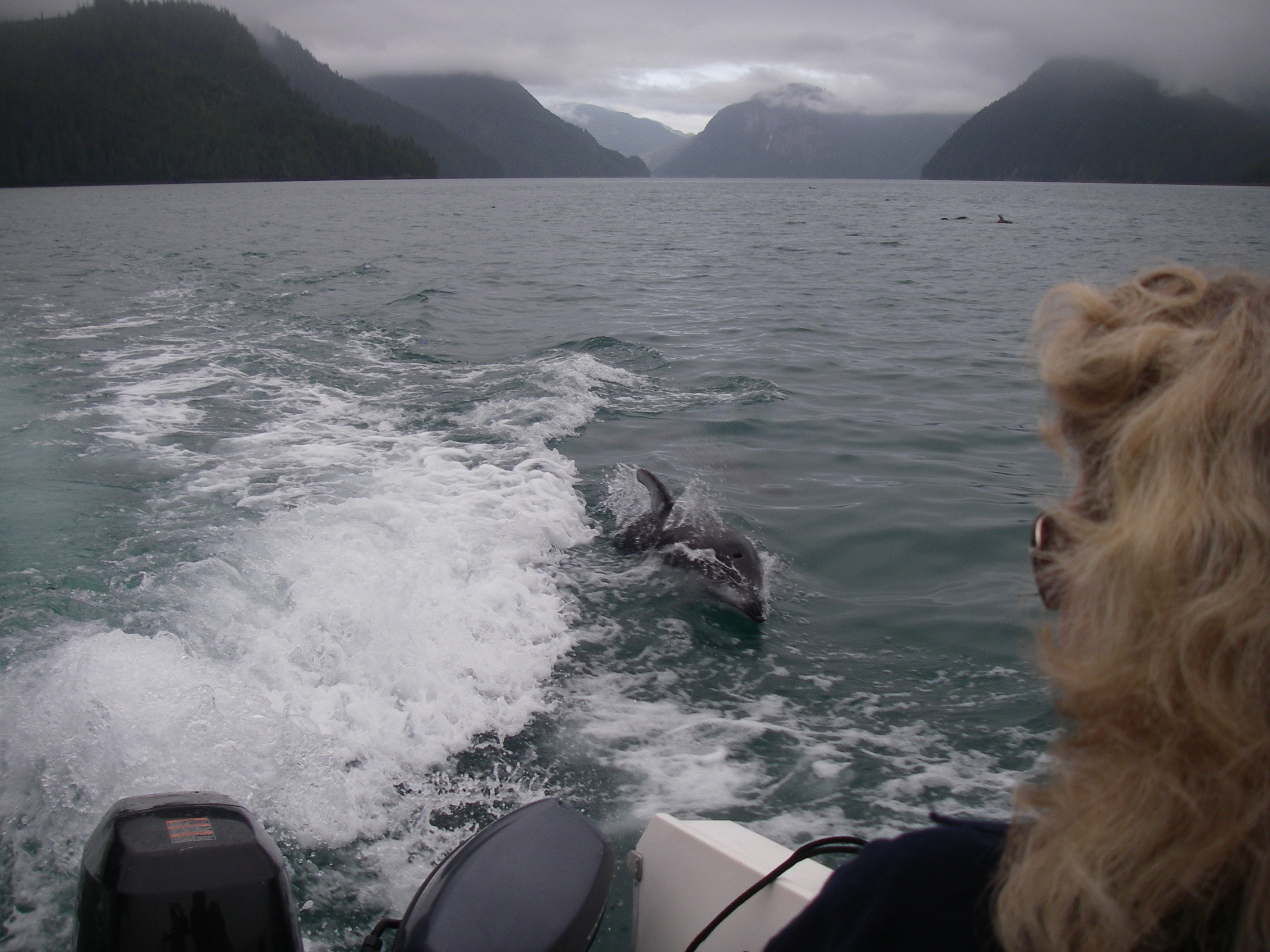
Once you are with a large pod of pacific whitesided dolphins they are everywhere. They seem to like 8 mph (GPS speed) as a speed for running along side the boat. Glenn took this photo of my guests not believing what they were seeing. Note the glare from my head. Besides running beside the boat they follow in the wake and stick their nose within one meter (yard) of the motor’s prop. The key to operating the boat is to maintain a constant speed and direction or the dolphins will leave.

Dolphins following boat


Good Timing Photo

Dolphins Playing

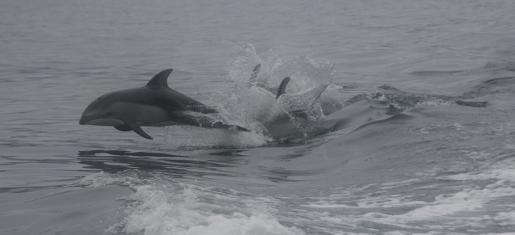
Pacific whitesided dolphin love to play in the wake of the boat or to ride the bow wave. The most reliable way to obtain photos when you are traveling with a pod of several hundred is to point and click as many times as possible. Once you return to the lodge you can delete all the pictures of sky and water and you may have one or two keepers. The best way to enjoy the dolphins is to put down your camera and buy one of the photos that Glen, one of the guides, has for sale. This running with the dolphins can happen on any of the day trips whether to view grizzly bears, whales or a visit to the wild river on the extra day in camp.


Pacific Whitesided Dolphns

Whitesides Dolphins


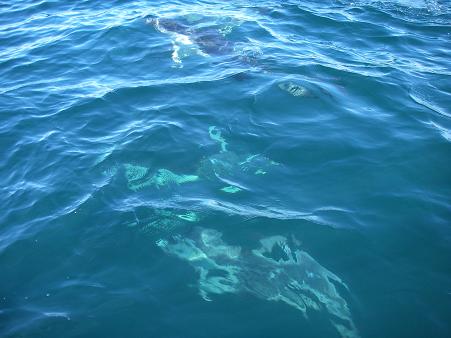
The June 8th posting showed our boats with a pod of pacific whitesided dolphins playing in the bow wake and the prop-wash. If you stop the boat the dolphins often stop with you and come along side the boat and that is what this picture shows. Two dolphins less than one meter (yard) from the boat.


Pacific white-sided dolphins

Pacific whitesided dolphins

Pacific white-sided dolphins are frequently viewed on all our wildlife tours.  There are estimated to be 900,000 pacific white-sided dolphins in the North Pacific. Dolphins travel in groups throughout their lives. In B.C., Pacific white-sided dolphins are usually encountered in groups of 10 – 100 animals, although some groups have been seen with 2,000 or more individuals. Dolphin remains are present in First Nation’s middens (waste heap) dating back 2,000 years, but were rare in B.C. during the 19th and 20th centuries. They were first spotted by fishermen in 1956 north of Vancouver Island, and sightings became more common in the 1980’s as Pacific white-sided dolphins started to spend more time in inshore waters and inlets along the B.C. coast. It’s possible that their long absence was related to a change in ocean temperatures and a shift in their prey distribution.


Dolphin Taking a Dive

whitside dolphin tail

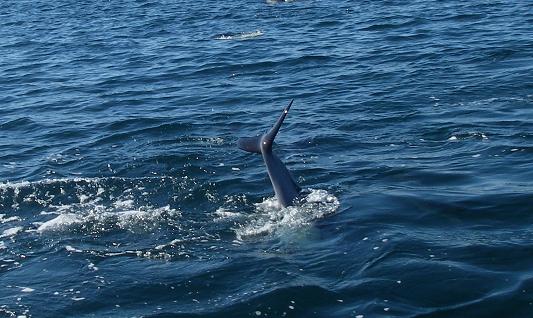
Pacific white sided dolphins, as mentioned in the positing of April 17th, are frequently seen in our viewing area. They are observed as often on the grizzly bear tour and the day with Trapper Rick as they are while whale watching. This is an unusual photo as it is the after the leap and was kept to compare it to tomorrow’s post.


Pacific White Sided Dolphins

Whitsides - Dolphins

Pacific white sided dolphins have the Latin name of “Lagenorhynchus obliquidens”, which is shortened to “Lags” because the Latin is too much of a mouthful to use over a VHF radio. These dolphins may travel in-groups that reach numbers of up to 2,000 or 3,000 but most often in-groups between 20 to 100. If you only see a couple keep a look out as there are usually more not too far off. These dolphins are playful and will often follow in the propwash of the boat or ride the bow wave. The best approach for a photo is to point and click as much as possible and upon returning to the Lodge delete all the pictures of the sky and water and maybe have some of the dolphins.


Pacific Whitesided Dolphins

Pacific whitsides

Not a bad photo for a one-handed shot with a small camera while running the boat and staying with the dolphins. The dolphins seem to love to come and play with the boat and nine miles an hour is the speed that works. The dolphins are found in the inlets as well as while whale watching in the Johnstone Strait area. This means that there are opportunities to see dolphins while travelling up Knight Inlet to view the grizzly bears as well as on the extra day trip to visit Trapper Rick.


Pacific Whitesides Dolphins Play

Pacific Whiteside Dolphins

“(Lagenorhynchus obliquidens) The Pacific white sided dolphin is very beautiful. They have a coloring that ranges from light to dark gray. The underside of them though is white. They also have dark black rings that cover both eyes. The beak is very small and often seems out of proportion with the rest of the body. One characteristic that you will notice is that the dorsal fin has a hook on the end of it. They aren’t very large though compared to other types of dolphins. Full grown they will be about 8 feet long. They will weight approximately 300 pounds.” Taken form the website Dolphins-World
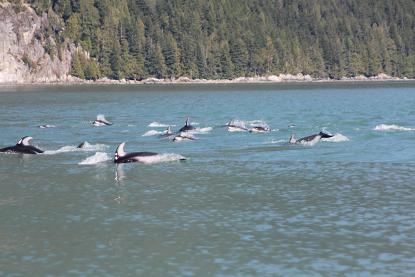
The technical write up is interesting but cannot compare to the excitement of a pod of two or three hundred dolphins playing with our boat. They are on all sides of the boat playing in the bow wave as well as sticking their nose within a meter (yard) of the prop.

Follow the leader

Pacific white-sided dolphins inhabit the coastal water of British Columbia. Whether on a grizzly bear tour, whale watching trip or on the way to the wild river on the extra day at the lodge it is possible to find a pod of dolphins. Whale watching guidelines require that boats come no closer than 100 meters (yards) but the dolphins do not seem to follow the guidelines. They ride the bow wake, nose into the prop wash and when the boat stops swim underneath and around.