Tag Archives: Ealges
Eagles on ALL tours
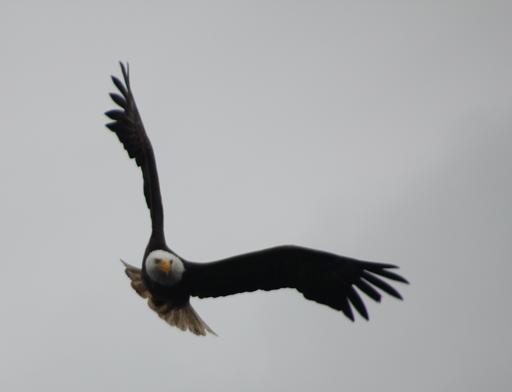 Bald eagles are viewed on all the tours from the lodge. It does not matter if you are on your day trip to the grizzlies in the Glendale River, whale watching in the Johnstone Strait or on the river with Trapper Rick. In fact this picture was taken from the front lawn of the lodge on Minstrel Island. The bald eagles with their white head are a majestic bird when flying over head or perched in a tree along the shore.
Bald Eagle soaring overhead

Bald eagles are a common site on a Grizzly Bear Lodge tour day. Whether it is a tour to the grizzly bears, whales or a visit to the wild river eagles are found along the shore perched in trees or flying overhead. It takes a fast camera to obtain a good picture of a flying eagle as they to not pause for the photographer. The positive side to the abundance of eagles is that there are numerous opportunities for that “perfect” photo.
Best bald eagle
The perfect eagle picture is hard to achieve but Grizzly Bear Lodge tries to provide the perfect opportunity. First by keeping an eye out for bald eagles on the whale watching trip, grizzly bear tours and extra day at the river. Secondly when the resident eagles are still in their nest behind the lodge we will occasionally throw out a bottom fish and encourage them to come for an easy meal. Glen, one of our guides, provided another great photo.
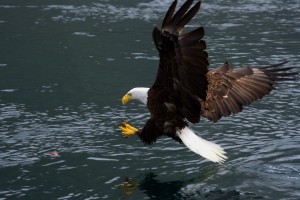
Posing Bald Eagle

This is a great pose of a mature bald eagle with a solid white head without any dark feathers and the bright yellow in beak and claws. As common as eagles are on the whales watching and grizzly bear tours it is still difficult to obtain a good picture. The important part is the dark background so that the eagle does not blend with the sky. At times it is hard to find and eagle sitting low enough in the trees to achieve the necessary background.
Everybody eats in the fall
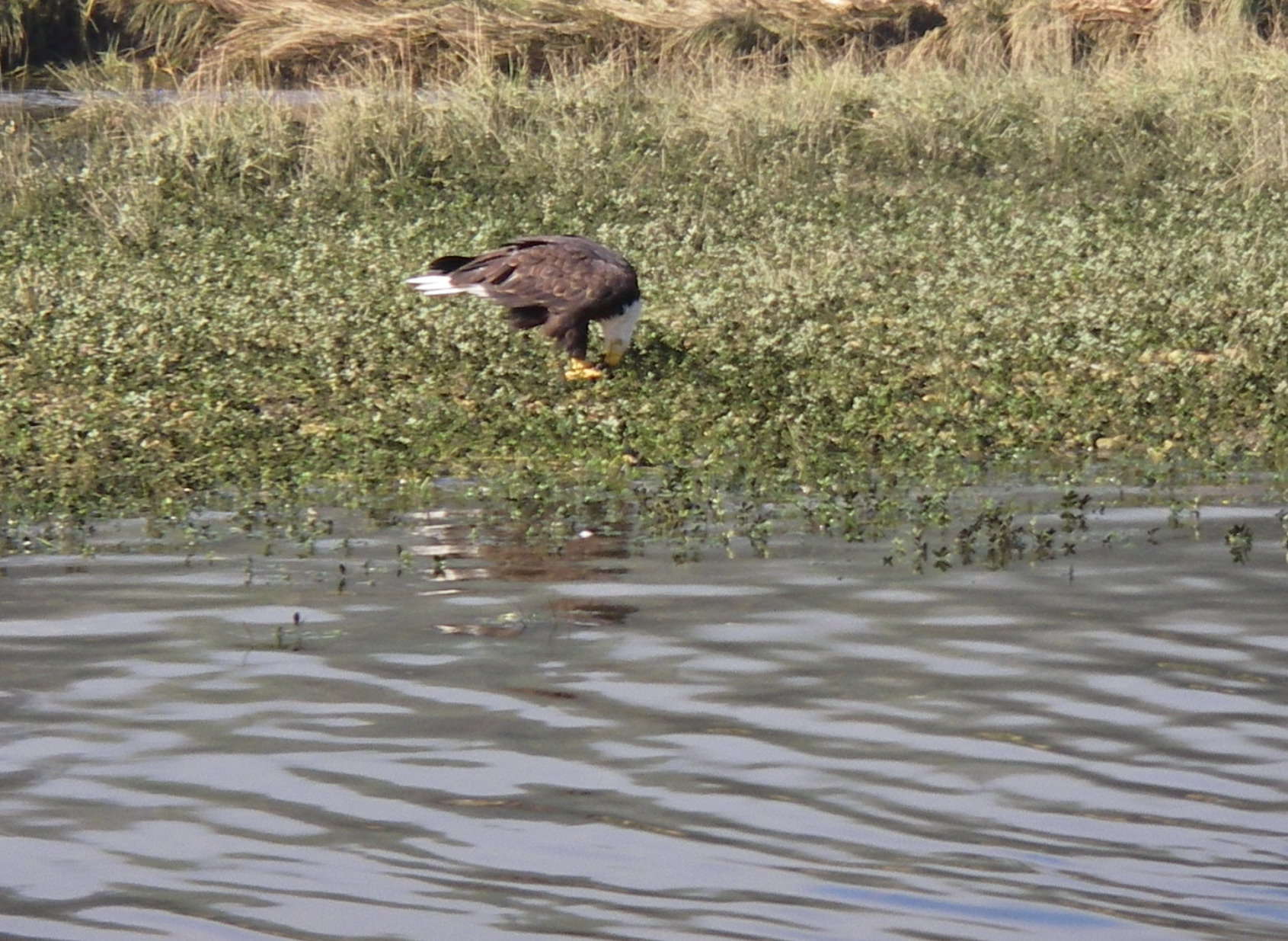
Following from yesterday’s post and the use of a small camera to get a photo this is from the same camera. The evening of this photo, back at the lodge, guests were showing their pictures of this eagle and they were amazing. The photo was taken on the Glendale River as the guide was walking the boat up the river on an incoming tide. Yes guides wear waders and as the water in the river is not deep enough to use a motor we pull the boat up river to obtain the best opportunities for photos of wildlife which at times means close ups of eagles as well as grizzlies.
Almost a complete white head
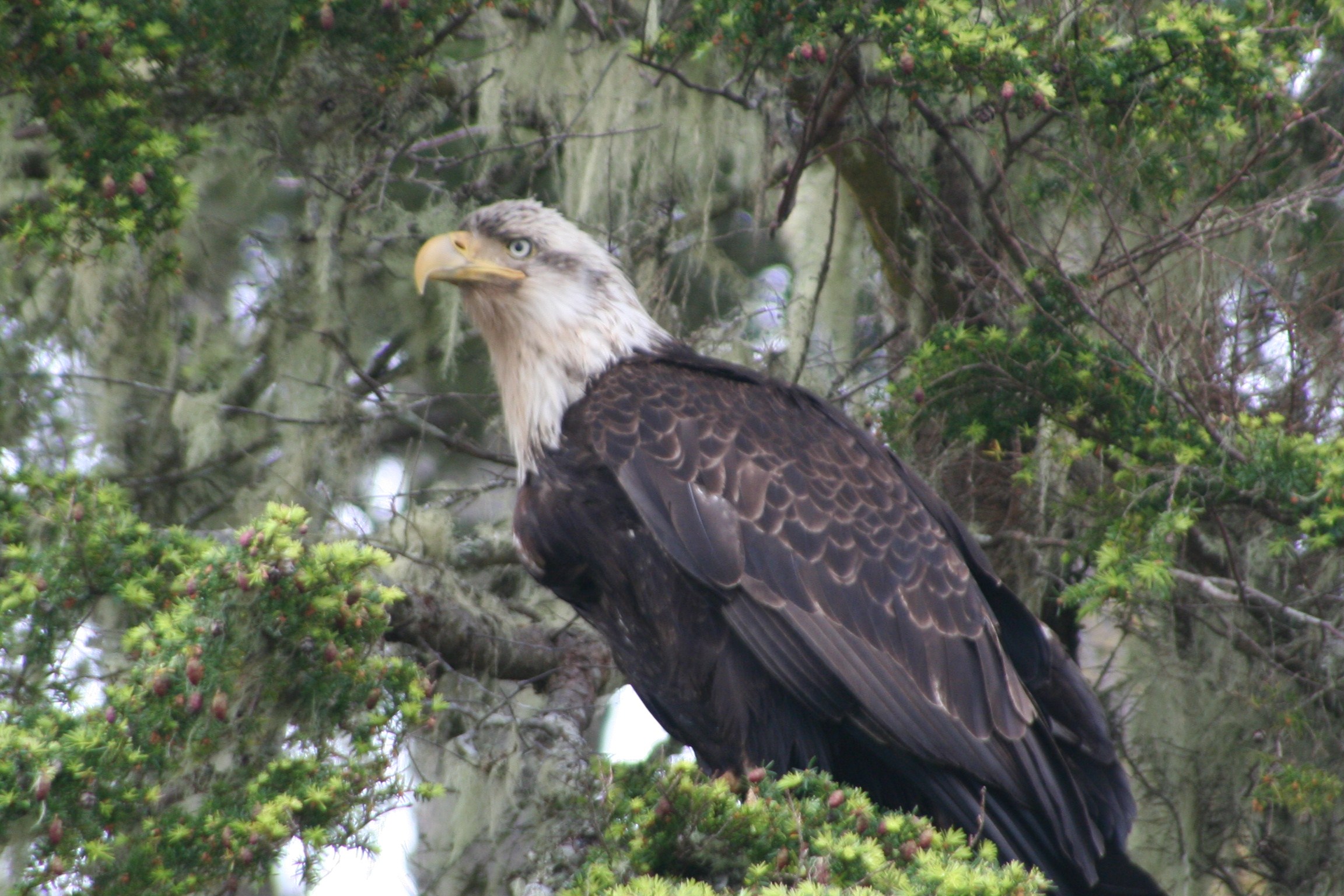
Great photo of a young bald eagle. Young because eagles start to get their whites heads in their third year and are normally fully white by the end of the fifth year. Regarding the yellow beak I found an interesting story on line from Senior Naturalist Dave Erler that is worth reading:
“Not long ago a Squam Lakes Natural Science Center trail visitor observed the immature and adult Bald Eagles housed at the Raptor Exhibit and asked me a great question. Why does the adult Bald Eagle have a yellow beak? I pondered for a moment before responding. I recollected from the ornithology course I took in college that the outer covering of a bird’s beak was composed of keratin, which is similar to keratin in mammal nails or claws, reptile scales, and bird feathers. I also explained that the yellow color in bird beaks, ceres (the fleshy portion at the base of a raptor’s beak), and feet are caused by pigments called carotenoids. After sharing this information, I explained that when I first came to work at the Science Center some three decades ago, most of the raptors in our collection had very dull color in their ceres and feet. This prompted me to contact a veterinarian I knew who worked with raptors. The vet explained to me that the carotenoids in bird beaks have a slightly different composition of proteins and glycine than is found in other animals. The yellow color is influenced by both diet and hormones. The vet suspected the dull color was the result of a vitamin deficiency, possibly vitamin E. On the vet’s recommendation we began to use a vitamin supplement formulated for hawks and falcons. After a few months, there was a marked improvement of the birds’ ceres and feet, indicated by a brighter yellow color.
After sharing all this information with this gentleman, I could tell by his glassed-over eyes that I had missed the intention of his question. So I asked him if his question was really, “What is the function of having a yellow beak?” He nodded yes. Realizing I had already bored him senseless, I simply stated it probably indicates to other eagles that the individual is fully mature and healthy, important factors if you are trying attract a mate and hold a territory. That answer was sufficient and he wandered off leaving me to wonder why I don’t have a yellow beak.”
Guide Photos
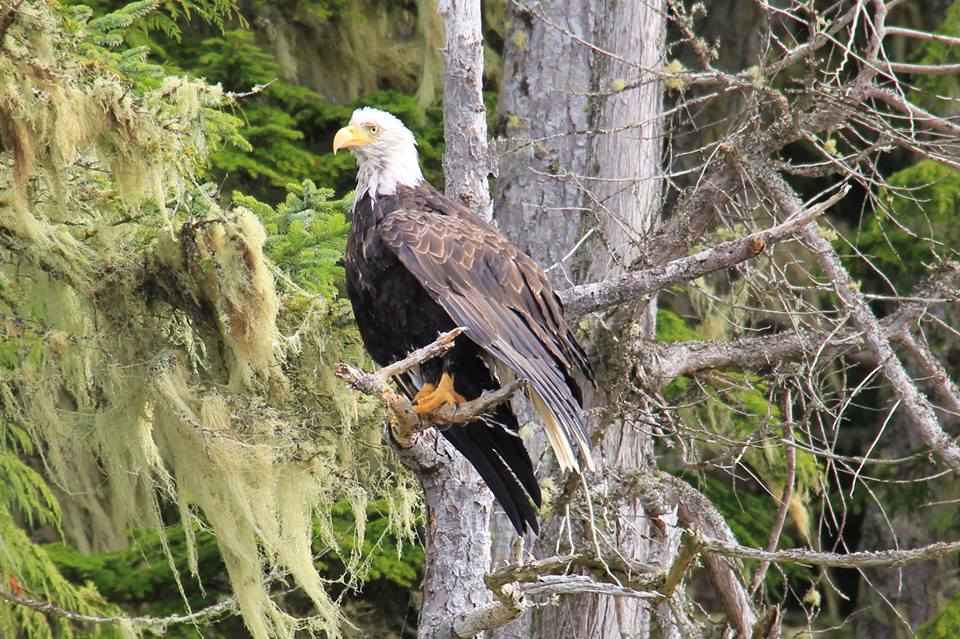
Bald eagles can be viewed from the front deck of the lodge on Minstrel Island as they fly from the nest behind the lodge to their fishing areas. On all the day trips for the whale watching safari, grizzly bear tours and wild river trips eagles are plentiful. The hardest part for a good bald eagle picture is to have the eagle so it is not “sky lined”. They need a dark background to set off their white head as shown in this photo. Also to note is the spread wings as it enjoys the sun while drying after the summer’s morning fog.
Guide Photos
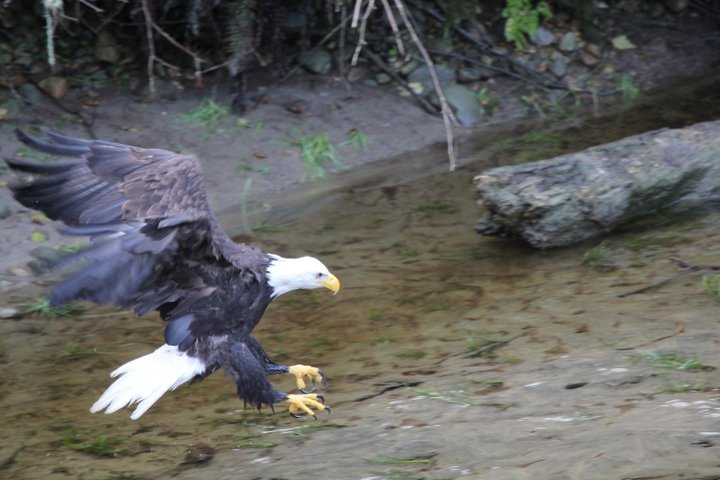
Great photo of a bald eagle coming into land on a salmon carcass on the Glendale River. The eagles leave other parts of the BC coast to congregate at river mouths in the fall when the spawning salmon return. The eagles arrive shortly after the grizzly bears and for the same reason, free and easy food. Grizzly Bear Lodge’s spring and fall tours spend time on one Knight Inlets rivers which has the sedge grass for grizzly grazing in the spring and the salmon in the manmade spawning channel in the fall.
Guide Photos

Bald eagles are common on all day tours whether on the grizzly bear tour, whale watching safari or the extra day wildlife trip to the Kakweikan River and Trapper Rick. In the fall when the salmon are spawning in Knight Inlet’s Glendale River the eagles come down to the riverbank to feed on dead salmon. All birds of prey find it easier to eat carrion than catch their own food and a riverbank full of spawned out salmon is the ideal place. On our skiff rides up the river adult and juveniles eagles remain on the riverbank and refuse to leave their meals while we pass close. As shown in this photo we tend to get the “eagle eye” as if to say, “this is mine, keep going”.