Tag Archives: grizzly

Grizzly Bear coming to visit

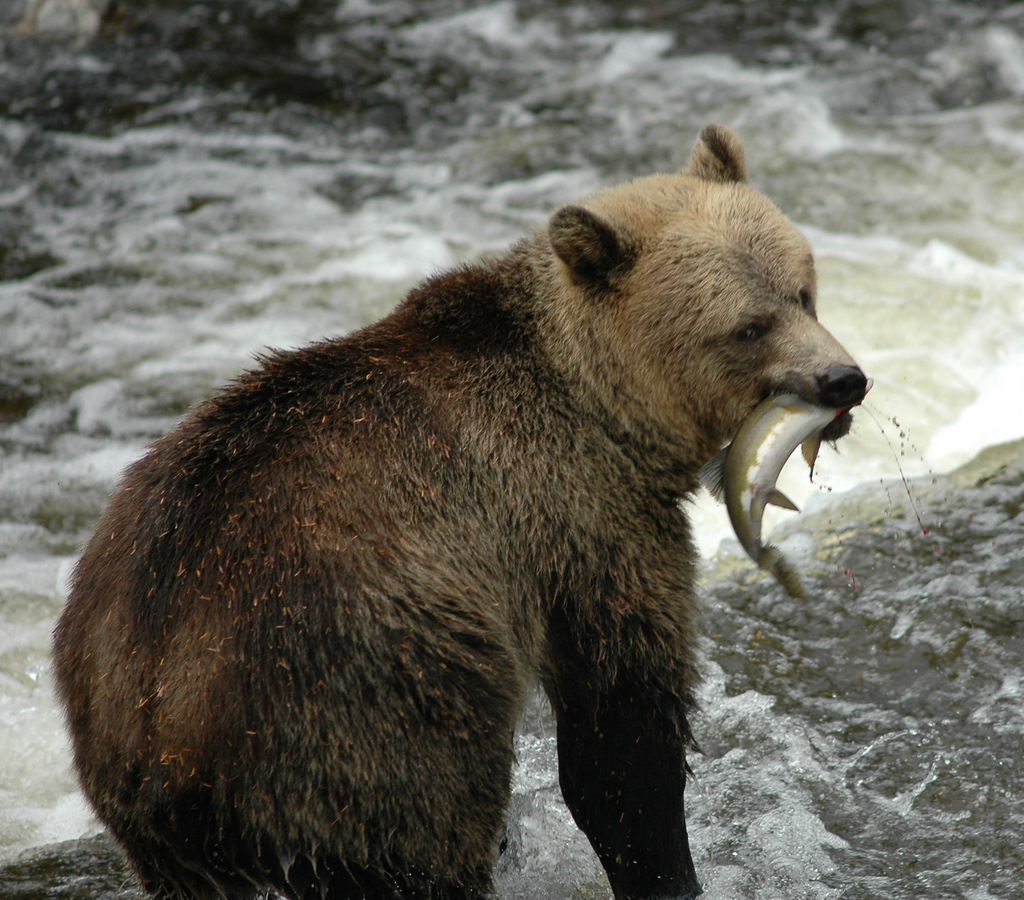
large male grizzly knight inlet
Click to enlarge

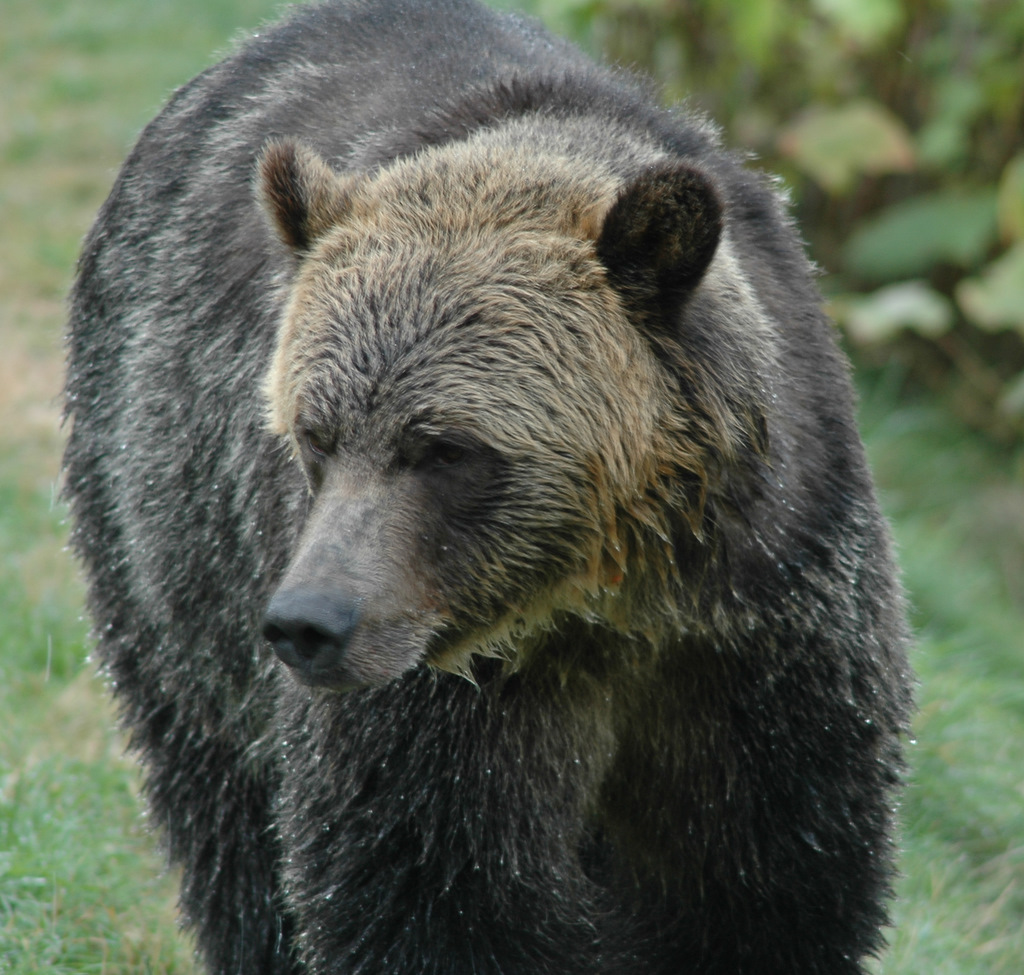
When you can see the water drops on a grizzly’s coat you know that it is coming close. The viewing area the lodge has access to on Knight Inlet’s Glendale River has two stands on either end of a narrow finger of land that separates the entrance to the man-made spawning channel and the main river. This finger of land provides a one way road to drive between stands which allows the van to park next to the stand so it is only a few feet until you are safe in the stand.  However it also provides a good path for the grizzlies to use as this picture from Lindy Taylor shows. Bears will walk in front of and beneath the stands which provides great opportunities for pictures.

Grizzly Bear Eating the Catch

grizzly cstching salmon
Click to enlarge

This grizzly bear seems to be devouring the salmon headfirst.  The time of the year determines what part of the salmon the bears will eat. The photo by Lindy Taylor was the start of September when the pink salmon first appear in great number so the whole fish is consumed. As the season progresses they eat on the really fatty parts, such as the brain and the ovaries packed with eggs and the skin – giving them maximum calories per bite.  This selective eating by the successful grizzlies provide food for bears that are less able to catch live salmon. The discards drift down stream and become meals for other bears and the ever present bald eagles. One of the viewing stand is by a deeper water pool and some bears just sit and scavenge all day this sure saves energy and that helps puts on the fat layer.

All fishers are not created equal

grizzly caught salmon
Click to enlarge


Just as all grizzly bears are not the same size or the same colours not all have the same ability when it comes to catching salmon.  The fall viewing area on Knight Inlet’s Glendale River has an abundance of pink salmon and this attracts the bears.  The estimated of grizzly salmon consumption runs from 40 to 100 pounds in a day depending on the size of the bear.  Even if you take a low number of fifty pounds considering the pink salmon average weight are 3.5 to 4 lbs. They still need at least 12 to 15 fish a day to fatten for the winter. Bigger bears allot more.  Bears fishing for salmon is not a hobby it is a lifestyle.

Grizzly bear cub and mother

grizzly and cub on beach
Click to enlarge

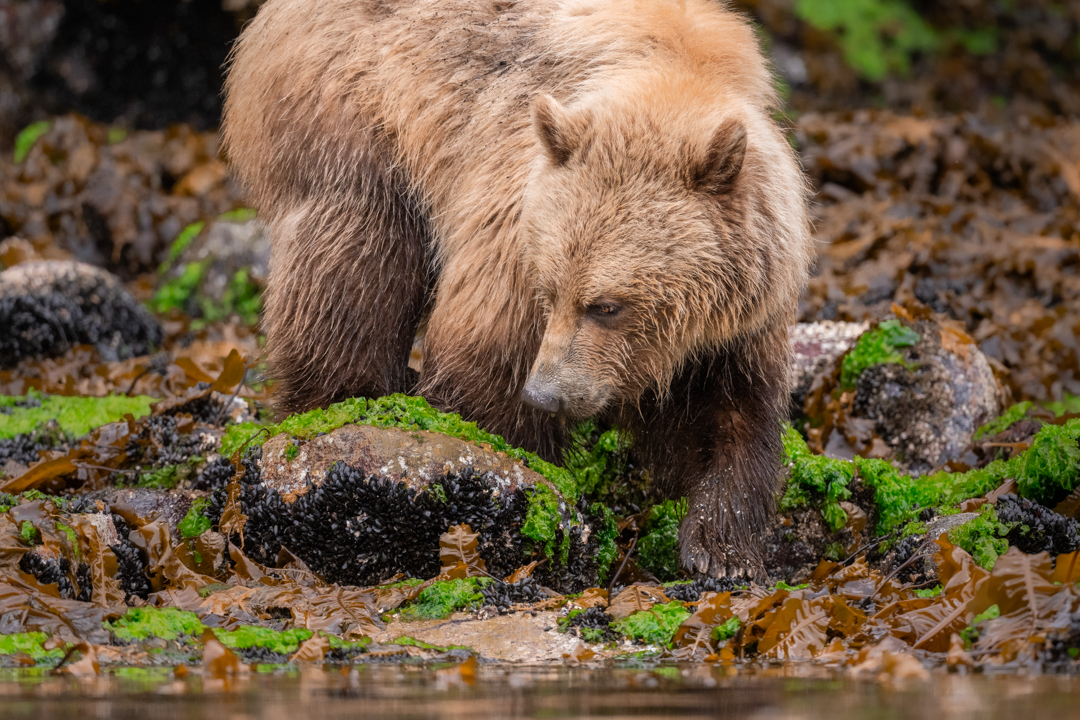
The tide in coming in the grizzly bears of Glendale Cove on Knight Inlet move off the beach where they have been turning over rock looking for protein rich food.  Because our schedule enables us to spend a day in the Glendale River estuary at sometime there will be a low tide to bring the bears onto the beach.  If we arrive at high tide we first spend time up the river in the tall sedge grass where the bears tend to graze and as the tide drops we leave the river and move along the inter-tidal zone while the bears search for “beach food”.  This August photo taken by Marc and Solange Edouard from France shows this year’s cub, about seven months old.

Spring Grizzly Bears

grizzly mother and cub playing
Click to enlarge

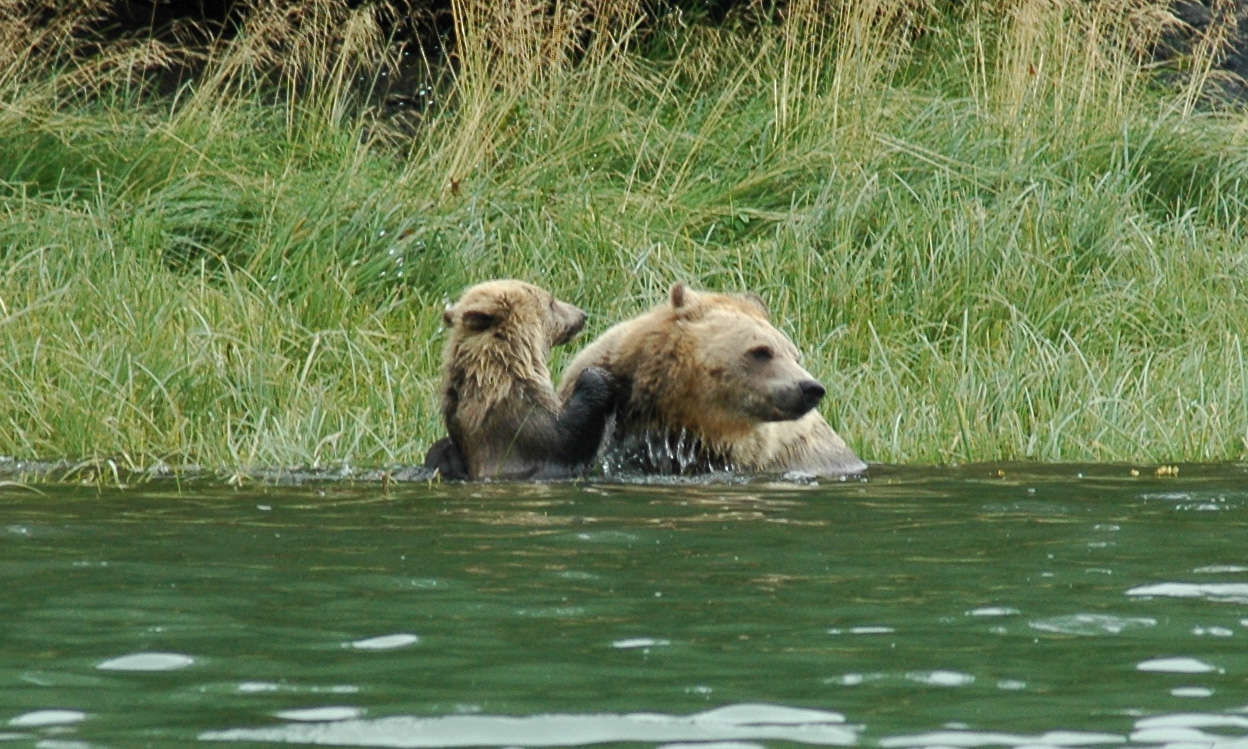
The grizzly bear tours from the lodge on Minstrel Island run up Knight Inlet to the area of Glendale Cove.  By mid-May the mother grizzlies bring their cubs to the shore of Knight Inlet and start to make their way toward the Glendale estuary.  Berries are note yet ripe so the best source of protein is the sedge grass that grows in the estuary.  The cubs in May seem to have an aversion to water but by mid August when this picture was taken they rather enjoy the water as a way to cool down and play.


Glendale Cove and a rising tide

Grizzly bear and cubGrizzly & cub in sedge grass

Click photo to enlarge

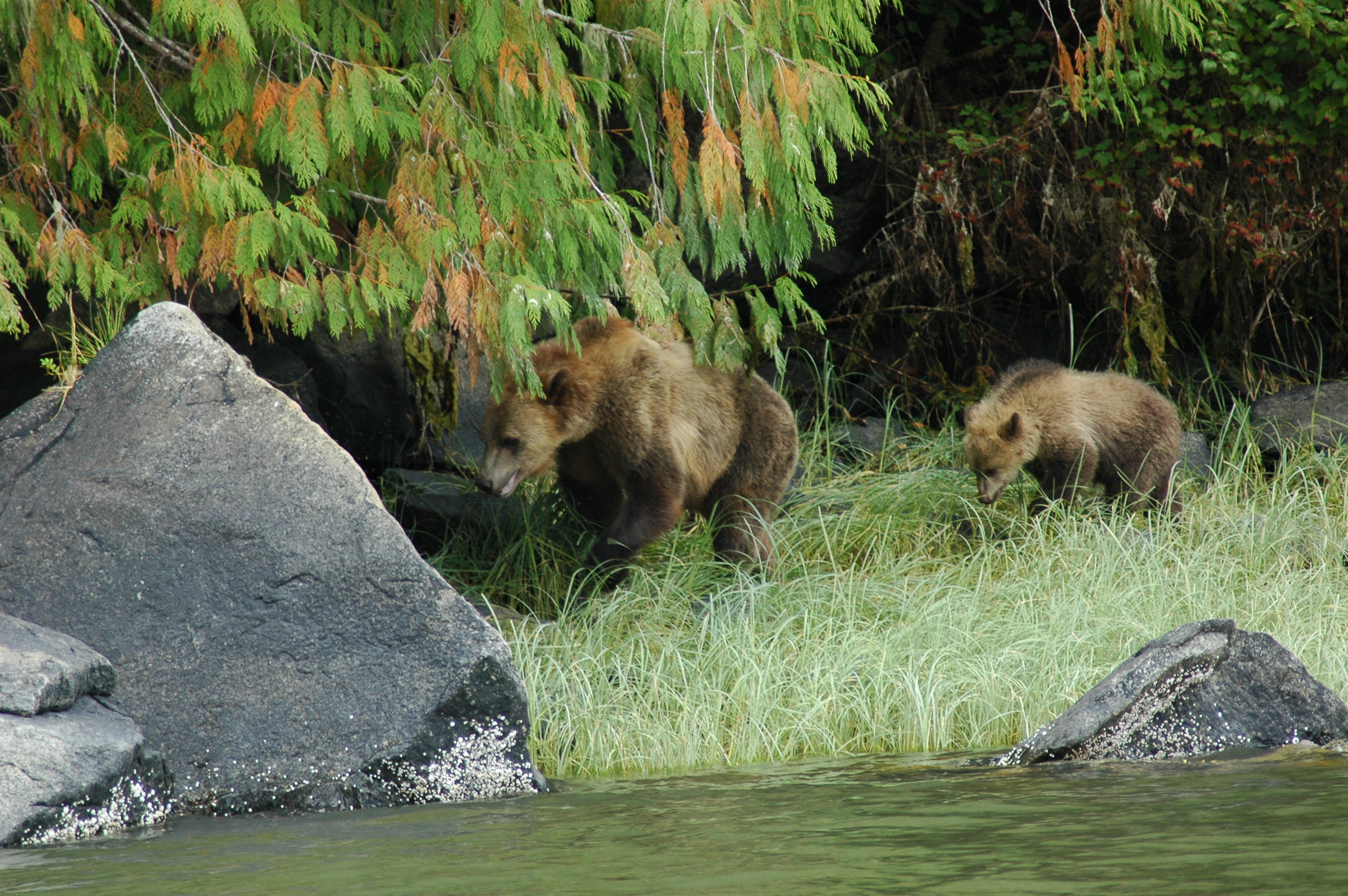
Time to come out of the water, playtime is over, need to head to higher ground as the beach disappears under the incoming tide.  The shore of the Glendale River estuary is an ideal place, at a low tide, to turn over rocks to find that mobile protein but as the tide comes in it becomes grazing time on the protein rich sedge grass.  As the tide comes in even more it is time to move up the shore into the river delta and higher ground.  And that is exactly what we do with our guests.  We travel up Knight Inlet is larger “speed boats” and once we reach the viewing area we transfer to shallow draft skiff about eighteen feet long and seven feet wide which makes it stable enough to walk around in and have no fear of rocking.  This skiff allows us to follow the grizzly bears up the river through the tall grass and pretend we are on the “African Queen”.

Grizzly and deer grazing

Click to enlarge
Click to enlarge

This is not an unusual scene in the spring at the river estuary in Knight Inlet. The grizzly bears come into the estuary at low tide to turn over rocks to gather the small invertebrates for the protein they contain.  Another favourite food this time of the year is sedge grass which is very high in protein and as the salmon have not arrived the beach is the grizzlies’ main source of food until the many variety of berries start to ripen in mid-June.  Not to be out done the deer also need to eat and sedge grass also provides them with a necessary source of food. The deer are always alert and keep an eye on the bears but I have never seen a bear attempt a chase.  The level beach area gives the deer an advantage and the openness prevents a surprise attack by the bears.


Spring grizzly bear teaching cub

mother and cub on beach
Click to enlarge

One of the best ways to learn is to watch another and this is true of grizzly bears as it is of humans.  This mother grizzly in the Glendale River estuary of Knight Inlet is teaching by example. At low tide especially in the spring when the salmon have not arrived in the river to spawn will bring the grizzly to the beach.  The turning over rock produces food high in protein, which is made up of crab, clams, barnacles, amphipods and other tiny invertebrates. This cub is ready to share moms food and will soon be turning it’s own rock in search of a meal.
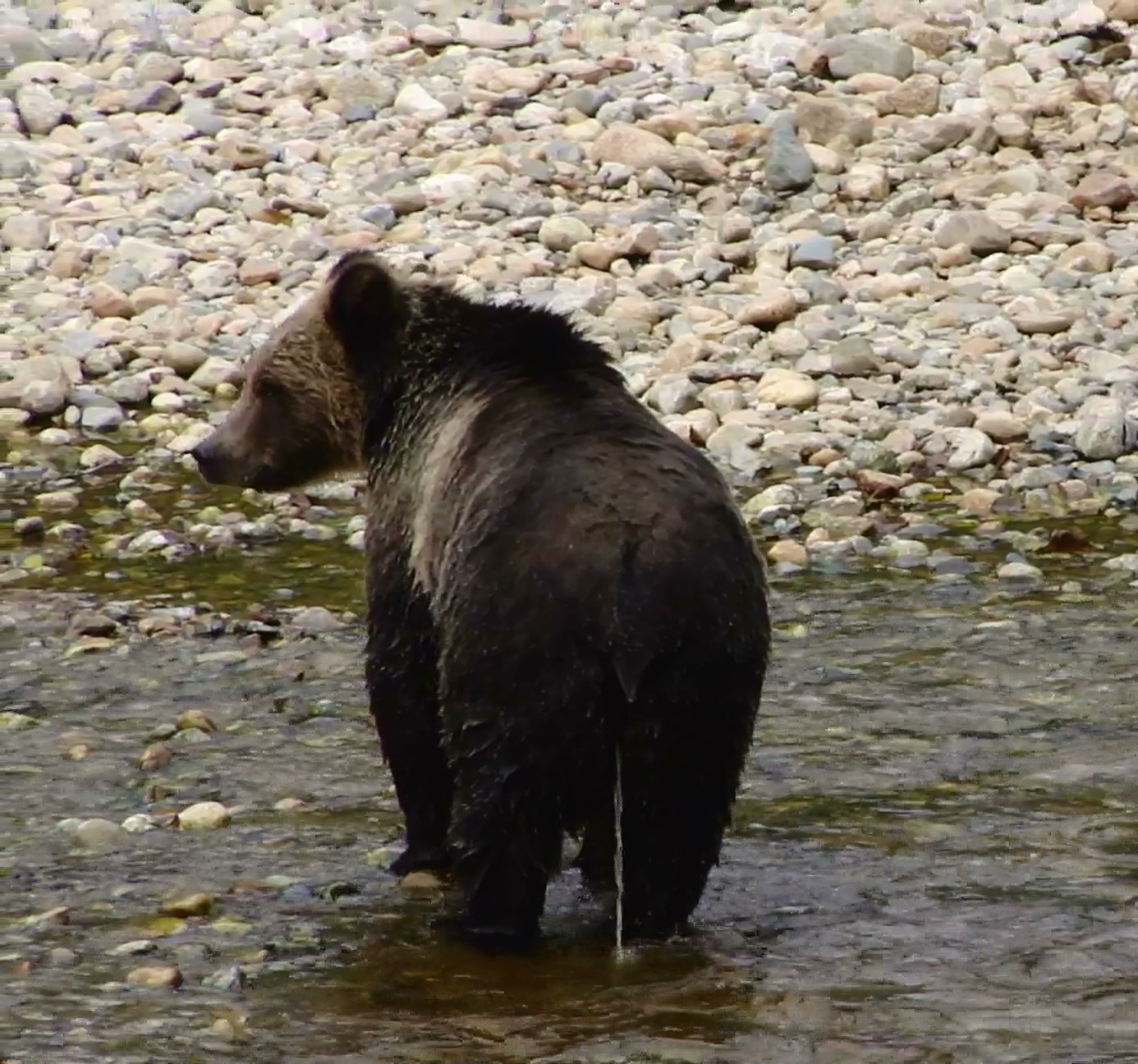
Guest question about grizzly bears

large male grizzly
Click to enlarge

An often asked questions from the guests a Grizzly Bear Lodge is: Is that a male or female grizzly?  Some guidelines we use to go by are: The male is usually bigger and his head appears to be smaller in comparison to his body. Females appear to have shorter legs and are a bit more squat in appearance. The body difference is often hard to determine unless there are several grizzlies together. And of course in the spring when they have not had time to fatten on the salmon it may be even harder to determine the difference. In the May and June the mating season the male has a swagger, often walking with a swaying walk with their hind legs farther apart than normal. The tried and true way to tell the males from the females (as shown in this picture) is to watch them urinate. The males urinate forward, and the females backward! This picture also reinforces something I was told by a friend who spends allot of time in the bush “If you take a drink of water from a river or stream do not walk up river and look around he corner.”
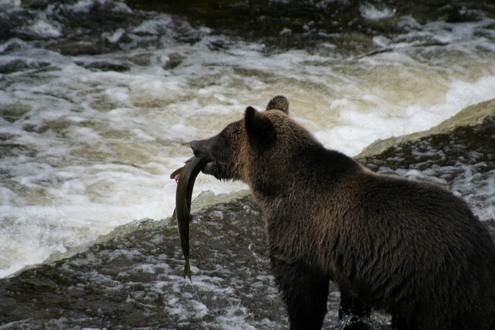
Grizzly Bear “at work”

glengrizsalmon2

After August 25 the grizzly bear watching takes place from viewing stands on Knight Inlet’s Glendale River.  A classic pose after a good catch.  A salmon in the mouth is the reasons the bears come to this part of British Columbia’s coast and also the reason we come.