Tag Archives: Humpback Whales

The bad and the good of wildlife viewing


Like much success in life it all comes down to timing and the same applies to a good wildlife photograph. Grizzly bears are easier for the obvious reason that they are always visible on land and once you find them they are there for a while. On a whale watching tour once you find the marine mammals they are not always available for a photograph. A breaching humpback or killer whale is especially difficult as they do not announce their intent and often the result is the first photo posted. The second posting is the result of preparing to take one photo when another occurs. Luck!
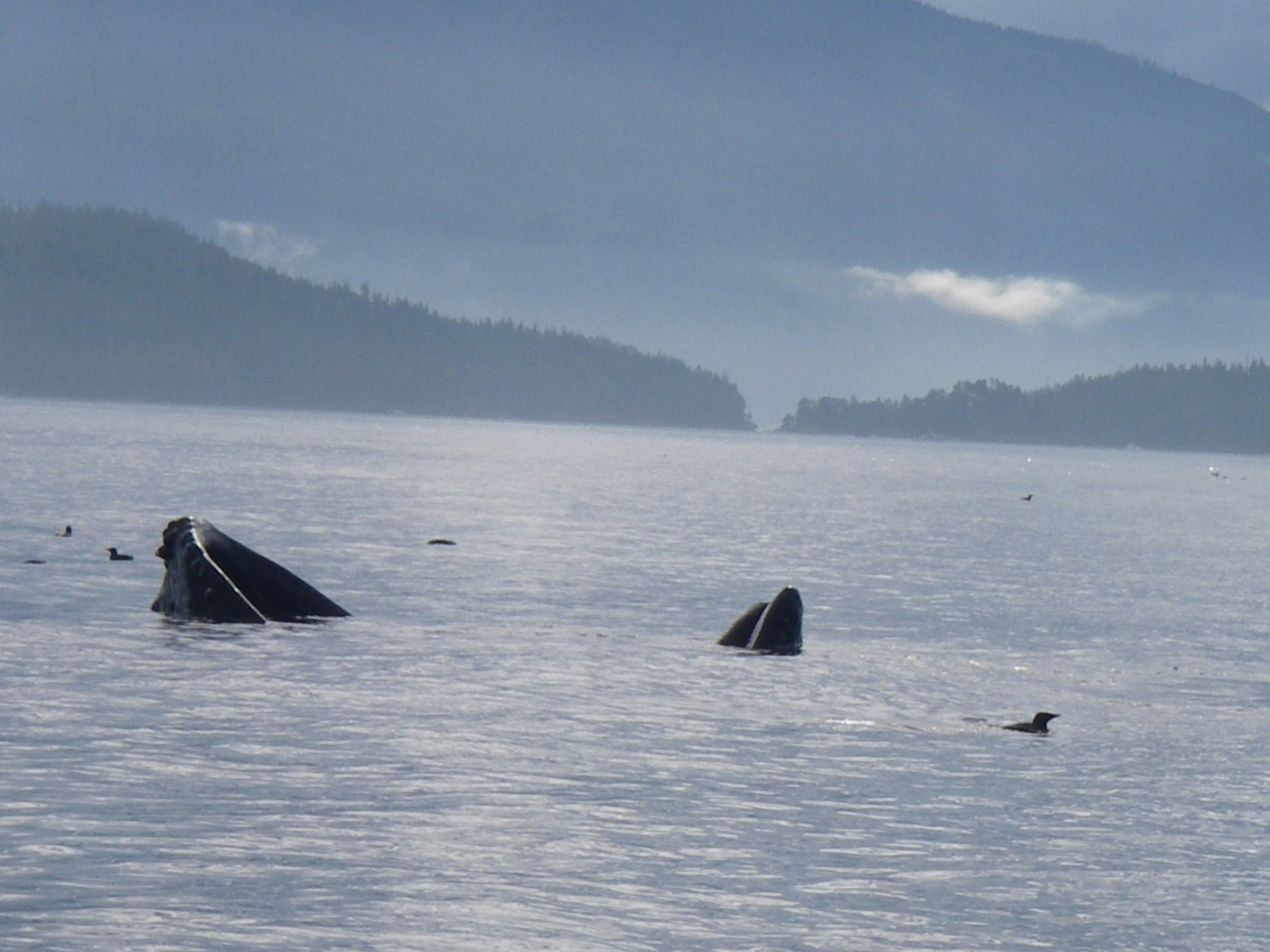
Humpback whale lunge feeding

Click to enlarge then click again

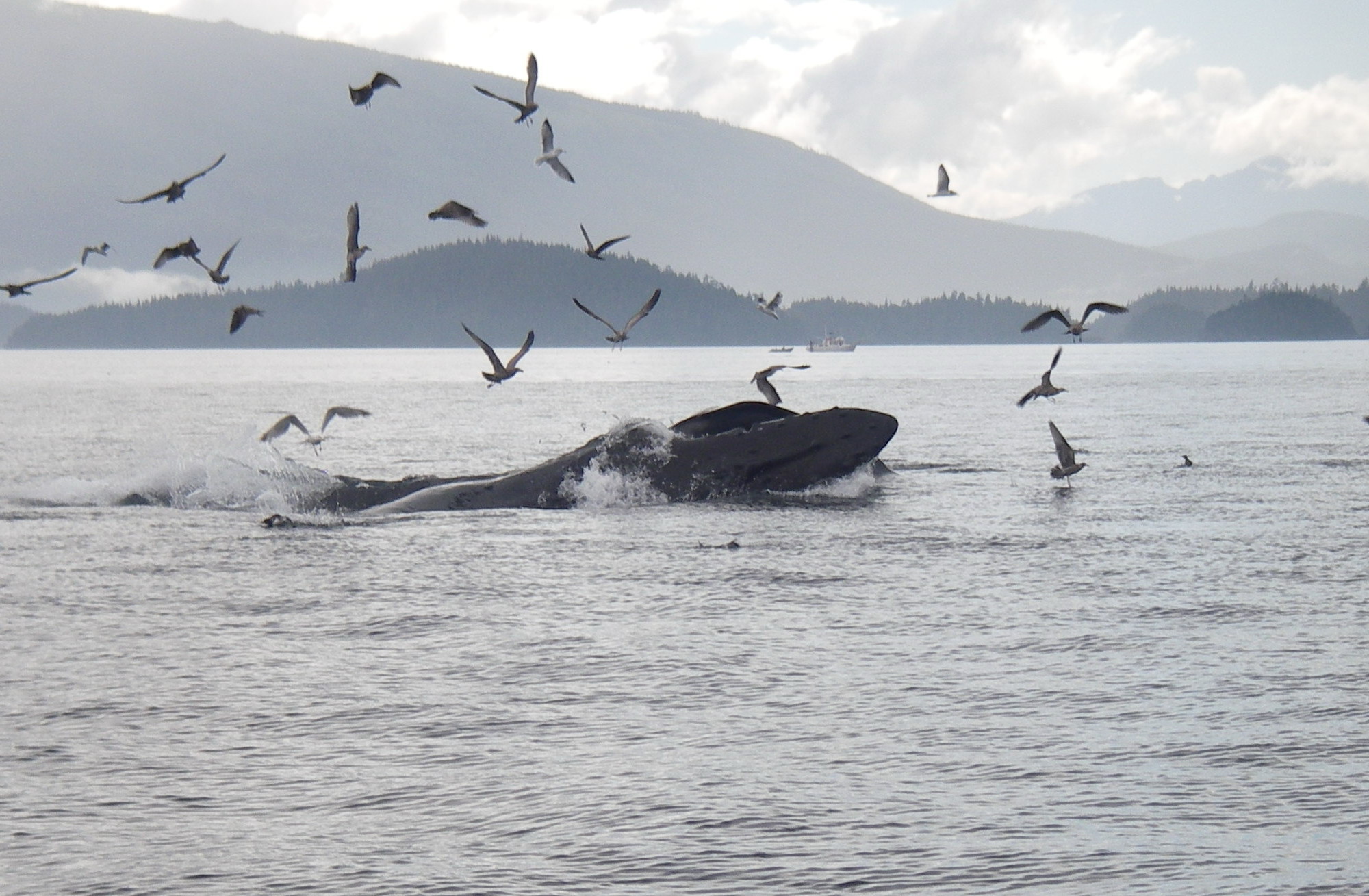
 Whale watching safaris in and around Johnstone Strait always provide opportunities for interesting photographs. In this case it is a humpback whale lunge feeding beneath or up through a school of herring. The boat in the background is also of interest as it belongs to Susan MacKay who spends her summers in this area photographing whales, orca and all marine mammals.


Humpback Lunge

Click to enlarge then click again

The head on lunge of a humpback whale coming up through a school of herring produces a very impressive photo. This is a definite “Click on to enlarge” to get the detail of the herring in the air and the baleen in the whales mouth. The area of the whale watching tours from the lodge in Knight Inlet has become the summer home of eighteen or more humpback whales. This increased number of whales on the day tours means many more photos such as this one.


Watching What?

dolphinf
Click to enlarge then click again
whales playing with dolphins
Click to enlarge then click again

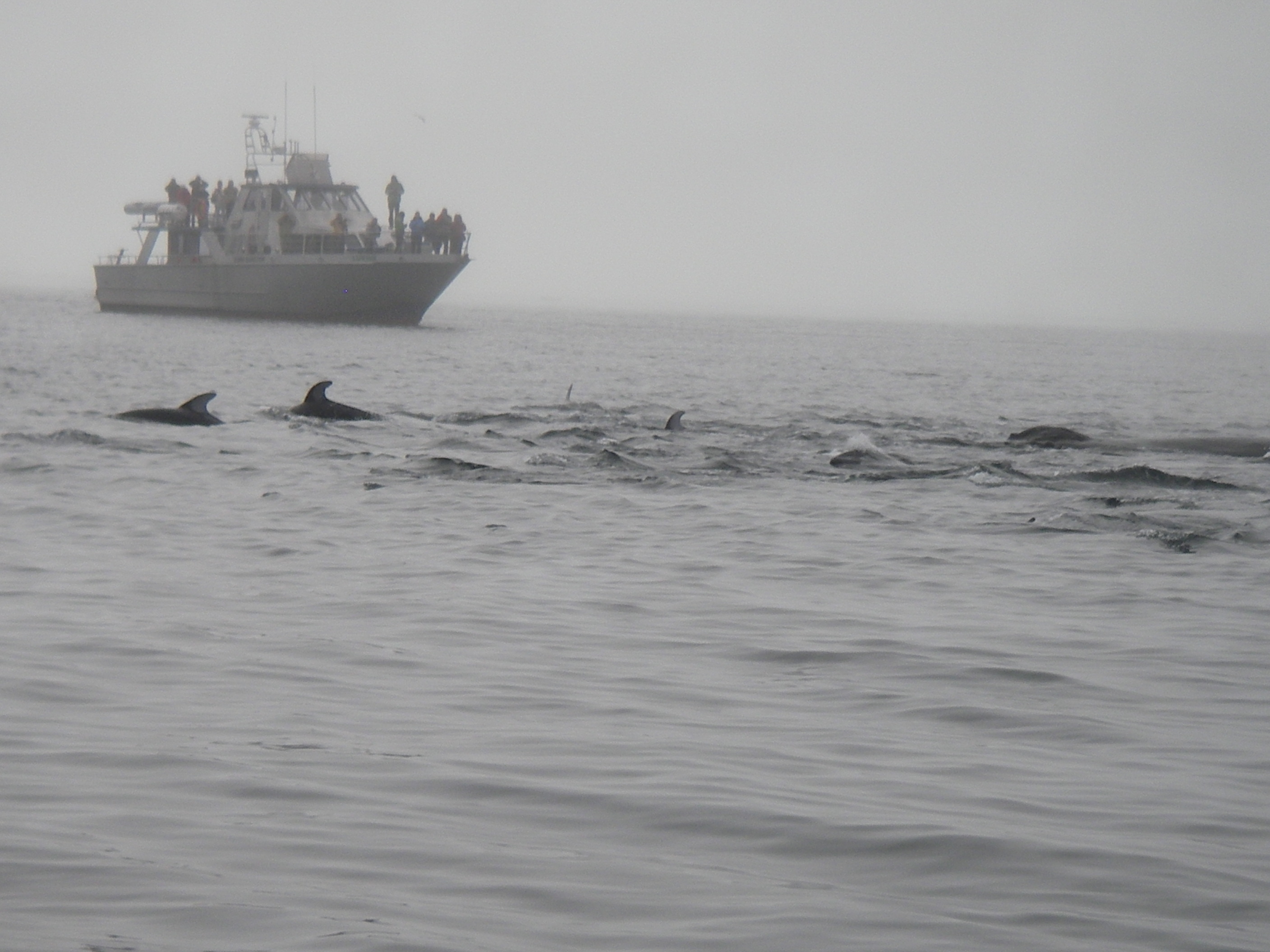
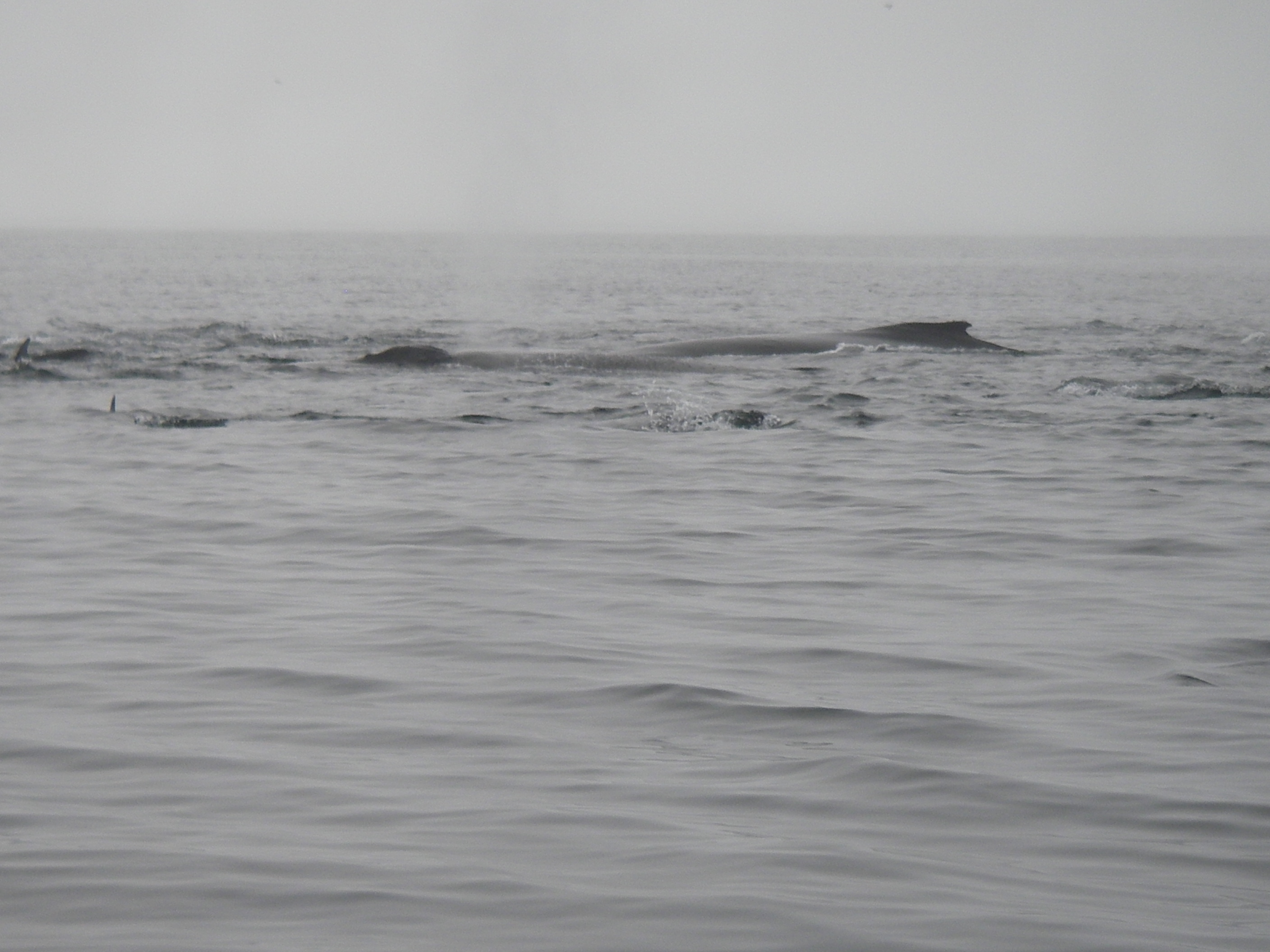
This was the first time I saw this site on a whale watching tour from the lodge. As the pictures show it was a foggy morning and we were in Blackney Passage off Cracroft Point about fifty minutes from the lodge. The other larger boat was also whale watching from Telegraph Cove with a few guests on board. This morning only twenty or so guests were aboard when they often have between forty and fifty. In the first photo there are a number of pacific whitesided dolphins playing and on the right side the large back of a humpback whale. In the second photo you can clearly see a mother and calf being harassed by the dolphins. This harassment continued for about fifteen minutes until the humpback took a long dive and disappeared. It is common to view Steller sealions playing with the humpback whales but a first for the dolphins.


Confusion?

orca dorsal fin
Click to enlarge then click again
humpback pectoral fin
Click to enlarge then click again

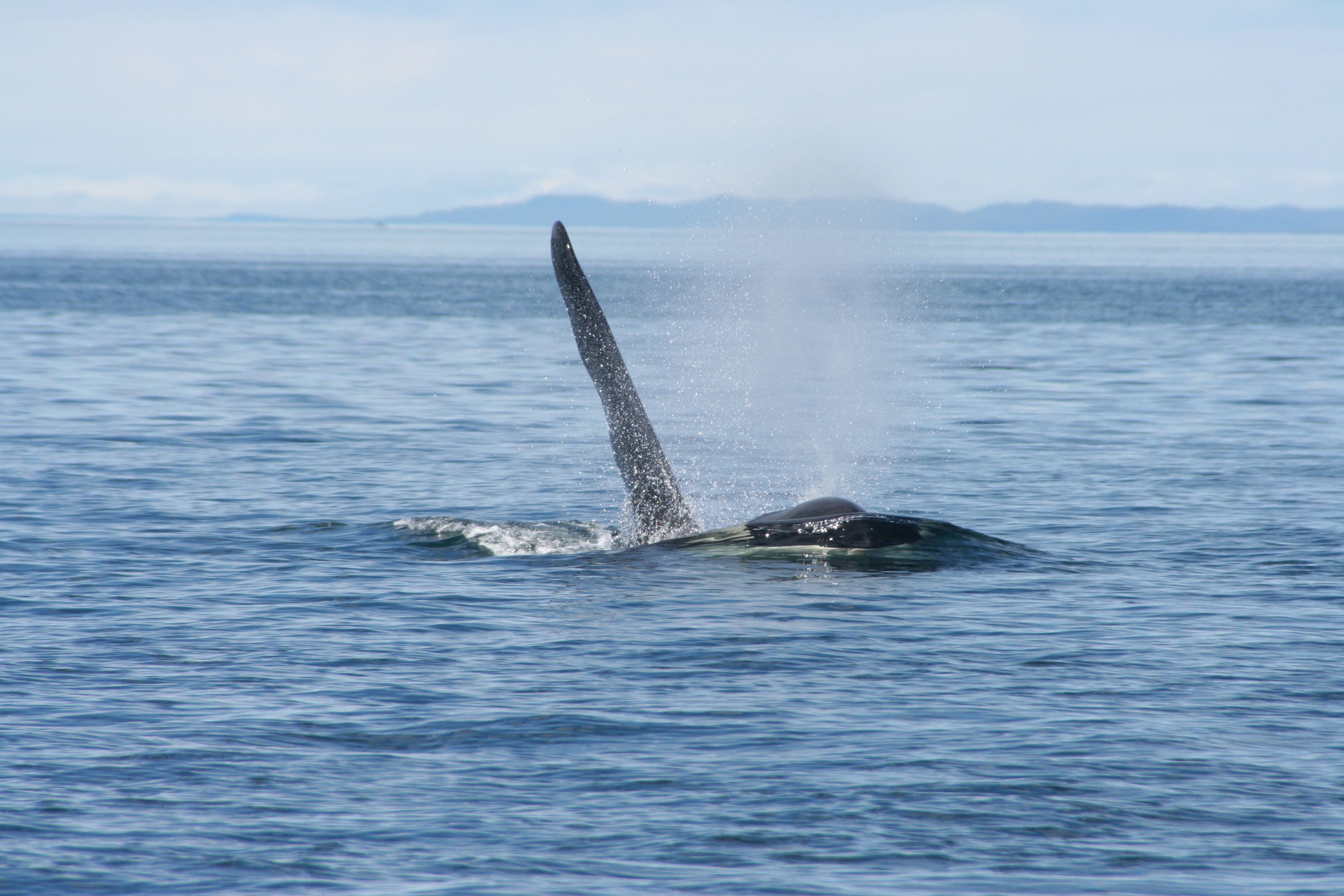
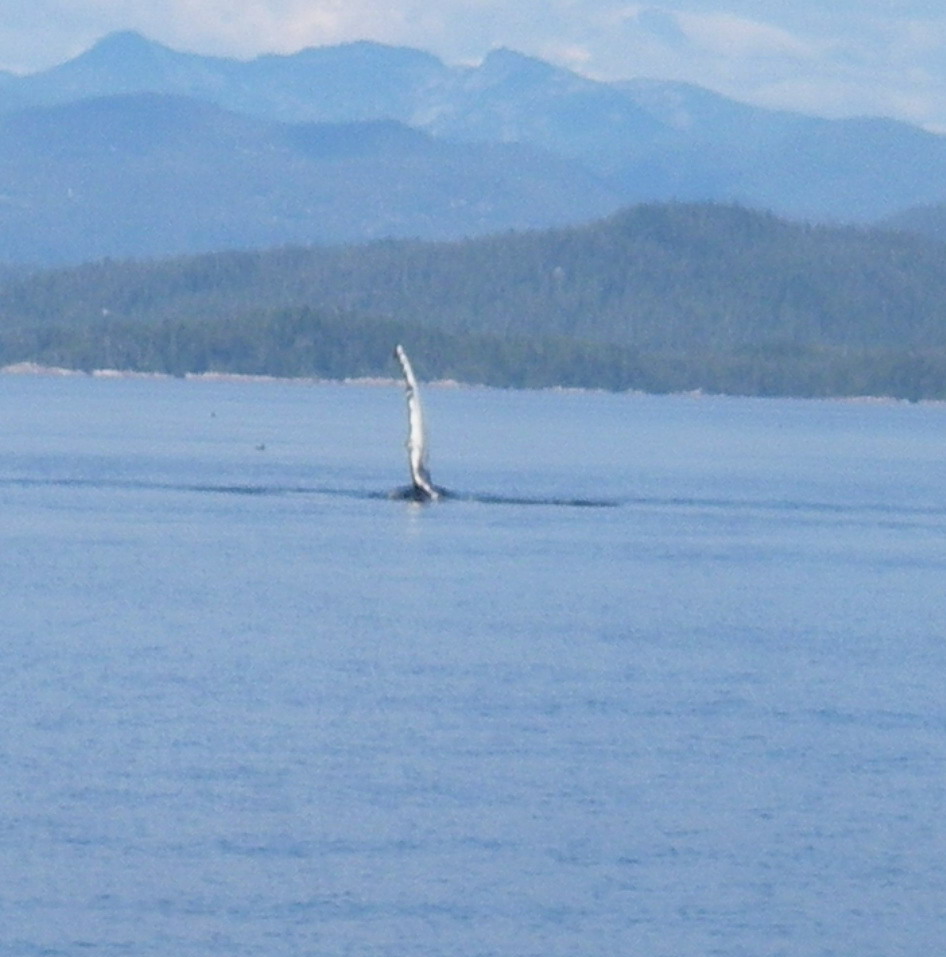
On a clear whale watching day these two photos would not be confusing. One of a killer whales approaching the boat and the other of a humpback when it is rolling on it’s side and showing its pectoral flipper. But on a foggy day or from a distance without binoculars many guides have confused the pectoral flipper for a dorsal fin and made a radio call to claim a pod of orca only to have to admit the error. Either picture on it’s own is excellent the confusion is only embarrassment.


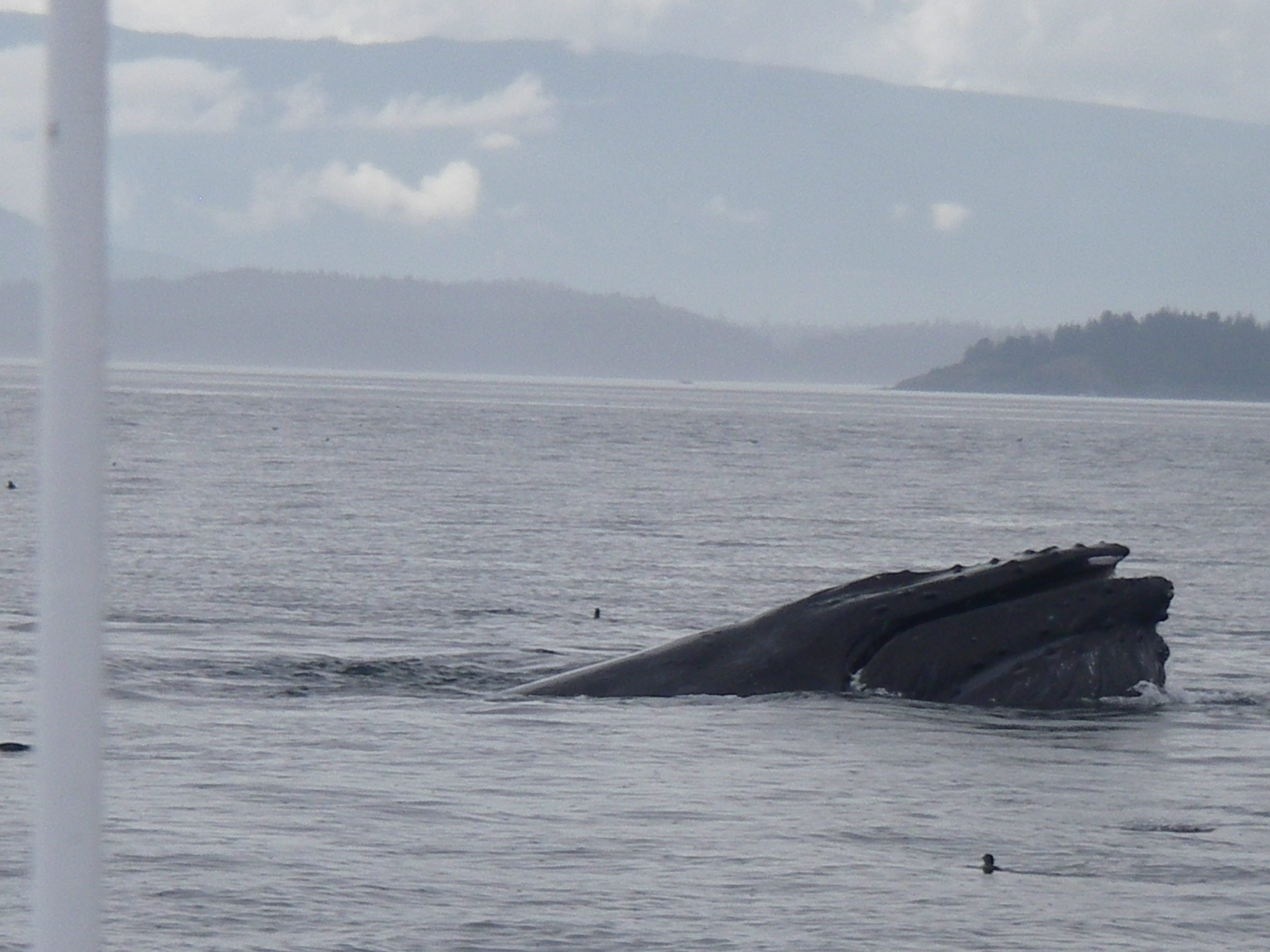
Humpback Whale Feeding

whale feding on herring
Click to enlarge then click again

These photos represent the opposite of a lunge feed for a humpback whale. The whale watching tour from the lodge travels to an area known as Bold Head that is on BC’s inside passage or route to Alaska. In this picturesque area the whales come to feed on the abundant herring. A lunge feed is when the whales suddenly come up beneath a ball or school of herring with their mouth open and lunge out of the water. In today’s photos the opposite happens. The whale opens it’s mouth as wide and comes up very slowly often spinning in a circle for up to a minute before closing it’s mouth very slowly to trap an many herring as possible.


Humpback Whale Visiting

humpback whale visiting
Click to enlarge then click again

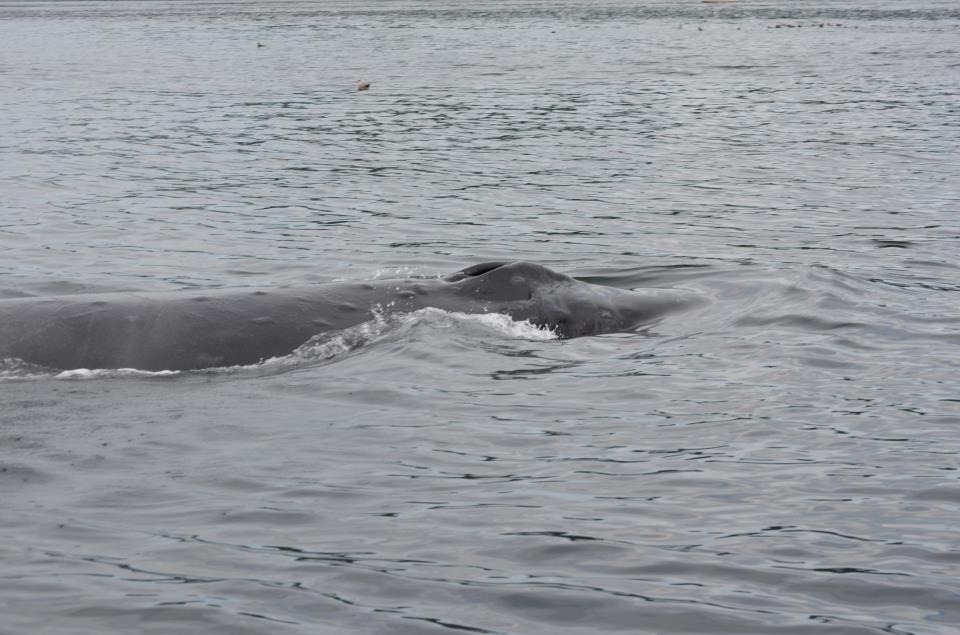
The first thing to note is the white boat antenna in the left corner of the photo.  A telephoto lens was not required to get this close up. More than a dozen different humpback whales are found in our whale watching area on a daily basis. The whale safari travel about an hour from the lodge to an area close to British Columbia’s Vancouver Island and area rich in herring the many food of humpbacks. Our picnic lunches are most often eaten in the boast while we drift among feeding whales. It is sort of like the movie “Field of Dreams” but in this case if one waits quietly (boat motor off) the whales come to visit.


Guide Photos

whale blow hole
Click to enlarge then click again

Over the past five years humpback whales have become more common in he area Grizzly Bear Lodge visits on whale watching days. The area close to Johnstone Straits between Vancouver Island and mainland British Columbia has become the summer home of more than twenty-five whales. The area has an abundant supply of herring and the whales come to feed and stay within our viewing area for a few days before moving in and out of nearby inlets. The whales start appearing in late May and there are whales all summer some days on six or eight but most days more than a dozen whales are lunge feeding and lobtailing in our viewing area.


Interesting Guest Photos

humpback mouth
Click to enlarge then click again

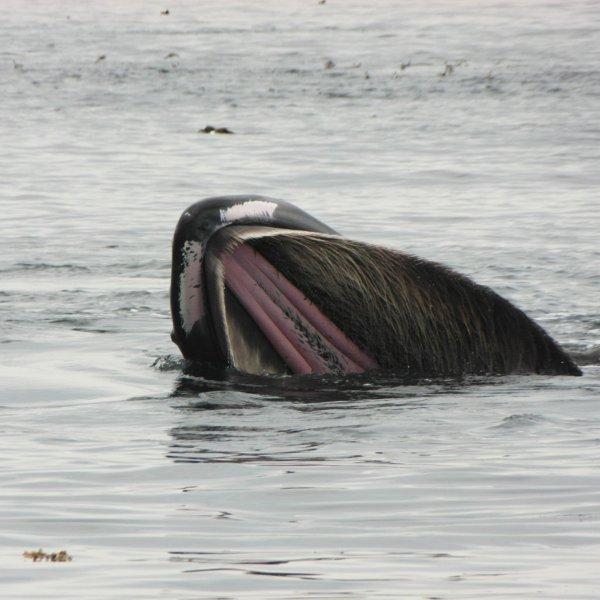
On the whale watching tour from Grizzly Bear Lodge we are fortunate to view between eight and sixteen different humpback whales each trip. These whales spend their summer in our area feeding on the herring, which provides our guests with ample opportunities to watch them lunge feeding. In a lunge the humpbacks come up beneath a herring ball with mouths open as shown in James Kastelein’s photo. The baleen shown is a row of a large number of keratin plates attached to the upper jaw. These plates have a composition similar to those in human hair or fingernails. They are triangular in section with the largest, inward-facing side bearing fine hairs, which form a filtering mat. The humpback whale has about 330 pairs of dark gray baleen plates with coarse gray bristles hanging from the jaws. They are about 0.6 m (25 inches) long and 34 cm (13.5 inches) wide.


Guide Photos

whales and sea lions
Click to enlarge then click again

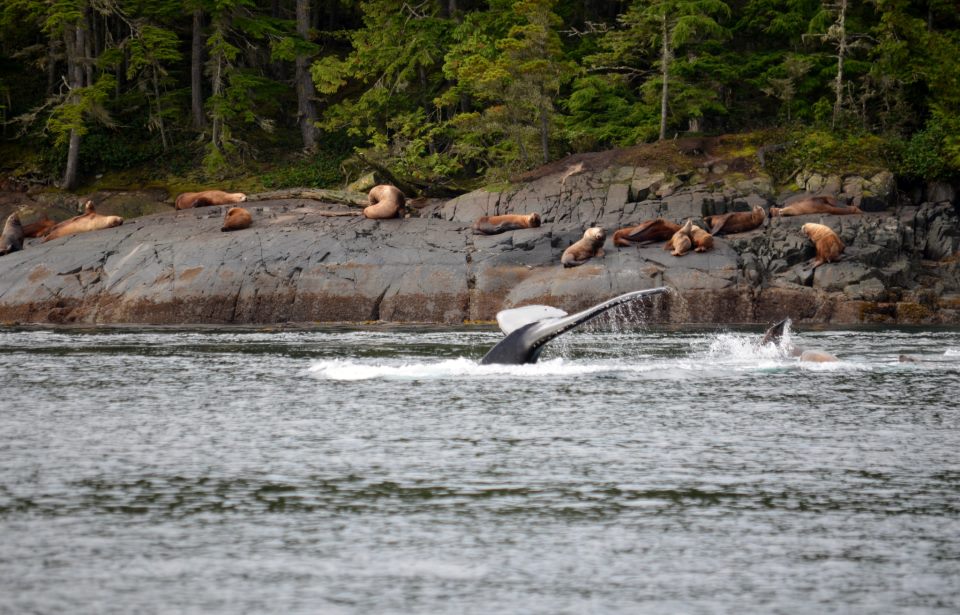
It is not uncommon to see Steller sealions play with humpback whales. I have found no research to explain the behaviour and from the times that I have viewed these actions they do not appear aggressive just interesting to observe. In this case it is a humpback passing the small island that is one of the “haul outs” for the sealions and a few in the water following it as it dives. Other times they will follow it along the shore and go to where it surfaces after a dive.