Tag Archives: Killer Whales

Watching a Killer Whale Family

Pod of orca

“Pods are actually their own matriarchal family groups. Animals born into a pod, stay in the pod their entire lives. This is like living with your mother, aunts, uncles, cousins and brothers and sisters all descendant from your mother’s side of the family for your whole life. It is extremely rare for an Orca from one pod to be accepted or join with another pod of whales. The gene pool gets mixed up by not having any father within the same pod. Each pod has their own ‘dialect’ of communication through various squeaks, burbles, and whistles.
The term “Whale” is a misnomer since the Orca is actually from the dolphin family. We associate “whale” with something very large and they are much larger than the majority of dolphins. They are a whale of a dolphin.”

This quote was taken from the website Whales and Dolphins BC which is a great site to visit if you are interested in more information.
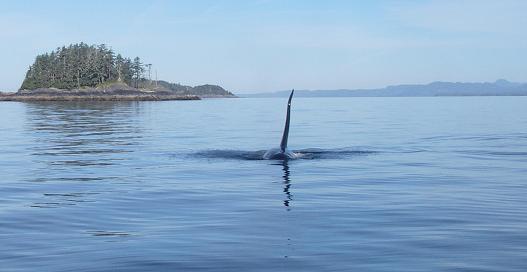


Killer Whales Approaching

Killer Whale Coming

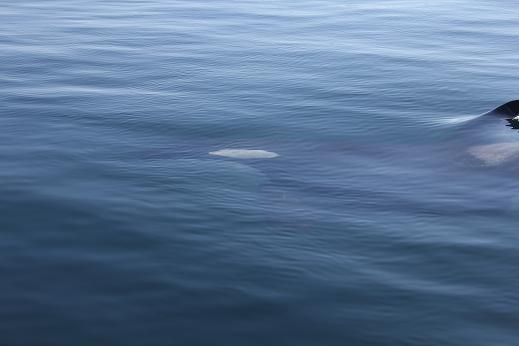
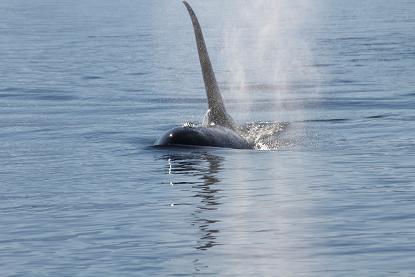
This is not the classic photo of an orca /killer whales. The classic photo would show the orca from a side view with its head far enough out of the water to get a good view of the white eye patch. But this is a much more interesting photo because it means that pretty soon there are going to be orca very close to and under the boat. From my experience of guiding whale watching tours the guests prefer the second.


Killer Whales 1 of 2

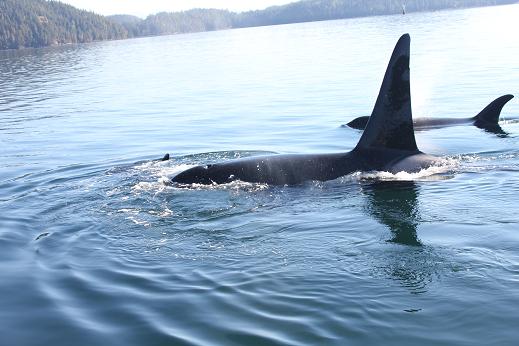
Large male orca

Grizzly Bear Lodge’s whale watching safari trips travel to the waters of Johnstone Strait, between Vancouver Island and mainland British Columbia.  The orca / killer whales arrives in the area by late June or early July and remains until late October.  These resident salmon eating orca travel in pods and are curious, as most dolphins.  They have been known to detour from their normal path of travel to inspect boats and whale watchers passing on all sides of the boat which makes it hard to choose the best chance for a picture. This large male may have come close for another reason. See tomorrow’s post


Killer Whales – aka Orca

Killer whales

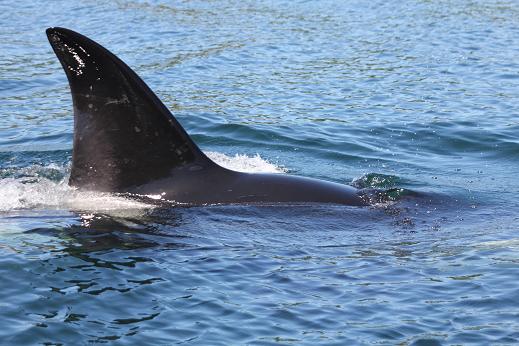
The orcas in our whale watching area arrive in late June and stay through mid-October. The most common orca / killer whales in the area are the residents. Residents or fish eating orca live in large family groups called pods, with multiple pods making up a population or community. The pods consist of multiple related matrilines, with each matriline often containing 3 or more generations. Each pod is led by the head female or matriach, as orca are a female dominated species. The matriarch tends to be the oldest female in the extended family. Her experience and knowledge guides the pod, and the matriach teaches younger whales about everything from parenting skills, feeding tactics, and navigation through the vast territories that they cover. Marc & Solange and family from France provided the photo and I know enjoyed their time with the orca.


Orcas / Killer Whales 3 of 3

Killer Whale / Orca

Although we do see some orca in Knight Inlet we spend more time in BC’s coastal waters off Eastern Vancouver Island in an area around Telegraph Cove and Black Fish Sound.  (Black Fish being another name for Orca.) Orca being members of the dolphin family are curious and will often approach boats if they are sitting quietly as shown by the photos in the previous days posting.

Visiting Killer Whales / Orca

Four Killer Whales

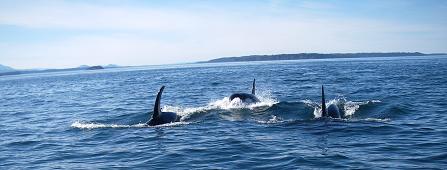
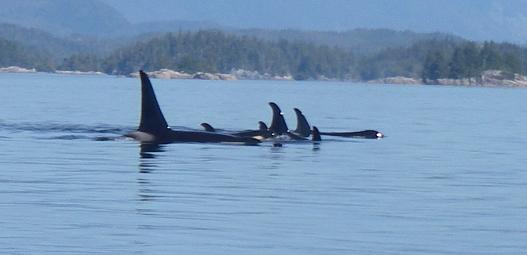
The whale / orca watching requires a short run to Johnstone Strait in the area of Telegraph Cove on BC’s Vancouver Island.  Guidelines are in place to prevent whale harassment but that does not mean that we don’t manage to obtain good photos.  Orca being curious will frequently investigate us while we watch them.  The centre orca in this photo shows that they are coming toward us for a closer look.

Killer Whales Visit

Orca coming close

As with most wildlife viewing the best approach is often to sit and wait. On this particular whale watching tour from Grizzly Bear Lodge we arrived at the area of Johnstone Strait to start looking for orca and immediately located a pod of orca traveling along the shore. We stopped our boat, got out the cameras and let the orca come to us. As a guide for the lodge this is the best way to start a days trip and after some time with the orca we went on to watch stellar sealions, humpback whales lunge feeding, harbour seals, eagles and a few dall’s porpoise. All in all a full day.


Ideal orca photo

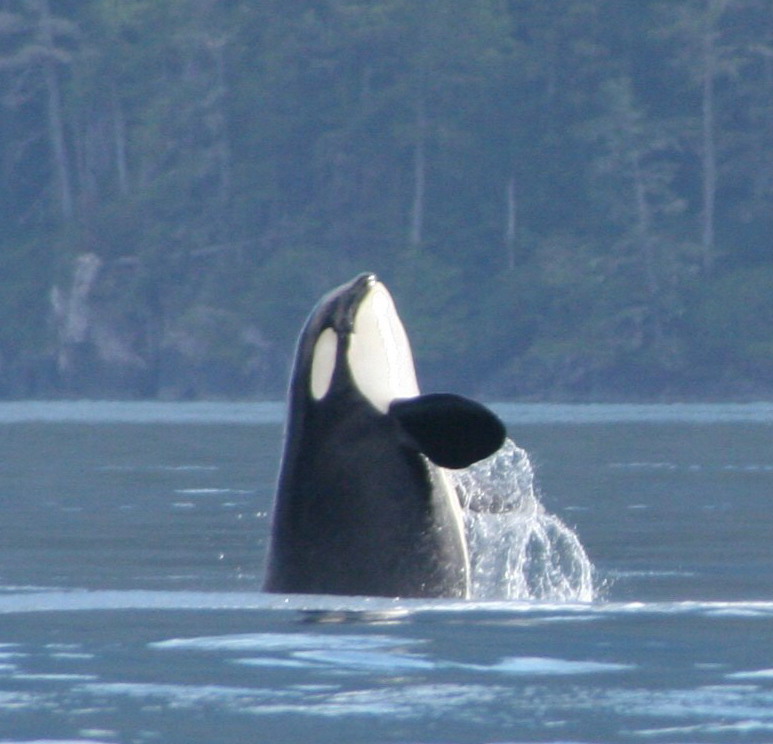
Wikipedia offers a good explanation of spyhopping:  “When spyhopping, the whale rises and holds position partially out of the water, often exposing its entire rostrum and head, and is visually akin to a human treading water. Spyhopping is controlled and slow, and can last for minutes at a time if the whale is sufficiently inquisitive about whatever (or whomever) it is viewing.

Generally, the whale does not appear to swim to maintain its “elevated” position while spyhopping, instead relying on exceptional buoyancy control and positioning with pectoral fins. Typically the whale’s eyes will be slightly above or below the surface of the water, enabling it to see whatever is nearby on the surface.

Spyhopping often occurs during a “mugging” situation, where the focus of a whale’s attention is on a boat rather than on other nearby whales. Spyhopping among orcas may be to view prey species. For this a spyhop may be more useful than a breach, because the view is held steady for a longer period of time.”


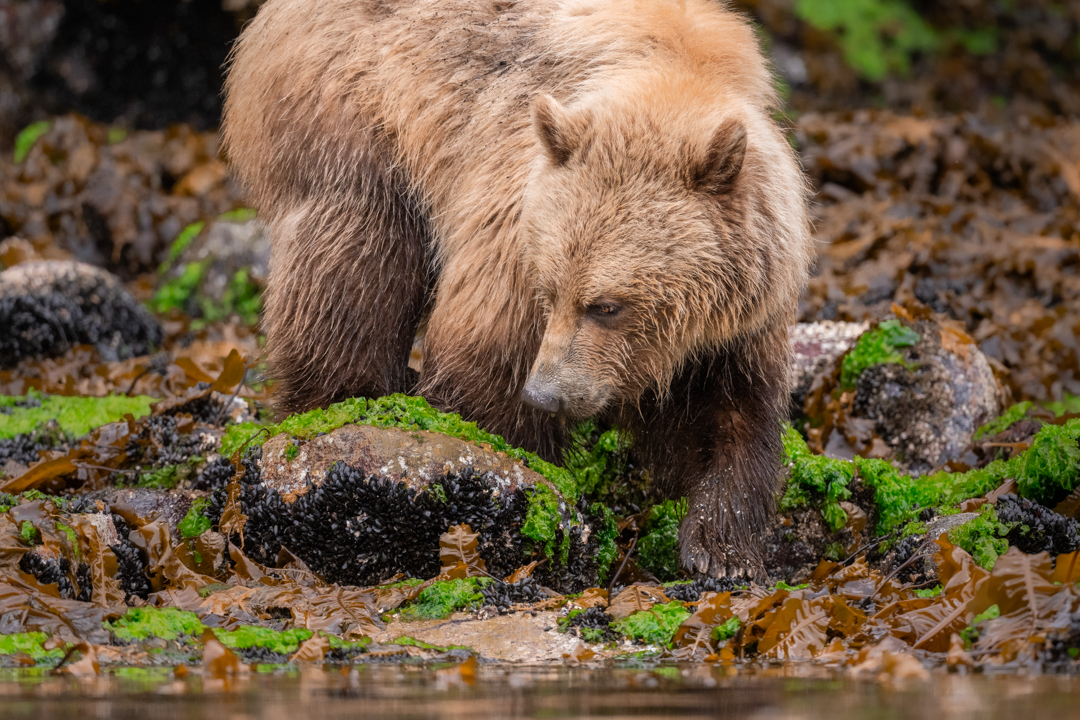
The bad and the good of wildlife viewing


Like much success in life it all comes down to timing and the same applies to a good wildlife photograph. Grizzly bears are easier for the obvious reason that they are always visible on land and once you find them they are there for a while. On a whale watching tour once you find the marine mammals they are not always available for a photograph. A breaching humpback or killer whale is especially difficult as they do not announce their intent and often the result is the first photo posted. The second posting is the result of preparing to take one photo when another occurs. Luck!