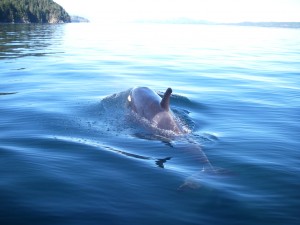
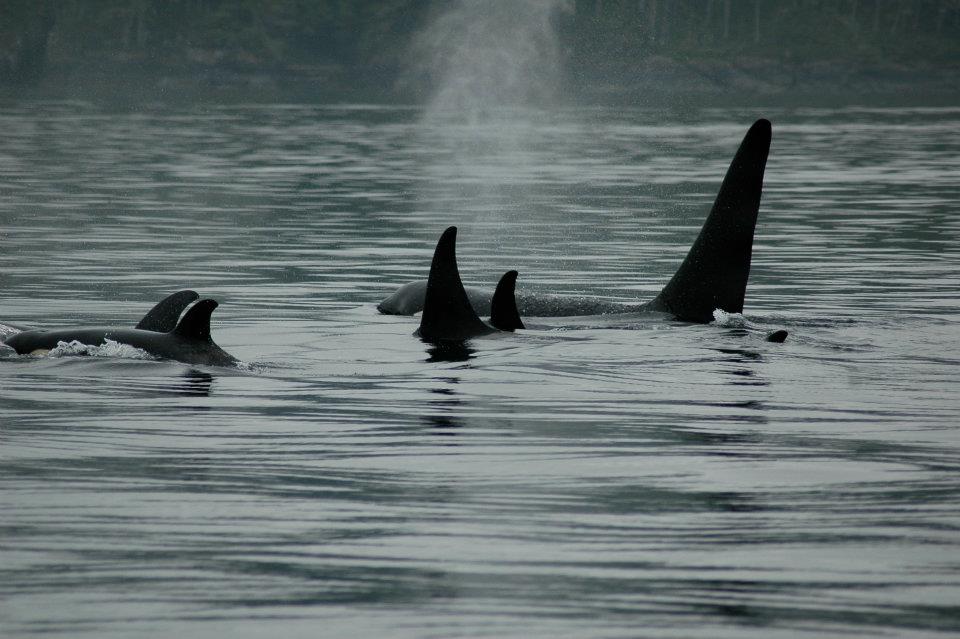
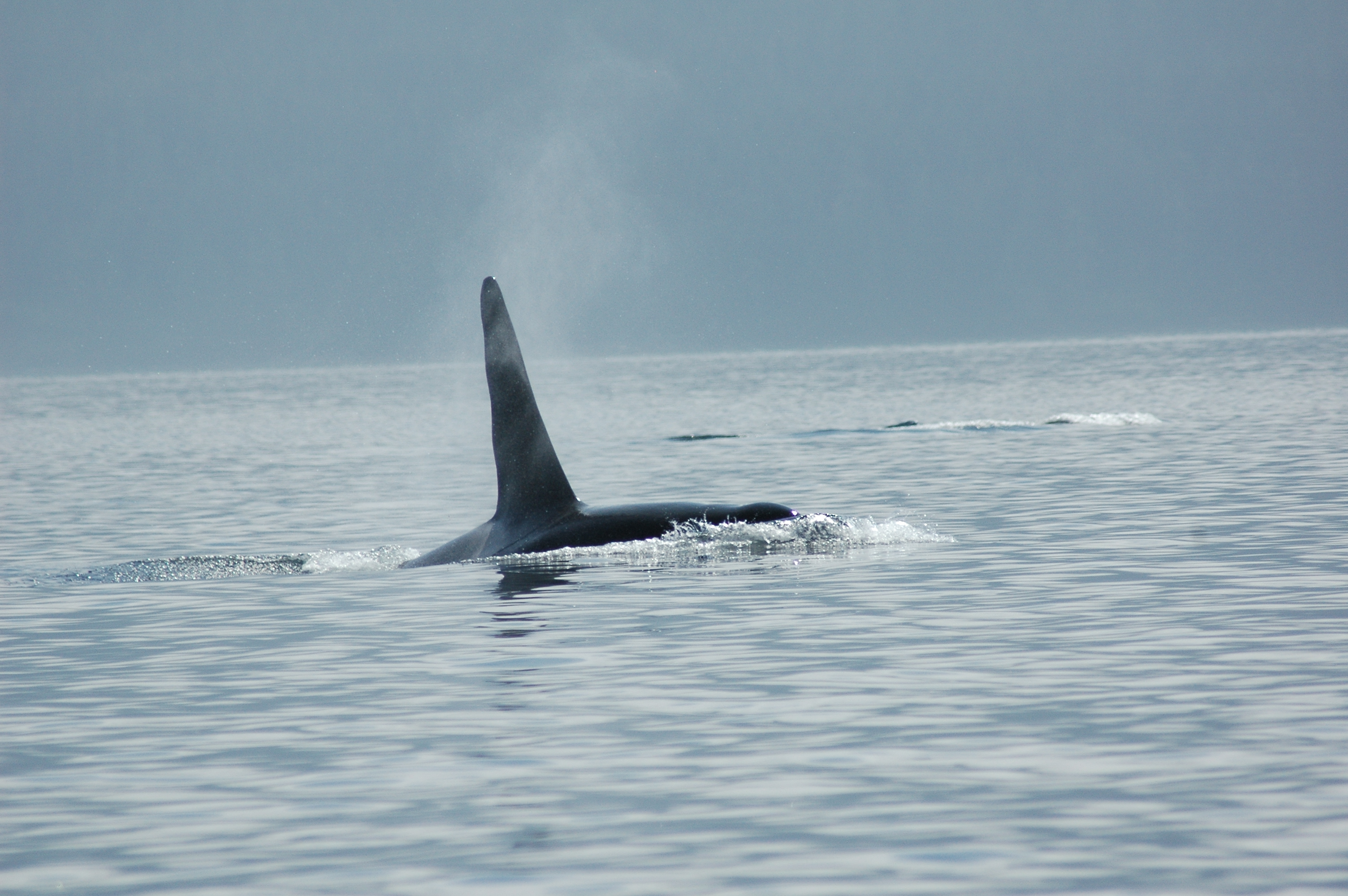
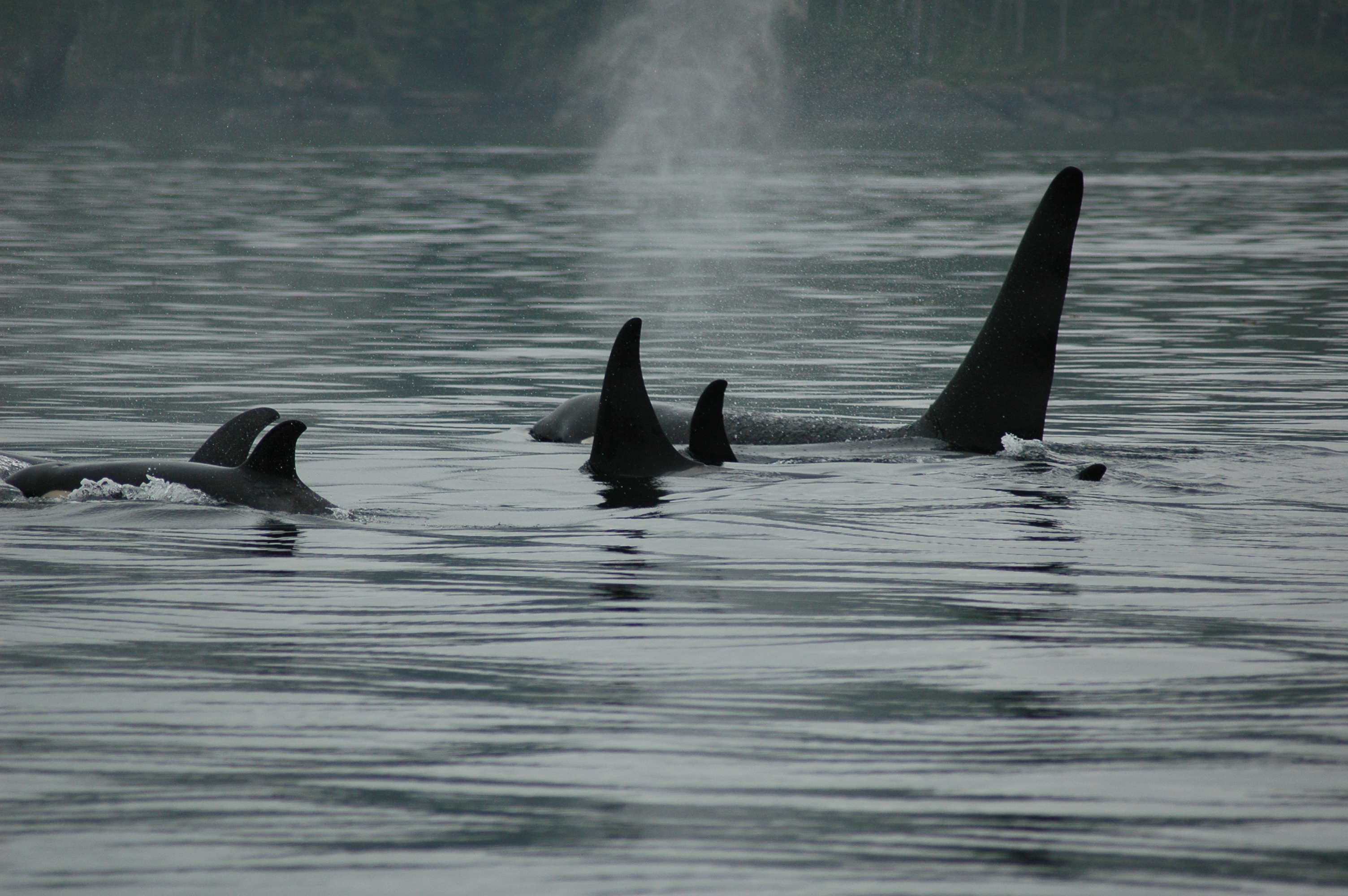
As I have said frequently in this blog that one of the best methods of whale or killer whale watching is to sit quietly. If you are able to be in an area as we were on this day with no other boats the orca tend to approach closer and are curious. They are a dolphin and dolphins like to play with moving boats and orcas seem to approach resting boats. The picture is the proof.
The post from yesterday with the seine boat netting salmon is in direct competition with today’s killer whales fishing. I have found over the years that during the commercial fishing season, which is not much, more that two weeks the orca stay away from the areas containing the fishing boats. Fortunately the commercial fishing area is a small portion of the viewing area for orca and humpback whales. In a way it is helpful in that it eliminates some area from our search grid and helps to locate the humpbacks and killer whales a little faster.
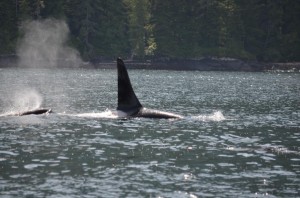
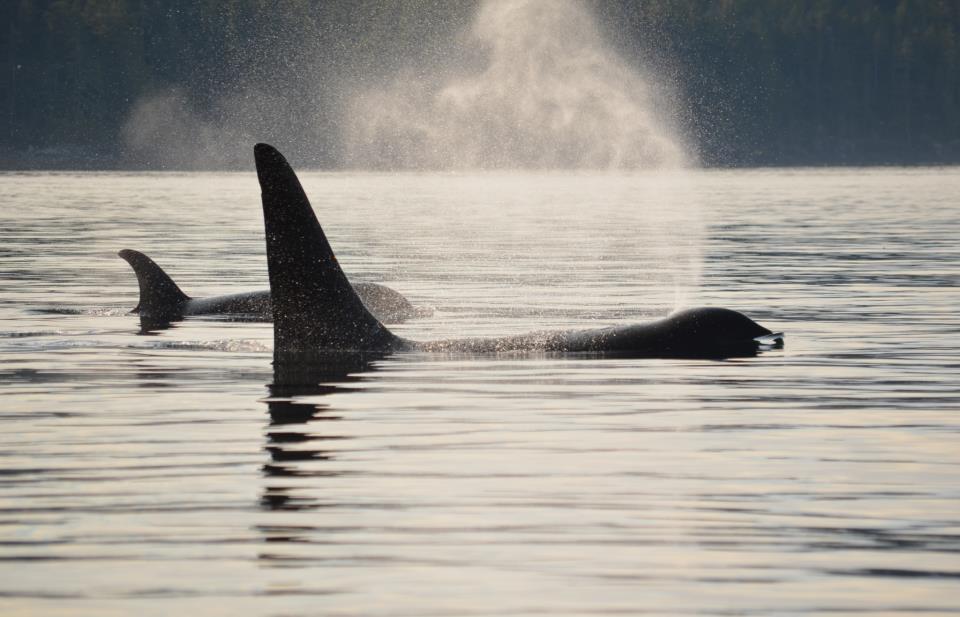
A pleasant morning with the orca on the lodge’s whale watching safari to Johnstone Strait. This area along the shore of Vancouver Island is the summer home to the Northern Resident killer whales. They follow the salmon into the area arriving, most years, in early June and staying until mid-October. The northern residents contain approximately 250 orca in 16 pods. It is a quite area for viewing the orca in that on most mornings there are only five or six boats in the area watching the killer whales so they tend to behave in a natural way. They are not herded about by twenty or thirty boats, as are the Southern Residents near Victoria BC.
A Wikipedia quote “When spyhopping, the whale rises and holds position partially out of the water, often exposing its entire rostrum and head, and is visually akin to a human treading water. Spyhopping is controlled and slow, and can last for minutes at a time if the whale is sufficiently inquisitive about whatever (or whomever) it is viewing. Generally, the whale does not appear to swim to maintain its “elevated” position while spyhopping, instead relying on exceptional buoyancy control and positioning with pectoral fins. Typically the whale’s eyes will be slightly above or below the surface of the water, enabling it to see whatever is nearby on the surface. Spyhopping often occurs during a “mugging” situation, where the focus of a whale’s attention is on a boat rather than on other nearby whales. Spyhopping among orcas may be to view prey species. For this a spyhop may be more useful than a breach, because the view is held steady for a longer period of time.” And thanks to James and Wendy Kastelein for the great photo.
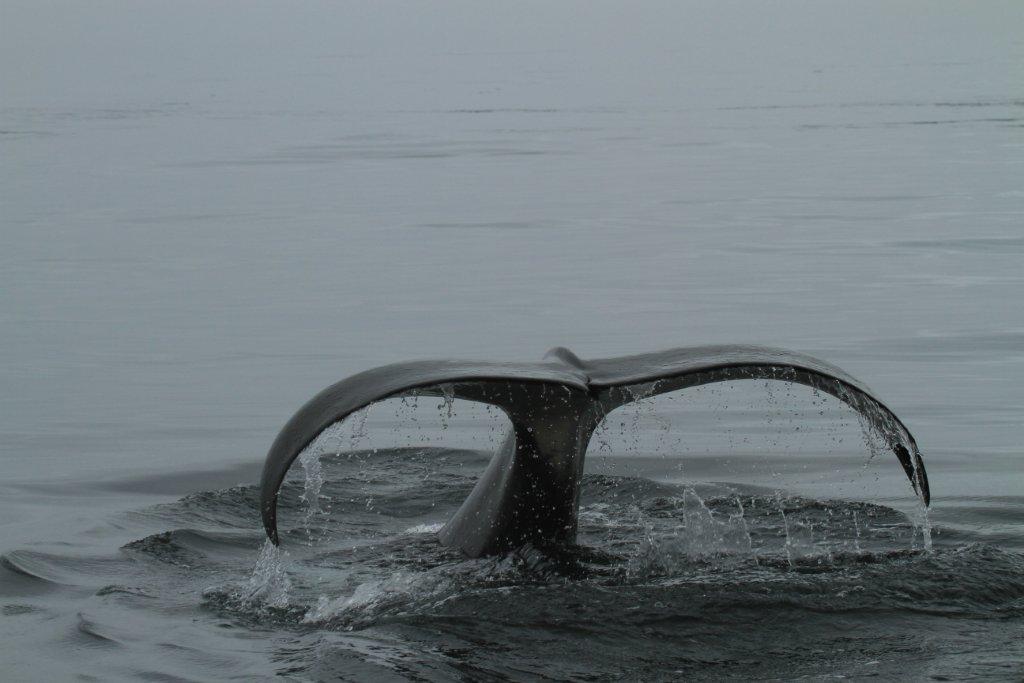
April and Rob White of Australia provide this unique series of photos from their visit to Grizzly Bear Lodge. It is a set of six photos of, which of choose three to make it interesting. This is the best set that I have viewed in my ten years as a guide for the lodge. It is known that humpback whales are identified by the markings on the underside of their tail. The key to this sequence is the first photo and the tip of the dorsal fin, which is visible in the water in front of the tail. This fin is about two meter (six feet) tall and belongs to an orca or killer whale. This orca passed beneath our boat and surfaced about five meters away and then dove and Rob manage to obtain a very unique set of photos.
Killer whales live in tight-knit families or pods, which are matriarchal family groups. Animals born into a pod stay in the pod their entire lives. Each matriline often contains three or more generations. The head female or matriarch leads the pod, as orcas are a female dominated species. The matriarch tends to be the oldest female in the extended family. Her experience and knowledge guides the pod, and the matriarch teaches younger dolphins about everything from parenting skills, feeding tactics, and navigation through the vast territories that they cover.
Orcas have long life expectancies, 60 to 80 years for females and 40-60 years for the males. Females have the ability to reproduce as early as 14 years of age, but it is more common to see a female first calf at around 17 to 18 years old. Males reach sexual maturity between the ages of 17 and 20, but DNA research has revealed that older males are more successful. An orca gestation period averages 16 to 18 months.
Whether it is a single large male killer whale or a family pod the feeling is always the same, excitement. A whale watching safari from Grizzly Bear Lodge offers this excitement which may come from viewing orca, humpback whales lunge feeding, Steller sealions, harbour seals, dall porpoise, pacific white-sided dolphins or bald eagles. The variety of marine life in the area of Johnstone Strait between Vancouver Island and mainland British Columbia is astounding and mostly due to the abundance of herring. Herring are the food of the humpback whales, dolphins, porpoise and salmon. The salmon then become the food for the orca, seals and eagles.
A great photo of an orca calf not quite in sync with its family. Wildlife viewing from Grizzly Bear Lodge, in this case your day with the whales, most often includes time spent with the orca (killer whales or Blackfish) and a opportunity for great pictures. The pods of orca most often encountered are the resident or fish eating orca.
As I have stated many time in this blog one of the most effective whale watching techniques is to do nothing. Drifting while eating the picnic lunch we are often visited by humpback whales, steller sea lions, and harbour seals. The orca (killer whale) is by nature curious and a stationery boat off to one side of a traveling pod is frequently a thing of interest. This photo demonstrates this philosophy as an orca passes beneath the boat and then returns to join its pod.
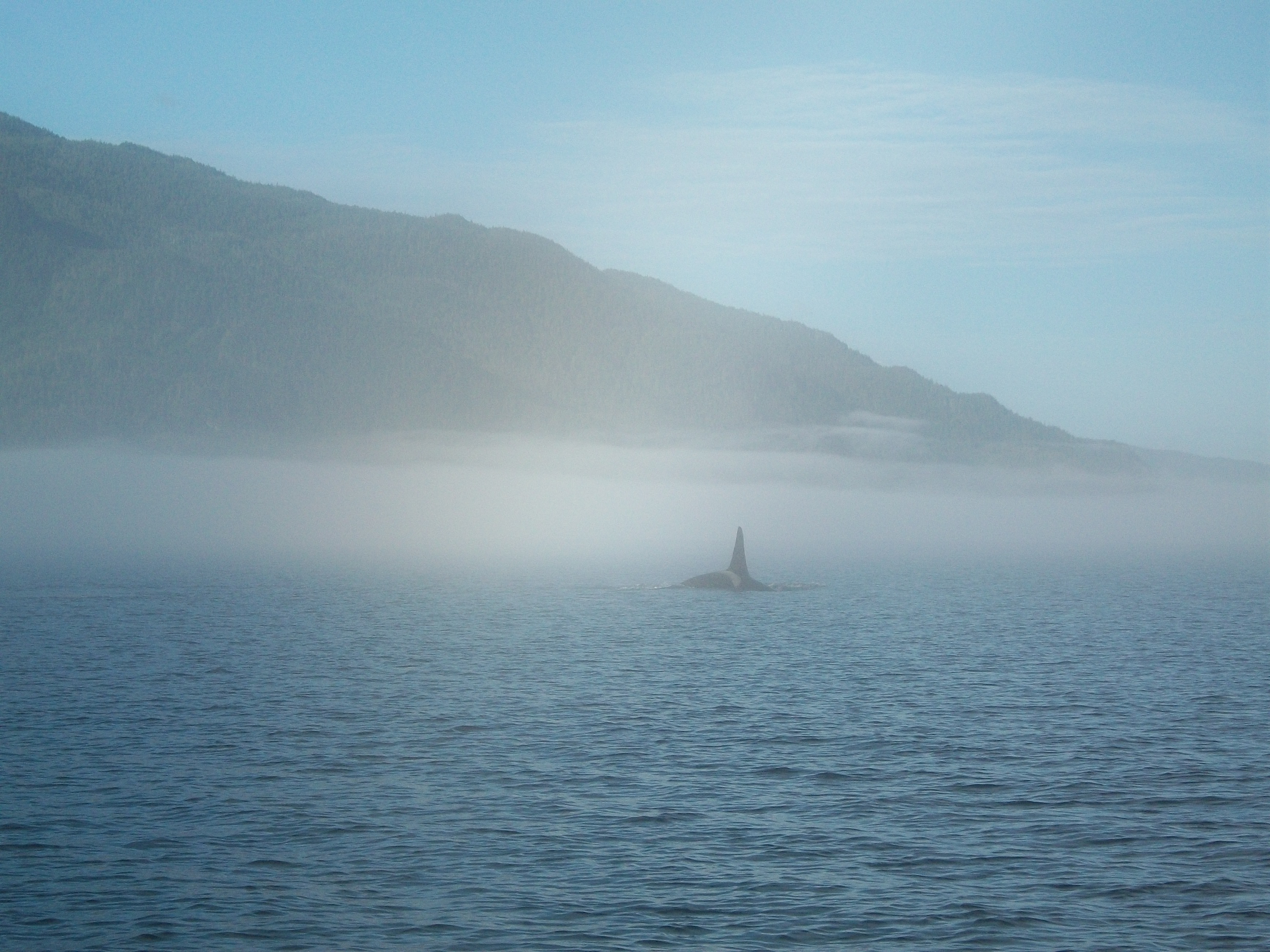
Some of the mornings, until noon at the latest, provide your guide a reason to use their GPS. It is also fun to try and locate orca or humpback whales by sound. The whales by Braille routine requires allot of stopping and listening until a “tell tail” blow is heard from either an orca or a humpback whale it is then necessary to determine the direction of the sound and to move ion that direction. This is more of a challenge than one would think as the fog muffles the sound and makes determining direction interesting. The whales make this more difficult as they frequently change direction while the orca are at least a little more consistent in their movements. This low fog makes for a mystic picture and also shows why the morning that has fog clear up pretty fast.
Just like that another season has come to an end. We are grateful for all the wonderful staff and the guests this season. It was an excellent season and we are already looking forward to next May.
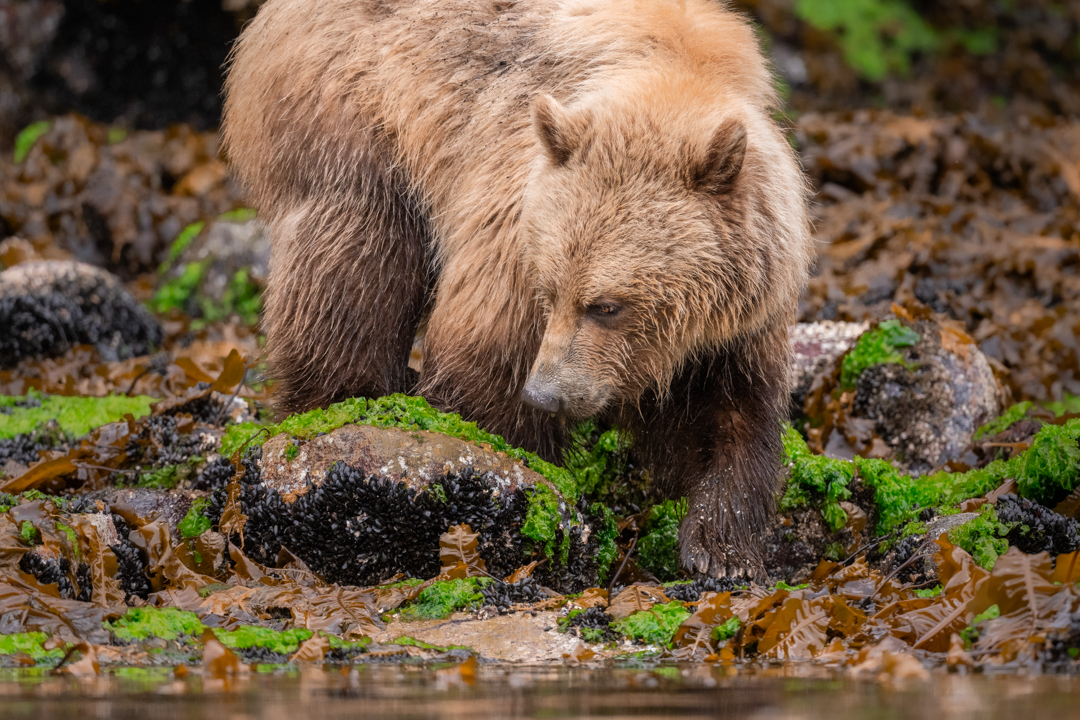
One of the highlights of the season was all of the new cubs out. It was awesome to see so many new cubs of the year and that is great news for our bear populations moving forward. We had great spring viewing and this continued through summer. On our river trips we started to see salmon arriving in August and enjoyed some great shoulder season viewing. The fish at the viewing platforms were a little late showing up this year, but viewing during late September at the platforms was great and the estuary viewing remained strong throughout the season.
Out in the whale watching world it was another year that saw large numbers of resident Orca who remained in the area right into October. The Humpback viewing was also great with large numbers feeding in Blackfish Sound. It is so amazing to have these magnificent animals back in our waters in such numbers.
Over the winter and spring we will be doing some repairs and maintenance. We rebuilt the front deck last spring, utilising cedar cut on site. We will continue with some siding, rooms improvements and hopefully a floating sauna ready for the start of our season.
2026 is already looking like a very busy season for us. We only have limited high season availability so please book early to ensure we have space for your group.