Tag Archives: Killer Whales

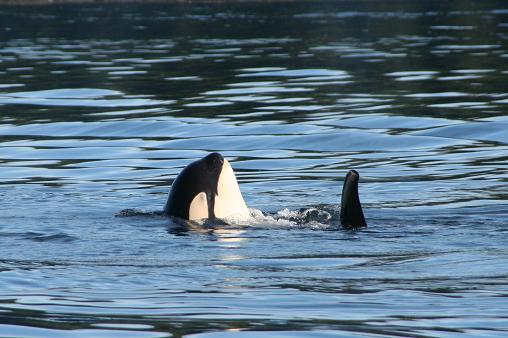
Orca spyhopping

Killer whale spyhopping

In a good spyhop the orca / killer whale has about half of it’s body out of the water. This is more of an orca backstroke where it was passing the boat and rolled over and stuck it’s head out of the water. The description of what is happening is not important because the picture is interesting and unique.


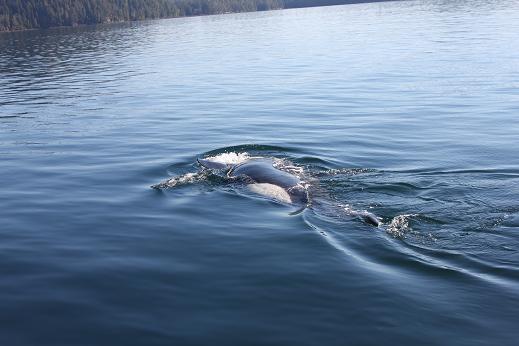
Confusing orca photo

Orca?

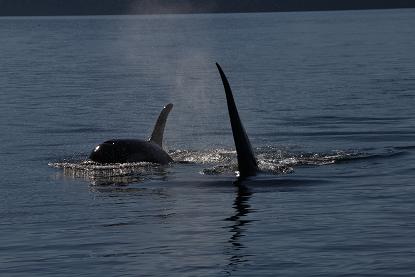
These two orca / killer whales passed under our boat and surfaced a few meters (yards) away. Explanation: looking at the photo their appears to be a dorsal fin at the top of the photo but it cannot be from the main orca because that would mean it was coming out of it’s belly. The belly of an orca is white and it is possible to see the tip of the tail at the end of the photo. So it could be one orca diving over the back of another or the dorsal fin could be the tail of another orca and the second one is following too close. Either way it was close.


Everybody gets a Killer Whale

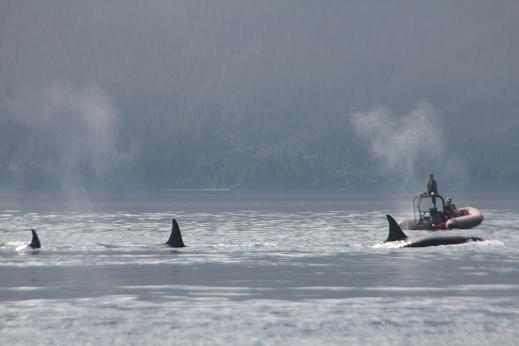
research vessele

The above photo shows an orange zodiac very close to the orca and this is permissible if you are a research vessel however it should be flying a “research” flag. The photo below shows what happens if you wait patiently in the right place, the killer whales come to you.

Killer whales close


Killer Whales pod A30

Killer Whale Pod

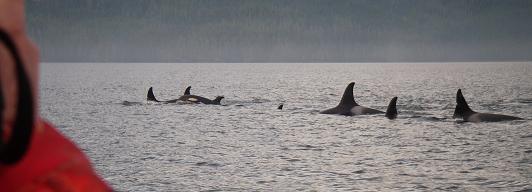
If you have time to refer to the posting of June 16th this is again the resident killer whale pod A30 with A72 the last orca with a notch in her dorsal fin.  The guest in the corner of the photo provides a little perspective for the closeness of the orca. On the lodges whale watching safaris we are on the water 7 to 8 hours which allows us time to position ourselves for a number of good pictures of the wildlife we view. The whale watching tours view marine wildlife such as killer whales, humpback whales, dolphins, porpoise, harbour seals, Steller sealions, occasionally minke whales, a wide variety of waterfowl, bald eagles, and frequently black bear as we travel to and from the lodge.


Killer Whale Breathing

Killer Whale Surfacing


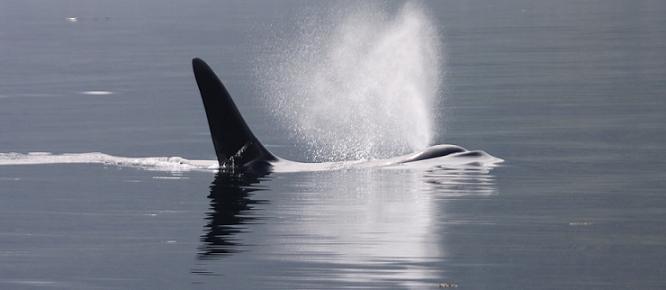
An interesting sequence of photos taken on a whale watching day in the Johnstone Strait. This area is a fifty-minute boat ride from Grizzly Bear Lodge, a time spent looking for black bear, bald eagles, dolphins and enjoying the morning scenery. The photo above shows an orca just breaking water and starting to exhale as shown by the bubbling water marking the start of the blow. The photo below the final exhale and then breathing in before it disappears.

Killer whale breathing


Male Resident Killer Whale

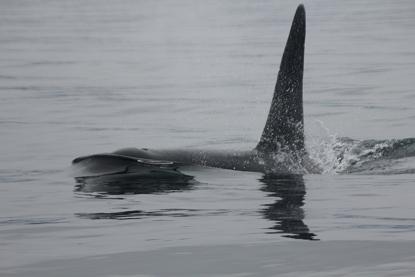
Male killer whale

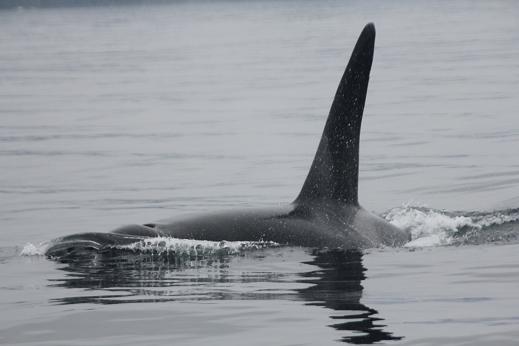
Male because of the large dorsal fin as the species shows considerable size difference between males and females. Adult males develop larger pectoral flippers, dorsal fins, tail flukes, and girths than females. Resident because the dorsal fin is rounded at the tip and curved and tapering while the transient is shorter and sharper. The other key reason that this is a resident is that it is coming close to the boat while transients are less curious and will not approach a boat.


Killer Whales Dorsal Fin – Collapsed

Killer whale

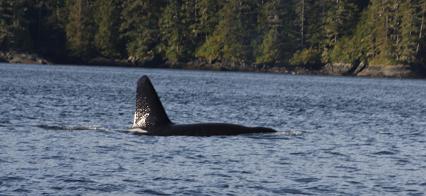
A wild orca often travels far, and quickly, in deep water. The water provides pressure to the fin, keeping the tissues inside healthy and straight, and encouraging the dorsal fin to remain straight. However, it is not impossible for a wild orca’s dorsal fin to collapse or become bent. A study in 1998 of killer whales in New Zealand showed a relatively high rate (23%) of collapsing, collapsed, or even bent or wavy dorsal fins, and noted that this was higher than that observed in populations in British Columbia or Norway. It has been found from a well-studied group of wild killer whales (the ones in our viewing area) off the coast of British Columbia that the total rate of dorsal fin collapse is around 1%.  This is only the second collapsed fin I have seen in ten years.  Researchers have theorized that dorsal fin collapse in wild whales may be due to age, stress or altercations with other killer whales.


Killer Whale Dorsal Fin

orca reflection

A male killer whale’s dorsal fin can grow to as much as 6 feet tall. Despite the fact that the dorsal fin is very straight, it is not supported by bone, but a fibrous connective tissue called collagen. This male is a member of the “A” Clan. The northern resident population numbers approximately 250 whales made up of three clans – A, G, R Clan. Resident (fish eaters) killer whale pods are MATRIARCHAL, meaning that sons and daughters stay with their mother throughout their lives, even after they have offspring of their own. The bonds between siblings usually remain strong even after the mother has died. A matriarch and all of her descendents are referred to as a MATRILINE. A POD is a larger unit that is made up of one or more matrilines that travel together at least half the time and that probably stem from a deceased matriarch. A CLAN is a group of pods that share similar calls or dialects.


Perspective on Whale Watching

orca  with guests

When I am in the boat with guest I try to get photos that show that there are opportunities for good pictures. Although the Whale Watching Guideline specify that boats stay 100 meters (yards) from the orca / killer whales at sometime during your trip that may not be true. In the area we do our marine wildlife viewing there is less than eight boats whale watching and over the period of the day every one has an opportunity for photos. Once taken we move off to view the humpback whales, stellar sea lions, harbour seal, dolphins, porpoise, bald eagles and a variety of sea birds.  Must not leave out the black bears we often see as we travel between the viewing area and the Lodge.


Visiting Killer Whales

Killer Whales approaching

The resident salmon eating orca that we see on our whale watching / wildlife viewing trips are curious like all dolphins. If you are sitting quietly in your boat with the engine turned off they will approach and pass beneath the boat. The regulations or guidelines prohibit leap frogging, which is running ahead of the orca and moving to stop directly in front of a moving pod of killer whales. When your are whale watching form the lodge you are not limited to a 3.5 hour tour, rather a full day tour, the opportunity to be in a position to have the curious orca visit your boat increases dramatically.