Tag Archives: orca watching

Confusing orca photo

Orca?

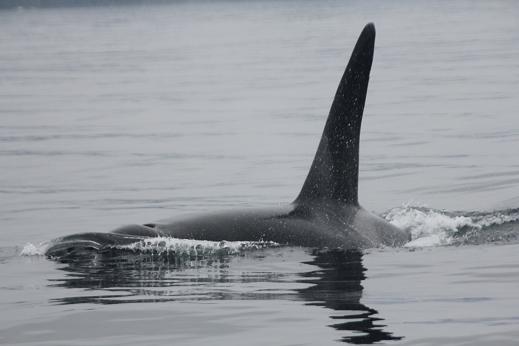
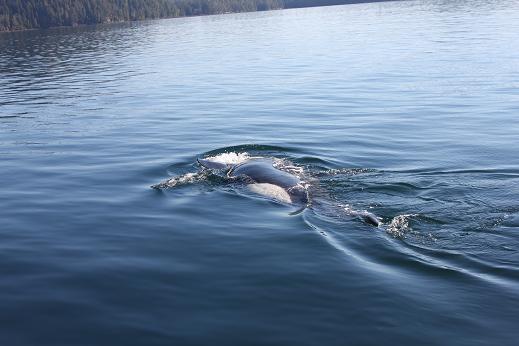
These two orca / killer whales passed under our boat and surfaced a few meters (yards) away. Explanation: looking at the photo their appears to be a dorsal fin at the top of the photo but it cannot be from the main orca because that would mean it was coming out of it’s belly. The belly of an orca is white and it is possible to see the tip of the tail at the end of the photo. So it could be one orca diving over the back of another or the dorsal fin could be the tail of another orca and the second one is following too close. Either way it was close.


Orcalab – What is it?

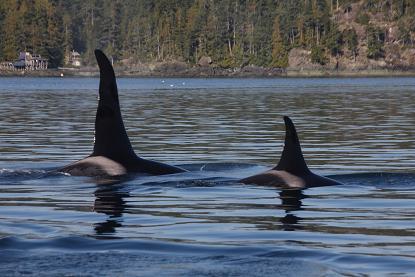
Resident male orca

A male and female orca / killer whlaes passing close to the boat in Blackfish Sound. Blackfish is the native name for orca. In the background one can see the building of OrcaLab. From their website at http://orcalab.org/:

“The work of OrcaLab is centred on the philosophy that it is possible to study the wild without interfering with lives or habitat. A network of hydrophones, positioned around the orcas’ “core habitat”, helps us monitor their movements all year round. Supplementing the acoustic data are visual sightings of orcas as they pass OrcaLab, and reports from land observation sites staffed by OrcaLab volunteers during the summer “season”, as well as reports from other researchers and whale watchers who share observations and information.”

If you go to OrcaLabs second website at “www.orca-live.net/” and click on “OrcaLive” then click on the map “The Hanson Island area” you have a view of the area where Grizzly Bear Lodge does their whale watching.


Killer Whales pod A30

Killer Whale Pod

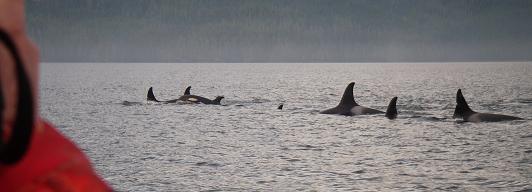
If you have time to refer to the posting of June 16th this is again the resident killer whale pod A30 with A72 the last orca with a notch in her dorsal fin.  The guest in the corner of the photo provides a little perspective for the closeness of the orca. On the lodges whale watching safaris we are on the water 7 to 8 hours which allows us time to position ourselves for a number of good pictures of the wildlife we view. The whale watching tours view marine wildlife such as killer whales, humpback whales, dolphins, porpoise, harbour seals, Steller sealions, occasionally minke whales, a wide variety of waterfowl, bald eagles, and frequently black bear as we travel to and from the lodge.


Amazing Humpback Whale

Humpback Whales Breaching


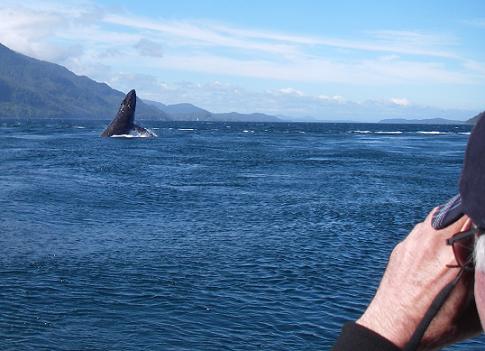
The amazing aspect of this breaching was the location and number of  breaches. We were on a whale watching safari at Cracroft point with a pod of resident killer whales that were feeding on the salmon feeding on the herring in the fast water of the tide ripe. The humpback was in the same area feeding on the herring when it started to do this lunging and coming down with a load slap. This occurred in an arc on the outside of the killer whales. The arc was over 200 meters (yards) long and the lunging was repeated eleven times in a row. It did not seem to bother the orca so it happened a second time but only eight lunges. The orca kept feeding and the humpback returned to it’s herring and the guest got a great show and pictures.


Northern resident A72

Orca A72

If you Google “orca A72” and go into  “A30 matriline – Wikipedia, the free encyclopedia” you will learn about all about Bend (born 1999). Bend is a young female and has a distinctive cut at the middle of her dorsal fin, the cause of which is not known. Above photo.

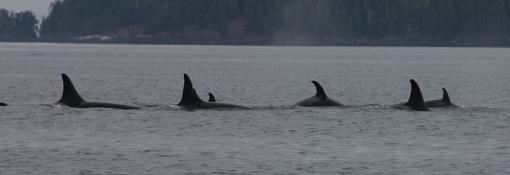
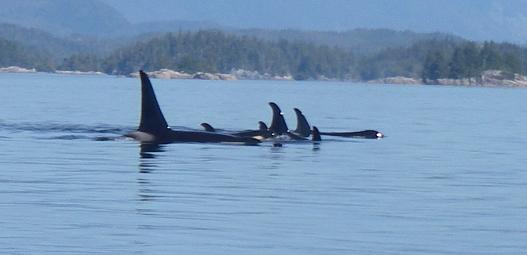
The orca pod often viewed on our tours is the A30.  A30 matrilineal is the name given to the most commonly seen orca matriline in British Columbia. The matriline was present in over 60% of all of the encounters in the Johnstone Strait region, making it one of best known matrilines. The group’s size has increased, from 6 in the mid-1970s to 10 as of 2013, including 4 calves. It is most frequently seen in Johnstone Strait from late spring to early fall, often traveling with other pods of the Northern Resident Community. The second photo shows this pod minus the three adult males which were in the area but not traveling with the family. Note A72 is the fifth one in the photo.
Orca Pod


Killer Whale Breathing

Killer Whale Surfacing


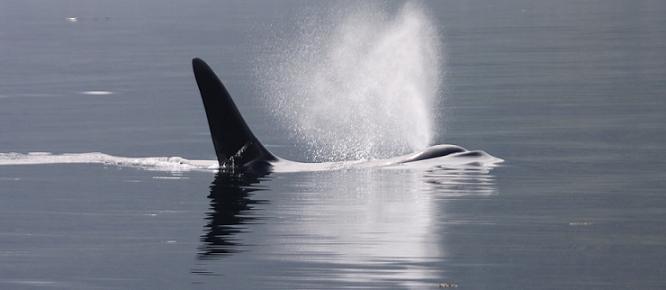
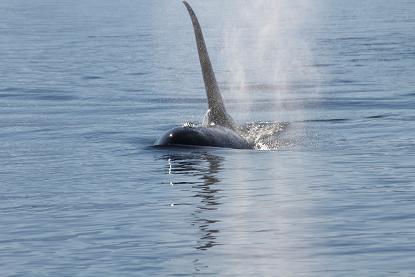
An interesting sequence of photos taken on a whale watching day in the Johnstone Strait. This area is a fifty-minute boat ride from Grizzly Bear Lodge, a time spent looking for black bear, bald eagles, dolphins and enjoying the morning scenery. The photo above shows an orca just breaking water and starting to exhale as shown by the bubbling water marking the start of the blow. The photo below the final exhale and then breathing in before it disappears.

Killer whale breathing


Male Resident Killer Whale

Male killer whale

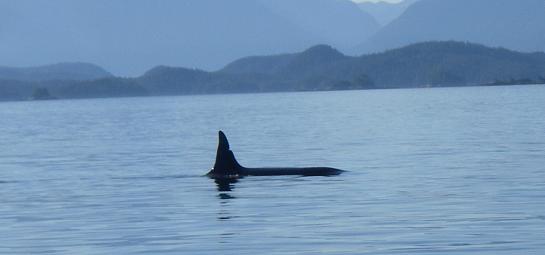
Male because of the large dorsal fin as the species shows considerable size difference between males and females. Adult males develop larger pectoral flippers, dorsal fins, tail flukes, and girths than females. Resident because the dorsal fin is rounded at the tip and curved and tapering while the transient is shorter and sharper. The other key reason that this is a resident is that it is coming close to the boat while transients are less curious and will not approach a boat.


Perspective on Whale Watching

orca  with guests

When I am in the boat with guest I try to get photos that show that there are opportunities for good pictures. Although the Whale Watching Guideline specify that boats stay 100 meters (yards) from the orca / killer whales at sometime during your trip that may not be true. In the area we do our marine wildlife viewing there is less than eight boats whale watching and over the period of the day every one has an opportunity for photos. Once taken we move off to view the humpback whales, stellar sea lions, harbour seal, dolphins, porpoise, bald eagles and a variety of sea birds.  Must not leave out the black bears we often see as we travel between the viewing area and the Lodge.


Watching a Killer Whale Family

Pod of orca

“Pods are actually their own matriarchal family groups. Animals born into a pod, stay in the pod their entire lives. This is like living with your mother, aunts, uncles, cousins and brothers and sisters all descendant from your mother’s side of the family for your whole life. It is extremely rare for an Orca from one pod to be accepted or join with another pod of whales. The gene pool gets mixed up by not having any father within the same pod. Each pod has their own ‘dialect’ of communication through various squeaks, burbles, and whistles.
The term “Whale” is a misnomer since the Orca is actually from the dolphin family. We associate “whale” with something very large and they are much larger than the majority of dolphins. They are a whale of a dolphin.”

This quote was taken from the website Whales and Dolphins BC which is a great site to visit if you are interested in more information.


Killer Whales Approaching

Killer Whale Coming

This is not the classic photo of an orca /killer whales. The classic photo would show the orca from a side view with its head far enough out of the water to get a good view of the white eye patch. But this is a much more interesting photo because it means that pretty soon there are going to be orca very close to and under the boat. From my experience of guiding whale watching tours the guests prefer the second.