Tag Archives: Stellar Sea Lions

Steller Sea Lions at Haul-out

sea lions on the BC coast

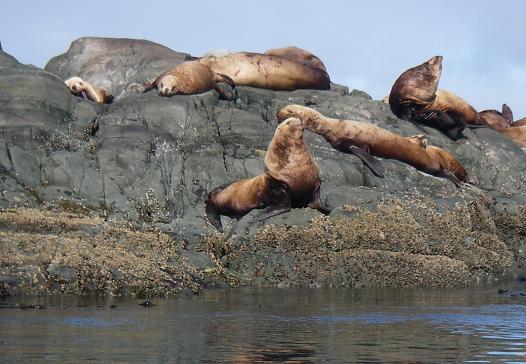
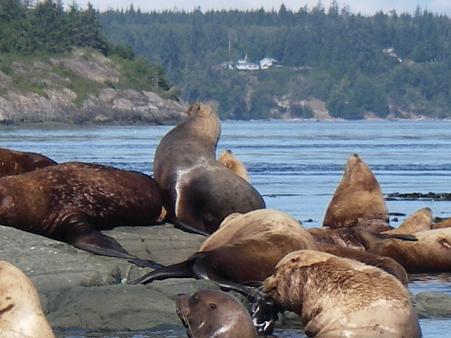
A sea lion haul-out is an interesting place to visit but you would not choose it as a good location for a picnic lunch. First is the constant roar. Scientist say roaring is a way that they can protect their territory when they feel threatened. This is often enough to get both humans and other animals to leave them alone. There are many sites on “YouTube” that give you an idea of the volume of the roar but nearly all of them are for “one” seal lion whereas most of the time we are viewing thirty or forty sea lions. Second is the smell. Enough said.
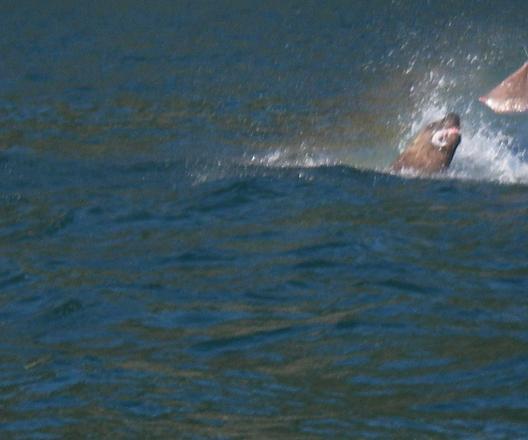
Steller sea lion feeding on salmon?

sealion eatingsealion eating halibut

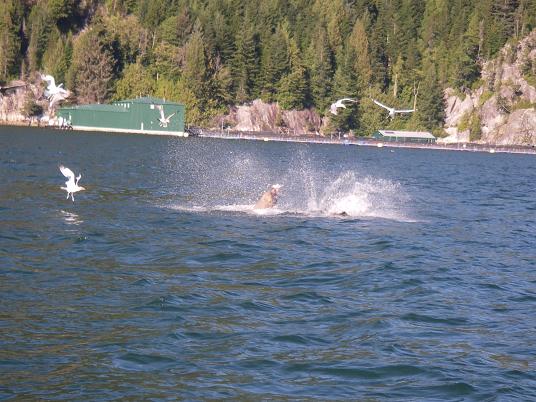
Steller sea lions on the BC coast most often catch and eat their food under water however if it is larger then they come to the surface. The process has the sea lion whipping their head back and forth until they rip a mouthful out of their catch. Once that is swallowed they dive down and pick up the catch and repeat the performance until it is all consumed. The first photo shows the whipping process and the second is all I could get of a close up of the sea lion with a mouthful. From the second photo this appears to be a halibut or some other flounder style fish.


Steller Sea Lion Haulout

Sea Lions near Vancouver Island


Sea lions are a little larger than harbour seals. Their length is 2.4 to 2.8 m (7.75 to 9.25 ft) and they weight 1,133 kg (2,500 lbs.) and have average life span in the wild of 18 years for (males) and 30 (females). The sea lions have started to stay our viewing area all year but are more abundant in the summer. The rocky island haulouts in spring and fall may have over one hundred sea lions.


Decorated Sea Lion

sea lions

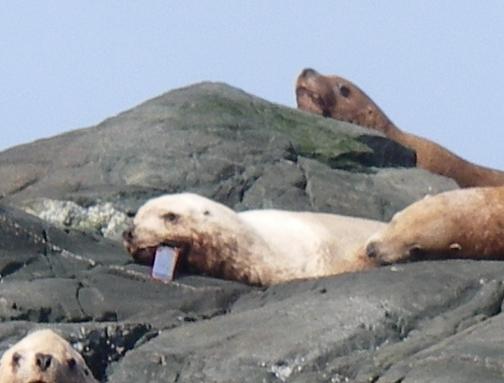
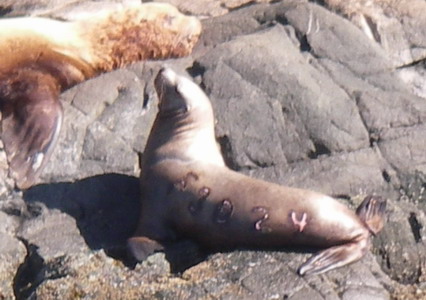
Steller sea lions are a common sight on our whale watching trips to the Johnstone Strait area. Not as common is a sea lion with a “flasher” hanging from its mouth. A flasher is an attracter used when fishing for salmon to give a lure action. In this case there must be an angry fisher who lost their lure to a sea lion. The sea lion likely took and swallowed the bait attached to the flasher and now has it hook caught inside. Hooks are designed to rust out in a few weeks and it was not long after this photo the flasher was spotted on the rocks without the sea lion attached.


Steller Sea Lions

sea lions AKA Steller sea lion, Steller’s sea lion, northern sea lion are in are viewing area all year around but much more abundant in late May to early June on their way North and again in late August through September when returning south. These male Steller sea lions average a nose-to-tail length of 3 m (9 ft.) and weigh about 700 kg (1500 lbs.). When dry, Steller sea lions are a tan to golden-brown color and darken to a chocolate brown on their flippers and underside. They appear dark brown or black when wet.


Steller Sea Lions at Rest

Steller Sealions

Steller sea lions range throughout the Pacific Rim (from northern California to Northern Honshu in Japan, and to the Bering Strait). Steller sea lions are highly gregarious and they use traditional haul out sites (an area used for resting) on remote and exposed islands. These sites can be rock shelves, ledges, boulders, and gravel or sand beaches. Adult Steller sea lions eat a wide variety of fishes, including Pacific herring, pollock, salmon, cod, and rockfishes. They also eat octopus and some squids. Over the past five years more of these sea lions are spending their summers in our viewing area rather than traveling to more northern waters.


Steller Sea Lion Breaching

SeaLion Porpoising

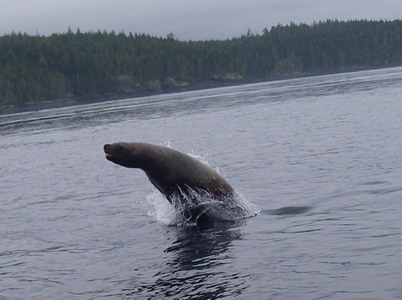
Over the years it is not uncommon to watch Steller sea lions play with humpback whales but the behaviour exhibited in this picture was new. We were following a pod of dolphins when this sea lion came up on the other side of the boat breaching or porpoising like the dolphins. It was not just a one-time breach rather it followed the boat for at least a kilometer (mile) with continuous breaches. Another marvel of nature that is hard to explain.


Branded Steller Sea Lion

Steller sealion brand

This Steller sea lion was branded at Forrester Island in Southeast Alaska that is the “F” in the brand. Branding occurs at several places along the west coast of North America as part of project to discover the reasons behind the mysterious disappearance of sea lions and what it could mean for the ocean ecosystem. Since 1980, the world population of Steller sea lions (Eumetopias jubatus) has dropped from around 300,000 animals to fewer than 100,000, and it is still declining. Possible causes include increased incidence of parasites and disease, predation by killer whales, nutritional stress through competition with man or other species for food, or nutritional stress caused by natural and/ or human-induced changes in the abundance, quality and distribution of prey. Other factors that may be contributing to the population decline include meteorological changes (i.e., frequency of storms), pollution and toxic substances, entanglement in marine debris, and incidental and intentional take by man. Whether the decline is caused by a single factor or a combination of all of the above is a matter of scientific debate.


Curious 1 of 3

Steller Sea Lions

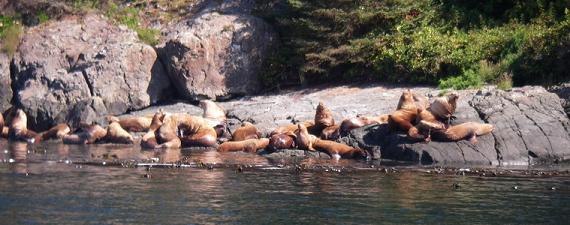
Most marine wildlife is curious but the key is to be sitting / drifting quietly. This viewing area has a fast tidal current that allows us to drift past a number (25 to 150) Steller sealions at a haulout on a small rocky island. The many young sea lions in the water will come and play around and under the boat and given time will approach quite close.


Steller sealions at rest?

Steller sea lions

This was one of those rare times when the sealions were actually resting and not roaring and climbing over each other. But if you look closely you do not see any young sealions only the adults. It is the young that come out of the water and want to move to the top of the rock what cause all the problems and noise. The quiet only lasted five minutes and it turned to chaos and better opportunities for photos of roaring sealions.