Tag Archives: Whale Watching

Whale watching – Florence and Ray 8

humpback near boat
Click to enlarge then click again

While on our whale watching day we managed to see stellar sealions, harbour seas, eagles and a few dolphins but all these are hard to compare to a humpback whale rising out of the water behind the boat while we are taking a lunch break. The important part of the previous sentence is the word “day”. We are not limited to as four-hour tour like the companies from Telegraph Cove or Port McNeil nor do we arrive late in the morning and have to leave early as the companies that travel from a greater distance. We are close to the viewing area, approximately 50 minutes, and unless it is your departure day there is no set time to return to camp so if the activity occurs later in the day we are later returning to the lodge.
Whale watching – Florence and Ray 7

whale of a tail
Click to enlarge then click again

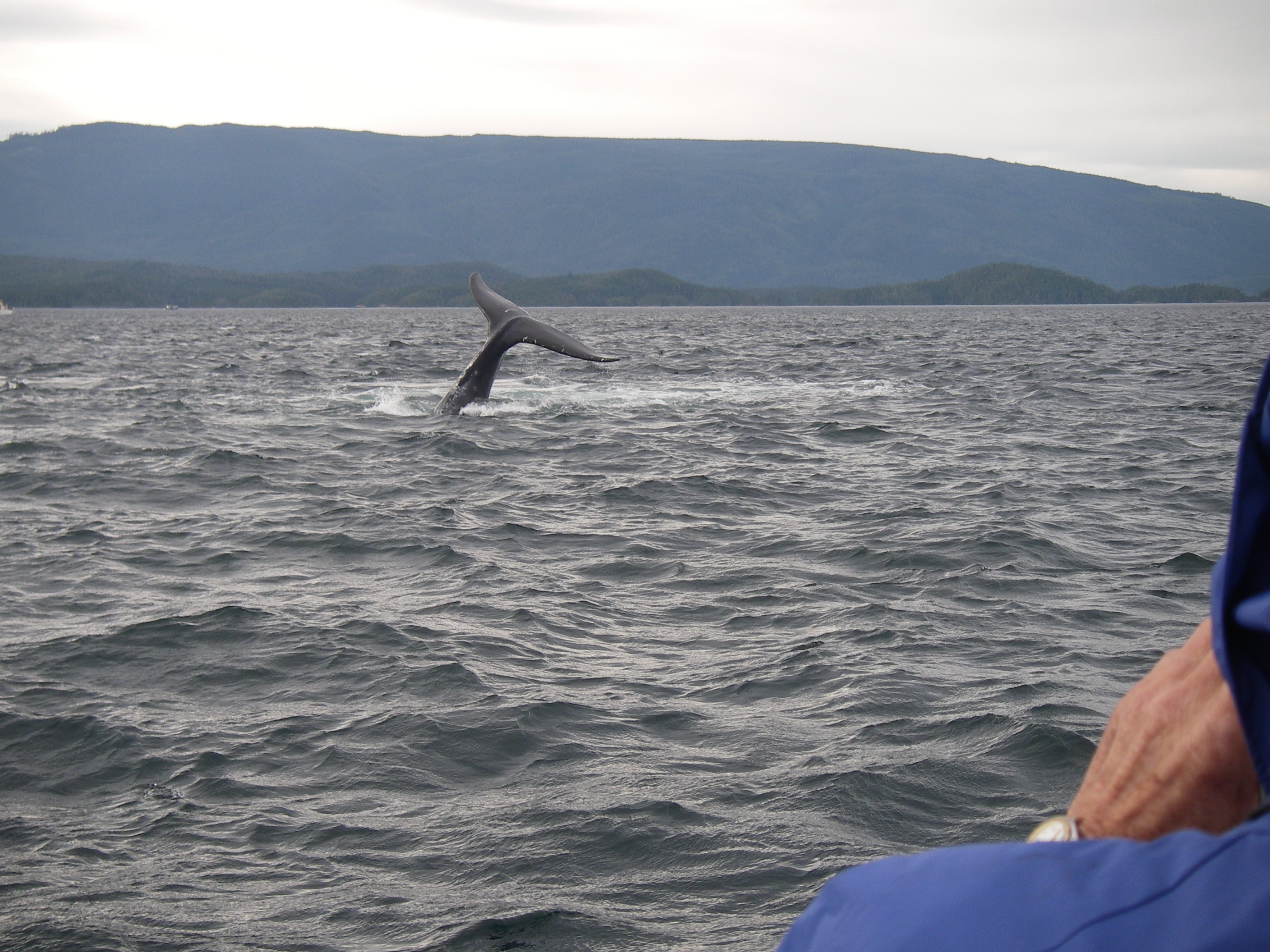
Florence and Ray’s whale watching day was also blessed with a very active humpback calf that spend part of it’s day entertaining us with a number of fluke (tail)) slaps. For some reason it would repeatedly (ten or twelve times in a row) slap the water stop for a few minutes and then repeat the process.


Whale watching – Florence and Ray 6

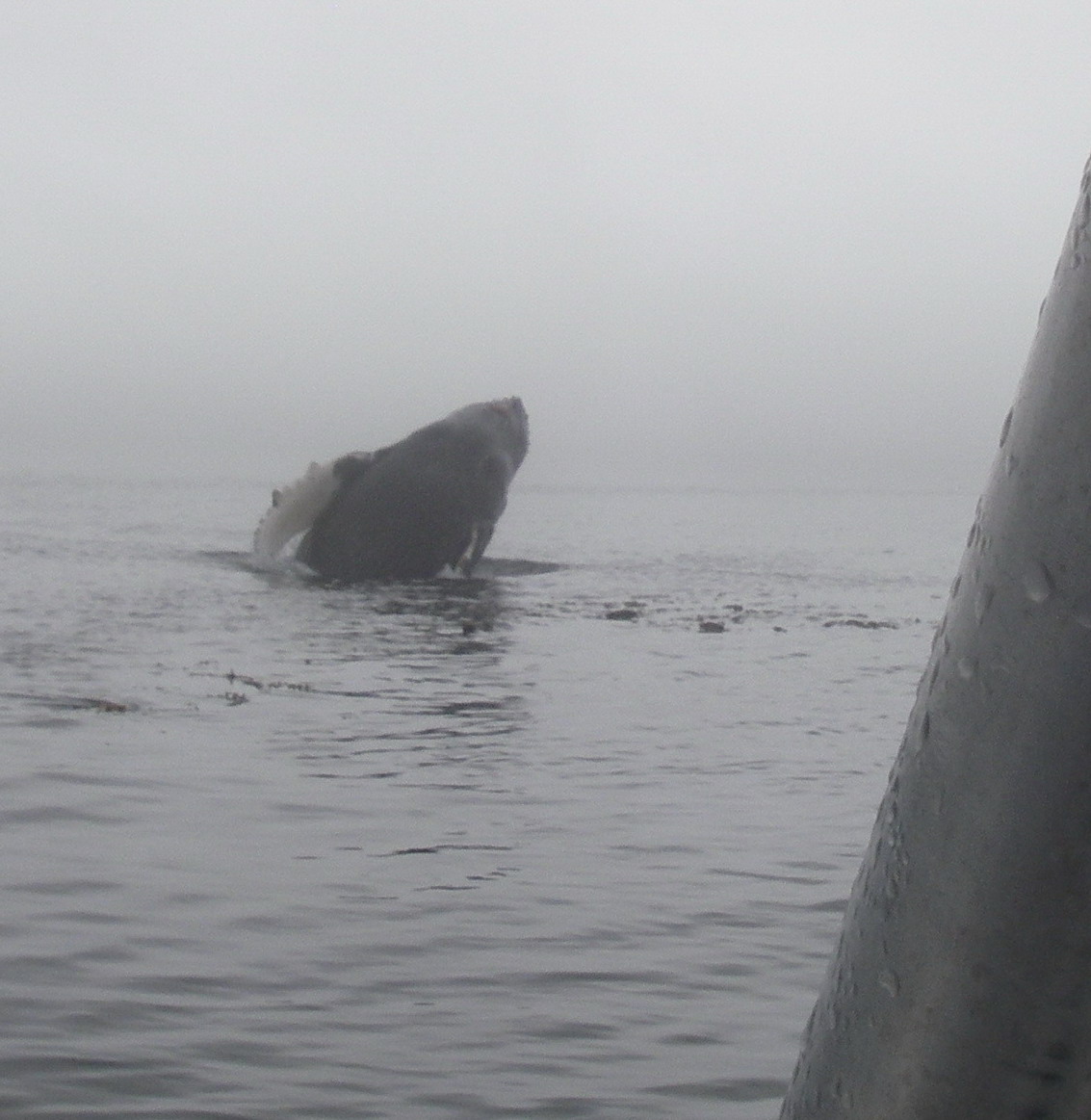
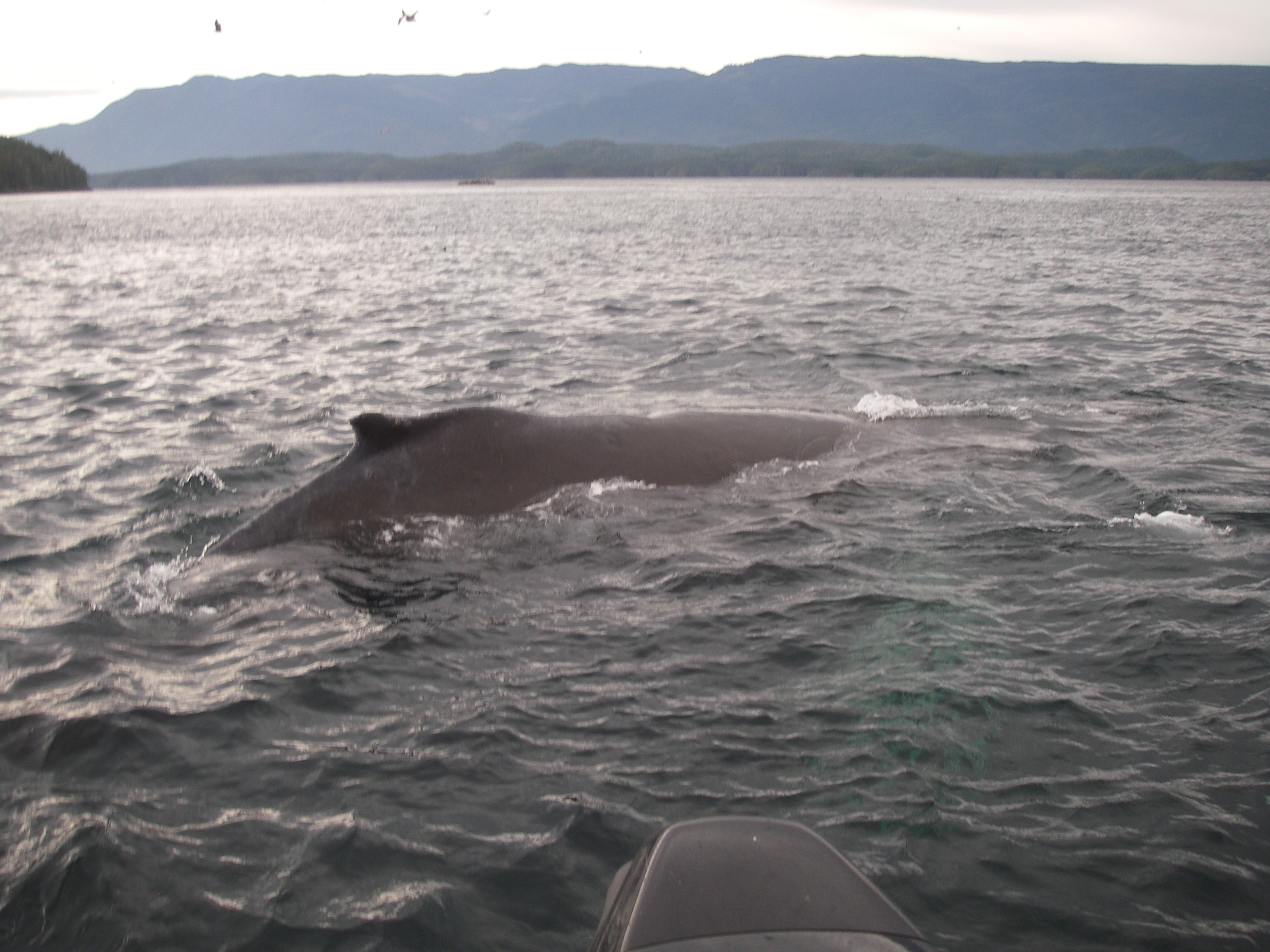
very close whale
Click to enlarge then click again

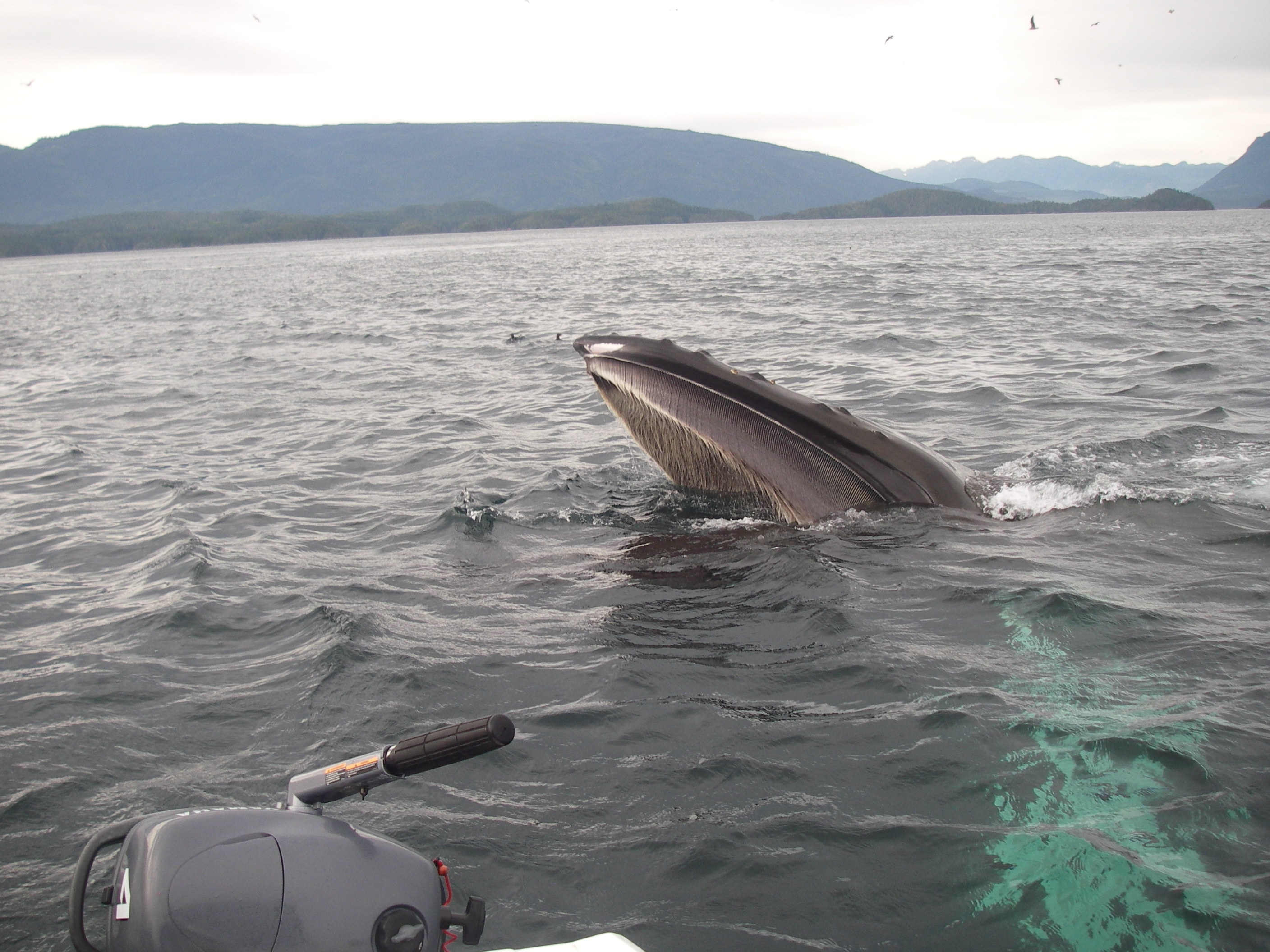
As mentioned in yesterday’s post it was an active day for the humpback whales.  Our lunch break is often in the area of Bold Head where we set up a table in the boat and drift with the tide and the whales.  With the motor turned off and no noise but the water lapping against the boat we often have visitors. On this whale watching tour we had a humpback whales lunge feed directly behind the boat. As you can see humpback whales are baleen feeders straining water through their baleen.  Note also the white of the pectoral fin extending beneath the back of the boat.  The whales know our exact position but as our motor is turned off we are not a threat rather like a drifting log.

Humpback Whale breaching close to boat

close breachinf whale
Click to enlarge then click again

As the blog writer and guide I have frequently mentioned that the best strategy in whale watching is to do nothing. Doing nothing means once the whales are located it is often best to sit in a quite boat and let the whales carry on with their natural activity without the noise of boats moving around. This is especially effective if you are the only boat in the area. Besides providing the guests with opportunities for great photos it gives me time to play with my Pentax Optio (6mp 3Xoptical zoom) and get a shot like the one posted. If I am able to do this with a “point and shoot” imagine what guests are able to do with the cameras they normally have.

Male orca

killer whale breath
Click to enlarge then click again

A male killer whale’s dorsal fin can grow to as much as two meters (6 feet) tall. Despite the fact that the dorsal fin is very straight, it is primarily made of cartilage. Orcas travel in deep water and this water provides pressure to the fin, keeping the tissues inside healthy and straight. This photo shows the difference in size between and adult male and female orca’s dorsal fin.

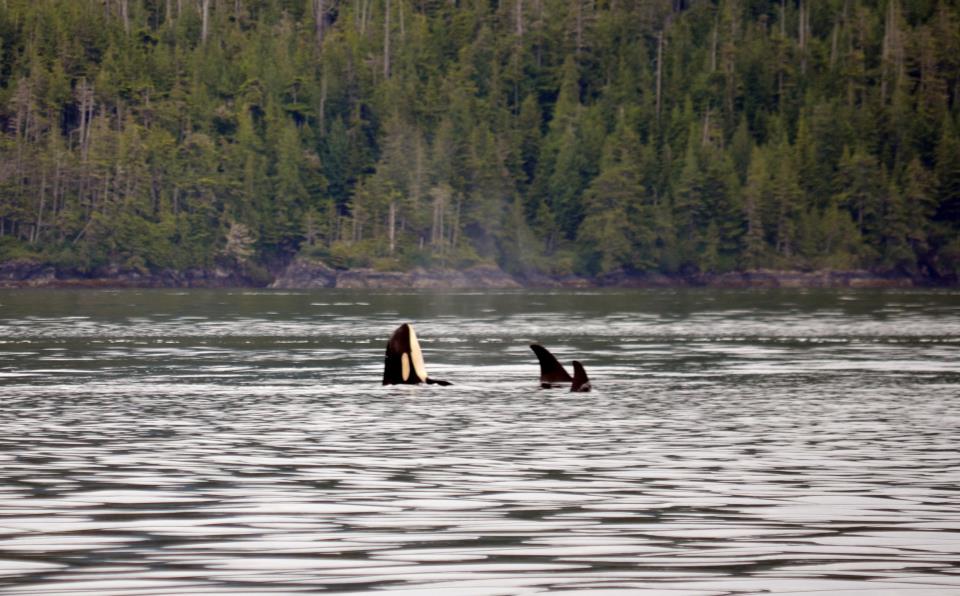
Orca spyhop

spyhopping orca
Click to enlarge then click again

“When spyhopping, the whale rises and holds position partially out of the water, often exposing its entire rostrum and head, and is visually akin to a human treading water. Spyhopping is controlled and slow, and can last for minutes at a time if the whale is sufficiently inquisitive about whatever (or whomever) it is viewing.

Generally, the whale does not appear to swim to maintain its “elevated” position while spyhopping, instead relying on exceptional buoyancy control and positioning with pectoral fins. Typically the whale’s eyes will be slightly above or below the surface of the water, enabling it to see whatever is nearby on the surface.

Spyhopping often occurs during a “mugging” situation, where the focus of a whale’s attention is on a boat rather than on other nearby whales. Spyhopping among orcas may be to view prey species. For this a spyhop may be more useful than a breach, because the view is held steady for a longer period of time.” From Wikipedia

Humpback whales fluking

whale diving
Click to enlarge then click again

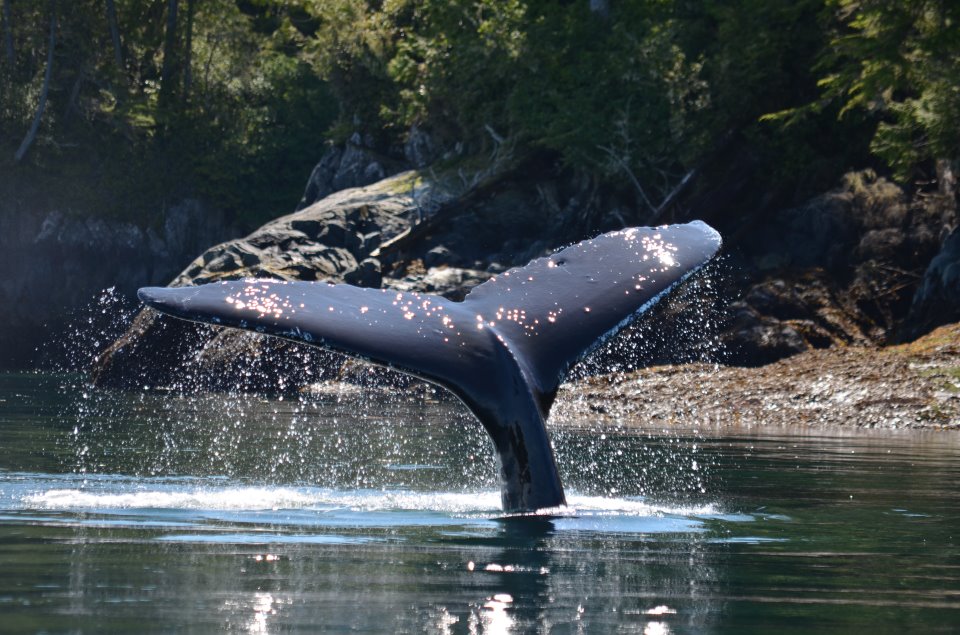
An excellent photo of the top of a humpback whales fluke. It clearly shows the scares left by barnacles as well as hole from an old injury. The whale watching tours from Grizzly Bear Lodge has viewed many more humpback whales this summer than in previous years. Viewing each year has improved from an average of four or five whale’s five years ago to twelve to fourteen whales this past summer. The abundance of herring (humpbacks main food) in the area men the whales are spending the summer s in our viewing area rather than traveling to their normal feeding grounds in Alaska.

Resident Orca Family

killer whale fins
Click to enlarge then click again

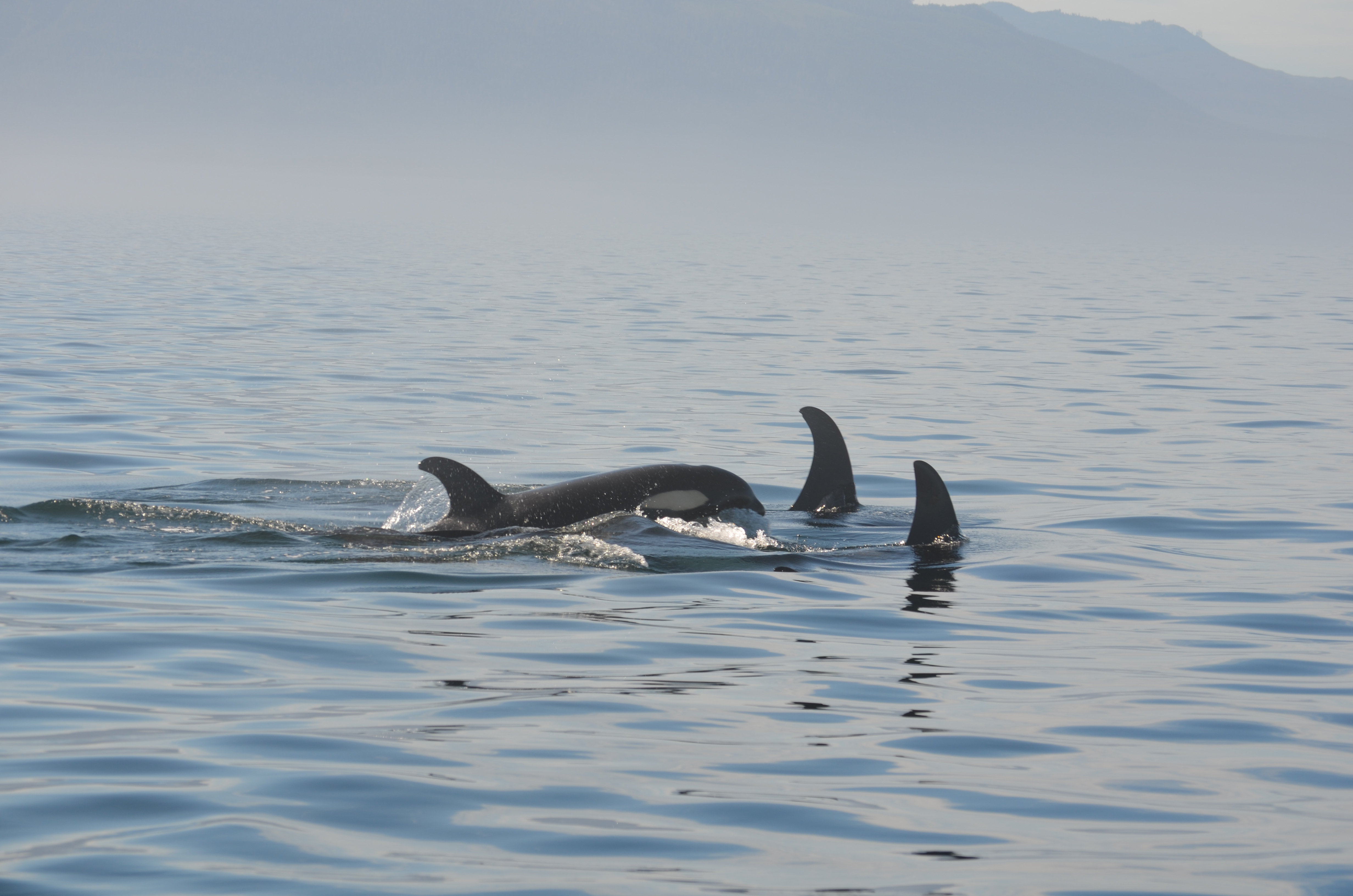
The Northern resident orca we view on tour from Grizzly Bear Lodge live in large family groups called pods, with multiple pods making up a population or community. The pods consist of related matrilines, with each matriline often containing 3 or more generations. The head female or matriarch leads each pod, as orca is a female dominated species. The matriarch tends to be the oldest female in the extended family. Her experience and knowledge guides the pod, and the matriarch teaches younger whales about everything from parenting skills, feeding tactics, and navigation through the vast territories that they cover. The pods in our area may be as small as three orca or more than fifteen.

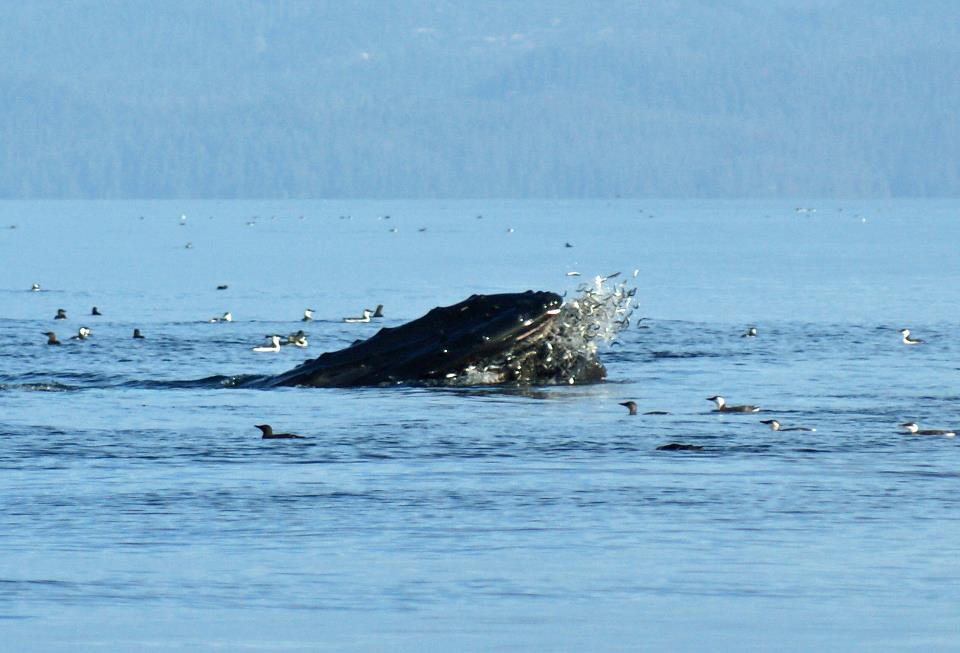
Humpback whale lunge feeding

lunge feeding whale
Click to enlarge then click again

Great photo of a humpback whales lunge feeding but not completely successful. Your guide does not look for herring which is the main food of the humpbacks in Grizzly Bear Lodge’s whale watching area rather we look for seagulls.  The diving ducks feed on the herring, which form a tight ball to avoid being eaten.  The herring balls are forced toward the surface by the ducks and this attracts the gulls, which attract the guides.  We position the boats near the gulls and herring balls and wait for the humpback whales. Not all quests manage to get a photo as the waiting game does predict the exact time the lunge will occur but the experience is better than the picture.

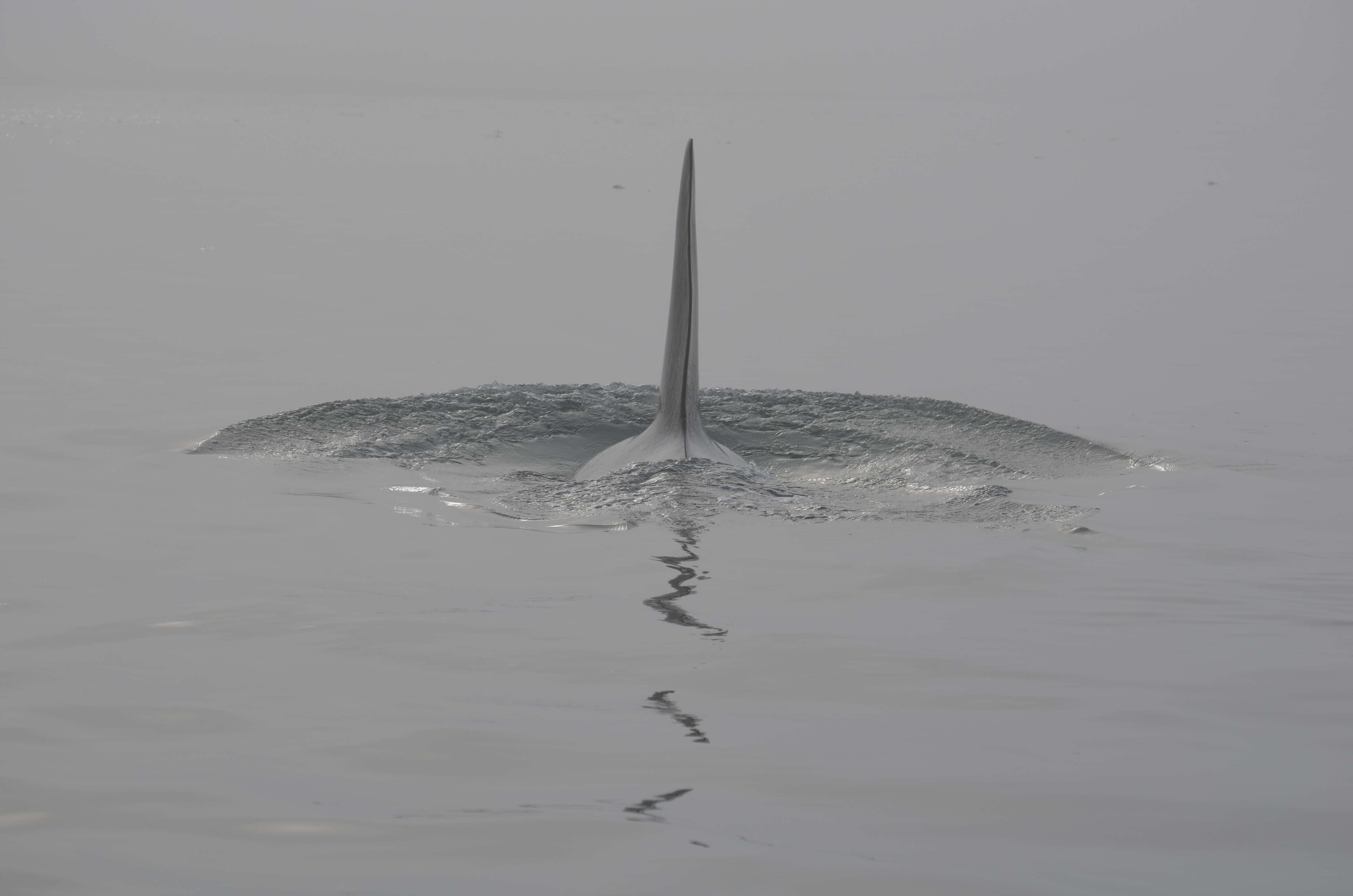
Whales by Braille

misty orca
Click to enlarge then click again

Many mornings in August and September start with a low layer of fog over the area surrounding Grizzly Bear Lodge. This fog is short lived as it normally burns off by noon.  The boat used for whale watching is equipped with radar and all the guides have a personal GPS with routes programmed to allow them to navigate in the fog. Whale watching is not a “solo” experience as we are in radio contact with two or three others “whale watchers” and share our search. Unlike Victoria on the southern tip of Vancouver Island a busy day in our area may involve eight boats watching whales in a rather large area while Victoria may have fifty boats in a similar sized area. This photo is of a male resident orca that passed beneath the boat as surfaced in the fog.