There’s lots to see and do right here at the lodge. Some of the best wildlife viewing opportunities are right outside your window. The trip here on the float plane is a scenic one with lot’s of great photo opportunities.
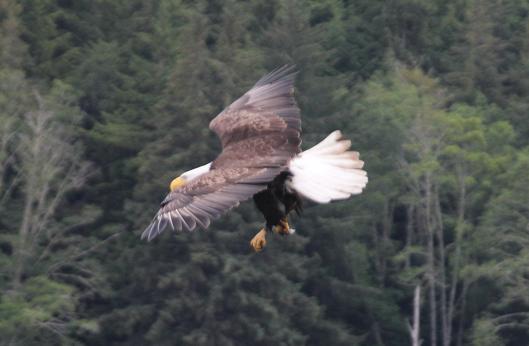
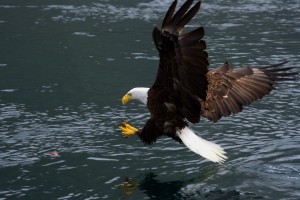
The morning run up Knight Inlet on the grizzly bear tour is always interesting. It is a spectral view, Grizzly Bear Lodge is located approximately 20 miles from the mouth, and the grizzly viewing area starts another 25 miles up the inlet, which is about 90 miles long. Eagles are abundant on the morning run this one being in the Glendale estuary the primary grizzly bear viewing area. Eagles are not always in trees it is not uncommon to watch them pick up a fish from the water and then land on shore to eat the “catch of the day”. This bald eagle with talons open was coming in to catch a late breakfast.
Glen, one of the Lodge guides, takes many excellent photos and allows me to use them on the blog. He would likely have deleted this photo because part of the wing tip is missing but I have lower standards. Bald eagles are a favourite subject for our guests and I am sure many would be happy with this photo, as they do not have three months to capture the “peeeerfect” picture.
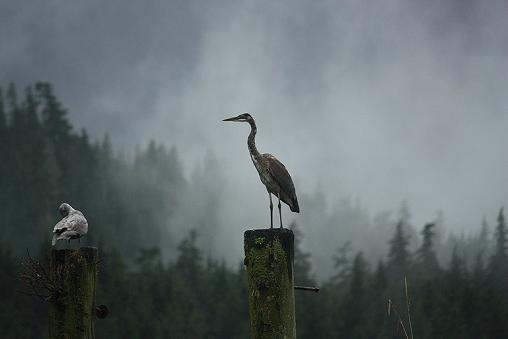
“Early morning from Grizzly Bear Lodge. We were in total awe of the beauty of the scenery and the silence – this place is just stunning. The staff, the location, the food – everything was just perfect! We captured this stunning photo of a Great Blue Heron just by chance as we stood on the jetty waiting for our boat to take us to the Bear viewing platform. The scenery in the early morning mist was just stunning.”
Thank you, Lynn for the compliment although we do try hard we cannot take credit for the scenery.
As Lynn of the UK says “Stunning views of beautiful Knights Inlet from the float plane. We were so sad to leave after an unforgettable few days. We will be back!!” A view of coastal British Columbia’s scenery is part of the bonus of flying into Grizzly Bear Lodge. There are many “TV” shows about flying over England, Ireland, Canada etc. ours is included and in the 45-minute flight from Campbell River.
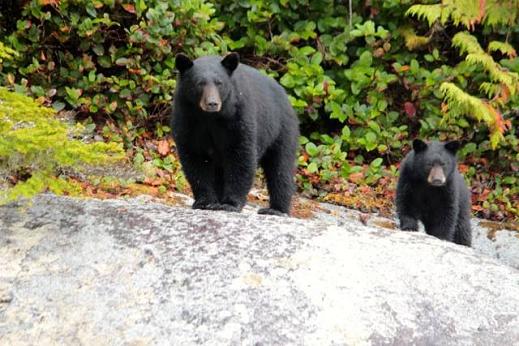
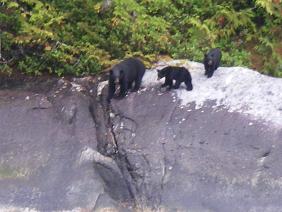
I recall these black bears because for most of the season it was hard to get photos of black bears. All our guests had good photos of grizzly bears but photos of black bears were much harder to obtain. These three bears, mother and two cubs, were on a rock face on the shore of Knight Inlet on the return trip from watching grizzlies all morning. They were on the shore scraping muscles off the rocks and we followed them along the shore for the better part of half an hour as they moved in and out of the bush as they worked their way down the shore for better patches of muscles to eat. Paul and Sheila took the larger photo while the smaller one was from my camera to show there were three bears.
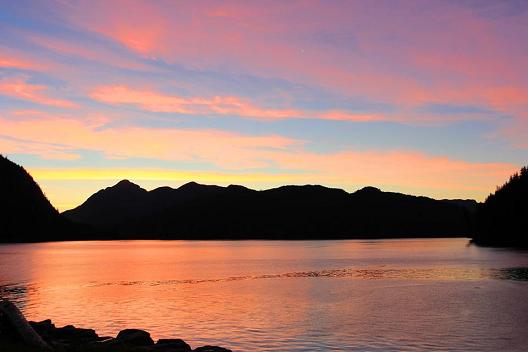
Grizzly Bear Lodge is located on Minstrel Island approximately 25 kilometers from the mouth of Knight Inlet on the West Coast of British Columbia between the BC Coast and Vancouver Island. This is important because the location has its own microclimate, which involves a cloud cover, which moves in most evenings and burns off by noon the next day. This all makes the sunrise shown in this photo by Craig and Pat Brown from USA rather rare.
Sometime on the evening of the arrival day guest will go on a local wildlife tour. It may be before or after diner depending on the tide. The object of the tour is to find black bears on the beach and that means there needs to be a low tide to have a beach for the bears. It tour is an hour or so depending on the wildlife viewing. It allows the guest to become familiar with the guides and boats and to gain some experience of photographing from a boat.
The perfect eagle picture is hard to achieve but Grizzly Bear Lodge tries to provide the perfect opportunity. First by keeping an eye out for bald eagles on the whale watching trip, grizzly bear tours and extra day at the river. Secondly when the resident eagles are still in their nest behind the lodge we will occasionally throw out a bottom fish and encourage them to come for an easy meal. Glen, one of our guides, provided another great photo.
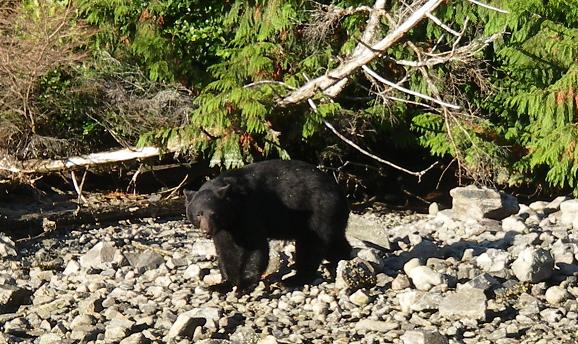
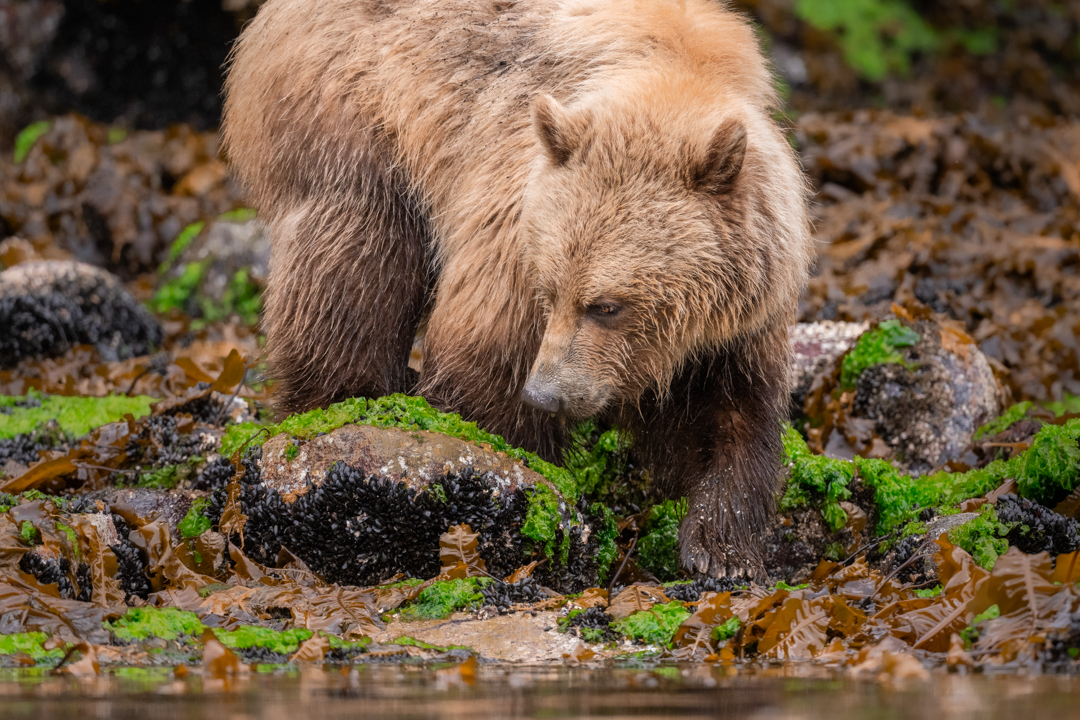
The grizzly bear population of the viewing area in Knight Inlet is very healthy and has been growing over the years. Our lodge, Grizzly Bear Lodge, is located 40 km (26 m) from the main viewing river in Knight Inlet. Six years ago a grizzly bear in the area of the lodge was unheard of and now there are grizzlies on the lodge’s island several times a year. It is a small island so the bears come and go within a day but are frequently seen in the area. This bear was seen in the spring in a small bay not for from Minstrel Island on one of the evening black bear tours.
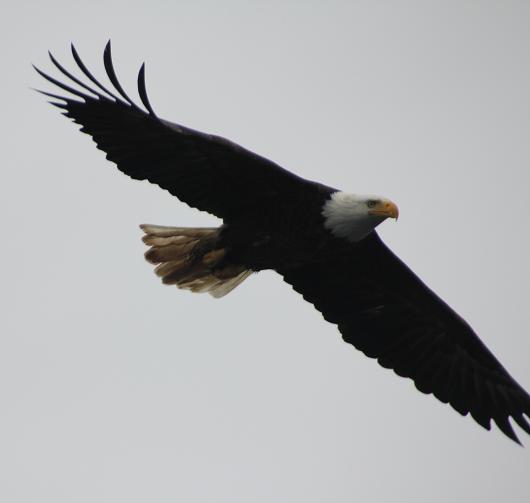
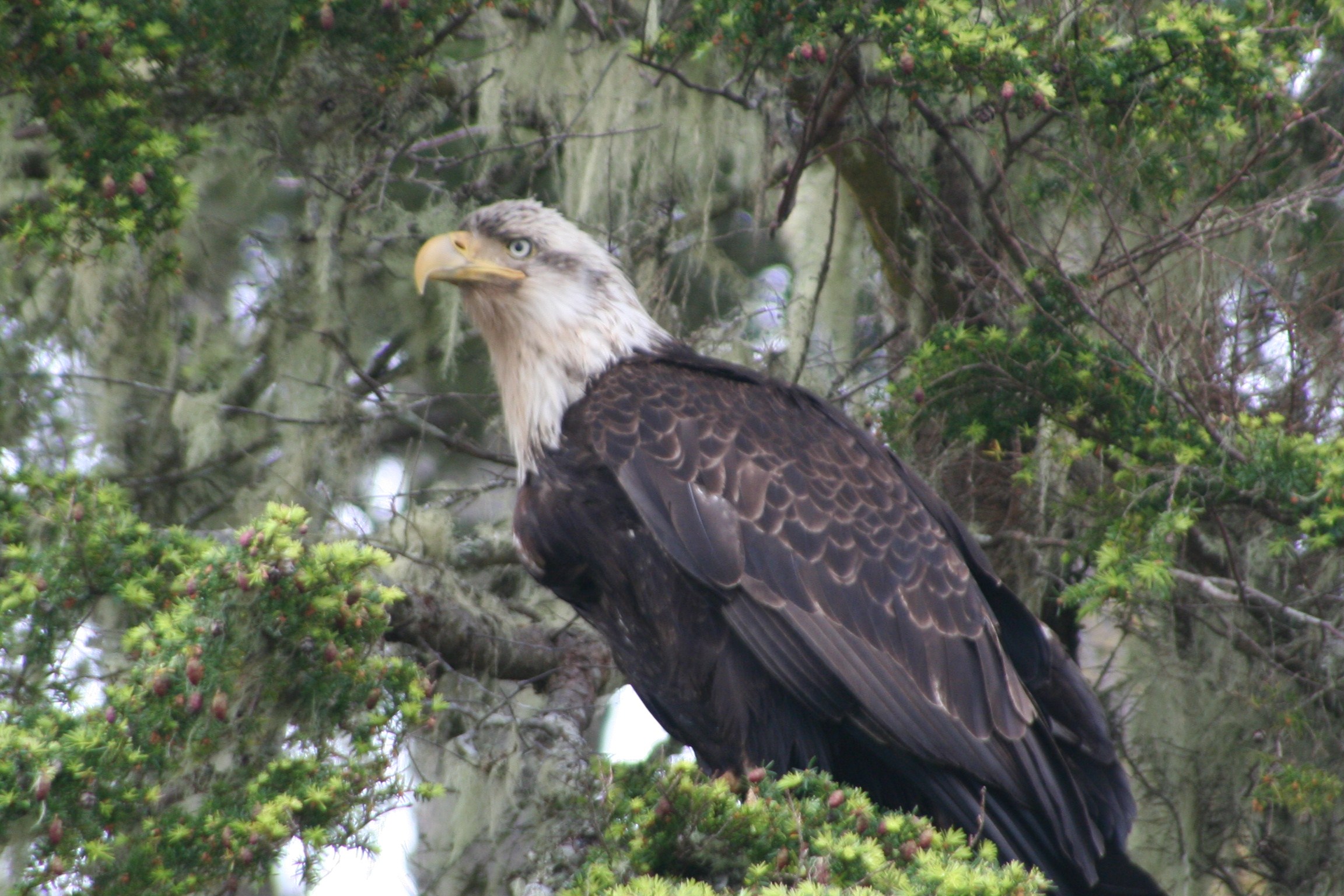
Great photo of a young bald eagle. Young because eagles start to get their whites heads in their third year and are normally fully white by the end of the fifth year. Regarding the yellow beak I found an interesting story on line from Senior Naturalist Dave Erler that is worth reading:
“Not long ago a Squam Lakes Natural Science Center trail visitor observed the immature and adult Bald Eagles housed at the Raptor Exhibit and asked me a great question. Why does the adult Bald Eagle have a yellow beak? I pondered for a moment before responding. I recollected from the ornithology course I took in college that the outer covering of a bird’s beak was composed of keratin, which is similar to keratin in mammal nails or claws, reptile scales, and bird feathers. I also explained that the yellow color in bird beaks, ceres (the fleshy portion at the base of a raptor’s beak), and feet are caused by pigments called carotenoids. After sharing this information, I explained that when I first came to work at the Science Center some three decades ago, most of the raptors in our collection had very dull color in their ceres and feet. This prompted me to contact a veterinarian I knew who worked with raptors. The vet explained to me that the carotenoids in bird beaks have a slightly different composition of proteins and glycine than is found in other animals. The yellow color is influenced by both diet and hormones. The vet suspected the dull color was the result of a vitamin deficiency, possibly vitamin E. On the vet’s recommendation we began to use a vitamin supplement formulated for hawks and falcons. After a few months, there was a marked improvement of the birds’ ceres and feet, indicated by a brighter yellow color. After sharing all this information with this gentleman, I could tell by his glassed-over eyes that I had missed the intention of his question. So I asked him if his question was really, “What is the function of having a yellow beak?” He nodded yes. Realizing I had already bored him senseless, I simply stated it probably indicates to other eagles that the individual is fully mature and healthy, important factors if you are trying attract a mate and hold a territory. That answer was sufficient and he wandered off leaving me to wonder why I don’t have a yellow beak.”
Just like that another season has come to an end. We are grateful for all the wonderful staff and the guests this season. It was an excellent season and we are already looking forward to next May.
One of the highlights of the season was all of the new cubs out. It was awesome to see so many new cubs of the year and that is great news for our bear populations moving forward. We had great spring viewing and this continued through summer. On our river trips we started to see salmon arriving in August and enjoyed some great shoulder season viewing. The fish at the viewing platforms were a little late showing up this year, but viewing during late September at the platforms was great and the estuary viewing remained strong throughout the season.
Out in the whale watching world it was another year that saw large numbers of resident Orca who remained in the area right into October. The Humpback viewing was also great with large numbers feeding in Blackfish Sound. It is so amazing to have these magnificent animals back in our waters in such numbers.
Over the winter and spring we will be doing some repairs and maintenance. We rebuilt the front deck last spring, utilising cedar cut on site. We will continue with some siding, rooms improvements and hopefully a floating sauna ready for the start of our season.
2026 is already looking like a very busy season for us. We only have limited high season availability so please book early to ensure we have space for your group.