Grizzly Watching

Grizzly Bears are magnificent and the biggest reason visitors choose our lodge!

Grizzly bears thrive here and the viewing opportunities are spectacular. We have operated our Grizzly Bear Lodge for decades and know the prime spots for bear watching. The ultimate grizzly bear photo opportunities.

Friendly wildlife of Knight Inlet


The black tail deer are a common sight in the river estuary where we view grizzly bears. They come to the shore to graze on the sedge grass and it is not unusual to see the deer and grizzlies grazing in the same area. The open and flat nature of the river mouth give the deer an advantage so the bears do not attempt to start a chase they cannot win.

Blak tail deer

Grizzly Bear Tour Seasons

Grizzlt in Glendale Estuary

The grizzly bears tours from our lodge have one important date and that is August 24th.  After to the 24th we are permitted to travel up the Glendale River valley and use the viewing platforms, which overlook the manmade spawning channel (October 24th posting an example). Prior to the 24th we use a 5.5 meter (yard) skiff to view grizzlies in the river estuary and along the banks of the river (October 23rd posting an example). Today’s post could be from either viewing time because going up to the viewing platform does not mean that we abandoned a tour up the river, if time permits.


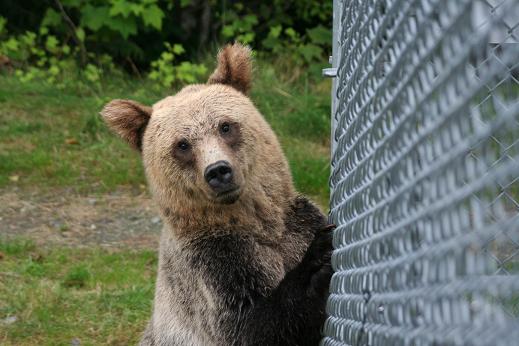
Grizzly bear at the gate

Grizzly wanting INThe viewing stands Grizzly Bear Lodge uses in the fall are located on Knight Inlet’s Glendale River. The stands are large enough to accommodate twelve guests but we only take a maximum of five per tour. The approach ramp to the to the viewing platform is a gated steel cage for a reason. The reason is the subadult bear (that equates to teenage human male) who are curious and like to investigate their surroundings. If this were a zoo we would be the ones in a cage.


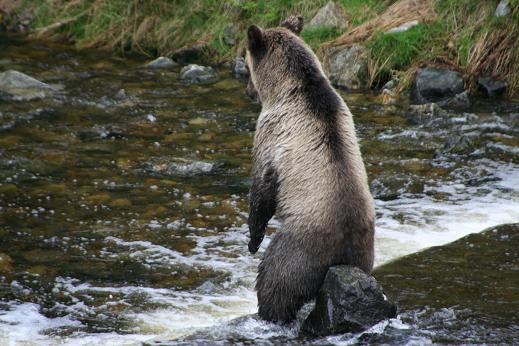
Waiting for Salmon

Grizzly Sitting

The viewing stands we use after August 24 offer some interesting photo opportunities.  In the case it is a grizzly taking advantage of a strategically placed rock to rest while it waits for salmon to move up river into the spawning channel. The height provides a better view of the approaching salmon and a good position to launch an attack.

Grizzly on Whale Watching Tour

Grizzly on Tour

The grizzly bear population of Knight Inlet is healthy and growing. Over the past five years the number of sightings in the lower portion of the inlet near our lodge has increased. This past summer a grizzly visited our island for about a week before it moved on down the inlet. This photo was taken coming back from a whale watching day when we found a grizzly swimming between islands. It was working its way to Johnstone Strait, which separated the mainland from Vancouver Island that now has a small population of grizzlies. Historically there have never been grizzly bears on the Island but that changed six years ago when the first bear appeared near Kelsey Bay and more have arrived every year.


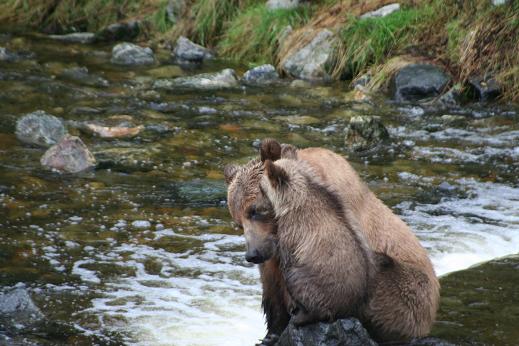
Grizzly Family Time

Grizzly bear family

Most grizzlies’ first year cubs prefer not to be in the water. When they first come to the beach in the spring and are required to swim along some to the steep bank beaches the mother are forced to abandoned them to force them into the water. After August 24th the viewing activity moves up the river after the salmon arrive. In this photo the cub made it to the rock near the fishing hole but choose a dry perch. As long as mom came by to check on a regular basis all was good.


Hungry Grizzly Bears

Young grizzlies feeding

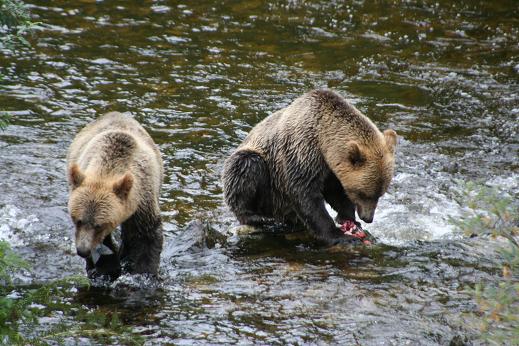
Unlike the grizzly bear in the October 4th posting these bears are eating everything. There are two reason for their hunger: first the photo was taken in late August so the salmon have just arrived and second these juvenile bears are not the most experienced fisher so they eat everything they catch. Give these bear a few years and some experience and they will become more selective.


Selective Feeding

Grizzly bear Eating

Depending on the time of the year grizzlies have selective eating habits.  When the salmon first appear in the coastal rivers any salmon and all of the salmon is eaten. This also applies near the end of the salmon run if the grizzly bears have not gained enough weight for hibernation. In between these two times the bear can be “fussy”. It starts with rejecting the male salmon because they do not have the fat rich roe (eggs). The popular body parts are the brain, skin with its layer of fat beneath and the roe. Often the remainder of the salmon is left on the riverbank for a less selective bear or for scavengers such as seagulls, crows, ravens, bald eagles, and pine martin. This grizzly as one can see by its size has reached the “roe only” stage of eating salmon.


Berry Picking Grizzly

Spring grizzly

It is a little later in the season with different bears than the ones in Oct. 1st posting but still in the river estuary. This mother and cub have just come out of the salmon berry patch behind the three alder trees. Mom is back to grazing however the cub is cautious as this is only the second time this family has appeared along the shore. The Glendale River mouth has a constant spring population of four to six grizzlies that appear most days and added to that is a roaming population that appears for a week and then moves on to be replaced by a different family. Nature arranged it this way so the guides have some new bears and are never sure what each day will bring.


Male Grizzly

Large Grizzly Bear

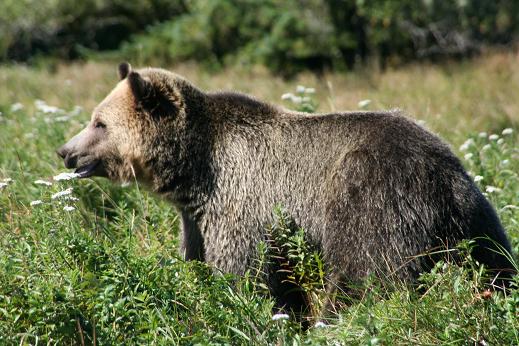
In the spring before the salmon arrive the grizzly bear tours from the lodge run up Knight Inlet to Glendale Cove and observe the bears that forage in the river estuary and on the beach. The high protein sedge grass is often one meter (yard) high. Also there is an abundance of skunk cabbage roots, which is a grizzly favourite. At this time of the year we use a large flat bottom skiff that allows us to move in the shallow waters along the shore and further up the river providing great photographic opportunities.