Grizzly Bear and Wildlife Tour Blog

We offer an exceptional fly-in lodge for Grizzly Bear Watching and Whale Watching in British Columbia.

Learn about What’s happening at the Lodge, view our British Columbia’s Wildlife Report, read our Grizzly Bear Watching Blog and Whale Watching Blog. Learn more about a Day on the River Blog, see Our Tour Guide’s Photos & Blog and  Photos from Our Guests.

June Grizzly and Cub

Family

This was a good day with the bears.  This is a common scene in the spring when mothers bring their cubs to the beach to feed. The run up Knight Inlet on the grizzly bear tour day to the Glendale River estuary is 40 km (26 m) and the last 5 km (3 m) is often referred to as the nursery. The mother grizzlies bring their cubs to this area to avoid the larger males in Glendale Cove. Remember grizzly mating season runs from May to early July and this places new cubs in danger.
Friends? (2 of 2)

deer-griz2

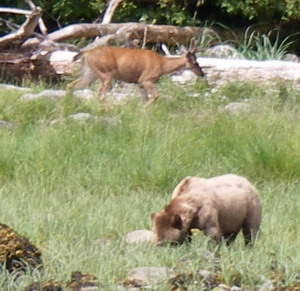
At one point in time they were not much more than ten meters (yards) apart. The beach seemed to have pretty good footing for the deer so they were not worried about a sudden lunge from the bear. I am sure the grizzly had determined that the chance of catching one of the deer was not worth the waste of energy required.

Friends? (1 of 2)

deer-griz

Most of the grizzly watching tours from the lodge arrive at the River estuary on Knight Inlet and view the coast black tail deer. The sedge grass is high in protein and provides an excellent food for both deer and grizzly bears. It is the main food sources for grizzlies along with the protein from turning of rocks. The three male deer on the beach with a young grizzly seem to be keeping their distance for a quick get-away.

Resident Killer Whales

Resident Killer Whales

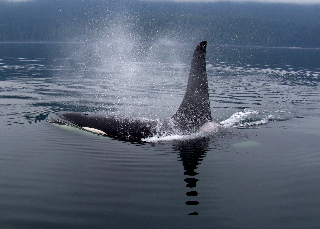
Excellent picture of the orca we see in the Johnston Strait while on a whale watching safari. The resident orcas (fish eaters) return to the area in late June and remain through late October. Their return corresponds to the arrival of the salmon, which attract the many fishers to the area to try their luck on catching a “Tyee”. A tyee is a large salmon over thirty pounds (13.6 k). Thanks again Karen and Martin for the provided this photo.

Grizzlies searcing for protein

grtizzly and cub

Grizzlies on the beach! That is where we find them until late August and the salmon arrive in the river. Once the salmon arrive the bears move up the river with the salmon and then we use our viewing stands on the spawning channel. Until that time we have excellent viewing of the bears as they eat the sedge grasses in the Glendale Estuary and forge the beach by turning over rocks and eating anything that moves or at least provides protein. Again Karen and Martin visiting from the UK provided this photo.

Grizzly Bear Triplets

grizbeachcubsaa

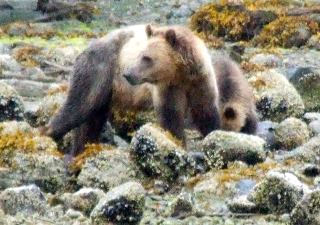
Note that there are three cubs: to the left of the rock, on the rock and to the right (partially hidden by the rock). We watched this family for about an hour and I was not able to get a clear photo of the family together. My guest got good photos but then they were not maneuvering the boat and taking pictures. That’s my excuse. Grizzly cubs, twins and triplets, are not uncommon in the area of Knight Inlet. It is a sign that the females are healthy and able to handle multiple births. The cubs are born in the winter den and if the female is not in good health (enough fat to feed her and her expected babies) the eggs are absorbed and no cubs are produced. Many of these multiple births survive their first year as they are seen the following year still with their mothers.

Bait fishing for bald eagles

clubbing rosk fishIf time permits while you are whale watching and if there is a shortage of suitable food back at the lodge your guide may jig up a few bottom fish to feed the camp eagles. The guest reaction to the fact that I must “knock” the fish on the head is often a mixed response. As much as they want to see an eagle fed there is a certain amount of sympathy for the fish. Karen and Martin visiting from the UK provided this photo.

June Bears

bear estuary

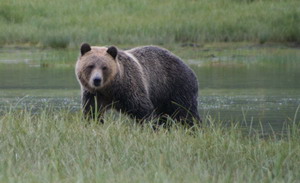
In late May and early June the grizzlies show up in the Glendale River estuary and along the shores on Knight Inlet. They have come out of hibernation having lost a significant amount of their body fat and are looking for food. Some bears are in much better shape, after a long winter, than other bears. This male grizzly is in good shape and ready for the breeding which takes place at this time of the year.  He is also the reason the mother grizzlies keep their cubs away from the river estuary.


September Viewing Platform

stand-close

 Click photo to enlarge then click again   

This fat two-year-old cub came to visit beneath the viewing platform this past September. After August 24th the grizzly bear tours from the lodge use one of two viewing platforms located on Knight Inlets Glendale River. The bears in the area have come to accept our presence and as long as we avoid loud noises, flashes on cameras and sudden movement we are ignores. This does not mean that on occasion such as this a grizzly will not come and watch use for a while.

Everybody eats in the fall

eagle on rivr
Click to enlarge then click again

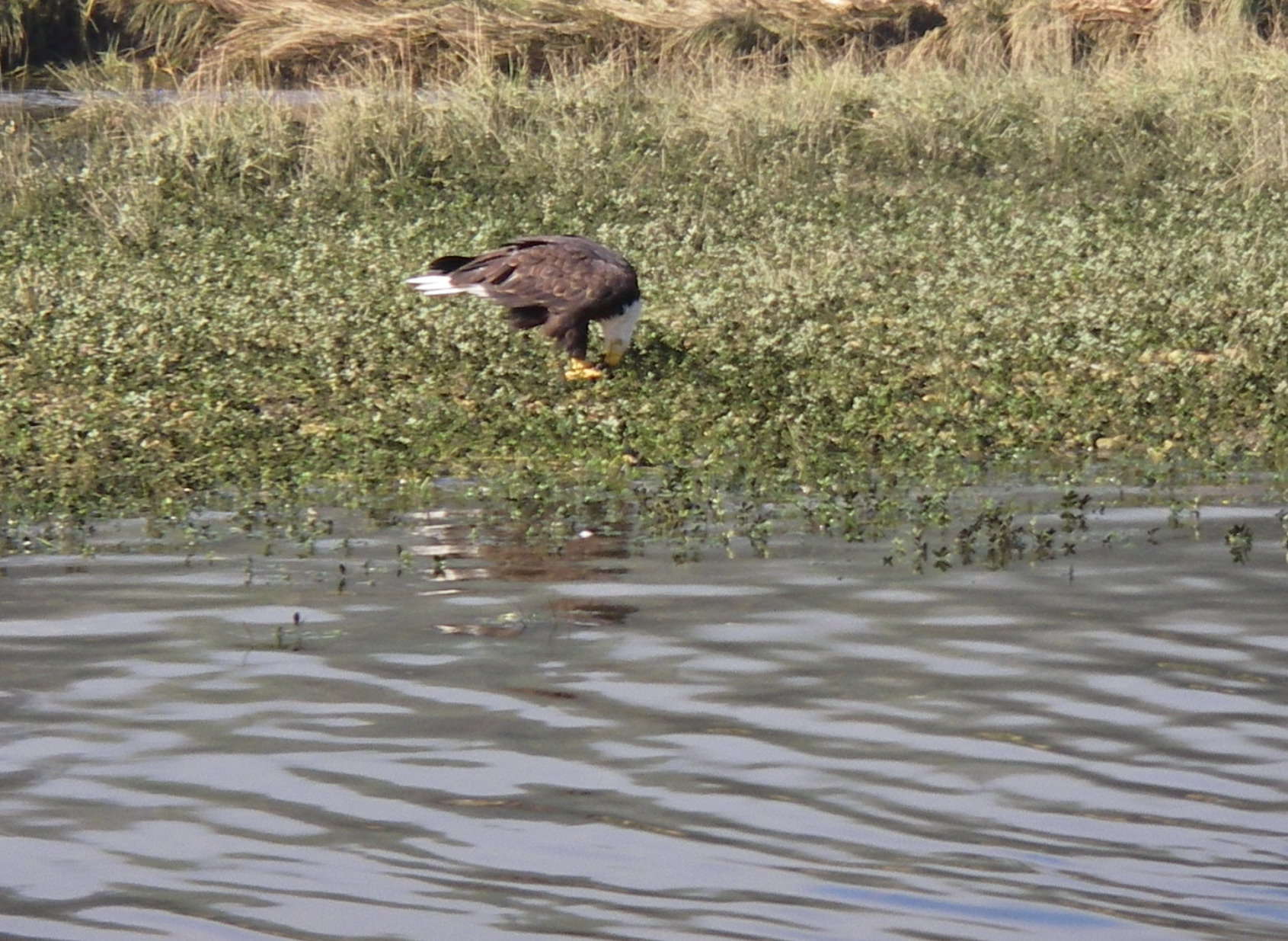
Following from yesterday’s post and the use of a small camera to get a photo this is from the same camera. The evening of this photo, back at the lodge, guests were showing their pictures of this eagle and they were amazing. The photo was taken on the Glendale River as the guide was walking the boat up the river on an incoming tide. Yes guides wear waders and as the water in the river is not deep enough to use a motor we pull the boat up river to obtain the best opportunities for photos of wildlife which at times means close ups of eagles as well as grizzlies.