River Day

For those that want an adventure that goes a little more off the beaten path… to Trapper Rick’s!

Our optional extra day is truly extra-ordinary, please take a look below.

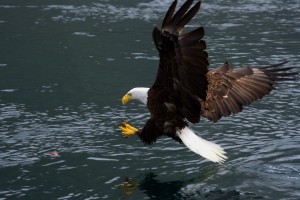
Bald Eagle soaring overhead

Soaring Bald Eagle


Bald eagles are a common site on a Grizzly Bear Lodge tour day. Whether it is a tour to the grizzly bears, whales or a visit to the wild river eagles are found along the shore perched in trees or flying overhead. It takes a fast camera to obtain a good picture of a flying eagle as they to not pause for the photographer. The positive side to the abundance of eagles is that there are numerous opportunities for that “perfect” photo.


Evening black bear tour

Black BearSometime on the evening of the arrival day guest will go on a local wildlife tour. It may be before or after diner depending on the tide. The object of the tour is to find black bears on the beach and that means there needs to be a low tide to have a beach for the bears. It tour is an hour or so depending on the wildlife viewing. It allows the guest to become familiar with the guides and boats and to gain some experience of photographing from a boat.


Best bald eagle

The perfect eagle picture is hard to achieve but Grizzly Bear Lodge tries to provide the perfect opportunity. First by keeping an eye out for bald eagles on the whale watching trip, grizzly bear tours and extra day at the river. Secondly when the resident eagles are still in their nest behind the lodge we will occasionally throw out a bottom fish and encourage them to come for an easy meal. Glen, one of our guides, provided another great photo.

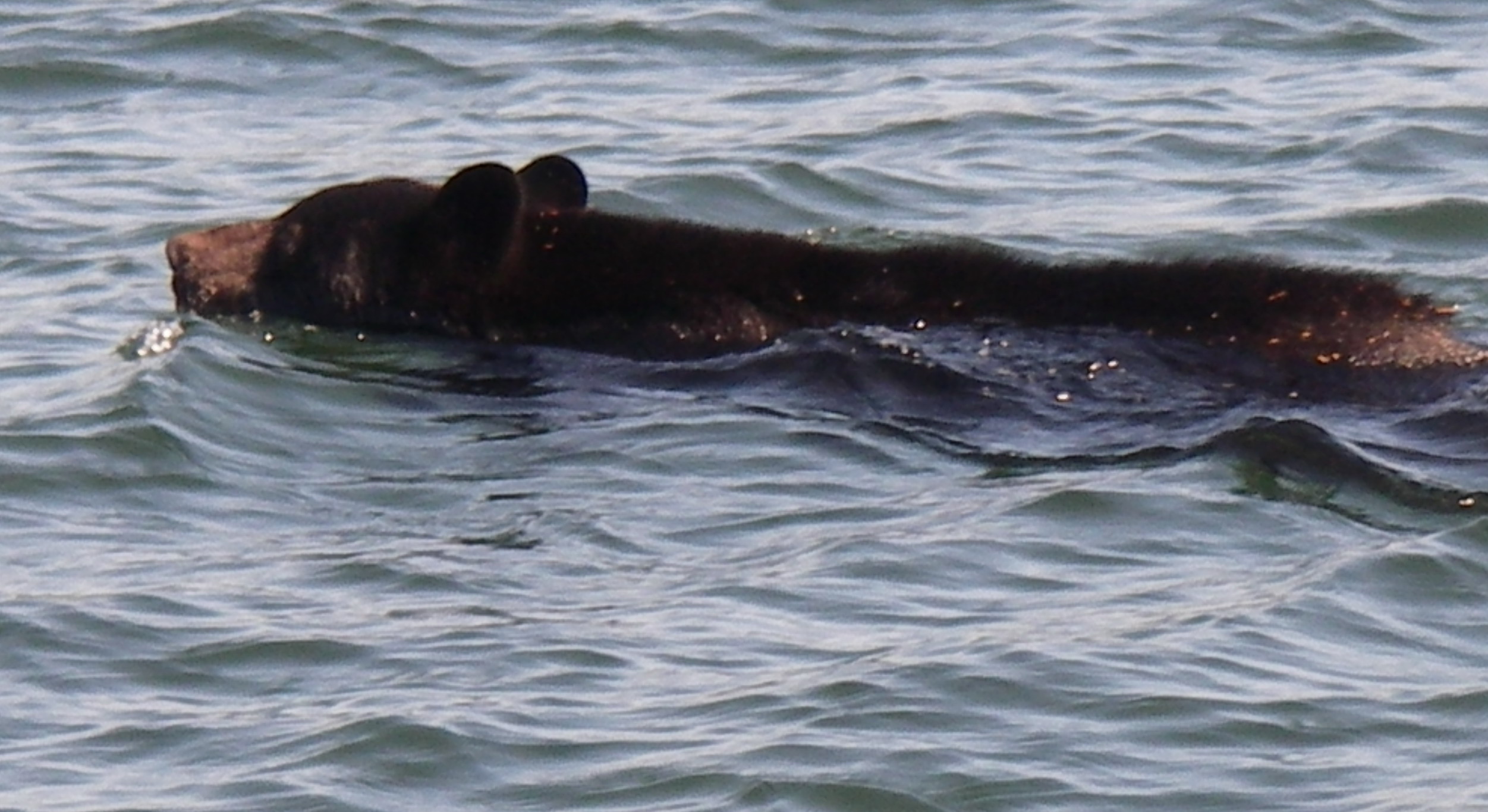
Healthy Black Bear swimming

Grizzly Bear Lodge is on Minstrel Island BC and on the southern edge of the Broughton Archipelago. This is an area of many islands varying in size from small (100 square meters / yards) to large (100 square km /miles) and therefore many passages that need to be swum when black bears want to move from island to island. The current estimate of the black bear population in British Columbia is 120,000–160,000. This is about one quarter of all black bears in Canada. Its natural range includes Vancouver Island and most coastal islands to the north. This means that a swimming black bear is common rather than rare. This appears to be a healthy bear with a good layer of fat as shown by how high it’s body is out of the water. In the early spring often all that is visible is their head.


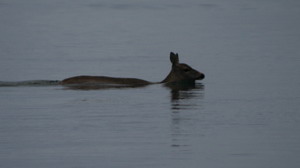
Blacktail deer swimming

It is always interesting that along the coast the blacktail deer population is exploding yet it is rare to observe them swimming between islands. The explosion is blamed on a lack of predators (cougars and wolves) and restrictive hunting regulations. On the islands where deer are present, they exist in high densities, around one per hectare, and they’re devouring native plants. Some smaller islands, which can reasonably support 200 or so deer, are now home to thousands. Young arbutus trees and native flowers, for example, are now rare, and birds that rely on the plants are also disappearing. As well, the fierce competition for food leaves the deer hungry and scrawny.

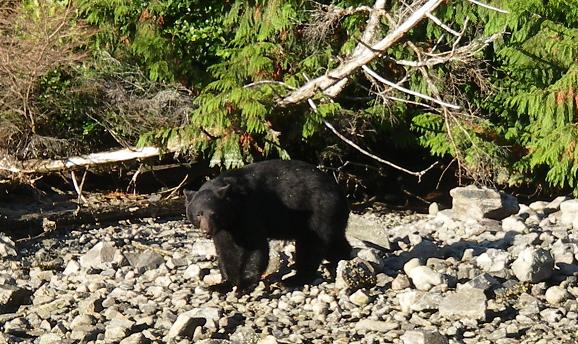
 

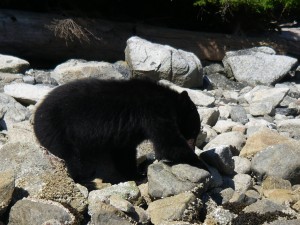
Black Bear working the beach

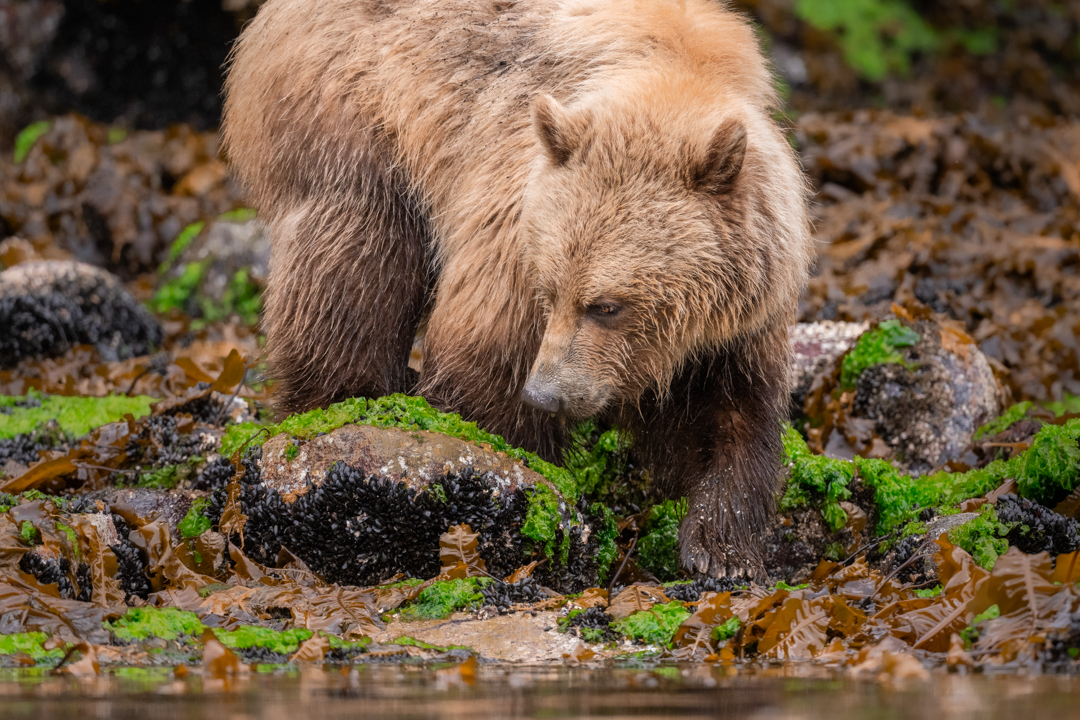
This black bear was viewed on one of the evening tours that happen on your arrival day. A local wildlife boat trip is taken to familiarize guest with boats and guides as well as finding black bear, bald eagles, harbour seals etc. This bear is looking for it’s evening meal located under rocks. This inter-tidal zone “food” is high in protein and is made up of crab, clams, barnacles, amphipods and other tiny invertebrates. The “beach food” is important because plant food is relatively scarce during spring and bears will continue to loose weight until well into June. Yes it is a large rock and the bear did turn it over with a little effort.


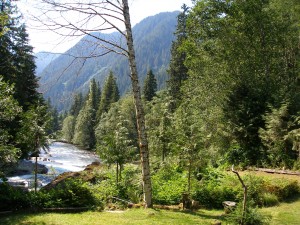
Looking both ways on the river

Click to enlarge then click again

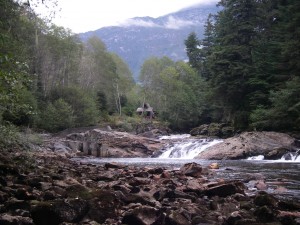
If you book the extra day in camp we take a forty-five minute boat tour across Knight Inlet through Thompson Sound to the Kakweikan River where spend a day with Trapper Rick.  This river is located on the BC mainland where we travel by road to Rick’s cabin. The first photo is the view from the deck of the cabin down the river overlooking the falls. The second photo is from below the falls back toward the cabin. On the left of this picture is the fish ladder built to assist the salmon around the falls that they had been jumping over for thousands of years. (Never question a government when it has money to spend.) The area below the falls is good for grizzly bear viewing, as it is one of their main fishing spots. We tend to sit on the deck and wait for the bears to appear and also hike to the lower pool another popular feeding area.


Looks a bit like a grizzly

Click to enlarge then click again

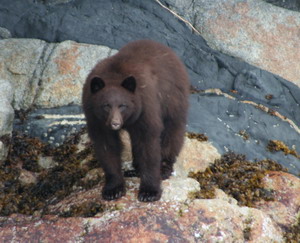
On the boat rides up and down Knight Inlet for the grizzly bear watching day the guides are constantly scanning the shores for black bears. This photo is of one of the few brown black bears observed in the inlet over the years.
Ministry of Environment, Lands and Parks for British Columbia says:
“Black bears are not always black, and this variation is most apparent in British Columbia. Other colour phases that occur in British Columbia include cinnamon, brown, and blonde. A white-coloured morph, called Kermode or Spirit Bear, is reported most frequently on the north-central coast. The blue phase, or “glacier” bear, is sometimes seen in the extreme northwest corner of the province.” Unfortunately this “brown” black bear is rarely seen in our viewing area.


June Black Bear Cubs

Click to enlarge then click again

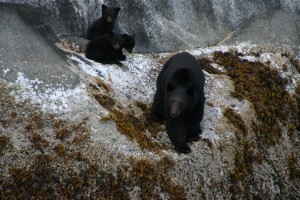
Whenever we are on the water for a day whether it is a grizzly bear tour, whales watching trip or the extra day at the river we are always scanning the shore for wildlife. Frequently the wildlife found is black bears. On this trip in late June it was a mother and cubs that are about six months old. Two things are interesting the first being that there are three cubs. Triplets for a black bear are rare the common number being one and twins occasionally. The second is all the white on the rock where the barnacles have been removed. Bears come to the shore in search of protein and scraping off and eating barnacles is one source.  This appears to be one of their feeding areas.


Posing Bald Eagle

eagle posing for a phot
Click to enlarge then click again

This is a great pose of a mature bald eagle with a solid white head without any dark feathers and the bright yellow in beak and claws. As common as eagles are on the whales watching and grizzly bear tours it is still difficult to obtain a good picture. The important part is the dark background so that the eagle does not blend with the sky. At times it is hard to find and eagle sitting low enough in the trees to achieve the necessary background.