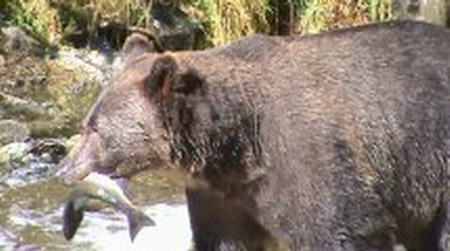
The reason we travel up Knight Inlet to the Glendale River and to the viewing stands is to obtain pictures such as this one provided by Mike and Christina from Florida. In the fall we are able to spend two hours a day, between 10 am and 12 noon, observing the grizzly bears as they catch and eat salmon to fatten up before winter hibernation. The pink salmon in particular is the primary food source for grizzly bears in late summer to early fall. The rock turning on the beach in early summer and the many berries that are available are important food sources but it is the salmon that add that necessary layer of fat.
Some time one is not to sure if we are watchers or if the grizzly bears are in charge. In this case it appears that our guests Mike and Christina from Florida were caught taking the picture on the Glendale River. In the fall, after August 24, we are permitted to drive to viewing stands on the river to watch the bears feed on the salmon that have returned to the man-made spawning channel. The grizzly bears in the area have accepted our intrusion and tend to ignore us however every once in a while the tables seemed to be turned in their favour.
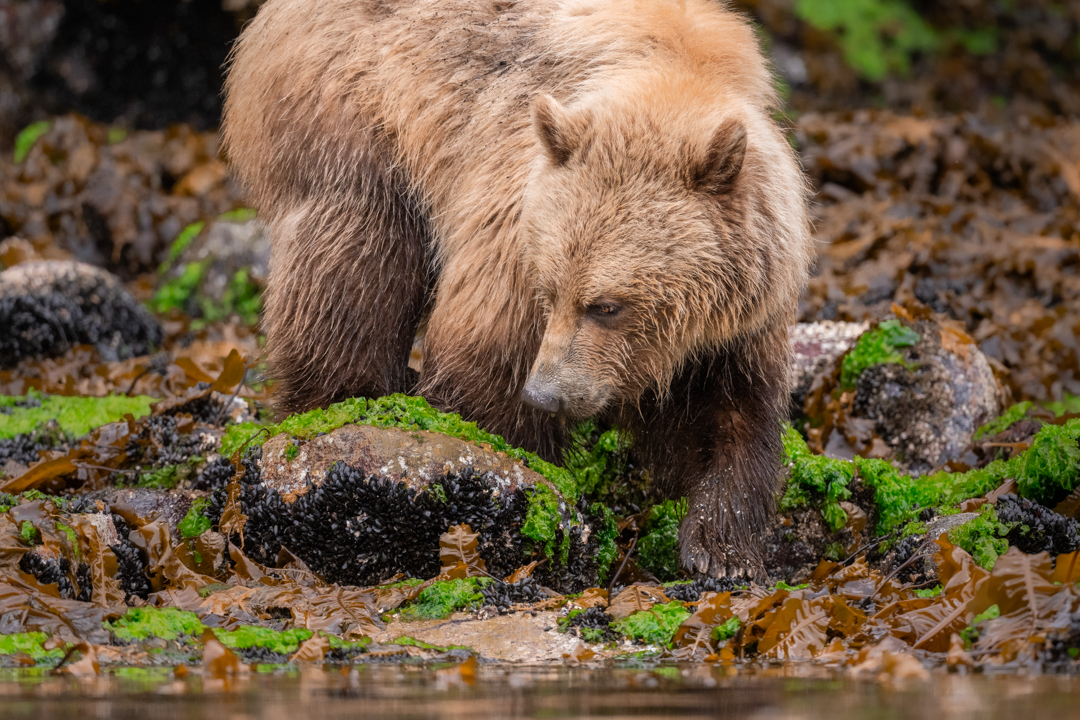
The tide in coming in the grizzly bears of Glendale Cove on Knight Inlet move off the beach where they have been turning over rock looking for protein rich food. Because our schedule enables us to spend a day in the Glendale River estuary at sometime there will be a low tide to bring the bears onto the beach. If we arrive at high tide we first spend time up the river in the tall sedge grass where the bears tend to graze and as the tide drops we leave the river and move along the inter-tidal zone while the bears search for “beach food”. This August photo taken by Marc and Solange Edouard from France shows this year’s cub, about seven months old.
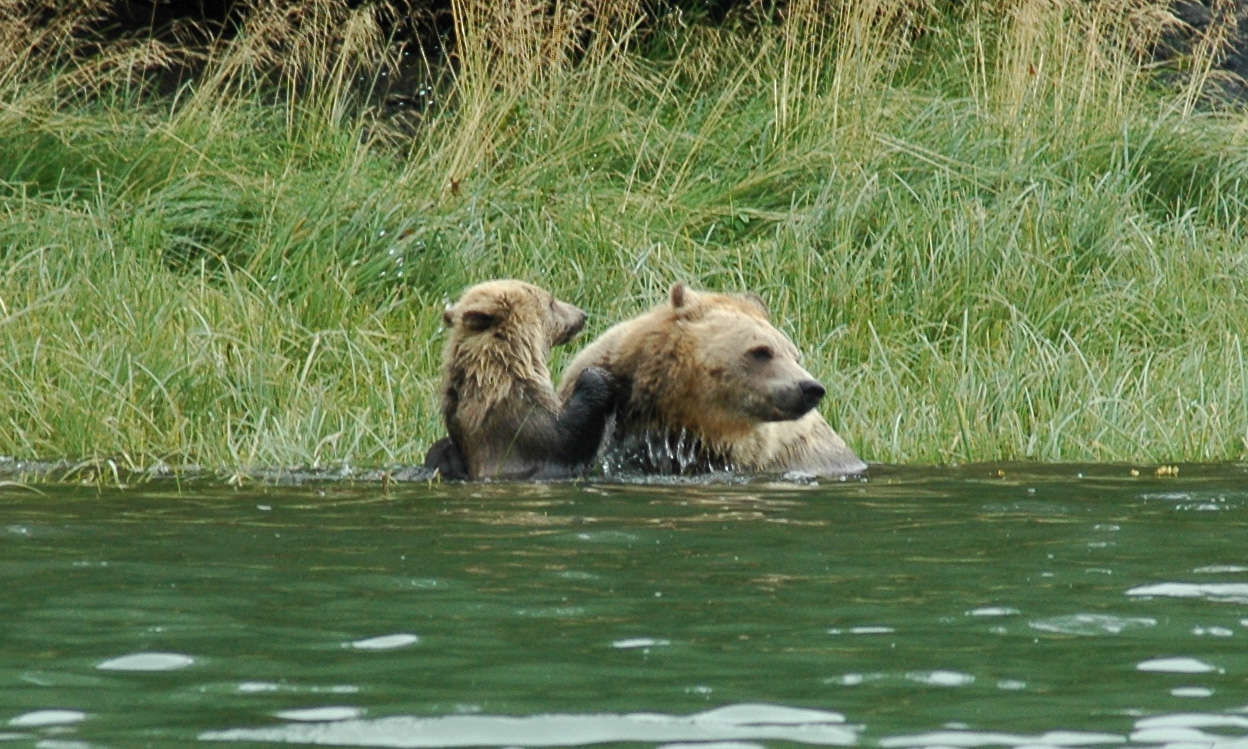
The grizzly bear tours from the lodge on Minstrel Island run up Knight Inlet to the area of Glendale Cove. By mid-May the mother grizzlies bring their cubs to the shore of Knight Inlet and start to make their way toward the Glendale estuary. Berries are note yet ripe so the best source of protein is the sedge grass that grows in the estuary. The cubs in May seem to have an aversion to water but by mid August when this picture was taken they rather enjoy the water as a way to cool down and play.
Time to come out of the water, playtime is over, need to head to higher ground as the beach disappears under the incoming tide. The shore of the Glendale River estuary is an ideal place, at a low tide, to turn over rocks to find that mobile protein but as the tide comes in it becomes grazing time on the protein rich sedge grass. As the tide comes in even more it is time to move up the shore into the river delta and higher ground. And that is exactly what we do with our guests. We travel up Knight Inlet is larger “speed boats” and once we reach the viewing area we transfer to shallow draft skiff about eighteen feet long and seven feet wide which makes it stable enough to walk around in and have no fear of rocking. This skiff allows us to follow the grizzly bears up the river through the tall grass and pretend we are on the “African Queen”.
As the photo shows lunchtime is over and time to move along. Triplets are a sign of a very healthy grizzly. This was best explained by Bruce Auchly in Montana Outdoors “When a pregnant bear goes into her den, she is only a little bit pregnant. After bears mate in late spring and early summer, a female’s eggs are fertilized but they do not implant in the uterus. By midsummer the fertilized egg has developed into a multicelled blastocyst (an early stage embryo), but further growth is arrested. The embryo floats freely in the uterus until denning time, later in the fall.
This delayed implantation allows the female bear’s body to assess whether it has sufficient fat reserves to carry, give birth to, and nurse cubs through the sow’s long winter nap. If fat reserves are present, it’s all systems go. But if a bear can’t gain enough fat, the blastocyst won’t attach to the uterine wall, ensuring that a female in poor condition will not be further stressed by reproduction. Then the bear’s body absorbs the embryo, gaining a bit of nourishment.”
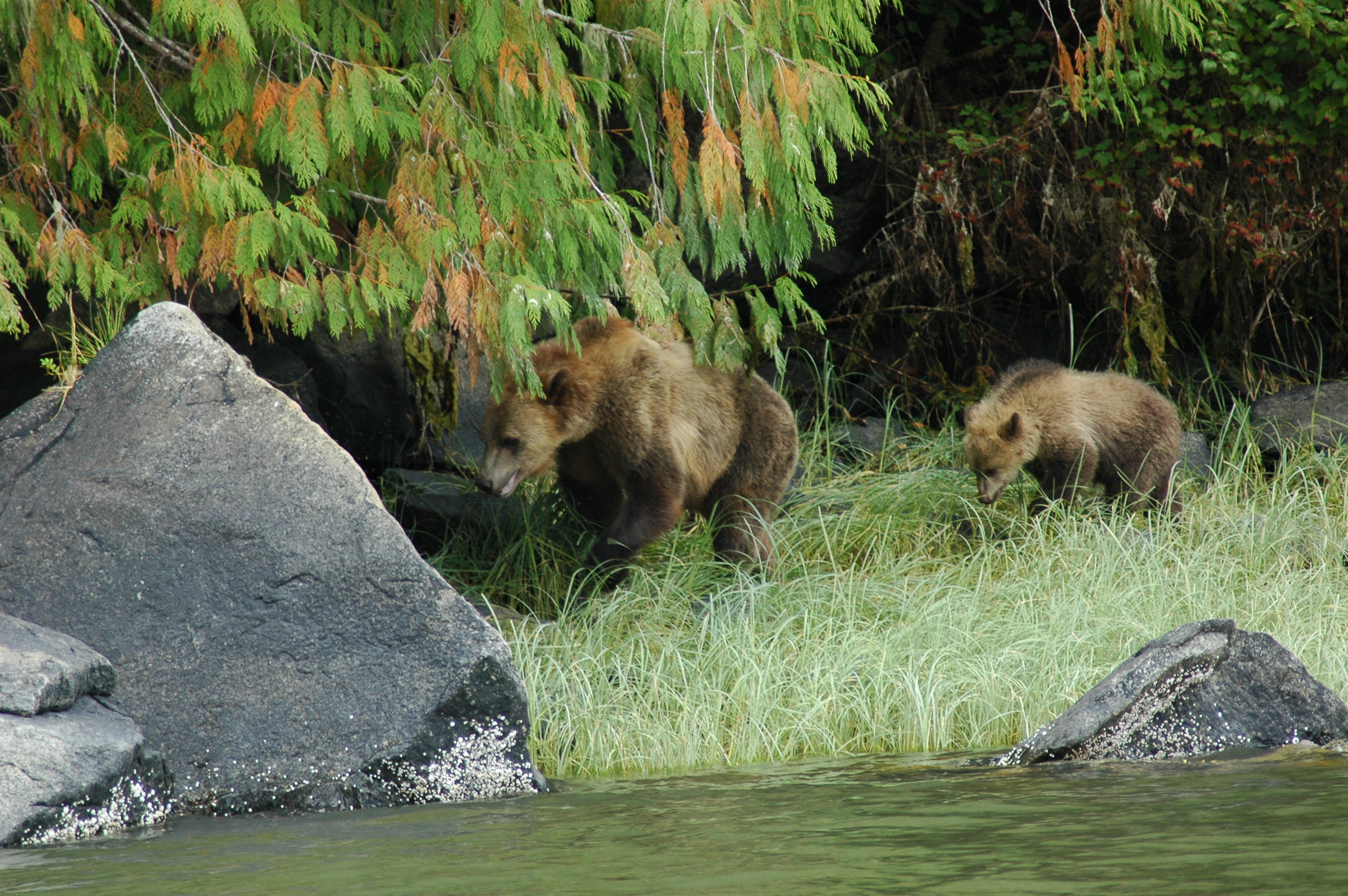
This photo of a “long legged” grizzly bear was taken in the spring. As the season progresses and the bears bulk up for the fall hibernation their legs seem to get shorter and shorter. Bears may loose 15-30 % of their body weight during hibernation giving the appearance of longer legs. The cub behind the mother appears, by it’s size, to be last year’s cub. Cubs normally spend two years with their mother and if she does not become pregnant may be with her for a third season. The Glendale River estuary, our grizzly viewing area, provides a good beach at low tide to for “beach food” which is important as berries are relatively scarce and as the salmon have not arrived in the rivers bears will continue to loose weight until well into June.
This is not an unusual scene in the spring at the river estuary in Knight Inlet. The grizzly bears come into the estuary at low tide to turn over rocks to gather the small invertebrates for the protein they contain. Another favourite food this time of the year is sedge grass which is very high in protein and as the salmon have not arrived the beach is the grizzlies’ main source of food until the many variety of berries start to ripen in mid-June. Not to be out done the deer also need to eat and sedge grass also provides them with a necessary source of food. The deer are always alert and keep an eye on the bears but I have never seen a bear attempt a chase. The level beach area gives the deer an advantage and the openness prevents a surprise attack by the bears.
One of the best ways to learn is to watch another and this is true of grizzly bears as it is of humans. This mother grizzly in the Glendale River estuary of Knight Inlet is teaching by example. At low tide especially in the spring when the salmon have not arrived in the river to spawn will bring the grizzly to the beach. The turning over rock produces food high in protein, which is made up of crab, clams, barnacles, amphipods and other tiny invertebrates. This cub is ready to share moms food and will soon be turning it’s own rock in search of a meal.
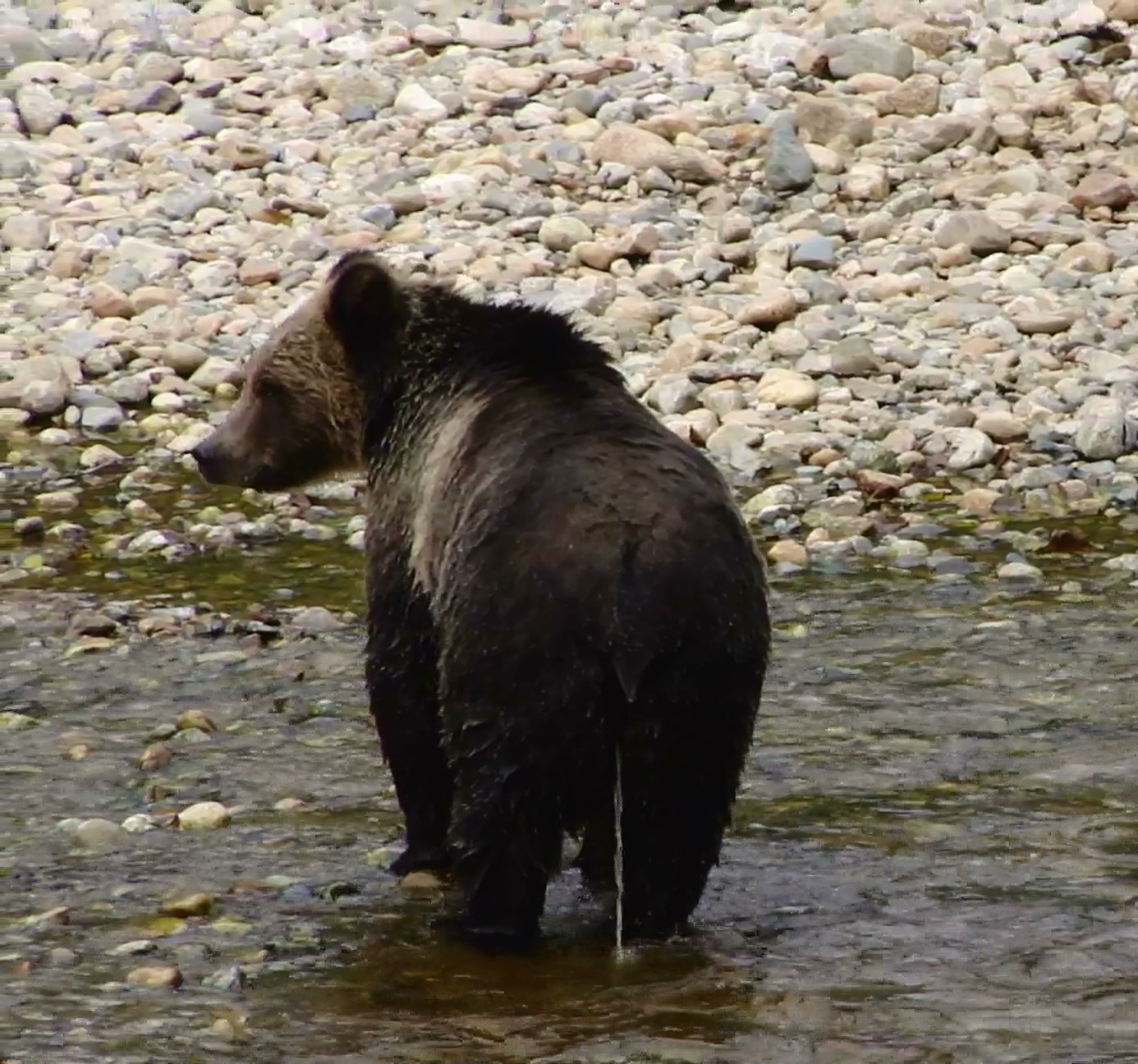
An often asked questions from the guests a Grizzly Bear Lodge is: Is that a male or female grizzly? Some guidelines we use to go by are: The male is usually bigger and his head appears to be smaller in comparison to his body. Females appear to have shorter legs and are a bit more squat in appearance. The body difference is often hard to determine unless there are several grizzlies together. And of course in the spring when they have not had time to fatten on the salmon it may be even harder to determine the difference. In the May and June the mating season the male has a swagger, often walking with a swaying walk with their hind legs farther apart than normal. The tried and true way to tell the males from the females (as shown in this picture) is to watch them urinate. The males urinate forward, and the females backward! This picture also reinforces something I was told by a friend who spends allot of time in the bush “If you take a drink of water from a river or stream do not walk up river and look around he corner.”
Just like that another season has come to an end. We are grateful for all the wonderful staff and the guests this season. It was an excellent season and we are already looking forward to next May.
One of the highlights of the season was all of the new cubs out. It was awesome to see so many new cubs of the year and that is great news for our bear populations moving forward. We had great spring viewing and this continued through summer. On our river trips we started to see salmon arriving in August and enjoyed some great shoulder season viewing. The fish at the viewing platforms were a little late showing up this year, but viewing during late September at the platforms was great and the estuary viewing remained strong throughout the season.
Out in the whale watching world it was another year that saw large numbers of resident Orca who remained in the area right into October. The Humpback viewing was also great with large numbers feeding in Blackfish Sound. It is so amazing to have these magnificent animals back in our waters in such numbers.
Over the winter and spring we will be doing some repairs and maintenance. We rebuilt the front deck last spring, utilising cedar cut on site. We will continue with some siding, rooms improvements and hopefully a floating sauna ready for the start of our season.
2026 is already looking like a very busy season for us. We only have limited high season availability so please book early to ensure we have space for your group.