Tag Archives: killer whale watching

Watching a Killer Whale Family

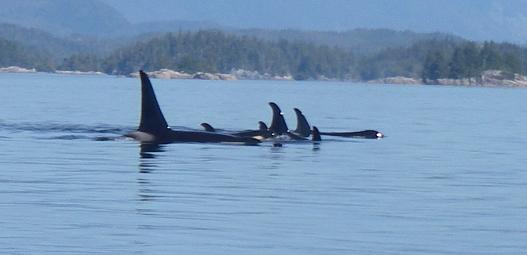
Pod of orca

“Pods are actually their own matriarchal family groups. Animals born into a pod, stay in the pod their entire lives. This is like living with your mother, aunts, uncles, cousins and brothers and sisters all descendant from your mother’s side of the family for your whole life. It is extremely rare for an Orca from one pod to be accepted or join with another pod of whales. The gene pool gets mixed up by not having any father within the same pod. Each pod has their own ‘dialect’ of communication through various squeaks, burbles, and whistles.
The term “Whale” is a misnomer since the Orca is actually from the dolphin family. We associate “whale” with something very large and they are much larger than the majority of dolphins. They are a whale of a dolphin.”

This quote was taken from the website Whales and Dolphins BC which is a great site to visit if you are interested in more information.


Killer Whales Approaching

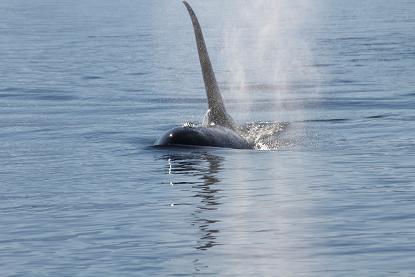
Killer Whale Coming

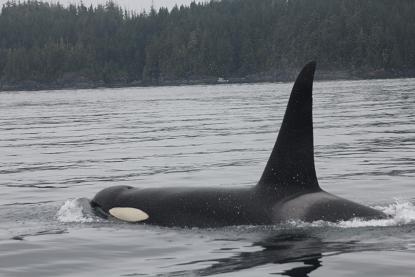
This is not the classic photo of an orca /killer whales. The classic photo would show the orca from a side view with its head far enough out of the water to get a good view of the white eye patch. But this is a much more interesting photo because it means that pretty soon there are going to be orca very close to and under the boat. From my experience of guiding whale watching tours the guests prefer the second.


Killer Whales – Blackfish – Orca

Killer whales

Killer whale is the tourist / media name, Orcinus orca is the scientific name, and Blackfish is the name I grew up knowing. Growing up and fishing in Campbell River on BC’s Vancouver Island orca were frequently in the area. At that time in the 1950’s and for years to come the name used by local was Blackfish. It was not until the mid 1960’s and on the name killer whale came into common use.  After the first orca was captured in 1964 and for the first time, newspapers and magazines including Reader’s Digest, Life, The Times of London, and the Victoria Times gave some positive press about killer whales the name started to become popular. It is not hard to see that a tour or a visit to see a Blackfish did not seem to attract much interest whereas killer whale was media gold.


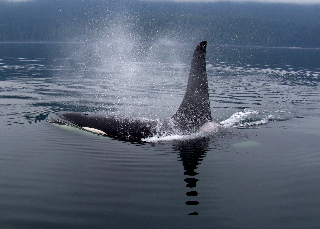
Resident Killer Whales

Resident Killer Whales

Excellent picture of the orca we see in the Johnston Strait while on a whale watching safari. The resident orcas (fish eaters) return to the area in late June and remain through late October. Their return corresponds to the arrival of the salmon, which attract the many fishers to the area to try their luck on catching a “Tyee”. A tyee is a large salmon over thirty pounds (13.6 k). Thanks again Karen and Martin for the provided this photo.

Bait fishing for bald eagles

clubbing rosk fishIf time permits while you are whale watching and if there is a shortage of suitable food back at the lodge your guide may jig up a few bottom fish to feed the camp eagles. The guest reaction to the fact that I must “knock” the fish on the head is often a mixed response. As much as they want to see an eagle fed there is a certain amount of sympathy for the fish. Karen and Martin visiting from the UK provided this photo.

Humpback whale feeding

humpback very close feeding
Click to enlarge then click again

While parked within photo range of a herring ball it is important to remember that humpback whales have and excellent sense of their environment. They will surface close to the boat but they are aware that you are in the area. The other important point is not to be moving while you are waiting or the whales will not know your position.  In this case the whale was close enough that it was impossible to focus the camera and those with long lenses were lost. The June 5th posting is a much better distance.


Interesting Guest Photos

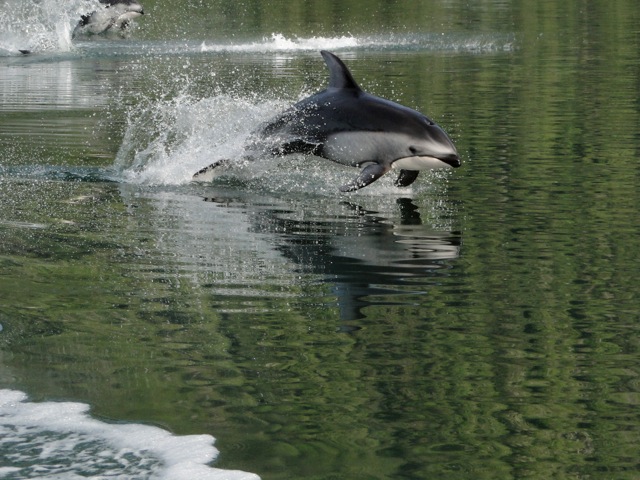
fast dolphin
Click to enlarge then click again

Pacific white-sided dolphins can be found on any one of the lodge’s tours. Whether going on a whale watching safari, up the river with Trapper Rick or up Knight Inlet to view grizzly bears. These dolphins most often travel in pods several hundred strong and love to ride the bow wave of the boat or to follow in the prop wash of the motor. They will race the boat and leap up to three or four meters (ten to twelve feet) out of the water. A glassy calm day with the reflection of the trees just makes the photo more amazing.


Guide Photos

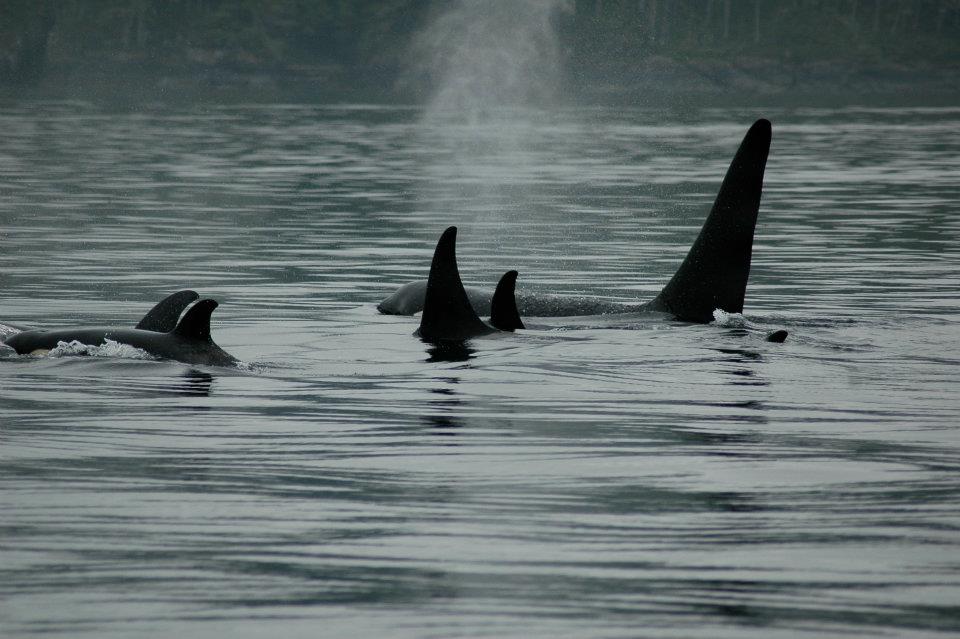
orca pods
Click to enlarge then click again

Killer whales live in tight-knit families or pods, which are matriarchal family groups. Animals born into a pod stay in the pod their entire lives.  Each matriline often contains three or more generations. The head female or matriarch leads the pod, as orcas are a female dominated species. The matriarch tends to be the oldest female in the extended family. Her experience and knowledge guides the pod, and the matriarch teaches younger dolphins about everything from parenting skills, feeding tactics, and navigation through the vast territories that they cover.

Orcas have long life expectancies, 60 to 80 years for females and 40-60 years for the males. Females have the ability to reproduce as early as 14 years of age, but it is more common to see a female first calf at around 17 to 18 years old. Males reach sexual maturity between the ages of 17 and 20, but DNA research has revealed that older males are more successful. An orca gestation period averages 16 to 18 months.


Killer whale (orca) calf

orca calf
Click to enlarge then click again

A great photo of an orca calf not quite in sync with its family. Wildlife viewing from Grizzly Bear Lodge, in this case your day with the whales, most often includes time spent with the orca (killer whales or Blackfish) and a opportunity for great pictures. The pods of orca most often encountered are the resident or fish eating orca.

Humpback Whale mother and calf

Humpback Whale and CalfFor the past five years the number of humpback whales spending their summers in our viewing area has increased to eight to ten whales viewed on a daily basis.  The southern BC/Washington population, which includes our area, is approximately 200-400 whales. It is becoming more common to see calves with their mothers. The gestation period is approximately 11 months, calves being born between December and April. A calf will spent about one year with its mother before becoming independent. Our viewing area is rich in herring and therefore a feeding area for the calves and mothers. There also appears to be a correlation between feeding and breeding grounds. The majority of humpback whales feeding in the southern BC waters have been re-sighted off mainland Mexico, as well as Hawaii according to the B.C. Cetacean Sighting Network.