
Classic orca photo
Killer whales and humpback whales are often seen during our wildlife tours. There are resident whales and transient whales that can be seen feeding and playing in our waters.
 For the past five years the number of humpback whales spending their summers in our viewing area has increased to eight to ten whales viewed on a daily basis. The southern BC/Washington population, which includes our area, is approximately 200-400 whales. It is becoming more common to see calves with their mothers. The gestation period is approximately 11 months, calves being born between December and April. A calf will spent about one year with its mother before becoming independent. Our viewing area is rich in herring and therefore a feeding area for the calves and mothers. There also appears to be a correlation between feeding and breeding grounds. The majority of humpback whales feeding in the southern BC waters have been re-sighted off mainland Mexico, as well as Hawaii according to the B.C. Cetacean Sighting Network.
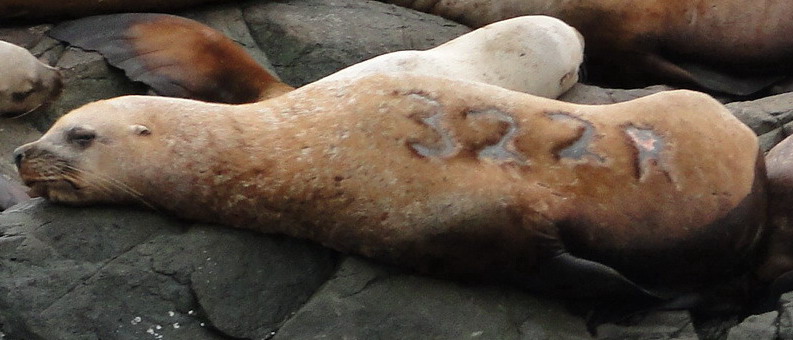
Steller sea lions often “haul out” on the rocks near Stubs Island located not far from Telegraph Cove on Vancouver Island. They pass through this area in the spring and fall traveling between California and Alaska. The sea lion numbers are on a decline along the West Coast of North America and a branding identification program has been underway for about fifteen years. “The two sites chosen to mark Steller pups were Pyramid Rock at Rogue Reef, Oregon and Southwest Seal Rock at St. George Reef in northern California. These sites are the largest Steller sea lion rookeries in the lower forty eight states. Steller sea lion pups were branded along the left flank. Sea lions branded at Rogue Reef, Oregon have a letter R following the numbered digit (i.e. 25R). Quote from Patrick J. Gearin
NOAA, AFSC, National marine Mammal Laboratory” Several of these branded sea lions are seen each summer and sightings are reported.
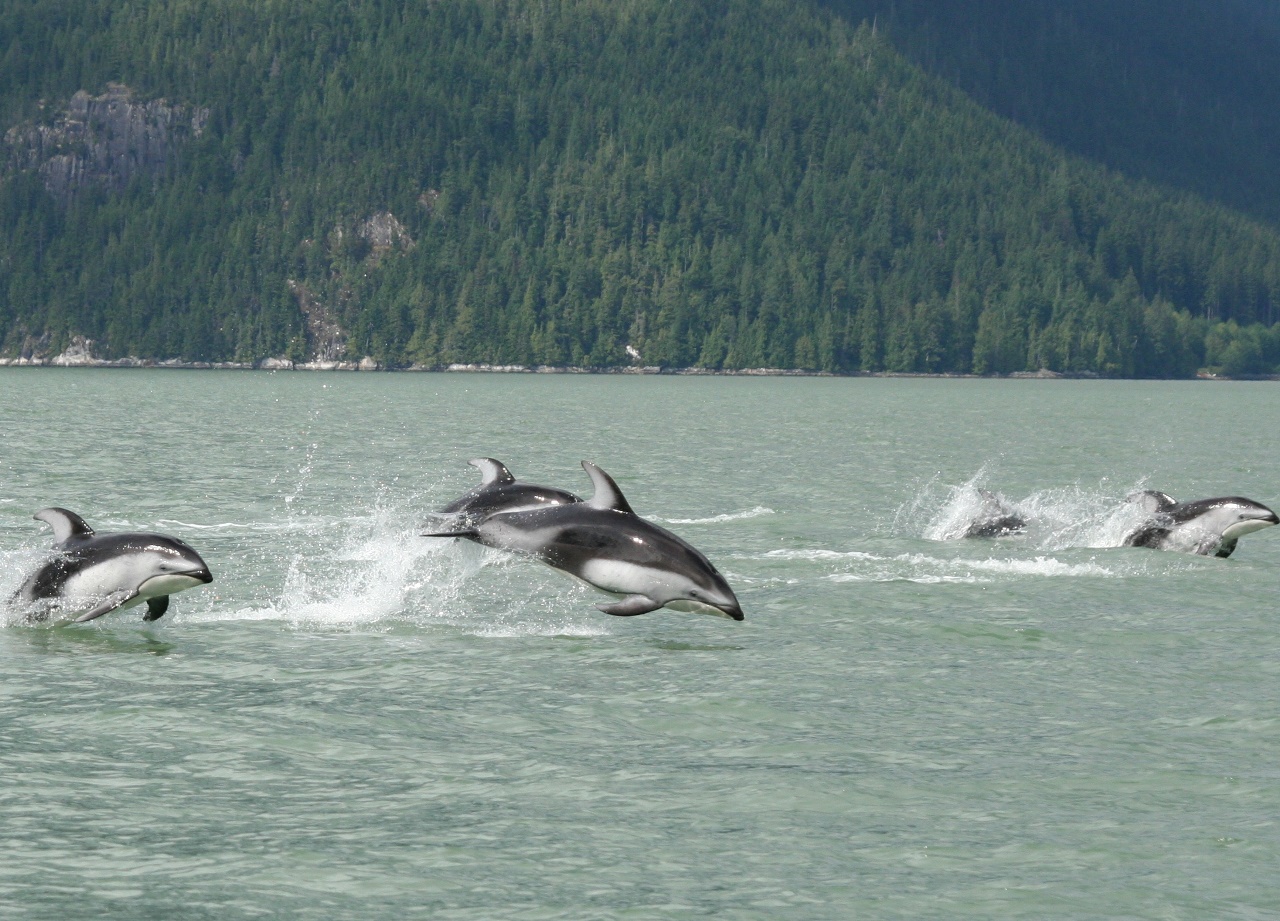
On the whale watching day we frequently encounter pacific white side dolphins. The area along BC’s coast between Vancouver Island and the mainland has become a feeding area for the dolphins. Until twenty years ago they rarely appeared in fact so rare that native people did not have a name for them in their language. Now these dolphins are becoming more common in our viewing area. We see pods of several hundred.
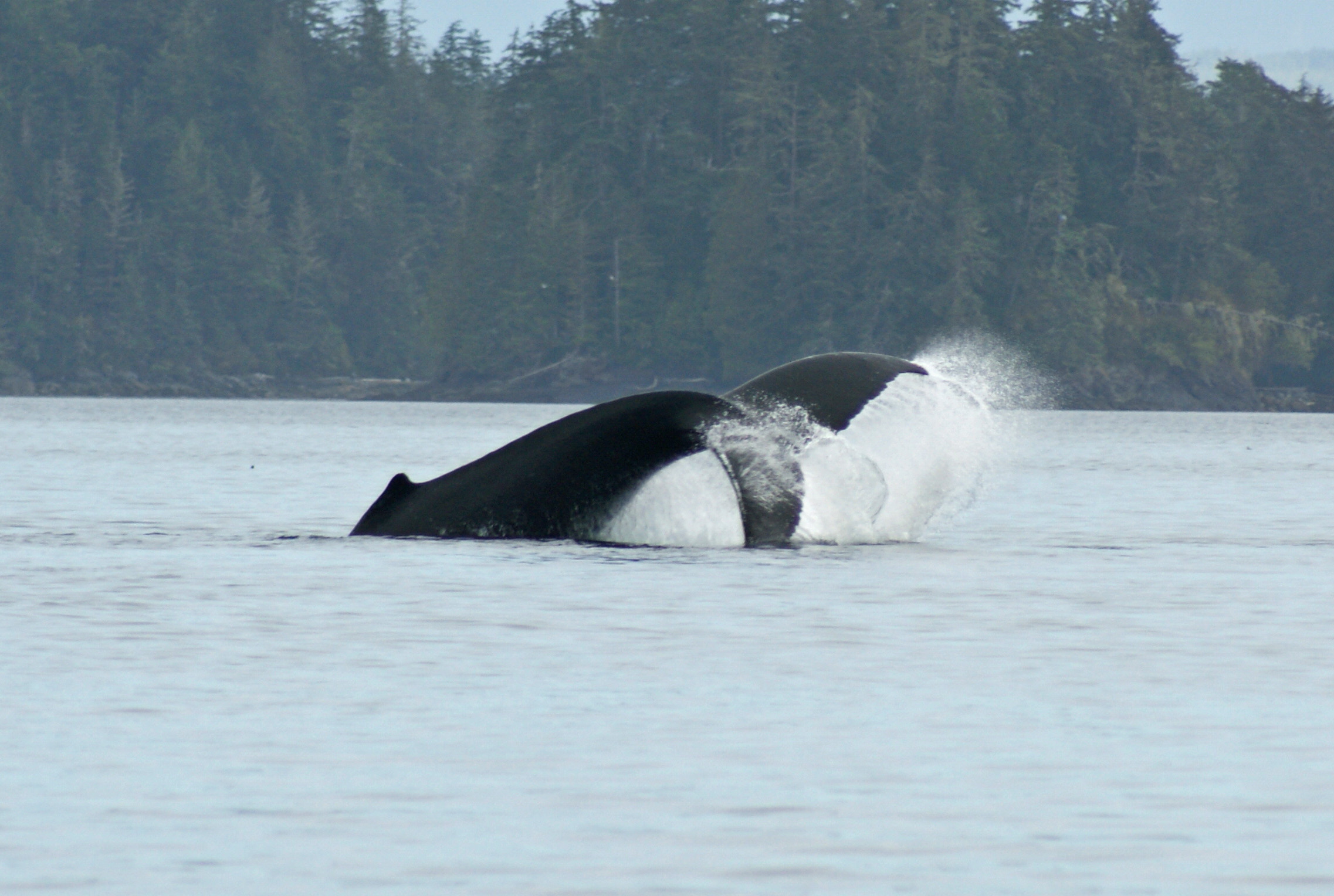
We know what is happening not sure why it is happening. The “Whale Trust website” says the tail lob or tail slap occurs when the whale extends its tail fluke above the water and slaps it forcibly down on the surface. This can be “right way up”, slapping the underneath side of the flukes on the water, or the reverse, with the whale belly-up slapping the dorsal (top-side) of the flukes on the water. This often, but not always, occurs many (35+) times in a row. As with the other behaviors, the meaning behind this behavior is unknown, but it has been speculated that it may be a way to ward off other whales, or to the contrary, to invite other whales to join a group. The explanation seems clear as mud but is sure exciting to watch. This photo by Gary Wilson was from the area of Telegraph Cove on Vancouver Island.
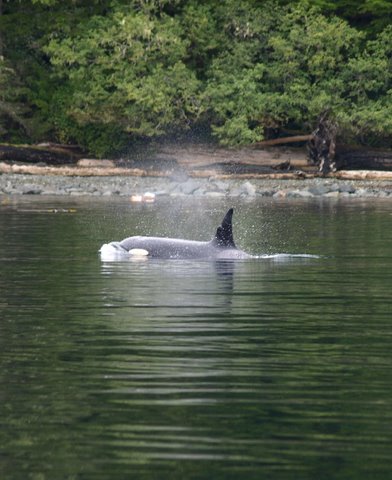
Tim O’Neil does it again, an excellent photo of A72. Resident and transient orca along the coast of British Columbia have photo identification catalogues that make use their unique dorsal fin and saddle patch to identified each orca. Some ID’s are easy and this is one of the easy ones. The notch in the front of this female’s fin identifies her, as A72 she was born in 1999 daughter of A50 born is 1964. A50 is daughter of the pod’s matriarch A30 born in 1947. The Orcas live in a matriarchal community. The females live much longer than the males, and therefor have more valuable experiences, which make them the dominant. The males stay with their mother all their life and breed outside their pod. The pods are named after the dominant female in this case A30 and they are members of the northern resident orcas which spend the summer in the waters north of Campbell River close to Telegraph Cove in the Johnstone Strait.
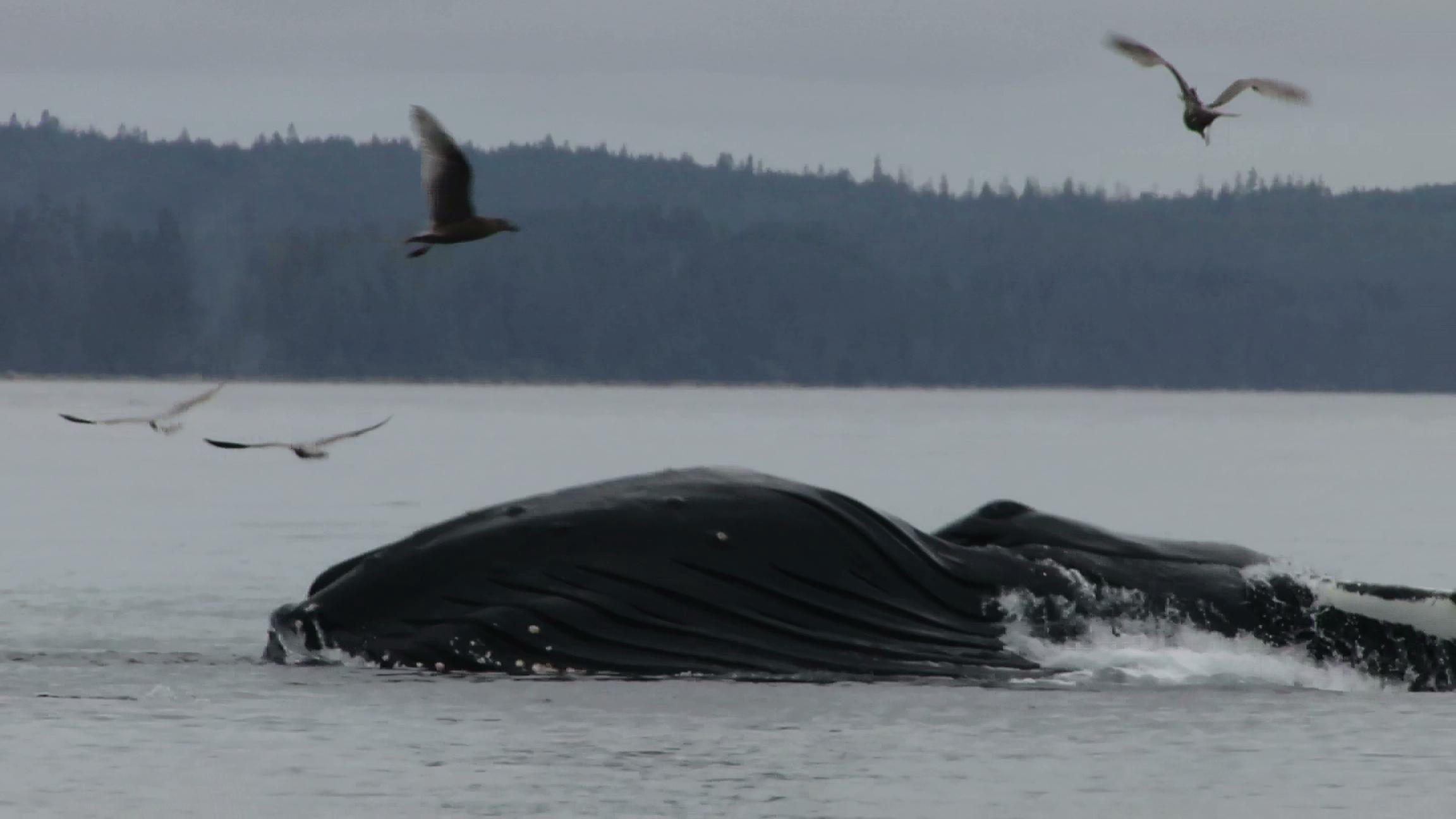
An add on to yesterday’s posting Luwen & Liwen from Singapore have provides an excellent photo of a humpback whale lunge feeding in the waters off Blackfish Sound’s Bold Head a short boat ride from Telegraph Cove on Vancouver Island. A whale watching trip from the lodge involves a fifty minute boat ride to this area where there is an abundance of marine life including pacific white-sided dolphins, dall’s porpoise, harbour porpoise, harbour seals, steller sea lions, orca, a variety of birdlife including eagles, common murre, surf scooter, rhinocerous auklet, pigen guillemot, marbled murrelet, great blue heron, cormorants, storm petrels, and a large variey of “sea gull”. Added to this is a good chance of seeing a black bear on the way to the area.

No this is not a baby orca it is a Dall’s Porpoise often called a “false orca”. To be honest it is the only picture of a dall’s porpoise that I have in my blog collection and I have allot of photos from allot of guests and Tim O’Neil from the UK is the only one that I know that has a decent photo. It took quit a bit of maneuvering in the boat and much patience on Tim’s part to get this picture. As you can see it from the photo it was a perfect day whale watching in the area of Johnstone Strait near Telegraph Cove on Vancouver Island. A dall’s porpoise lays claim to being the fastest marine mammal. “Some marine mammals can swim at relatively high speeds. Sea lions swim up to 35 kph and orcas can reach 50 kph. The fastest marine mammal, however, is the common dolphin, which reaches speeds up to 64 kph.” quote from http://marinebio.org

On the grizzly bear tours and whale watching safari, boats form the lodge often travel together. This day Glen and I encountered a pod of white-sided dolphins who decided to play with the boats. Glen managed a great photo of my guests not believing what they are seeing.

Luwen & Liwen on a visit from Singapore had several great days of viewing grizzly bears and whales. This days whale watching in the area of BC’s Johnstone strait included a humpback whale “lunge feeding” just astern of our boat. The idea is to locate a ball of herring from the bird activity on the water and then to move into the proximity of the herring ball and wait for the whales to feed.
Just like that another season has come to an end. We are grateful for all the wonderful staff and the guests this season. It was an excellent season and we are already looking forward to next May.
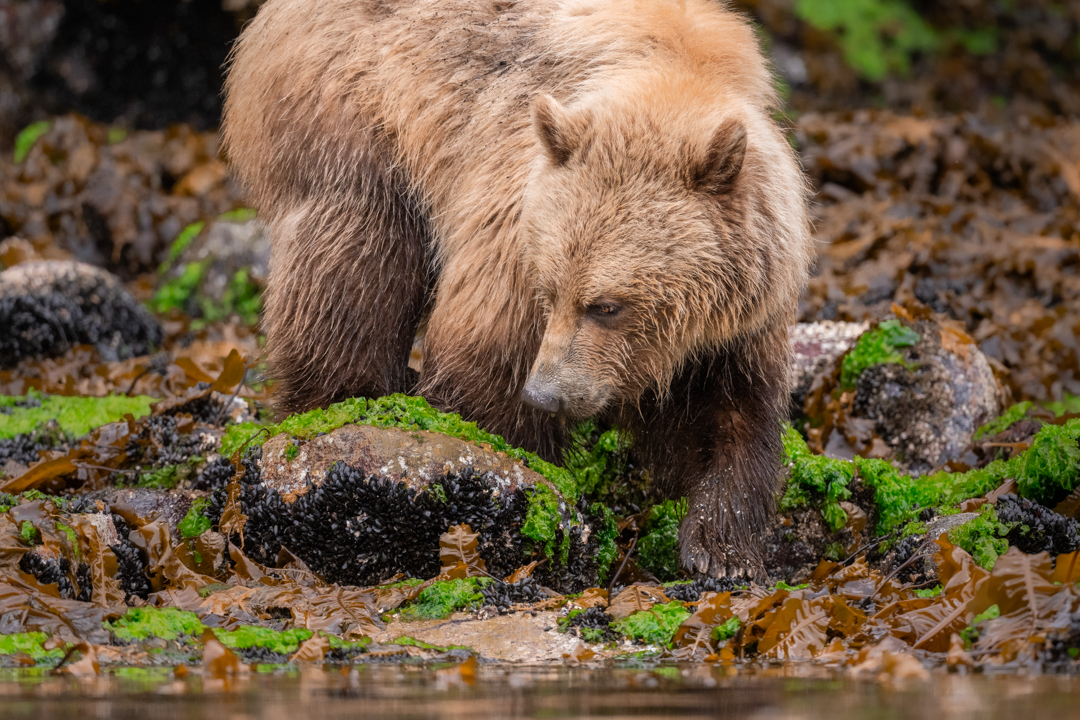
One of the highlights of the season was all of the new cubs out. It was awesome to see so many new cubs of the year and that is great news for our bear populations moving forward. We had great spring viewing and this continued through summer. On our river trips we started to see salmon arriving in August and enjoyed some great shoulder season viewing. The fish at the viewing platforms were a little late showing up this year, but viewing during late September at the platforms was great and the estuary viewing remained strong throughout the season.
Out in the whale watching world it was another year that saw large numbers of resident Orca who remained in the area right into October. The Humpback viewing was also great with large numbers feeding in Blackfish Sound. It is so amazing to have these magnificent animals back in our waters in such numbers.
Over the winter and spring we will be doing some repairs and maintenance. We rebuilt the front deck last spring, utilising cedar cut on site. We will continue with some siding, rooms improvements and hopefully a floating sauna ready for the start of our season.
2026 is already looking like a very busy season for us. We only have limited high season availability so please book early to ensure we have space for your group.
Looking forward to seeing you next year
Angus Reid
Visit our Blog