Whale Watching

We’re not all about the bears, whales are abundant here too!

Killer whales and humpback whales are often seen during our wildlife tours. There are resident whales and transient whales that can be seen feeding and playing in our waters.

Grizzy Bear Migrating

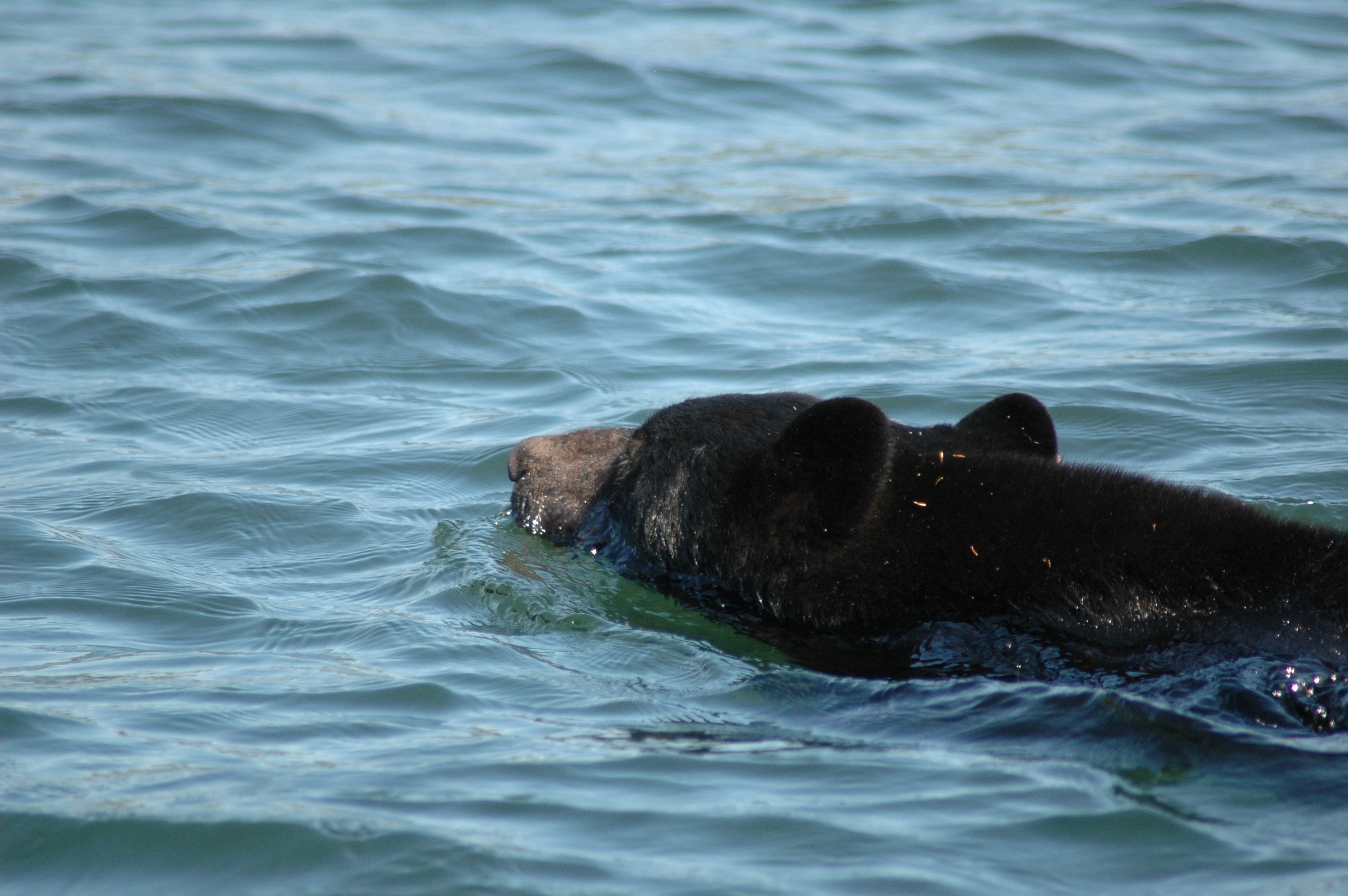
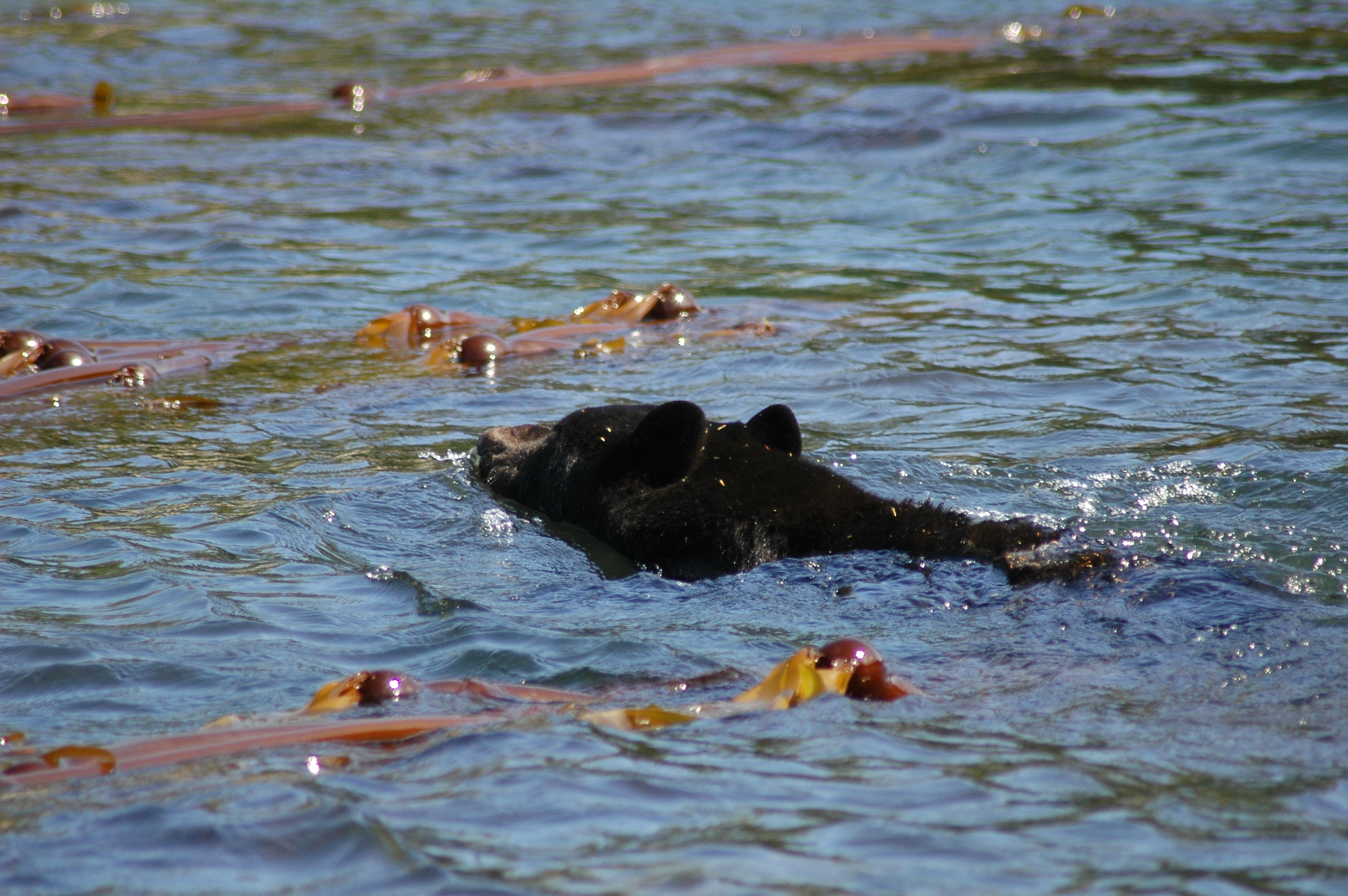
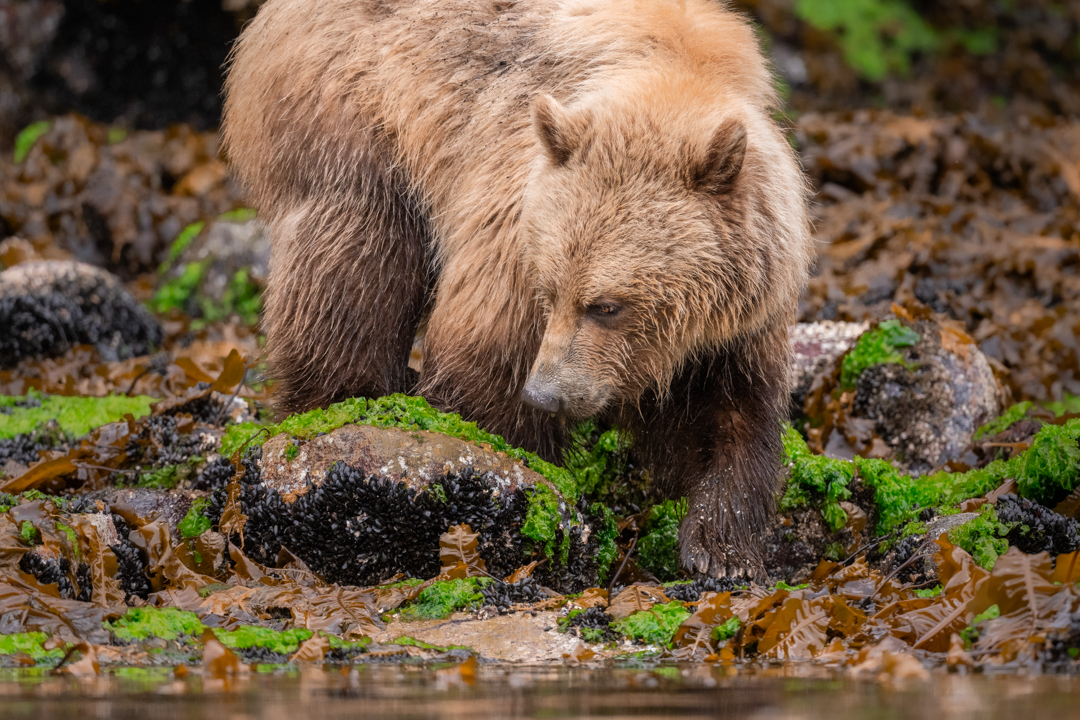
Grizzly swimmingGrizzly just out of waterThe photos are not as clear as they could be but my excuse is that I was maneuvering the boat while taking photos one-handed.  The interesting aspect is the location. We were heading back to the lodge from a day’s successful whale watching to find this grizzly swimming between islands.  We were about eight miles from the lodge toward Vancouver Island.  It has become more common in the past five years to see and have reports of grizzly bears in the area of the lodge and closer to Vancouver Island.  As a result of the healthy population of grizzly bears in Knight Inlet the sub-adult bears are being forced out of the area and are starting to migrate down the Inlet and across Johnstone Strait to take up residence on Vancouver Island.  Grizzly bears have been sighted on the Island from Sayward to Port McNeil. To view a map of the areas mentioned scroll down the sidebar on the left to “Pages” then to “Google Map of Grizzly Bear Lodge Itinerary”.

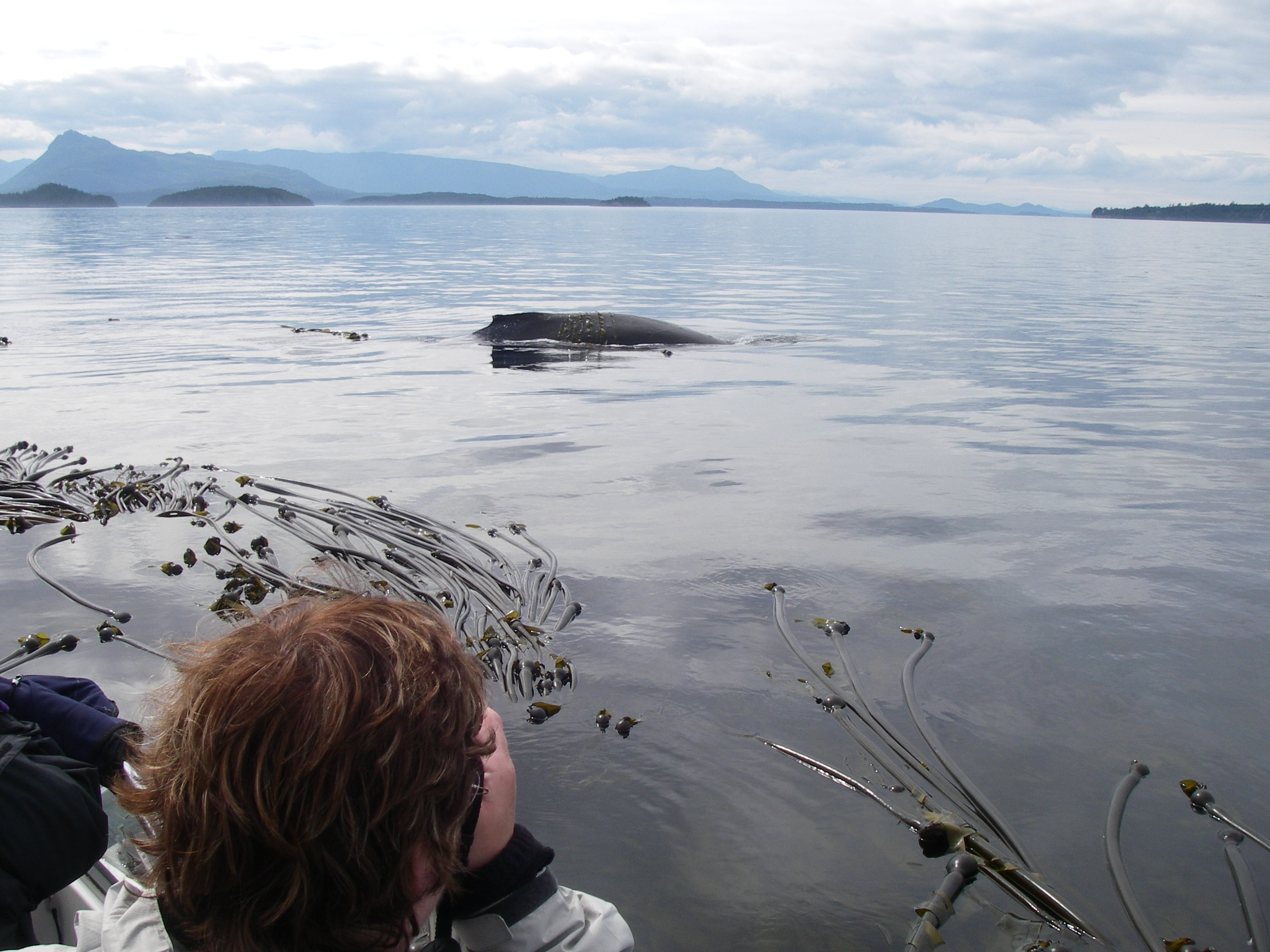
 

Humpback whale at lunch

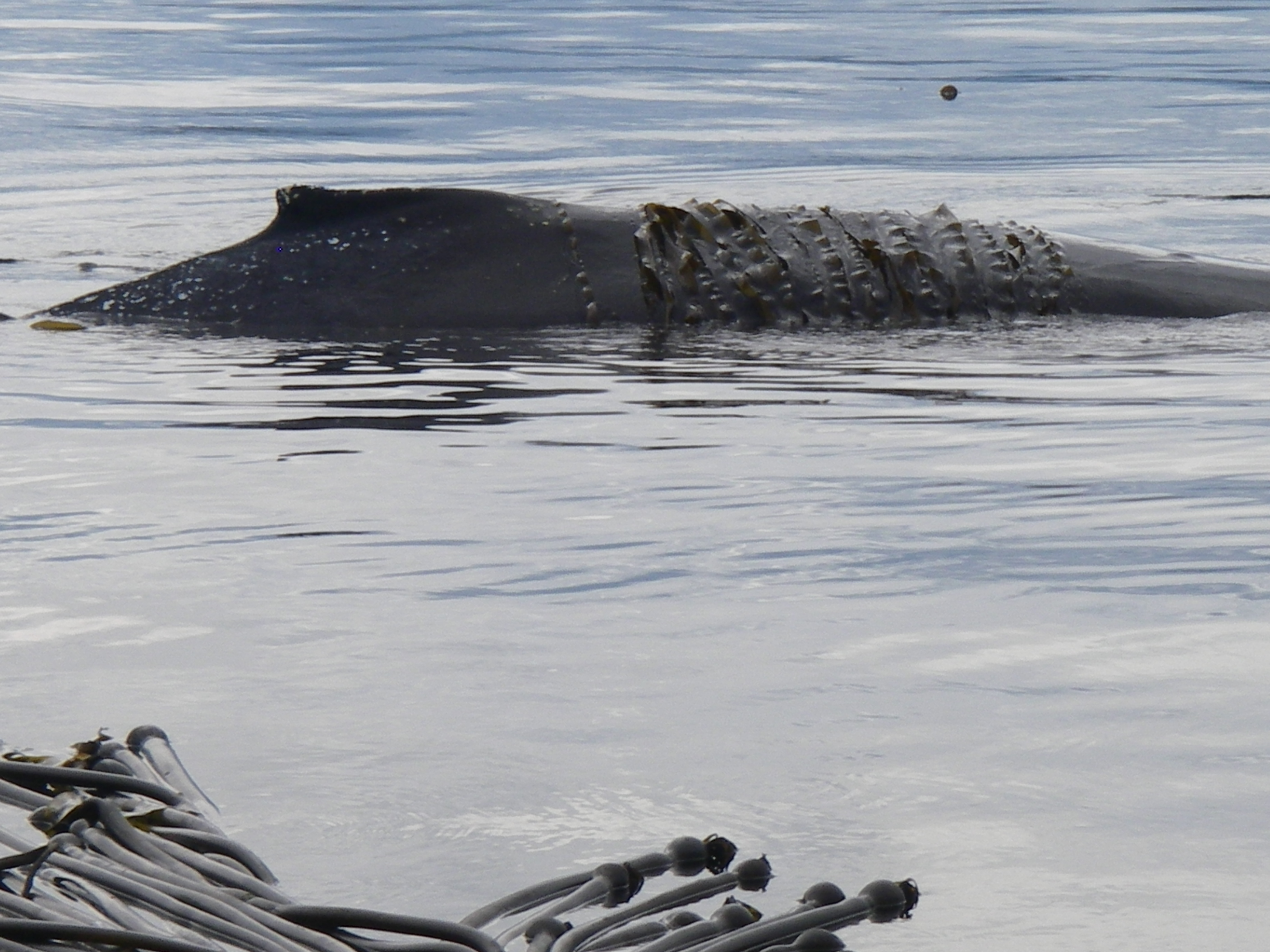
Humpback WhaleHumpback whale close upOn whale watching tours from Grizzly Bear Lodge we spend the day in the area of Johnstone Straits.  These pictures were taken at Bold Head in Blackfish Sound about a fifteen-minute boat ride from Telegraph Cove on Vancouver Island. I remember this day well as I normally take our guests to Bold Head and we tie up in the kelp bed to have our picnic lunch as it is a quite area frequented by humpback whales most of time several hundred meters (yards) away. However on this day in August one humpback came to visit us and played in the kelp. The first photo gives an idea of how close it came to the boat the second even closer.  No the second photo is not a blow up of the first because if you enlarge the second you will see a harbour seal’s head in the background.  Humpback whales often play in kelp beds and I believe the reason that this one came so close is because we were sitting quietly, motor shut off, and eating lunch. There were no other boats in the area and after the whale came close we were very quite in the boat and no one hit the side of the boat or made noise moving about as these noises are easily transferred through the water.  We had more than a thirty-minute visit.


The Four Austrians 9 of 11

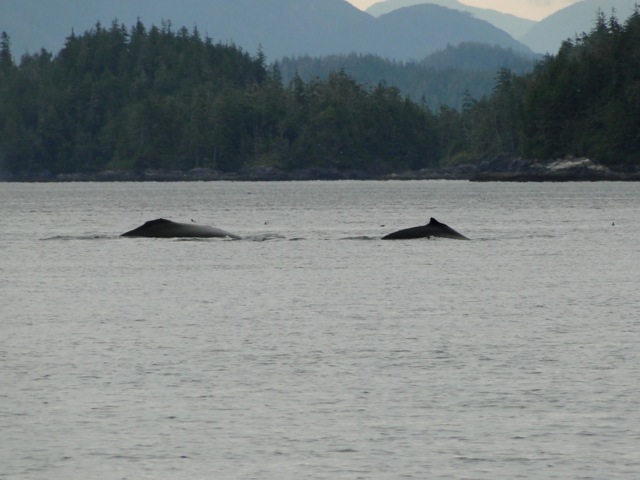
Humpback whalesSea lionsThe whale watching safari day requires a fifty-minute boat ride to the area of Johnstone Strait adjacent to Vancouver Island. Wildlife viewed normally includes black bear and eagles on the way to the Strait’s and seals, Steller sea lions, harbour porpoise, dall’s porpoise, dolphins, resident killer whales (orca), minke whales and humpback whales while in the viewing area.  Guest’s interests vary but humpback whales such as the mother and calf shown as well as the bull Steller sea lions are always favourites.  The whales spend the summer feeding in the area and it is common to see eight or more whales in a day feeding on the herring.  The Steller sea lion are more abundant in the early spring and fall as they pass through the area between California and Alaska, however for the past four years a couple of dozen sea lion have made this area their permanent summer residence.

Northern Resident Orca Identification

killer whale pod
Click to enlarge

If you have the time to open another browser click here

Killer Whales of the Northern Resident Community

northenresidentorcas.blogspot.com// you will be in a website which identifies all the orca that we observe each summer.  The map area in red shows the area frequented by the northern resident orca and this is basically the area we cover when we go on our whale-watching safari. If you click on  “A1 pod – A30 matriline” and scroll down until you come to “A72 Bend” if you look closely you will discover that this one of the orca in the photo. Some great video of the orca the orca is provided the second one has sound.

Orca while whale watching

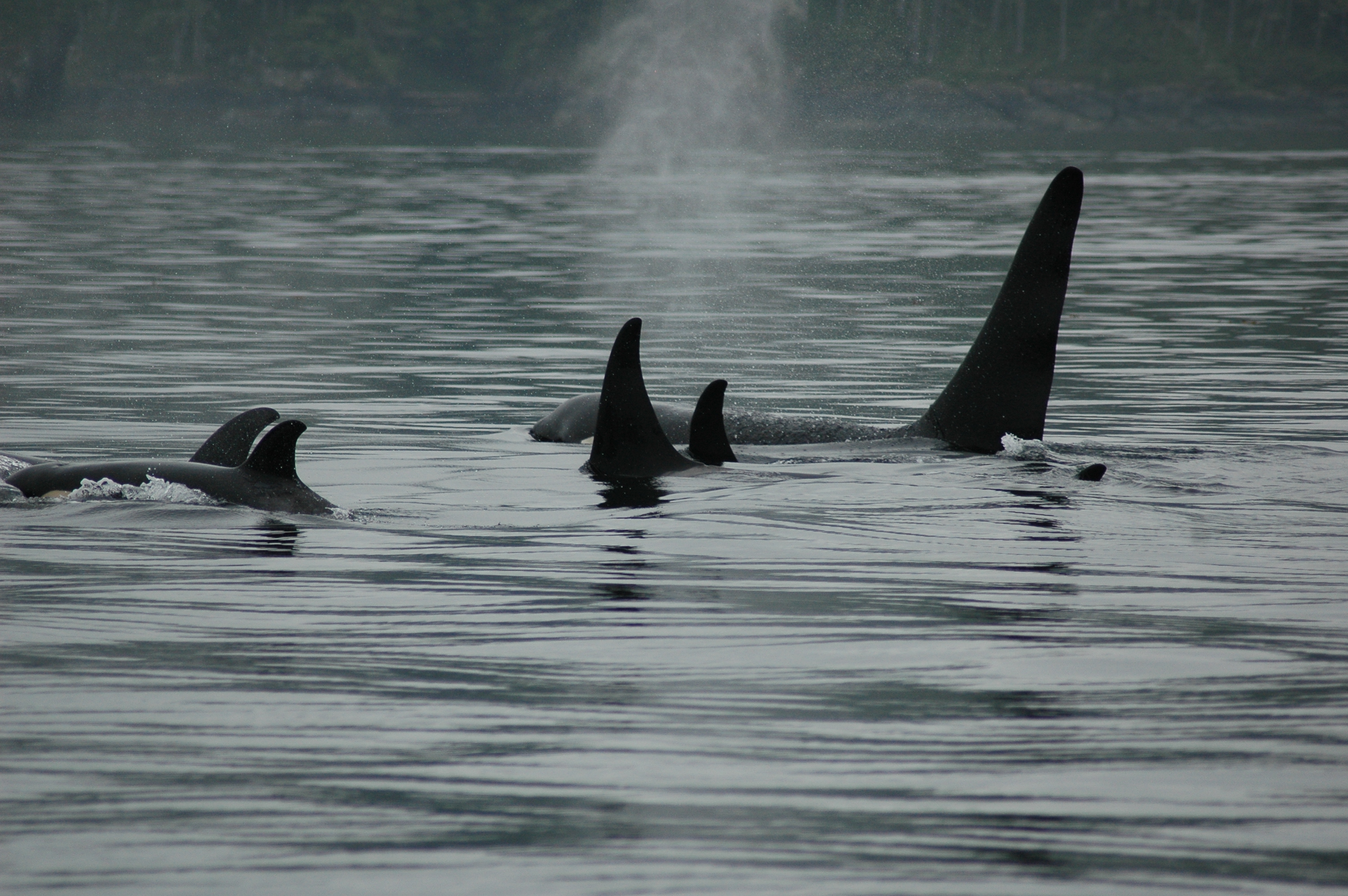
Resident OrcaResident male orca

Click photo to enlarge

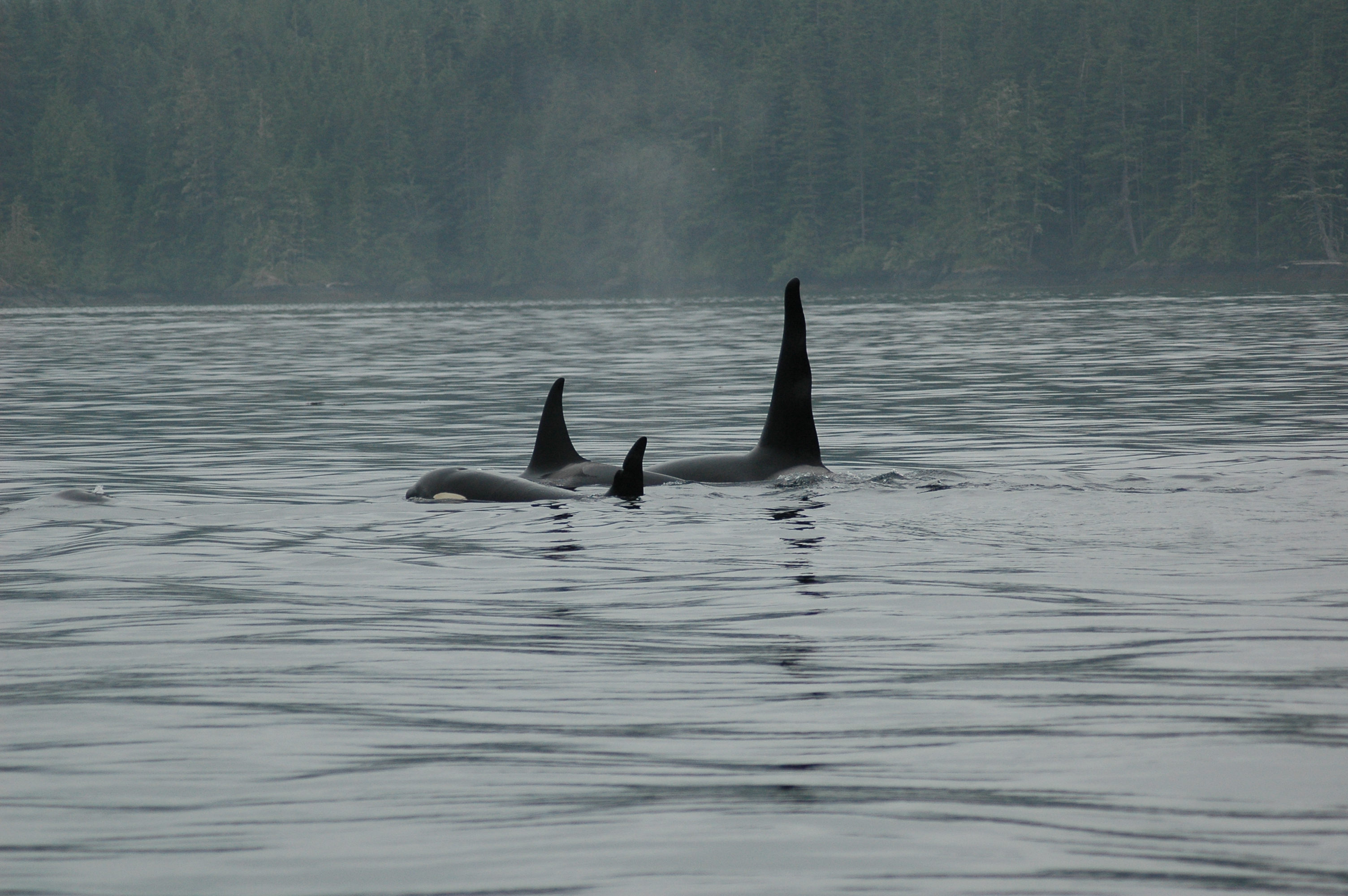
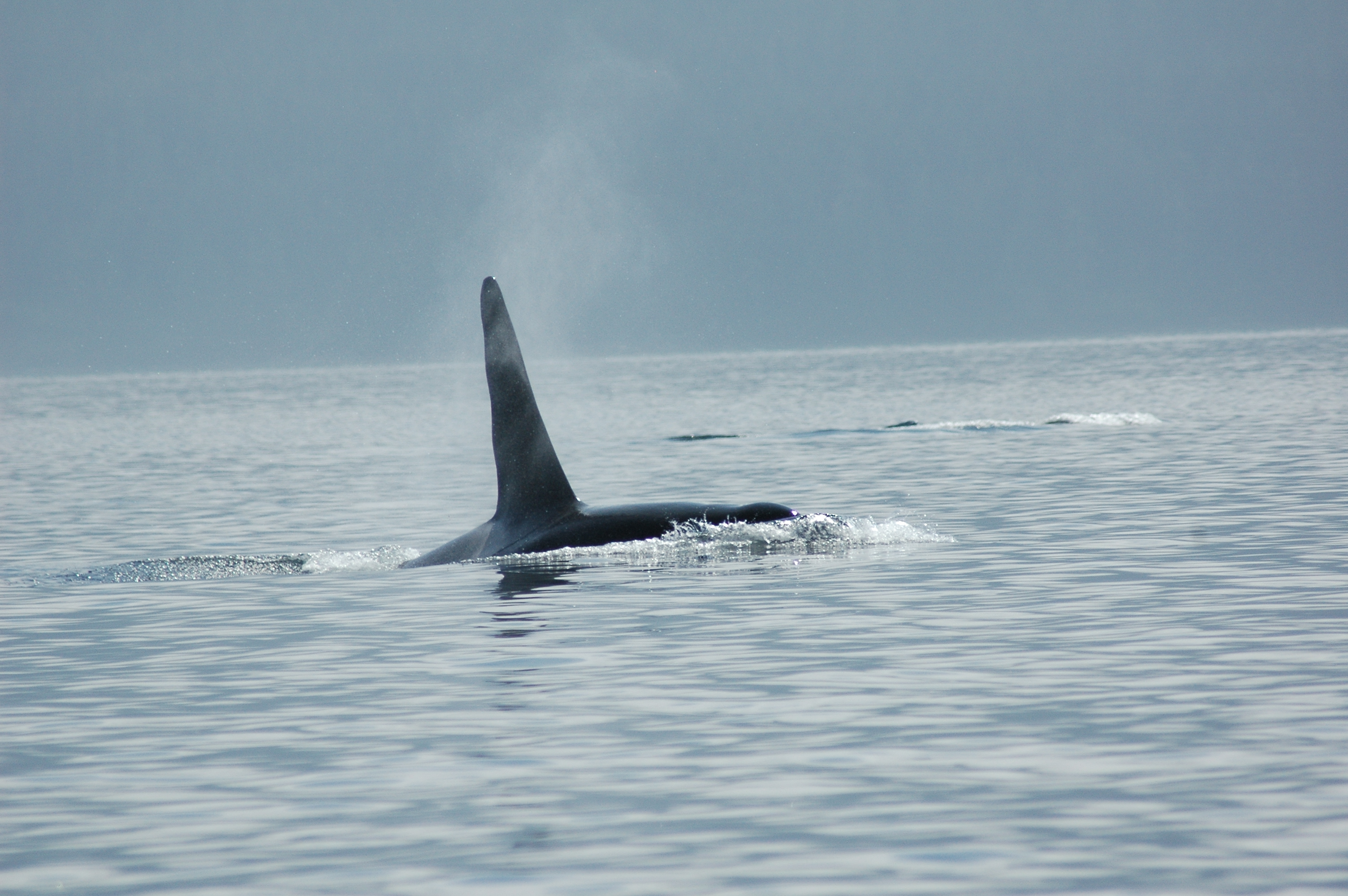
The resident orcas arrive in the area adjacent to the East Coast of Vancouver Island in the Johnstone Strait normally by the start of July and remain in the area through October.  The residents are the salmon eating orca. The transient orca, mammal eaters, is in the are all year but spend much of their time is the inlets away from much of the marine traffic. R. W. Baird says “Membership in each (group) begins at birth and cultural bonds and identity continue throughout life. Residents and transients differ in diet, vocal traditions, habitat range, morphology (shape of dorsal fin, etc.), pigmentation patterns (such as the eye patch) and genetically. Though they cross paths routinely throughout the inland waters of BC and Washington State, the two forms are becoming, or by some accounts are already, separate species. DNA work indicates that they have not interbred for at minimum one hundred thousand years.” This great photos provided by Marc and Solange Edouard from France are of two female resident orcas and a lone male.


Orca in a rest line or sleeping

Orca pod resting
Click to enlarge

The website “eHow” provides the best explanation of “How Do Killer Whales Sleep?”“Like dolphins, killer whales are voluntary breathers, meaning their breathing is not automatic like it is for humans. Instead, they must consciously rise to the surface and breathe. This makes sleeping for them much different than it is for other animals. Studies on dolphins and beluga whales have shown that they sleep by shutting down only one hemisphere of the brain at a time, thereby allowing them to both rest and have control over their breathing. It is thought that killer whales, being closely related to dolphins, do the same thing. Resting behaviors differ depending on whether the killer whale is by itself or part of a pod. If it is alone, it will rest by staying near the surface, with dorsal fin, blowhole and part of the head out of the water. Usually this only lasts for a few minutes at a time, but there have been reports of killer whales resting this way for up to eight hours.Killer whales in pods sleep differently. The pod will form a tight circle, and their breathing and movements will synchronize. They take several breaths at the surface, and then submerge for a period of time before surfacing again. The time spent submerged increases as the “sleep” becomes deeper, and they may take up to ten breaths near the surface before submerging for as long as ten minutes. Pods resting like this will avoid boats and contact with other animals during this process. It is thought that this kind of group resting may strengthen the animals’ bond and cohesiveness as a unit.”

Shore break in Telegraph Cove

Boat full of guests
Click to enlarge

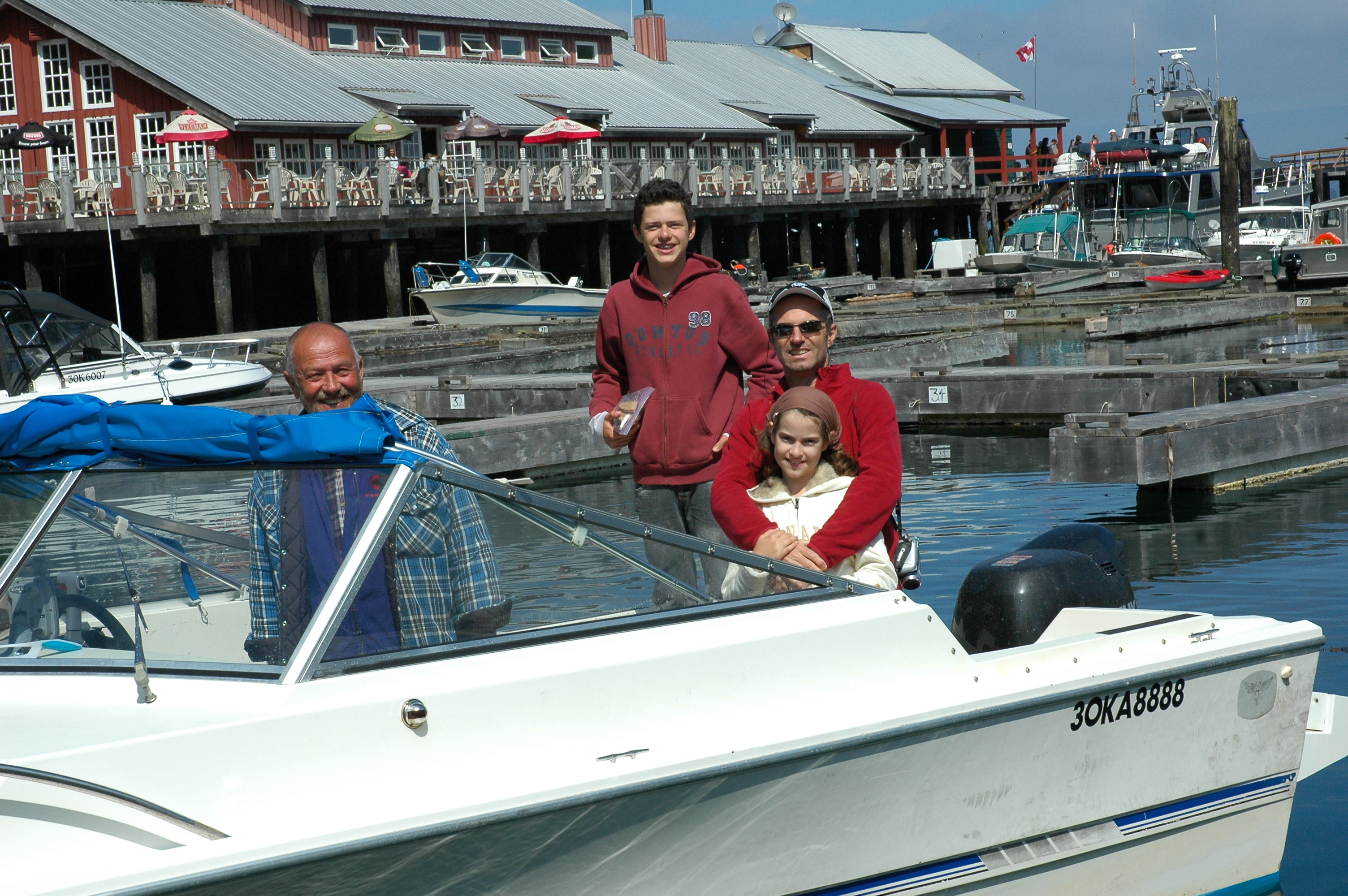
Some day as much as I try I cannot avoid being in a photo.  There is a reason for showing this, as we do not have many photos taken in Telegraph Cove on Vancouver Island.  I was with the Edouard family from France when we stopped for our “bathroom break”.  Eight or so hours on the water during a whale watching days does call for a break and that normally means Telegraph Cove.  One can leave the boat and stretch your legs, use the facilities, purchase a coffee or hot chocolate (we have a good picnic lunch and soda pop on board), visit the shop or the whale museum.  The amount of time spent ashore is up to the guest someday’s it is an hour or two other days enough time to use the bathroom then we are off again to have lunch with the whales. As long as you remember I have been here before and would rather be on the water so the amount of time is your decision.

Black Bear Island Hopping – Set II

Black Bear head photoBlack bear and rose hips

Click on photo to enlarge

The bear left the small island for a larger one although this one was not much more than half and acre in size.  This was in late August so the bear was starting to produce a reasonable layer of fat this is indicated by how far the head and shoulders are out of the water.  In the spring all only the head would be visible the back under water.  All in all the bear passed over three small islands until it reached Tourner Island which is close or ten miles long. The red “berries” are rose hips, which are the fruit from of a wild rose bush. As guides spending our summers in the area on the east coast of Vancouver Island and the water of Knight Inlet working for Grizzly Bear Lodge we all have been with the lodge for at least ten years and in the area for twenty-five years or more.  We rely on experience in our boat handling and knowledge of the area but luck is a great companion with wildlife viewing ask any wildlife photographer.


Black Bear Island Hopping – Set I

Black BearBlack Bear shaking water

Click photos to enlarge

This sequence of photos was memorable as it shows that “luck” plays an important part in making a day memorable for guests.  We were on our way back to the lodge from whale watching in the area of Johnstone Strait our boat containing myself and the Edourad family from France was a little slower than the other lodge boat by about five minutes.  We came to a small passage between a series of islands in Beware Passage to find a black bear swimming. It was coming to the first small island and passed through the kelp bed along the shore without a problem.  It climbed up the shore shook off the excess water and crossed over to the back of the island….. see tomorrow’s post

Humpback whale tail identification

Humpback WhaleHunpback whaleHumoback whale fluke

Click photos to enlarge

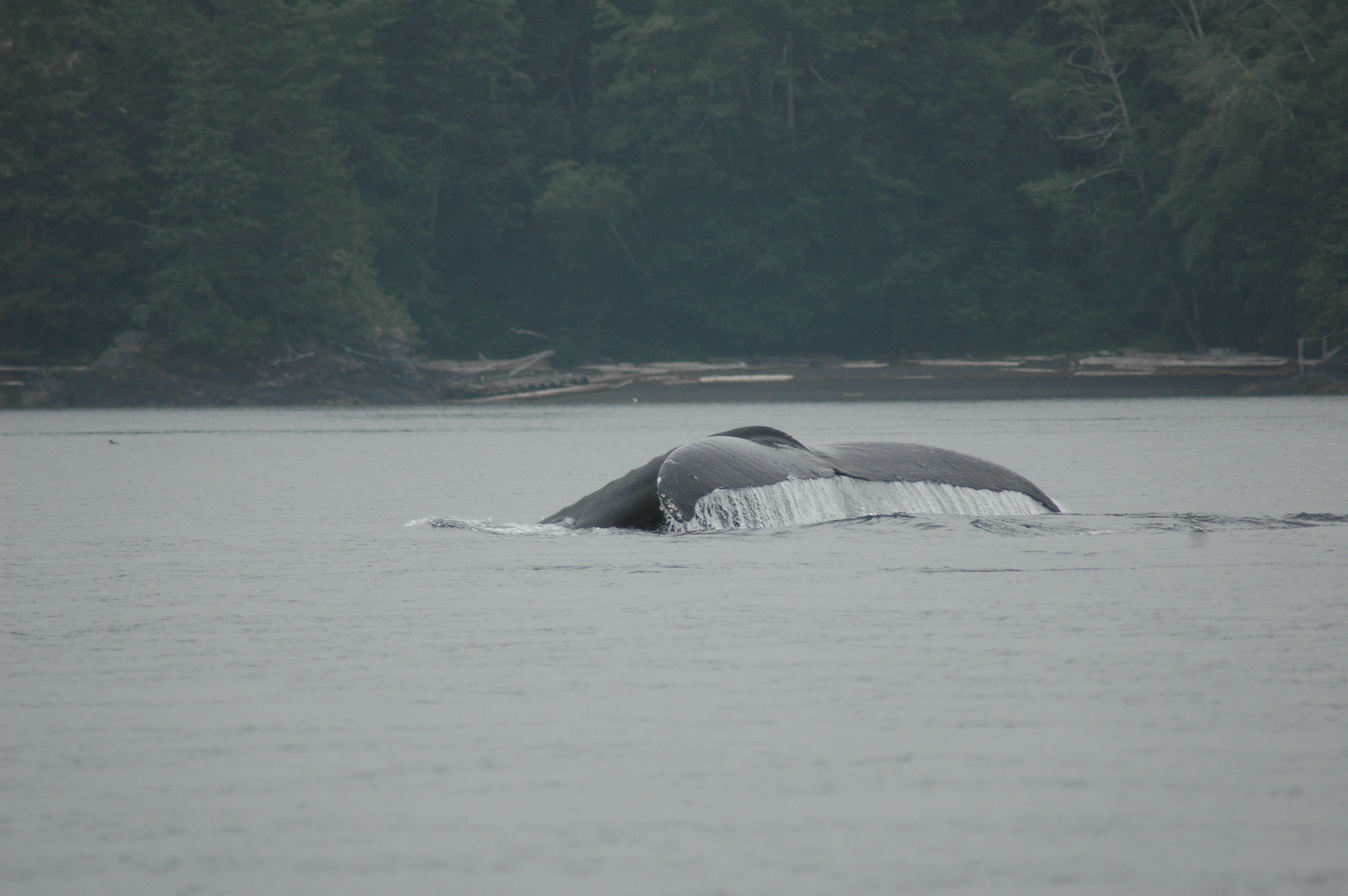
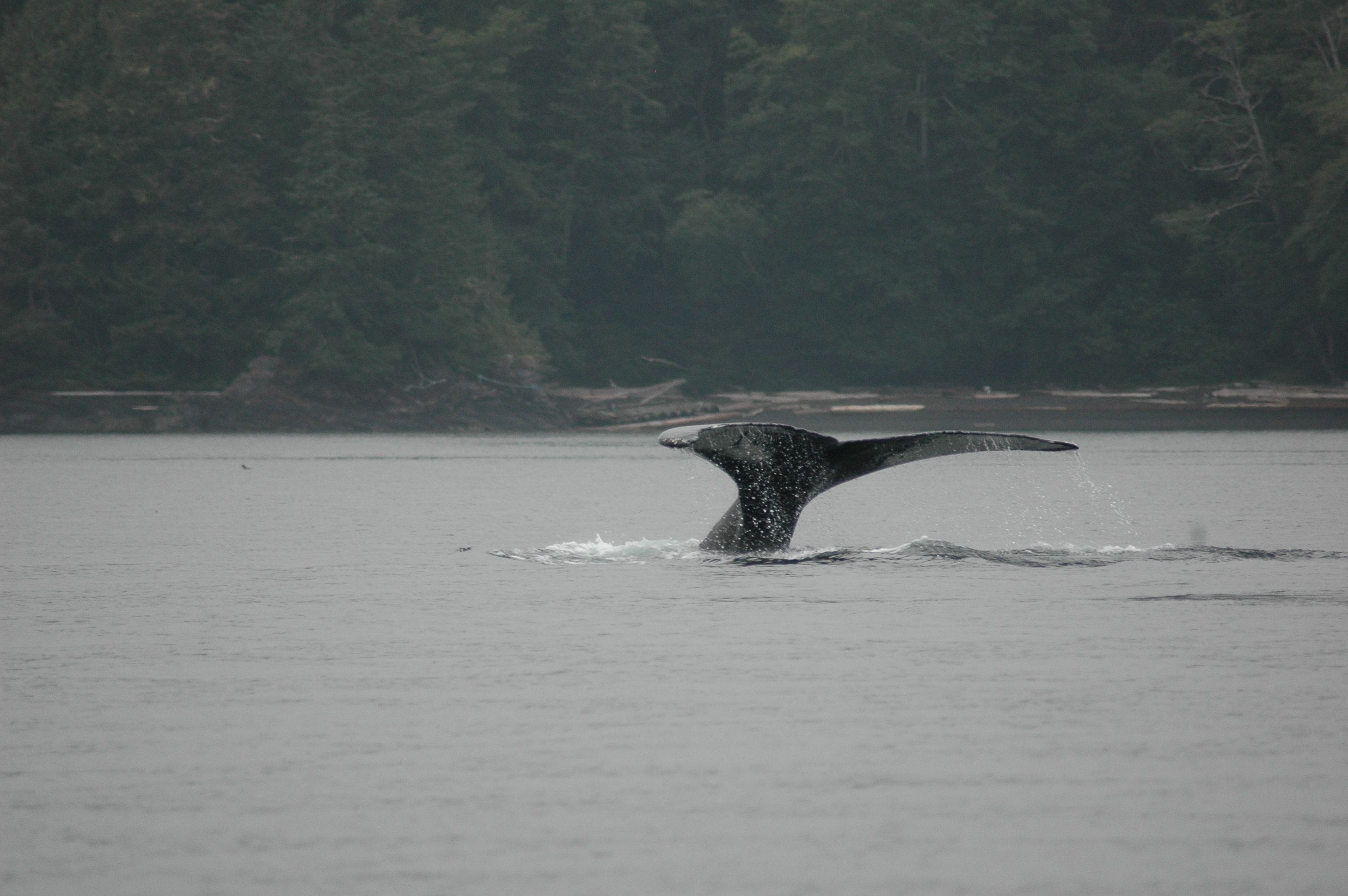
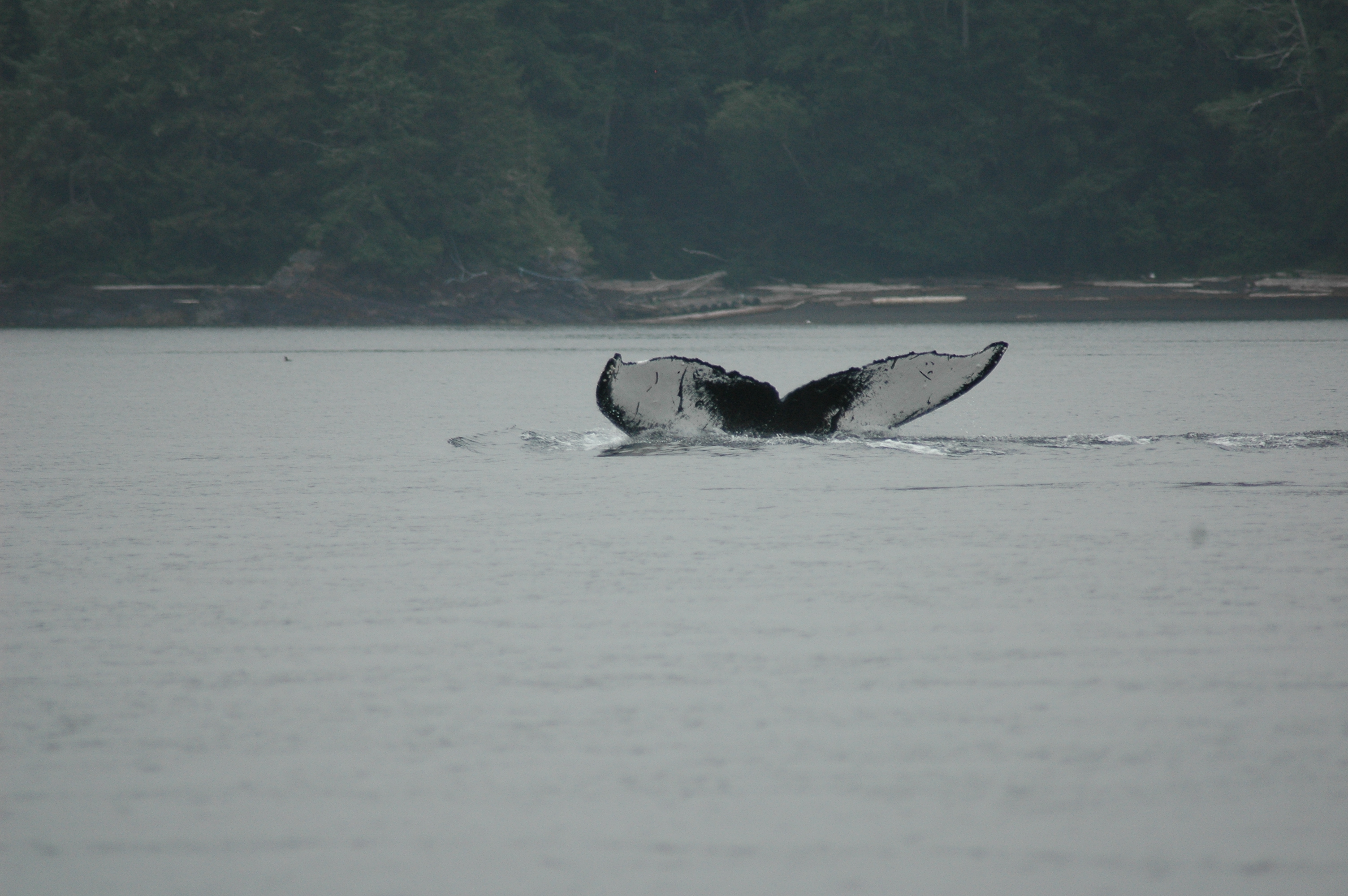
 In 2008 the number of humpback whales in the North Pacific was estimated at just less than 20,000. This number is a far cry from the scant 1,400 humpback whales estimated in the North Pacific Ocean at the end of commercial whaling in 1966. Researchers are able to identify humpback whales by photographing and cataloguing pictures of the animals’ tail, or fluke, because the pigmentation patterns on the fluke act like a fingerprint and are unique to each animal. This sequence of photographs by Marc and Solange from France are exceptional in that they show three photos of the same whale diving (note the beach behind the tail) as well as the underside that would be used for identification.  These photos were taken in Blackfish Sound near Telegraph Cove BC on Vancouver Island.