Tag Archives: Black Bears
Black Bear ancestry – proof?

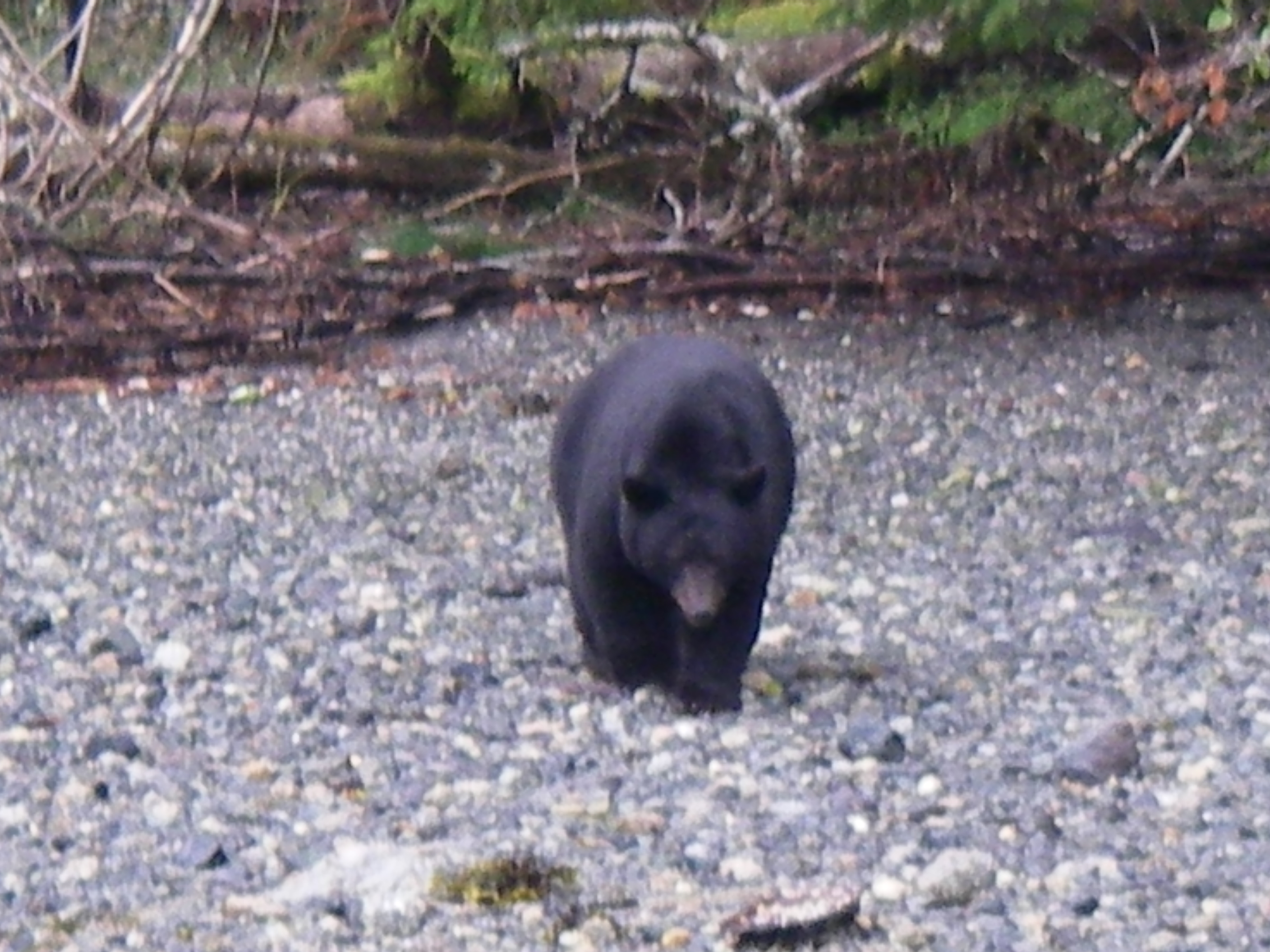
The picture that supports the speculation of scientists:“Most black bears are black with a light brown muzzle and often have a white V-shaped fur patch on their chest. The North American black bear Ursus americanus is the smallest and the most widespread bear species found in North America. Its ancestors are believed to have crossed into North America over the Bering Land Bridge.” (from http://www.bearsoftheworld.net)
“Asian black bears are medium-sized bears that inhabit parts of southeast Asia and the Russian Far East. Asian black bears have a patch of yellowish-white fur on their chest and a black body. They resemble American black bears in body shape and behavior. Asian black bears feed on a variety of plant materials including bamboo shoots, leaves, herbs, grasses, fruits and nuts.” ( from About.com Animals / Wildlife)
Every tour from the lodge is a black bear tour as they are most often seen along the shore at low tide turning over rocks in search of food. These bears do not have access to the salmon spawning rivers as they are under the protection of the grizzly bear. For a grizzly a black bear would be food for several days.
Black Bear pose
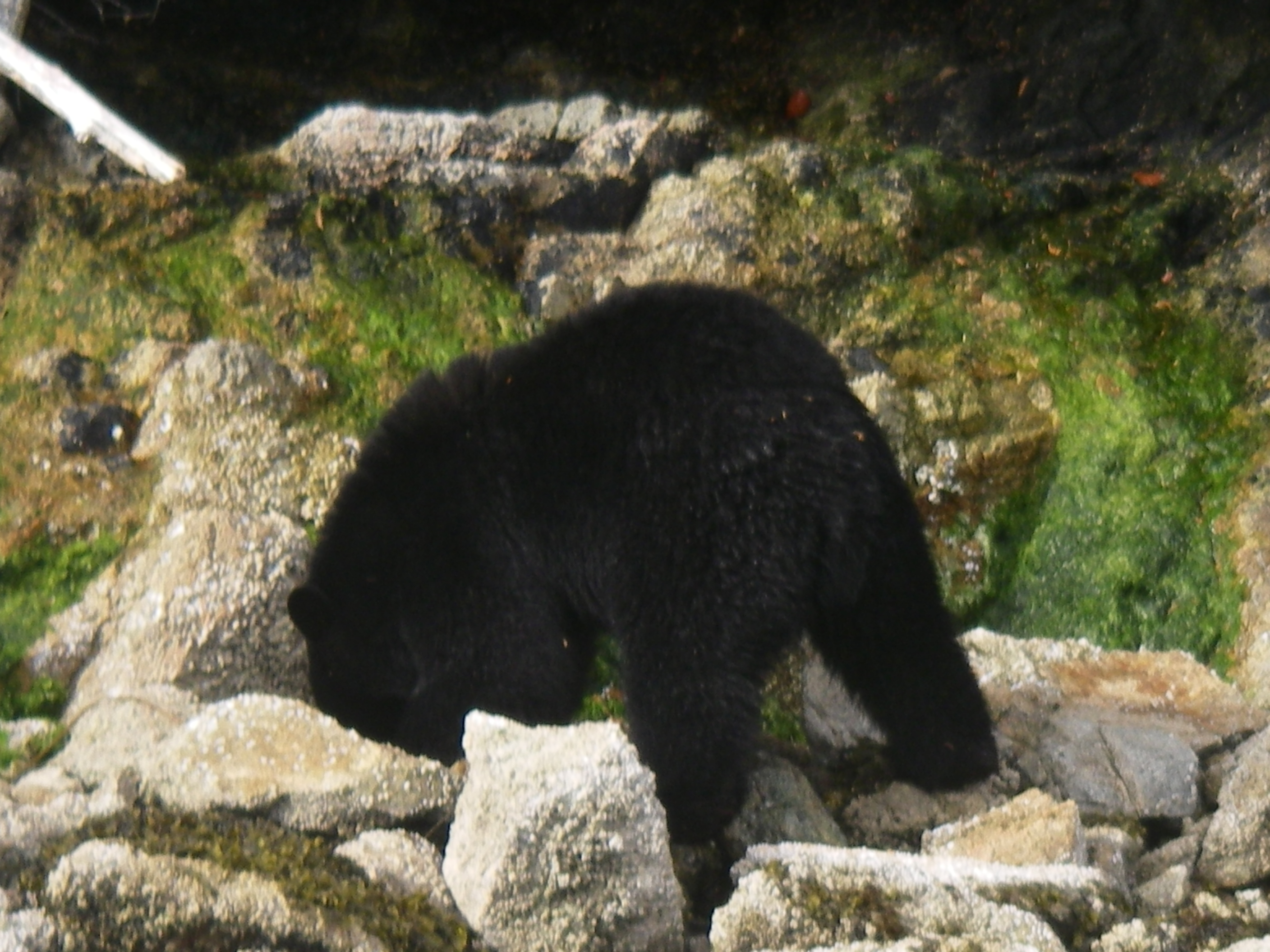
Fortunately this is not a permanent pose only a common position we often find bears using on our tours. At low tide bears come to the beach for food and that requires them to turn over rocks to get at the high protein crab, clams, barnacles, amphipods and other tiny invertebrates. Rocks roll easier down hill so we often have a great view of their backside. This black bear like others will eventually move to another rock and prove more photogenic. The good aspect of this photo is that it shows we are not interrupting their feeding or disturbing their natural habits as the motto we tend to use as guides is “ Leave them as we find them.” Part is we want to be able to come back to the same area another day and not to have the bears run when we approach but the main reason is that it is good stewardship.
Black bear evening tour
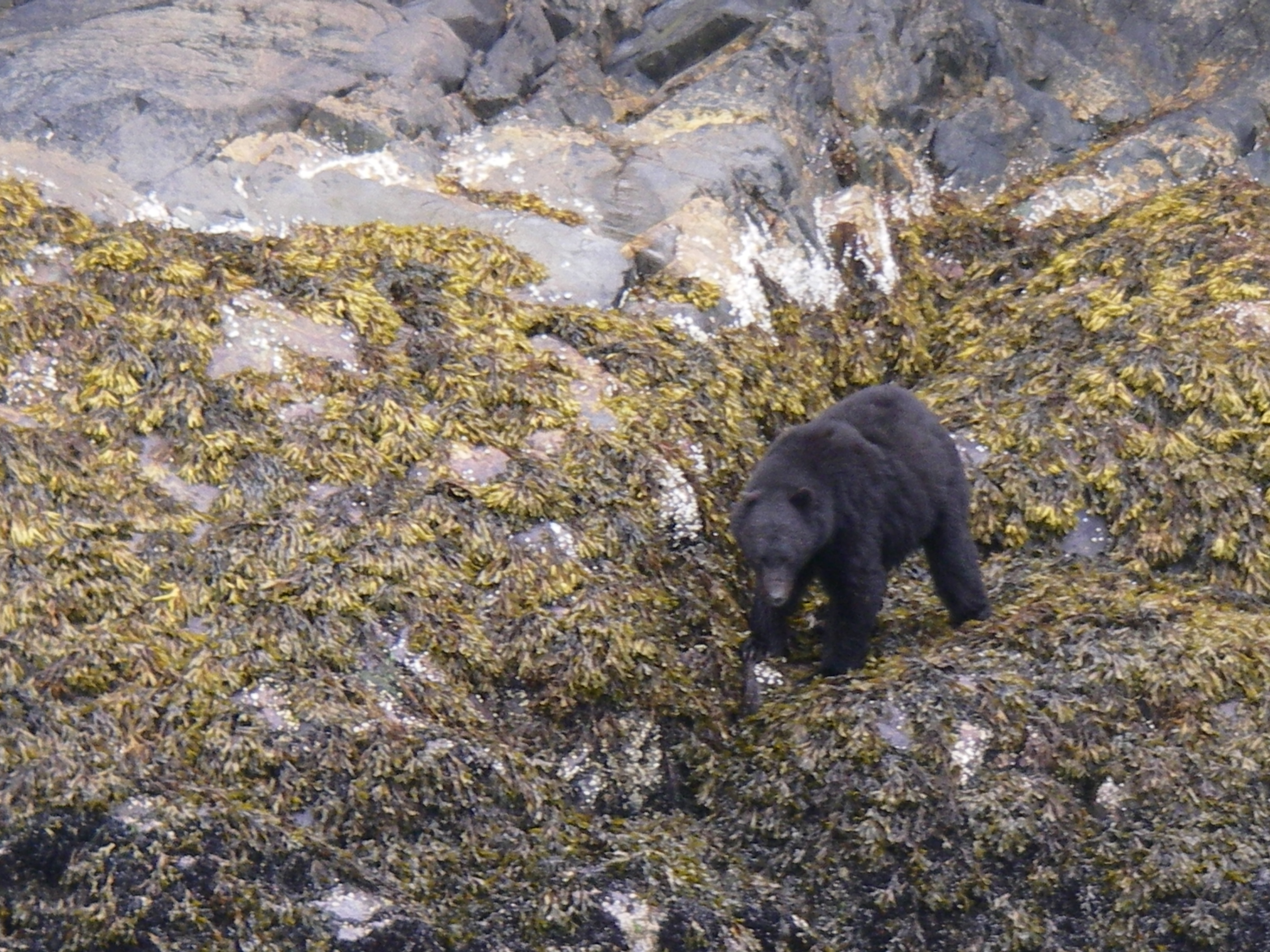
The first evening at the lodge, if the tide is low enough, there is a local boat tour looking for black bear, bald eagles and other wildlife. The black bears come to the shore for food high in protein and this is made up of crab, clams, barnacles, mussels, amphipods and other tiny invertebrates. In this case the bear would use its claws to scrap the barnacles free to the rocks and eat them including the shell. From the size of this bears belly it is in pretty good shape for the coming winter and the photo date in only July. Black bears do not have access to the salmon rivers because of the number on grizzlies in the area so they cannot rely on a sudden food source in September to gain hibernation fat and must work hard all spring and summer if they want to survive.
Black Bear on the beach

Your first evening at Grizzly Bear Lodge involves an evening boat run in the local waters looking for black bears. At low tides the bears come to the beach to roll rocks for protein in the form of small crab, clams, barnacles, amphipods and other tiny invertebrates. Guest often ask how do the bears know when there will be a low tide? When we travel along the shore by boat it is possible to pick up the smell of the beach and it is said that bears are thought to have the best sense of smell of any animal on earth. For example, the average dog’s sense of smell is 100 times better than humans. A bloodhound’s is 300 times better. A bear’s sense of smell is 7 times better than a bloodhound’s or 2,100 times better than a human. Simply stated they smell low tide and food.
Evening black bear tour
 On the first evening at the lodge, if the permits, you set out on a short local trip to view Black Bear feeding on the beach. The “tide permits” is important because you need a low tide to have a beach to give the black bears some palace to turn over rocks to look for high protein food made up of crab, clams, muscles, barnacles, amphipods and other tiny invertebrates. The coastal black bears are small compared to the grizzlies, as they do not have access to the salmon rivers because of the grizzlies. The bears only grow to the size that access to food permits the more protein rich the food the larger the bear. The first year cubs follow their mother closely and take clues from them to determine what is “good food”.
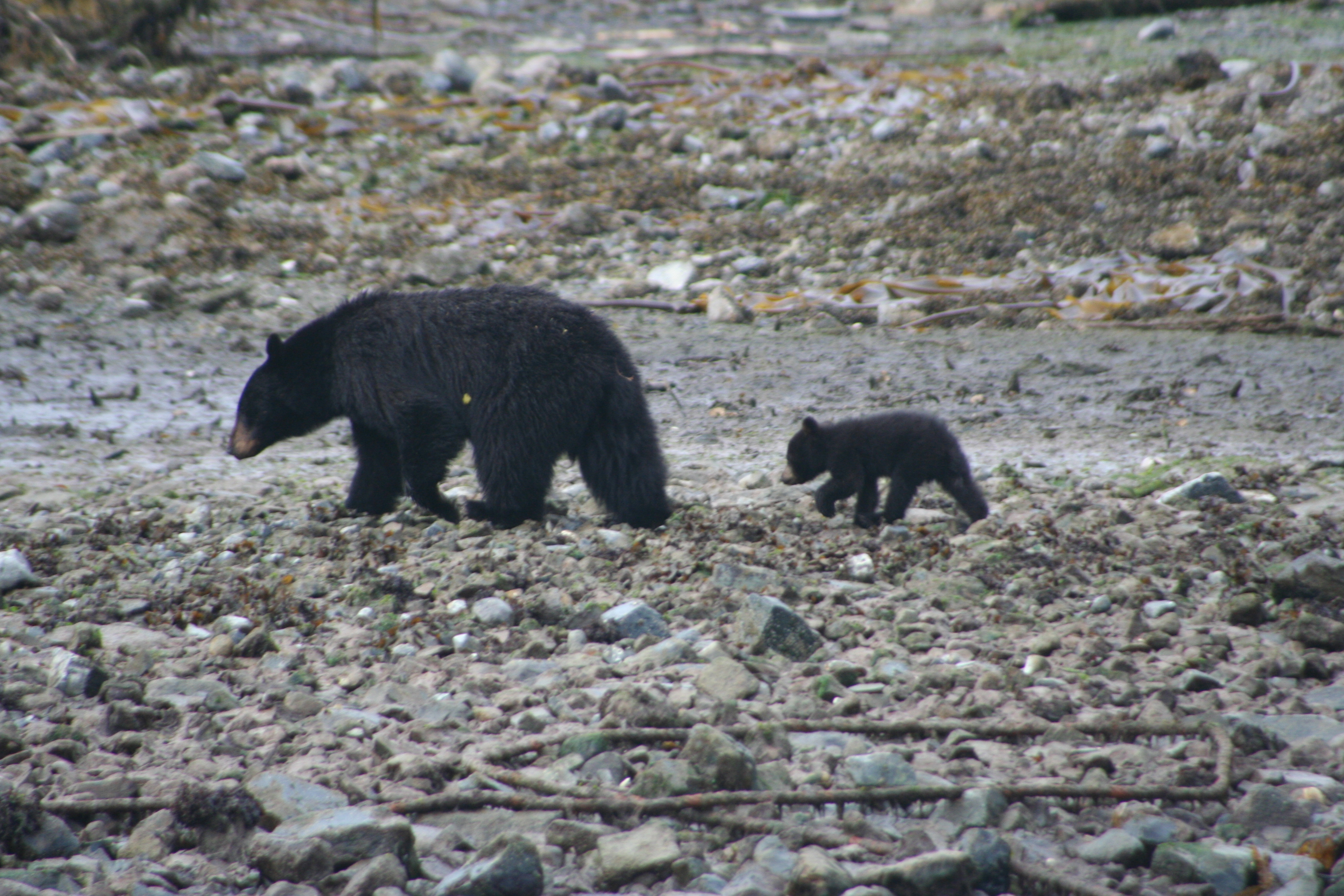
Black Bear Cubs
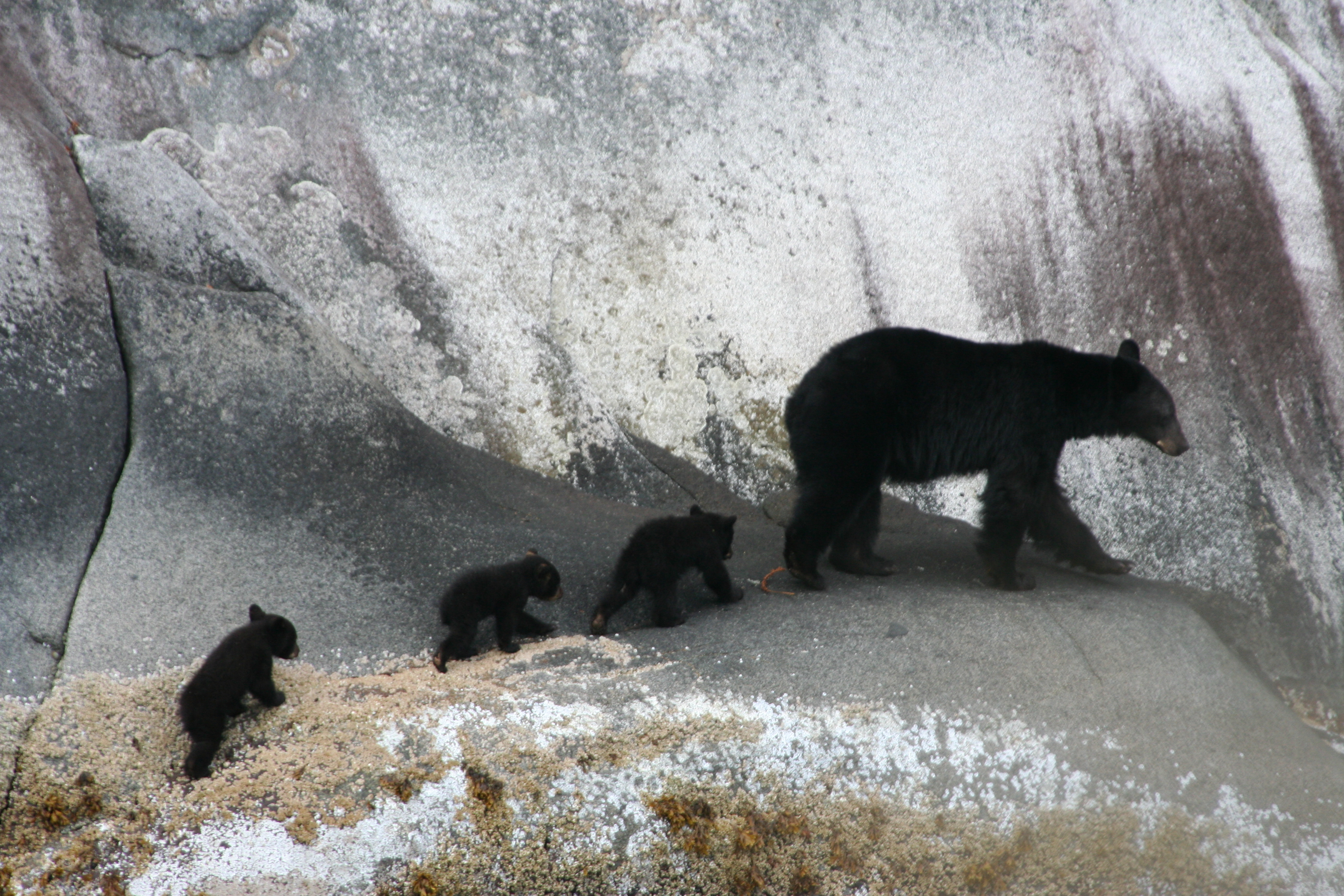
A common saying at the lodge is “black bears are where you find them” meaning that on all tours whether for grizzlies, whales, or the extra day at the river we are always looking for and finding black bears. In this case it was a June trip up Knight Inlet for a morning run to the grizzly bears that Glen took this photo of a black bear and her triplets. Twin cubs are common triplets less so but not rare. These cubs are likely three to for months old being born in their den February. Many of the black bears is the area have come to accept boat traffic and do not necessarily run for the nearest tree as this mother indicates by her stroll along the rocky shore.
The Four Austrians 4 of 11
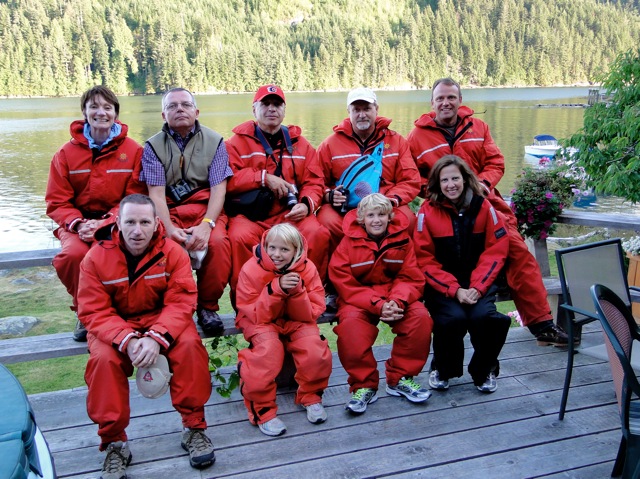
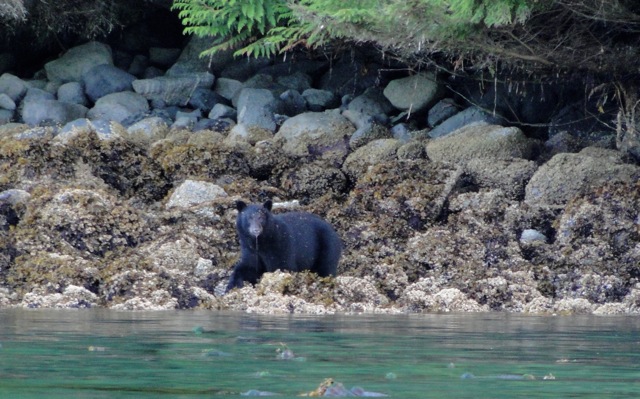
The lodge normally accommodates eight guests. This means that you interact with the other guests and the staff on a full time basis unless you prefer the privacy of your room. The mornings on the water are be cool so we provide the “floater suites” to keep you warm. They are your “Personal Floatation Device” and even if you choose not to wear them they need to be with you in the boat. After snack time the guides will bring out the suited to make sure you have one that fits this taken care of it is time for your first “quest” for wildlife. The first evening we do a tour looking for black bear and eagles in the vicinity of the lodge, normally an hour or so before or after dinner depending on the tide. The black bears are on the beach looking for food so we need a reasonably low tide to provide the beach. If we don’t have success on the first evening most days we find black bears while on a grizzly or whale tour. This evening was successful.
Black Bear Island Hopping – Set II

Click on photo to enlarge
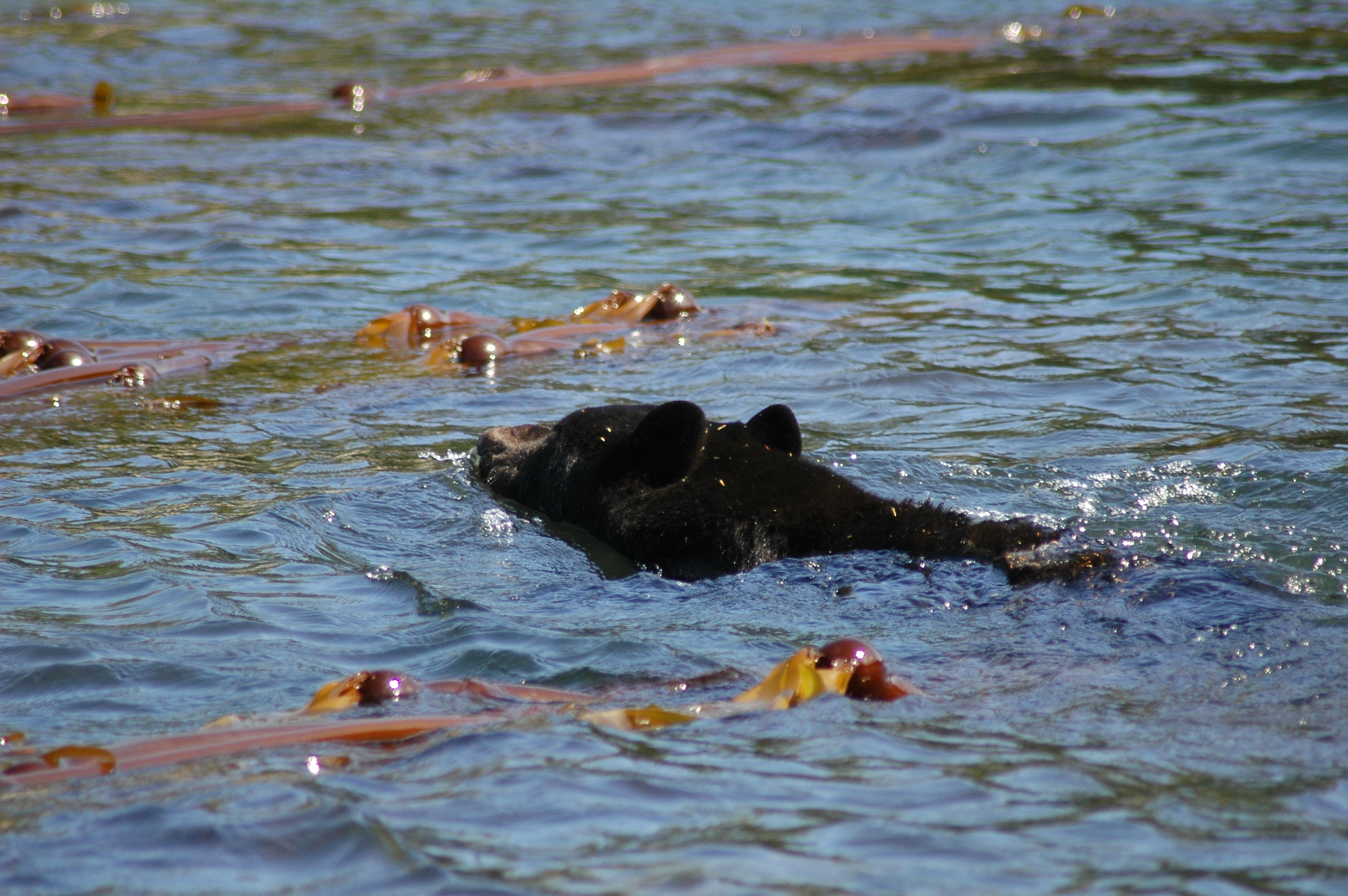
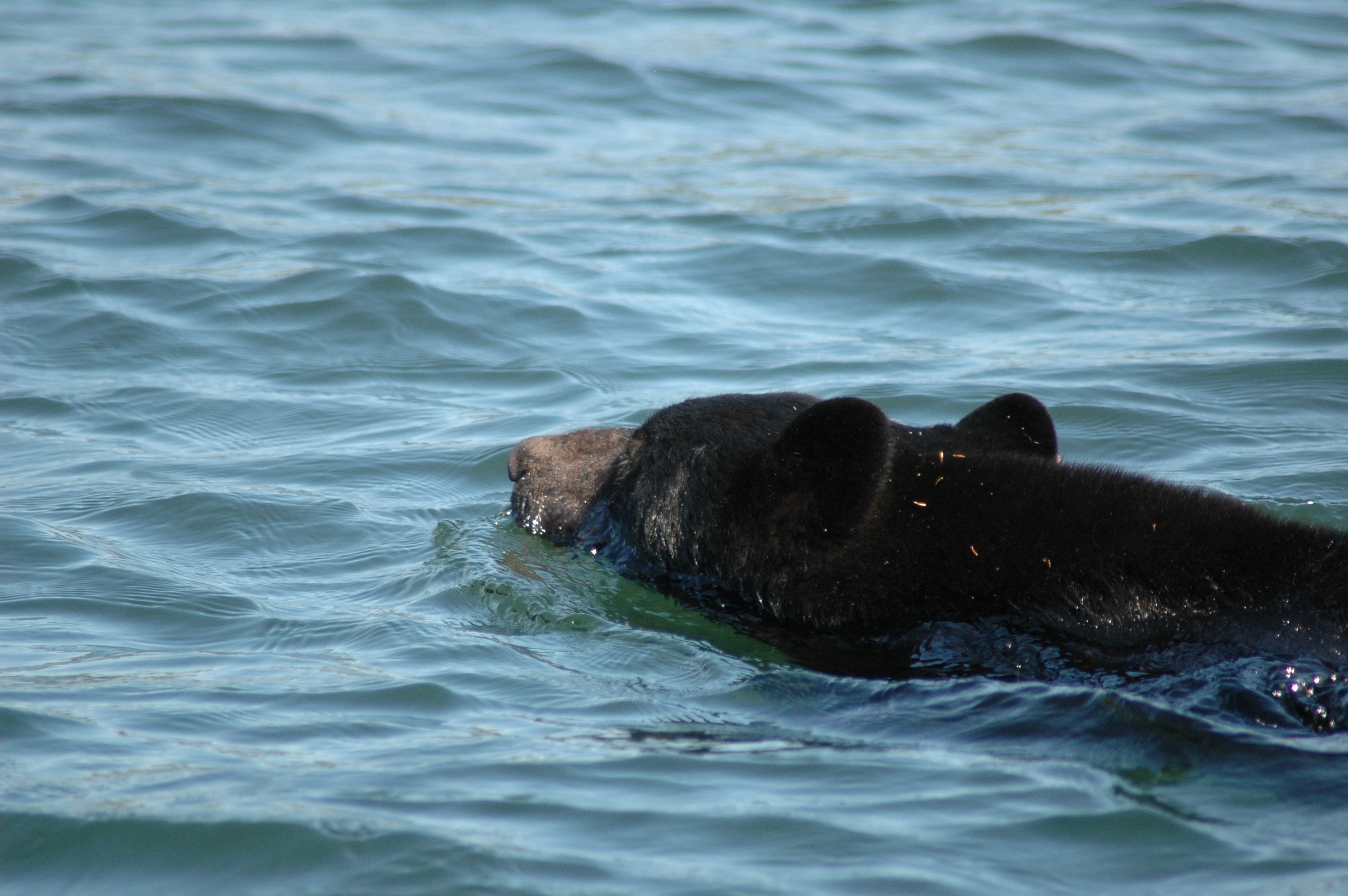
The bear left the small island for a larger one although this one was not much more than half and acre in size. This was in late August so the bear was starting to produce a reasonable layer of fat this is indicated by how far the head and shoulders are out of the water. In the spring all only the head would be visible the back under water. All in all the bear passed over three small islands until it reached Tourner Island which is close or ten miles long. The red “berries” are rose hips, which are the fruit from of a wild rose bush. As guides spending our summers in the area on the east coast of Vancouver Island and the water of Knight Inlet working for Grizzly Bear Lodge we all have been with the lodge for at least ten years and in the area for twenty-five years or more. We rely on experience in our boat handling and knowledge of the area but luck is a great companion with wildlife viewing ask any wildlife photographer.
Black Bear Island Hopping – Set I