Grizzly Bear and Wildlife Tour Blog

We offer an exceptional fly-in lodge for Grizzly Bear Watching and Whale Watching in British Columbia.

Learn about What’s happening at the Lodge, view our British Columbia’s Wildlife Report, read our Grizzly Bear Watching Blog and Whale Watching Blog. Learn more about a Day on the River Blog, see Our Tour Guide’s Photos & Blog and  Photos from Our Guests.

Guide Photos

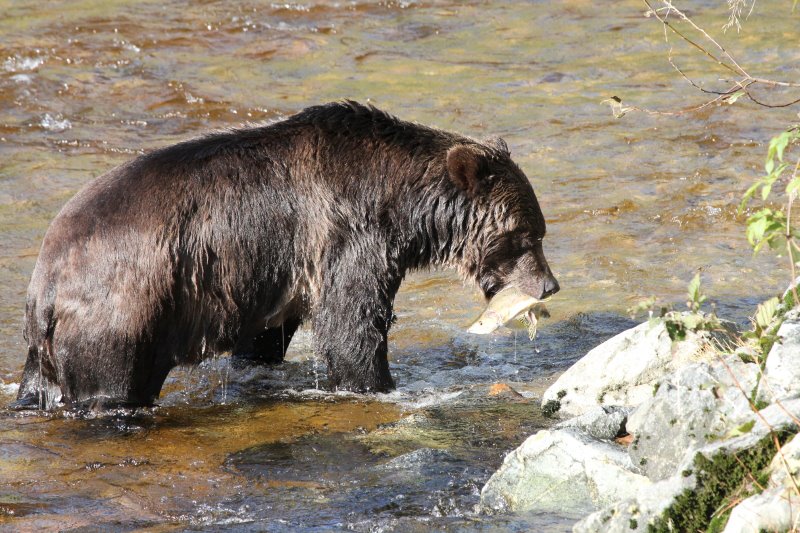
grizzly caught lunch
Click to enlarge then click again

The sign of a hungry grizzly bear is the salmon it eats. Bears will get selective in their eating habits as they bulk up and consecrate on female salmon because of either high fat row (eggs). The salmon that return to the Glendale River which is the river Grizzly Bear Lodge use for its viewing in the fall are mostly pink salmon or humpback salmon. The males develop a pronounced humped back thus they are also known as “humpies”. The salmon in the mouth of this grizzly is a male so it has not reached the selective feeding stage. The other reason could be that it is the end of the season and this bear just wants that bit of extra bulk and does not have time to be selective.
 

Guide Photos

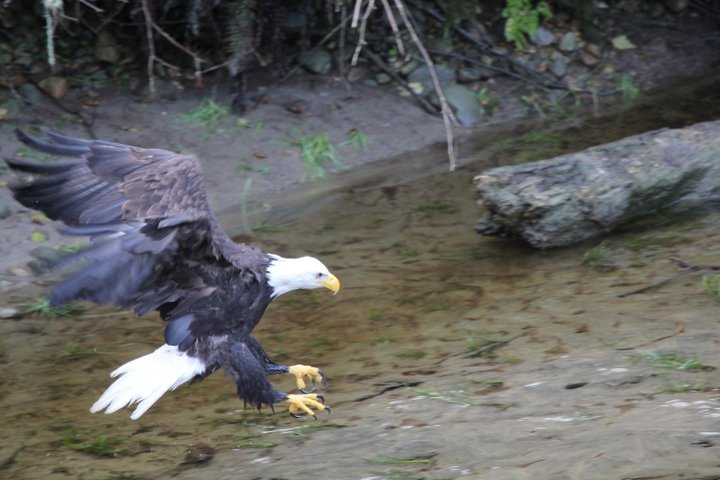
eagle fishing
Click to enlarge then click again

Great photo of a bald eagle coming into land on a salmon carcass on the Glendale River. The eagles leave other parts of the BC coast to congregate at river mouths in the fall when the spawning salmon return. The eagles arrive shortly after the grizzly bears and for the same reason, free and easy food. Grizzly Bear Lodge’s spring and fall tours spend time on one Knight Inlets rivers which has the sedge grass for grizzly grazing in the spring and the salmon in the manmade spawning channel in the fall.


Guide Photos

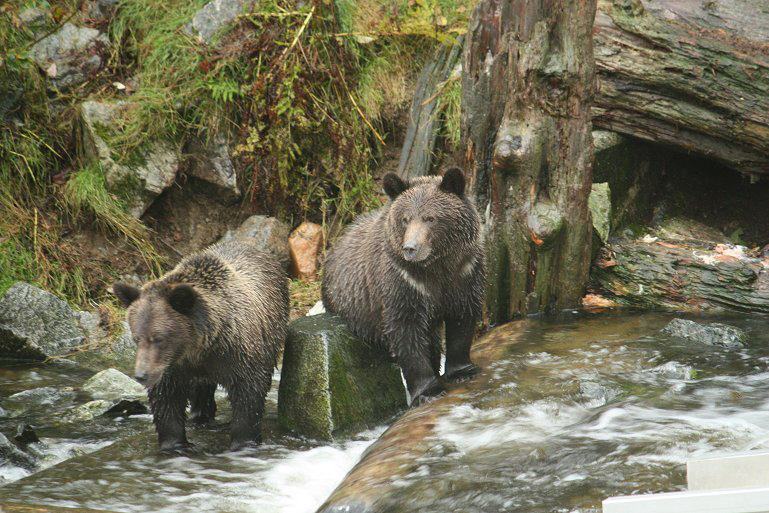
waiting grizzlies
Click to enlarge then click again

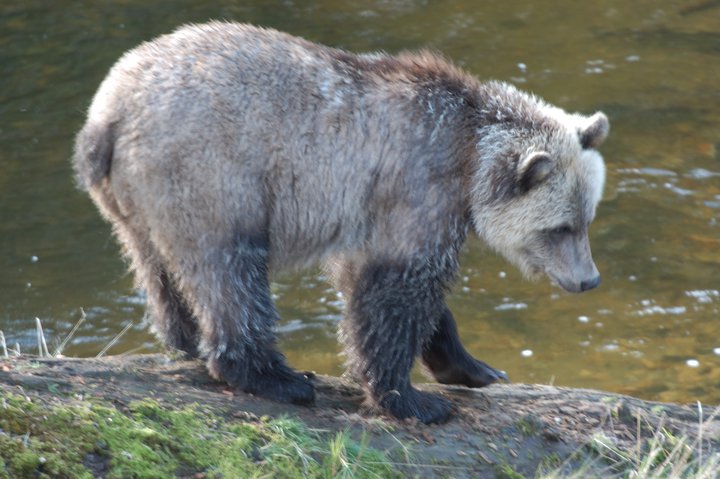
These two juvenile sibling grizzly bears are waiting for a chance to move out into the river to fish for salmon. Being young they need to time their fishing to avoid the older males and the mothers with cubs. The area Grizzly Bear Lodge use on Knight Inlet for its tours has more than forty bears but there is such an abundance of food little fighting occurs and it is more about a bear timing its approach to the river.  From the size of these bears bellies they seem to be successful and should have no trouble reaching a weight which will carry them through hibernation.


Guide Photos

grizzly eating water grass
Click to enlarge then click again

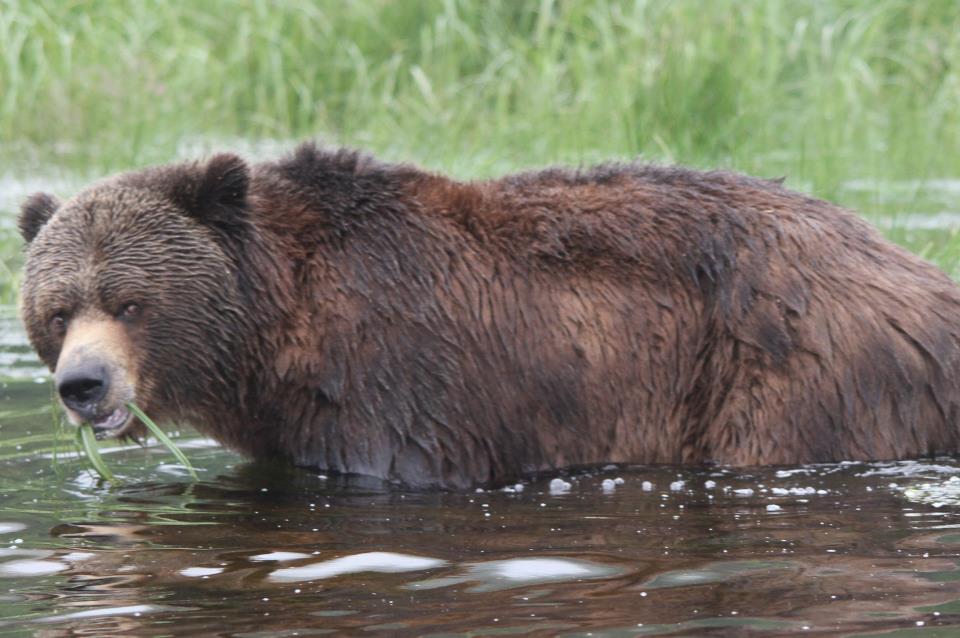
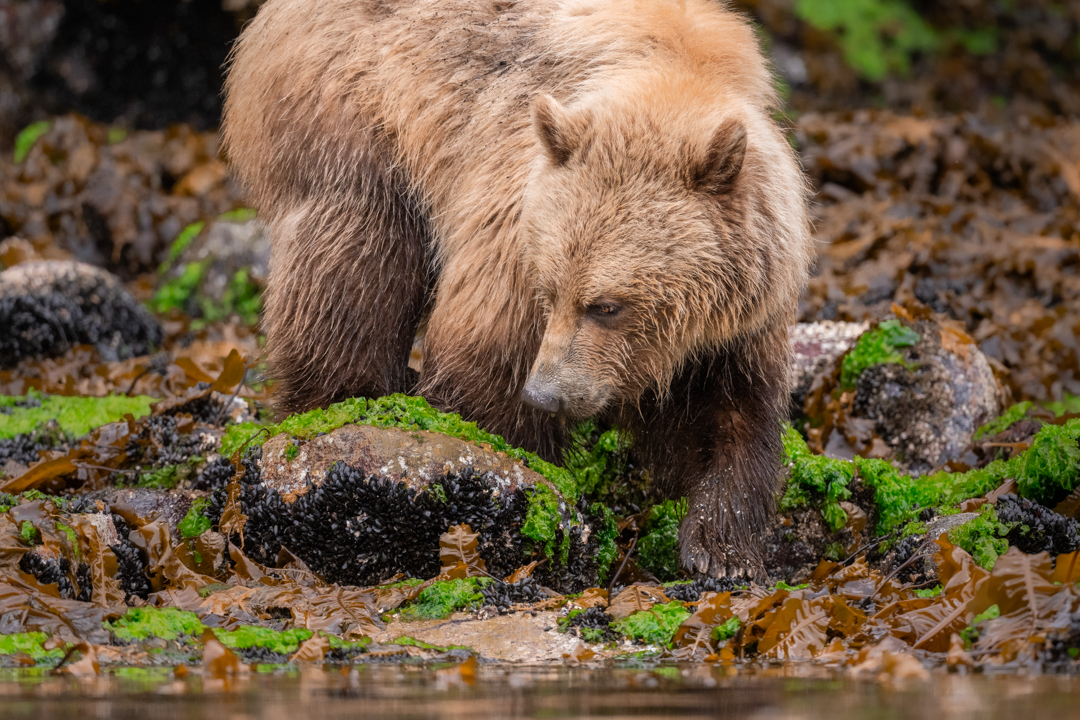
In the spring an important part of a grizzly bear’s diet is high protein sedge grass.  This grass grows in the estuary of the Glendale River that is flooded with salt water at high tide. After the hour or so boat ride from Grizzly Bear Lodge to the river estuary we change boats for a large skiff which allows us to travel up the rive through the acres of sedge grass and obtain some close up photo of the bears grazing. This grizzly is letting us know that we may be with in its comfort zone and it is time to drift down river and give it room. Grizzly bears eat the grass in spring and early summer but once it goes to seed they move on to other food sources like salmon.


Guide Photos

dolphins speeding
Click to enlarge then click again

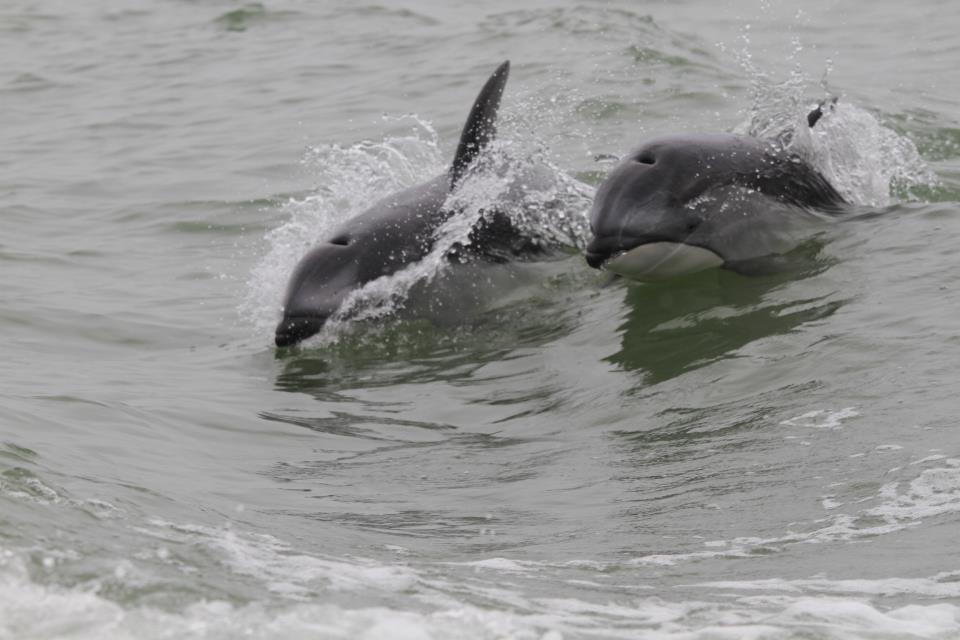
Pacific white sided dolphins travel in groups that are between 50 to 200 but on occasion will reach numbers of up to 2,000. These dolphins can travel quickly reaching speeds of up to 45 kph (30 mph). They are acrobatic with airborne flips and leaps can reach extreme heights. Like all dolphins they like to ride the bow wave of a boat and stick their nose into the prop wash. The best way to obtain a good photo is to spend twenty of thirty minutes in their presence and constantly take pictures and to hope there are some goods ones when you do your editing in the evening back at the lodge. All our day trips whether to the grizzly bears, whale watching or Trapper Rick’s often encounter pods of white sided dolphins.


Guide Photos

grizzly salmon under belly
Click to enlarge then click again

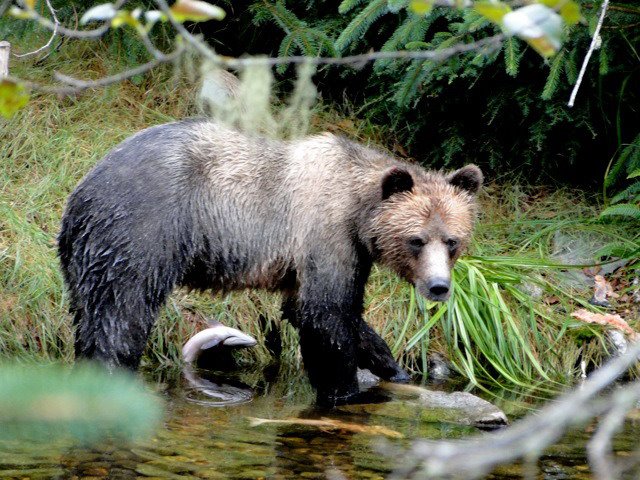
This past summer part of the early run of salmon into the spawning channel died because fresh cool water from the lake feeding the channel was not released soon enough. If the water in the spawning beds becomes too warm it loses oxygen and salmon suffocate. This photo shows a late August grizzly bear; late August because it does not have the fat belly it will have later in the season when one normally sees this number of dead uneaten salmon. The positive of the salmon kill is that many more bears came early to feed in the area of the spawning channel. Unfortunately the control of water to the spawning beds is not under the control of those most often in the area and it takes time for other to respond.


Guide Photos

timid grizzly cub
Click to enlarge then click again

The May grizzly cub shown in the April 8th posting shows by comparison the growth that takes place in a little over three months. Even without another grizzly in the photos the size difference is amazing. This growth is because grizzly bear milk contains up to 33 percent fat, more than that in heavy whipping cream. While whole milk just as it came from the cow contains about 3 1/2 percent milk fat. During this time the cubs alternate between nursing, grazing on sedge grass, a variety of berries and obtaining protein from under the rocks turned over on the beach.


Guide Photos

floatplane at grizzly bear lodge
Click to enlarge then click again

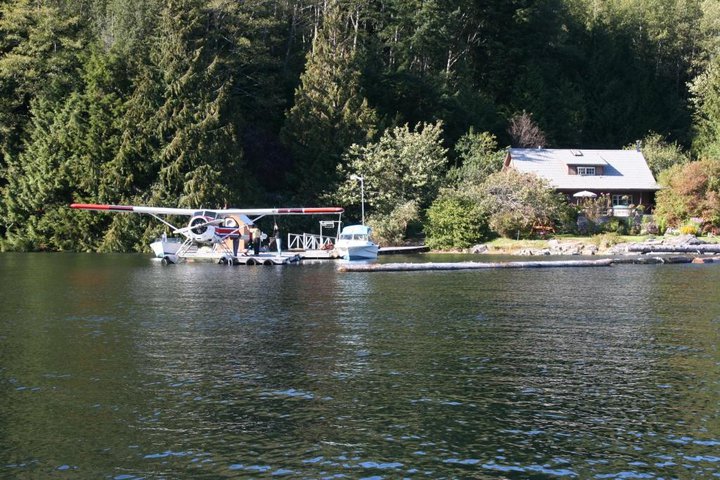
From a guides perspective this is a good view of a seaplane at the dock of Grizzly Bear Lodge. The first reason would be that we are on the water and not carrying luggage or boxes of food up to the lodge. The second is that if we were on the dock carrying luggage it is a high tide. The float is about the same level as the shore and this makes the trips allot easier. The summer tides can be four or five meters (yards) in height and this makes for a steep ramp up to land level. The flight to the lodge from Campbell River takes about forty-five minutes and flies over some great coastal scenery so be sure to have your camera at hand and not stowed in your suitcase. 


Guide Photos

grizzlies three in a row
Click to enlarge then click again

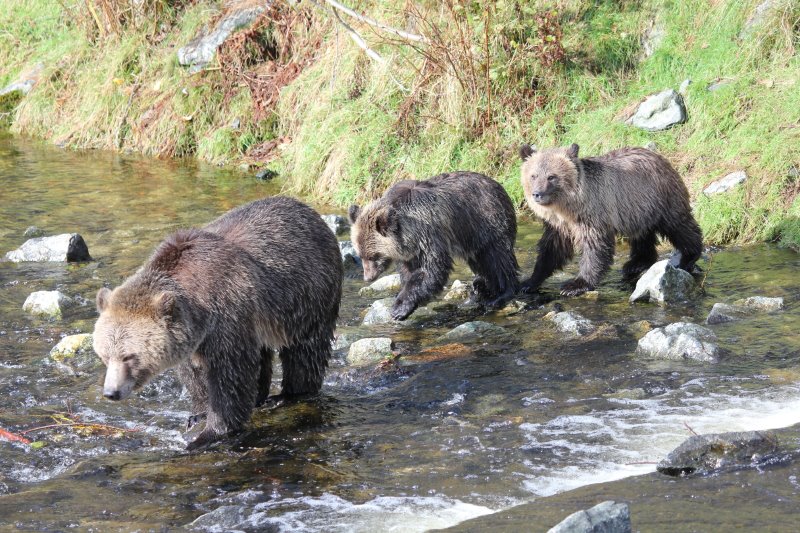
The size of these second year cubs can be compared to the April 8th and 10th posting, which show first year cubs. Grizzly bear cubs generally stay with their mother for two years, although they will stay for three or four if the sow does not become pregnant in the fall of their second year. Pregnancy triggers a reaction in the sow through which she drives the cubs off and hibernates on her own in preparation for giving birth to new cubs the following spring. Cubs will often spend their first hibernation together, and three-year olds observed in frequent close proximity in the spring are most likely to be siblings who have denned together. Even second year cubs stay close to their mother especially when they are on a fishing river in the presence of other bears.


Guide Photos

whales and sea lions
Click to enlarge then click again

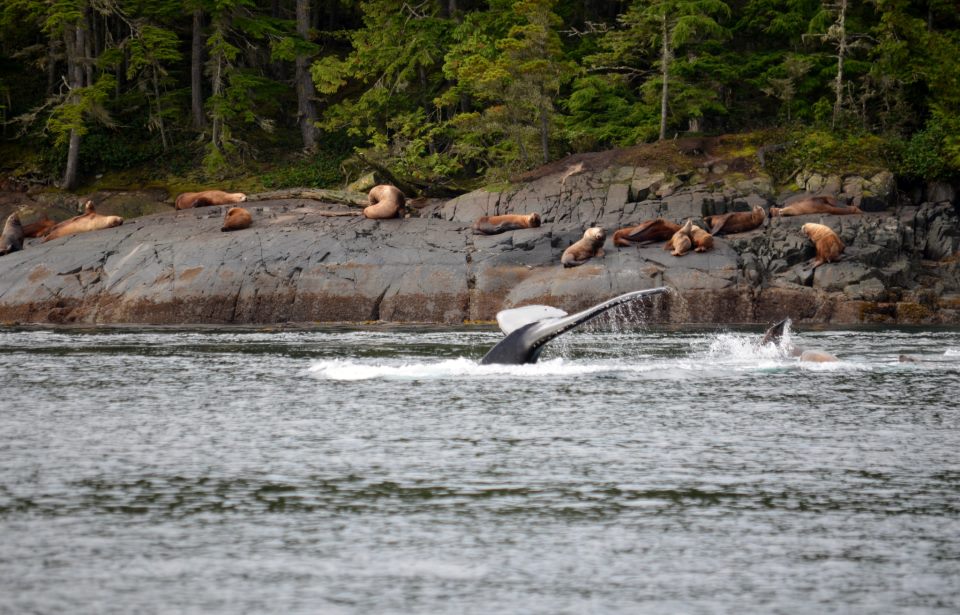
It is not uncommon to see Steller sealions play with humpback whales. I have found no research to explain the behaviour and from the times that I have viewed these actions they do not appear aggressive just interesting to observe. In this case it is a humpback passing the small island that is one of the “haul outs” for the sealions and a few in the water following it as it dives. Other times they will follow it along the shore and go to where it surfaces after a dive.