Grizzly Bear and Wildlife Tour Blog

We offer an exceptional fly-in lodge for Grizzly Bear Watching and Whale Watching in British Columbia.

Learn about What’s happening at the Lodge, view our British Columbia’s Wildlife Report, read our Grizzly Bear Watching Blog and Whale Watching Blog. Learn more about a Day on the River Blog, see Our Tour Guide’s Photos & Blog and  Photos from Our Guests.

Guide Photos

grizzly face off
Click to enlarge then click again

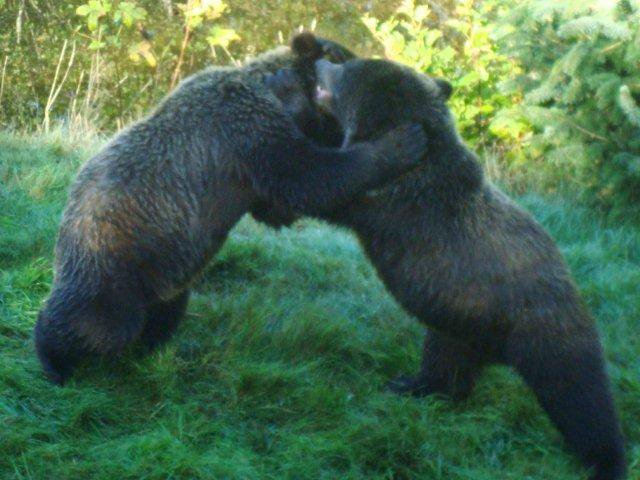
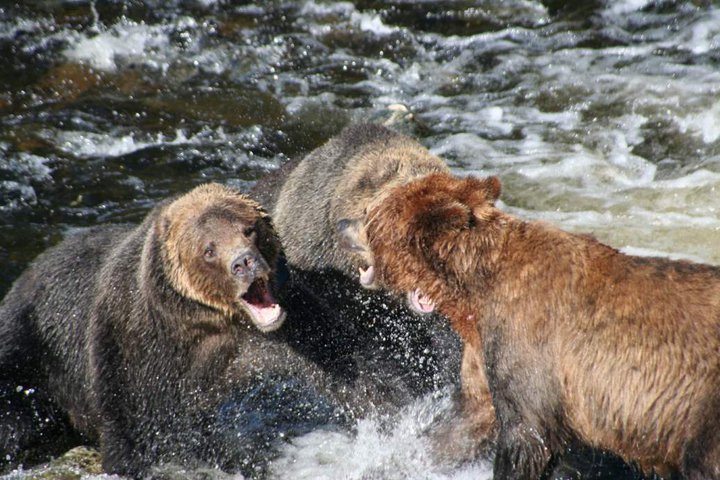
Most disputes between grizzly bears over the best fishing spots end with one side deciding that the amount and the ease of catching salmon does not warrant getting hurt. In this case the reddish grizzly is also defending the fishing area for two cubs and it is not good to upset a mother. This photo was taken in the fall just below the viewing stands on Knight Inlet’s Glendale River. The grizzly watching tours from the lodge normally views a variety of bear activity from feeding to feuding and all that lies in between.
 

Guide Photos

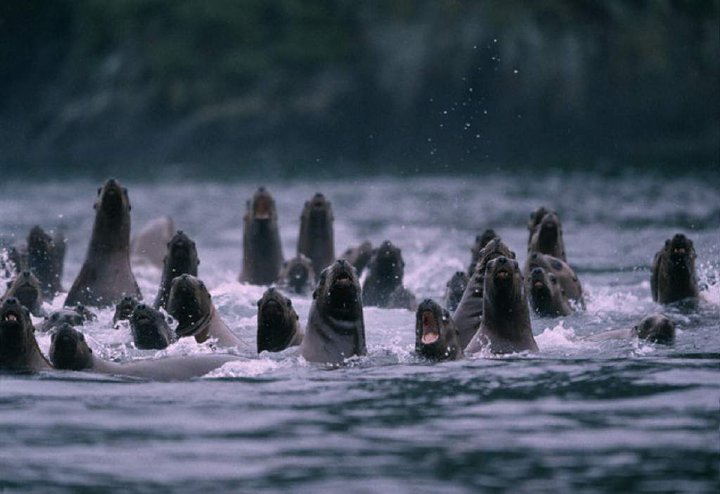
sea lions charging
Click to enlarge then click again

Some Steller sealions have started to spend their summers in our viewing area. The whale watching safari from Grizzly Bear Lodge travels from Minstrel Island on Knight Inlet to Johnstone Strait and Vancouver Island. This hour trip places us in an area of a variety of marine wildlife such as killer whales (orca), humpback whales, sealions, seals, pacific white-sided dolphins, dall porpoise, harbour porpoise as well as bald eagles and numerous species of ducks and gulls. All of this is because of the abundance of herring which one way or another is the main source of food, either eating the herring directly or indirectly through salmon. Some of the Steller sealions, about three dozen, which used to pass through on their migration now summer here.


Guide Photos

young bald eagle
Click to enlarge then click again

Bald eagles are common on all day tours whether on the grizzly bear tour, whale watching safari or the extra day wildlife trip to the Kakweikan River and Trapper Rick. In the fall when the salmon are spawning in Knight Inlet’s Glendale River the eagles come down to the riverbank to feed on dead salmon. All birds of prey find it easier to eat carrion than catch their own food and a riverbank full of spawned out salmon is the ideal place. On our skiff rides up the river adult and juveniles eagles remain on the riverbank and refuse to leave their meals while we pass close. As shown in this photo we tend to get the “eagle eye” as if to say, “this is mine, keep going”.


Guide Photos

grizzly hiding
Click to enlarge then click again

An interesting photo of a grizzly bear taken in the spring.  This is the estuary at the mouth of Knight Inlet’s Glendale River. In the spring we travel up the inlet for a little over an hour, looking for black bear, eagles, dolphins and whales along the way, to the river estuary. Upon arriving we transfer to a large shallow draft flat-bottom skiff used for viewing along the shore and up the river. The protein rich sedge grass growing in the area attracts the bears and offers great viewing opportunities. This is large bear walking through a patch of grass. Large because the sedge grass is normally better than a meter (three feet) tall.


Guide Photos

grizzlies fight
Click to enlarge then click again

Not all encounters between grizzly bears are friendly but this one between siblings was playing. The wildlife tours from the lodge travel up Knight Inlet to view the grizzly bears along the shore in the spring and after August 24th we move up the river to the viewing platforms which overlook a man-made salmon spawning channel. Both along the beach and on the river we encounter juvenile bears testing their strength in play. The only true aggression is when a mother with cubs encounters a male bear or when one bear is defending its claim to a fishing area. But even these rarely end in injury as mothers are a “force of nature” normally left alone and the abundance of salmon in the area make the fishing spot not that important.


Guide Photos

orca porposing
Click to enlarge then click again

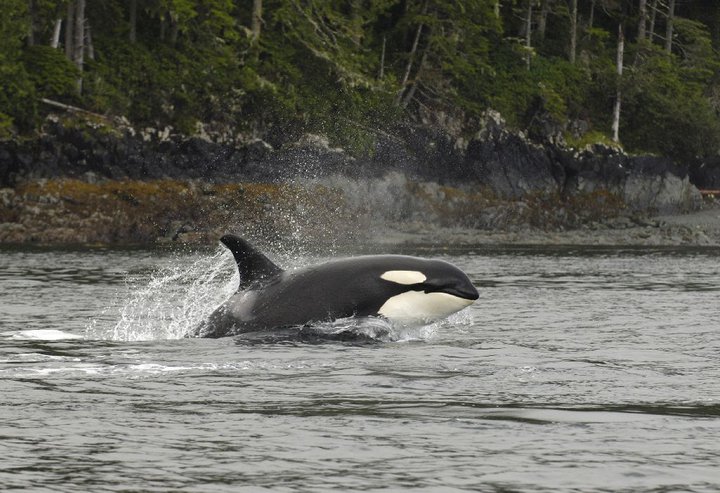
As this photo taken, on a whale watching tour shows orca has a very distinctive coloring. While these markings are beautiful, they do have a very important purpose. The quote from “The Orca Ocean” website is a good explanation.
      “The first thing the orca’s markings do is to help break up their shape in the water. This is known as Disruptive Coloring. Close up the orca is quite visible in the water. However, when the orca gets further away, the white spots help to make the orca look like a collection of smaller animals, thus fooling their prey. Another bit in fooling their prey the eye patch. Animals that are being attack will instinctively go for the eyes. Sharks protect their eyes from seals and sea lions with membranes that come up and cover the eye. Orcas, however, have the large eye patch that the prey will focus on and therefore leave the actual eye unharmed.
      The other purposes the coloring on a killer whale is what is known as Counter Shading. Counter shading is a form of camouflage. What it does is simple: When an orca is swimming above their prey and the prey looks up the orca’s white patches will blend in with the light shinning down from the surface. Aforesaid, the black patches that remain fool the prey in to believing the orca is a collection of smaller animals. The counter shading also works when the orca is swimming below the prey. The animal will look down and see only hints of white and a black back that blends with the dark waters.”


Guide Photos

grizzly scaring salmon
Click to enlarge then click again

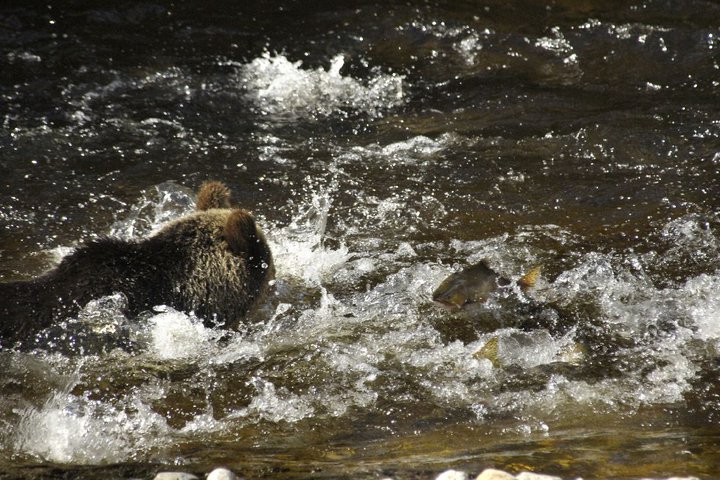
With all those salmon in the water one would think that it would be next to impossible NOT to catch one. The key to catching salmon is shallow water, as grizzly bears tend to grab the salmon with their mouth after they have pinned them to the bottom with their claws. In this photo the bear is in water over a meter (yard) deep so it becomes much more difficult to push a salmon from the surface to pin it on the bottom. The photo in the April 3rd posting is a better example of a successful grizzly bear fishing. The fall tours from the lodge are on the Glendale River, which provide a variety of locations and many opportunities to watch bears catching and eating the spawning salmon. 


Guide Photos

grizzly triplets on log
Click to enlarge then click again

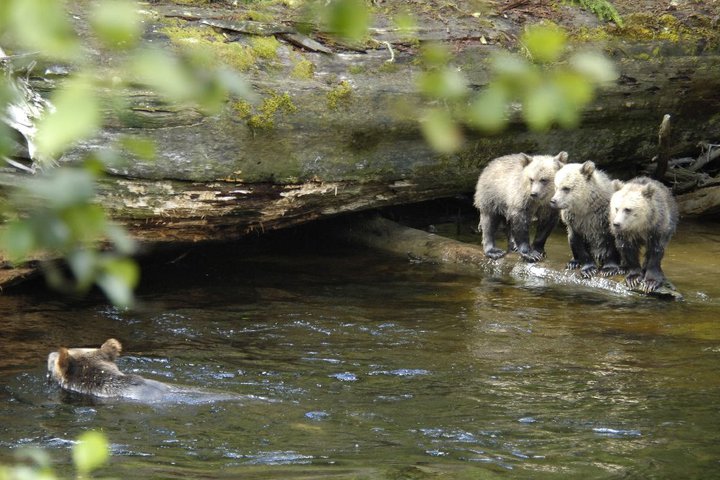
April 8th posting shows a May cub while these three are also first year cubs this photo was taken some time after August 24th when we are permitted to use the viewing stands on the Glendale River’s spawning channel. Three months has passed and even though this mother is feeding triplets they are allot larger than the May cub. A several more months of eating salmon and these three should be ready to den for the winter. The survival rate for cubs in our viewing area in quite good. It is common on the grizzly tours to see mothers with sets of twins and triplets in the spring that we had viewed the previous year.


Guide Photos


stumps
Click to enlarge then click again

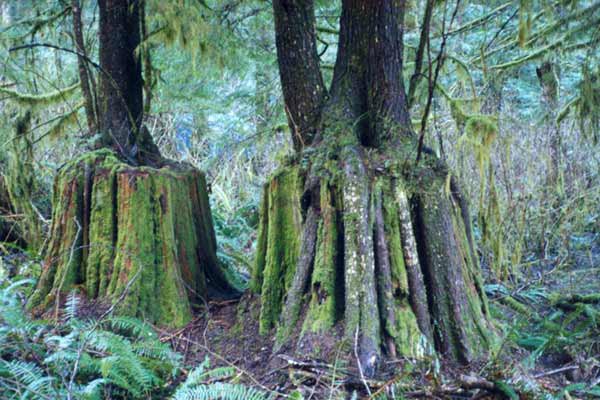
The old stumps such as seen in the above photo are found along the road to the grizzly bear viewing stands, on the forest walk on the extra day spent at the “wild river” and on the walking trail behind Grizzly Bear Lodge. The notches cut into the stump, on the right, were for the springboards used by hand loggers. These boards were to raise the loggers up the tree trunk to an area that was narrower than at the base were it would take less time to “fall” the tree. Remember that hand logger means the long two-man hand saw using “armstrong” power and not motorized.


Guide Photos

grizzly first year cub on a rock
Click to enlarge then click again

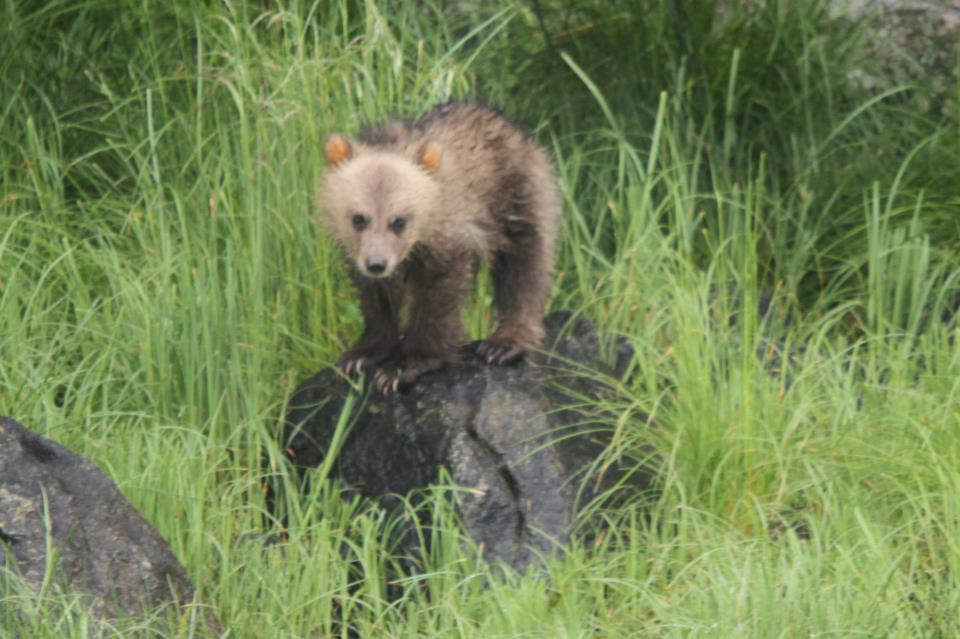
Grizzly bear watching from our lodge in Knight Inlet starts in late May. At this time of the season the mother grizzlies bring their cubs, born in the den between January and March, to the beach for the first time. The three or four month cubs are very timid the first time they see a boat but when the mother ignores the “clicking cameras” so do the cubs but they are still alert to our presence. If the size of a dog pup’s feet is an indication of its eventual size then this cub will develop into a good-sized bear.