Grizzly Bear and Wildlife Tour Blog

We offer an exceptional fly-in lodge for Grizzly Bear Watching and Whale Watching in British Columbia.

Learn about What’s happening at the Lodge, view our British Columbia’s Wildlife Report, read our Grizzly Bear Watching Blog and Whale Watching Blog. Learn more about a Day on the River Blog, see Our Tour Guide’s Photos & Blog and  Photos from Our Guests.

Male Grizzly Bear on Spring Tour

lage male grizzly
Click to enlarge then click again

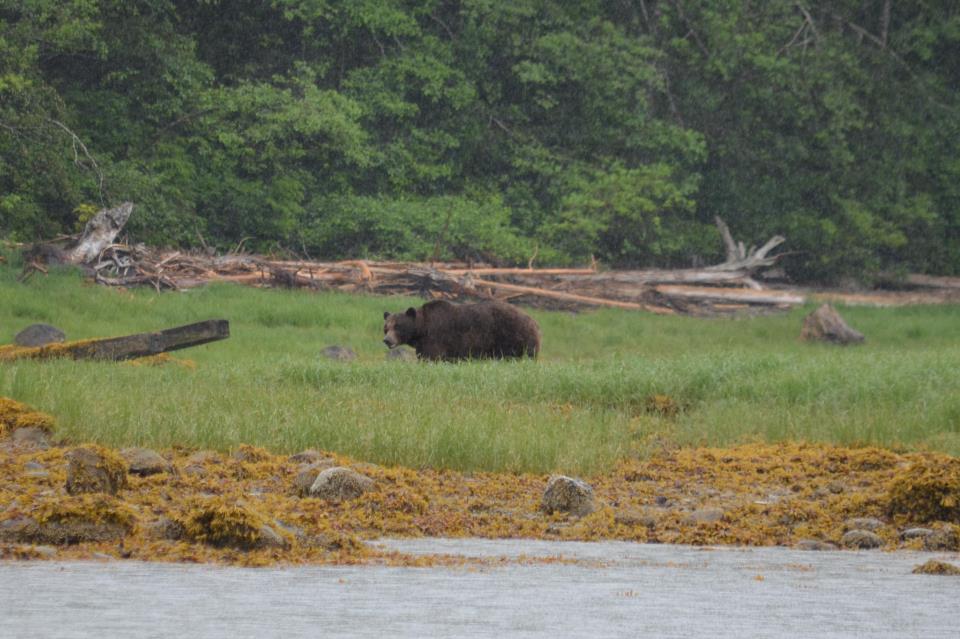
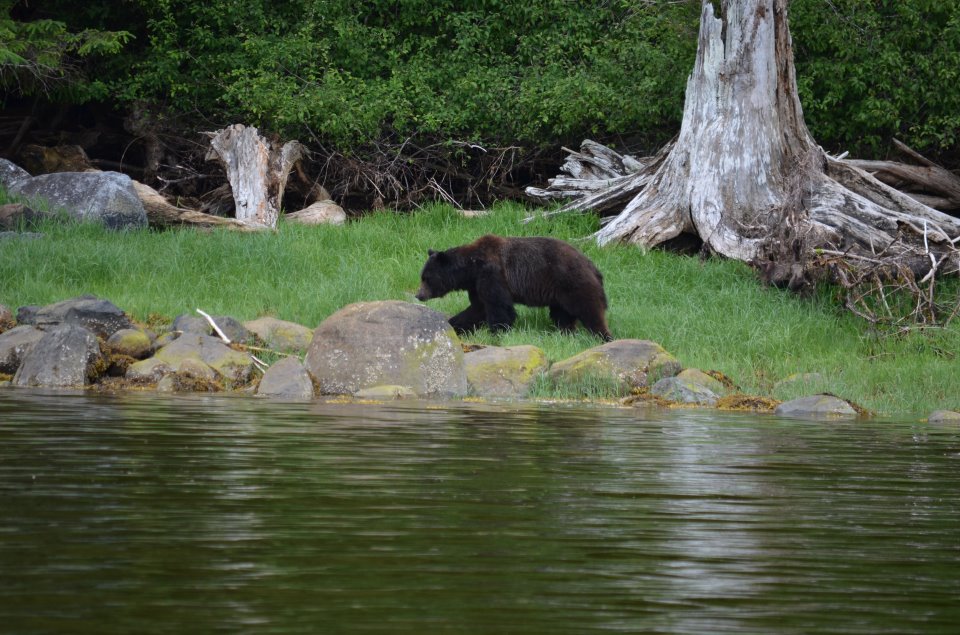
Grizzly Bear lodge’s grizzly tours from May to mid-August are in Knight Inlet’s Glendale River estuary. The bears come to this area to graze on the sedge grass and to turn over rocks at low tide for protein.  However the large males which also appear have something else on their mind. Mating season runs from May to early July. Cubs are usually born between January and March. The female usually has two cubs. The cubs are blind and weigh approximately 500 grams (one pound) at birth. The cubs will grow to weigh 3-4 kg (7 to 8 lbs.) prior to emerging from the den in spring. The bear in this photo was in the area for several days until he approached the female in tomorrows posting.
Pacific White-sided Dolphins

dolphins on tour
Click to enlarge then click again

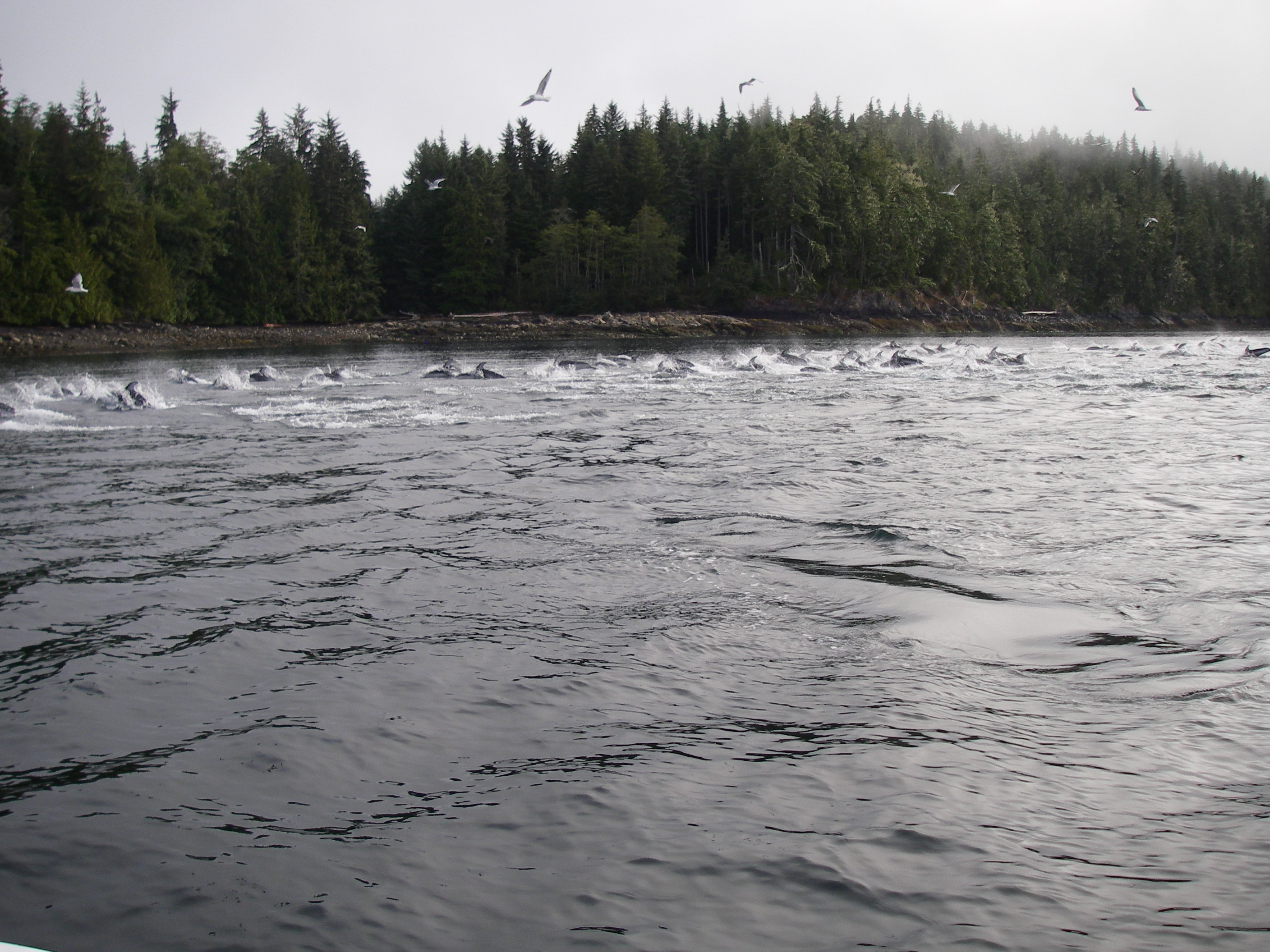
“In British Columbia, Pacific white-sided dolphins move inshore/offshore throughout the year. Pacific white-sided dolphins are opportunistic predators feeding on over 60 species of fish and 20 species of cephalopods (octopuses, squid, and cuttlefish etc.). In BC, they feed on at least 13 different prey species, including salmon, herring, Pollock, shrimp, sablefish, smelt, and squid.  They forage cooperatively, though large groups may separate into smaller sub-groups for foraging purposes.  These feeding groups have been observed corralling and herding fish in a coordinated fashion.” Quote from Wild Whales b.c. cetacean sightings network website.  
This photo is of dolphins forging activity that we followed as they worked through a large bay (Parsons Bay) adjacent to Johnstone Strait.  There were at least three hundred dolphins that would churn the water in an area then stop and eat before rushing through another area. We observed them for about forty-five minutes.

Almost a Black Bear

black grizzly
Click to enlarge then click again

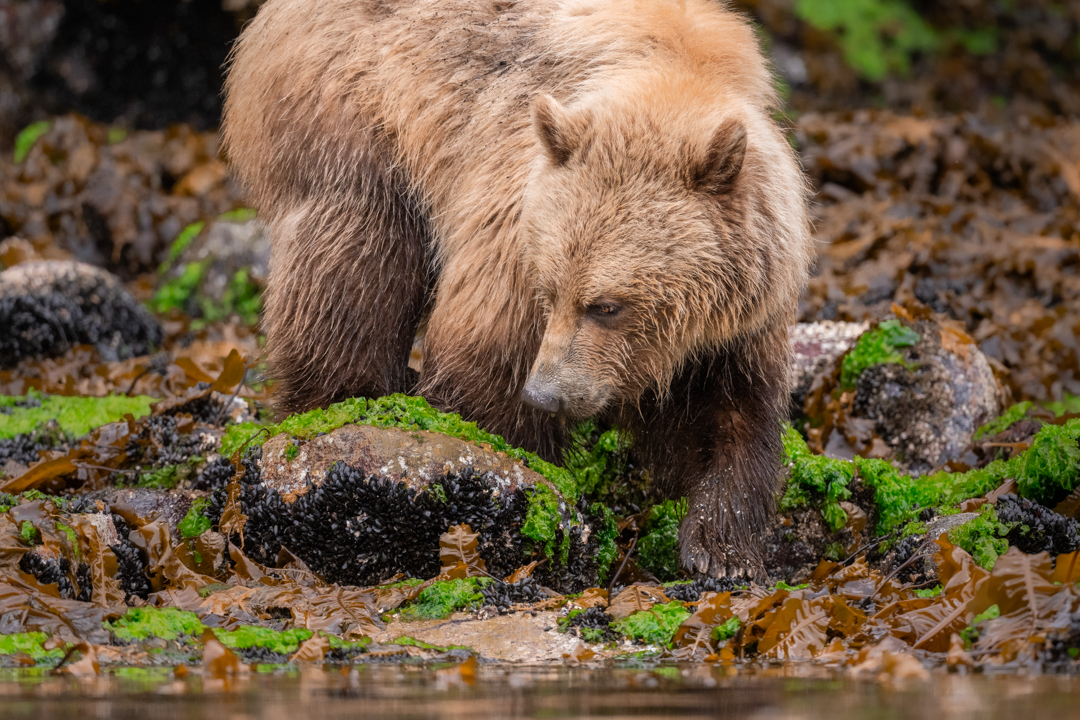
The grizzly bears we view in the river mouths of Knight Inlet vary in colour from almost blonde to dark brown, which appears black. As the photo shows the most identifiable trait of a grizzly bear is the large hump on their shoulders, a powerful muscle they use to power their forelimbs through their daily routine. Grizzlies dig through the earth for wild rice and skunk cabbage bulbs, tear apart rotted logs in search of roots, insects, rodents, and other grubs as well as spend their days on the beach turning over rocks. Their massive hump is also the muscle powering them as they dig out winter dens, often in steep and rocky mountain terrain.

Grizzly Behaviour

neck straining grizzly
Click to enlarge then click again

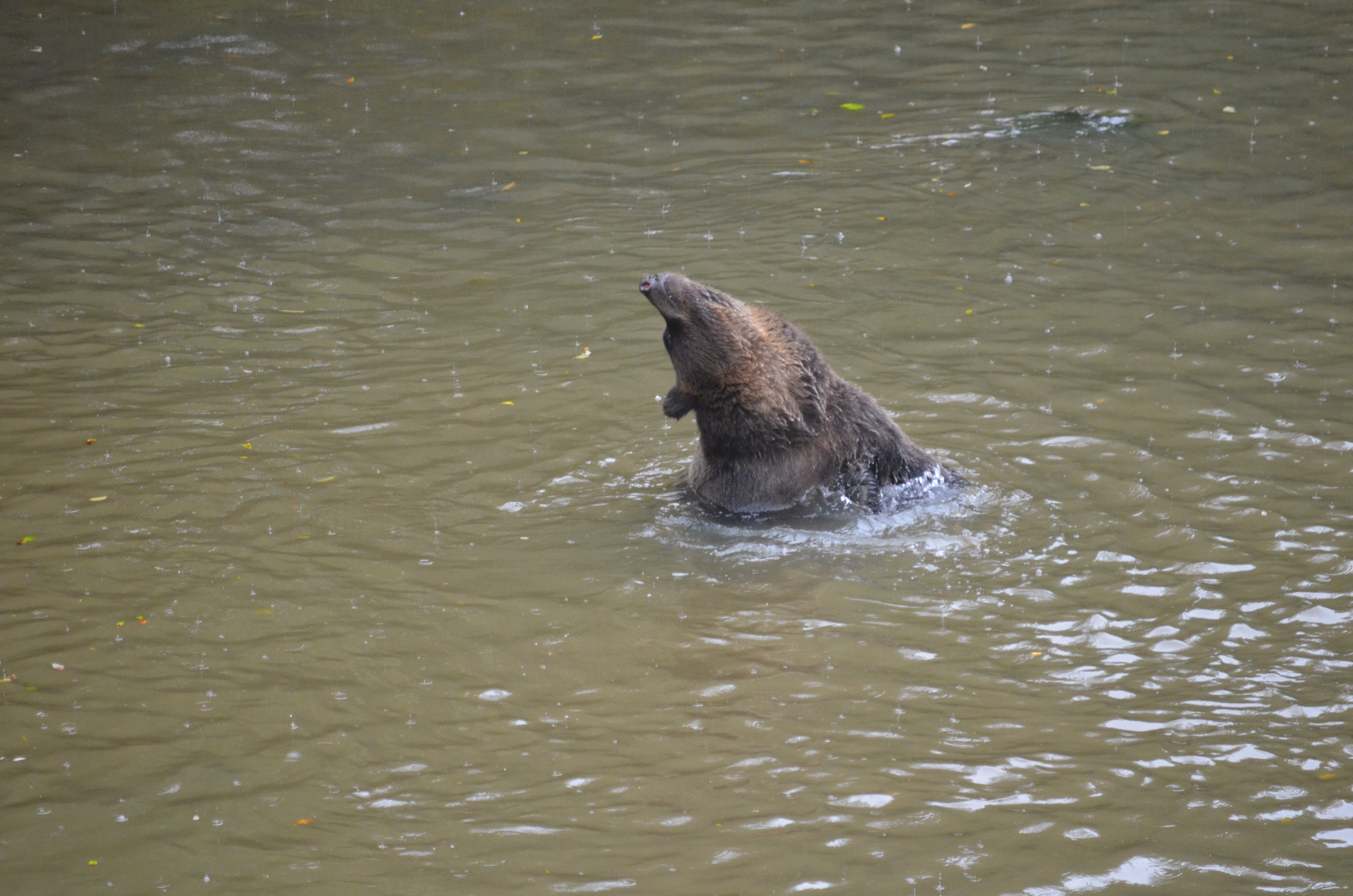
This grizzly bear was in the pool, which is the entrance to the spawning channel.  The water is too deep to allow the bears to pin the salmon on the bottom and then grab them with their mouth so the fishing technique is a little different. The salmon caught in this area are ones that have been injured or killed by the bears further up the channel and have drifted into deeper water and are being lifted off the bottom by the lazier bears. Less energy is used in this fishing and the salmon taste the same however on this day the water was a little “muddy” from the previous day’s rain so it was fishing by “Braille”.

Grizzly Bear Cooling in River

grizzly cooloing in water
Click to enlarge then click again

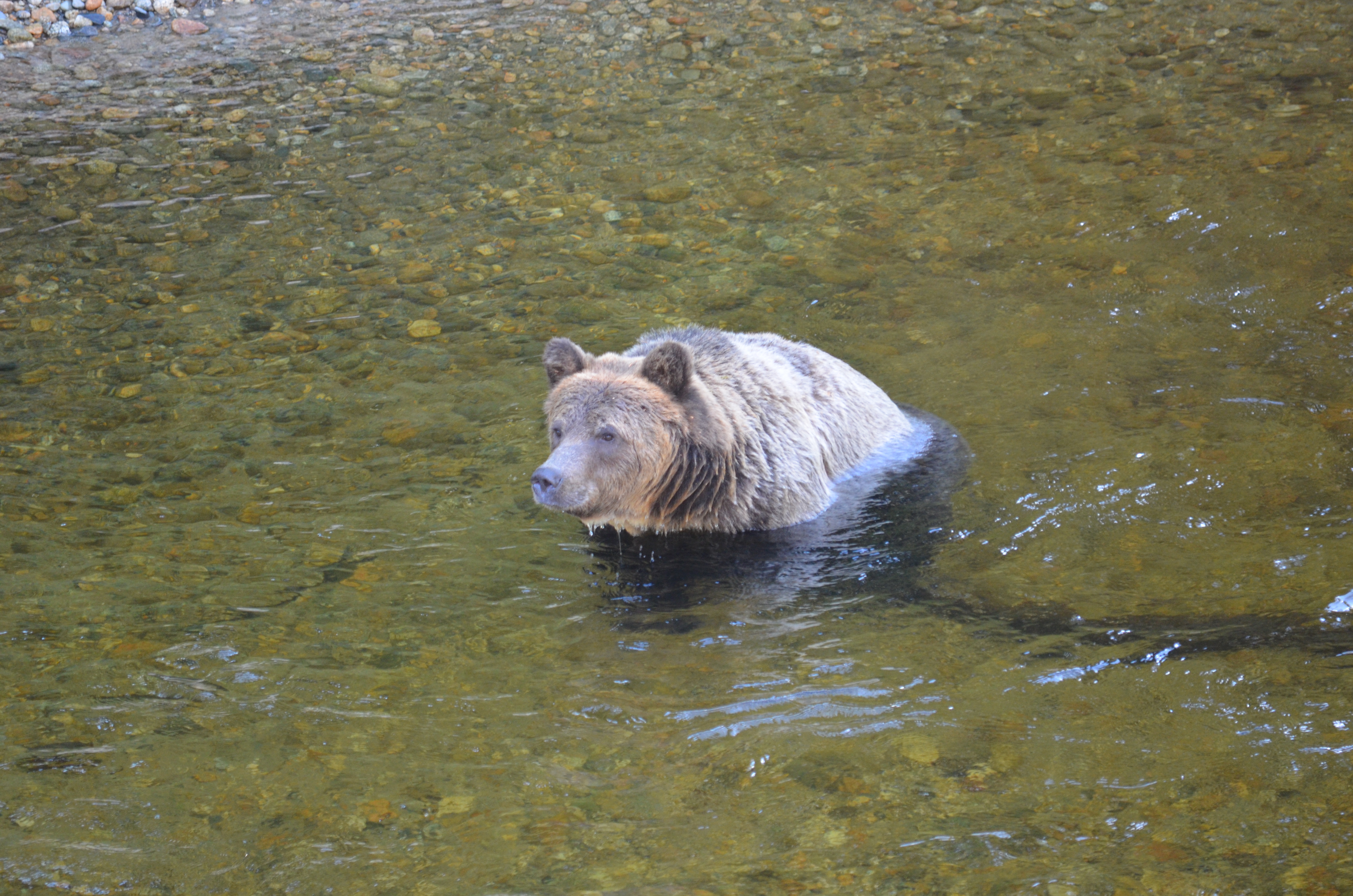
This summer there were some warm days on Knight Inlet’s Glendale River. This photo was taken on the first of September from the viewing stands.  After August 24th Grizzly Bear Lodge’s grizzly watching tours are permitted to use the viewing stands on the Glendale River, this is an hour and fifteen-minute boat ride from the lodge. This grizzly bear was on the natural riverside of the stands just enjoying the cooler river water.  It spent about ten minutes just sitting and letting the cool water flow past before it resumed fishing for the “pink” salmon.

Curious black bear cub

black bear alert
Click to enlarge then click again

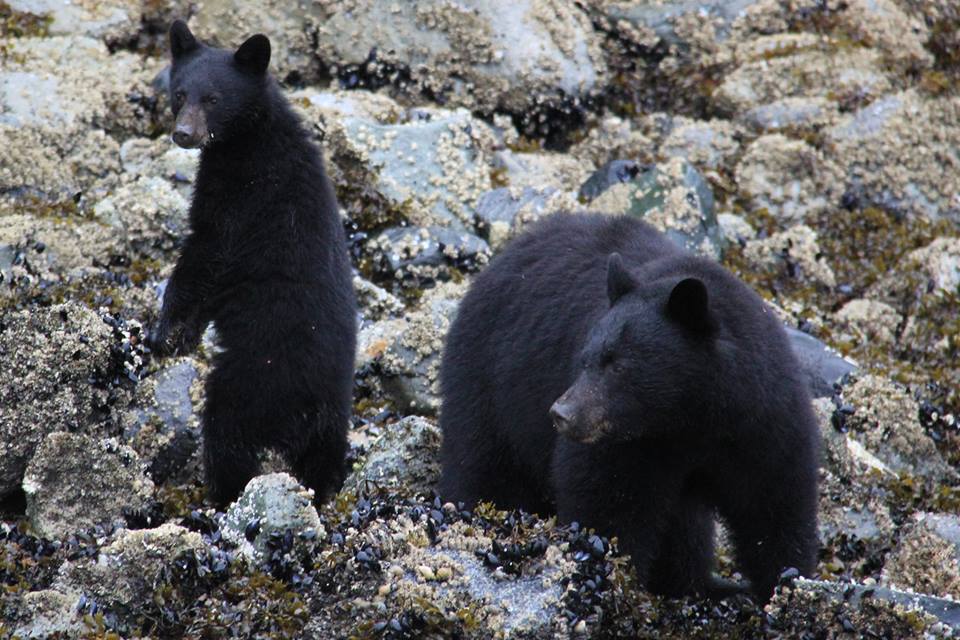
The black bear tour occurs on your first evening in the lodge however black bears are often found on the grizzly bear tours and the whale watching trips. As all tours are by boat we travel along the shore looking for bears and frequently view bears on the beach looking for food. The lower the tide the better the opportunity for good viewing. It is normally the cubs that are concerned with our presence the mother are more likely to accept a boat coming close and the older bears, male or female, without cubs tend to ignore the boats. In this case the cub was taking notice but it did not run off as the mother was not concerned and that is who the cubs learn to ignore our intrusion.


Grizzly Bear Waiting

leary grizzly
Click to enlarge then click again

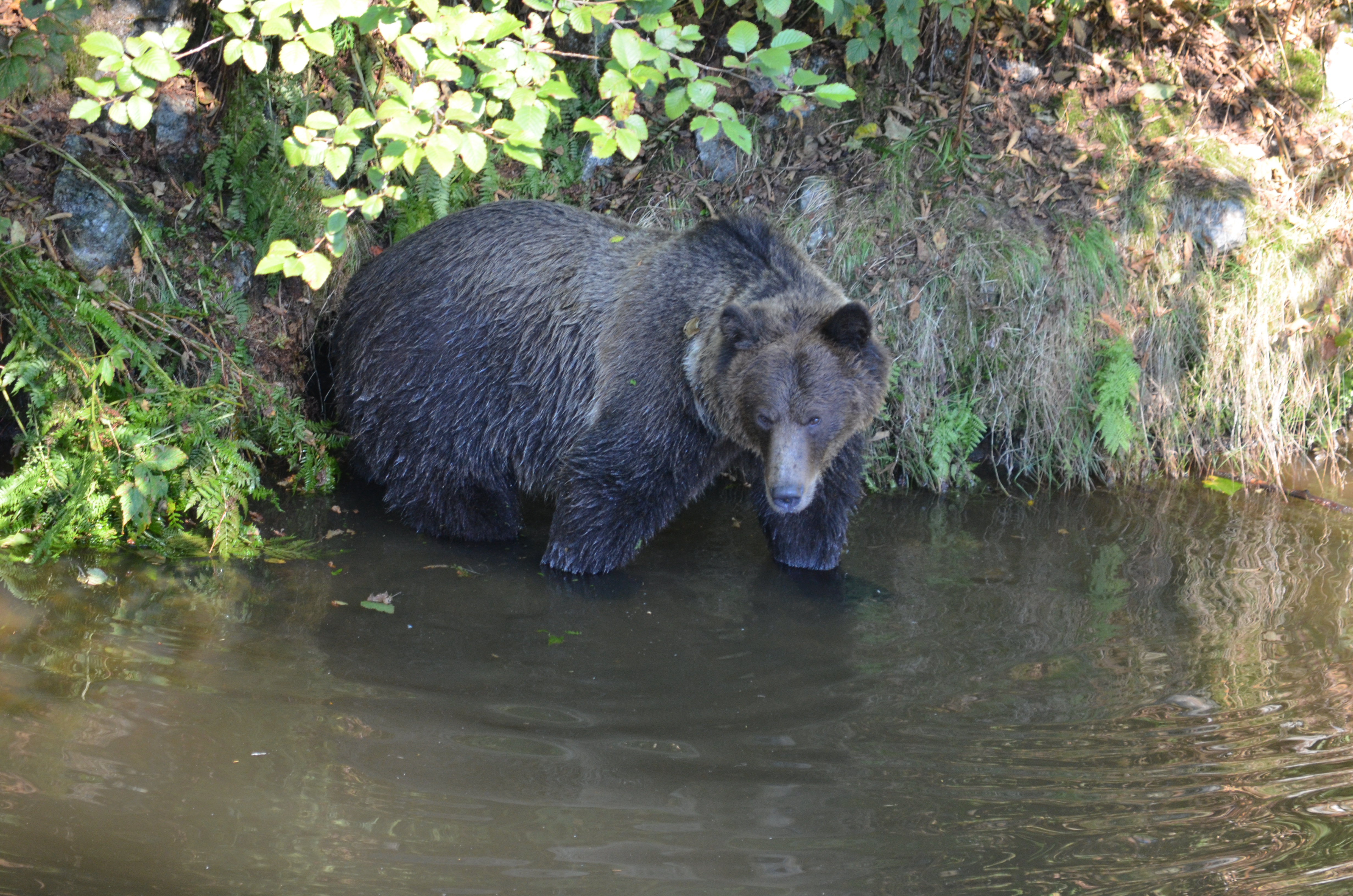
Our guests, from Grizzly Bear Lodge, spend two hours on the viewing stands enjoying their time watching and photographing the grizzly bears on Knight Inlet’s Glendale River.  However the bears do spend sometime watching the guests but by in large we are ignored as their prime goal on the river is enough food (calories) to fatten and survive the winter hibernation. This grizzly bear was more interested in the other bears in the area and whether it was safe to proceed into the fishing area we were not part of that decision.  Our presence actually makes it safer for mothers and cubs as well as sub-adult grizzly bears as the larger males are a little more cautious near humans.

Grizzly Bear Eating

eating salmon grizzly
Click to enlarge then click again

The viewing stands used by Grizzly Bear Lodge are located overlooking the small area the salmon rest in before moving over the weir into the man-made spawning channel.  This also makes for an ideal area for grizzly bears to catch the pink salmon that drift down river either having died from exhaustion prior to spawning or having escaped from other grizzlies feeding up stream.  This photo shows a grizzly enjoying its catch as well as three other salmon behind the bear. This bear is less that 15 meters (45 feet) from the stand and the photo shows that this is a female pink salmon (males have a large hump on their back and thus the name “humppy”) and the preferred catch for the bears because of the fat rich egg row is contains.

Whale watching – Florence and Ray 8

humpback near boat
Click to enlarge then click again

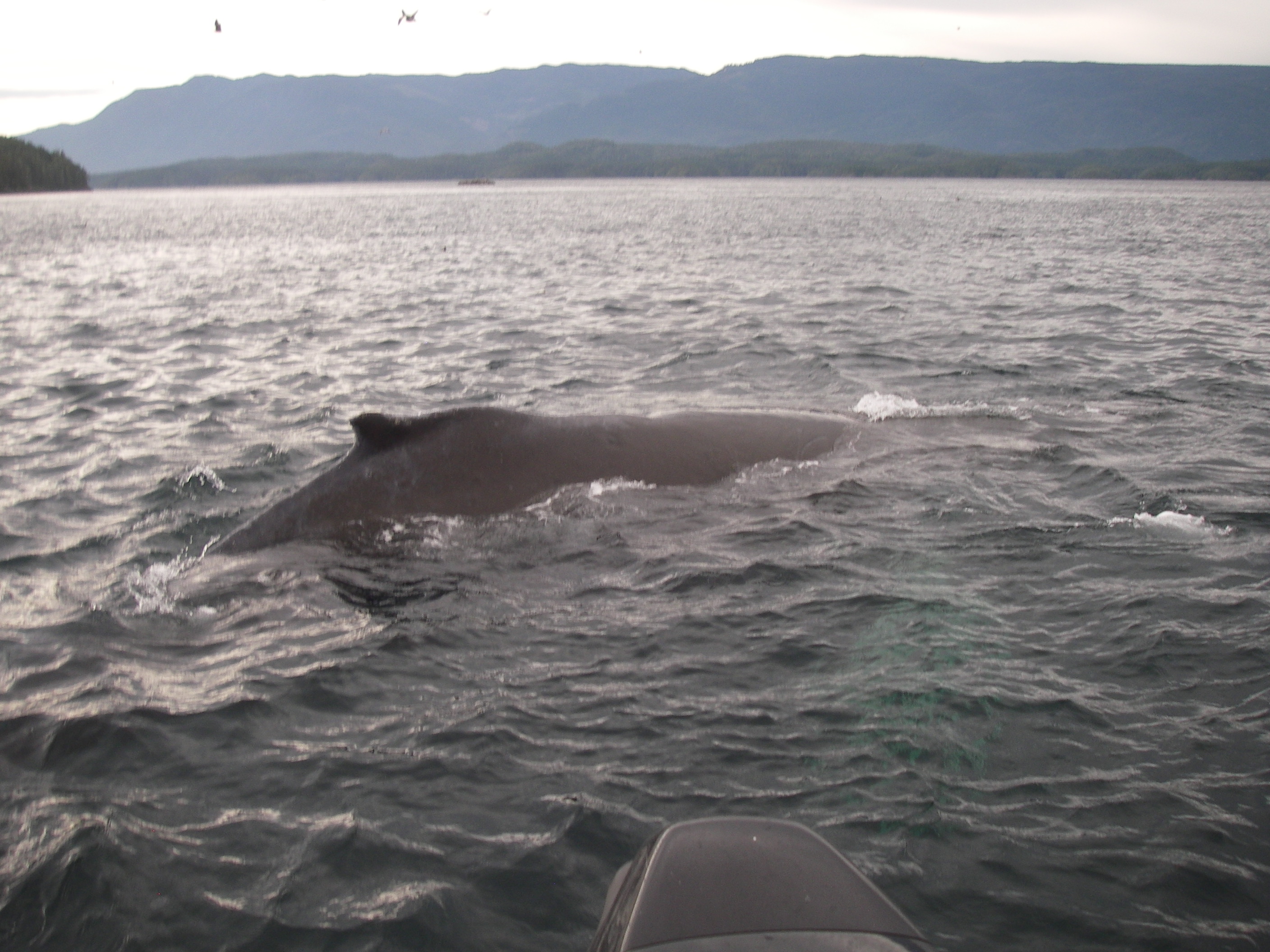
While on our whale watching day we managed to see stellar sealions, harbour seas, eagles and a few dolphins but all these are hard to compare to a humpback whale rising out of the water behind the boat while we are taking a lunch break. The important part of the previous sentence is the word “day”. We are not limited to as four-hour tour like the companies from Telegraph Cove or Port McNeil nor do we arrive late in the morning and have to leave early as the companies that travel from a greater distance. We are close to the viewing area, approximately 50 minutes, and unless it is your departure day there is no set time to return to camp so if the activity occurs later in the day we are later returning to the lodge.

Whale watching – Florence and Ray 7

whale of a tail
Click to enlarge then click again

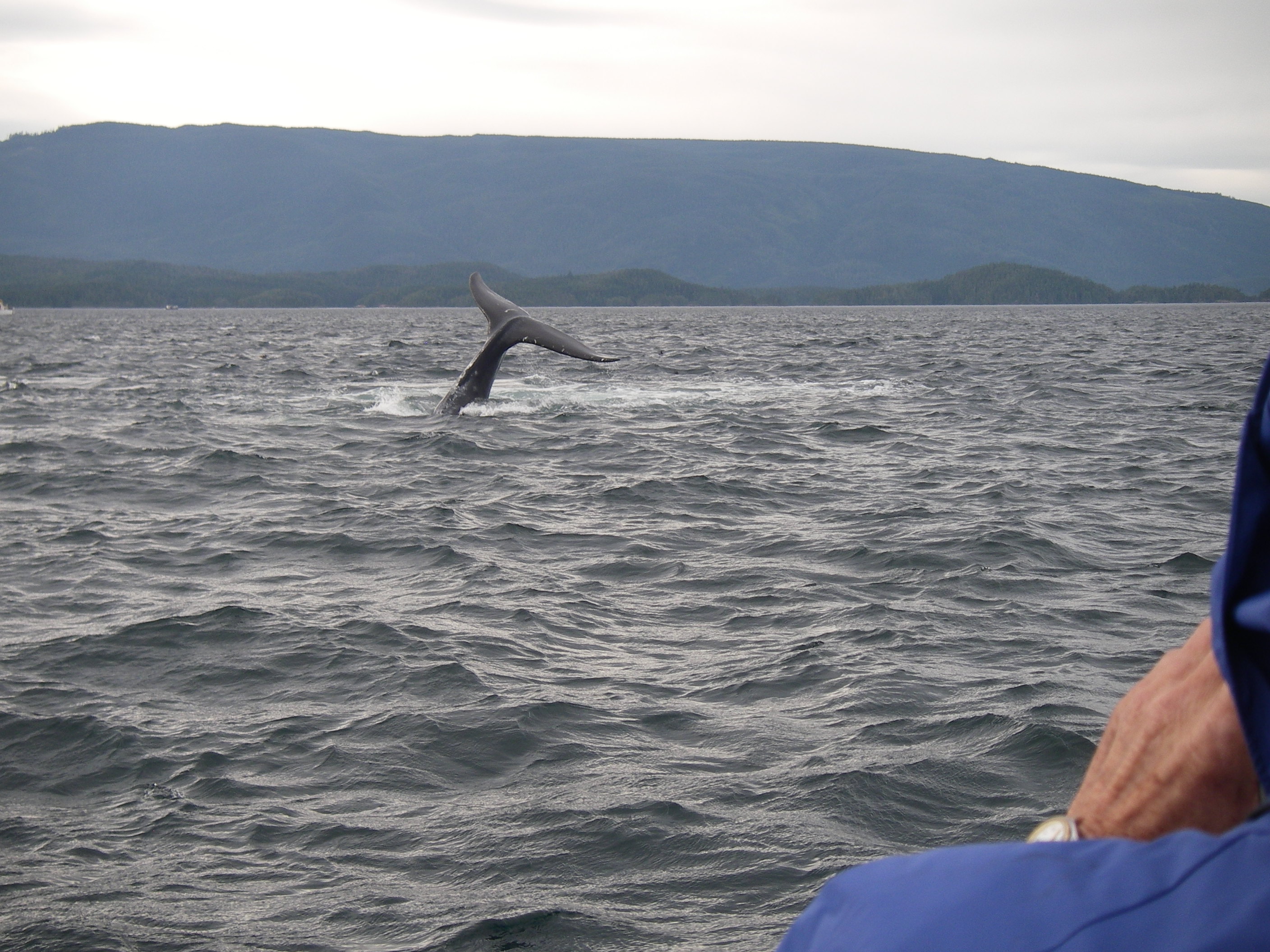
Florence and Ray’s whale watching day was also blessed with a very active humpback calf that spend part of it’s day entertaining us with a number of fluke (tail)) slaps. For some reason it would repeatedly (ten or twelve times in a row) slap the water stop for a few minutes and then repeat the process.