Grizzly Bear and Wildlife Tour Blog

We offer an exceptional fly-in lodge for Grizzly Bear Watching and Whale Watching in British Columbia.

Learn about What’s happening at the Lodge, view our British Columbia’s Wildlife Report, read our Grizzly Bear Watching Blog and Whale Watching Blog. Learn more about a Day on the River Blog, see Our Tour Guide’s Photos & Blog and  Photos from Our Guests.

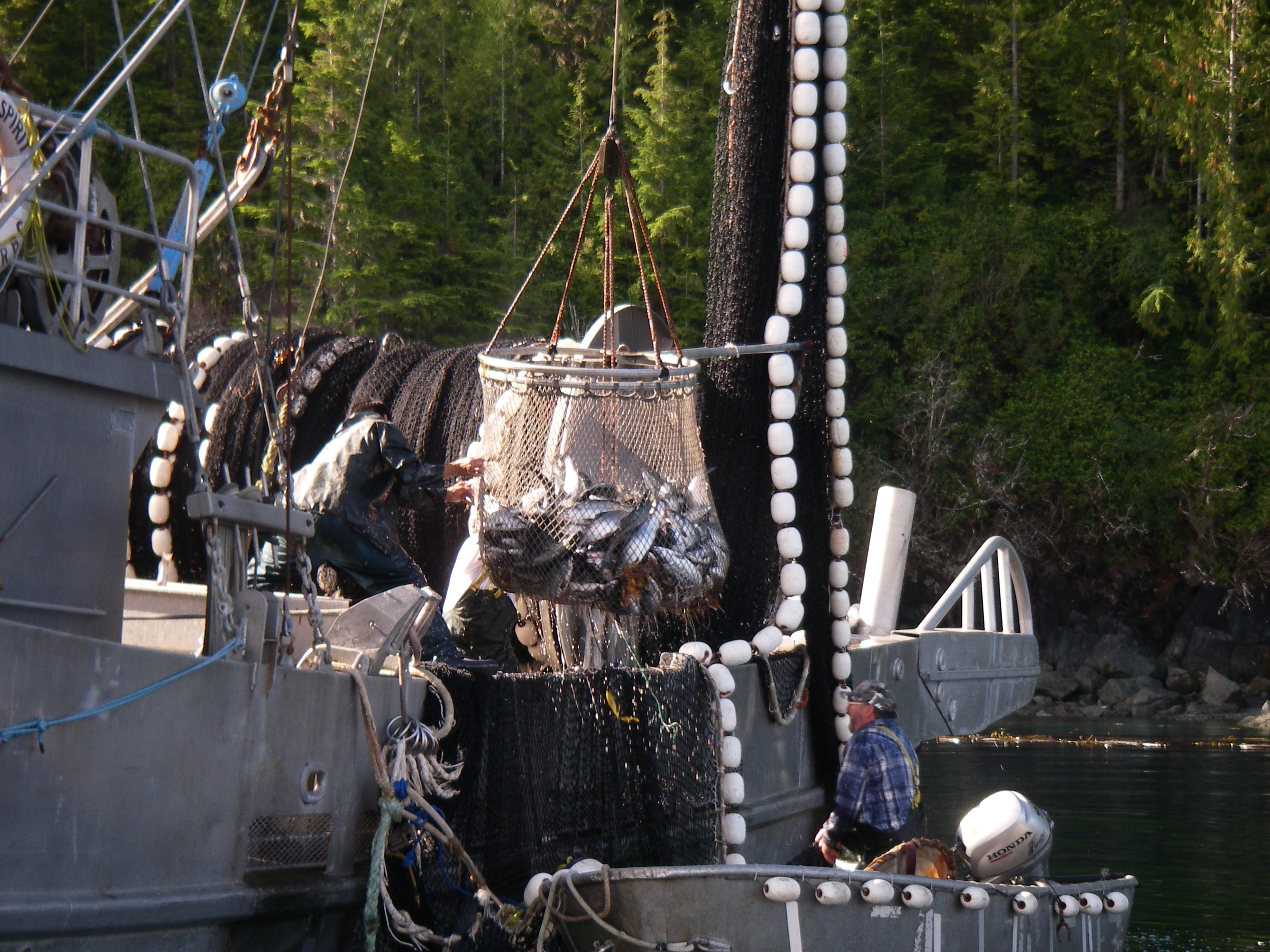
Purse seining

Sein Fishing 1Sein Fishing 2

A whale-watching safari does not only include wildlife it means stopping to watch and explain all things of interest. From log booms towed by tugs to seine fishing. Seine fishing is a method of fishing that employs a seine or dragnet net. A seine is a fishing net that hangs vertically in the water with its bottom edge held down by weights and its top edge buoyed by floats.  Once there are sufficient salmon in the net both ends are pulled together at the back of the boat and the bottom of the net held down by the weights is closed by pulling a draw string the same way one would close the top of a purse. Thus the name purse seining. The salmon are then bailed into the boat using a long handled net on ropes and a hydraulic wench. The nets are set and left open for about an hour but we try to watch the more interesting part of bailing the salmon this is not difficult to do as there are normally several dozen vessels fishing in the area at any one time.  The time frame of this picture it was a “food fish” for the local native people of Alert Bay.


Too many salmon

Too many fish to catch

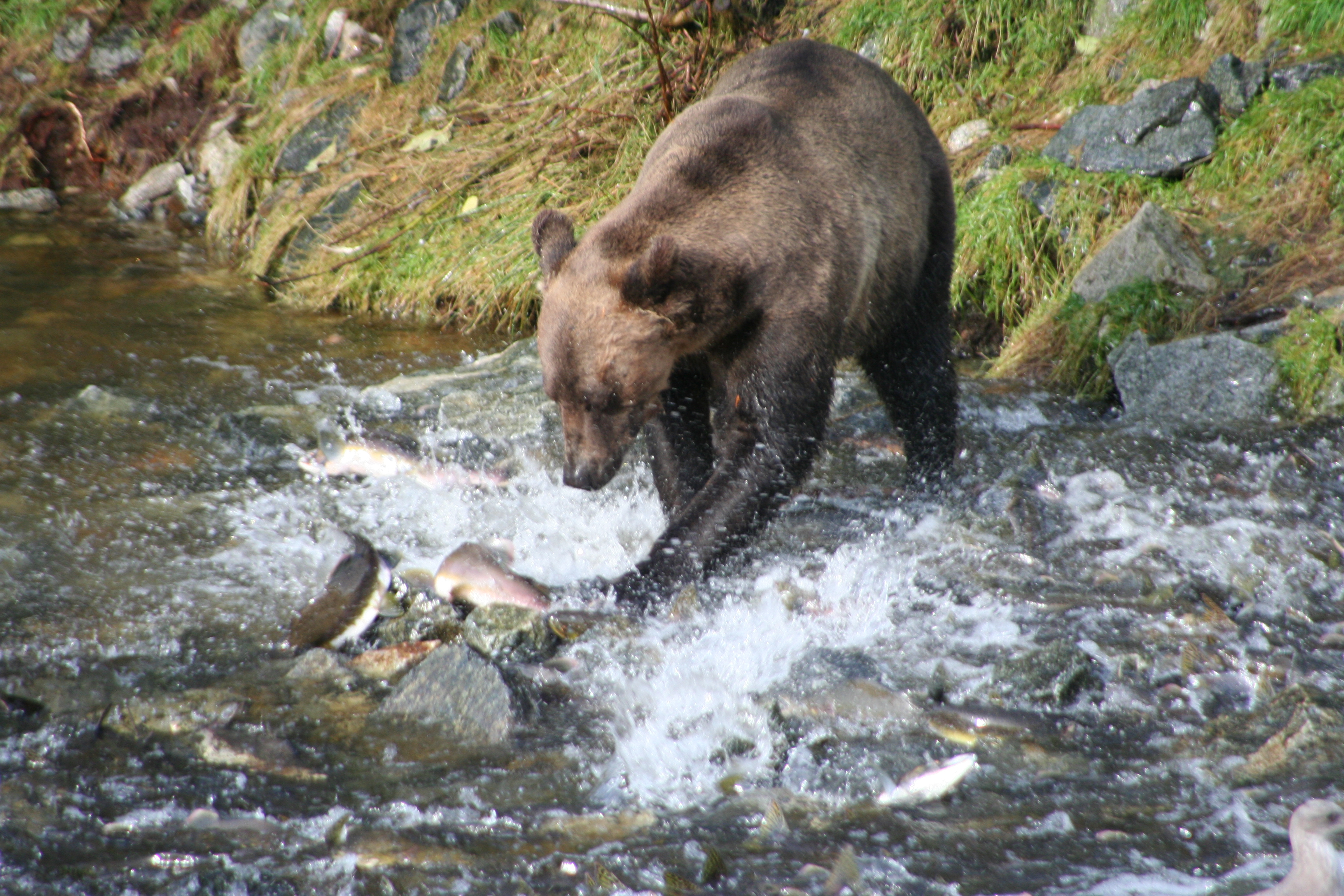
This is the favourite time of the year for the grizzly bears as well as for our guests. For the grizzly because their food source is a guarantee and the biggest problem is trying to catch only the females with their fat rich eggs. For the guests because of the abundance of bears on the Glendale River’s spawning channel.  After August 24th the lodge is permitted to travel up the river, by van, to the man made spawning channel and watch the bears from one of the two viewing stands. For the lodge and bears it becomes a “no brainer”; bears have unlimited salmon to catch and the lodges guests can fill their memory cards with photos.

Grizzly bear goes for salmon eggs

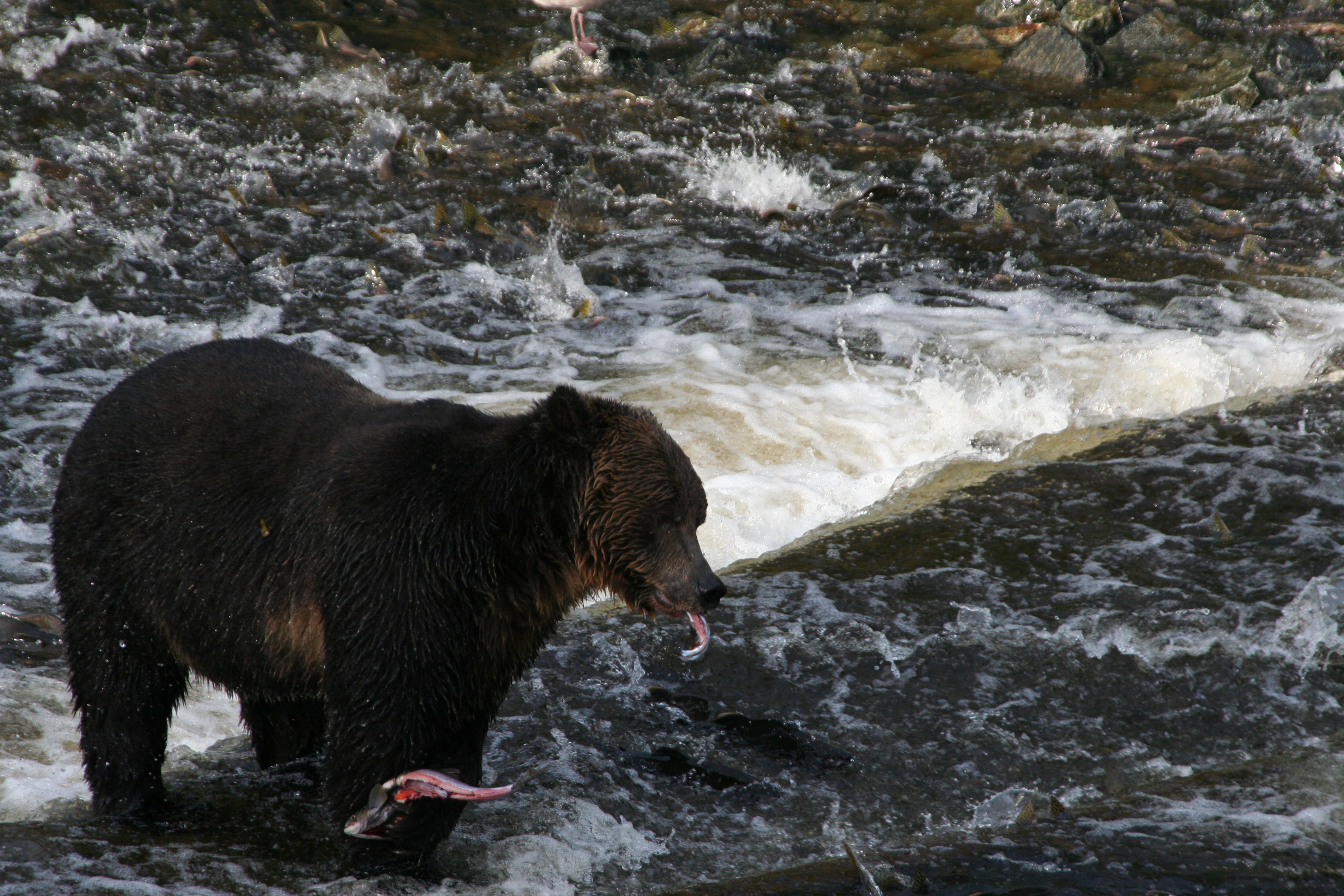
Grizzly selective feeding

Grizzly bears can be selective in the parts of the salmon they choose to eat. It all depends on what time it is in the salmon run and who close to hibernation. When the salmon first arrive the bears have been maintaining their weight eating sedge grass and berries so early on grizzlies will eat the entire fish except for the intestines. As time progresses and the bears are less ravenous these less hungry bears consume only the eggs, brains and skin of the salmon, which are the fattiest parts. Near the end of the salmon run if the bear has not attained enough fat content it will return to eating the whole salmon.  Also true at certain times of the season is it is common to watch grizzly bears reject the male salmon they catch for the egg rich females. In this picture one can see part of the egg sack exposed after the fat rich belly has been removed.

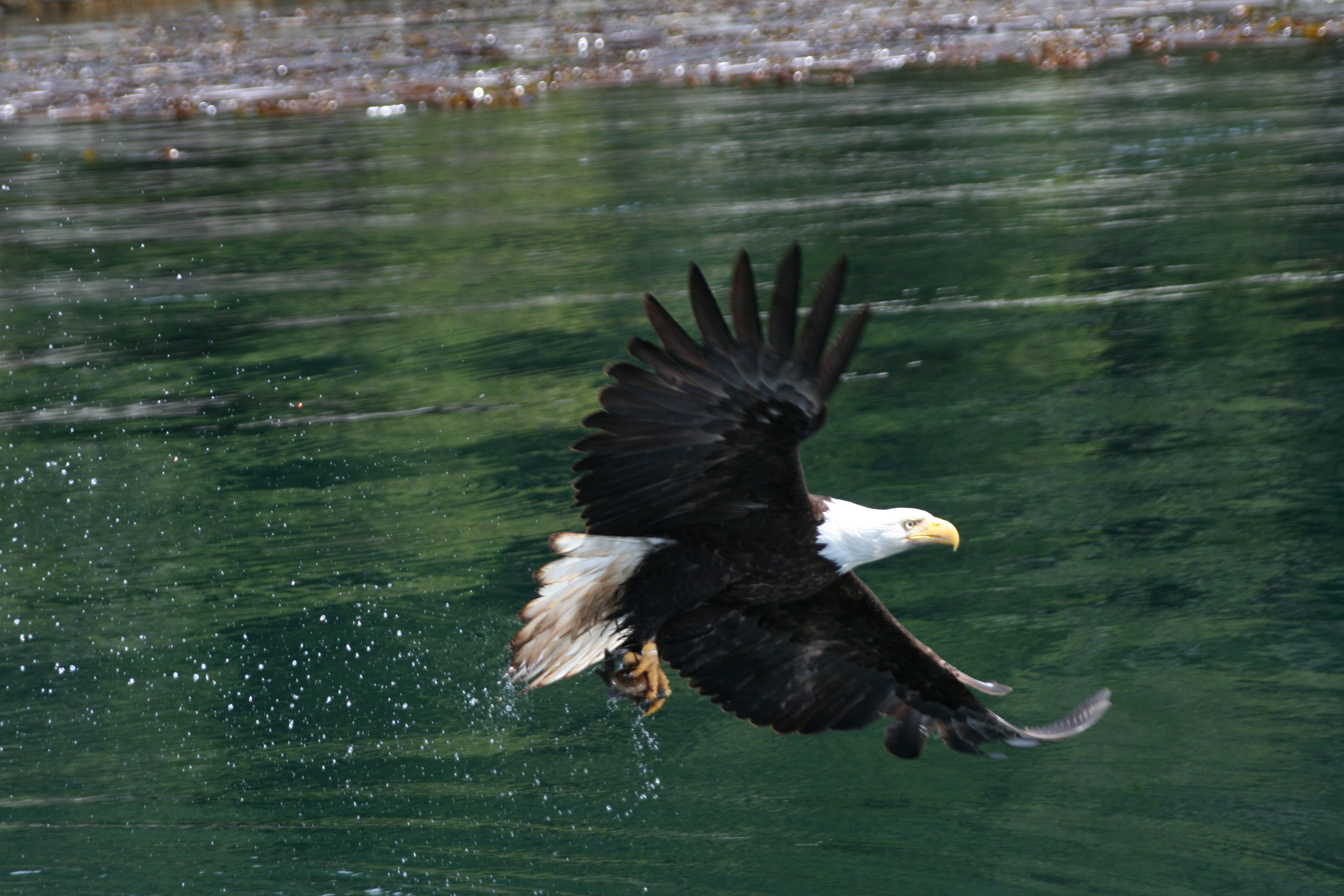
Excellent eagle photo

Bald Eagle with catchOne of the guides, Glen, captures an eagle picking up a fish.  You know that it is a good photo when you can zoom in on the eye and it is still sharp and in focus.  Eagles are abundant in all our tour areas during the spring and summer; however the numbers decline once the salmon arrive in the local river and the eagle move for closer access to the salmon. That just means there are more eagles on the tour to the grizzly bears on the Glendale River and we have to look a little harder to locate them on a whale watching tour.


Grizzly Play Fight

Play fightMother grizzly and cub or siblings they still spend time enjoying each other’s company. This is a common scene on one of the lodge’s grizzly tours to the Glendale River.  Once the appetite is satisfied the bears take time out to socialize.  It is good that it is playing because the size of the claws indicates that some damage could occur if it became serious.  In this case I would go for siblings, if your notice the size of the paw in the lower left corner of the picture is similar in size to the one in the upper right.


Copy and learn

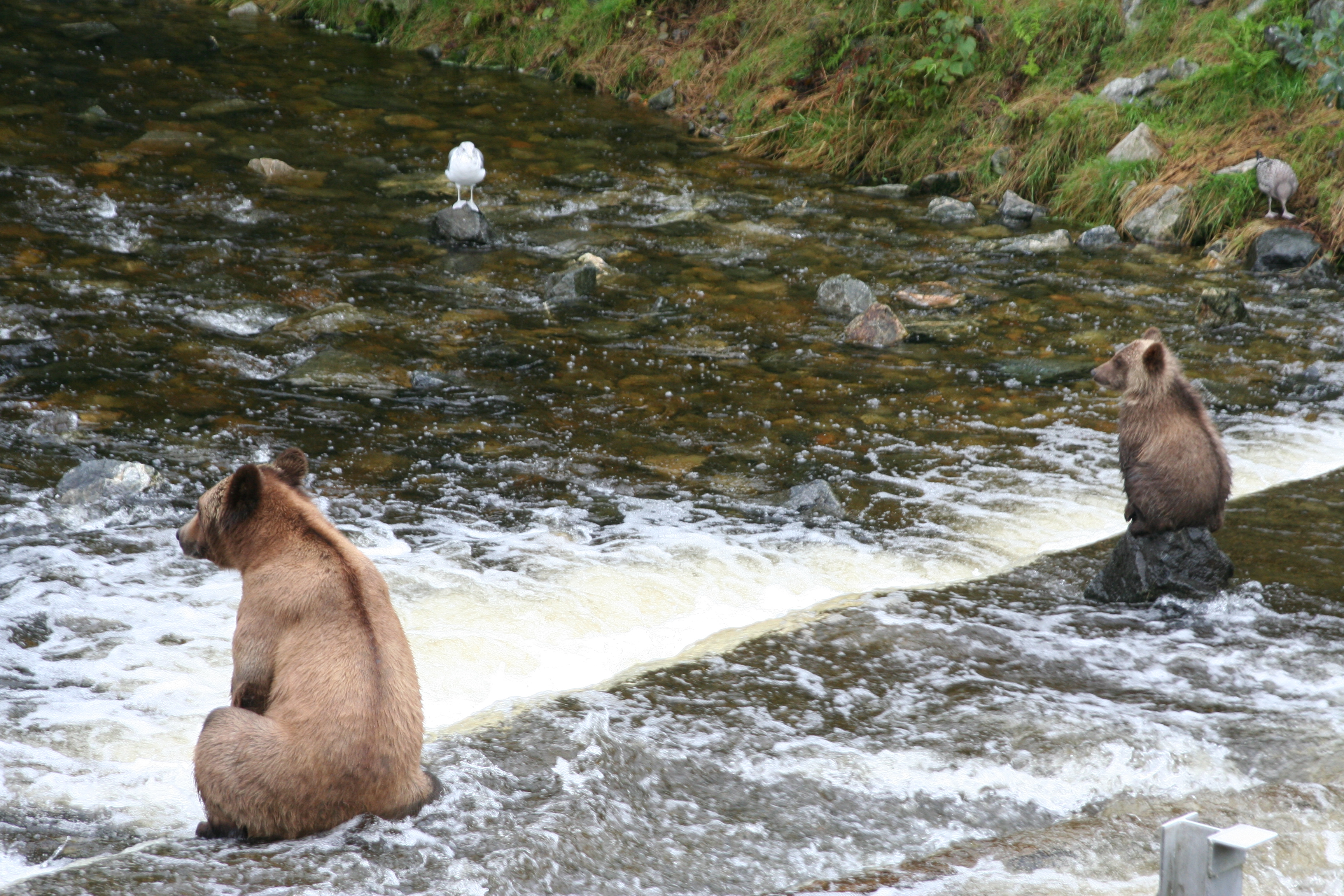
Copying momThis grizzly bear cub, on BC’s  Glendale River on Knight Inlet, even has its mother’s colouring. Cubs tend to learn by seeing and doing.  In this case the cub has taken to a rock because it is a little warmer and it lacks the layer of body fat of the mother.  Also the force of the water might make it hard for it to remain in one place.  Both are looking down river and waiting for another school of pink salmon to arrive in the entrance of the spawning channel. Waiting for lunch.

Evening black bear tour

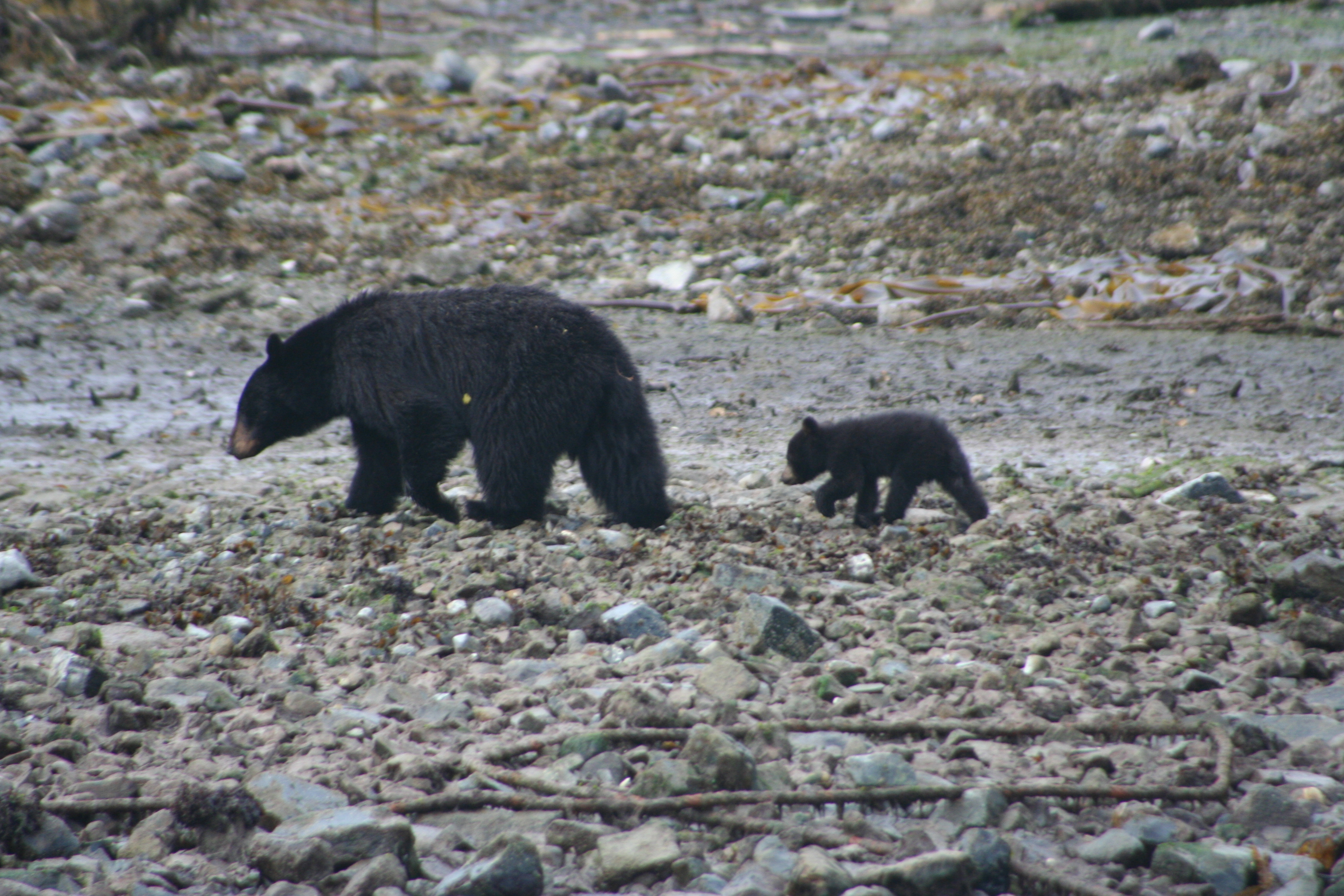
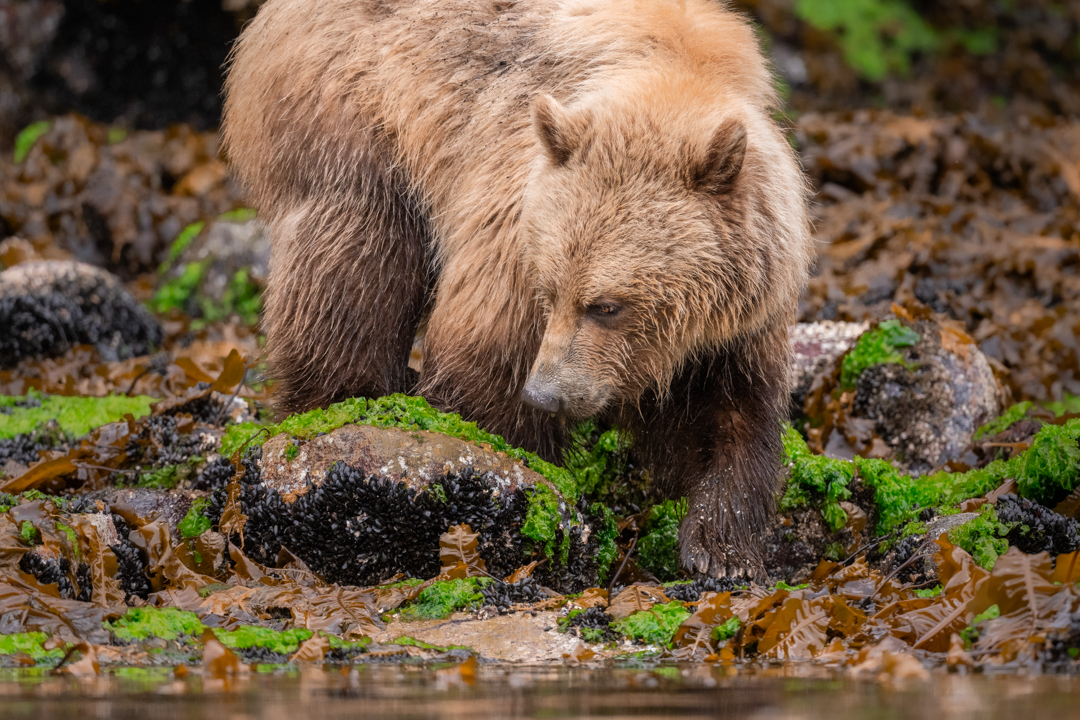
Black Bear cubOn the first evening at the lodge, if the permits, you set out on a short local trip to view Black Bear feeding on the beach. The “tide permits” is important because you need a low tide to have a beach to give the black bears some palace to turn over rocks to look for high protein food made up of crab, clams, muscles, barnacles, amphipods and other tiny invertebrates. The coastal black bears are small compared to the grizzlies, as they do not have access to the salmon rivers because of the grizzlies.  The bears only grow to the size that access to food permits the more protein rich the food the larger the bear. The first year cubs follow their mother closely and take clues from them to determine what is “good food”.


Perfect day for pictures

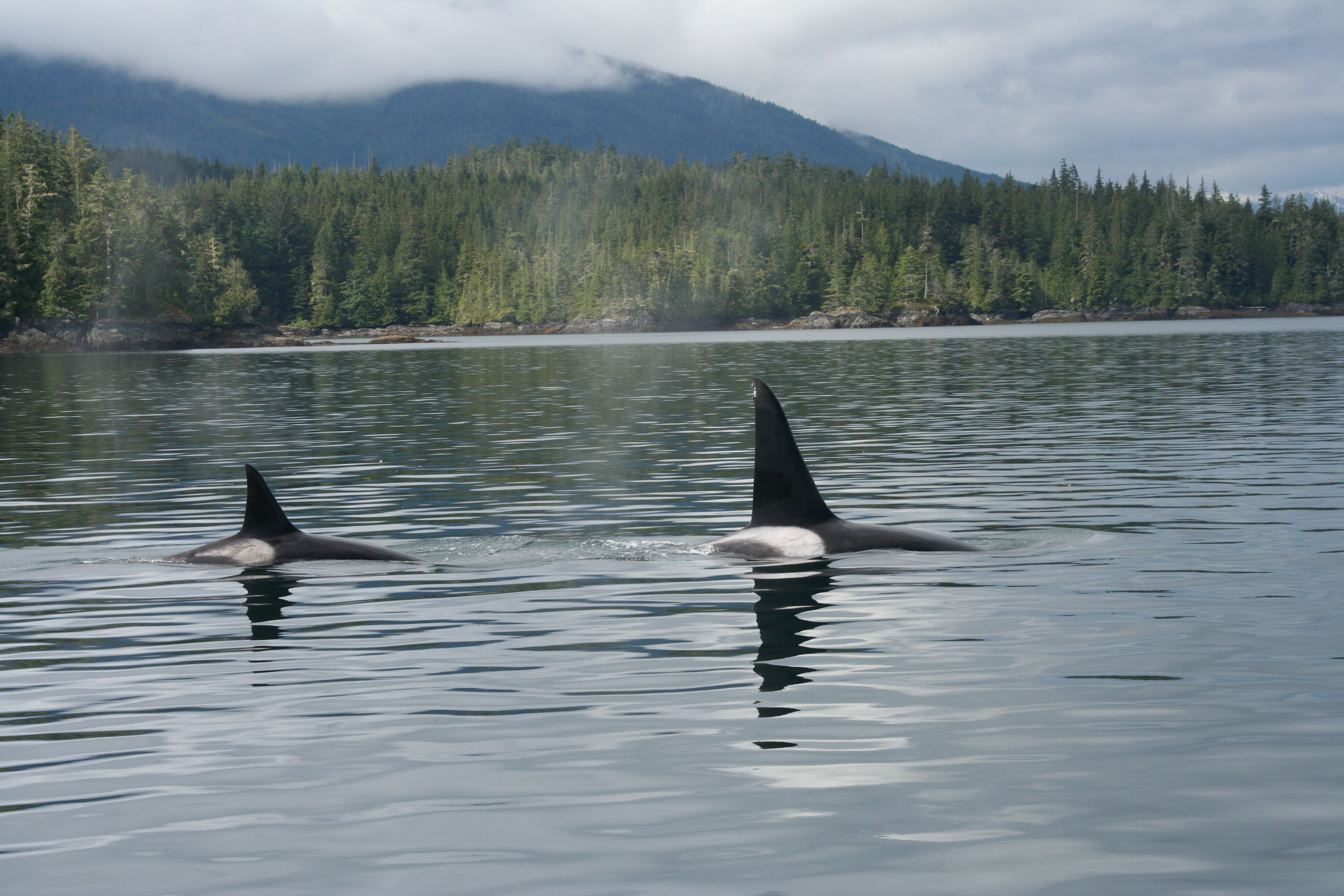
Killer Whales (orca)It does not matter what the subject of you photo, when you are on the water, you do not want a bright sunny day.  Guests in the lodge are often upset as most mornings are overcast with the clouds burning off by noon.  That is the nature of the north coast and that is good. Bright sun reflecting off the water makes for a poor picture whether of a grizzly bear on the shore, eagle in a tree or orca swimming. Most afternoons on the water are spent maneuvering the boat so the sun is at our backs to improve your chance of a good photo.


Grizzly bear spring cub

Grizzly moher & cubThe end of May and this mother grizzly and cub has found it’s way to the shore on Knight Inlet. Born in January or February makes this cub four to five months old and a new member of the “Grizzly Bears of Knight Inlet Family”.  The shore of the inlet has few large male grizzlies this time of the year as they are waiting the arrival of the salmon in August and tend to be nearer the river mouths of the Inlet. This photo was taken several miles from the mouth of the Glendale River our ultimate destination for the day’s grizzly bear tour. But you never pass up a photo opportunity especially one involving a cub.


Humpback whale identification

Humpback whale tailHumpback whales are identified by “Researchers (who) use photographs of the ventral surface of the tail flukes to identify and track movements of individual whales and to estimate abundance. Patterns of pigmentation, scarring and shape of the flukes are unique to each individual.” If you Google “Humpback whale identification” and scroll down to the Fisheries and Oceans Canada site titled “Photographic Catalogue of Humpback Whales in British Columbia” and once in the site scroll to “Photographs and data may not be used without permission. Please refer to “Conditions of Use”” and click on the Conditions of Use and you will have access to their catalogue identifying humpback whales in the lodges viewing area.