Tag Archives: orca watching

Killer Whale Visiting

orca right beside tour boat
Click to enlarge then click again

Every day on the whale watching safari trips that leave Grizzly Bear Lodge is different. On the day of this picture we were sitting several hundred meters (yards) off shore as a pod of orca were passing. The whale watching guidelines specify that you are to be two hundred meters from the shore if whales are in shore of your boat or one hundred meters in open water. The regulations are in force by an organization known as Strait Watch and on this day they were less than seventy-five meters behind our boat. One of the whales in the pod turned from the shore and surfaced beside our boat, swam around the boat and then under the boat and resurfaced on the other side. Strait Watch came over after the orca had moved on and were interested in our pictures, they thought that the orca was fishing under the boat and became curious as dolphins are by nature interested in their surroundings. The reason is not as important as the great pictures. 


Interesting Guest Photos

good orca photo
Click to enlarge then click again

Alfred Bittner provides a great photo that I call “Follow the leader”. Take a close look and there is a tip of a dorsal fin just in front of this large male killer whale. Also an excellent photo as this is how an orca is identified using a picture of the right side of the orca showing its dorsal fin and the saddle patch. All the resident orcas on the BC coast are in two groups either the Northern or Southern Residents.
The website: http://wildwhales.org/killer-whale/ provides the following:
“The southern resident community consists of one clan (J clan) and 3 pods (J, K and L pods) and number only around 86 animals. They are most commonly seen in the waters around Victoria and the San Juan Islands in the summer, although they may range north to Desolation Sound and as far south as California in the winter months. Southern resident killer whales are critically endangered, due to their small population size, reliance on endangered or threatened salmon runs for prey, high toxin loads and sensitivity to boat disturbance.

The northern resident community consists of 3 clans (A, G and R) and numerous pods within each clan. It numbers around 250 animals. Northern residents are most commonly seen in the waters around the northern end of Vancouver Island, and in sheltered inlets along B.C.’s Central and North Coasts. They also range northward into Southeast Alaska in the winter months. Northern resident killer whales are also threatened by the same factors as southern residents.”


Interesting Guest Photos

orca dive 1
Click to enlarge then click again


orca dive 2
Click to enlarge then click again


orca dive 3
Click to enlarge then click again

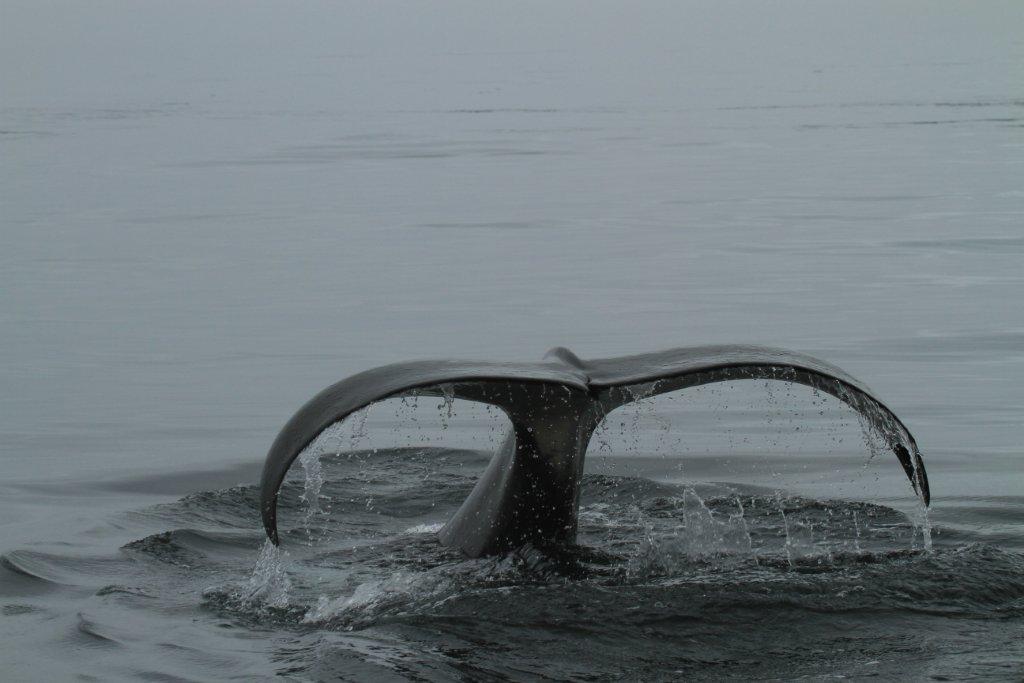
April and Rob White of Australia provide this unique series of photos from their visit to Grizzly Bear Lodge. It is a set of six photos of, which of choose three to make it interesting. This is the best set that I have viewed in my ten years as a guide for the lodge. It is known that humpback whales are identified by the markings on the underside of their tail. The key to this sequence is the first photo and the tip of the dorsal fin, which is visible in the water in front of the tail. This fin is about two meter (six feet) tall and belongs to an orca or killer whale. This orca passed beneath our boat and surfaced about five meters away and then dove and Rob manage to obtain a very unique set of photos.


Guide Photos

orca porposing
Click to enlarge then click again

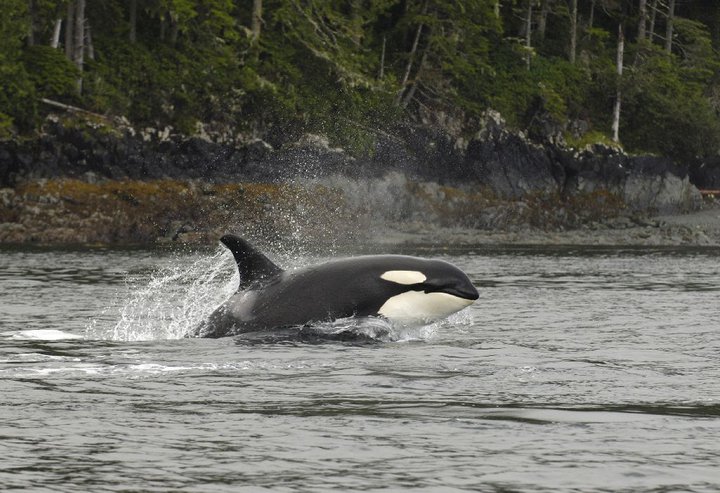
As this photo taken, on a whale watching tour shows orca has a very distinctive coloring. While these markings are beautiful, they do have a very important purpose. The quote from “The Orca Ocean” website is a good explanation.
      “The first thing the orca’s markings do is to help break up their shape in the water. This is known as Disruptive Coloring. Close up the orca is quite visible in the water. However, when the orca gets further away, the white spots help to make the orca look like a collection of smaller animals, thus fooling their prey. Another bit in fooling their prey the eye patch. Animals that are being attack will instinctively go for the eyes. Sharks protect their eyes from seals and sea lions with membranes that come up and cover the eye. Orcas, however, have the large eye patch that the prey will focus on and therefore leave the actual eye unharmed.
      The other purposes the coloring on a killer whale is what is known as Counter Shading. Counter shading is a form of camouflage. What it does is simple: When an orca is swimming above their prey and the prey looks up the orca’s white patches will blend in with the light shinning down from the surface. Aforesaid, the black patches that remain fool the prey in to believing the orca is a collection of smaller animals. The counter shading also works when the orca is swimming below the prey. The animal will look down and see only hints of white and a black back that blends with the dark waters.”


Interesting Guest Photos

single orca
Click to enlarge then click again


pod of orca
Click to enlarge then click again

Whether it is a single large male killer whale or a family pod the feeling is always the same, excitement. A whale watching safari from Grizzly Bear Lodge offers this excitement which may come from viewing orca, humpback whales lunge feeding, Steller sealions, harbour seals, dall porpoise, pacific white-sided dolphins or bald eagles. The variety of marine life in the area of Johnstone Strait between Vancouver Island and mainland British Columbia is astounding and mostly due to the abundance of herring. Herring are the food of the humpback whales, dolphins, porpoise and salmon. The salmon then become the food for the orca, seals and eagles.


Whale Watching Safari – 5 of 5

resident orca pod
Click to enlarge then click again

After leaving the sea lions and entering Blackfish Sound the orca we saw earlier in the day appeared this time in the sunshine. Blackfish Sound is an appropriate name for this area as that is the name used by the locals and the only name I knew growing up for what are now called killer whales and orca. Names the result of advertising for tourism. The name is not really important what is important is the majestic appearance of these mammals and the thrill obtained with the first sighting on a tour.

Whale Watching Safari – 2 of 5

orca
Click to enlarge then click again


more orca
Click to enlarge then click again

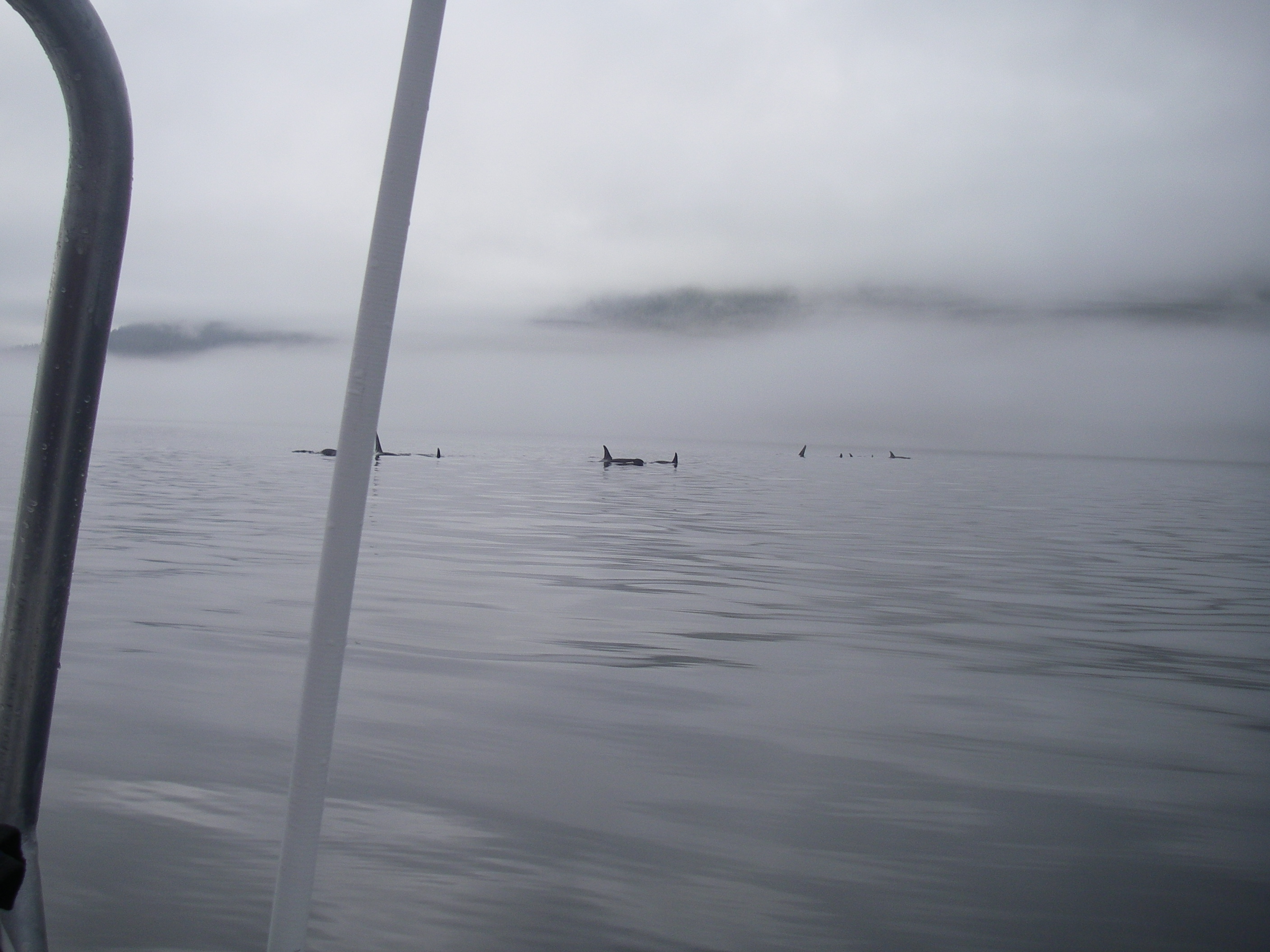
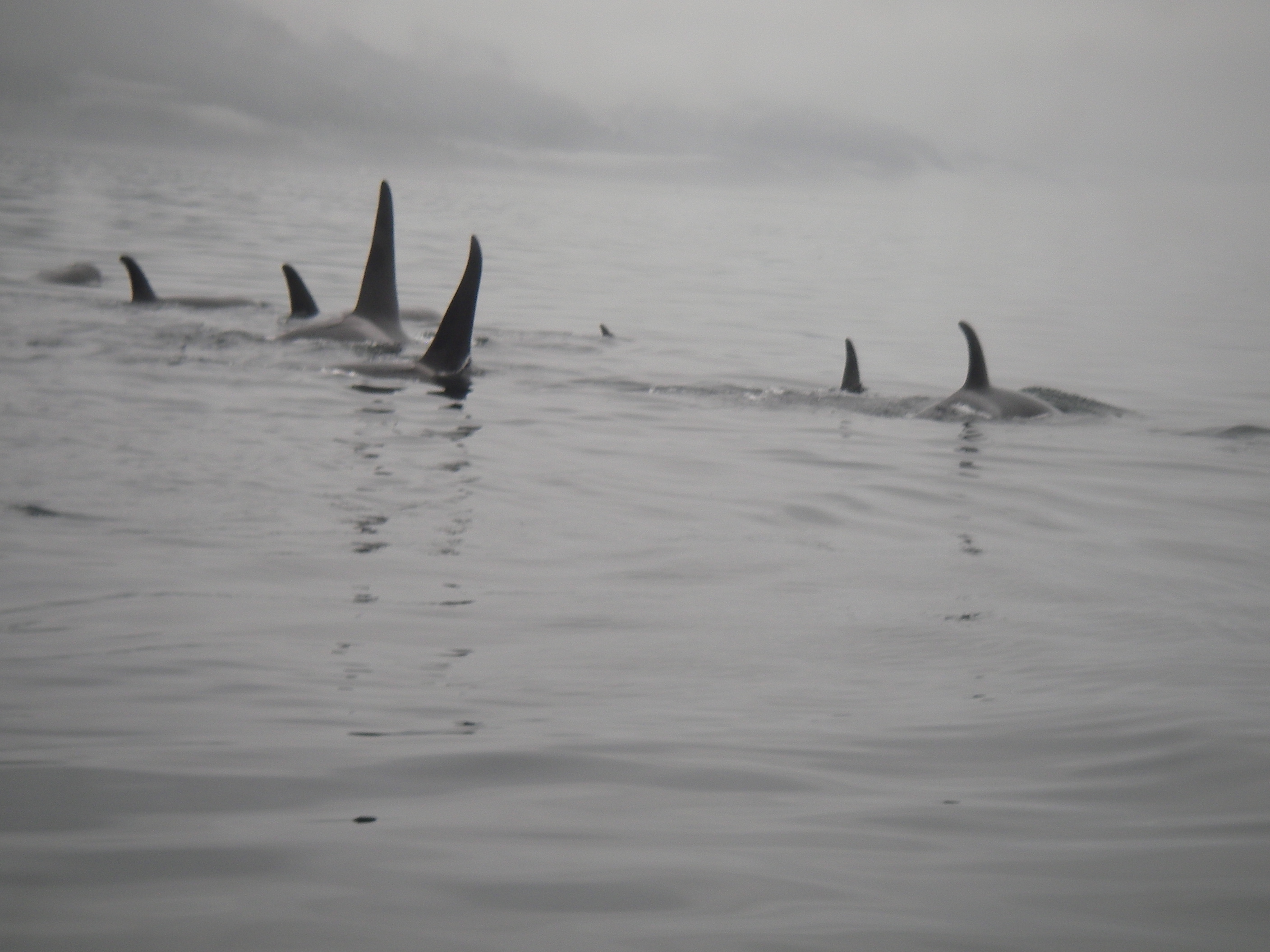
This was a normal “foggy” morning in August when we first found this pod of orca in Johnstone strait. The posting on February 17 will show the same orca in the sunshine later in the day. If you remember from my previous posting these photos were taken with a small waterproof Pentax (an optio, 6.0 megapixels with three times optical zoom) point and shoot so these orca came quite close. The first photo was when they appeared out of the fog and we shut off the motor and waited while they approached the boat. Again the guest photos are much better than mine are as I was also using the hydrophone to listen to their calls. If you check the December 26, 2013 posting you will see how close the orca came to the boat while they were listening to our hydrophone.

Killer Whale Dorsal Fin

killer whale dorsal fin
Click to enlarge then click again

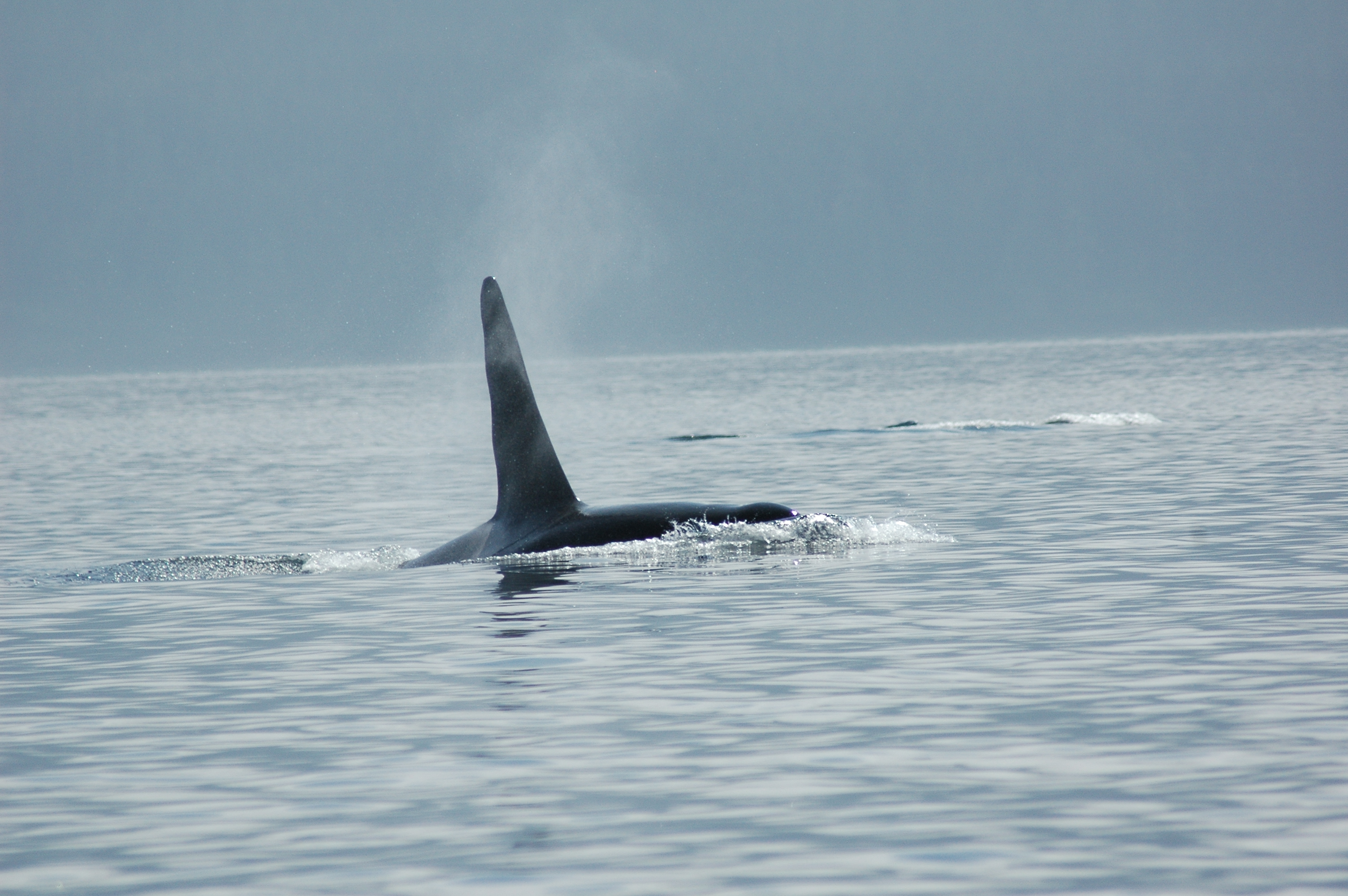
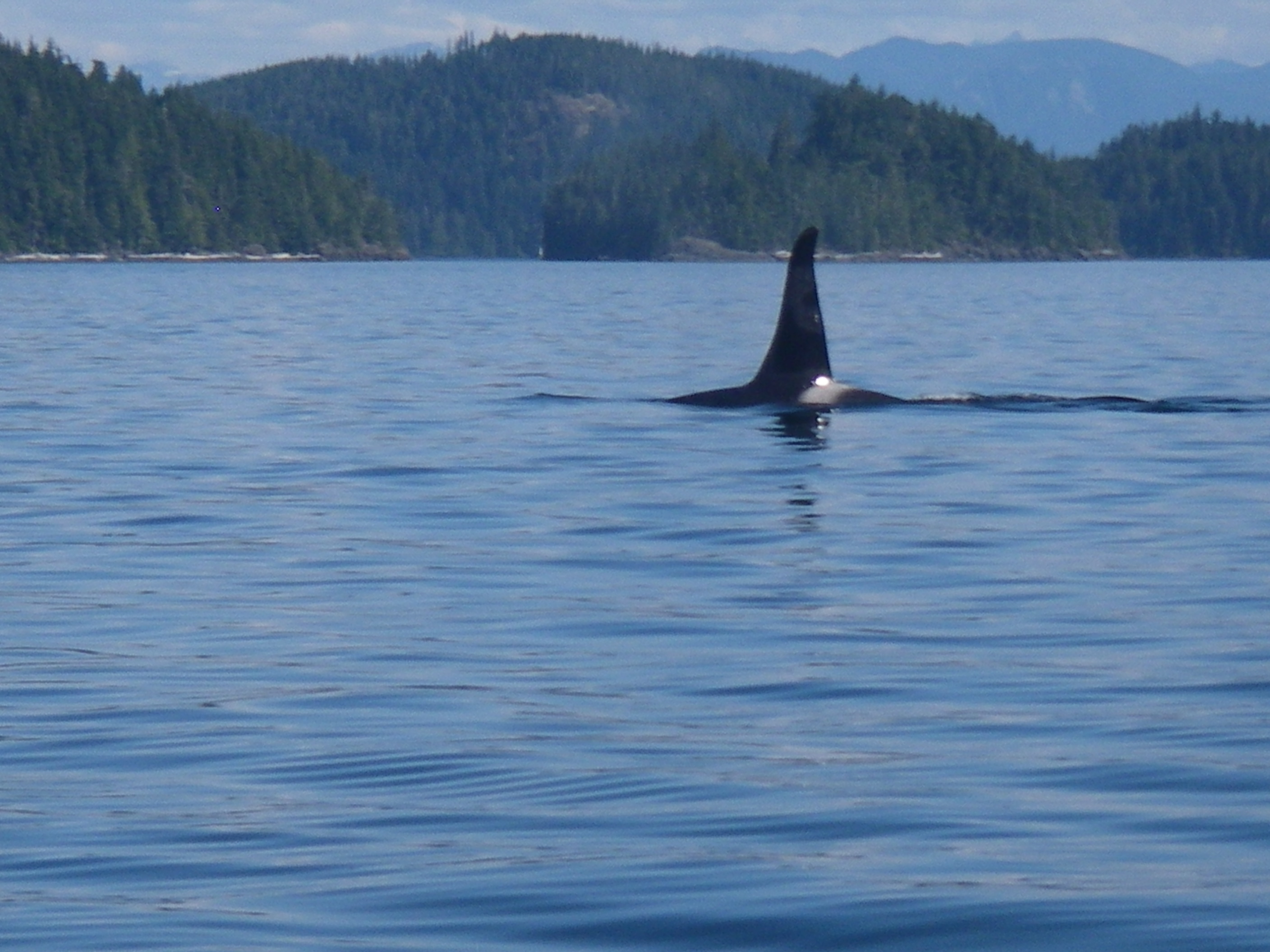
Orca, killer whales or blackfish are all the same and the residents return by late June most years. Our whale watching safaris are in the area of Johnstone Strait between Vancouver Island and the British Columbia mainland. This photo of a male orca shows a mature dorsal fin.  Following are some interesting fact about dorsal fins taken from www.seaworld.org/infobooks/killerwhale.
1.  Like the flukes, the dorsal fin is made of dense, fibrous connective tissue, with no bones.
2.  The dorsal fin acts as a keel.  The dorsal fin probably helps stabilize a killer whale as it swims at high speeds but is not essential to a whale’s stability.
3.  The dorsal fins of male killer whales are the tallest of any cetacean in the world, growing up to 1.8 m (6 ft.).  Female dorsal fins are smaller at about 0.9 to 1.2 m (3-4 ft.) and may be slightly curved back.
4.  For male killer whales, dorsal fin growth is thought to be a secondary sexual characteristic as peak growth of the fin coincides approximately with the onset of sexual maturity.
5.  Because of the huge diversity of killer whale dorsal fins and the adjacent saddle patch, researchers take pictures of these fins to identify individuals and their pods, much like fingerprints are taken to identify humans.

Orca dorsal fin height

pair of killer whales
Click to enlarge then click again

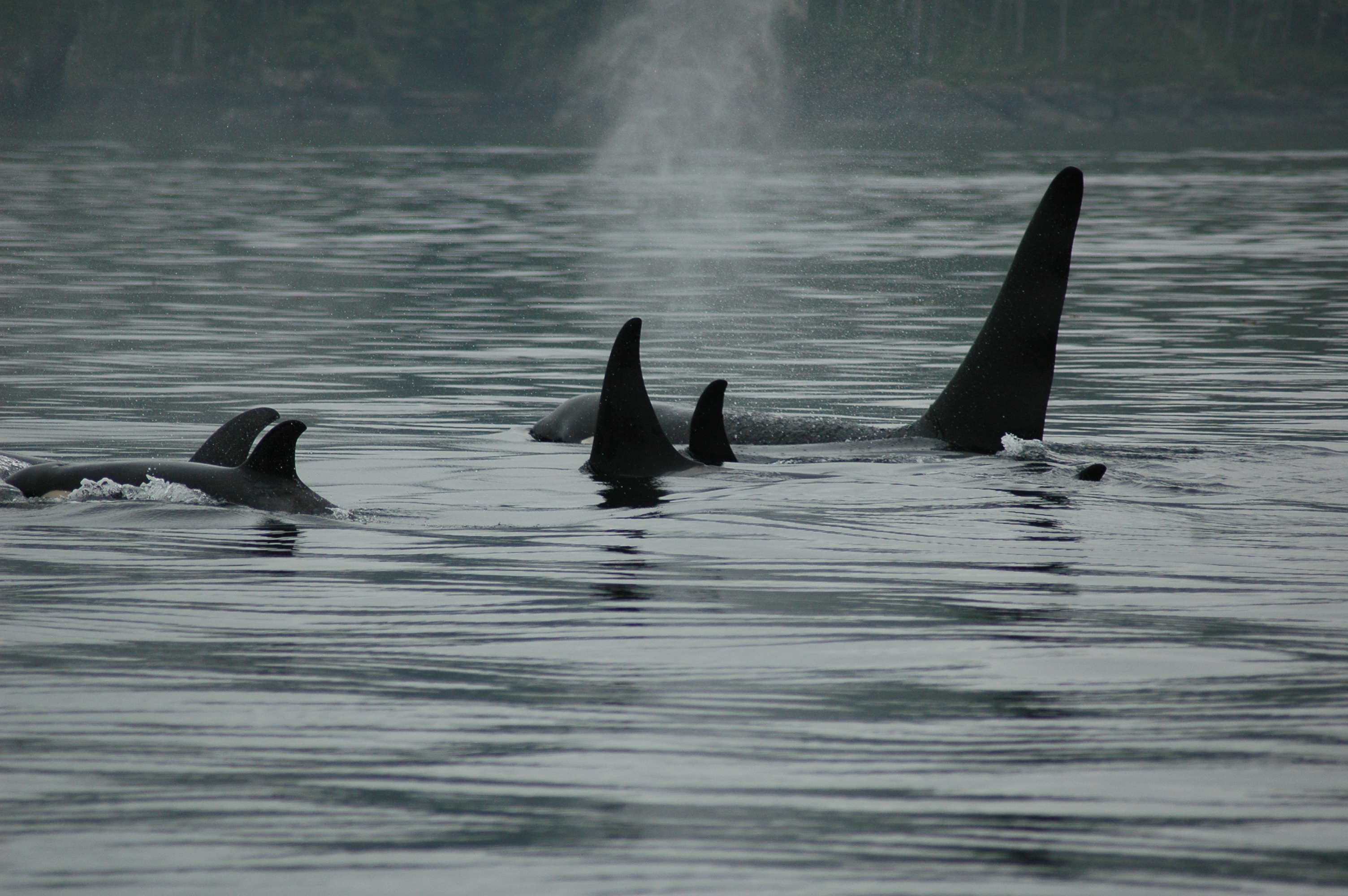
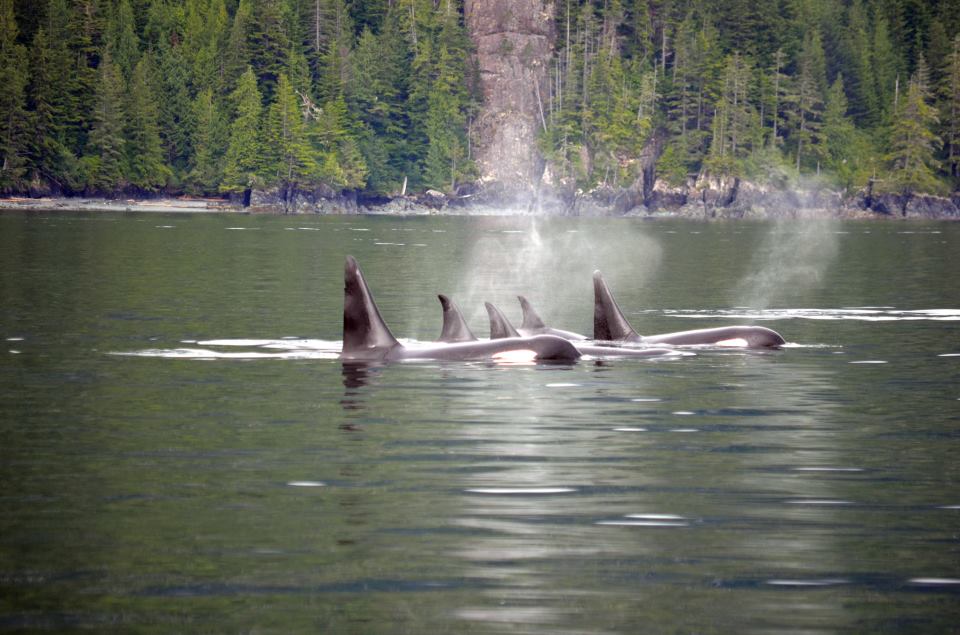
The whale watching safaris from Grizzly Bear Lodge has a good chance of finding resident orca or killer whales.  The resident orca is the fish eaters while the transient orca are the male eaters and are less common in the summer.  This photo demonstrates the difference in size of the dorsal fins between a male and female orca. The males fin can be up to two meters (six feet) while the females are often less than half the height.

Orca listening to hydrophone

orca comong
Click to enlarge then click again

Although the weather does not look the best it was one of the most interesting experiences of my summer. It was a foggy morning and thus a challenge to find the orca but the whale watching companies work together and being the faster boat on the water we were able to find the orca first. As they came out of the fog we had a hydrophone in the water listening to their calls to help locate them.  Two orcas came very close to the boat and stayed on the surface as the calls came over the speaker. These two remained in position for several minutes and did not go back down until the calls stopped. Orcas are members of the dolphin family and at times their curiosity is amazing. Note: as normal the fog lifted by noon and we were able to enjoy an afternoon with humpback whales.