Grizzly Bear and Wildlife Tour Blog

We offer an exceptional fly-in lodge for Grizzly Bear Watching and Whale Watching in British Columbia.

Learn about What’s happening at the Lodge, view our British Columbia’s Wildlife Report, read our Grizzly Bear Watching Blog and Whale Watching Blog. Learn more about a Day on the River Blog, see Our Tour Guide’s Photos & Blog and  Photos from Our Guests.

Grizzly Bears September River Trip – 2

Click to enlarge then click again


Click to enlarge then click again

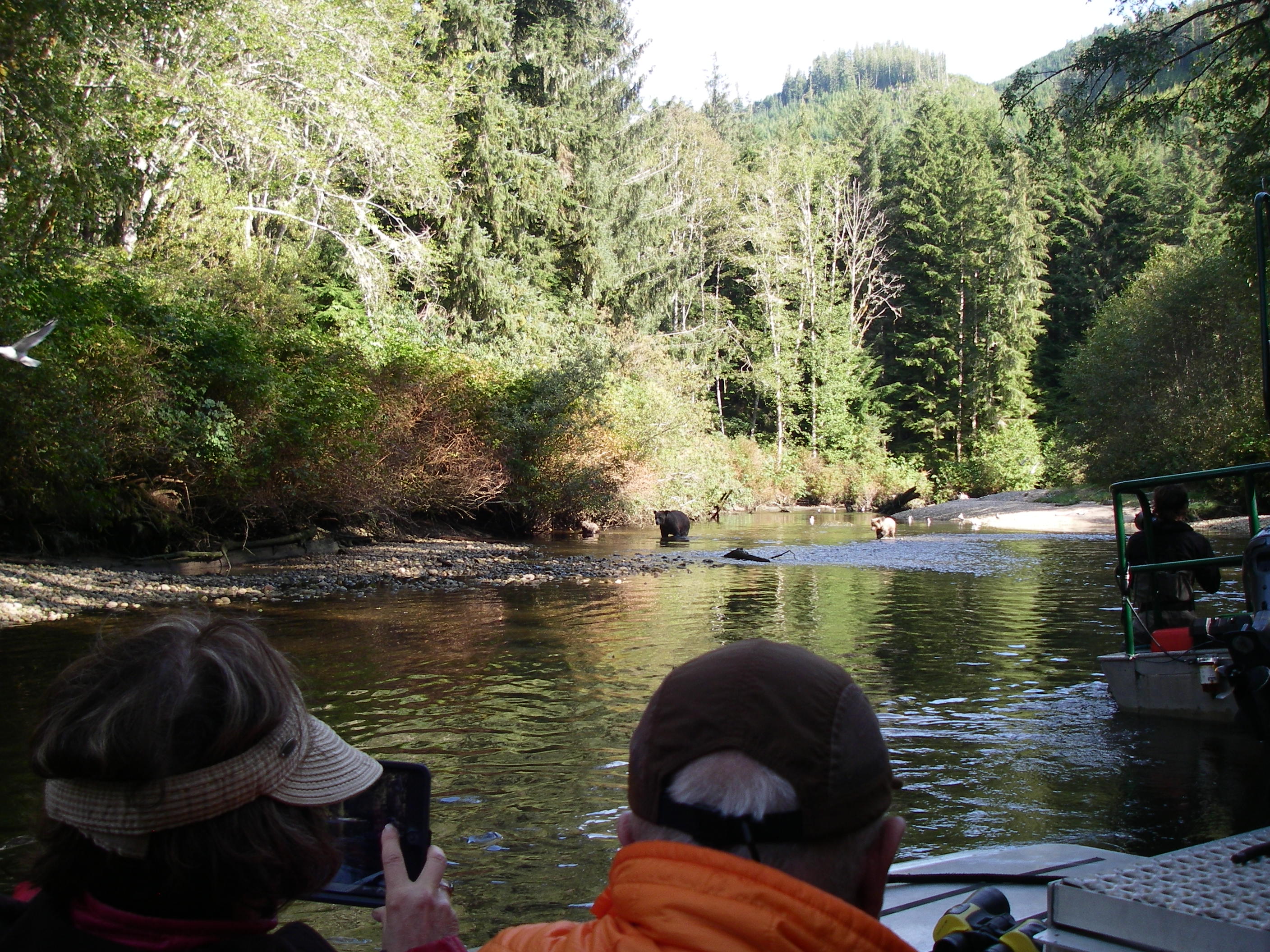
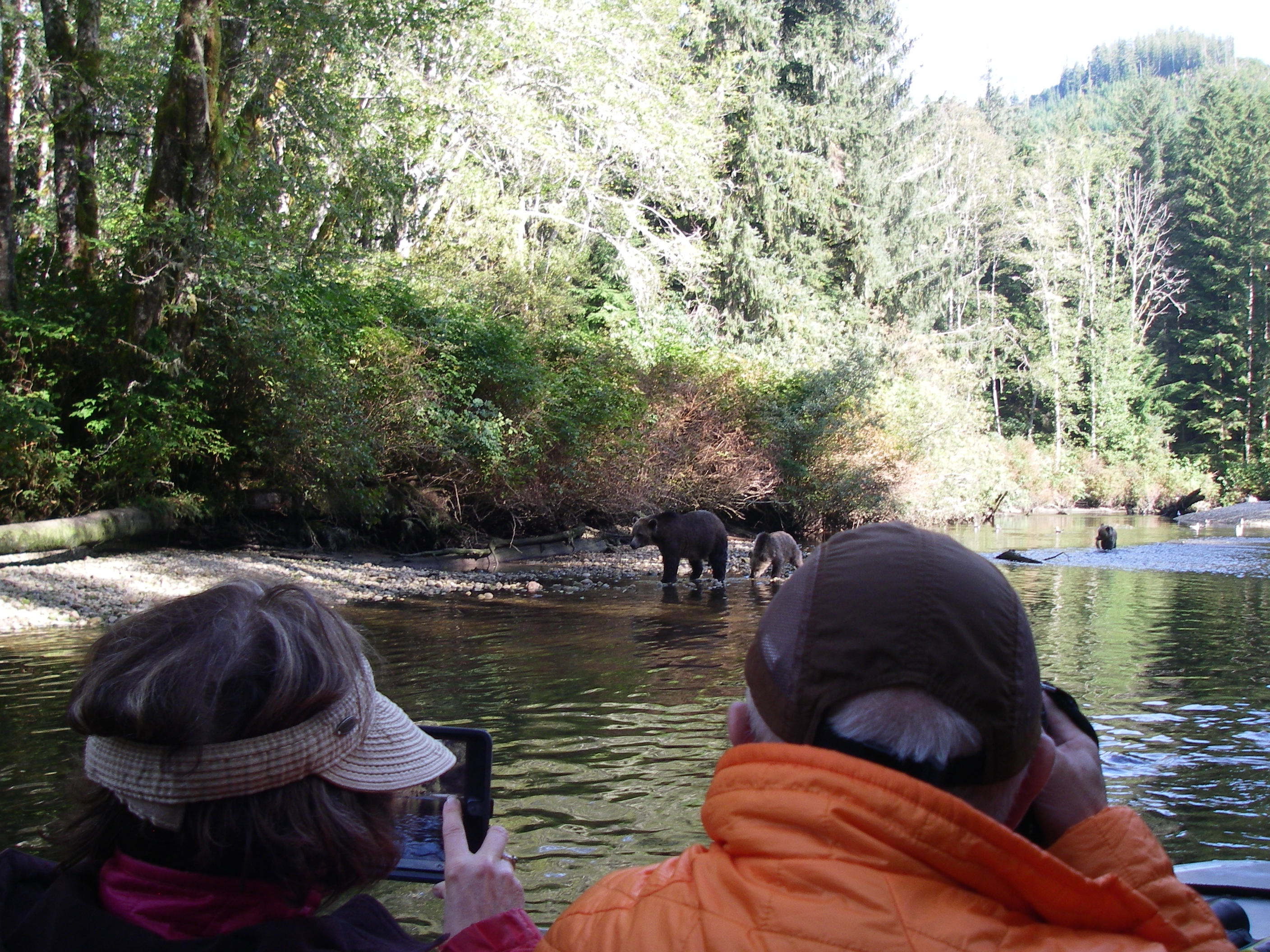
You my notice that both the guests head and the bear are in reasonable focus so the distance is close. At this point the mother grizzly bear was about fifteen meters or less than fifty feet across the river from the boat. Knowing the bears and their habits we were very safe in our location. These same bears had being coming down the river for about five days and had accepted the boats presence and as you may have noticed there was a larger boat ahead of ours and another behind, enough to make the bears very cautious…. more tomorrow


Grizzly Bears September River Trip – 1

river grizzly watching
Click to enlarge then click again


closer river grizzlies
Click to enlarge then click again

A beautiful fall morning on the Glendale River located on Knight Inlet, which is part of British Columbia’s Great Bear Rainforest. We had left Grizzly Bear Lodge at 7:30 for the hour and half boat ride up the inlet to the river. After taking Angus’s guest to shore for the SUV ride up to the viewing stands my guests climbed into the flat bottom river skiff for an estuary tour. If you check the Jan 1st posting “Google Map of Spawning Channel” it shows the yellow dot of the float and we went from there into the river and up past the tree line. At times pulling the boat over the sand bars and up the shallow river but as the tide came in we were about half a mile into the tree’s when we saw this mother and cubs coming down river. We had moved to the riverbank and I was standing in hip deep water holding the boat…… more tomorrow


Grizzly cubs – different size and colour

grizzly cubs size matters
Click to enlarge then click again

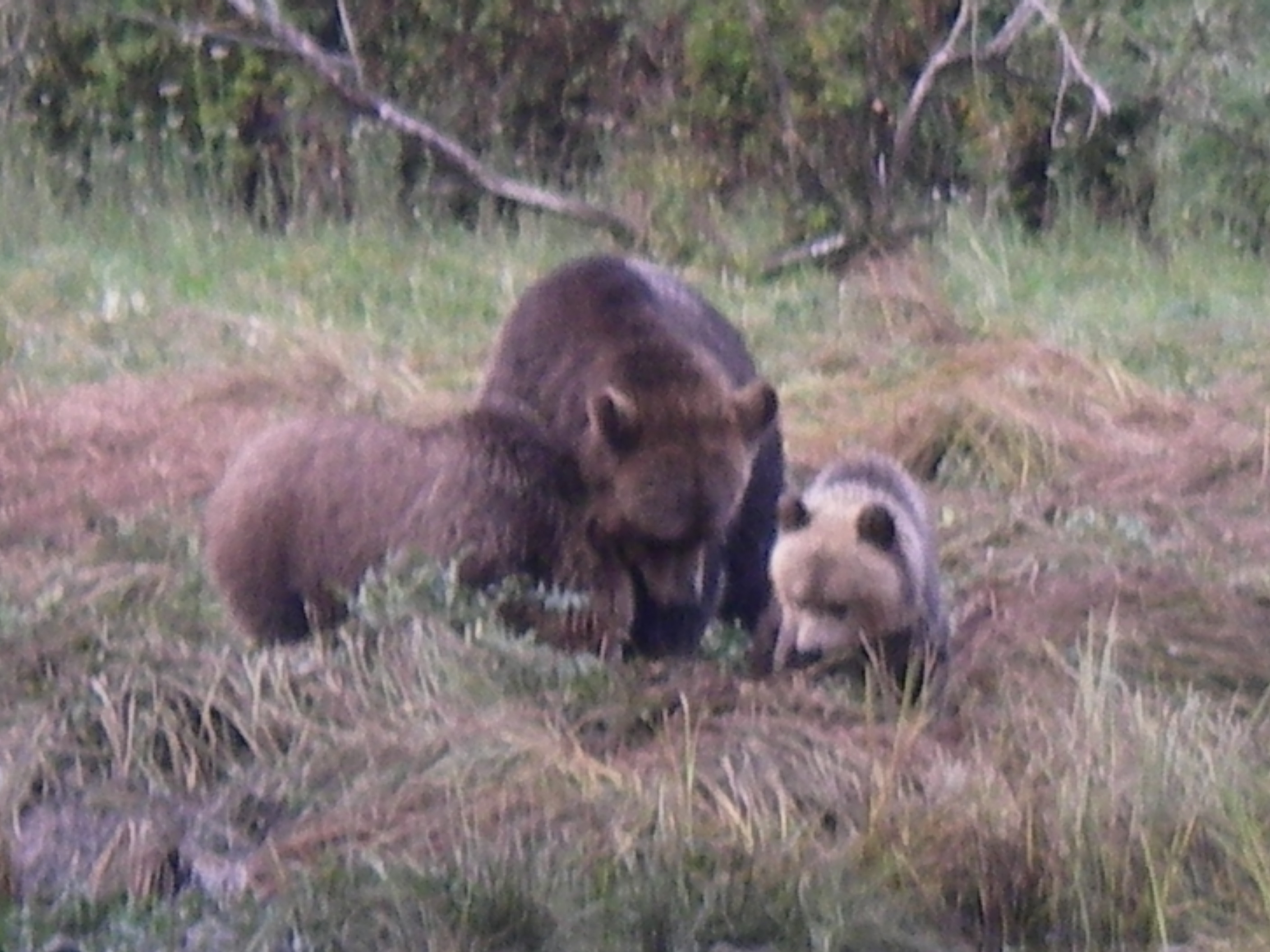
This photo shows that grizzly bear cubs are often different colours and can be quite different in size even though they are siblings. The size difference is often a result of one being a male and more aggressive than a female. This means first to nurse and the first to solid food once they are on the beach in the spring. It could also be due to the fact that siblings may have different fathers as females will mate with multiple males. A genetically larger male may produce a larger cub.  And the difference in colour is a result of the different mating partners. As the season progress and salmon become more of their diet the oils will cause the fur to darken but these are “spring cubs” and salmon are not in the rivers.

Grizzly Bear Lodge in the morning

grizzly bear lodge
Click to enlarge then click again

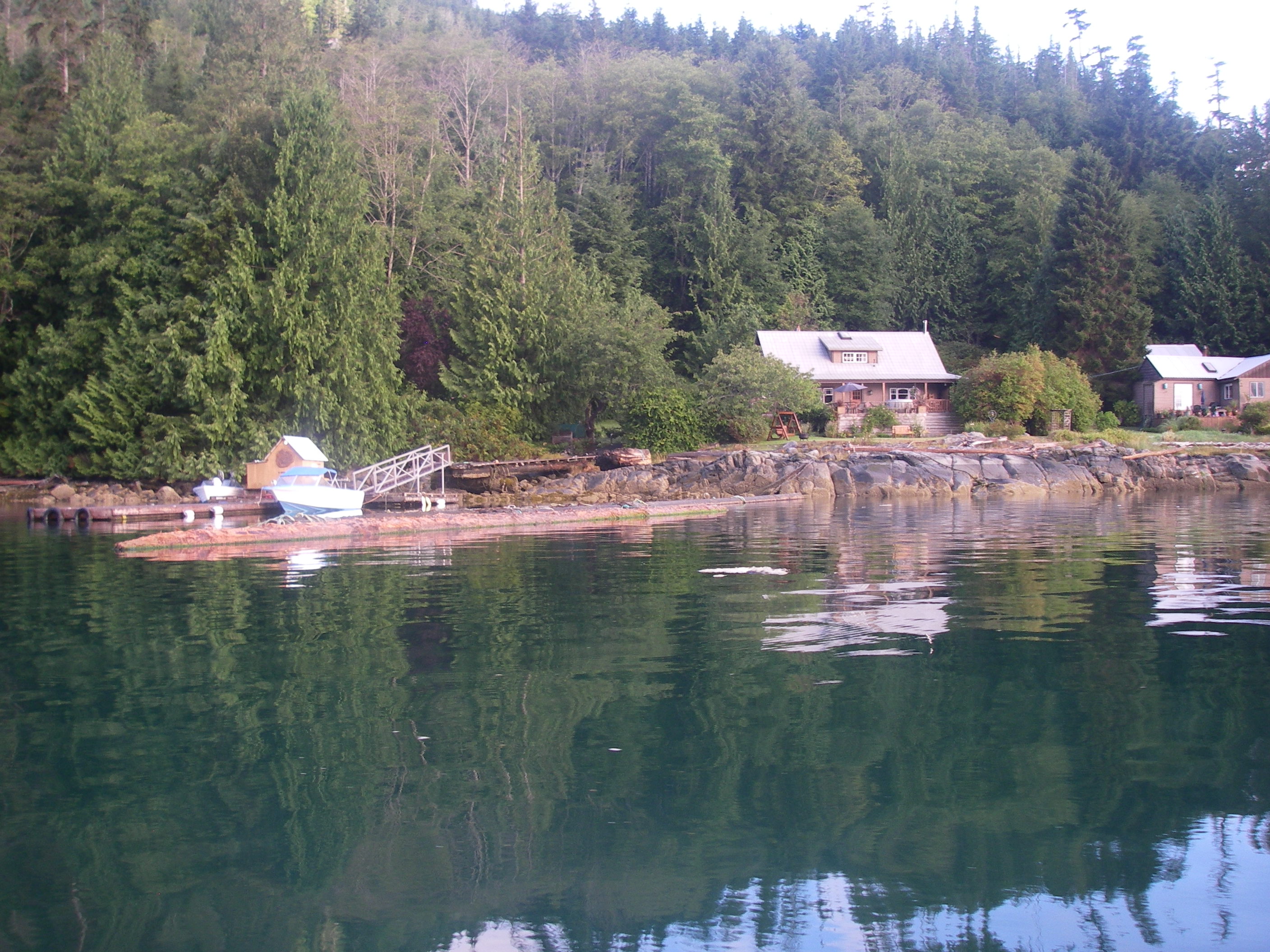
A quiet morning departure from Grizzly Bear Lodge located on Minstrel Island (Knight Inlet) at the edge of BC’s Great Bear Rainforest. Depending on the season tours leave either by 7:30 or 8:00 and return between 3:00 and 5:00 depending on the days success. Guests often want a picture of the lodge and dock as we leave or return in the afternoon. Accommodating eight to ten guests allows for the personal touch from the gourmet meals to sharing the boat with a maximum of five people including the guide. The limit placed on the number of guests in camp is often one of the main reasons guest first select Grizzly Bear Lodge but by the time they leave it is the family atmosphere and the years of experience of all the staff that makes the visit memorable.

Andreas & Steffi Tacke, Germany – 4

tel slapping whale
Click to enlarge then click again

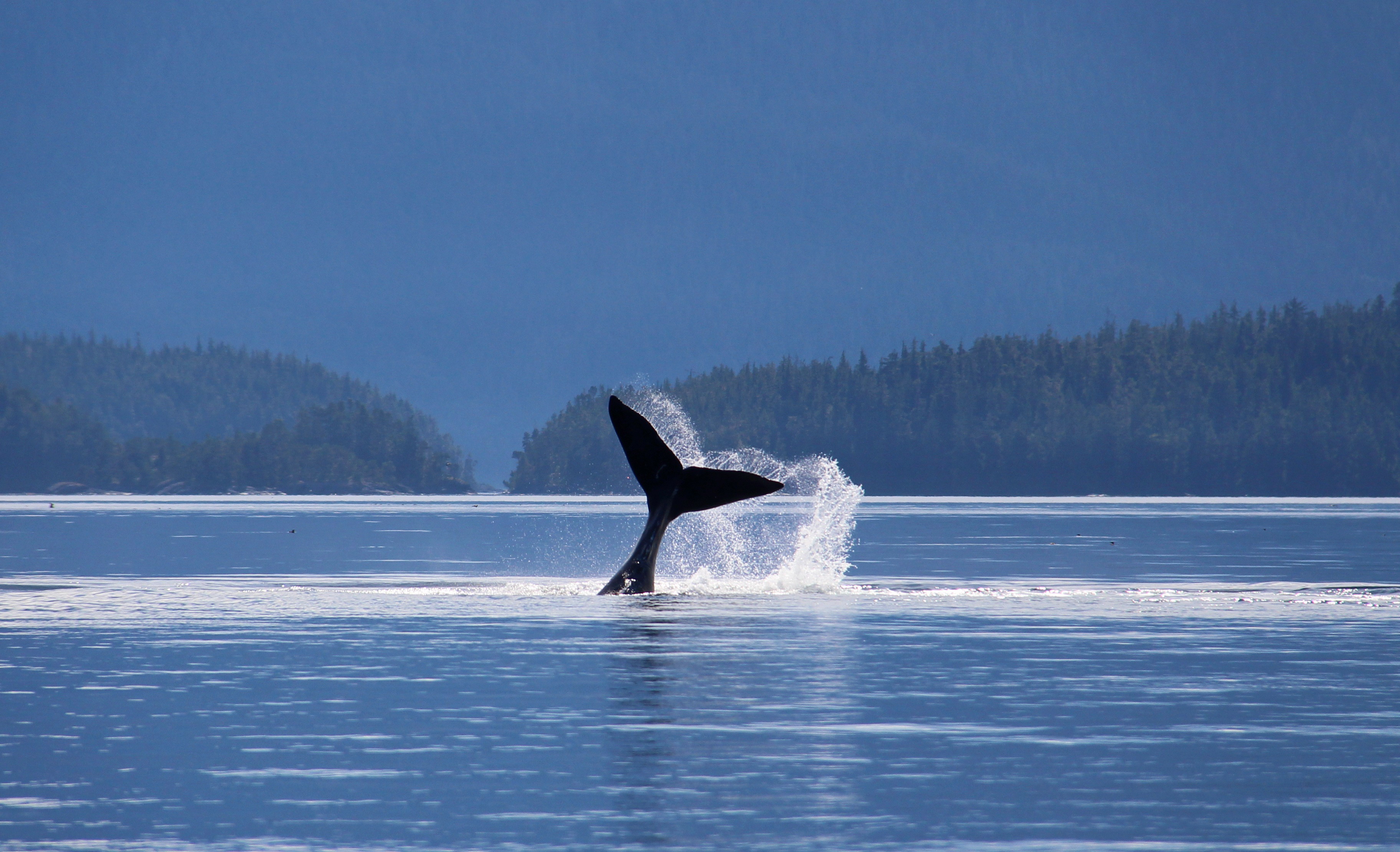
This photo taken an hour earlier than yesterday’s post shows a humpback whale fluking or lobtailing. Lobtailing is the act of a whale lifting its fluke out of the water and then bringing it down onto the surface of the water hard and fast in order to make a loud slap. Large whales tend to lobtail by positioning themselves vertically downwards into the water and then slapping the surface by bending the tail stock.  They are likely to slap several times in a single session. The sound of a lobtail can be heard underwater several hundred metres from the site of a slap. This has led to speculation amongst scientists that lobtailing is, like breaching, a form of non-vocal communication. Also some suggest that lobtailing in humpback whales is a means of foraging. The hypothesis is that the loud noise causes herring to become frightened, thus tightening their school together, making it easier for the humpback to feed on them.

Andreas & Steffi Tacke, Germany – 3

tail lobbing whale
Click to enlarge then click again

Whale watching safaris from the lodge this summer saw allot of activity from the humpback whales. Most days there were more than a dozen whales in the area of Bold Head on Blackfish Sound which is adjacent to Johnstone Strait and Vancouver Island on BC’s coast. There were two families of mother and calf in the area and the calves were very active. In this photo the calf was quite close and spent time throwing it’s back half of its body sideways out of the water. It would come up with it’s upper body part way out of the water and then throw it’s back half up and to the side.  This was a repeat performance going on for the better part of five minutes with a rest and then trying again.  From my searching scientists aren’t sure if this breaching behaviour serves some purpose, such as cleaning pests from the whale’s skin, or whether whales simply do it for fun.

Andreas & Steffi Tacke, Germany – 2

eagle fishing
Click to enlarge then click again

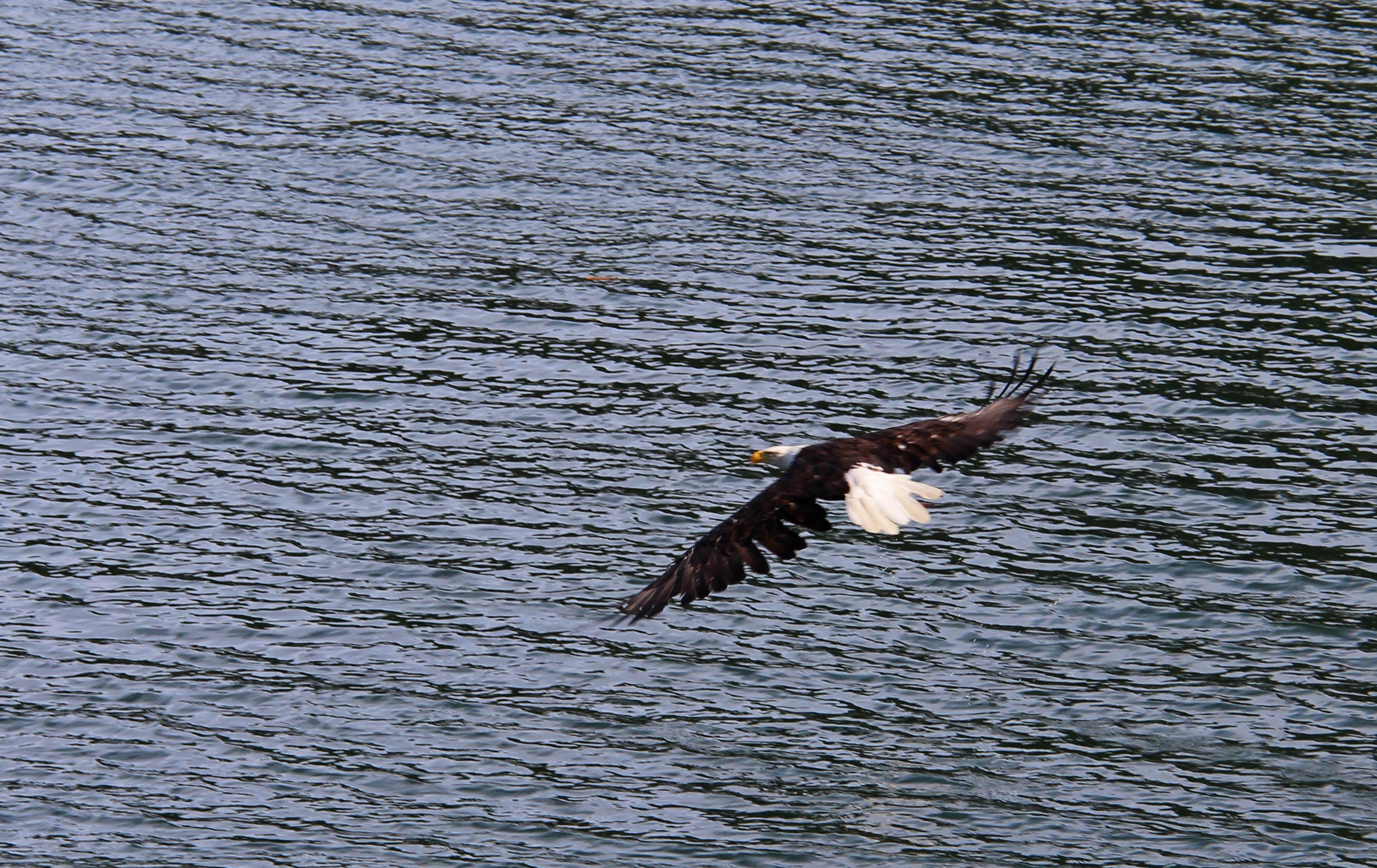
The only place that I can think of that would make this photo possible is the front deck of the Grizzly Bear Lodge.  The boats we spend most of the tour day in are not high enough to offer this overhead view of a bald eagle.  Eagles are common in the area of the lodge but most of the time they are overhead but on occasion they do come down to feed in front of the lodge.

Andreas & Steffi Tacke, Germany – 1

foggy whale watching
Click to enlarge then click again

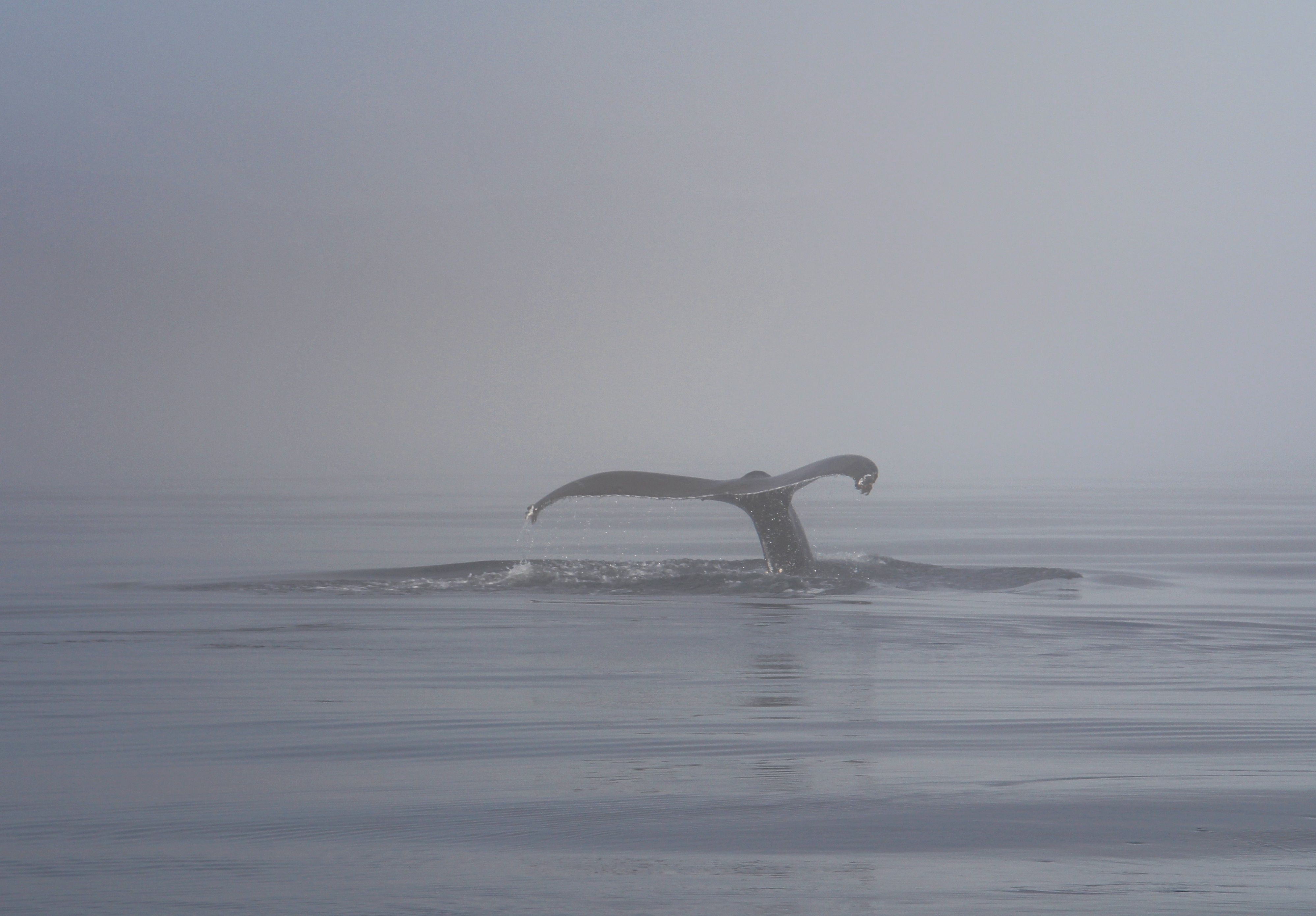
Fog is always a challenge for a guide.  The first being able to locate the whales which is the easiest to overcome because the humpback whales are normally in the area of Bold Head (the northern end of Swanson Island not far from Vancouver Island) about a fifty minute boat ride from our lodge. GPS have made that part much easier. The harder part once the whales are located in the fog is to find them.  They can be easily heard but when there are many whales blowing or breathing it is hard to choose the correct direction and once the whale is in site even hared to be behind for a good photo. In this case it all work out but my motto has always been: “Luck is better than skill any day.”

Myrna Daschuk, Haida Gwaii BC– 3

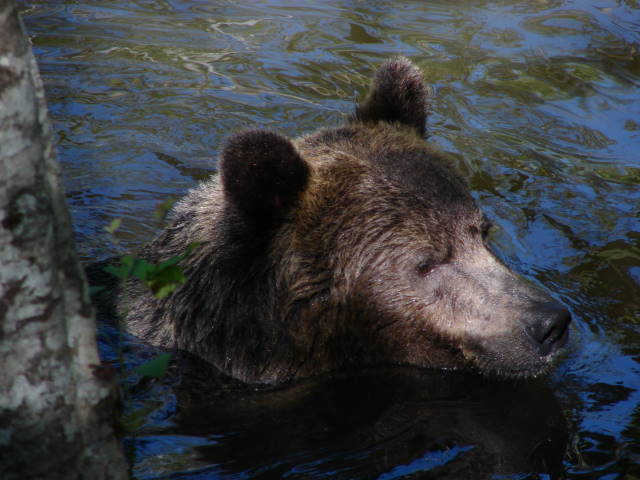
grizzly face
Click to enlarge then click again

Driving to and from the viewing stands we drive slowly along side of the spawning channel for a short distance. This is a shaded area mentioned in Jan 5th post often contains allot of grizzly bears. The drive is slow enough to allow some good photos such as the one above.

Myrna Daschuk, Haida Gwaii BC– 2


impressive grizzly
Click to enlarge then click again

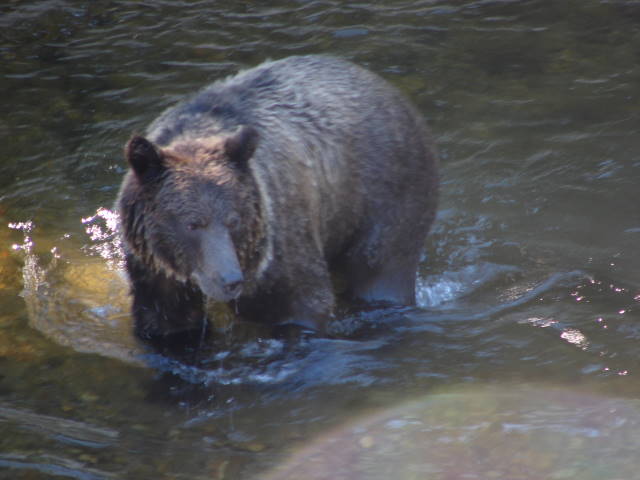
This is the look of a determined grizzly bear. The photo taken from Grizzly Bear Lodge’s viewing stand in one of British Columbia’s best grizzly viewing areas. This river on Knight Inlet has a man made spawning channel, which attracts bears from a large area. The grizzly population will increase from a dozen bears in the spring to more than forty grizzly bears once the salmon have entered the river. This look is directed at another bear in the river, which is coming to close to a fishing spot. Fights that cause serious harm are rare as there is an abundance of salmon and the main goal is to fatten for the winter.  Mating season is long gone so that tension is not present.