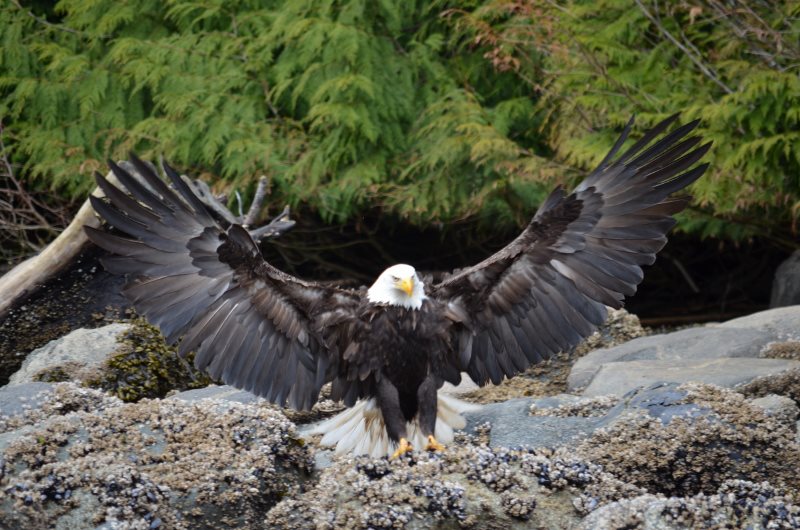
Perfect photo of a bald eagle landing or taking off either way it is still a great picture. We cannot guarantee “this” photo but there are many eagles in our viewing area. From the eagles in the tree near the lodge’s dock to any number of trees while on a day watching grizzly bears or on a whale watching excursion. Bald eagles are often seen picking small fish or herring from the water, feeding along the shore on recent catches or in the river picking on the salmon left by the grizzly bears.
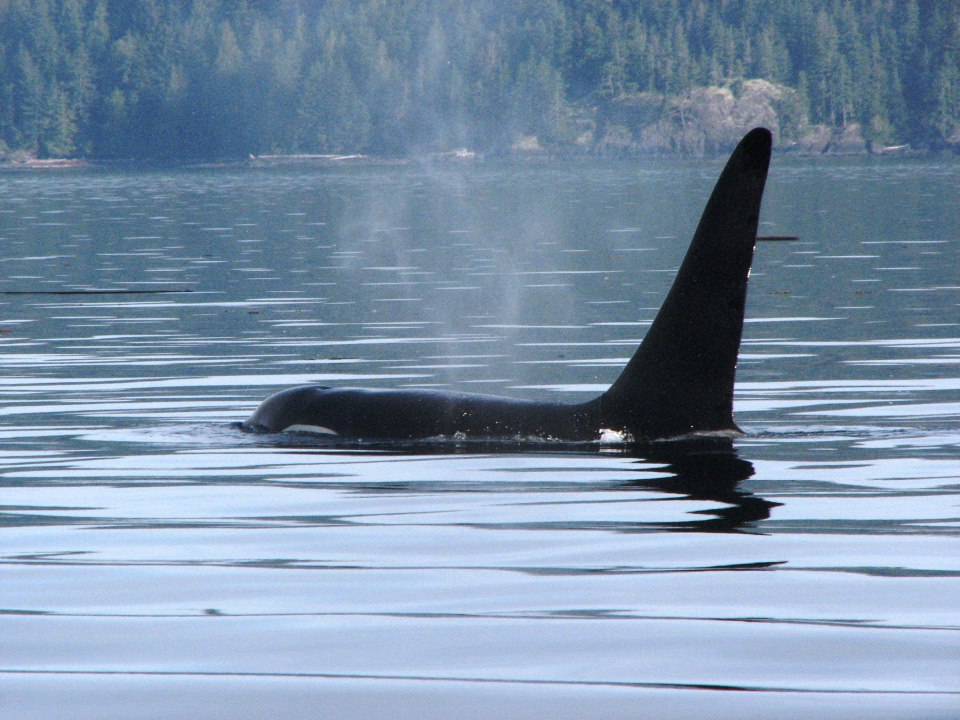
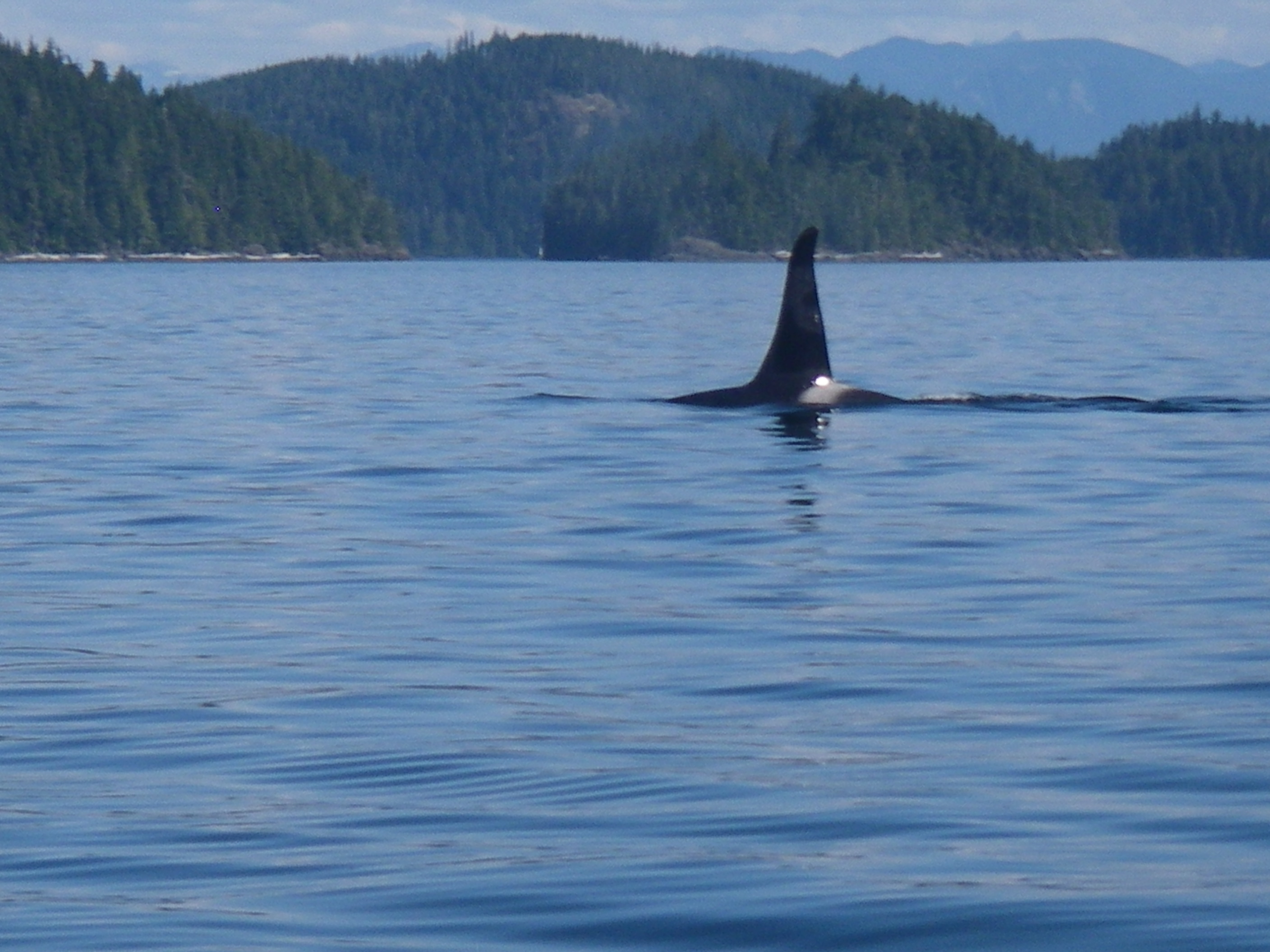
Orcas (killer whales) can be identified on an individual basis due to natural markings and differences in fin shape. Dorsal fins that vary in shape and size often have unique nicks or scars. The saddle patch behind the dorsal fin also varies from in shape, size, color and scarring. This male orca is a member of the northern resident community, which are most often seen during the summer months in the area of western Johnstone Strait and Queen Charlotte Strait, off northeastern Vancouver Island. This orca watching area adjacent to Grizzly Bear Lodge is also the home of humpback whales, which along with the orca are normally viewed on a daily basis.
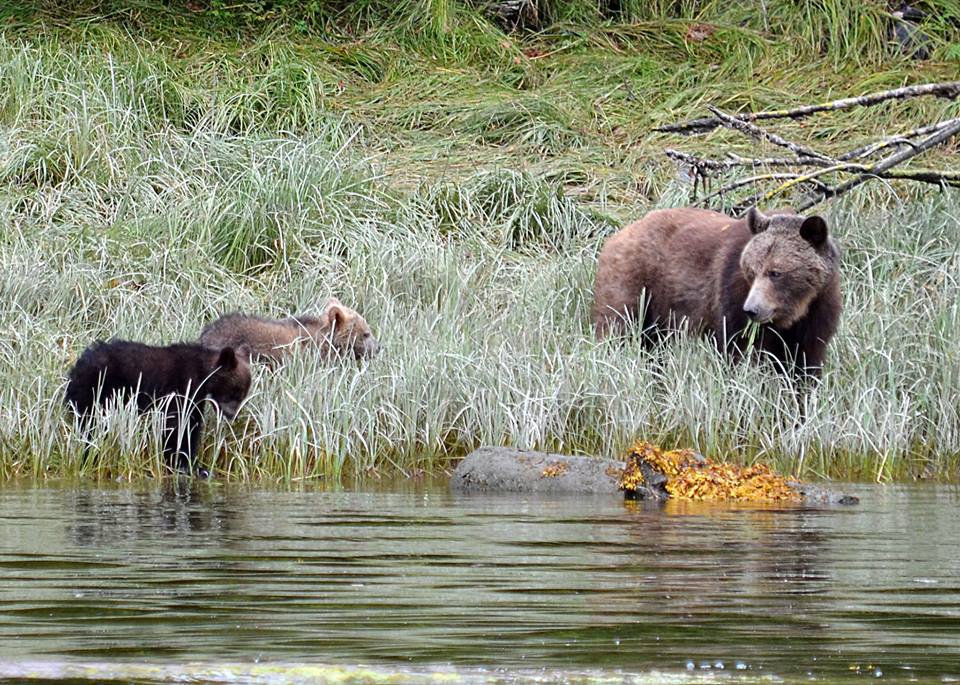
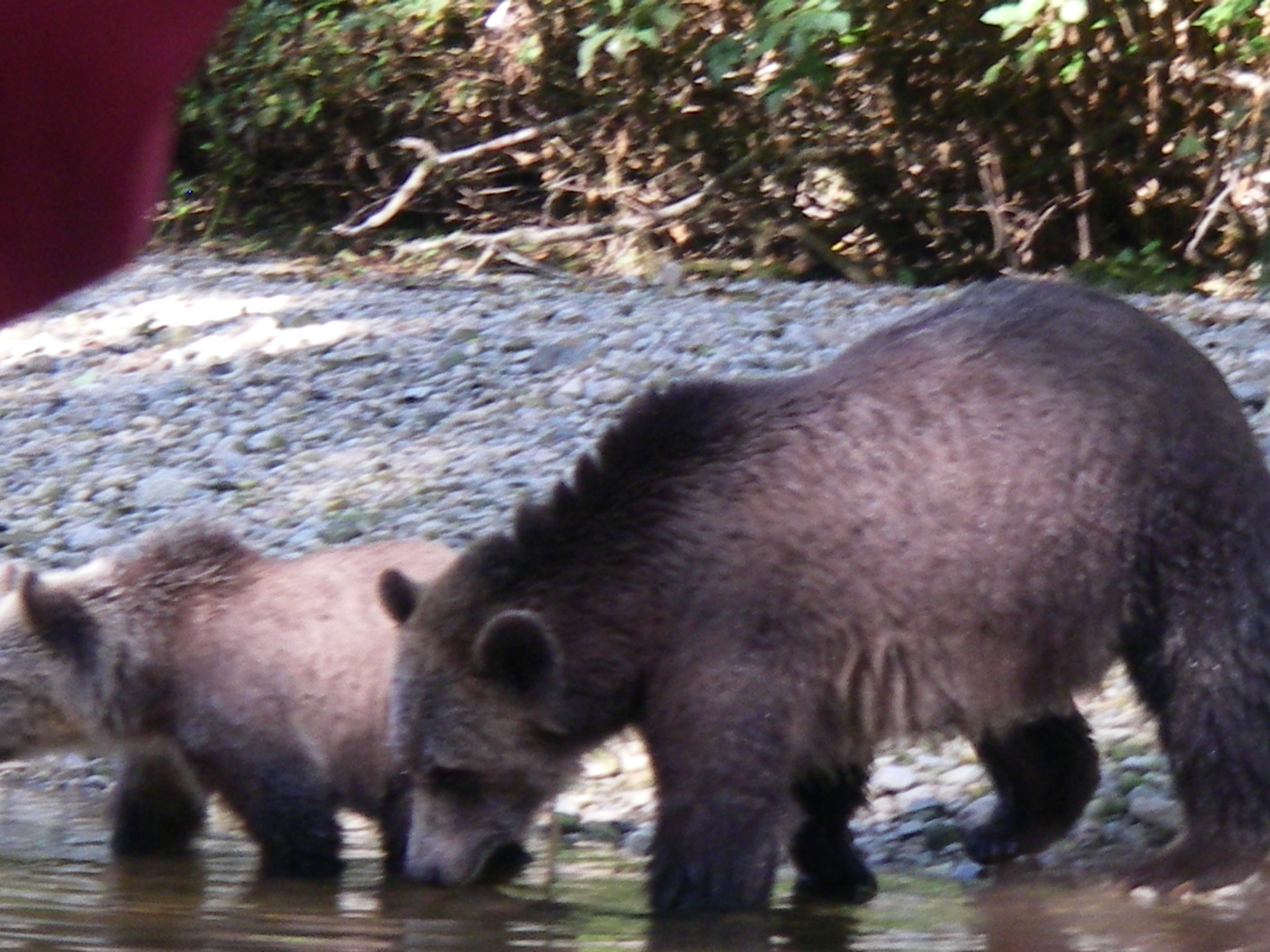
Spring and early summer (until August 24th) tours from Grizzly Bear Lodge involve a boat ride up Knight Inlet to the estuary of the Glendale River. This photo of the grizzly bear with two spring or first year cubs was taken in this estuary. The mothers bring their cubs to the shores along Knight Inlet in late May. The cubs born in January or February are only three or four months old and when they first appear along the shore stay close to their mothers. As time progress they move into the estuary to feed on the protein rich sedge grass. These cubs are closer to five months old but still stay close to their main source of food as they will nurse for a few more months and there will be a few male grizzlies in the area because mating season last until mid-June.
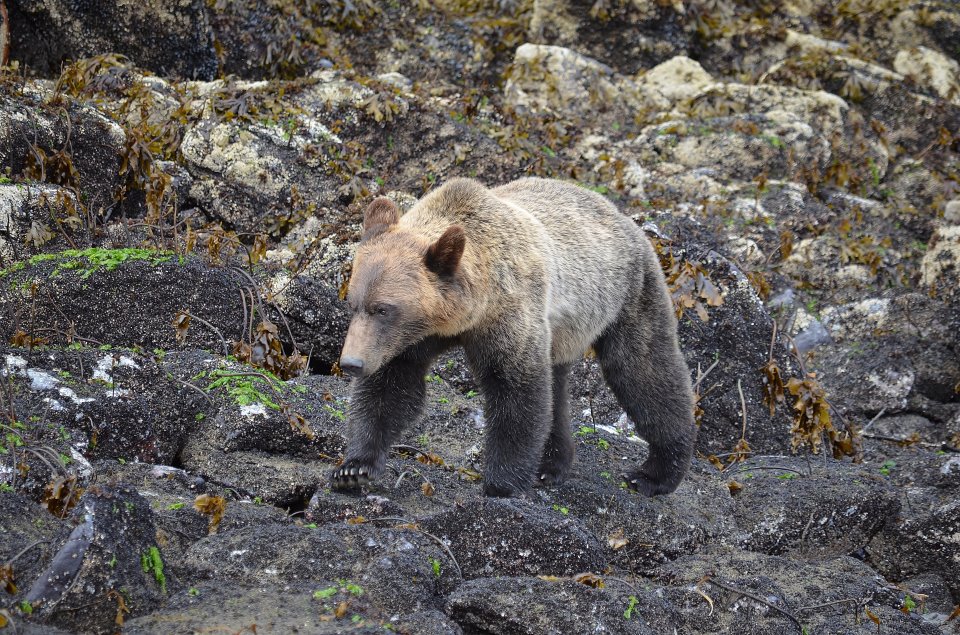
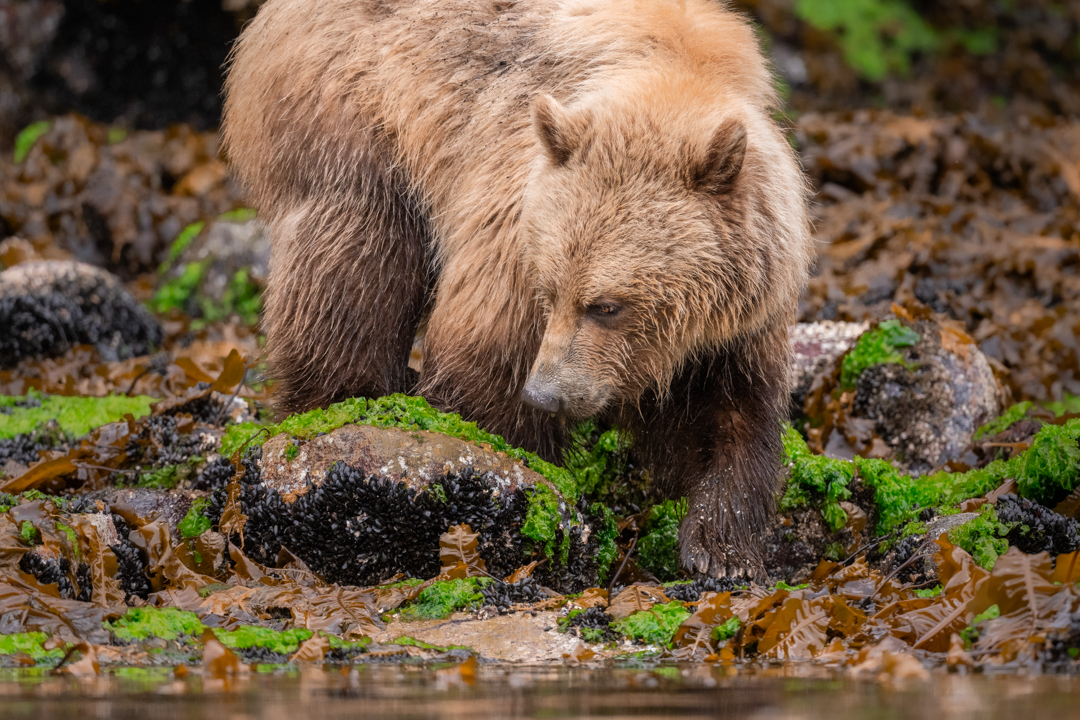
This is a great picture of a sub-adult grizzly in BC’s Glendale River estuary in the spring. The long looking legs because of the absence of a fat belly means that sedge grass and protein from turning over rock is this bear’s main food source. Sub-adult or juvenile grizzly bears refer to the age they leave their mother and they reach sexual maturity. Depending on food abundance mother grizzlies may keep their yearlings a second (even a third) year, denning together again and breaking up in the third (or fourth) year. The average breeding age for female grizzlies is 4.5 years. Males reach sexual maturity at roughly the same age as their female counterparts. Even though males are capable of breeding at three or four years of age, they rarely have the opportunity to do so because of intense competition from older, bigger males.
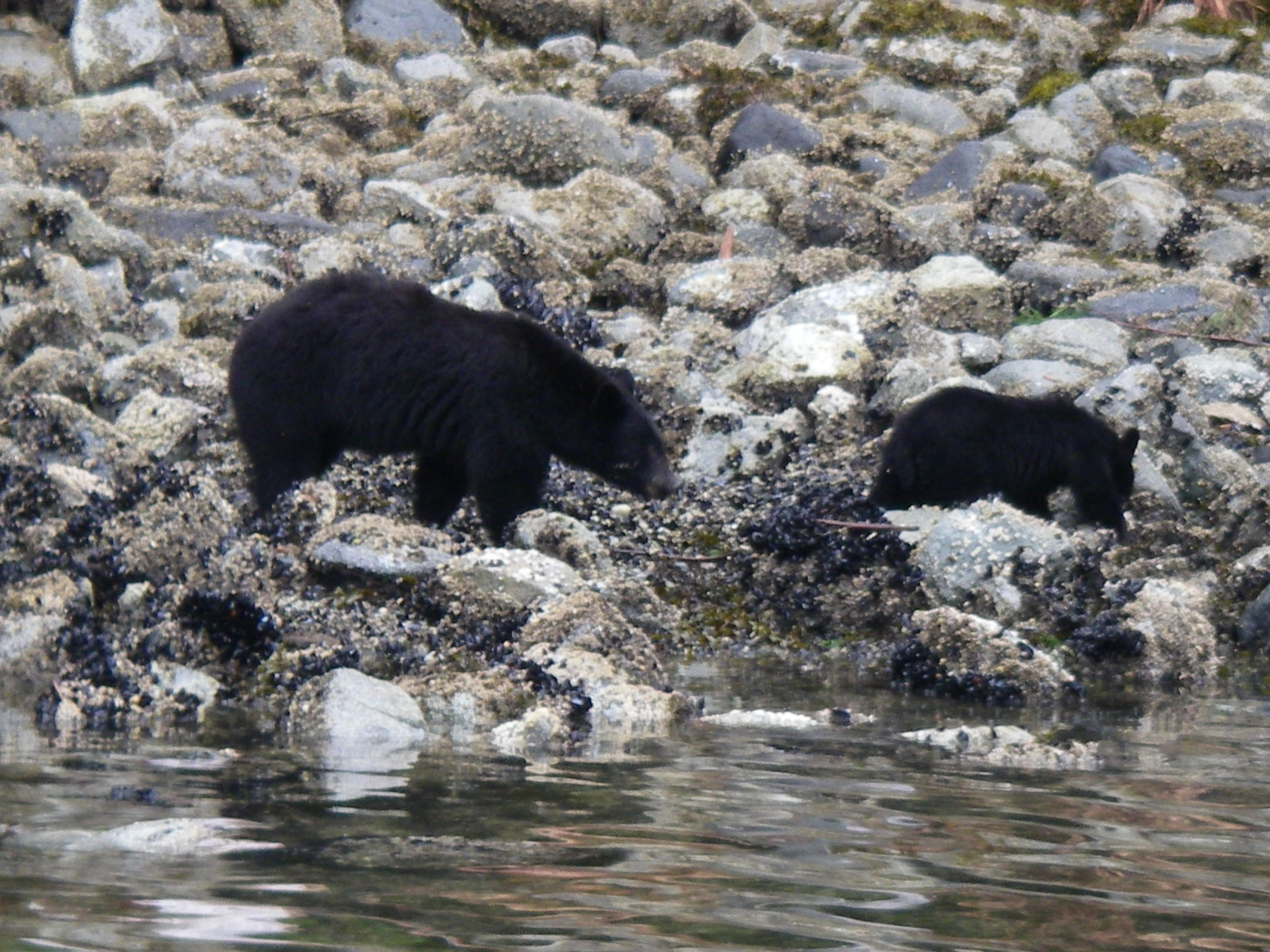
The float plane flight from Campbell River on Vancouver Island means that arrival at Grizzly Bear Lodge is between 3:00 and 4:00. Once guests are settled in their rooms a welcoming snack of fresh dungeness crabs or prawn is served on the front deck. The first evening is a familiarization tour where you get to know your guide and feel comfortable is the boats and start to check off the list of wildlife you hope to see. If the tide is right and low enough to have a beach black bears may come to forage. As both the grizzly bear tours and the whale watching safari days are by boat the guides are always looking for black bears. Black bears appear on the beaches to turnover rocks. This inter-tidal zone “food” is high in protein and is made up of crab, clams, barnacles, amphipods and other tiny invertebrates.
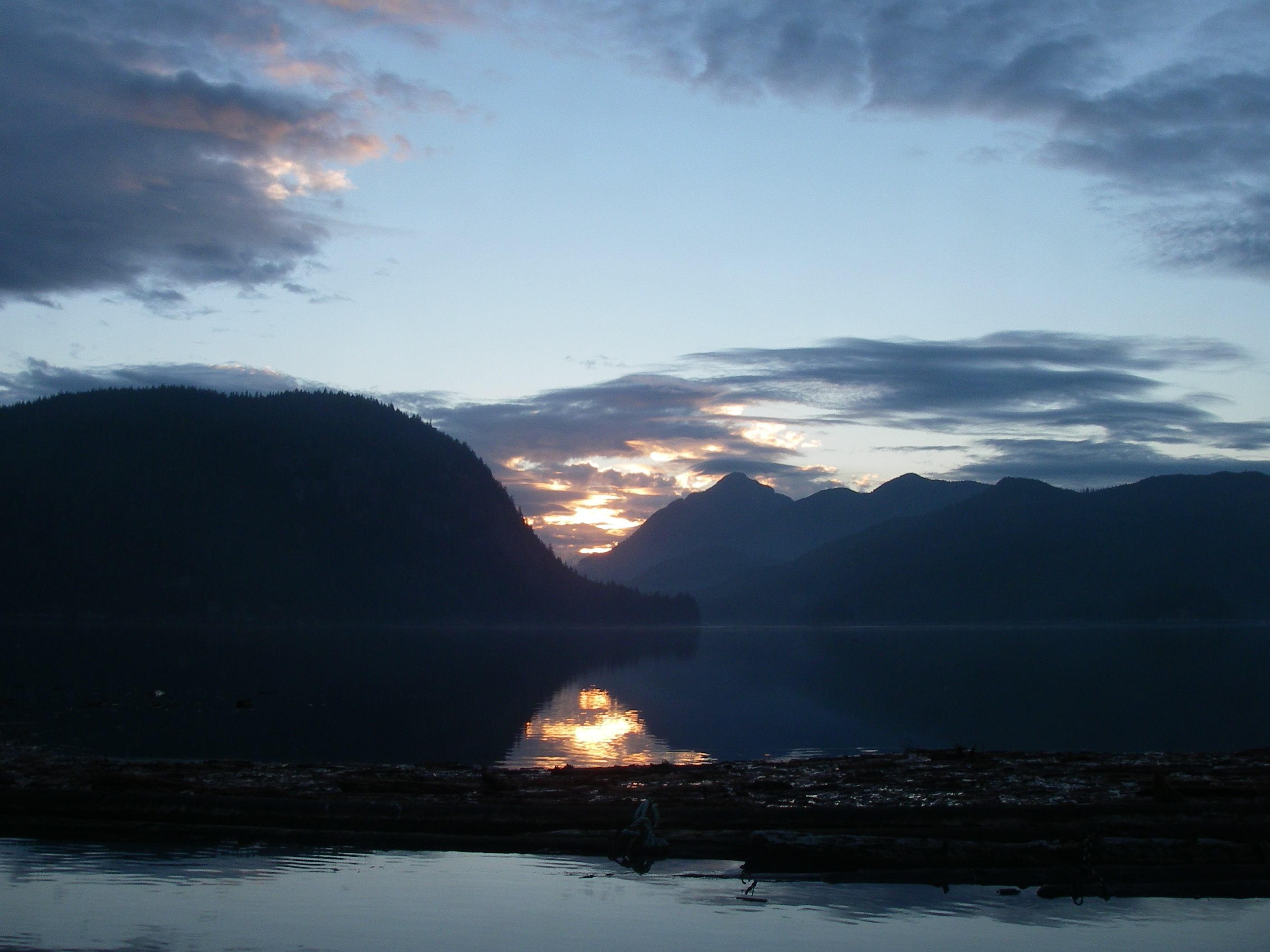
A guide’s view of early morning from the dock at Grizzly Bear Lodge on BC’s Knight Inlet. We are up about an hour before we call guests for breakfast and have often made several trips to the dock and our boats to make sure the picnic lunches are onboard with drinks and ice in the coolers. The boat tops are down, windshields cleaned and the seats dried and ready to leave by 7:30 or 8:00 depending on the season. Every morning in the lodge is a good morning some are just more scenic.
Humpback whales are common in the waters between Vancouver Island and the BC mainland. A normal viewing day from the lodge will encounter more than a dozen whales which often put on dramatic displays of breaching, lobtailing and fluking. In the case of this photo slapping a pectoral fin like a tail. Comparing it to yesterday’s post one can see way from a distance it could be mistaken for an orca. An interesting fact is that the humpback whale’s large pectoral fins have been the inspiration for the development of new aerodynamic technology to help fast-moving helicopters, maintain lift and increase maneuverability. The bumps on the pectoral fins of humpbacks have been used as inspiration before, in the development of turbine blades used in wind turbines, hydroelectric turbines and ventilation fans that increase efficiency.
Orca, killer whales or blackfish are all the same and the residents return by late June most years. Our whale watching safaris are in the area of Johnstone Strait between Vancouver Island and the British Columbia mainland. This photo of a male orca shows a mature dorsal fin. Following are some interesting fact about dorsal fins taken from www.seaworld.org/infobooks/killerwhale. 1. Like the flukes, the dorsal fin is made of dense, fibrous connective tissue, with no bones. 2. The dorsal fin acts as a keel. The dorsal fin probably helps stabilize a killer whale as it swims at high speeds but is not essential to a whale’s stability. 3. The dorsal fins of male killer whales are the tallest of any cetacean in the world, growing up to 1.8 m (6 ft.). Female dorsal fins are smaller at about 0.9 to 1.2 m (3-4 ft.) and may be slightly curved back. 4. For male killer whales, dorsal fin growth is thought to be a secondary sexual characteristic as peak growth of the fin coincides approximately with the onset of sexual maturity. 5. Because of the huge diversity of killer whale dorsal fins and the adjacent saddle patch, researchers take pictures of these fins to identify individuals and their pods, much like fingerprints are taken to identify humans.
Click to enlarge then click againClick to enlarge then click again
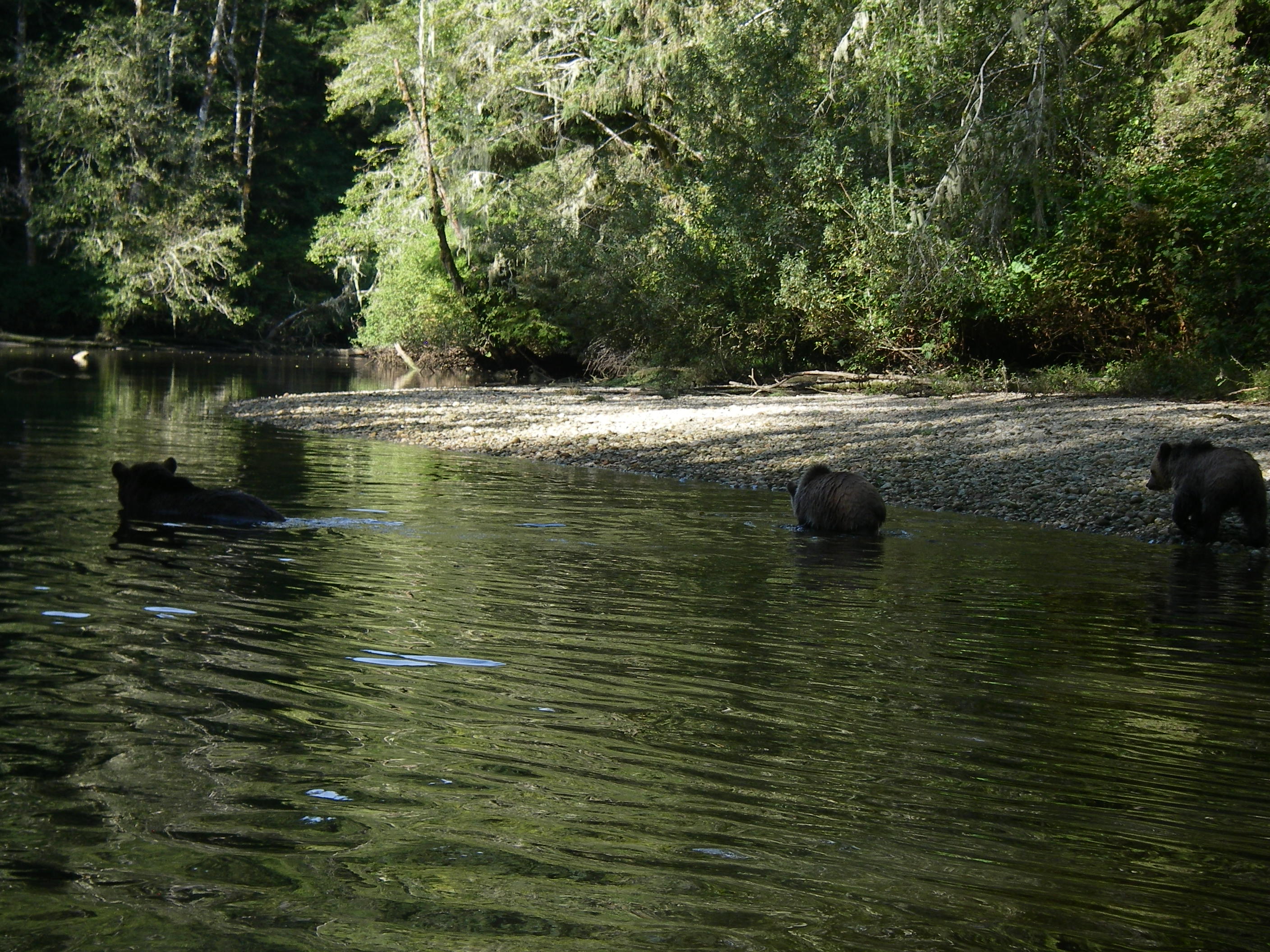
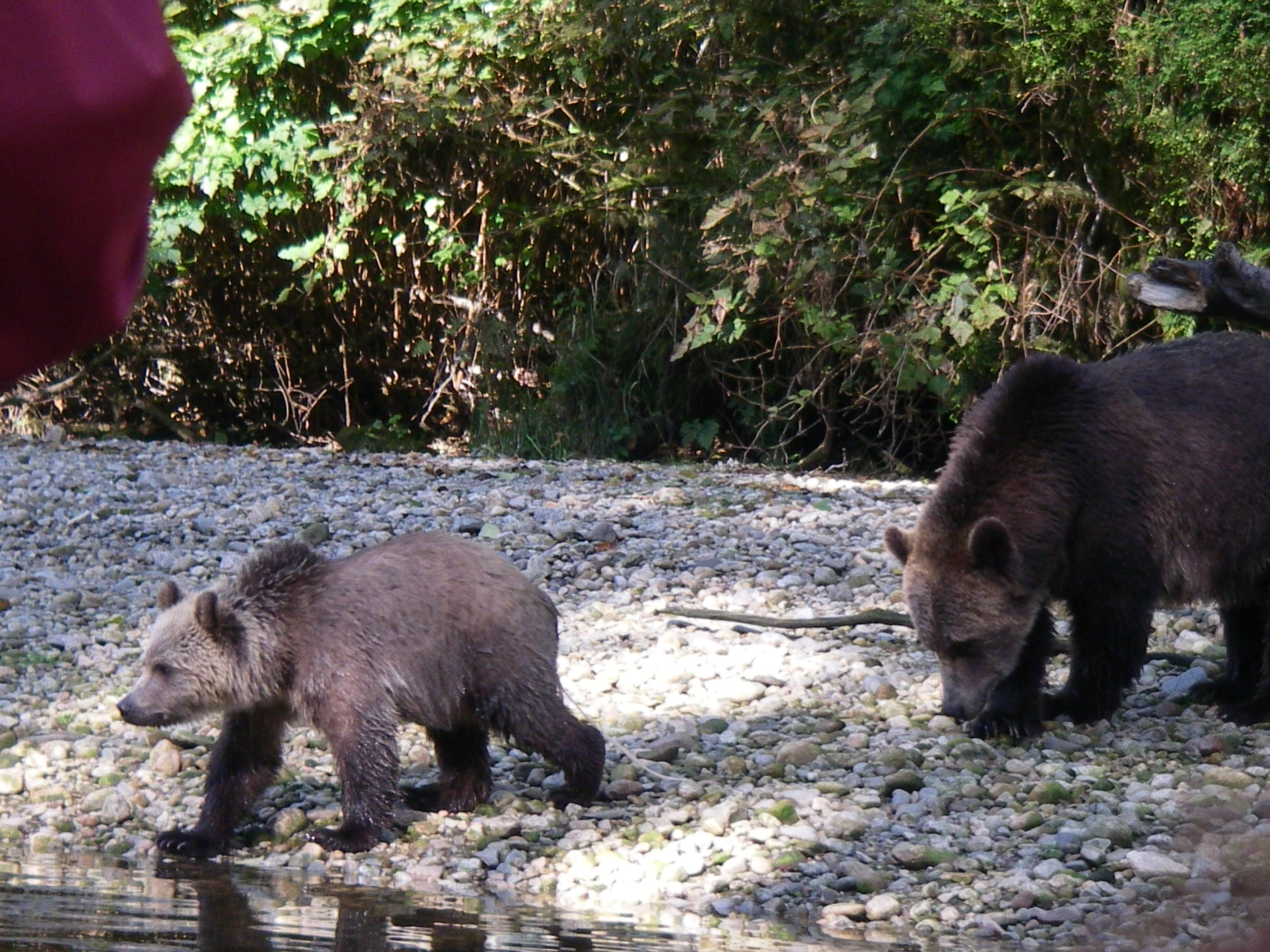
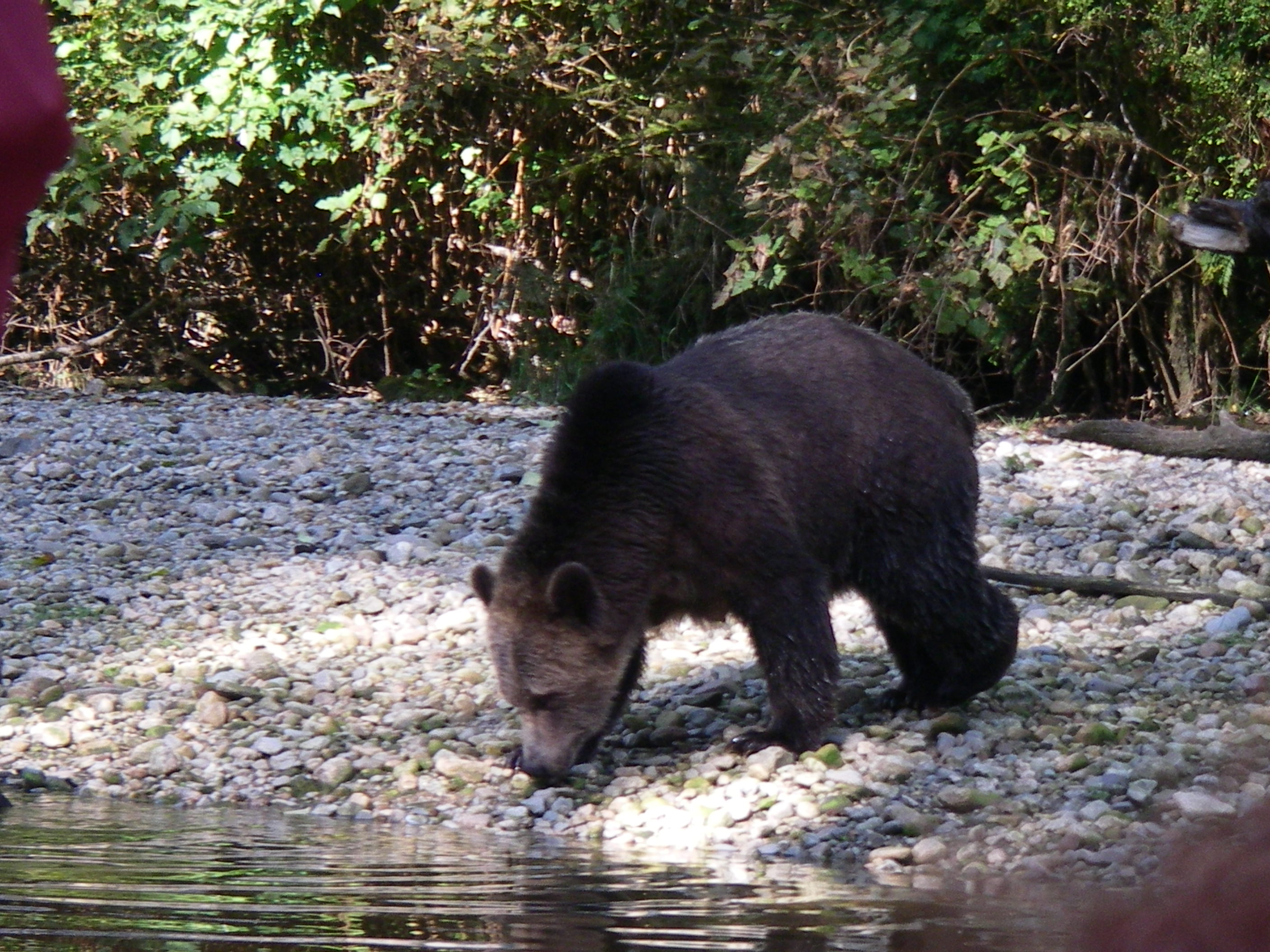
The bears move into the water and down river still looking for salmon. This mother and cubs are quite fat for this time of the season so their daily routine of walking the river in search of food must be a successful. Not that these pictures were taken with a point and shoot Pentax Opti 6mp 3X Optical Zoom I can only imagine the quality of the photos my guests obtained with their long lens camera and then again maybe we were to close.
Click to enlarge then click againClick to enlarge then click again
The mother grizzly and cubs have climbed over the log and are about to enter the river just behind the boat. If you look over the previous photos in this series of postings you will notice the grizzly did not make eye contact by looking toward the boats – staring a bear in the eyes is a sign of aggression. And the guests were cautioned that it was ok to glance and take pictures but to avoid “bug eyed staring”. The mother had her head down while the cubs would occasionally glance toward the boats when a camera was making noise. …. more tomorrow
Just like that another season has come to an end. We are grateful for all the wonderful staff and the guests this season. It was an excellent season and we are already looking forward to next May.
One of the highlights of the season was all of the new cubs out. It was awesome to see so many new cubs of the year and that is great news for our bear populations moving forward. We had great spring viewing and this continued through summer. On our river trips we started to see salmon arriving in August and enjoyed some great shoulder season viewing. The fish at the viewing platforms were a little late showing up this year, but viewing during late September at the platforms was great and the estuary viewing remained strong throughout the season.
Out in the whale watching world it was another year that saw large numbers of resident Orca who remained in the area right into October. The Humpback viewing was also great with large numbers feeding in Blackfish Sound. It is so amazing to have these magnificent animals back in our waters in such numbers.
Over the winter and spring we will be doing some repairs and maintenance. We rebuilt the front deck last spring, utilising cedar cut on site. We will continue with some siding, rooms improvements and hopefully a floating sauna ready for the start of our season.
2026 is already looking like a very busy season for us. We only have limited high season availability so please book early to ensure we have space for your group.