Tag Archives: Whale Watching

Perspective on Whale Watching

orca  with guests

When I am in the boat with guest I try to get photos that show that there are opportunities for good pictures. Although the Whale Watching Guideline specify that boats stay 100 meters (yards) from the orca / killer whales at sometime during your trip that may not be true. In the area we do our marine wildlife viewing there is less than eight boats whale watching and over the period of the day every one has an opportunity for photos. Once taken we move off to view the humpback whales, stellar sea lions, harbour seal, dolphins, porpoise, bald eagles and a variety of sea birds.  Must not leave out the black bears we often see as we travel between the viewing area and the Lodge.


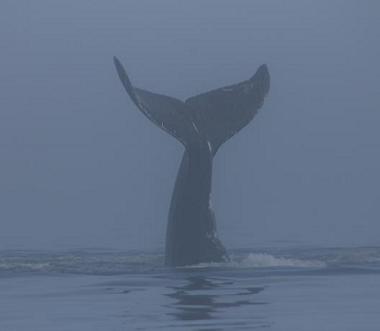
Humpback Whale Lobtailing

lobtailing humpback

Lobtailing is when a whale lifts its fluke (tail fin) out of the water and brings it down forcefully to slap the surface of the water with a big splash and loud report. Humpback whales will frequently lobtail repeatedly for several minutes at a time. They can lobtail both dorsally and ventrally (right side up as this photo shows or upside down), sometimes stopping just long enough to take a breath before rolling over to continue on the other side. As more and more whales are spending their summers in our viewing area, often as many as twelve to sixteen different whales a trip, the lobtailing is becoming more common. This tends to support the belief that lobtailing is most likely a form of non-verbal communication, like breaching or pectoral fin slapping, and can be used to call attention to an individual, to impress a potential mate or intimidate a foe.


Visiting Killer Whales

Killer Whales approaching

The resident salmon eating orca that we see on our whale watching / wildlife viewing trips are curious like all dolphins. If you are sitting quietly in your boat with the engine turned off they will approach and pass beneath the boat. The regulations or guidelines prohibit leap frogging, which is running ahead of the orca and moving to stop directly in front of a moving pod of killer whales. When your are whale watching form the lodge you are not limited to a 3.5 hour tour, rather a full day tour, the opportunity to be in a position to have the curious orca visit your boat increases dramatically.


Curious Sea Lions – Close

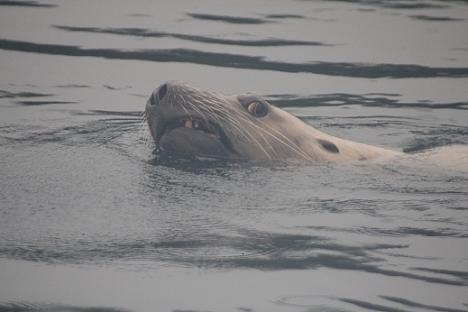
Steller sea lion

The Steller sea lion (Eumetopias jubatus) are also known as the northern sea lion and Steller’s sea lion. Males are distinguished from females by broader, higher foreheads, flatter snouts, and darker, slightly tuftier hair around their large necks, giving them a maned appearance. Their Latin name translates roughly as “maned one with the broad forehead”. Steller sea lions are known for their curiosity and playfulness, they frequently visit our boats as we watch them on the rock out croppings along the shore.


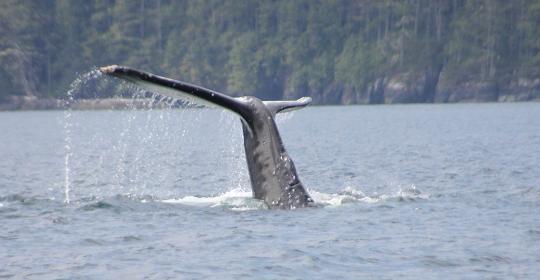
Humpback Whale Tail Fluke

Humpback Whale tail

Everything a humpback whale is about size. Length: up to 17 m (55 ft); Weight: up to 40,000 kg (88,000 lbs); A Large pectoral flipper, up to 1/3 length of body; and a tail fluke up to 5 m (15 ft) feet across.  It would be possible to lay two dolphins nose to nose across the tail fluke of an adult humpback whale. Over the past five years humpback whales sightings have increased from four or five a day to twelve to fifteen. Tail lobbing, lunge feeding and tail fluking are common. It does not matter how often you see that tail come out of the water it is amazing.


Herring balls and humpback whales

Humpback Lunge

The seagulls in this photo are the key to good whale watching. Humpback whales in our area feed on herring. Diving ducks attack the herring from below and their defence is to form a tight mass of revolving herring (a herring ball) which moves to the surface. When the herring near the surface the gulls attack from above and that is what your guide wants to see. Once the gulls are spotted it is necessary to move toward the herring ball without making the ball disperse and then wait for a humpback whale to lunge up and eat the herring. On this attempt the humpback was faster than the guide to reach the herring so our view was from the distance but if you check the post’s from April 6th and 7th you can see that is not the norm.


Humpback Whale Lunge Feed 2 of 2

Humpback lunge feeding

The joy of being able to spend time with the humpback whales in the viewing area used by Grizzly Bear Lodge is the variety of experiences that happen each tour. Aside from watching the whales lunge feed in the dramatic photo form yesterday’s post to the more sedate lunge in today’s post is the variety of other wildlife. Wildlife such as orca / killer whales, Stellar sealions, harbour seals, porpoise, dolphins, bald eagles, variety of sea birds and frequently black bears.


Humpback Whale Lunge Feed 1 of 2

Humpback whale lunge

At first glance it is hard to make sense of this picture. Sure it is something coming out of the water and that does look like a large pectoral fin but what is happening. A humpback whale (not too far from the boat) is making a sideways lunge through a ball of herring and turning at the same time. Tomorrow’s photo is more sedate


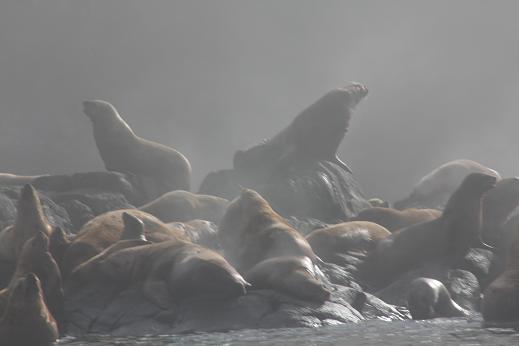
Fog Bound Stellar Sea Lions

Stellar sea lions

August whale watching can have some interesting mornings as the warm days will produce fog for the following morning. The fog may be patchy and is gone by noon but it does not prevent us from leaving the dock as we have radar and GPS. The fog does produce some unique photos such as this one with stellar sea lions on the rocks near Vancouver Island’s Telegraph Cove. The sea lions are now in the area most of the summer whereas in past years they were only passing through in June and September on their migration between California and Alaska.


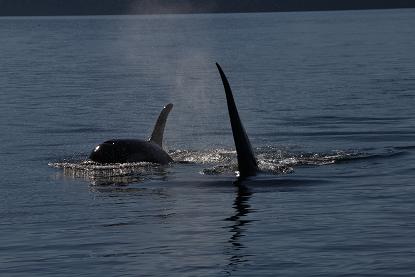
Orca Timing – A Little Off

Killer whale blowing

Always looking for the interesting / different photo to post on the blog and this photo fills that category. This orca seems to be “off” on its technique of coming out for a breath of air. Normally the blow occurs after the back has cleared the water and not before. I guess the important part is that it is not inhaling at this point but waiting until it is clear to do so.