
Grizzly Bear and Wildlife Tour Blog
We offer an exceptional fly-in lodge for Grizzly Bear Watching and Whale Watching in British Columbia.
Learn about What’s happening at the Lodge, view our British Columbia’s Wildlife Report, read our Grizzly Bear Watching Blog and Whale Watching Blog. Learn more about a Day on the River Blog, see Our Tour Guide’s Photos & Blog and Photos from Our Guests.
Humpback whale tail identification
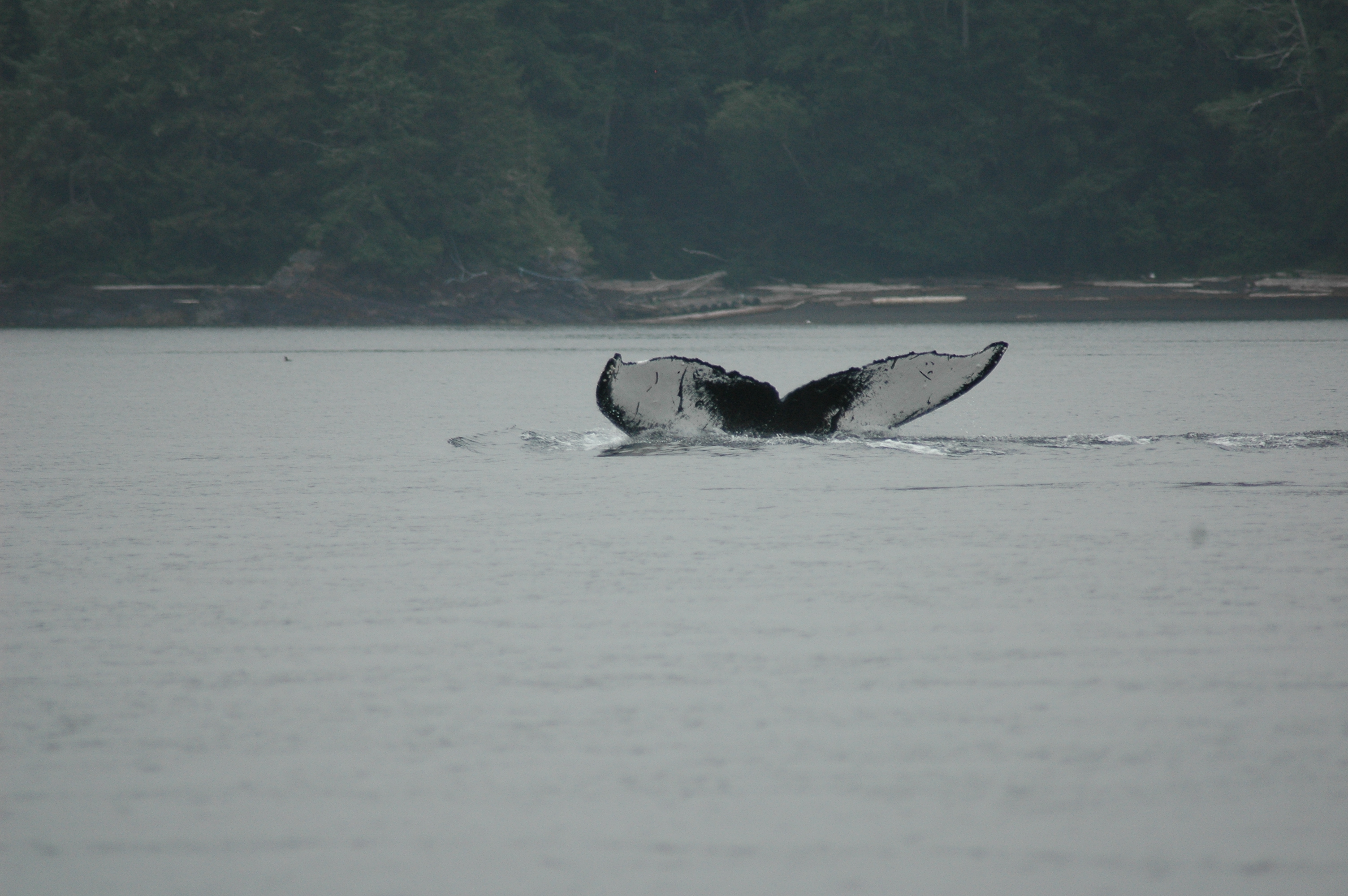
Click photos to enlarge
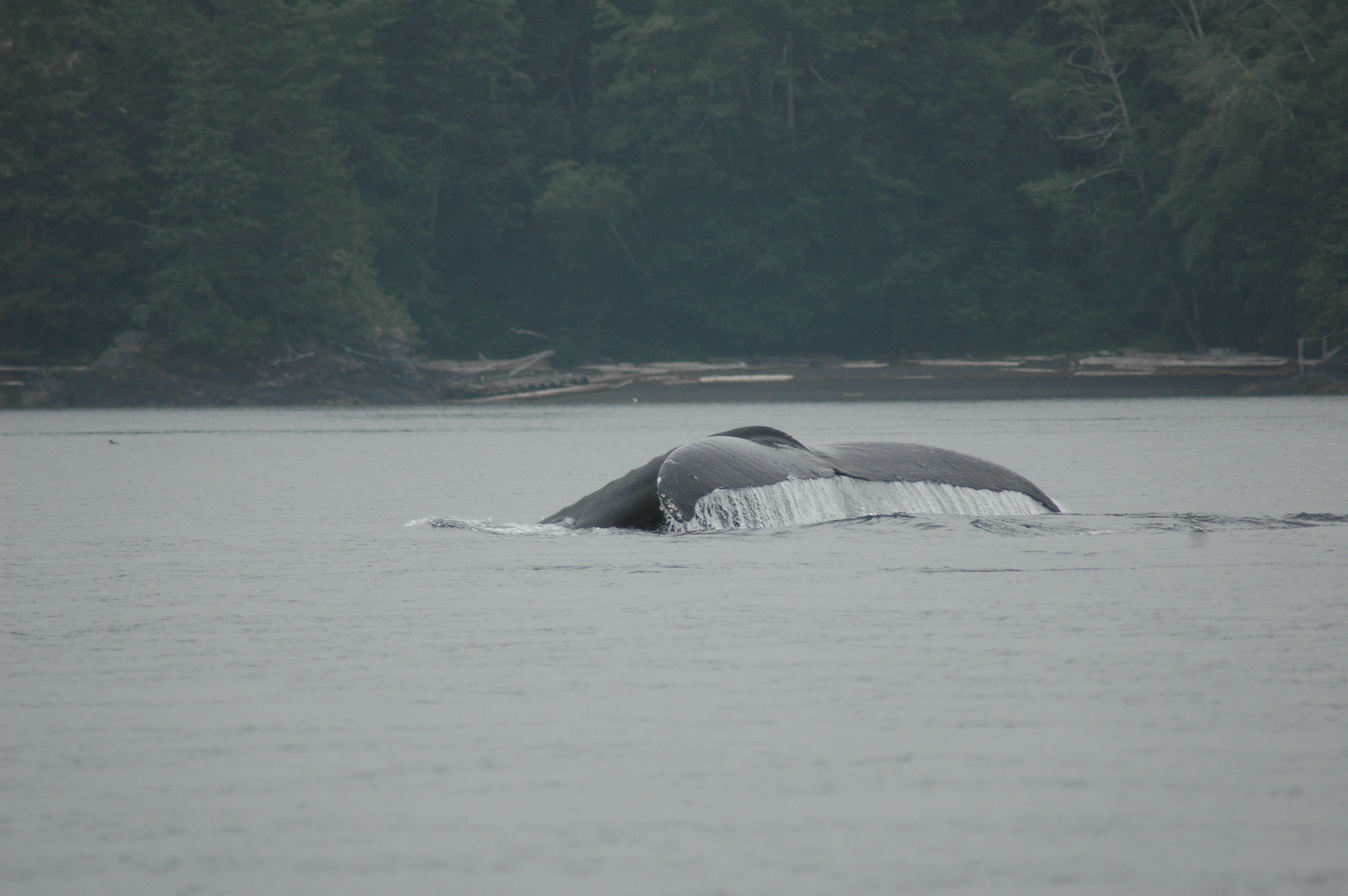
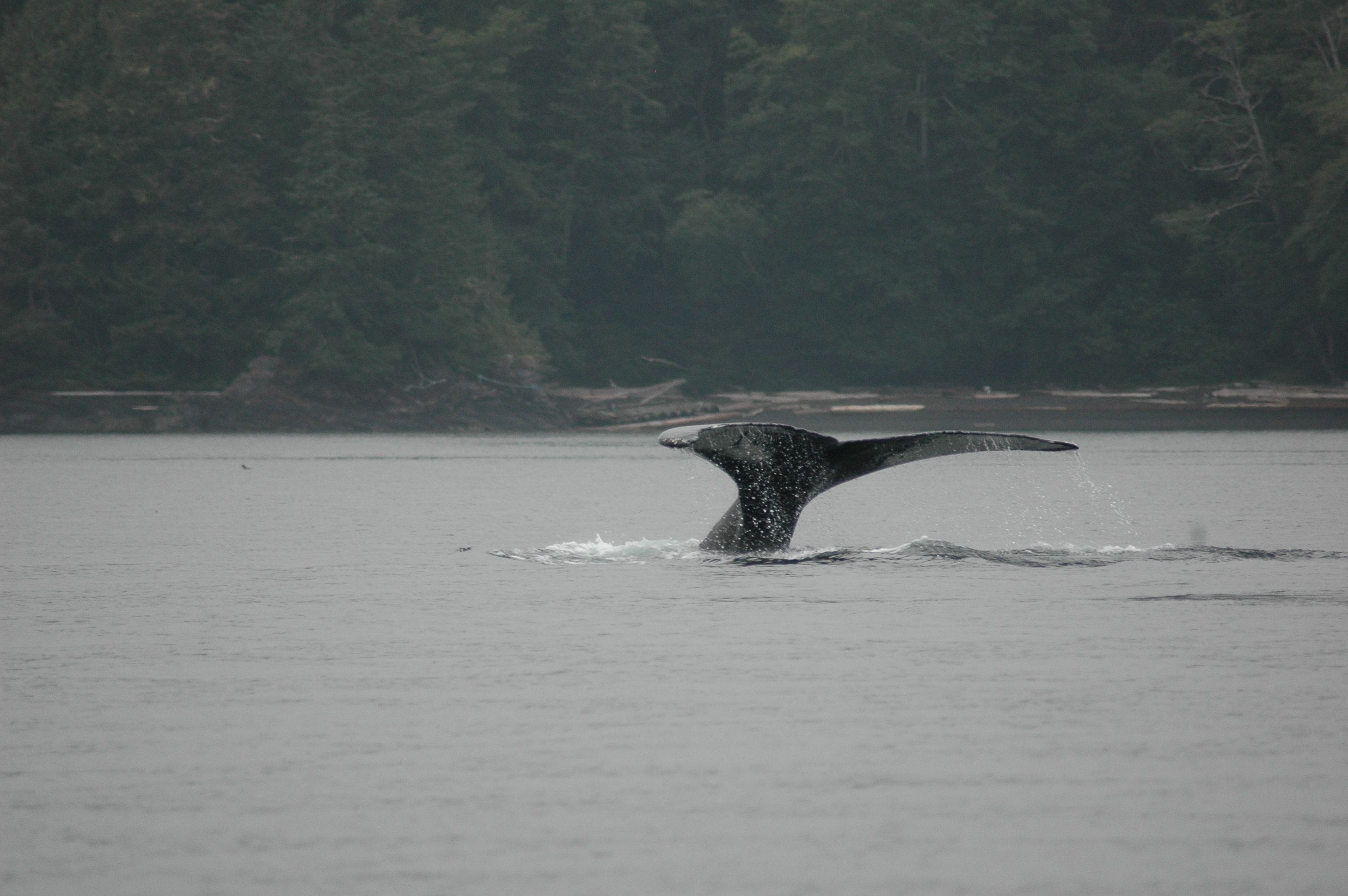
In 2008 the number of humpback whales in the North Pacific was estimated at just less than 20,000. This number is a far cry from the scant 1,400 humpback whales estimated in the North Pacific Ocean at the end of commercial whaling in 1966. Researchers are able to identify humpback whales by photographing and cataloguing pictures of the animals’ tail, or fluke, because the pigmentation patterns on the fluke act like a fingerprint and are unique to each animal. This sequence of photographs by Marc and Solange from France are exceptional in that they show three photos of the same whale diving (note the beach behind the tail) as well as the underside that would be used for identification. These photos were taken in Blackfish Sound near Telegraph Cove BC on Vancouver Island.
Grizzly Bear Mother Nursing – Set II


Click photo to enlarge and see ALL of the bear!
As the photo shows lunchtime is over and time to move along. Triplets are a sign of a very healthy grizzly. This was best explained by Bruce Auchly in Montana Outdoors “When a pregnant bear goes into her den, she is only a little bit pregnant. After bears mate in late spring and early summer, a female’s eggs are fertilized but they do not implant in the uterus. By midsummer the fertilized egg has developed into a multicelled blastocyst (an early stage embryo), but further growth is arrested. The embryo floats freely in the uterus until denning time, later in the fall.
This delayed implantation allows the female bear’s body to assess whether it has sufficient fat reserves to carry, give birth to, and nurse cubs through the sow’s long winter nap. If fat reserves are present, it’s all systems go. But if a bear can’t gain enough fat, the blastocyst won’t attach to the uterine wall, ensuring that a female in poor condition will not be further stressed by reproduction. Then the bear’s body absorbs the embryo, gaining a bit of nourishment.”
Grizzly Bear Mother Nursing – Set I


Click photo to enlarge
Martin and Viv were fortunate to take a series of photos of a mother grizzly bear nursing her three cubs. They say “We took these while out with Glen on the 30 May. As you will see they are of mother feeding her three cubs, we gather from Glen quite a rare sight. We watched mother feeding on the rocks with her cubs playing around her for about an hour, she then took them up on the beach only about 50-80 m from us and fed them.”
Spring Grizzly Bear and Cub

This photo of a “long legged” grizzly bear was taken in the spring. As the season progresses and the bears bulk up for the fall hibernation their legs seem to get shorter and shorter. Bears may loose 15-30 % of their body weight during hibernation giving the appearance of longer legs. The cub behind the mother appears, by it’s size, to be last year’s cub. Cubs normally spend two years with their mother and if she does not become pregnant may be with her for a third season. The Glendale River estuary, our grizzly viewing area, provides a good beach at low tide to for “beach food” which is important as berries are relatively scarce and as the salmon have not arrived in the rivers bears will continue to loose weight until well into June.
Classic orca photo

The whale / orca watching safari day from Grizzly Bear Lodge start with a fifty minute boat ride from the lodge to the area of Johnstone Strait. Along the way we search the shore for black bears, eagles and anything else that moves. Once we are in the Strait’s area or eyes turn to the water for marine wildlife such as seals, sea lions, dall’s porpoise, white-sided dolphins, minkie whales, humpback whales and of course killer whales or orca. The resident or salmon eating orca we normally see in this area travel in family pods of ten to twenty members. The pods are dominated by the “mother” (oldest female) making them matriarchal however it is older males (sons stay with their mother all their life) that tend to attract most of the picture taking.
Grizzly and deer grazing

This is not an unusual scene in the spring at the river estuary in Knight Inlet. The grizzly bears come into the estuary at low tide to turn over rocks to gather the small invertebrates for the protein they contain. Another favourite food this time of the year is sedge grass which is very high in protein and as the salmon have not arrived the beach is the grizzlies’ main source of food until the many variety of berries start to ripen in mid-June. Not to be out done the deer also need to eat and sedge grass also provides them with a necessary source of food. The deer are always alert and keep an eye on the bears but I have never seen a bear attempt a chase. The level beach area gives the deer an advantage and the openness prevents a surprise attack by the bears.
Spring grizzly bear teaching cub

One of the best ways to learn is to watch another and this is true of grizzly bears as it is of humans. This mother grizzly in the Glendale River estuary of Knight Inlet is teaching by example. At low tide especially in the spring when the salmon have not arrived in the river to spawn will bring the grizzly to the beach. The turning over rock produces food high in protein, which is made up of crab, clams, barnacles, amphipods and other tiny invertebrates. This cub is ready to share moms food and will soon be turning it’s own rock in search of a meal.
Humpback Whale mother and calf
 For the past five years the number of humpback whales spending their summers in our viewing area has increased to eight to ten whales viewed on a daily basis. The southern BC/Washington population, which includes our area, is approximately 200-400 whales. It is becoming more common to see calves with their mothers. The gestation period is approximately 11 months, calves being born between December and April. A calf will spent about one year with its mother before becoming independent. Our viewing area is rich in herring and therefore a feeding area for the calves and mothers. There also appears to be a correlation between feeding and breeding grounds. The majority of humpback whales feeding in the southern BC waters have been re-sighted off mainland Mexico, as well as Hawaii according to the B.C. Cetacean Sighting Network.
Black bear on a grizzly tour
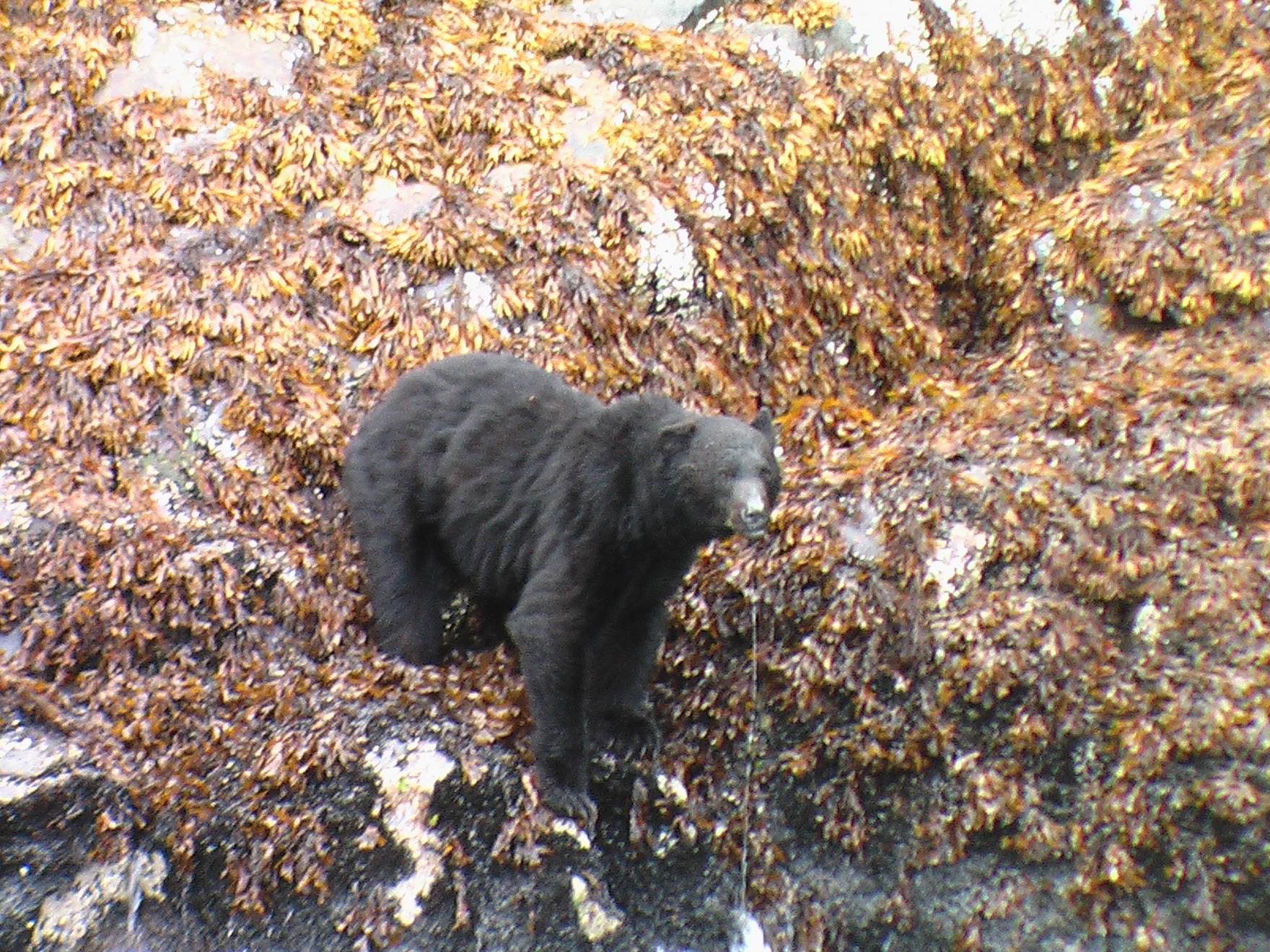
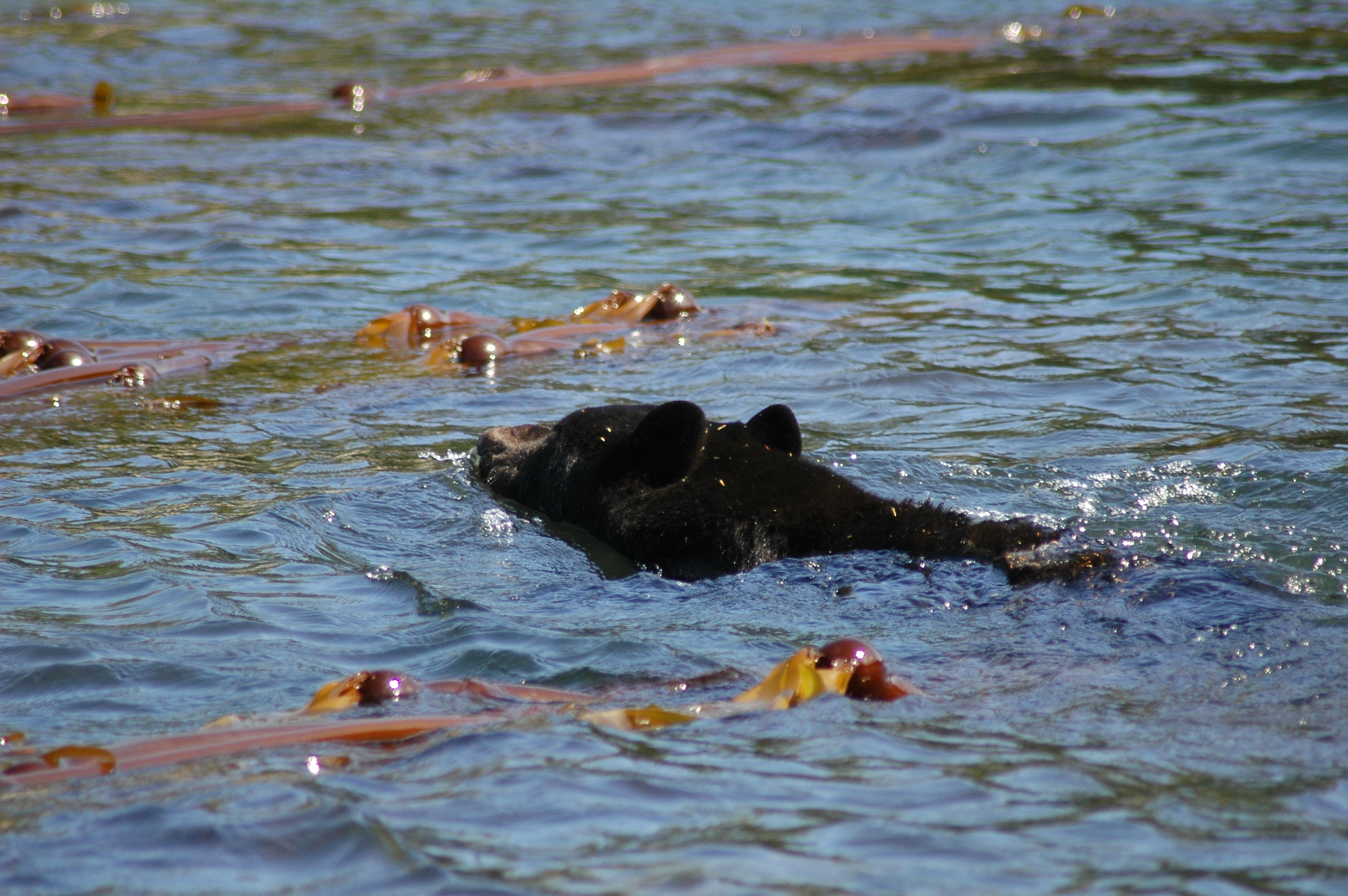
The day tour up Knight Inlet from Grizzly Bear Lodge is about an hour run to the Glendale River estuary an area frequented by grizzly bears. On this run it is common to see black bears coming to the shore eat the barnacles and muscles exposed by the low tide. Some of these bears are patient or maybe to interested in food and ignore our boat stopping for pictures other disappear as soon as we slow down. The younger bears tend to run the older bears have accepted the intrusion and realize there is no danger.